Watches
Watches and Wonders Geneva 2026: Five Key Developments
Watches and Wonders Geneva 2026 was defined less by one dominant watch than by a broader change in scale and emphasis. The final official roster counted 65 participating brands, Audemars Piguet made its first appearance at the fair, independent makers occupied more space, and the programme placed craftsmanship, education and technical verification alongside new releases. For collectors, the useful conclusion is not that every launch will become scarce or appreciate. It is that the fair offered several distinct ways to judge contemporary watchmaking: product design, movement development, handcraft, historical continuity and the quality of the evidence supplied by each maker.
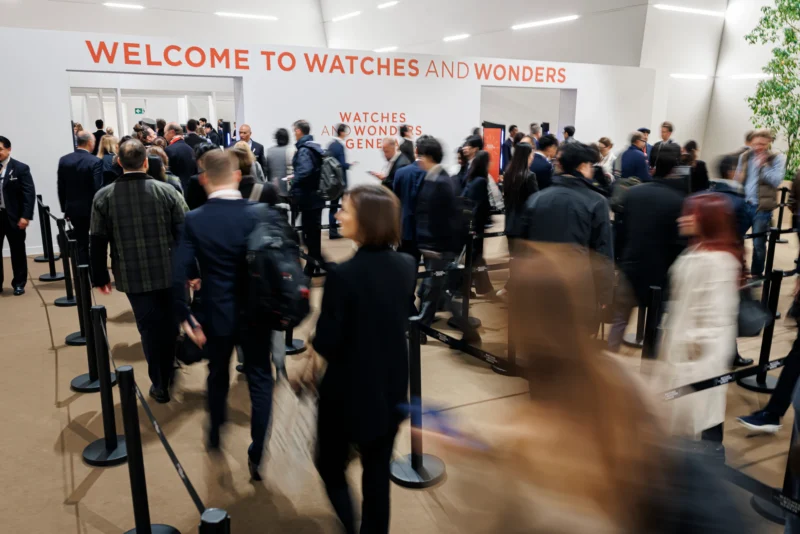
Arrivals at Watches and Wonders Geneva 2026, held from 14 to 20 April. Courtesy of Watches and Wonders.
Answer first
Watches and Wonders Geneva 2026 was defined less by one dominant watch than by a broader change in scale and emphasis. The final official roster counted 65 participating brands, Audemars Piguet made its first appearance at the fair, independent makers occupied more space, and the programme placed craftsmanship, education and technical verification alongside new releases. For collectors, the fair offered five distinct ways to read contemporary watchmaking: through product design, movement development, handcraft, historical continuity and the quality of evidence each maker chose to provide.
Key takeaways
- The Geneva edition ran from 14 to 20 April 2026 and the final official event page lists 65 participating brands.
- Organisers reported nearly 60,000 unique visitors, 25,000 public tickets, 1,750 journalists and 6,000 retailers.
- Audemars Piguet described 2026 as its first participation in Watches and Wonders Geneva, correcting the idea that it was simply returning to the fair.
- The launch mix ranged from experimental artisanal projects to a new 24-hour alarm complication and historically framed design updates.
- Launch-week attention records what captured the room; scarcity, resale performance and long-term significance emerge only later.
1. The fair grew into a public-facing watchmaking week
The official dates were 14–20 April 2026. The event's post-show release reported almost 60,000 unique visitors, nine per cent more than the previous edition, while 25,000 public tickets were sold. It also counted 1,750 journalists and 6,000 retailers. More than 10,000 people were reported to have joined the programme in central Geneva.
Those figures describe the fair's widening reach. They also show that Watches and Wonders is no longer only a closed trade appointment: public days, city programming and online replays now form part of its editorial and educational role. Attendance alone cannot reveal how many watches were ordered, how allocations will be distributed or how any reference will trade later.
That distinction matters when reading launch coverage. A packed room can carry real cultural weight without becoming a price signal. The dependable record here is the dates, the official participation list and the organiser's audience figures; interpretation begins after those facts are clear.
A closer look
Details worth keeping.
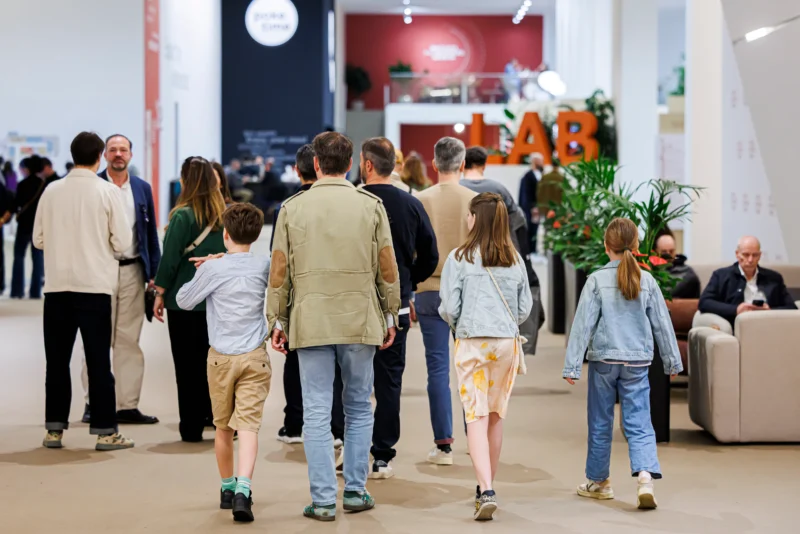
Public visitors inside the Salon, part of the fair’s wider educational reach. Courtesy of Watches and Wonders.
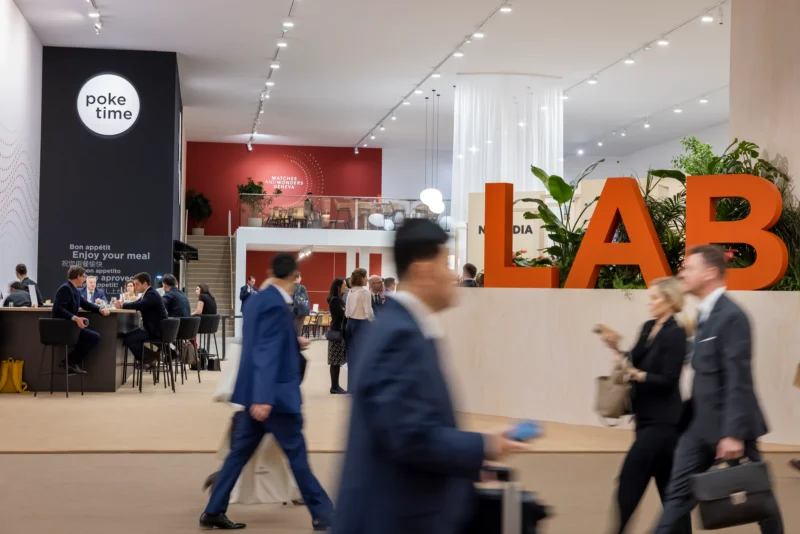
The 2026 LAB brought technology and research into the Salon programme. Courtesy of Watches and Wonders.
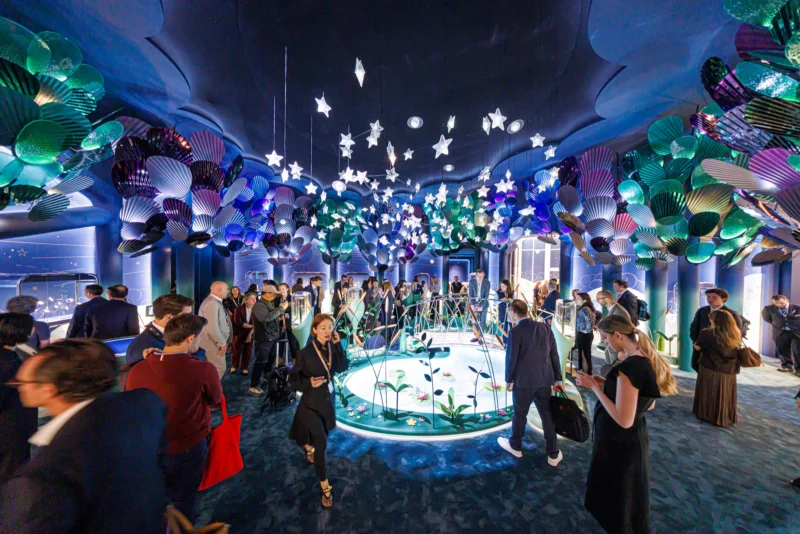
One of the immersive booth environments through which the 2026 releases were presented. Courtesy of Watches and Wonders.
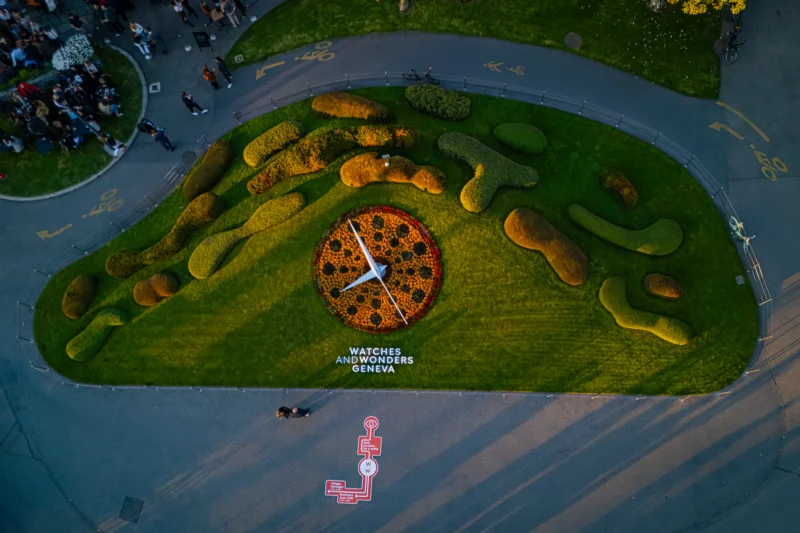
Watches and Wonders extended into central Geneva through its In the City programme. Courtesy of Watches and Wonders.
2. Audemars Piguet arrived with a different proposition
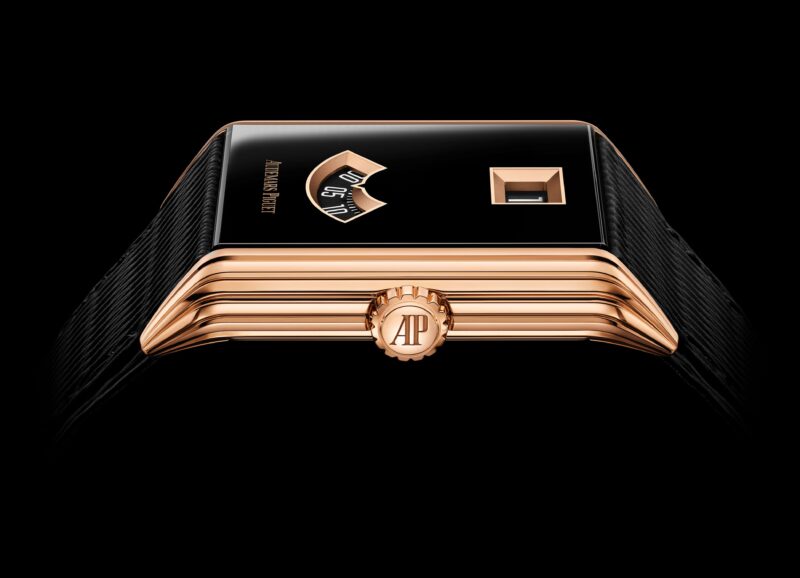
One of the clearest corrections to the early narrative concerns Audemars Piguet. The manufacture's own historical account says that 2026 was its first participation in Watches and Wonders Geneva. It did not frame the appearance around a conventional product cascade. Instead, its booth concluded with the first watches from the Atelier des Établisseurs.
The project revives the logic of établissage: specialised independent workshops collaborate under the coordination of a watchmaker. Audemars Piguet names Galets, Nomade and Peacock among the first projects and identifies the contributors behind them. The production model and the visible authorship of specialist craft are the story.
It is also a persuasive way to use heritage: as a working method rather than decoration. Readers interested in that distinction can continue with TheTimeo's guide to how a watch maison builds memory.
3. Independent watchmaking gained more room
The pre-event announcement described an enlarged independent presence. It said the Carré des Horlogers would expand from 16 to 23 brands and the Mezzanine from nine to 15, while 11 newcomers joined the 2026 edition. The announcement initially referred to 66 exhibiting maisons; the final event page now lists 65 participating brands. The final roster is therefore the appropriate number for a retrospective article, while the earlier document remains useful for understanding how the floor plan was presented before opening.
The extra floor space gave small-scale and specialist producers greater visibility beside major groups. A collector still needs to examine each maker separately: movement origin, service access, production continuity, warranty, case and dial work, and the clarity of delivery terms all matter more than the label "independent" on its own.
The more revealing question is which makers made their proposition easiest to understand and verify. Named artisans, disclosed calibres, clear dimensions and service information create a more durable record than adjectives such as revolutionary, rare or investment-grade.
4. Four releases showed four different kinds of value
The 2026 releases resist a single ranking because they answer different questions.
The Audemars Piguet Établisseurs projects foreground collaboration and handcraft. Their attraction lies in a documented production process and the attribution of specialist work, an unusually legible account of who contributed what.
Patek Philippe's reference 5322G-010 offers a technical proposition. The manufacture describes a self-winding 24-hour alarm that sounds on a classic gong, with an alarm display adjustable in 15-minute increments. The white-gold case is 41 mm in diameter and houses calibre AL 30-660 S C, made from 524 parts. The interest is mechanical and specific to this reference. For context on how to read mechanisms rather than headlines, see TheTimeo's introduction to Patek Philippe grand complications.
Cartier used the Santos-Dumont to emphasise form and material. The official fair page describes a flexible metal bracelet, a hard-stone dial and a manufacture mechanical movement. The combination places touch, movement and stone colour at the centre of the watch's appeal.
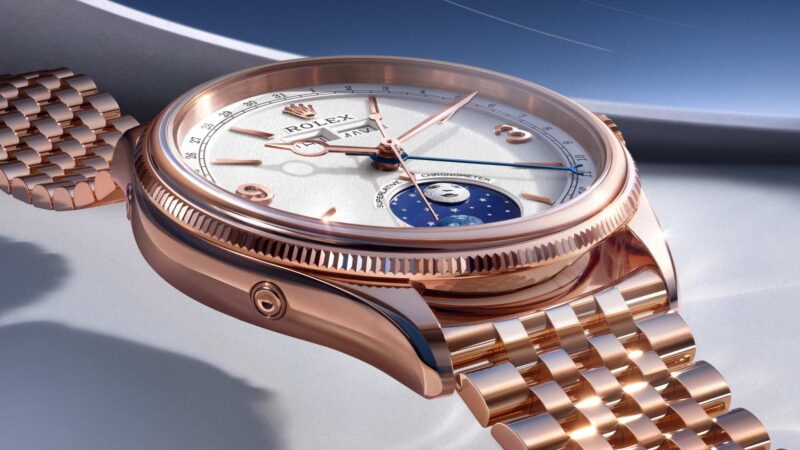
Rolex marked the centenary of the Oyster with new Oyster Perpetual versions. The official presentation links them to the waterproof wristwatch introduced in 1926. The centenary frame is historical rather than material: the source supports the Oyster connection, while earlier speculation about a wider adoption of Grade 5 titanium remains outside the verified record.
5. Education and verification became part of the programme
The fair's LAB highlighted 13 projects spanning watchmaking expertise, scientific research and emerging technologies. The programme also gave the Swiss Official Chronometer Testing Institute, COSC, space to present a new full-watch certification that included wear simulation, magnetic-resistance testing and a power-reserve check.
This part of the event is easy to overlook beside launch photography, yet its value to collectors is practical. Specifications become more meaningful when the test method, unit and testing body are identified. A useful certification record explains what was tested, under which conditions and whether the result applies to a movement or a complete watch.
The city programme extended that educational reach beyond the Salon. The organiser's pre-event programme described its partnership with the Montreux Jazz Festival, while the post-event release reported more than 10,000 participants in central Geneva. Together, they show how deliberately the fair now addresses an audience beyond the trade.
Five questions to carry beyond Geneva
A considered post-fair assessment begins with five questions:
- Identity: record the exact reference, calibre, case material and dimensions rather than relying on a collection name.
- Source: distinguish the maker's specification from an organiser's attendance figure and from an editor's interpretation.
- Availability: do not infer production volume, allocation or scarcity unless the maker has supplied the relevant evidence.
- Service: ask how a movement, unusual material or artisanal component can be maintained over time.
- Market: treat asking prices, auction results and private sales as separate datasets, each with a date, currency and transaction basis.
Documentation is part of this process. TheTimeo's watch documents and provenance guide explains how to separate manufacturer records, service papers, ownership evidence and later interpretation.
What remains after Geneva
The fair's lasting impression is breadth. Watches and Wonders Geneva 2026 became larger, more public and more varied in the kinds of watchmaking it placed on display. It gave independent workshops more room, introduced Audemars Piguet through a craft-led project, and placed highly technical releases beside historically framed design work. Testing and public education also became more visible.
The five most photographed watches may or may not become the edition's lasting objects. That judgement will form slowly, through production, deliveries, service experience and the way collectors continue to live with them. Geneva supplied the first chapter; time will decide which stories endure.
Sources & further reading
The event dates, final roster and public programme were checked against the Watches and Wonders official Geneva 2026 event page. Audience figures come from the organiser's 20 April 2026 post-event release. The pre-event exhibitor plan and expansion of independent spaces come from the 23 September 2025 official announcement. LAB and COSC details were checked on the official programme page, and the city partnership against the 5 February 2026 programme release. Audemars Piguet's first participation and the Atelier des Établisseurs are documented in the manufacture's official historical account. Product details were checked against Patek Philippe's reference 5322G-010 page, the official fair pages for Cartier and Rolex.
Last verified: 9 September 2026.