
TheTimeo / Maisons & Heritage
HOW A MAISON
makes time endure
Three different systems of continuity: Patek Philippe through archives and complications, Rolex through controlled evolution, and Audemars Piguet through workshop independence and radical design.

Patek Philippe Ref. 6105G-001: a Geneva sky chart surrounded by civil, solar and calendar indications. Courtesy of Patek Philippe.
Explore the story
Heritage is often presented as a procession of dates, founders and famous references. That is the visible part. The harder achievement is continuity: keeping an idea recognisable while the watches, tools, clients and culture around it change.
Patek Philippe, Rolex and Audemars Piguet offer three sharply different ways to do this. One makes the archive and the grand complication part of a long family-governed system. One turns technical improvements into an exceptionally stable public language. One protects a workshop identity while allowing a single radical design to transform the house. They should not be collapsed into a ranking, and they do not occupy identical positions within traditional haute horlogerie. Read together, however, they show how a watch maison converts history into something active.
Heritage is a working system
Age alone does not create authority. A house becomes convincing when a collector can see the connection between past and present in the object itself.
- The record. Archives, serial information, catalogues and documented references allow an object to be placed in time without relying on sales mythology.
- The object. A recognisable construction—case, dial, movement, bracelet or display—carries the house’s decisions into the hand.
- The afterlife. Service, restoration and parts policy determine whether the watch can remain an honest example of the house decades after purchase.
The most valuable heritage work is therefore quiet. It establishes facts, preserves techniques and gives designers enough structure to change the product without erasing its identity.
Three maisons, three forms of continuity
The useful comparison is not which name is most prestigious. It is what each institution chooses to preserve.
- Patek Philippe — continuity through the record
Patek Philippe connects technical ambition with an unusually explicit documentary culture. The company states that its establishment books list every watch produced since 1839, and its Extract from the Archives can recover registered information such as movement and case numbers, manufacture and sale dates, dial and bracelet details. The archive does not prove the entire later life of a watch, but it gives the object a documented point of departure.
- Rolex — continuity through controlled evolution
Rolex built a different kind of memory. Its public history centres on a sequence of practical wristwatch problems: chronometric precision, water resistance, automatic winding and legibility in specific environments. The Oyster of 1926 and the self-winding Perpetual system that followed became a platform. Submariner, GMT-Master, Datejust and Cosmograph Daytona look different, yet their relationship is immediately legible because proportion, naming and function evolve within a disciplined framework.
- Audemars Piguet — continuity through workshop independence
Audemars Piguet began in Le Brassus in 1875 and remains rooted in the Vallée de Joux. Its history combines complicated watchmaking with a willingness to let design disturb convention. The Royal Oak of 1972 did not imitate the house’s earlier watches; it changed the category around them. The continuity lies in the ability to execute a difficult idea—whether a complicated mechanism, a hand-finished movement or an integrated case and bracelet—with the confidence of a specialist manufacture.
Patek Philippe: the archive must meet the watch
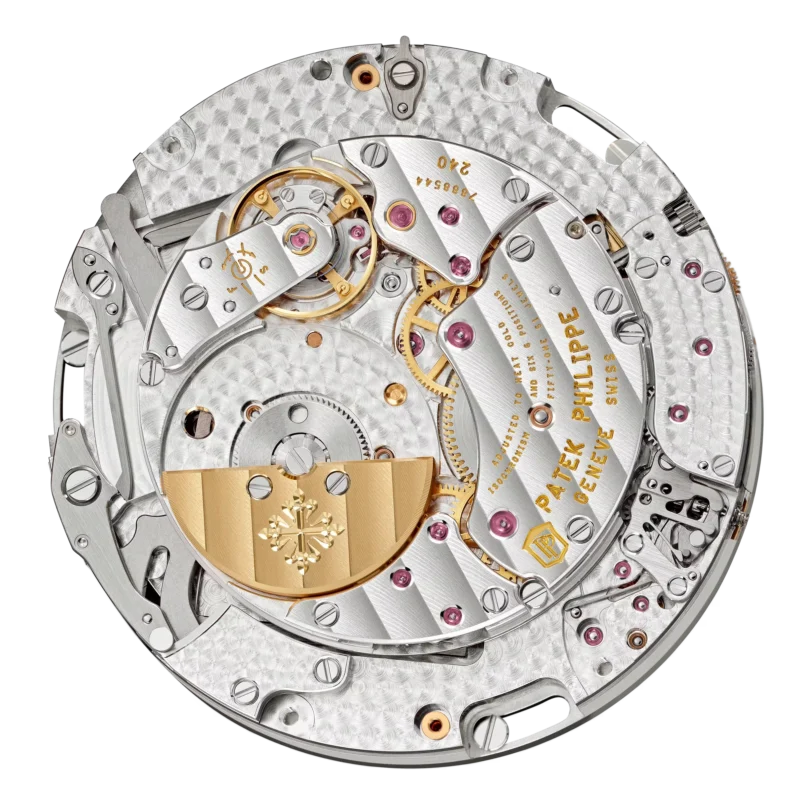
Calibre 240 C LU CL LCSO: 426 parts organised around an off-centre 22K gold minirotor. Courtesy of Patek Philippe.
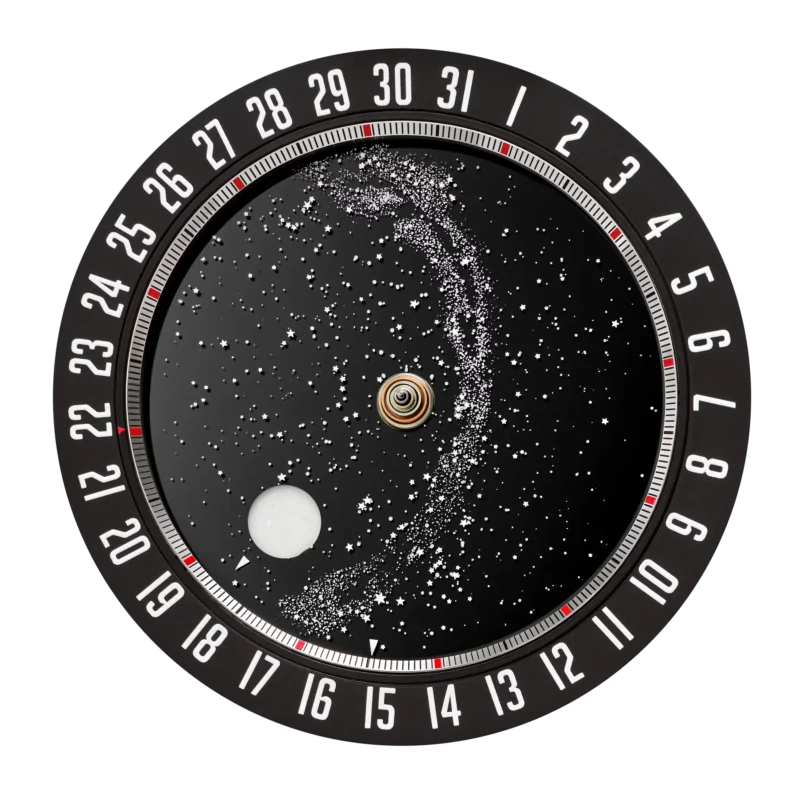
The superposed celestial display separates star-field, lunar position and lunar phase rates. Courtesy of Patek Philippe.
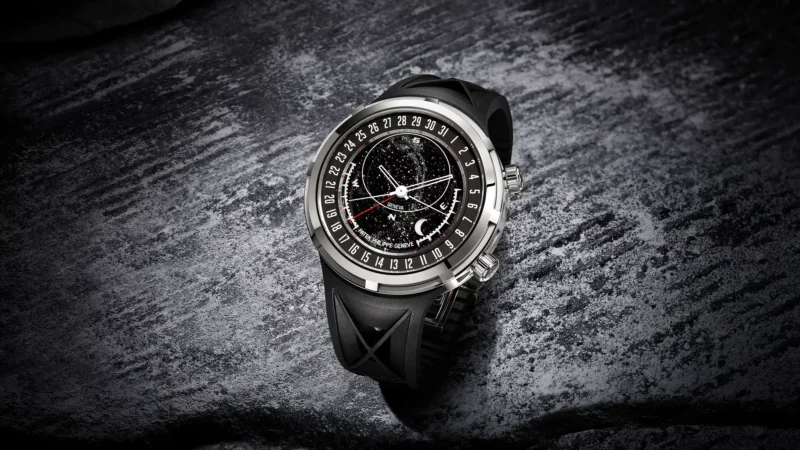
The Ref. 6105G becomes clearest when its sky, solar cycle and civil-time corrections are read separately. Courtesy of Patek Philippe.
Patek Philippe’s story is often reduced to rarity. That misses the institutional point. The manufacture has made continuity visible through records, complications, training and service. Its own account begins with the 1839 founding in Geneva and the meeting of Antoine Norbert de Patek and Jean Adrien Philippe, whose keyless winding system joined entrepreneurial reach to technical invention.
The modern collection keeps several lines alive at once. Calatrava expresses restraint through proportion. Nautilus shows how a house associated with formal watchmaking can sustain a sports-watch language. Grand Complications treat calendars, chronographs, astronomical displays and chiming mechanisms as an accumulated technical vocabulary rather than isolated spectacles.
The photographs here matter because they reveal that vocabulary at different scales. The dial of Ref. 6105G organises civil time, date, sunrise, sunset and a Geneva sky chart without pretending the complication is simple. Its calibre turns different astronomical periods into one mechanical display. The result is not heritage as a quotation from the past. It is heritage as the continued ability to solve a demanding problem in the house’s own voice.
For a collector, the responsible reading has two parts. First, identify the watch precisely: reference, movement, case, dial and production context. Then establish what happened after it left the manufacture. An archive extract is important evidence, but it is not a substitute for invoices, service documents, ownership history and a close condition report. The distinction protects both the watch and the credibility of the maison around it.
Rolex: the power of a stable visual grammar

Rolex GMT-Master II reference 126710GRNR on a Jubilee bracelet. Courtesy of Rolex/JVA Studios.

Rolex Cosmograph Daytona white dial wrist and desk composition

Rolex Cosmograph Daytona exhibition caseback and calibre view
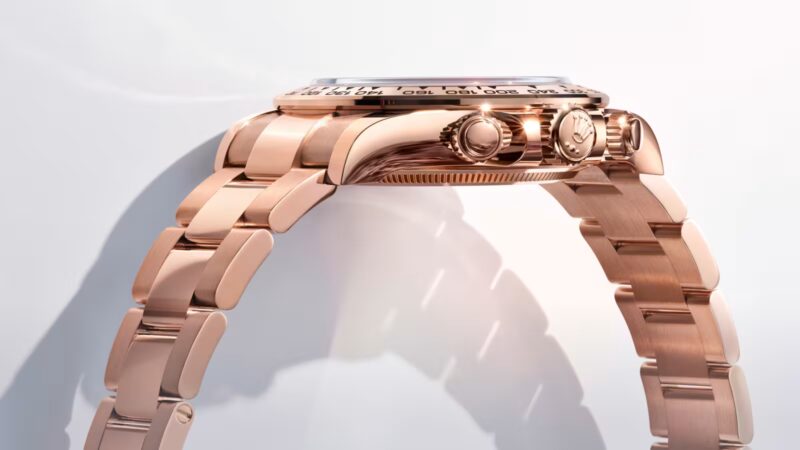
Rolex Cosmograph Daytona Everose gold case profile and bracelet
Rolex’s importance is not explained by ubiquity alone. Its deeper achievement is the conversion of engineering decisions into a visual grammar that can survive constant refinement. Hans Wilsdorf founded his distribution business in London in 1905; the company later made precision a public argument and used the Oyster case to make water resistance central to the modern wristwatch.
The strongest Rolex designs are easy to recognise because their functions have a shape. The GMT-Master’s additional hour hand and 24-hour bezel turn travel time into a glance. The Daytona’s pushers, subdials and tachymetric bezel organise elapsed time. The Datejust makes the date aperture part of the dial’s balance. These are not decorative signatures added after engineering. They are engineering made legible.
Continuity does not mean that every component remains unchanged. Cases, bracelets, clasps, movements, luminous materials and bezels evolve. The house’s discipline lies in controlling the rate of visible change. A new reference usually remains part of a family before it tries to become a new category.
That stability can create false confidence in the secondary market. Two watches with the same reference can have very different condition, service history and component integrity. A collector should separate the model’s institutional history from the individual watch’s evidence. Rolex gives the reference a powerful identity; the owner still has to establish the identity of the example in front of them.
Audemars Piguet: a radical object can become an institution
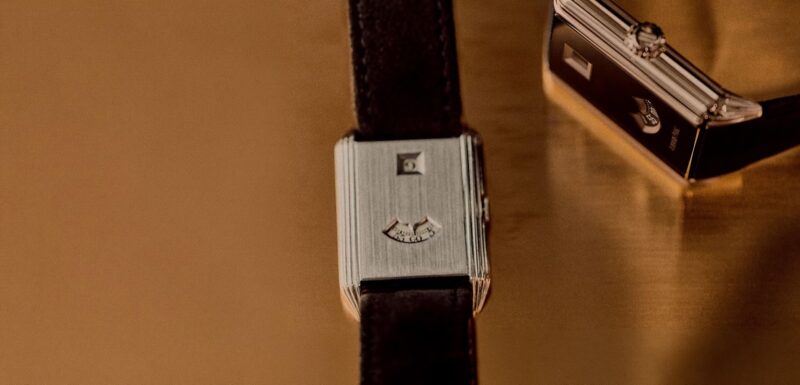
A wider campaign image places Neo Frame within Audemars Piguet’s 2026 collection language. Courtesy of Audemars Piguet.

Royal Oak Malachite in yellow gold, angled case and integrated bracelet. Image courtesy of Audemars Piguet.

Royal Oak Malachite sapphire caseback and automatic calibre. Image courtesy of Audemars Piguet.
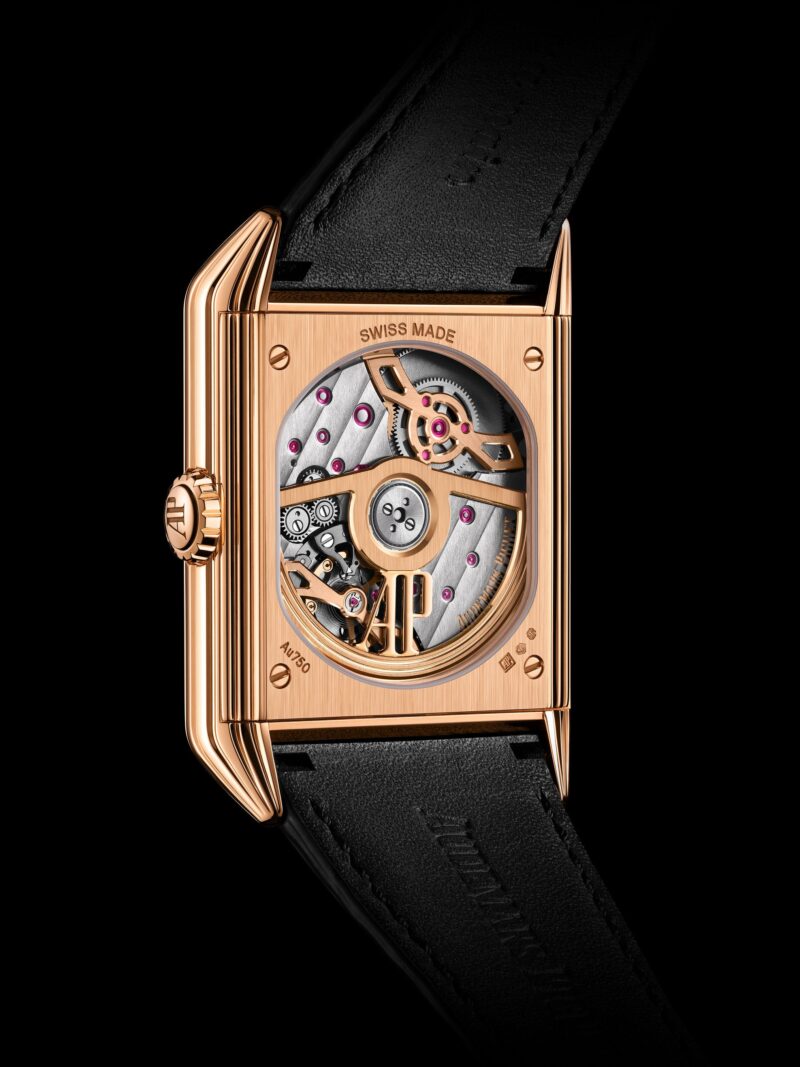
The round selfwinding Calibre 7122 sits inside the shaped pink-gold case. Courtesy of Audemars Piguet.
Audemars Piguet demonstrates that heritage can include rupture. The Royal Oak arrived in 1972 with an exposed octagonal bezel, visible screws, an integrated bracelet and the finishing expectations of a fine mechanical watch applied to steel. Its importance is not that it looked old. It is that the house had the craft and conviction to make an unfamiliar proposition coherent.
Once a radical object succeeds, the difficult work begins. The design has to expand without becoming a logo pasted onto endless variants. Case dimensions, bracelet articulation, dial material, finishing and movement architecture all change the character of a Royal Oak. The malachite version makes this especially clear: a natural hardstone dial introduces variation that cannot be made perfectly uniform, while the case and bracelet preserve the collection’s exacting geometry.
The Neo Frame Jumping Hour shows another side of the same institution. Its shaped pink-gold case, black sapphire front and jumping-hour display do not rely on the Royal Oak silhouette. The watch instead reconnects with historical form watches and linear displays while using a contemporary movement and surface language. A living archive should allow this kind of return: not a replica, but a new object built from an older question.
Audemars Piguet’s independence matters here as an operating condition, not a romantic slogan. It gives the house a long view, but it does not guarantee every design decision. The evidence remains in the watches: whether the movement, case and finish make the idea convincing.
What each house asks the collector to read
The same checklist does not reveal every maison equally well. The house’s model of continuity should guide the first questions.
Explore the comparison
| Maison | Institutional strength | Read first in the object | Evidence to preserve |
|---|---|---|---|
| Patek Philippe | Archives, complications and long family governance | Reference, calibre, dial architecture and finishing | Archive information, original documentation, service history and component record |
| Rolex | Functional innovation repeated through stable families | Case, bezel, dial, bracelet and reference-specific configuration | Serial and reference data, service papers, replaced components and condition |
| Audemars Piguet | Specialist workshop culture and design-led independence | Case/bracelet construction, movement, material and hand finishing | Reference documentation, movement/case identity, service and restoration history |
This comparison is not a hierarchy. It is a way to avoid asking vague questions such as whether a watch is “iconic.” A better question is whether the individual object still carries the decisions that made its family significant.
A short chronology of active heritage
- 1839 — Patek, Czapek & Co. is established in Geneva. The later partnership with Jean Adrien Philippe joins an international business vision to keyless winding and setting.
- 1875 — Jules Louis Audemars and Edward Auguste Piguet begin their work in Le Brassus. The Vallée de Joux remains central to the manufacture’s identity.
- 1905 — Hans Wilsdorf begins the business that will become Rolex. The wristwatch is treated as a technical and commercial project rather than a minor adaptation of the pocket watch.
- 1926 — Rolex introduces the Oyster. Water resistance becomes part of the wristwatch’s public meaning.
- 1932 — The Stern family acquires Patek Philippe. Family control becomes part of the manufacture’s long-term continuity.
- 1972 — Audemars Piguet presents the Royal Oak. High-end mechanical watchmaking and a steel sports-watch architecture are brought into one object.
- Today — the archive is judged in use. New references, restoration choices, public records and service policy decide whether continuity remains credible.
How to recognise living heritage
It can be described precisely
A serious house does not need every watch to be explained by legend. Reference, calibre, material, production context and function should form a clear identity. Poetry can enrich that record; it cannot replace it.
It survives change
Continuity is visible when a house can alter scale, material or technology without losing the logic of the object. Repetition without thought becomes nostalgia. Change without memory becomes generic novelty.
It takes responsibility for the future
The life of a mechanical watch extends beyond the launch. Service capability, restoration judgement, parts policy, archival access and the training of craftspeople are part of the design, even if the buyer cannot see them in a campaign image.
TheTimeo view
The most convincing maison is not the one with the longest chronology on a wall. It is the one that can show how a decision travels: from workshop to object, from object to owner, and from one generation of watchmaking to the next.
Patek Philippe, Rolex and Audemars Piguet preserve different things. Patek Philippe makes the record and the complication central. Rolex builds trust through controlled technical evolution and a stable public language. Audemars Piguet protects a specialist culture capable of turning rupture into continuity. Their histories become useful when they help us read the watch more clearly—not when they ask us to stop looking at it.
Sources & further reading
Primary sources consulted: Patek Philippe, “The Founders,” “The Finest Timepieces in the World” and the official Grand Complications collection; Rolex, official history and “Behind the Crown”; Audemars Piguet, “150 Years” and official collection materials. Dates and institutional claims were checked against these maison sources. The comparison and collector guidance are TheTimeo editorial analysis.
The Edit
Maisons & Heritage stories
Selected stories from the same editorial universe.
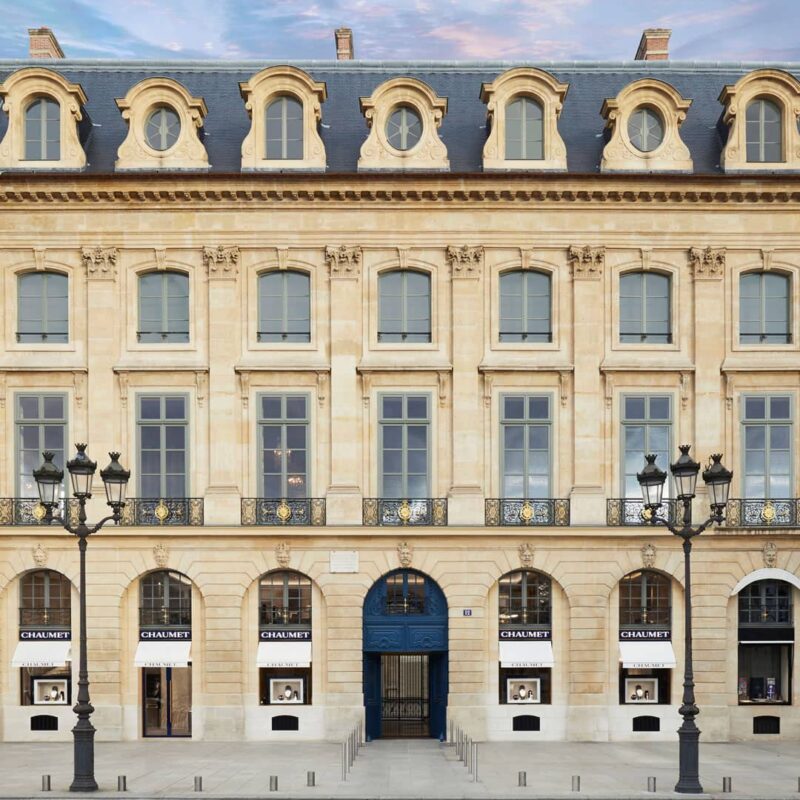
12 Vendôme: Where Chaumet Keeps Memory and Making Together
At Chaumet’s 12 Place Vendôme, boutique, heritage salons and High Jewellery workshop share one
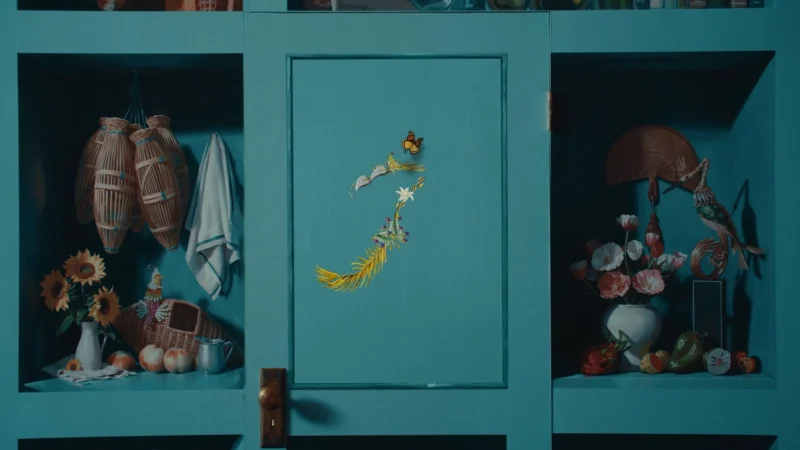
Tiffany Blue Book 2026: How Hidden Garden Rewrites Schlumberger
Hidden Garden treats Jean Schlumberger’s archive as a living design language, translating flora, birds,
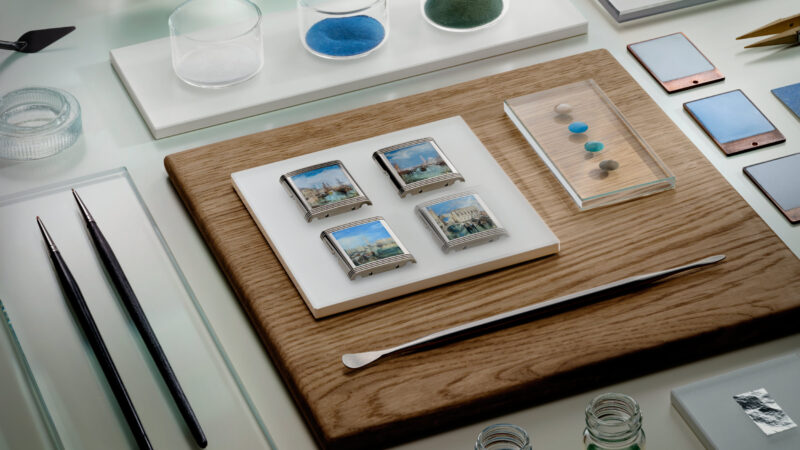
Putting Turner on 2 cm²: What Jaeger-LeCoultre’s Reverso Tribute Enamel “Turner Series” Actually Demands
Four Venetian paintings, four enamel and guilloché solutions, and one difficult question: how much

Calatrava: The Timeless Elegance of Patek Philippe’s Signature Model
The Patek Philippe Calatrava is not just a watch—it’s a statement of timeless elegance
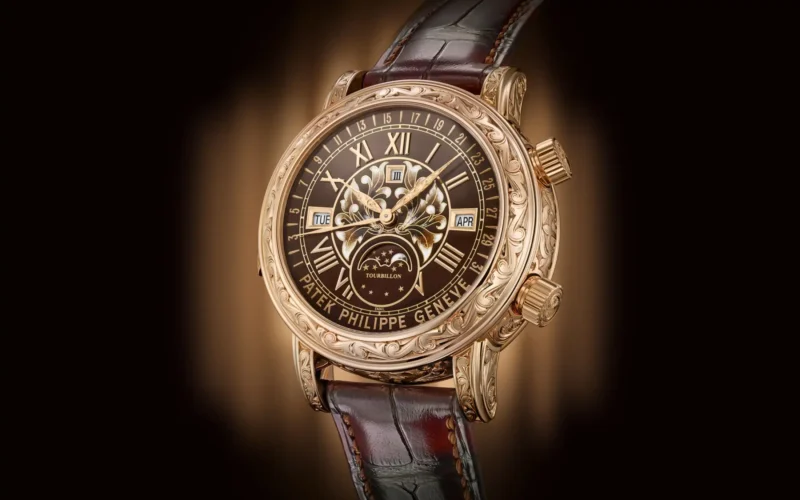
The Art of Complications: Understanding Patek Philippe’s Grand Complication Masterpieces
Patek Philippe stands as a beacon of horological excellence, largely due to its mastery

Patek Philippe Nautilus: How a Sporty Icon Redefined Luxury Watchmaking
When Patek Philippe introduced the Nautilus in 1976, it sent shockwaves through the luxury