

Calendar Intelligence / Midnight Study
Watches
Rolex Perpetual Padellone: How an Annual Calendar Makes Three Displays Jump at Midnight
At midnight, Rolex’s new annual calendar has to identify a short month, skip a nonexistent date and move day, date and month together. The answer is Haplos and calibre 7190.
TheTimeo view
The dial remembers 1949. The mechanism decides at midnight.
The Perpetual Padellone is most interesting at the instant its calm dial becomes active. Haplos identifies the length of the month; calibre 7190 turns that decision into a synchronized midnight jump.
The display looks historical. The decision underneath it is new.
TheTimeo technical reading
The visual edit
A calendar written in metal, light and lunar blue.
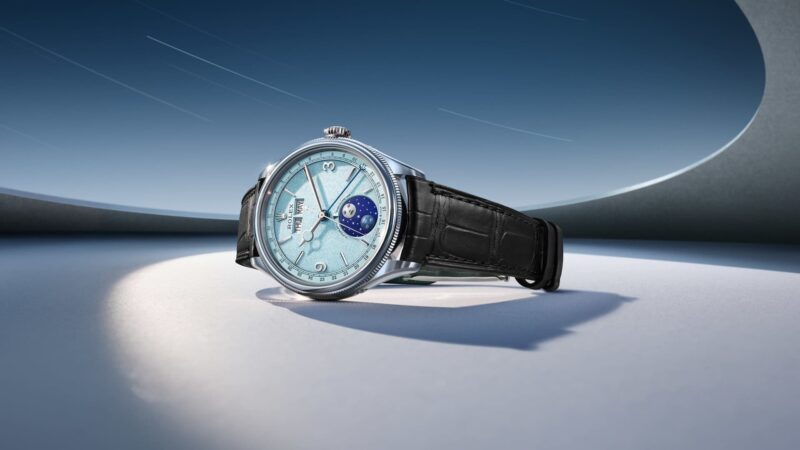
In platinum, the ice-blue grained dial shifts the same calendar architecture into a cooler field of light. Courtesy of Rolex.
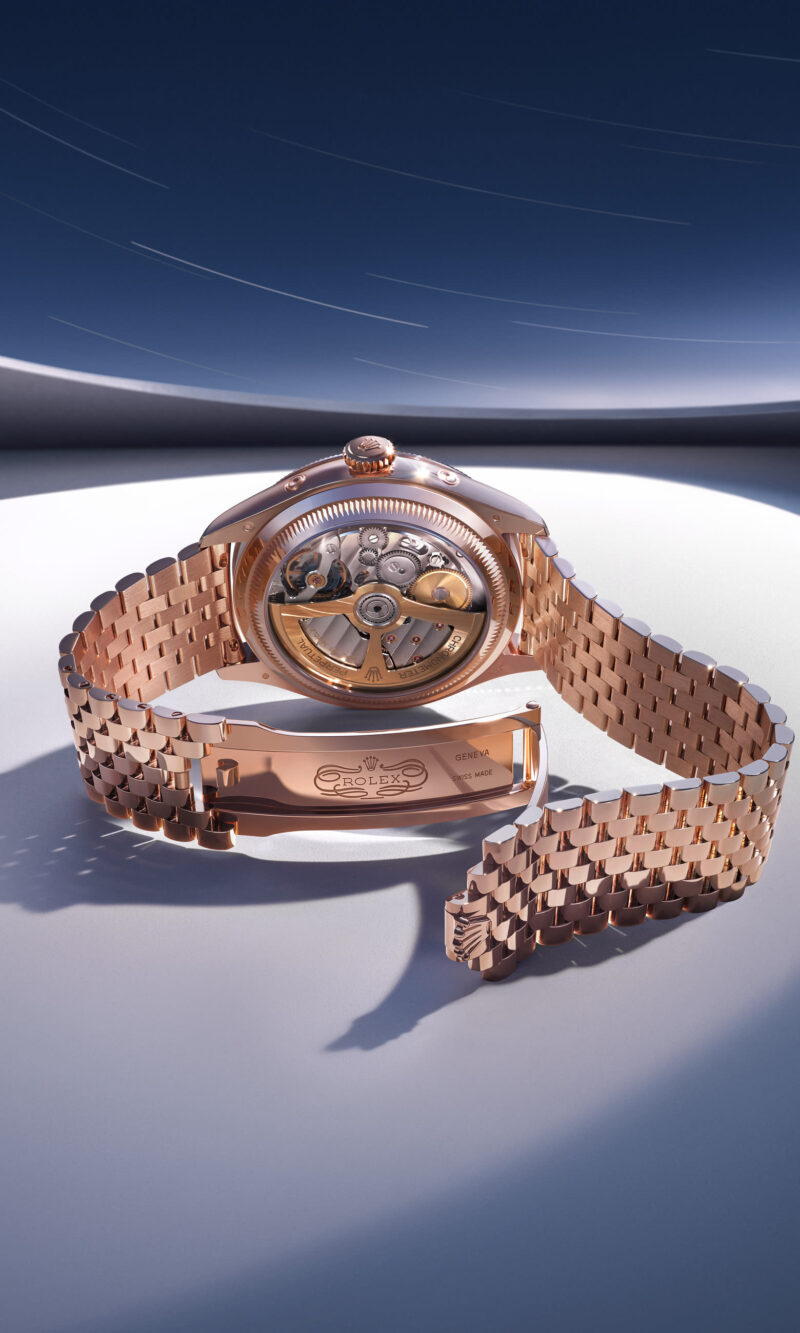
The transparent back exposes calibre 7190 and the geometry of the Settimo bracelet. Courtesy of Rolex.
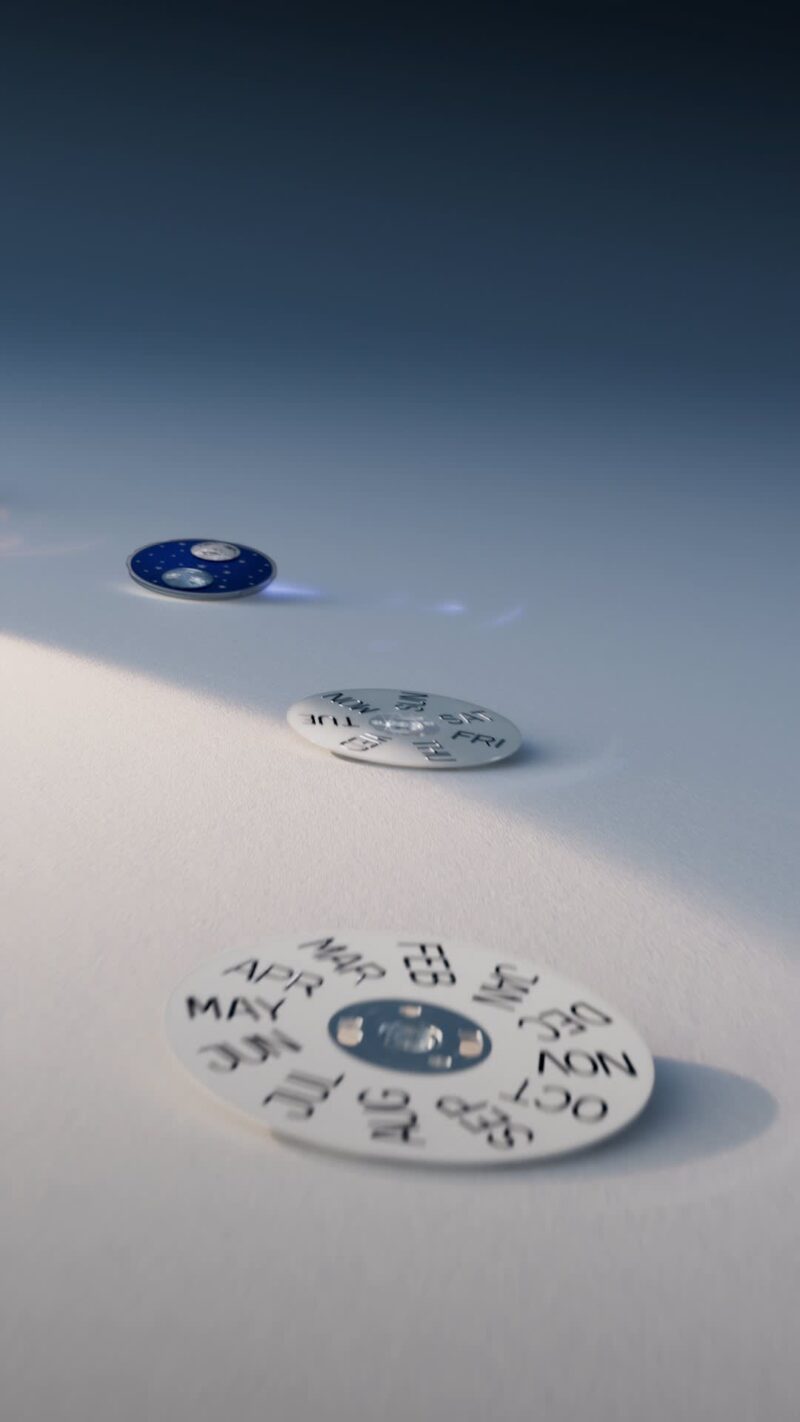
A meteorite moon travels across an aventurine sky in the display at six o’clock. Courtesy of Rolex.
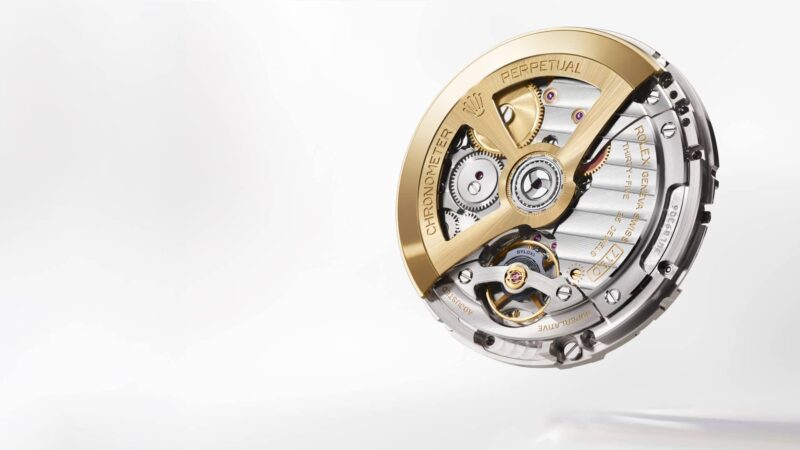
Calibre 7190 combines Haplos calendar logic, 5 Hz regulation and Rolex’s Dynapulse escapement. Courtesy of Rolex.
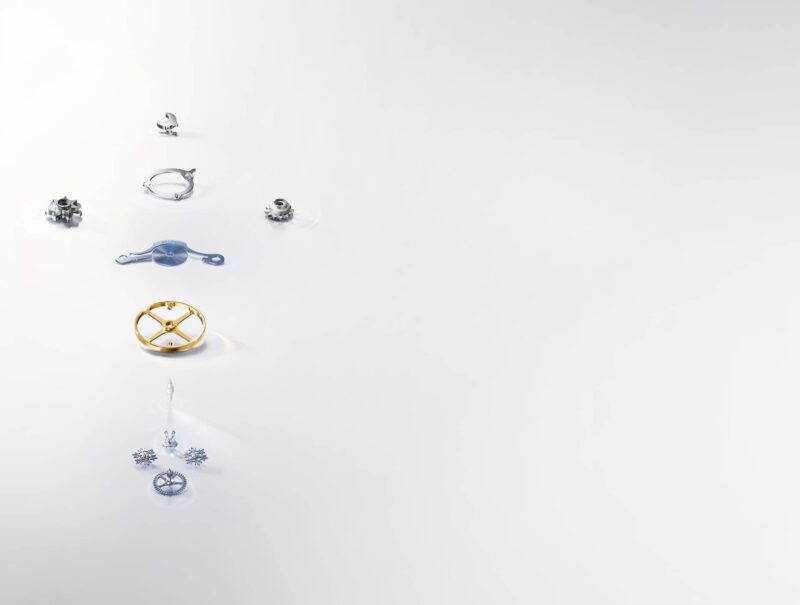
The separated movement parts reveal how much architecture sits beneath the restrained dial grammar. Courtesy of Rolex.
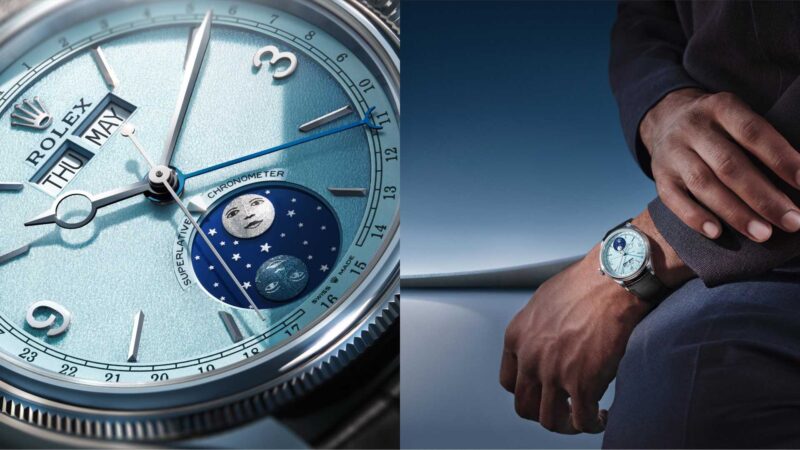
The platinum reference pairs an ice-blue dial with recessed calendar apertures and a peripheral date scale. Courtesy of Rolex.

Paired Everose details bring the crescent date hand, moon phase and softly grained dial into focus. Courtesy of Rolex.

The 39 mm case uses recessed correctors while preserving the calm profile of the complete-calendar design. Courtesy of Rolex.
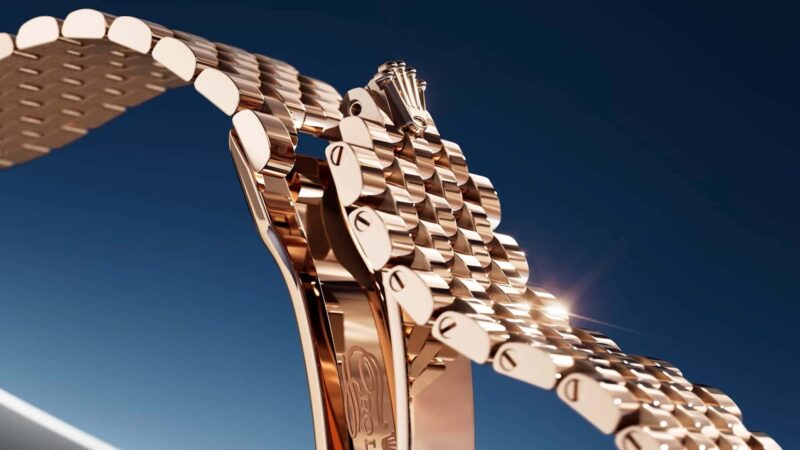
Settimo bracelet and alligator strap create two distinct tactile expressions for the same case architecture. Courtesy of Rolex.

The alligator-strap version makes the dial hierarchy and compact 39 mm proportions especially clear. Courtesy of Rolex.

Case and strap details show the polished Everose surfaces and the integration of the correctors. Courtesy of Rolex.
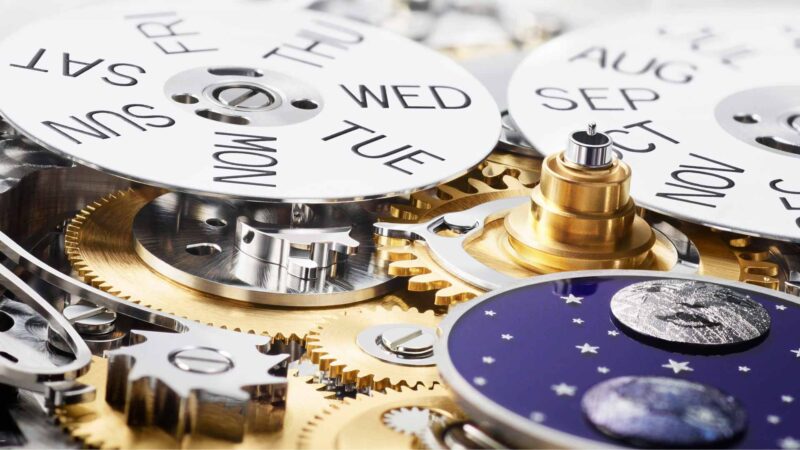
The leather configuration closes the visual sequence with the complete calendar held against a quiet field. Courtesy of Rolex.
The signature mechanism
Three displays.
One instant.
Follow the decision at midnight: the month programme identifies a short month, energy is accumulated, then day, date and month move as one coherent event.
Deck: The 2026 Perpetual Padellone revives the visual grammar of Rolex ref. 8171, but its real story sits under the dial. Calibre 7190 has to know whether the month ends on the 30th or 31st, then change day, date and month together in a fraction of a second, without turning the watch into a perpetual calendar.
Key facts
- Rolex introduced the Perpetual Padellone on 15 September 2026 as a 39 mm complete annual calendar with moon phase, available in 18 ct Everose gold or 950 platinum.
- The new calibre 7190 is automatic, runs at 5 Hz, uses the silicon Dynapulse escapement and offers approximately 66 hours of power reserve.
- Its patented Haplos annual-calendar system adds only two components to the instantaneous date mechanism: an additional carrier finger and an annual lever. The month programme is carried on the back of the month disc.
- At midnight, day, date and month change together in a fraction of a second. February still requires one manual correction each year, so this is an annual calendar, not a perpetual calendar.
- The name comes from Rolex reference 8171, the complete-calendar moon-phase watch collectors nicknamed “Padellone”. The 2026 watch borrows its display grammar, but not its calendar architecture.
At midnight on 30 April, the new Rolex Perpetual Padellone has a very specific problem to solve.
It cannot simply move the date hand from 30 to 31. April has no 31st. The mechanism must know which month is ending, decide that the next valid date is 1, advance the month from APR to MAY and move the day of the week at the same instant. Rolex says all three calendar indications change together in a fraction of a second.
That sequence is the real technical story of the watch.
The visual reference to the vintage ref. 8171 is obvious: two calendar apertures under 12, a peripheral date read by a central crescent-tipped hand and a moon-phase display at six. But the old watch was a complete calendar whose owner had to intervene at the ends of short months. The new Padellone is an annual calendar. It distinguishes 30-day months from 31-day months by itself and asks for one manual correction a year, when February becomes March.
Rolex has therefore revived an old display while changing the logic underneath it. The interesting question is not whether the 2026 watch looks like the 8171. It is how a modern Rolex movement can keep that old layout, add annual-calendar intelligence and make three separate indications jump together without losing the thinness, frequency and power reserve of the new 71XX movement family.
In platinum, the ice-blue grained dial shifts the same calendar architecture into a cooler field of light. Courtesy of Rolex.
Haplos solves the month-length problem with two added parts
Rolex calls the new annual-calendar system Haplos. The name is new, but the important point is the architecture Rolex chooses to disclose.
According to the Rolex Newsroom, Haplos consists of only two components coupled to the instantaneous date mechanism: an additional carrier finger and an annual lever. The programming that distinguishes 30-day months from 31-day months is integrated into the back of the month disc. That month programme tells the annual lever which month is currently displayed.
This is an unusually compact description of an annual calendar.
A normal date mechanism can advance one day at a time and assume that every month contains 31 positions. An annual calendar needs an extra decision. At the end of April, June, September and November, the mechanism must skip the nonexistent 31st. It must do so without requiring the owner to remember which months are short.
Rolex’s solution is not to add a large conventional month cam elsewhere in the movement and connect it through a long chain of levers. The month information is carried directly on the back of the month disc. The annual lever reads that information and lets the date mechanism behave differently at the end of a 30-day month.
That is why the two-part claim matters. It does not mean the entire Padellone calendar contains only two parts. The complete calendar is obviously more complicated than that. It means Rolex says the annual-calendar intelligence itself is added to the existing instantaneous date architecture through two specific components.
The distinction matters because marketing language can make “two-part annual calendar” sound almost magical. It is more accurate to say that Haplos reduces the extra logic required to distinguish 30- and 31-day months. The date, day and month displays still require their own wheels, jumpers, drives and control systems.
Annual and instantaneous are two different problems
An annual calendar and an instantaneous calendar solve different questions.
The annual function asks: how many days does this month contain?
The instantaneous function asks: how do several calendar indications change at midnight without spending minutes creeping toward their next positions?
The Padellone does both.
Rolex states that day, date and month change simultaneously at midnight in a fraction of a second. The company also says this synchronized instantaneous transition has been the subject of a patent filing. That matters because an instantaneous jump is not free. Energy has to be accumulated beforehand and released quickly enough to move the displays, then controlled so the wheels stop exactly where they should.
A Rolex patent application published in 2025, EP4632499A1, is highly relevant to this problem. It describes an instantaneous-jump calendar architecture built around an energy accumulator, a cam and drive elements for date and month. Its background section explicitly contrasts an instantaneous system with calendar indications that drag over several minutes or hours, and identifies compactness and energy consumption as design problems.
The patent record should be handled carefully. Rolex does not publish a patent number next to the Padellone on its consumer page, so it would be unsafe to claim that every numbered component in EP4632499A1 maps directly to the production calibre 7190. Technical launch coverage connects the application to the watch, and the architecture is consistent with Rolex’s own description of an instantaneous complete calendar. It is best treated as supporting evidence for the engineering problem, not as a substitute for a factory parts list.
That difference is important because the product itself gives us the result: at midnight the day, date and month agree immediately. The patent helps explain why achieving that result requires stored energy, controlled release and careful stopping of the display wheels.
Haplos / calibre 7190 / 5 Hz
Midnight becomes an engineered event.
The transparent back exposes calibre 7190 and the geometry of the Settimo bracelet. Courtesy of Rolex.
A meteorite moon travels across an aventurine sky in the display at six o’clock. Courtesy of Rolex.
Calibre 7190 combines Haplos calendar logic, 5 Hz regulation and Rolex’s Dynapulse escapement. Courtesy of Rolex.
Mechanical context
One calibre, two expressions of light.
Everose / Settimo
Warm metal, a white grained dial and the seven-link Settimo bracelet frame the complete-calendar display.
- Case
- 39 mm
- Display
- Annual calendar and moon phase
- Calibre
- 7190 automatic, 5 Hz
- Water resistance
- 50 metres
- Reserve
- Approximately 66 hours
Platinum / alligator
The ice-blue dial gives the same mechanism a cooler, more astronomical expression on alligator leather.
- Case
- 39 mm
- Display
- Annual calendar and moon phase
- Calibre
- 7190 automatic, 5 Hz
- Water resistance
- 50 metres
- Reserve
- Approximately 66 hours
Why simultaneous jumping is harder than it looks
A calendar that changes slowly can borrow energy from the going train over a longer interval. A calendar that changes instantaneously has to concentrate the work.
That creates several constraints.
First, the energy needed to move the indications should not disturb the oscillator enough to compromise rate stability. Second, the date may need to move a different distance at the end of a short month than on an ordinary night. Third, the day and date move every midnight, while the month moves only at the end of a month. The system has to coordinate displays that do not share the same switching schedule.
The 30 April example shows the difficulty clearly. The day advances by one position. The month advances by one position. The date faces a different task. It has to resolve the short-month condition and arrive at 1 rather than 31 instead of following the normal 30-to-31 progression.
Rolex’s own press material keeps the public explanation intentionally simple, but the phrase “perfect alignment of the calendar markers” is revealing. A slow calendar can tolerate a period in which the date has moved but the month has not yet completed its change. An instantaneous complete calendar cannot. If the watch says MAY while the date hand is still moving through 31, the display is temporarily contradictory.
The Padellone is designed to remove that interval.
This is a better reason to care about the instantaneous jump than spectacle. The useful result is not that the owner can watch three indications snap at midnight. It is that the calendar remains logically coherent during the transition.
Calibre 7190 begins with the Land-Dweller architecture
The calendar is new, but the regulating platform is not starting from zero.
Rolex says calibre 7190 is based on calibre 7135, introduced with the Land-Dweller in 2025. Both belong to the 71XX family, both run at 5 Hz and both use the Dynapulse escapement with a modern silicon oscillator architecture.
That lineage matters because the Padellone is asking a high-frequency movement to carry a significant calendar load while preserving approximately 66 hours of reserve.
Dynapulse is a sequential-distribution escapement made in silicon. Rolex introduced it on calibre 7135 and says it combines high energy efficiency with operational security while resisting strong magnetic fields. The escapement generated seven patent filings when it debuted with the Land-Dweller.
Calibre 7190 also uses the Syloxi silicon hairspring. Rolex says the coils are made particularly thick in this calibre to increase rigidity and provide the power required for the 5 Hz frequency. The oscillator uses a high-technology ceramic balance staff, an optimized brass balance and optimized Paraflex shock absorbers.
None of this means that 5 Hz automatically makes the Padellone more accurate than a slower watch. Frequency is one variable in a complete regulating system. A faster oscillator can divide time into smaller intervals and can offer advantages in disturbance averaging, but it also consumes more energy and places different demands on the hairspring, escapement and barrel.
The meaningful point here is that Rolex is maintaining a 5 Hz architecture while adding an instantaneous annual calendar and still publishing a power reserve of about 66 hours.
That balance between frequency, reserve and complication is more informative than the frequency number by itself.
The 2026 certification matters, but the rate tolerance did not become a slogan
The Padellone arrives in the same year Rolex expanded its Superlative Chronometer certification.
From 2026, Rolex says the programme adds three assessment criteria: resistance to magnetic fields, reliability and durability. These join precision, water resistance, automatic winding and autonomy, the criteria that have formed the modern finished-watch certification since 2015.
Rolex continues to state a finished-watch precision tolerance of minus 2 to plus 2 seconds per day after casing.
This matters for the Padellone because the movement is more complicated than a simple three-hand calibre. The annual calendar has its own energy demands, the frequency is 5 Hz and the watch still has to satisfy the same finished-watch rate requirement.
It would be wrong, however, to turn the expanded certification into an independent statement that the Padellone is “more accurate” than earlier Rolexes. The rate tolerance itself remains minus 2 to plus 2 seconds per day. What changed in 2026 is the scope of what Rolex says it evaluates around that performance, especially magnetism, reliability and long-term durability.
The moon phase is visually new, but its accuracy needs careful wording
At six o’clock, the calendar becomes astronomical.
Rolex uses a fully visible blue enamel disc that completes one rotation in 29.53 days. The full moon and new moon are made from meteorite. The new moon receives a dark-blue PVD treatment, while the silver-coloured stars are pad printed. Both lunar discs carry faces, a deliberate visual echo of older calendar watches.
There is a useful source-discipline point here.
Several launch reports state that the Padellone moon phase accumulates a one-day error only after 122 years. Rolex documented that same 122-year accuracy for the Cellini Moonphase in its 2019 official brochure. The current Padellone newsroom material reviewed by TheTimeo, however, states the 29.53-day lunar rotation but does not publish the 122-year correction interval.
It would therefore be too aggressive to promote 122 years as a primary-source Padellone specification without a current Rolex document saying so. The value is plausible, and it is widely reported, but in this package it remains NOT ESTABLISHED from current Padellone primary documentation.
The material facts are secure: blue enamel, meteorite full moon, meteorite new moon treated with dark-blue PVD, pad-printed stars and a 29.53-day rotation.
What the 2026 watch actually inherits from reference 8171
Rolex itself makes the historical connection explicit. The new watch is named after reference 8171, the complete-calendar Rolex collectors called “Padellone”. This is not a nickname applied retroactively by journalists to the 2026 model. Rolex has adopted the collector name as the official product name.
The visual inheritance is easy to read.
The 8171 placed day and month in two apertures around 12 o’clock, used a central pointer for a peripheral date scale and combined small seconds with a moon-phase display at six. The new Padellone keeps that basic information hierarchy. It also stays close to the old scale. Specialist sources place the vintage case at about 38 mm; the new watch is 39 mm.
But the resemblance should not be mistaken for mechanical continuity.
The 8171 used a complete calendar, not an annual calendar. It did not automatically distinguish 30-day months from 31-day months. It used a non-Oyster case with a snap back, while the 2026 watch has a transparent screwed back and 50 metres of water resistance. Its movement architecture belonged to a very different era.
Even the historical production dates are not perfectly settled in current secondary sources. Several specialist accounts agree on a 1949 introduction, but some place the end of production in 1952 while others say 1953. Rolex’s current newsroom establishes the identity of ref. 8171 and the Padellone nickname but does not specify the full production window. TheTimeo therefore treats the end date as NOT ESTABLISHED rather than choosing one version silently.
This is exactly the kind of distinction that matters in a revival story. The 2026 Padellone inherits the old watch’s grammar. It does not inherit its mechanism.
The case belongs as much to the modern Perpetual family as to the archive
The new case is 39 mm in either 18 ct Everose gold or 950 platinum and water-resistant to 50 metres. Rolex gives it a domed sapphire crystal, a transparent sapphire back and a bezel divided between a subtly fluted lower section and a domed upper section.
Those details place it closer to the contemporary Perpetual 1908 family than to a literal reproduction of ref. 8171.
The case flanks also carry recessed correctors for the calendar functions. Specialist launch documentation maps them as month at two o’clock, date at four, moon phase at eight and day at ten. Rolex’s primary newsroom confirms the presence of caseband correctors but does not publish that positional map in the text reviewed here, so the mapping is retained as a strong secondary specification.
That arrangement is old-fashioned in the best functional sense. It gives each calendar indication its own direct correction route instead of hiding multiple settings behind a complex crown sequence.
There is also a practical modern detail: specialist coverage reports that corrections can be made without the usual forbidden-time window that can damage some calendar mechanisms. Until Rolex publishes a user manual or primary operating instructions for the Padellone, that claim should remain attributed rather than treated as independently established.
Settimo changes the object more than the strap versions do
There are three launch configurations.
Everose gold with a white grained dial can be ordered on a brown alligator strap or on the Settimo bracelet. The platinum version receives an ice-blue grained dial and a black alligator strap.
The Settimo is not new in 2026. Rolex introduced the seven-row bracelet on the 1908 in 2025. On the Padellone, however, it appears in Everose gold and materially changes the character of the watch.
Rolex describes seven very small, slightly curved and fully polished link elements, with a patented attachment system and an invisible folding Crownclasp. The leather straps use green calfskin lining, tone-on-tone stitching and the Dualclasp double-folding clasp.
The design choice is consequential. On leather, the Padellone reads as a complicated dress watch with obvious links to the 8171 and to the 1908 family. On Settimo, it becomes a continuous precious-metal object, visually closer to jewellery and more distinctly contemporary.
That difference belongs to the UI/UX of the watch itself. The bracelet is not a neutral carrier. It changes how much of the object is case and how much is surface.
Thirty patent applications do not mean thirty inventions unique to the Padellone
Rolex says calibre 7190 benefits from 30 patent applications, two of which are exclusive to the Padellone.
That wording needs to remain exact.
It does not mean Rolex filed 30 patents solely for this watch. Calibre 7190 inherits technologies from the 71XX family, including Dynapulse, which Rolex says was already associated with seven patent filings when introduced on the Land-Dweller. Other elements such as Syloxi, Paraflex and the broader oscillator architecture also belong to established Rolex research programmes.
The two exclusive filings are the more relevant clue to what is specific here. Rolex identifies Haplos as the patented annual-calendar system and separately states that the synchronized instantaneous change of day, date and month has also been the subject of a patent filing.
That tells us where the genuinely Padellone-specific development is concentrated: not in the basic oscillator, but in calendar intelligence and calendar transition.
What the Padellone proves, and what it does not
The easiest way to describe the Perpetual Padellone is as Rolex returning to complicated dress watchmaking. That is true, but it is still too broad.
The important change is architectural.
Rolex has taken the 5 Hz 71XX movement family introduced in 2025 and used it as the base for a completely different kind of watch. The Land-Dweller made Dynapulse visible as a regulating-system story. The Padellone uses the same regulating philosophy as a platform for an annual calendar whose intelligence is deliberately compact and whose transition is deliberately instantaneous.
The vintage reference provides the shape of the information. The modern movement decides how that information behaves.
The result is not a perpetual calendar and should not be described as one. February still defeats it once a year. It is not a copy of ref. 8171 either. The old watch could not distinguish April from May on its own, and its calendar indications did not share the same instantaneous modern logic.
The best way to understand the 2026 Padellone is therefore to watch what happens at midnight on the last day of a short month. The dial looks historical. The decision being made underneath it is not.
Sources & credits
Sources & methodology
- Rolex, Perpetual Padellone, official product specifications, mechanism description and imagery, checked 21 September 2026.
- Rolex Newsroom, Perpetual Padellone, used for Haplos, calibre 7190 and launch context.
- Patent application EP4632499A1, treated as supporting evidence for the instantaneous-calendar engineering problem, not as a factory parts map.
- TheTimeo distinguishes current primary facts, attributed specialist reporting and editorial interpretation. This is not a hands-on review; the watch is correctly described as an annual calendar, and current Rolex documentation reviewed here does not establish a 122-year moon-phase accuracy claim.
Continue the story
For another astronomical display, read TheTimeo on Patek Philippe’s Celestial Sunrise and Sunset.
The Edit
Stories selected by TheTimeo
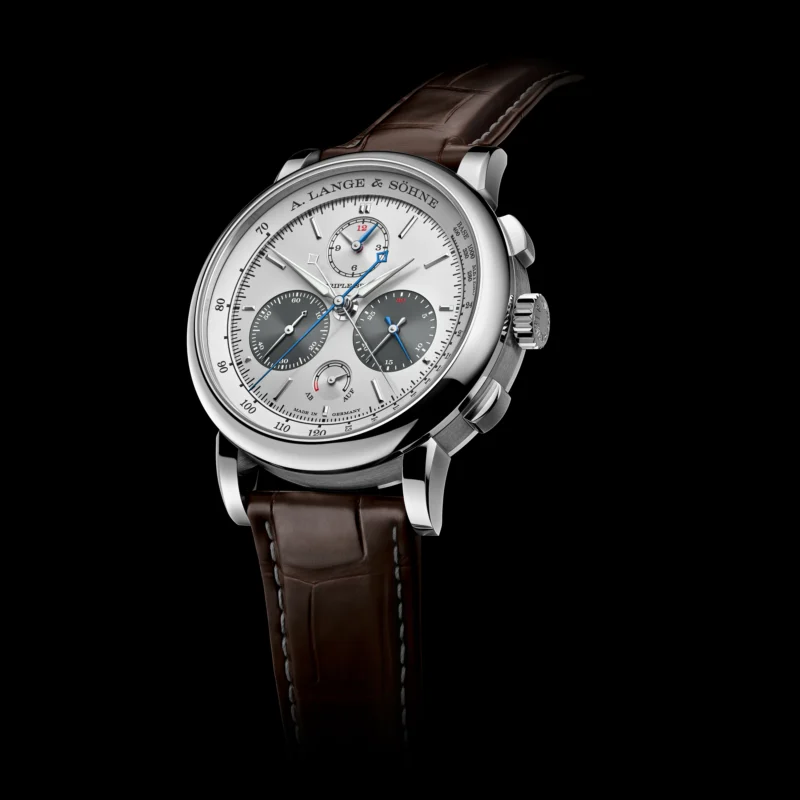
A. Lange & Söhne Triple Split: Why Twelve Hours Changes a Rattrapante
Seconds sweep, minutes jump and hours advance continuously. Calibre L132.1 must hold all three
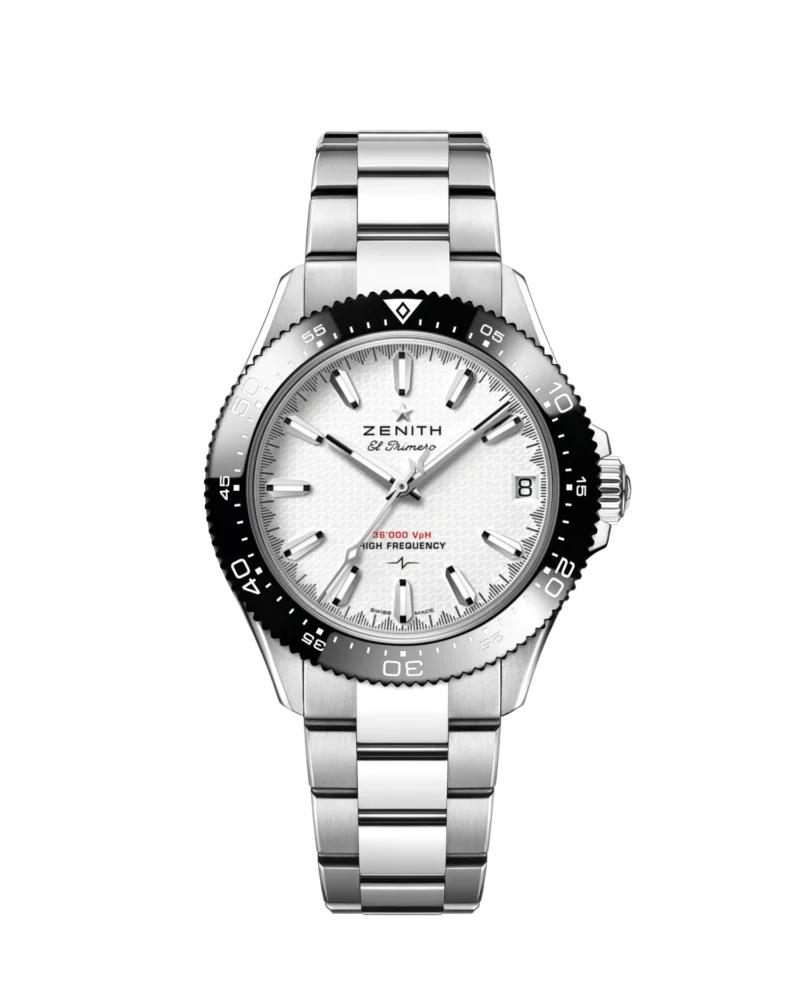
Zenith Chronomaster Solo Sport: What Is El Primero Without a Chronograph?
Zenith removes the pushers and counters from Chronomaster but keeps El Primero at 5
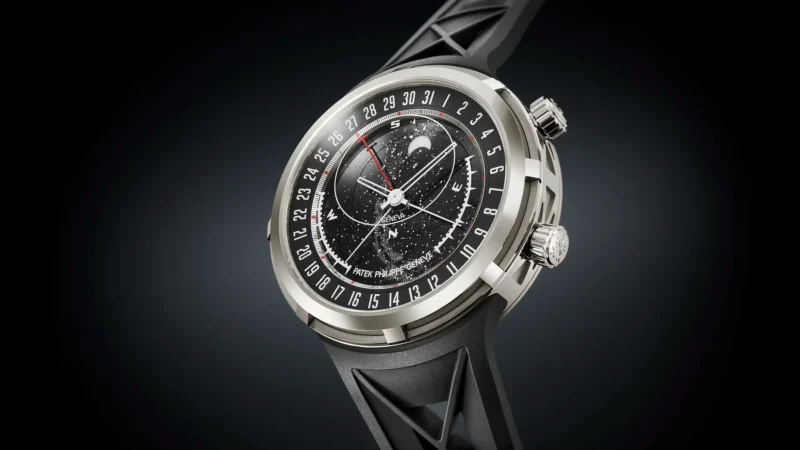
Patek Philippe Ref. 6105G: What a Sunrise-and-Sunset Celestial Actually Displays
The Ref. 6105G is not one astronomical display but several kinds of time negotiated