
TheTimeo / Watches
Patek PhilippeReading the references
A reference identifies the design; an archive extract adds part of its history. How to read both when exploring Patek Philippe watches.
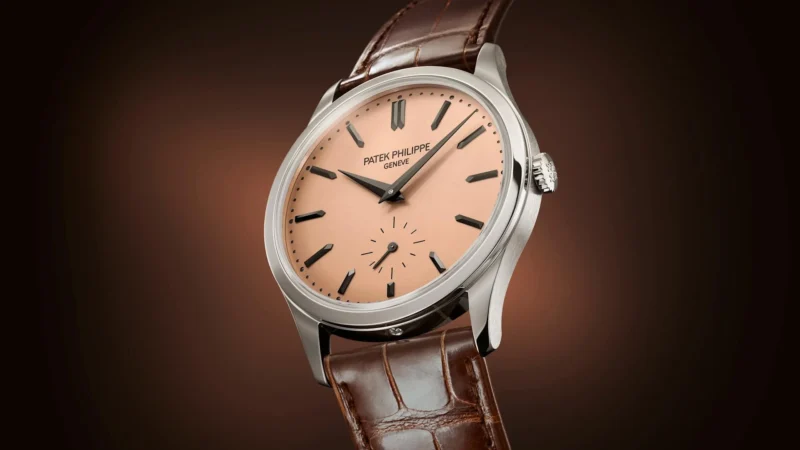
Patek Philippe Calatrava reference 6196P-001. Courtesy of Patek Philippe.
Explore the story
The warm dial of a Calatrava 6196P and the textured bezel of a 6119G offer two different pleasures. Both are restrained round watches with small seconds, yet the colour, finish and proportions give each its own character.
Reference numbers help us distinguish those designs. Patek Philippe’s archives go further, connecting individual watches with information recorded by the manufacture. Knowing what each can tell you is useful whether you are exploring the collection or researching an older watch.
A reference is more than a search term
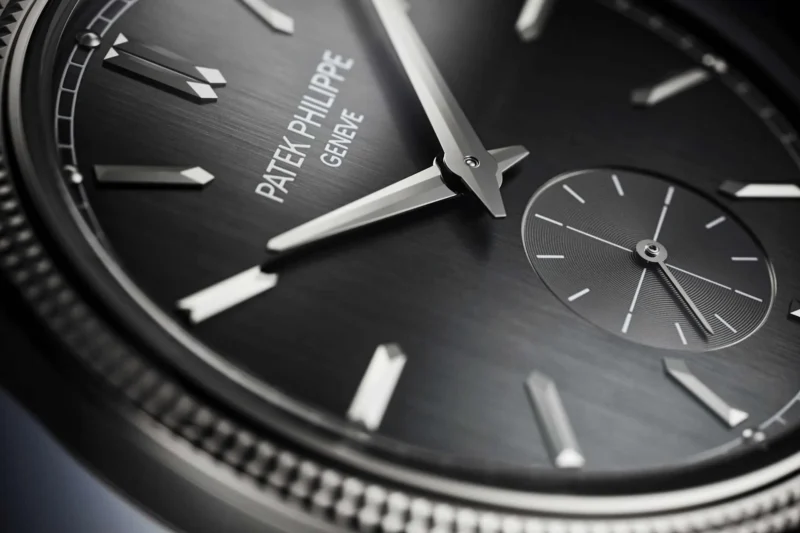
Dial and hobnail bezel detail of Calatrava reference 6119G-001. Courtesy of Patek Philippe.
A reference identifies a model or configuration, not one unique watch. Many examples can share it. The case and movement numbers belong to the more detailed identification of an individual piece.
This distinction becomes clearer through comparison. The 6119G has a hobnail-pattern bezel, a charcoal-grey dial and a 39 mm white-gold case. The 6196P uses a 38 mm platinum case and an opaline rose-gilt dial. Both house the manually wound 30-255 PS, but their external designs are visibly different.
Look at the photographs before turning to the specification table. The 6119’s textured border catches the eye around the dial, while the 6196 lets the smooth bezel and warmer face carry the composition. A shared movement does not make them the same experience in different metals.
Design families and movement families
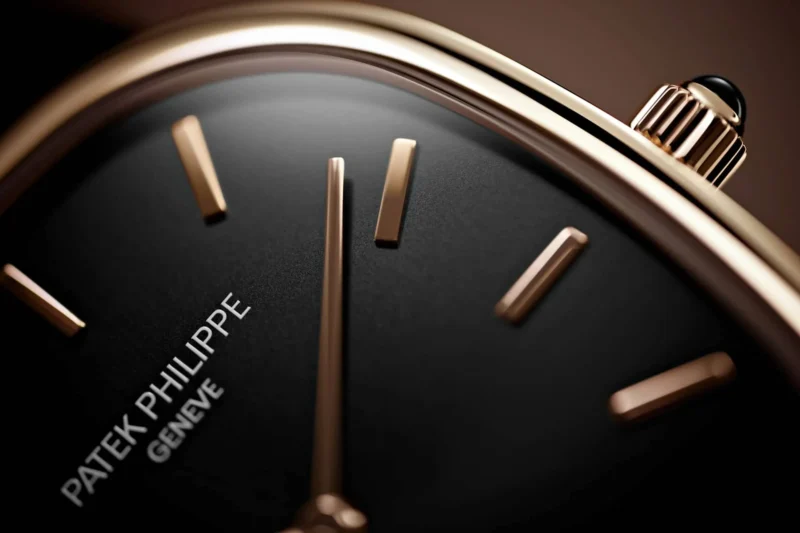
Case and dial detail of Golden Ellipse reference 5738R-001. Courtesy of Patek Philippe.
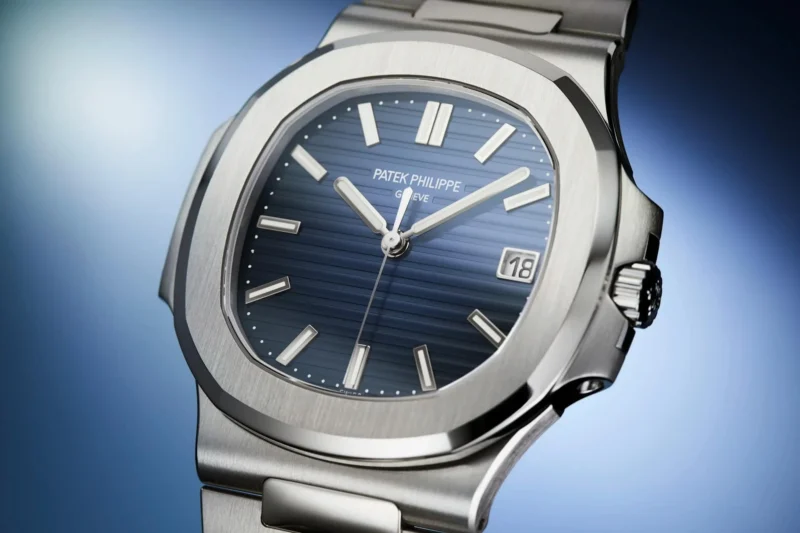
Case and dial detail of Nautilus reference 5811/1G-001. Courtesy of Patek Philippe.
The Calatrava, Golden Ellipse and Nautilus organise the collection by recognisable designs. Movements create another set of relationships beneath the dial. A calibre can serve more than one kind of watch, sometimes developing into versions with additional complications.
Calibre 240 is a good example. Introduced in 1977, it uses a small off-centre winding rotor integrated into the movement to help keep it thin. Its history extends from the Golden Ellipse into other Patek Philippe watches and complicated versions.
The Golden Ellipse had already been introduced in 1968. Its outline, between a circle and a rectangle, therefore predates the movement that later became closely associated with it. The relationship is worth noticing: the shape gives the watch its identity, while a suitable movement supports its slim profile.
For a collector, this opens two ways of exploring the house. You can follow a case design through successive references, or follow a movement through quite different watches. Either approach reveals connections that a list of famous models can miss.
The Nautilus shows why details still matter
The Nautilus family remains recognisable through its rounded-octagonal bezel, lateral case details and integrated bracelet. That continuity can make later examples look more similar to the original than their construction actually is.
A reference such as the 5811/1G should therefore be understood through its own specification. Case material, dimensions, movement and clasp are part of its identity. The resemblance to an earlier Nautilus is a starting point for comparison, not a reason to transfer every older specification to the newer watch.
The same principle applies to vintage examples. A familiar dial layout or case shape helps identify a family; the exact reference and individual condition determine which watch you are considering.
What an archive extract can tell you
Patek Philippe’s Extract from the Archives transcribes information available in its historical records. Depending on the entry, that can include the watch’s identifying numbers, type, manufacture and sale dates, and details of its original configuration.
It is valuable because it begins with the manufacture’s own record. It can help answer a question such as what dial or case was recorded for a particular watch, rather than relying only on a comparison with other surviving examples.
The extract is not a replacement Certificate of Origin. Nor does a historical entry describe every event after the watch left the retailer. Later repairs, changes of ownership and work outside the manufacture may require other documents.
Read what the document actually says, then compare it with the watch and accompanying paperwork. If you intend to request an extract, check Patek Philippe’s current eligibility requirements and terms directly; these are service conditions, not permanent characteristics of the watch.
The papers have different jobs
An original Certificate of Origin, a later archive extract and a service invoice are complementary. The first belongs to the original delivery documentation. The extract reports historical records. The invoice helps explain an intervention after sale.
A retailer’s receipt can add a dated transaction, while an older photograph may connect the watch with a known owner. Identifying details need to agree where they are recorded. Keep complete numbers privately and avoid sharing them unnecessarily in public listings.
For an inherited watch, start by gathering what already exists. A modest folder of invoices and family photographs can provide useful leads. You do not need to turn every gap into a story; make clear what is documented and what remains a family recollection.
Service continues the record
Patek Philippe describes checking watches against its historical archives as part of the service process. The manufacture also maintains a restoration workshop for older pieces. This gives an owner a route back to the organisation that holds the original production information.
Restoration still involves decisions about the particular watch. Ask what can be preserved, what needs replacement and whether cosmetic work is proposed. Retain the estimate, final report and photographs so that future owners can understand the intervention.
A well-documented repair can make an older watch easier to understand and enjoy. The important distinction is between work that has been explained and work that has disappeared behind a vague claim of originality.
Look at the watch, then follow its history
Start with the qualities that draw you to a Patek Philippe: the colour of a dial, the shape of a case, the arrangement of a complication or the slimness of a movement. The reference gives that interest a precise name.
Then use the identifying numbers and documents to understand the example in front of you. An archive is most useful when it deepens your appreciation of a real object, rather than replacing the pleasure of looking at it.
Sources & further reading
Patek Philippe’s specifications for 6119G and 6196P; its calibre 240 history, archive-extract service and servicing process.
The Edit
Watches stories
Selected stories from the same editorial universe.
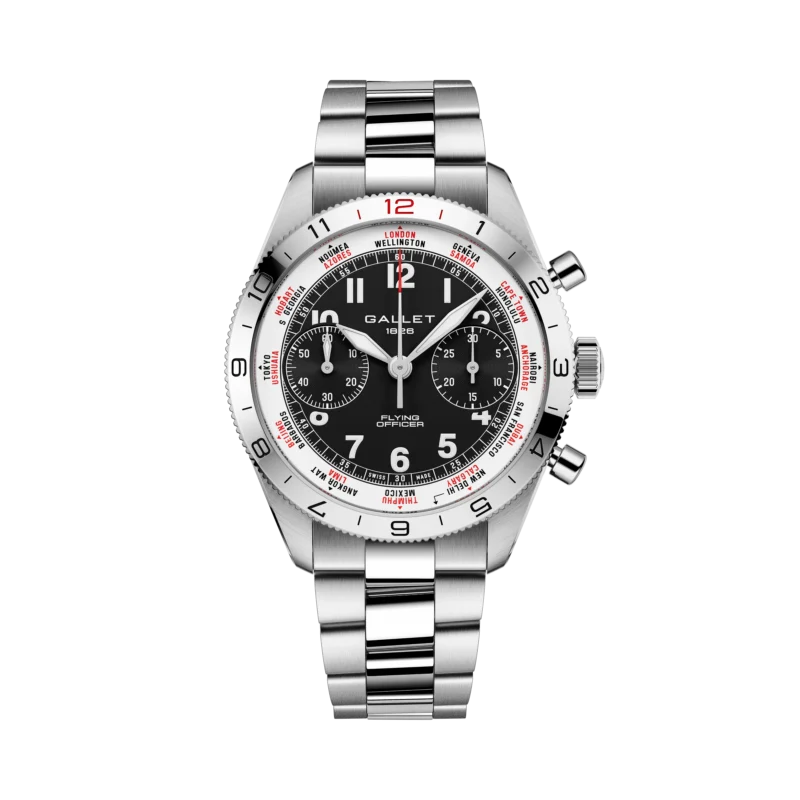
When Is a Revived Watch Brand Still the Same Brand? Testing the New Gallet Against the Archive
The archive is real and the manufacturing system is new. We test Flying Officer,

Patek Philippe Ref. 6105G: What a Sunrise-and-Sunset Celestial Actually Displays
The Ref. 6105G is not one astronomical display but several kinds of time negotiated

Rolex GMT-Master II: a closer look
Beyond the bezel colour: understanding GMT-Master generations, original components, service history and the documents
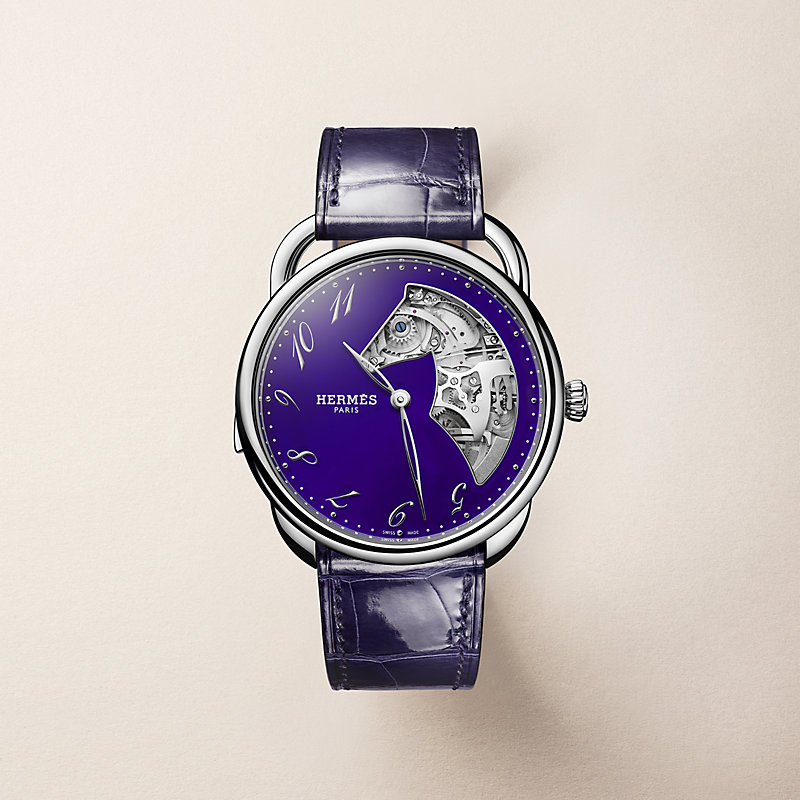
A Horse in Crystal: Hermès Arceau Samarcande
On the Arceau Samarcande W408546WW00, Hermès cuts a horse into a Saint-Louis crystal dial

Blancpain Lady B: What Does 19 Millimetres Require?
Blancpain’s 19 mm Lady B is best understood as an exercise in mechanical volume:
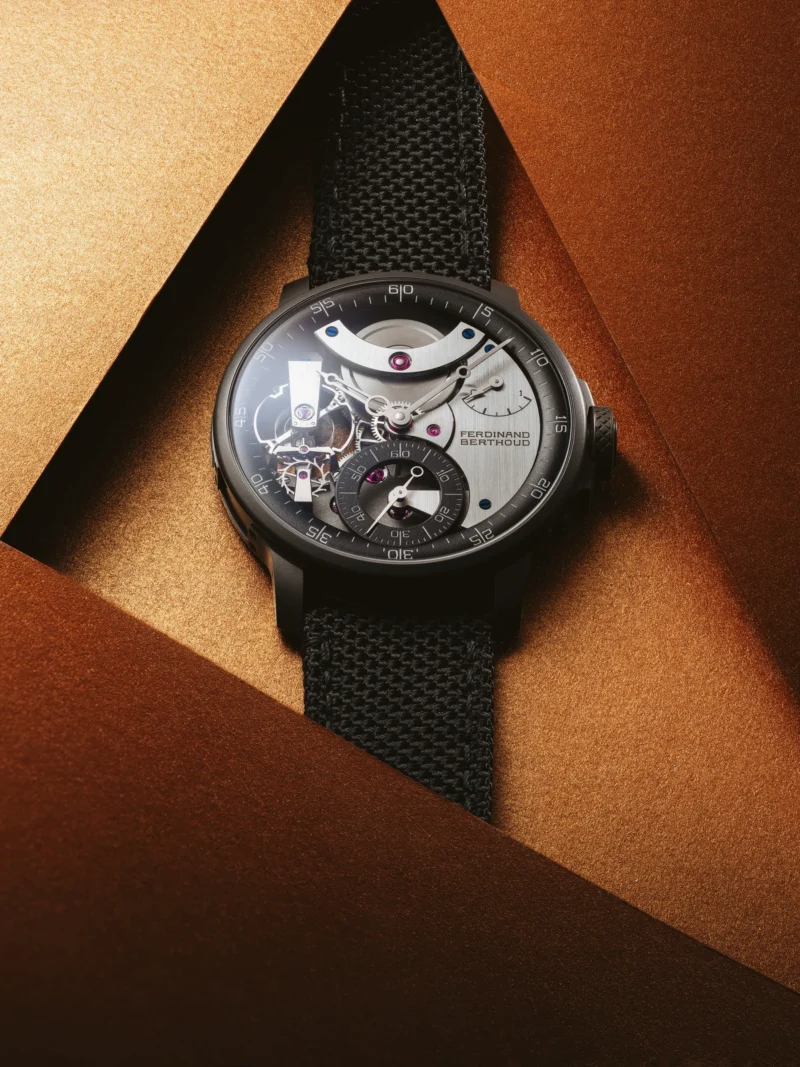
Ferdinand Berthoud FB 3SPC.4-1: Why Bend a Balance Spring into a Cylinder?
The black titanium case is new. The harder achievement is regulating a cylindrical spring