
TheTimeo / Watches
Omega SpeedmasterA life beyond the Moon
A replacement dial or bracelet can change a vintage Speedmaster’s appeal. How to understand the work a watch has received and choose with confidence.

Buzz Aldrin on the lunar surface during Apollo 11. Courtesy of NASA.
Explore the story
A vintage Speedmaster may have spent decades doing exactly what it was made to do: timing, travelling and being worn. Its crystal, pushers or bracelet may have been replaced along the way. Understanding that work is part of understanding the watch.
For a collector, an untouched dial can be especially desirable. For someone who wants a dependable daily companion, a carefully serviced example may be the more attractive choice. Neither preference removes the need for a clear description of what survives from the watch’s early life and what has changed.
First identify the generation
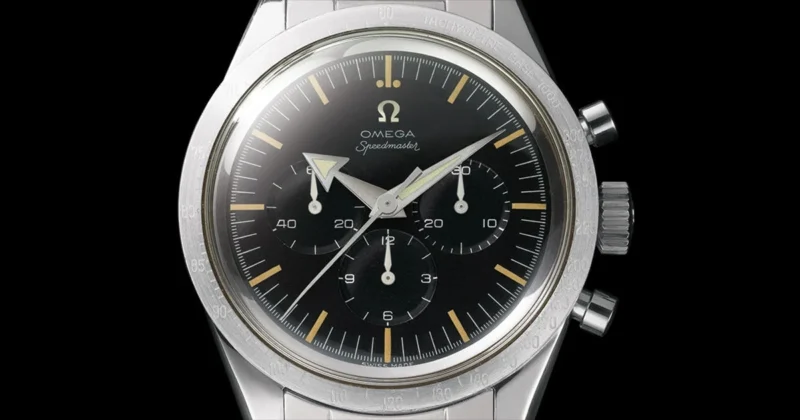
Historic OMEGA Speedmaster pictured for the collection’s 1957 origin. Courtesy of OMEGA.
The Speedmaster began in 1957 with reference CK 2915, Broad Arrow hands and a metal tachymeter bezel. Later references changed the hands, bezel and case before the familiar asymmetrical Speedmaster Professional shape became established.
That shape matters. Early straight-lug watches have a different profile from the later cases that protect the crown and chronograph pushers. A photograph from above can conceal much of the distinction, so ask for side views when comparing older examples.
The movement provides another starting point. Early Speedmasters used calibre 321; the 145.022 introduced the later 861 generation. The family subsequently developed through 1861 and, in the modern Moonwatch, 3861. A familiar black dial does not tell you which mechanism is inside.
Omega dates NASA’s flight qualification to 1965. That history explains much of the Speedmaster’s significance, but a watch from a mission-era reference is not automatically a watch used on a mission. Any such ownership or institutional claim needs evidence tied to the individual object.
Original, period-correct or a service replacement?
These descriptions answer different questions. An original component is one that was supplied with the watch. A period-correct component is consistent with its era but may have been fitted later. A genuine Omega service component is made or supplied by the manufacturer, but can still be a replacement.
Consider a bezel. An early example of the appropriate type may suit a vintage Speedmaster perfectly, yet there may be no record showing that it has always been on that watch. A later service bezel may be easy to explain if an invoice records its replacement. Both descriptions are more informative than “all original” without supporting detail.
The same approach applies to the crown, pushers and bracelet. Replacing worn parts can be sensible maintenance. The important thing is that the description and your expectations agree.
What the dial and case reveal
The dial is a good place to slow down. Look at the printing, the construction of the stepped or flat surface, the luminous markers and the hands. Compare the whole arrangement with documented examples from the relevant reference and period.
Colour is only one clue. Hands and markers can age differently, and a pleasing match is not proof that they were made or fitted together. Ask whether the dial has been replaced, refinished or relumed, and whether that assessment comes from examination or simply from the seller’s impression.
On the case, follow the edges of the lugs and the change between brushed and polished surfaces. Scratches and polishing are different things. A worn surface can retain its shape, while repeated refinishing may soften it. A clear account of previous cosmetic work helps you decide whether the condition suits your priorities.
When wear belongs to the story
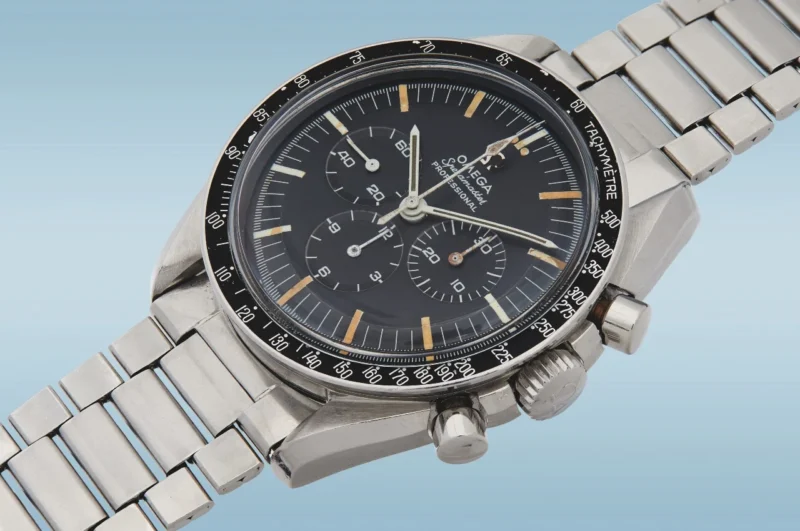
Ralph Ellison’s vintage OMEGA Speedmaster. Courtesy of OMEGA.
Ralph Ellison’s Speedmaster offers a particularly appealing example of a watch whose importance comes from use. Omega acquired the writer’s watch at auction in 2021. The manufacture records its delivery to the United States in 1968 and Ellison’s long period of ownership.
The visible wear belongs to that specific history. It connects an everyday object with a documented owner rather than making the watch important through a pristine appearance.
That does not mean scratches generally add value. It shows why condition is best understood alongside provenance. An unusually well-preserved example and a watch with a rich, documented working life may appeal for quite different reasons. There is room to appreciate both.
Before sending a vintage watch for service
Explain your priorities before approving work. If preserving the existing dial, hands or case finish matters to you, put that request in writing and ask what the workshop can accommodate. Find out which parts are required for reliable operation and which changes are aesthetic.
Keep the estimate and final invoice. If replacements are proposed, ask how they will be recorded and whether removed parts can be returned under the provider’s policy. Photographs taken before and after service can make later conversations much clearer.
A service report is especially helpful when it identifies what was done. “Recently serviced” tells a buyer far less than a dated invoice listing the work. For a watch intended for regular wear, the service history is part of the practical appeal, not an awkward detail to hide.
A vintage-looking detail can be new
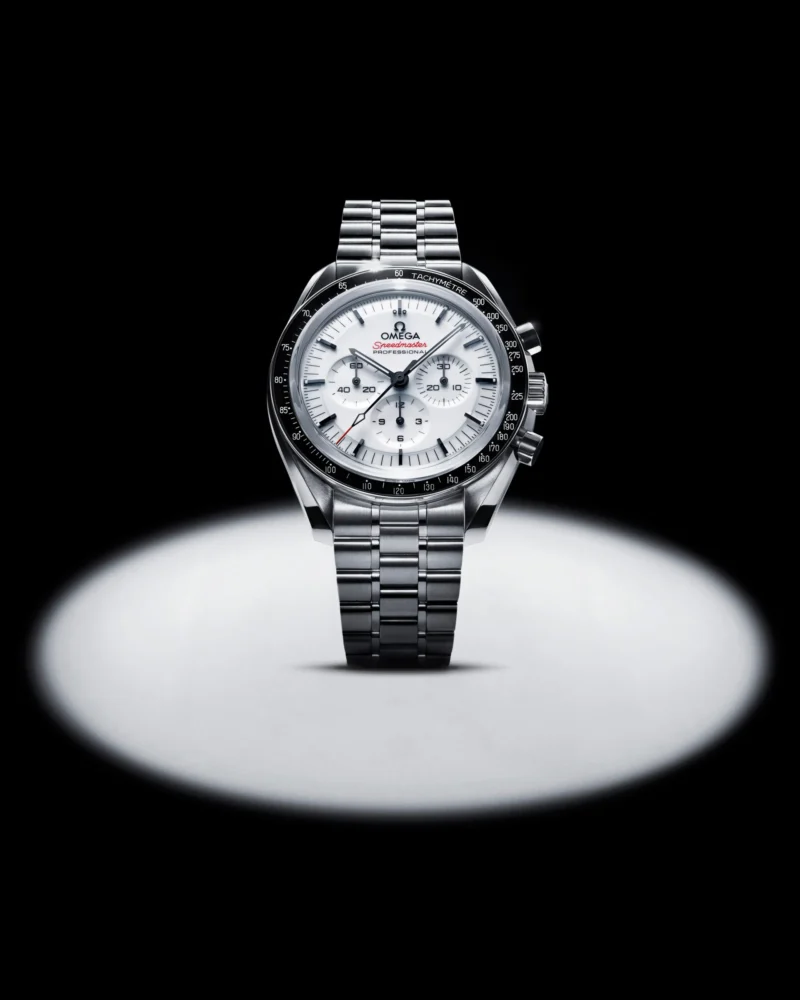
Modern Speedmaster Moonwatch Professional powered by calibre 3861. Courtesy of OMEGA.
Modern Speedmasters deliberately revisit historical design elements. The Moonwatch generation introduced in 2021 restored features including the stepped dial and the tachymeter’s dot-over-ninety arrangement while using the contemporary calibre 3861.
This makes a useful comparison with vintage examples. A familiar bezel detail or dial shape is not, on its own, evidence of age. The reference and the complete watch must make sense together.
It also gives owners a genuine choice. You may enjoy historical proportions and details in a modern watch, or prefer the material character of an older example. Those are different experiences, not a competition in which one automatically cancels the other.
A clearer description makes a better purchase
Before comparing prices, establish the reference, movement, case condition, dial, bezel, bracelet and known replacements. Read the documents individually. An archive extract reports historical records; a service invoice describes later work. Neither should be mistaken for a complete ownership history.
For a significant purchase, arrange specialist assessment and understand the seller’s terms. Photographs can help you choose what to examine, but they cannot show every internal component or confirm the watch’s mechanical condition.
The right Speedmaster is one whose history you understand and whose condition suits how you intend to enjoy it. A working watch should not need a fictional claim of untouched perfection to be worth owning.
Sources & further reading
Omega’s NASA qualification account, record of Ralph Ellison’s watch and complete-service guide; Swatch Group’s 2021 Moonwatch announcement.
For the broader model history, read Omega Speedmaster Moonwatch.
The Edit
Watches stories
Selected stories from the same editorial universe.
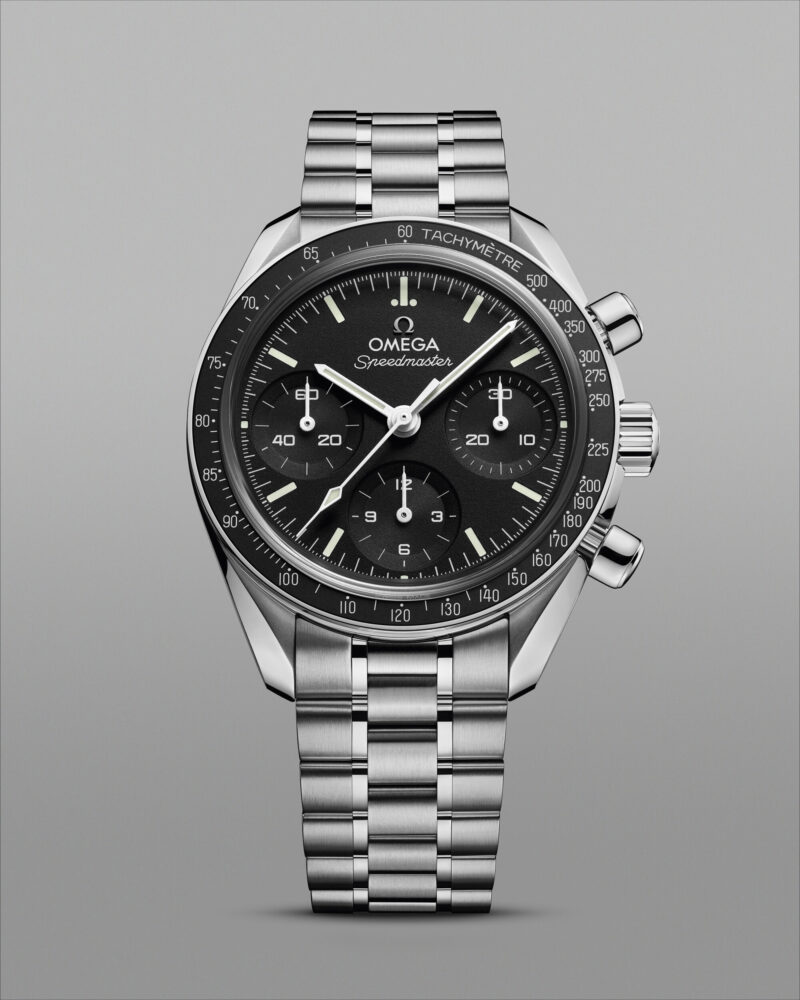
Omega Speedmaster 38 (2026): What Changed, What Stayed, and Why the Black No-Date Matters
Seven new references give the Speedmaster 38 a cleaner face and a stronger visual

Rolex GMT-Master II: a closer look
Beyond the bezel colour: understanding GMT-Master generations, original components, service history and the documents
A Horse in Crystal: Hermès Arceau Samarcande
On the Arceau Samarcande W408546WW00, Hermès cuts a horse into a Saint-Louis crystal dial
Blancpain Lady B: What Does 19 Millimetres Require?
Blancpain’s 19 mm Lady B is best understood as an exercise in mechanical volume:
When Is a Revived Watch Brand Still the Same Brand? Testing the New Gallet Against the Archive
The archive is real and the manufacturing system is new. We test Flying Officer,
Ferdinand Berthoud FB 3SPC.4-1: Why Bend a Balance Spring into a Cylinder?
The black titanium case is new. The harder achievement is regulating a cylindrical spring