
TheTimeo / Watches
Cartier TankThe details of an icon
Brancards, proportions and a familiar dial: how Cartier gives very different Tank watches a family resemblance, and what to notice when choosing one.
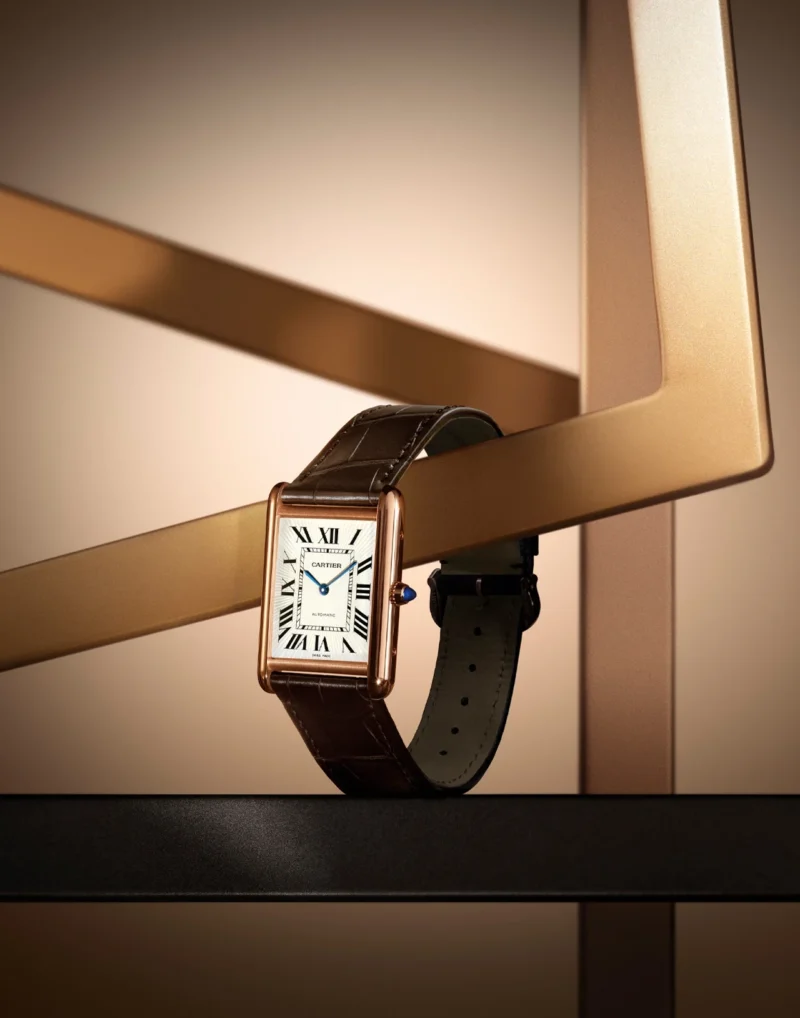
Tank Louis Cartier watch illustrating the collection’s enduring rectangular design. Courtesy of Cartier.
Explore the story
The two long sides of a Cartier Tank do more than frame its dial. They carry the shape towards the strap, making the watch feel like a continuous composition rather than a small case with four lugs attached.
Those sides, known as brancards, are the most useful place to begin looking. Their width, length and curvature explain why a compact Tank Normale, an elongated Américaine and a bracelet-mounted Française can look so different while remaining recognisably related.
The detail that holds the design together
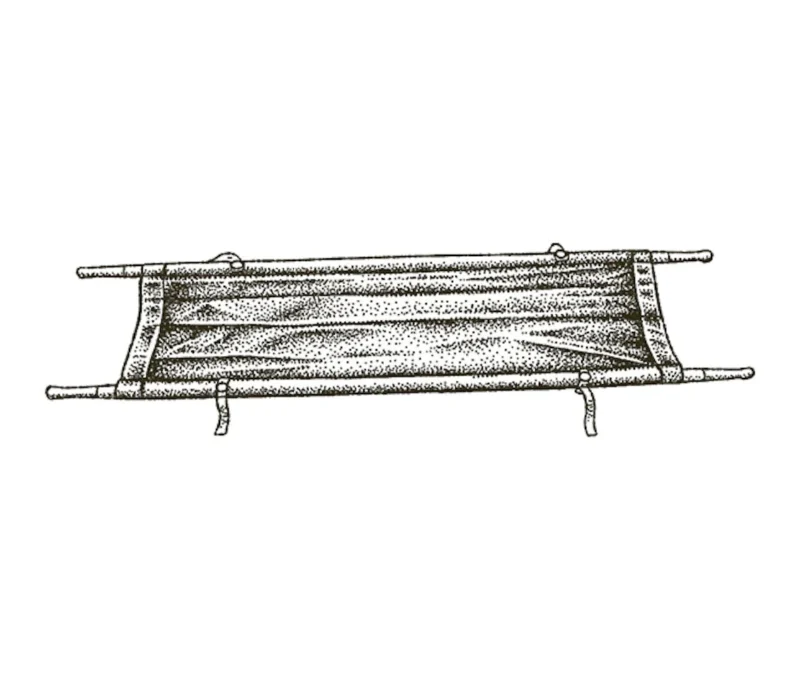
Cartier illustration explaining the Tank’s brancards. Courtesy of Cartier.
On a Tank, the brancards run along either side of the dial and continue to the strap attachments. Between them, the dial forms a smaller rectangle. The result is simple to recognise but sensitive to proportion: a slight change in the distance between the sides alters how much visual space the dial occupies.
A wider brancard gives the metal more presence. A longer case makes the same basic arrangement more slender. A curve changes how the watch follows the wrist. These differences explain why a Tank should be compared in three dimensions, not chosen from a width measurement alone.
When trying one on, look from the side as well as above. Notice where the strap turns down and whether the case lies comfortably along the wrist. The model that looks largest in a close-up photograph may not be the one that feels largest when worn.
A familiar dial, with room for variation
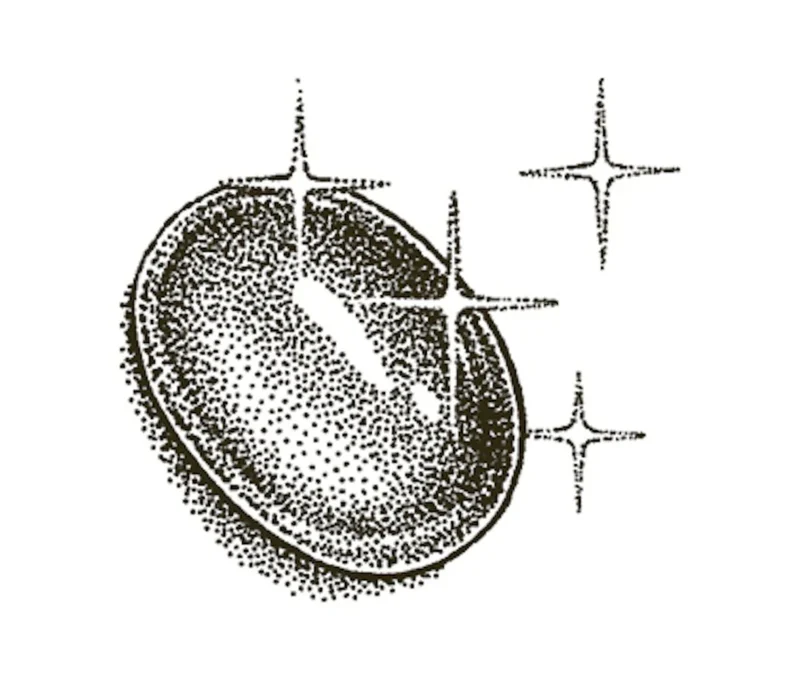
A Cartier illustration of the cabochon cut: a smooth, rounded surface rather than facets. Courtesy of Cartier.
Roman numerals, a railway-style minute track, blue hands and a cabochon-set crown form the familiar Cartier vocabulary. The minute track, often called a chemin de fer, gives the dial an inner border. The hands move across this ordered field, while the crown introduces a small rounded detail at the edge of the case.
The attraction is in the relationship between these elements. The numerals fill the rectangular space rather than sitting in an evenly spaced circle. The track gives the eye another shape to follow. The fine hands contrast with the more substantial case sides.
Yet these details are not present in every Tank. Some dials dispense with the conventional numerals, and some references use different hands. The family remains recognisable because the case carries so much of its identity. A dial variation is worth understanding on its own terms, rather than measuring against one supposedly definitive recipe.
Normale and Louis Cartier
Cartier dates the Tank’s creation to 1917 and its commercial introduction to 1919. The early design, now known as the Tank Normale, makes the construction especially clear: firm parallel sides contain a compact central face.
The Tank Louis Cartier, introduced in 1922, softens the effect. Its case lines are gentler and its proportions more elongated. Placing the two beside one another is an instructive comparison. The change is immediately visible even though neither watch abandons the relationship between dial, brancards and strap.
For someone choosing a Tank today, this is more useful than a long list of famous wearers. Ask whether you prefer the more emphatic outline of the Normale or the softened shape of the Louis Cartier. The answer is a matter of how you respond to the object, not which name has the longer cultural résumé.
Stretching the case, extending the bracelet
The Cintrée takes the Tank into a long, curved form. The Américaine develops a related idea, with a case that follows the wrist and gives the dial a distinctly elongated field. These watches make length and profile central to their appeal.
The Française changes another relationship: the transition into a metal bracelet. Leather makes a clear material break at the case; a bracelet allows the pattern of metal to continue around the wrist. The watch becomes part of a larger articulated form.
That difference matters when comparing models. A bracelet Tank can have a stronger overall presence than its case measurements suggest, while a narrow watch on leather can feel more contained. Consider the whole object, including the bracelet’s width and flexibility, rather than treating it as a choice made after the case.
What happens when the dial almost disappears?
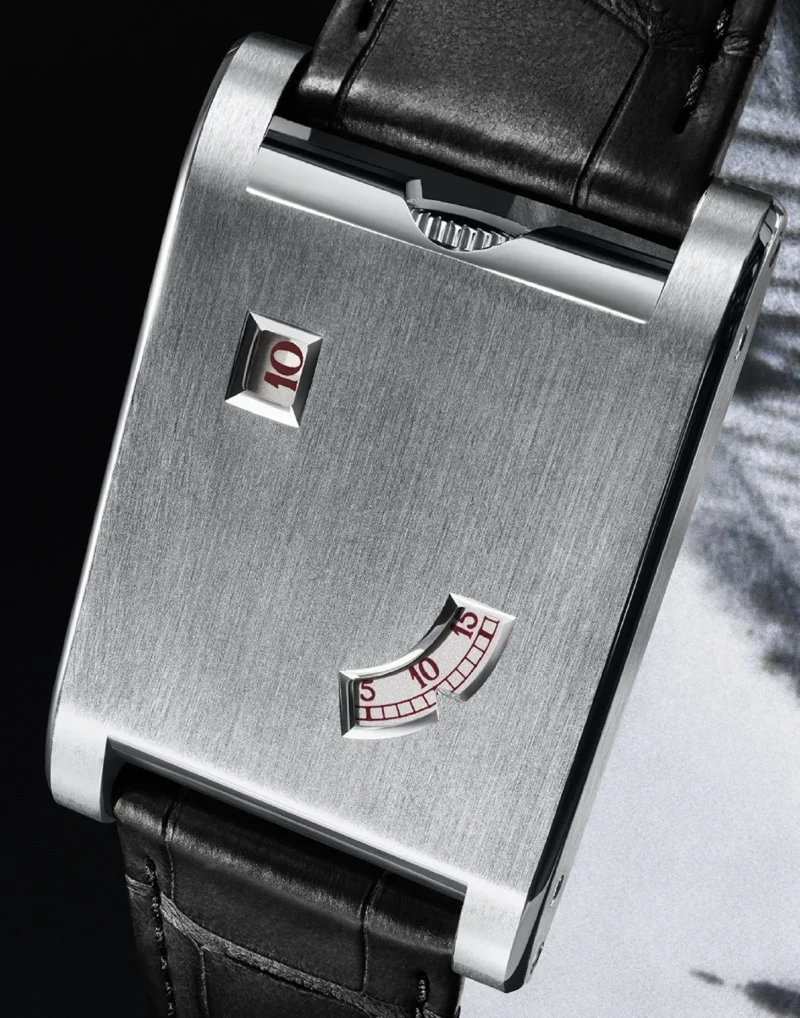
Tank à Guichets showing how Cartier reworks the Tank design language. Courtesy of Cartier.
The Tank à Guichets offers the clearest demonstration of how much the case can do. Introduced in 1928, it presents the time through small openings instead of a conventional dial with central hands.
Removing the Roman numeral field exposes the strength of the outline. There is more uninterrupted metal to look at, and the display becomes a small event within it. The watch remains a Tank even when several of Cartier’s most familiar dial details are absent.
This is also a different way of reading time. Anyone considering an aperture-display watch should spend time with that experience, not just its photograph. An unusual display can be fascinating precisely because it changes an everyday habit.
Choosing a Tank beyond the photograph
Begin with three questions: which proportions suit your wrist, which display do you enjoy, and do you prefer leather or a metal bracelet? They narrow the choice more effectively than treating every Tank as a variation on one ideal size.
Then look at the exact reference. Movement type, case material, dimensions, dial and crown details vary across the family. Mechanical and quartz Tanks both belong to its history; the practical choice depends on the watch and how you want to use it.
For an older example, condition and service history deserve the same attention as design. Ask about refinishing, replacement dials and the state of the strap attachments or bracelet. These are individual-watch questions that a familiar Cartier silhouette cannot answer.
The pleasure of studying the Tank is that the important differences are visible. Once you notice the brancards, the shape of the dial and the transition to the wrist, a collection of similar-looking rectangles becomes a series of distinct design decisions.
Sources & further reading
Cartier’s watchmaking design statement and Tank collection history explain the house’s design vocabulary and principal dates. Specifications should be checked against the exact reference being considered.
For the model’s wider cultural history, continue with The timeless appeal of the Cartier Tank.
The Edit
Watches stories
Selected stories from the same editorial universe.
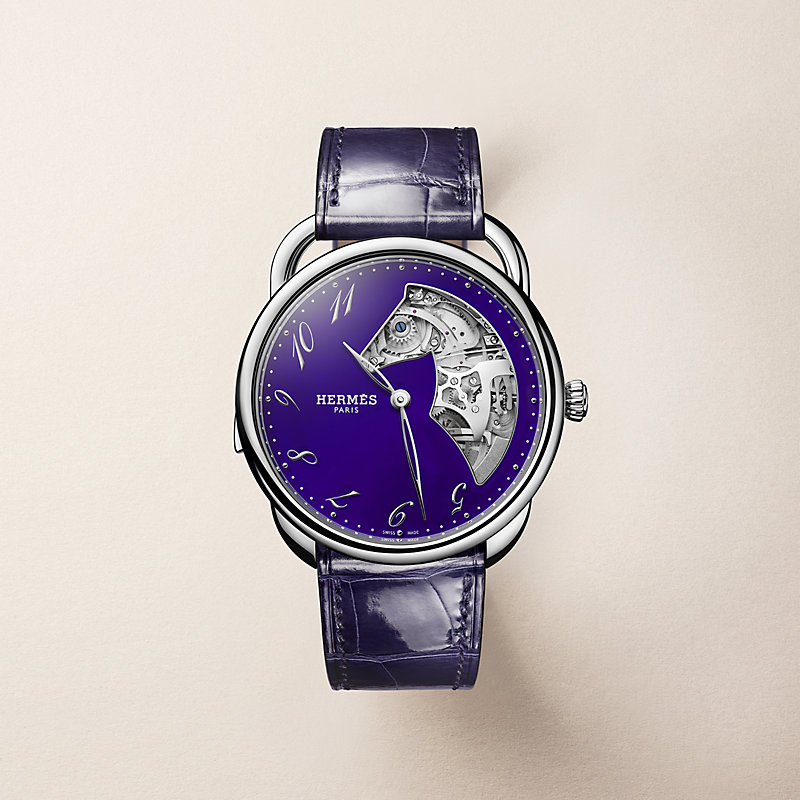
A Horse in Crystal: Hermès Arceau Samarcande
On the Arceau Samarcande W408546WW00, Hermès cuts a horse into a Saint-Louis crystal dial
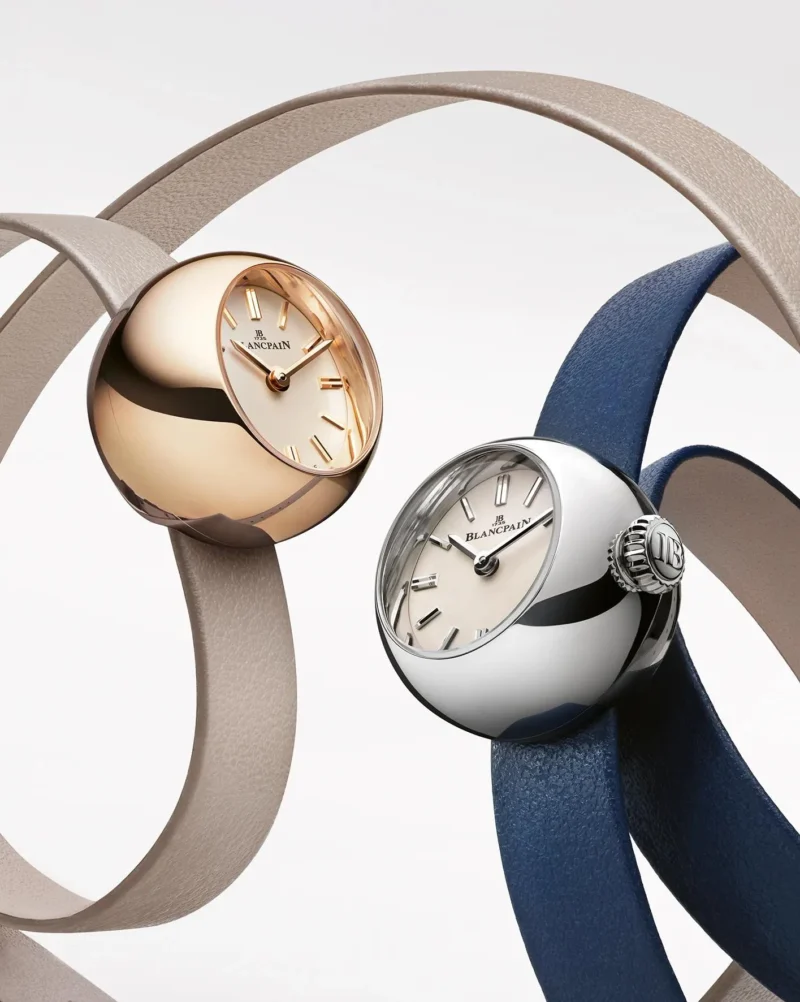
Blancpain Lady B: What Does 19 Millimetres Require?
Blancpain’s 19 mm Lady B is best understood as an exercise in mechanical volume:
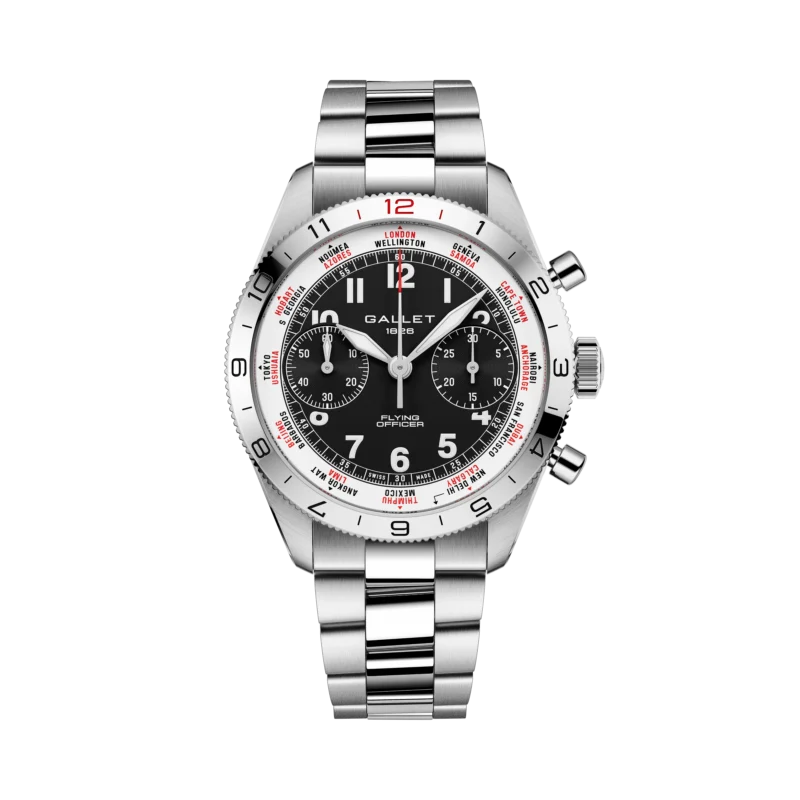
When Is a Revived Watch Brand Still the Same Brand? Testing the New Gallet Against the Archive
The archive is real and the manufacturing system is new. We test Flying Officer,
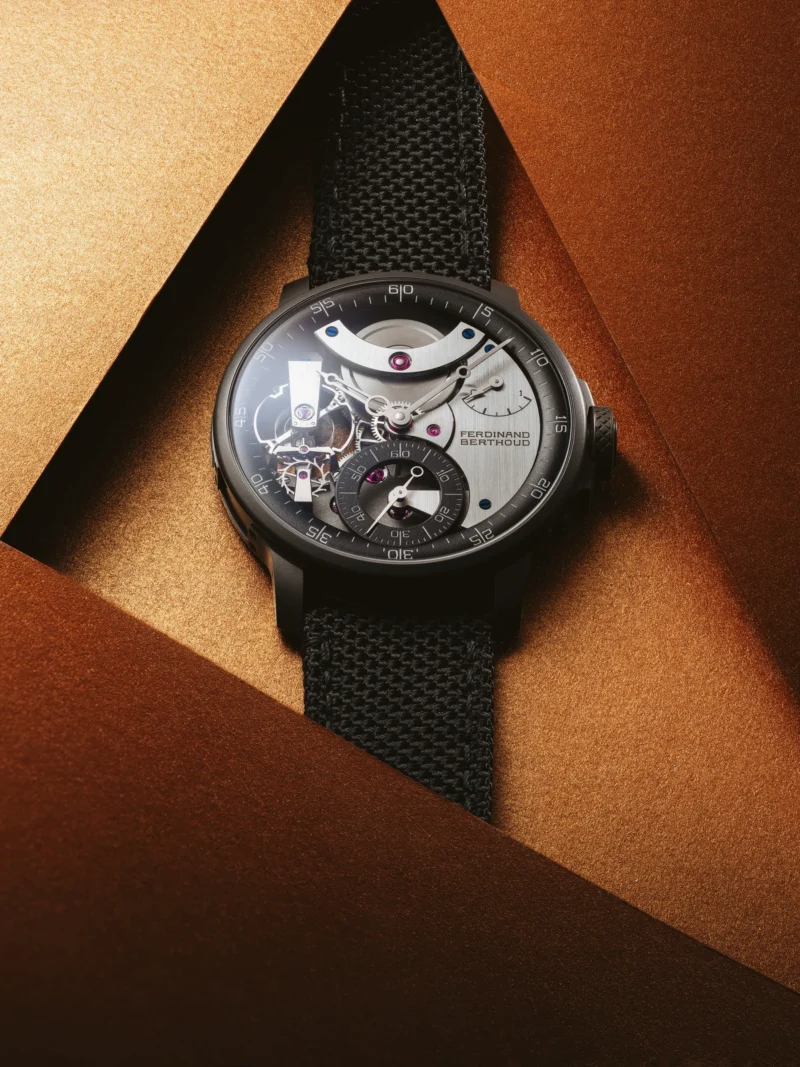
Ferdinand Berthoud FB 3SPC.4-1: Why Bend a Balance Spring into a Cylinder?
The black titanium case is new. The harder achievement is regulating a cylindrical spring
MING 57.05 Comet: The One-Click DST Fix and the Time-Zone Problem It Cannot Fully Solve
One click moves DST-observing cities by an hour. The harder problem is that civil-time
What Did IWC Actually Bring Back from Gérald Genta’s Ingenieur SL?
The 40 and 35 mm anniversary Ingenieurs share a rare silver-dial reference, but only