
TheTimeo / Maisons & Heritage
A house
made of colour.
Gaudí’s architectural language becomes a dome table clock. Patek Philippe’s The House of the Dragon brings balconies, scaled roofs and a vivid enamel palette to Ref. 20199M-001.
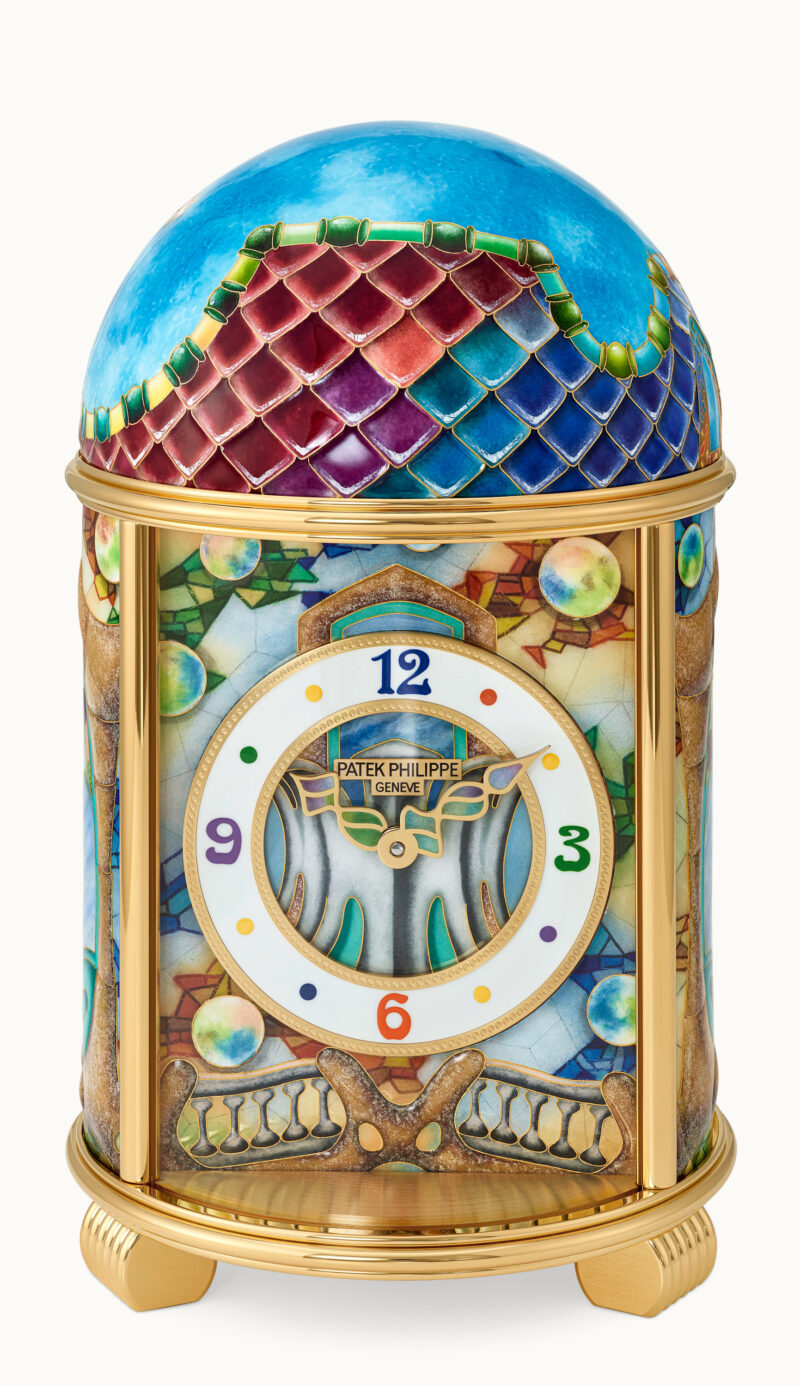
The House of the Dragon, Ref. 20199M-001, in its complete frontal portrait. Courtesy of Patek Philippe.
Explore the story
The balcony looks like a mask. Behind its pale rim, two curved openings reveal gold lines crossing a green field. Above it, blue and rose-coloured scales climb towards the top of a dome. Patek Philippe’s The House of the Dragon makes an unusual proposition: a clock can be read as a building before it is read for the time.
Reference 20199M-001 belongs to the maison’s 2026 Rare Handcrafts collection. The unique dome table clock honours Antoni Gaudí in the centenary year of his death, drawing on the architectural language of Barcelona’s Casa Batlló. Cloisonné enamel, miniature painting and plique-à-jour enamel carry that language into a much smaller object. The pleasure lies in following the façade around the clock, where a new angle can change the whole composition.
Around the painted façade
01 / 03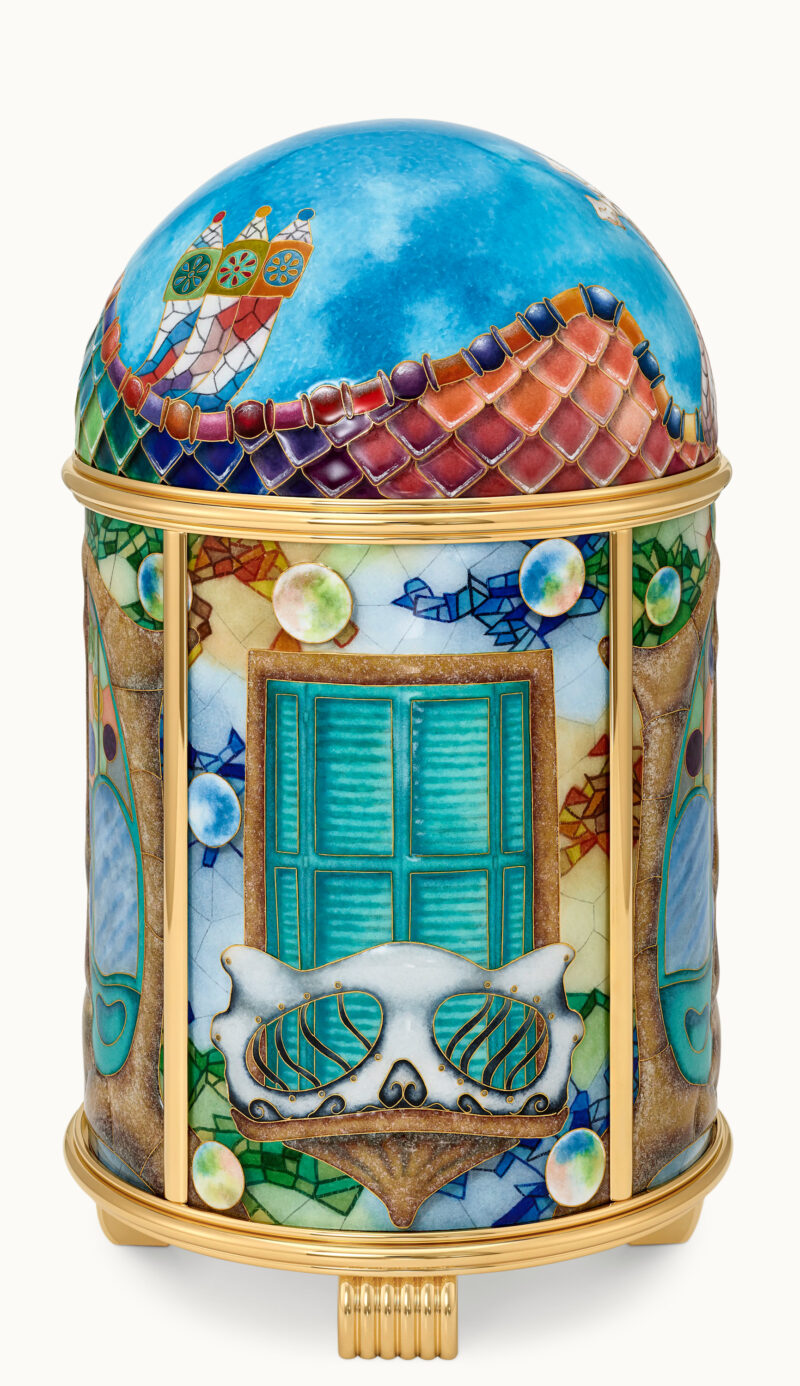
The reverse façade brings the shutter and balcony into view. Courtesy of Patek Philippe.
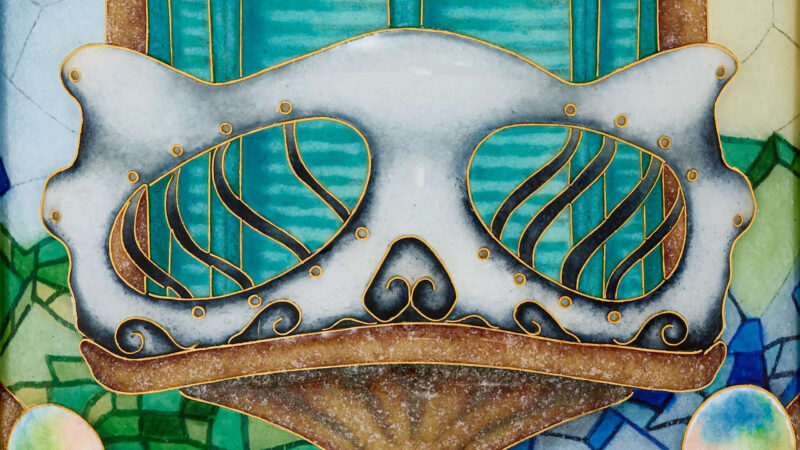
Fine borders and painted shading give the balcony its apparent depth. Courtesy of Patek Philippe.
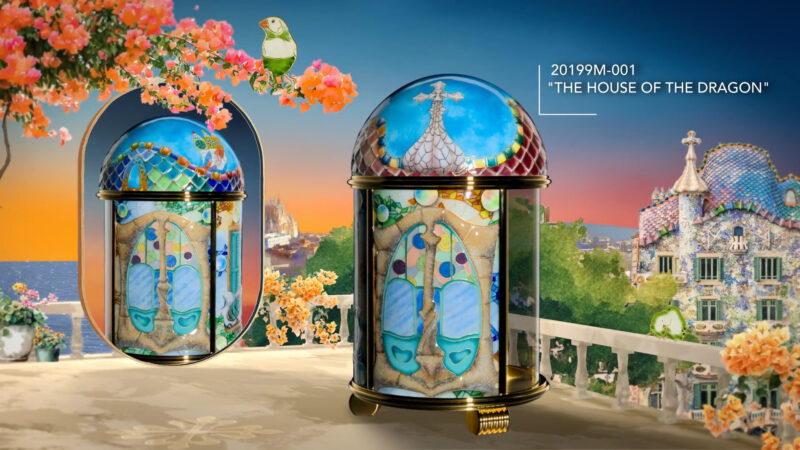
Different sides of Ref. 20199M-001, from the maison’s illustrated object film. Courtesy of Patek Philippe.
The complete rear view makes the architectural reference especially clear. A green shutter sits above a pale balcony, while the surrounding surface breaks into irregular pieces of colour. The clock’s curved body lets this small façade turn away from the eye. Its edge belongs to a cylindrical object, even when the decoration invites you to imagine a wall.
At the top, the dome changes the reading again. Rows of scales climb across a blue ground. Their diagonal rhythm brings a sense of direction to the rounded surface; red and green gather into separate zones, then meet along fine borders. The roof becomes more than a motif placed above the scene. It helps explain the shape of the object carrying it.
Casa Batlló’s own account describes mask-like balcony railings, bone-like columns and a roof resembling an animal’s back. It also records the familiar interpretation of the dragon and Saint George. These forms offer a vocabulary the clock can rearrange: a projecting balcony, a curved opening, a surface made lively by many small changes of colour.
The close photograph is the place to slow down. Fine lines separate the colours within the balcony openings, while the pale outer form is shaded to suggest a rim and an underside. Farther away, the mask registers almost instantly. Closer, its effect depends on a succession of small decisions about edges, light and depth.
The maison’s illustrated film adds another route around the design. It presents different views of the clock within an architectural setting, allowing the side panels to enter the conversation. The image is a constructed presentation, but its purpose is useful: it draws attention away from a single frontal portrait and towards decoration that continues around the body.
A colour has to become a surface
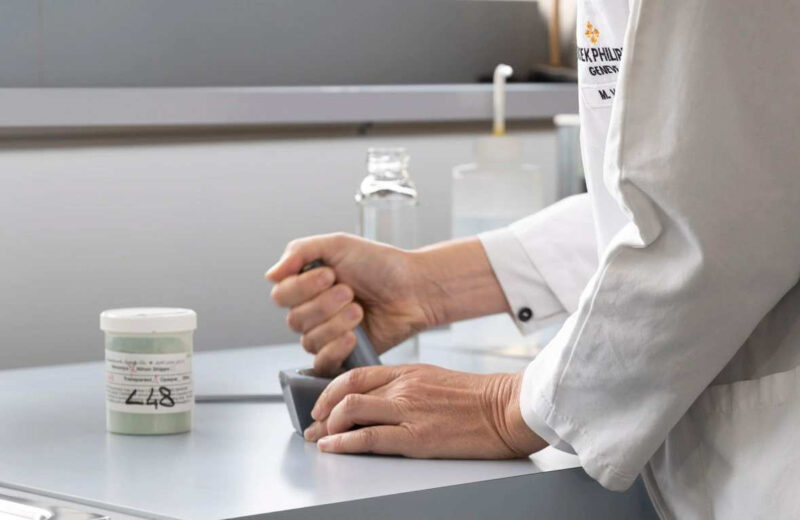
Preparing enamel, in Patek Philippe’s wider craft sequence. Courtesy of Patek Philippe.
The photograph of enamel preparation introduces a different scale of work. Material is ground into fine grains before it can become a controlled painted surface. Patek Philippe includes this image in its wider account of enamelling; it gives a tangible beginning to colours that appear effortlessly smooth on the finished clock.
For this particular piece, the maison specifies 154 enamel shades and approximately 16 metres of gold wire. Those figures describe two complementary tasks. The wire establishes a network of boundaries for the cloisonné work. The palette allows colour to change within the architectural drawing, from clear blues and greens to warmer, less transparent passages.
Miniature painting on enamel adds another layer of detail, including the appearance of cracked ceramic. The clock can therefore suggest a surface made from many pieces while remaining an enamelled object. What looks like a small fragment of architecture is the result of several techniques working on the same field.
Patek records nine or ten firings for each enamelled plate, at temperatures between 890 and 910°C. The process turns applied material into the finished surface through repeated work with heat. It is a useful detail to hold beside the photograph: colour has to survive making as well as look convincing in the design.
Two kinds of light
A surface with depth
The close views show colour held within fine outlines and shaded architectural forms. Some passages appear brighter and more open; others have a softer, more opaque character. The varied palette lets the façade suggest more than one material, even though enamel provides the principal surface of the scene.
This is where the clock rewards looking beyond the most saturated colour. Follow a pale edge around an opening, then look at the darker passage beside it. The small interval between them supplies much of the apparent relief.
A dial within the house
The white-lacquered hour circle restores the clock’s practical centre. Its coloured numerals belong to the same lively palette as the surrounding decoration, while the gold hands introduce plique-à-jour enamel. Time remains legible within an object whose imagery keeps inviting the eye elsewhere.
At 213.5 millimetres high, the piece brings an architectural impression to the scale of a table clock. The contrast is part of its appeal: a façade suggests a place large enough to enter, yet here its balconies, roof and windows gather around a small display of hours and minutes.
Look past the dial
Begin with the mask-like balcony, then follow the colours towards the roof. On the next view, let the side panel take over. The clock becomes more particular when its time display is one destination among several, rather than the only place to look.
Gaudí’s architecture provides a rich starting point, but the translation is what holds the attention. A curved body becomes a façade, a dome becomes a scaled roof, and minute changes in enamel give a small object the imaginative reach of a building.
Sources & further reading
The Edit
Maisons & Heritage stories
Selected stories from the same editorial universe.
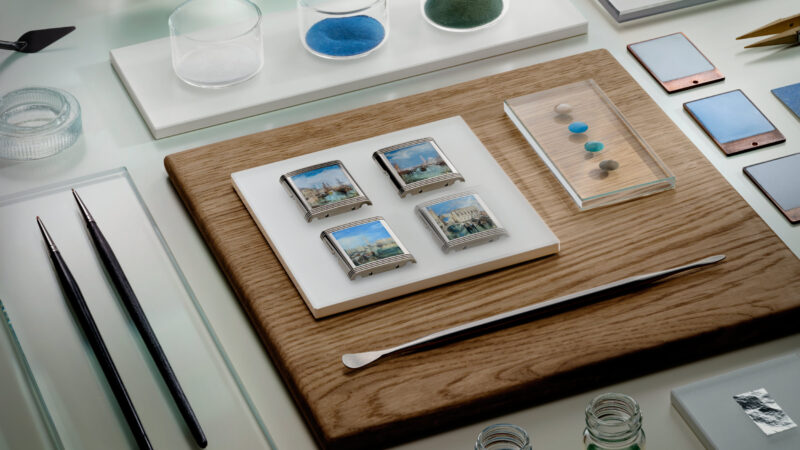
Putting Turner on 2 cm²: What Jaeger-LeCoultre’s Reverso Tribute Enamel “Turner Series” Actually Demands
Four Venetian paintings, four enamel and guilloché solutions, and one difficult question: how much
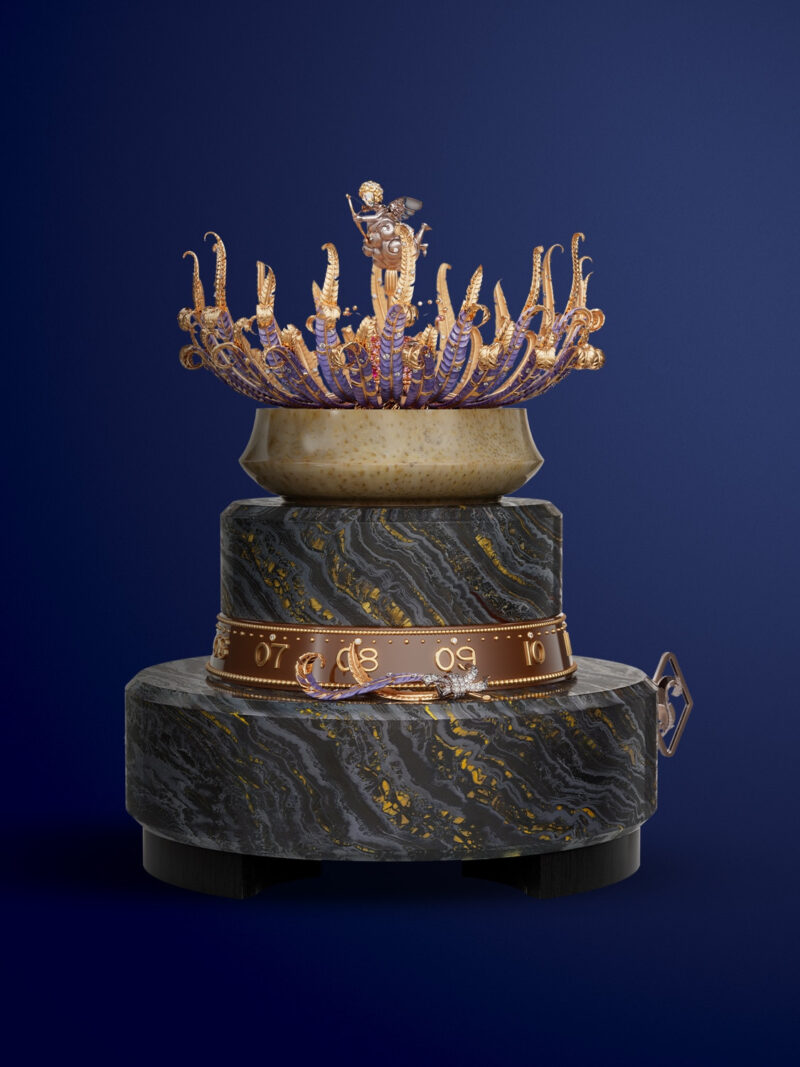
Van Cleef & Arpels Naissance de l’Amour: From Wax to Wingbeats
Green wax, a drawn gesture and a Cupid emerging from feathers. The making of
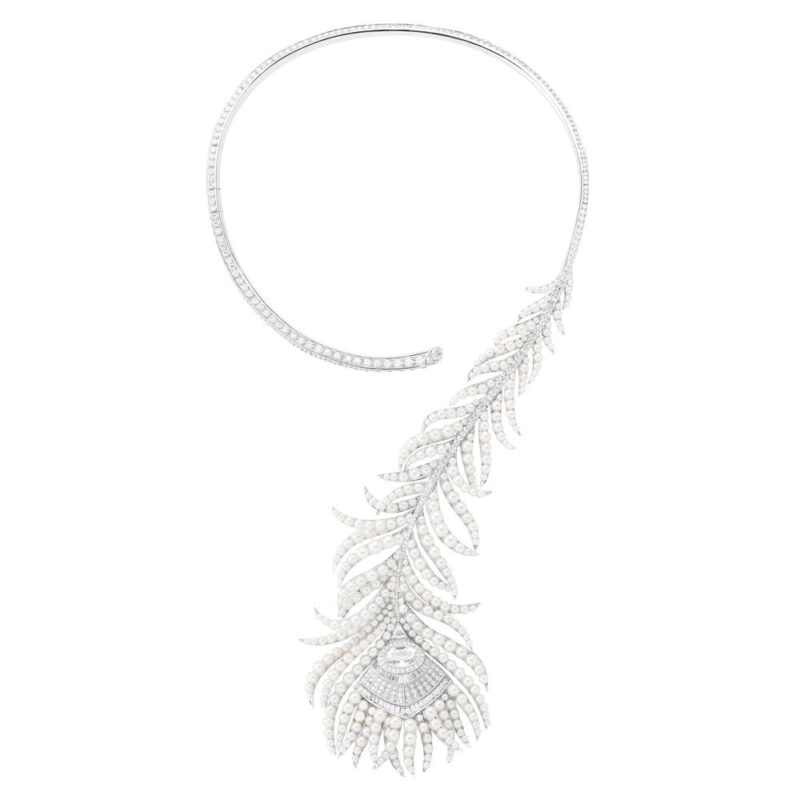
Boucheron Question Mark: The Freedom of an Open Line
A clasp-free curve and a feather that changes with the wearer. Boucheron’s Question Mark
Piaget: Two Manufactures, One Language of Gold
From ultra-thin movements in La Côte-aux-Fées to goldsmithing in Plan-les-Ouates: two manufactures help explain
Van Cleef & Arpels Zip: One Jewel, Two Lives
A working zipper becomes a precious line. The Van Cleef & Arpels Zip changes
Vacheron Constantin Woodenwings: A Falcon Carved in Wood
A raised wing, a patterned ground and four small windows for the time. Anna