
TheTimeo / Maisons & Heritage
Feather
by feather.
A raised wing, a patterned ground and four small windows for the time. Anna Le Corno brings sculpted wood marquetry to Vacheron Constantin’s Woodenwings concept watch.
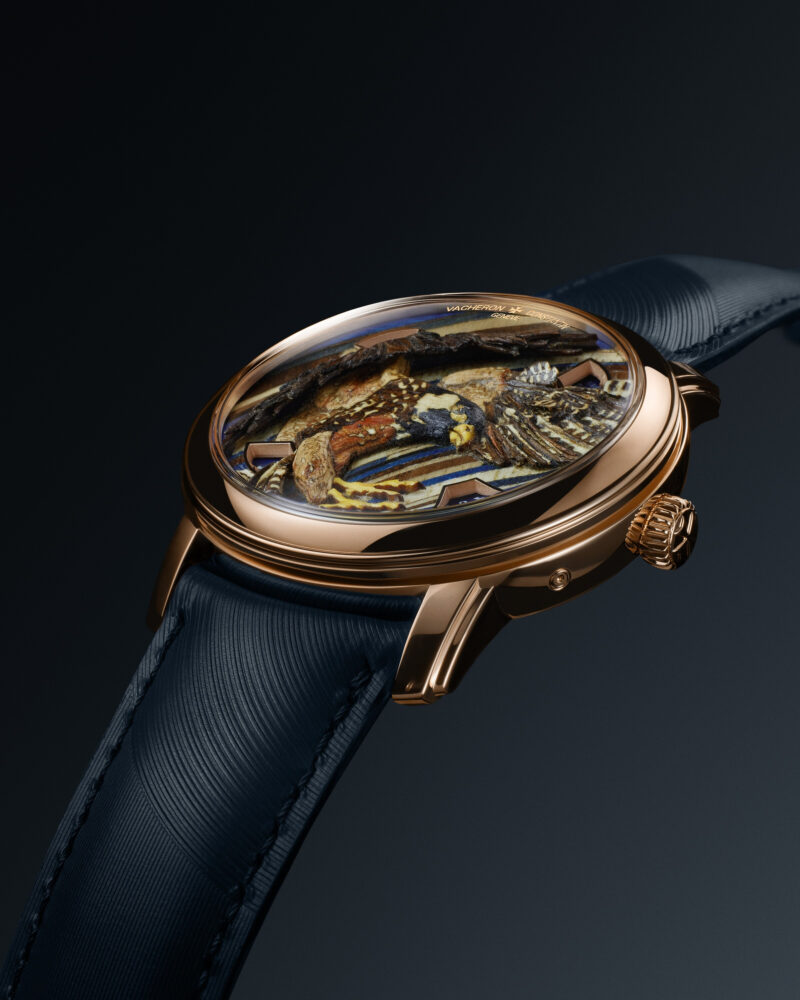
Woodenwings, reference 7630A/000R-H203, in the maison’s angled view. Courtesy of Vacheron Constantin.
Explore the story
The wing is the place to begin. Its feathers rise above the dial, their pale edges separated by fine shadows. In Woodenwings, Anna Le Corno makes wood behave like plumage; Vacheron Constantin gives that small sculpture a way to tell the time. Twelve wood species contribute to its shifting colours. The pleasure lies in following the grain from the surrounding circles into the bird itself.
A wing takes shape
01 / 03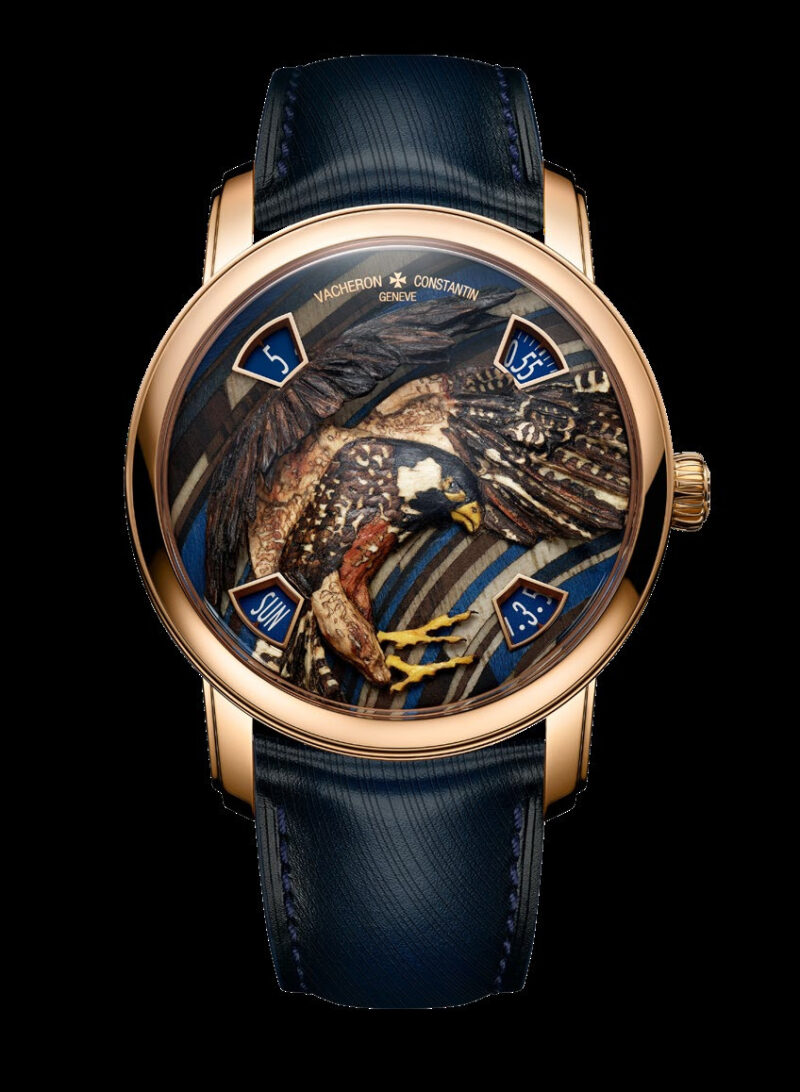
The complete watch face and its four display apertures. Image from the official 2026 dossier. Courtesy of Vacheron Constantin.
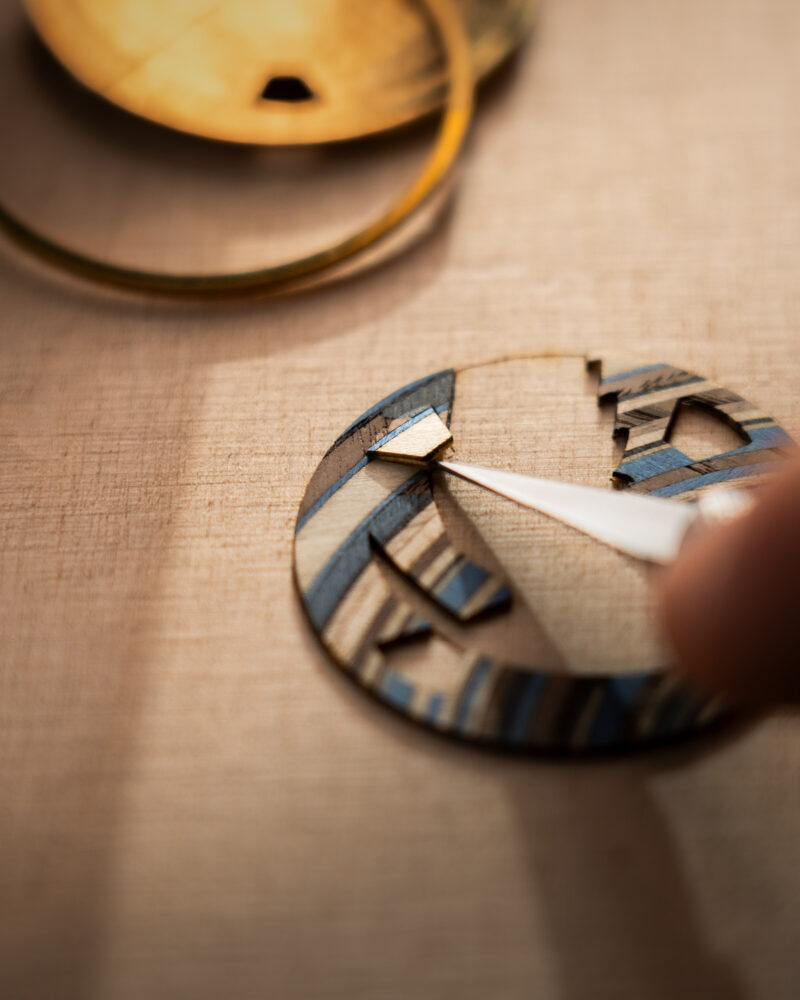
The geometric ground and its display openings, during the making of Woodenwings. Courtesy of Vacheron Constantin.
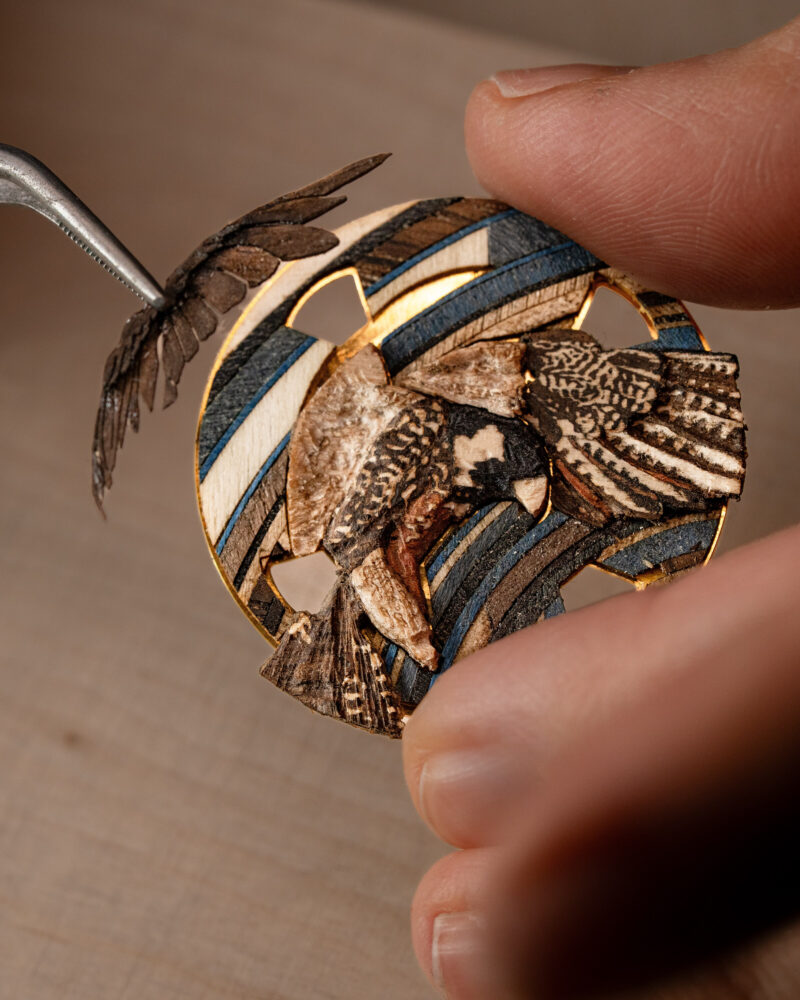
The bird’s carved body and projecting wing, seen close during the work. Courtesy of Vacheron Constantin.
Seen face-on, the falcon reaches across almost the whole dial. Its head turns towards the edge while the lifted wing draws the eye in the opposite direction. The composition feels poised between those two movements. Around it, bands of blue, cream and brown keep the circular shape of the watch visible.
The making photographs reveal how much of that impression depends on depth. One shows the geometric ground with its openings already present. Another brings the bird close enough for the feathers to become separate pieces of material. The light catches their edges and falls away beneath them. Those thin lines of darkness give the wing its distance from the surface below.
Marquetry usually brings different woods together to make an image. Here, the image also projects into space. Follow the grain through a light feather and then look at a darker section beside it: the change belongs to the material as much as to the outline. The bird has a particular richness because colour, texture and relief remain visible at the same time.
The straight-on portrait restores the complete object after those close views. Four small blue windows sit around the wooden scene. The gold case makes a clear boundary, and the strap carries the dark blue beyond it. Each distance offers a different reading: watch, bird, then the individual pieces that allow the bird to exist.
Ground, body, wing
- The ground holds the circle
Circular marquetry forms the background. Its bands give the eye a route around the dial and establish a measured geometry behind the animal. Look at the interrupted lines beside the openings: the display and the image occupy the same surface, so their relationship is already part of the composition.
- The body acquires depth
For the body, layers of veneer are assembled and sculpted. The carved surface turns a small area into a recognisable head, breast and folded plumage. In the close photograph, the grain stays legible through these changes of direction. The material continues to announce itself even where the carving becomes most descriptive.
- The wing separates into feathers
The wing uses an assembly developed feather by feather. Its long, pale elements reach over the darker dial below, making their edges unusually easy to follow. The sequence matters: the surrounding pattern first establishes a plane, the body rises from it, and the wing opens the greatest interval above that plane.
The scale of a gesture
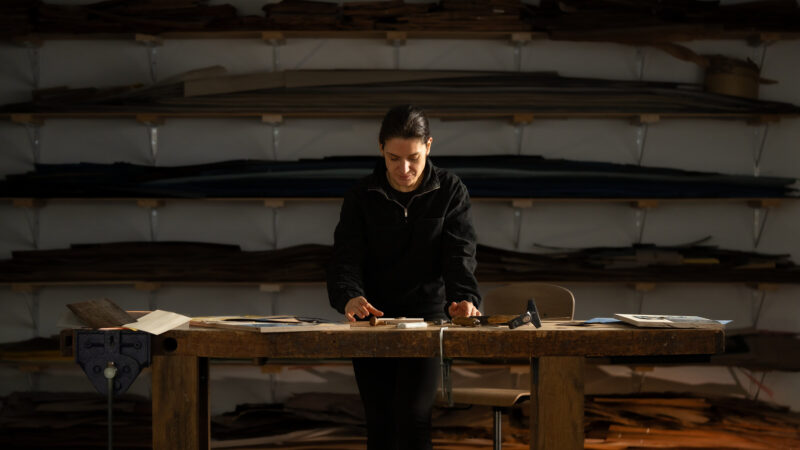
Anna Le Corno at her bench: the maison’s portrait of the artist and her woodwork practice. Courtesy of Vacheron Constantin.
Le Corno’s wider practice includes furniture and sculptural objects in wood. The workshop portrait places her behind a substantial bench, a useful counterpart to the tiny dial. It gives the material a familiar scale again: a surface worked with the hands, long before the finished watch invites a very close look.
Her training connects architecture with woodwork at École Boulle. That background makes an interesting point of entry into this collaboration. The finished dial has a sense of built space: an organised ground, a raised body and a wing whose projection changes how light moves across the whole. That interplay makes the side view as rewarding as the front.
The official account describes work under binocular magnification and the adaptation of very small tools. The change in scale therefore reaches beyond the size of the finished pieces. A familiar gesture has to be reconsidered when the distance between a feather and its neighbour becomes so small.
Woodenwings belongs to the six concept watches presented in 2026 through the One of Not Many Crafts Programme. The invitation to makers working outside the usual watchmaking crafts gives this piece its particular tension. A sculptural practice enters a precisely bounded object, and the object gains a surface that asks to be read slowly.
A bird and a clock
Make room for the image
Hours, minutes, day and date appear through four apertures around the dial. This arrangement leaves the centre available to the wooden composition. In the front view, the small blue fields act as pauses around the falcon. They remain distinct enough to find while allowing the bird to hold the first impression.
Keep the object in view
The official specification identifies a 42mm pink-gold case and an automatic Calibre 2460 G4. Those details help restore scale after the enlarged photographs. The bird occupies a watch-sized space, beneath a crystal, with the movement continuing its work behind the scene. Its sculptural presence and its time display share one compact object.
Look along the wing
Return to the side view after looking at the making photographs. The feather tips now have a different significance: they mark the distance between a patterned dial and a small sculpture. The grain remains the thread connecting the two. Woodenwings offers a way of looking at a watch in which the smallest change of level can become the most memorable detail.
Sources & further reading
The Edit
Maisons & Heritage stories
Selected stories from the same editorial universe.
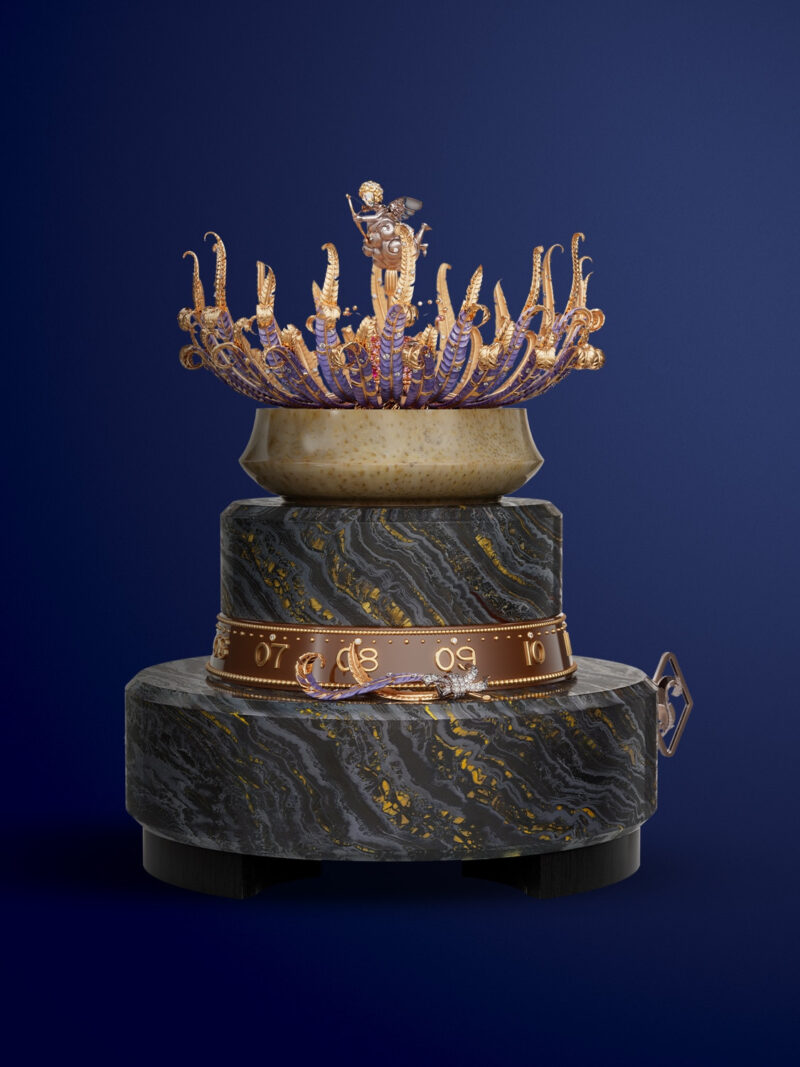
Van Cleef & Arpels Naissance de l’Amour: From Wax to Wingbeats
Green wax, a drawn gesture and a Cupid emerging from feathers. The making of
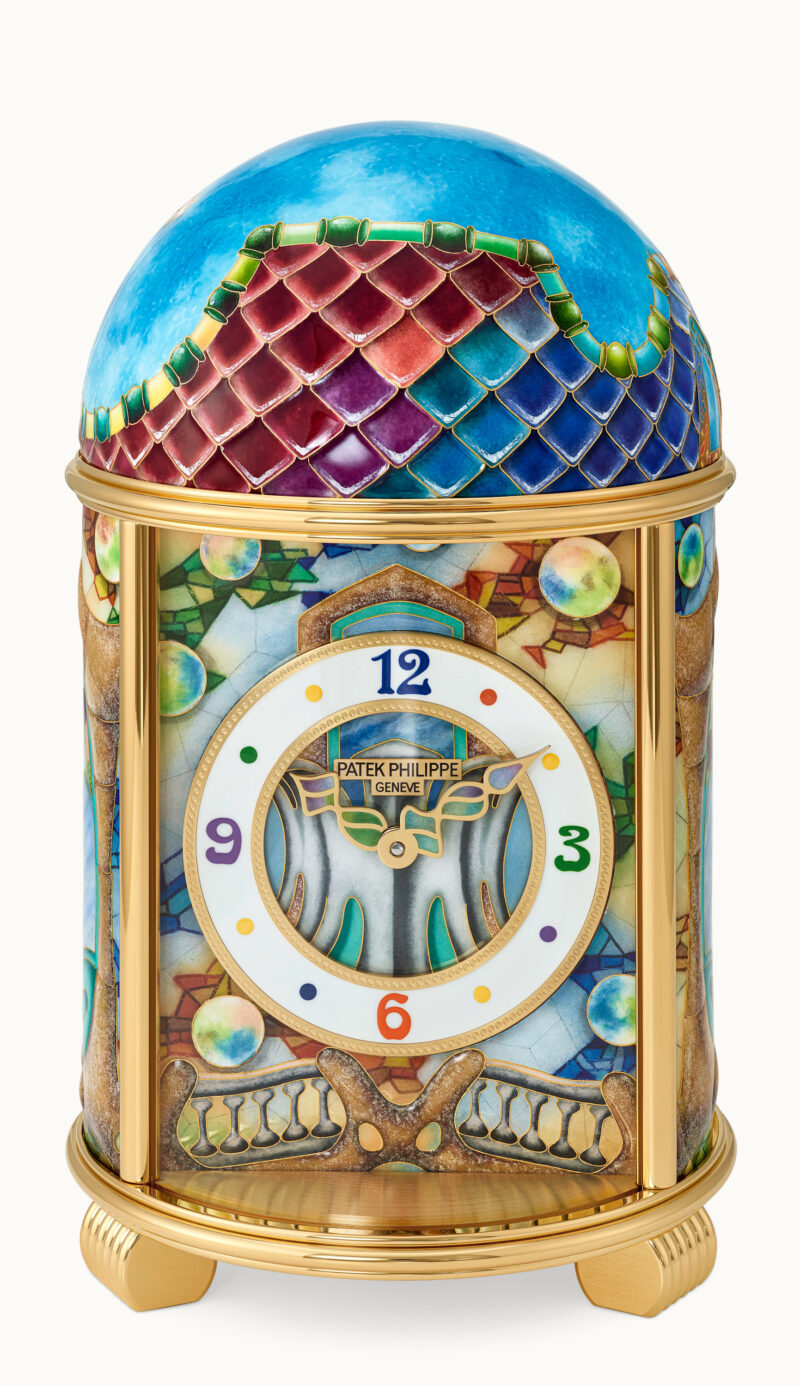
Patek Philippe The House of the Dragon: A Façade in Enamel
Gaudí’s architectural language becomes a dome table clock. Patek Philippe’s The House of the
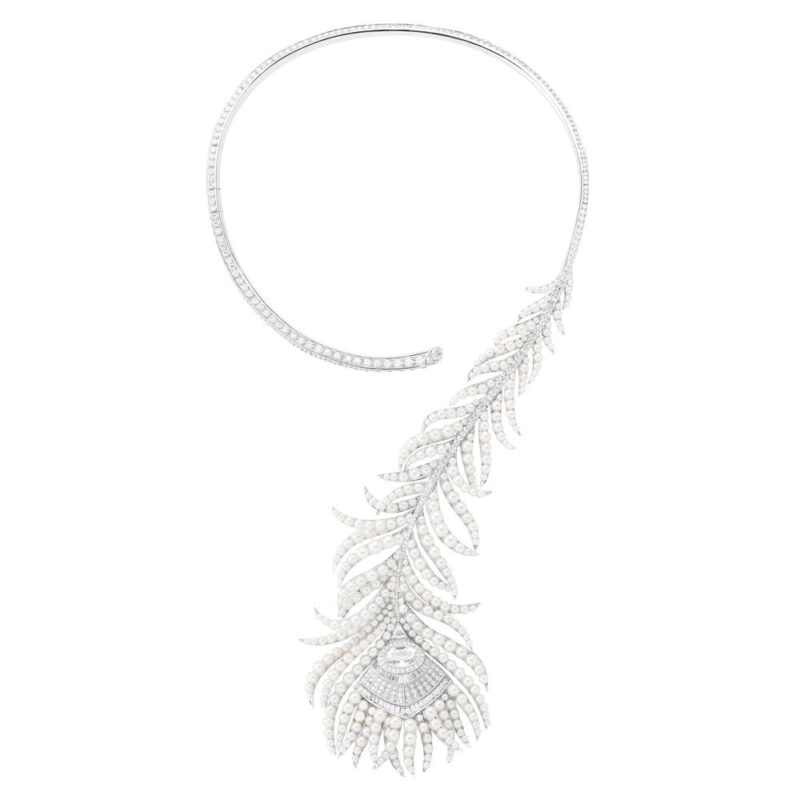
Boucheron Question Mark: The Freedom of an Open Line
A clasp-free curve and a feather that changes with the wearer. Boucheron’s Question Mark
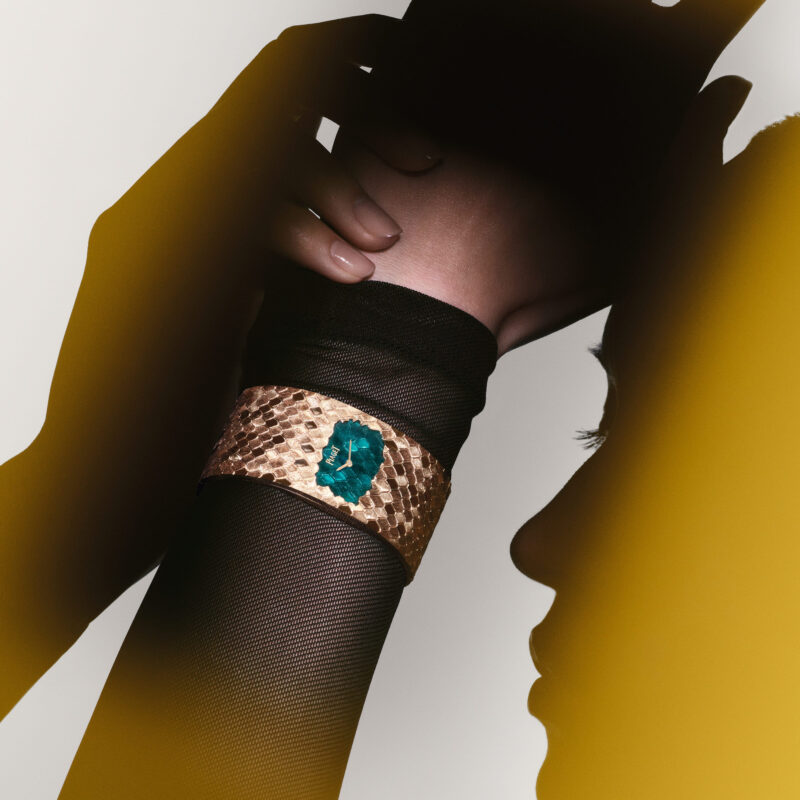
Piaget: Two Manufactures, One Language of Gold
From ultra-thin movements in La Côte-aux-Fées to goldsmithing in Plan-les-Ouates: two manufactures help explain
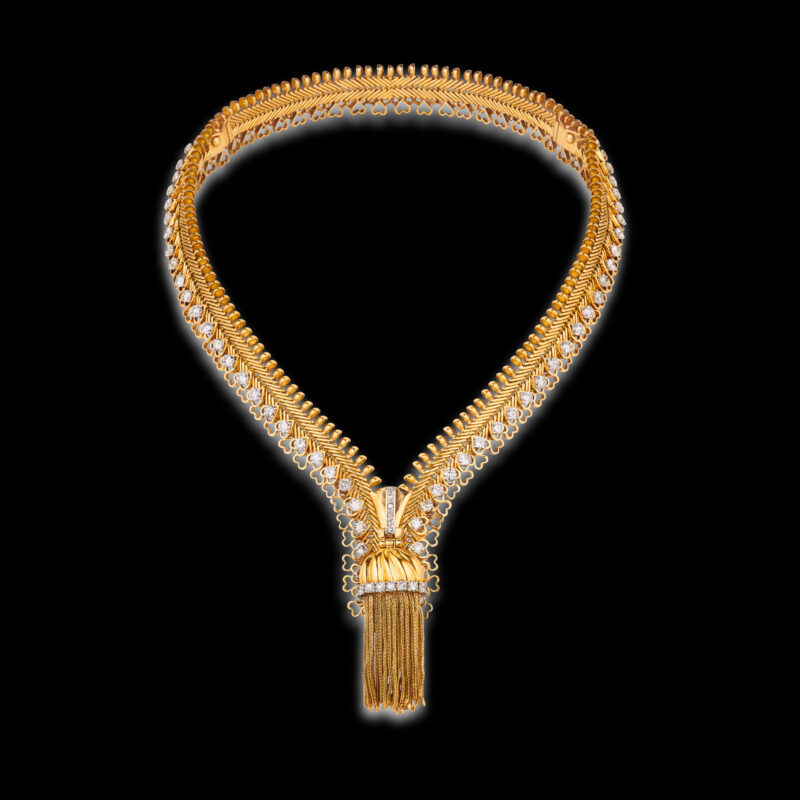
Van Cleef & Arpels Zip: One Jewel, Two Lives
A working zipper becomes a precious line. The Van Cleef & Arpels Zip changes
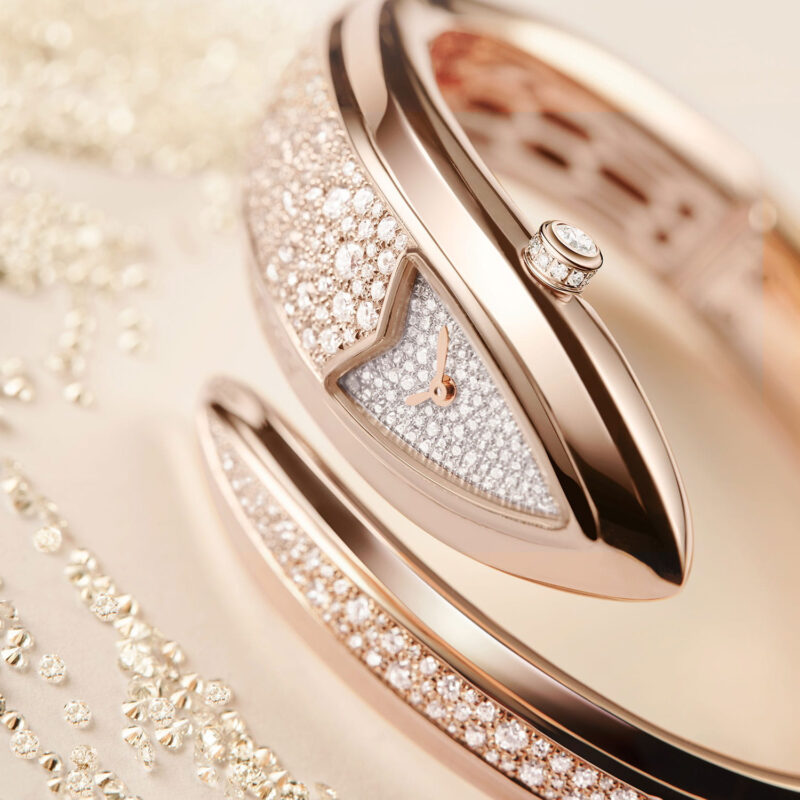
Bvlgari Serpenti Aeterna: The Snake Becomes a Line
A pointed head, an open coil and a fine seam of light. Serpenti Aeterna