
TheTimeo / Maisons & Heritage
One jewel.
Two lives.
A working zipper becomes a precious line. The Van Cleef & Arpels Zip changes from necklace to bracelet while its teeth, slider and tassel keep the design recognisable.
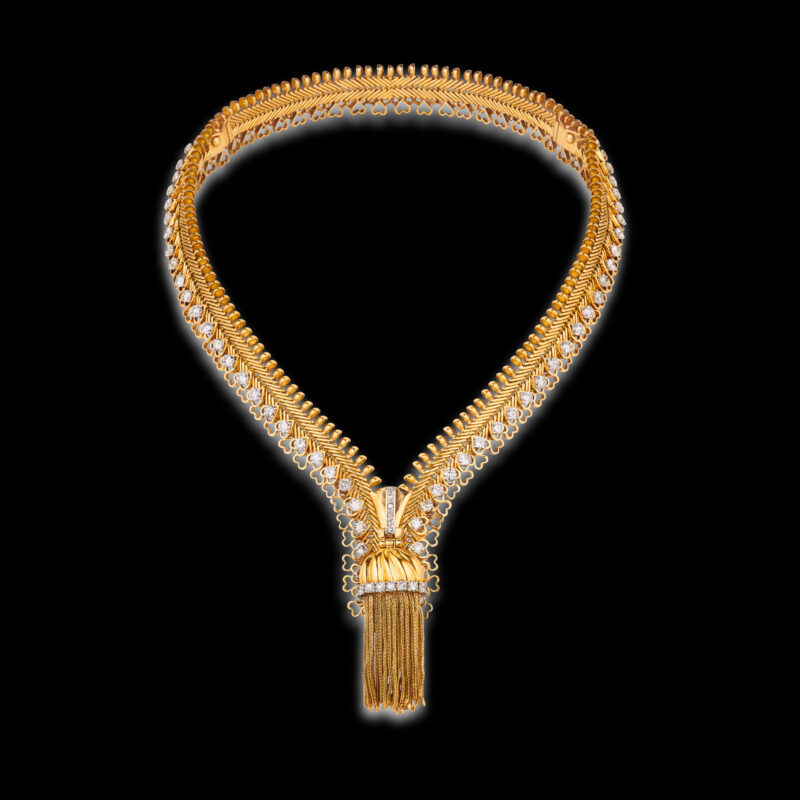
Zip necklace, 1951, in gold, platinum and diamonds. Van Cleef & Arpels Collection. Courtesy of Van Cleef & Arpels.
Explore the story
A tassel hangs where a zipper’s pull might be. Above it, two rows of gold teeth meet along the inside of a diamond-edged necklace. The Van Cleef & Arpels Zip makes an everyday gesture precious: its fastener works, and the jewel can become a bracelet. Following that change reveals how closely its beauty is tied to its construction.
A line, rewritten
01 / 03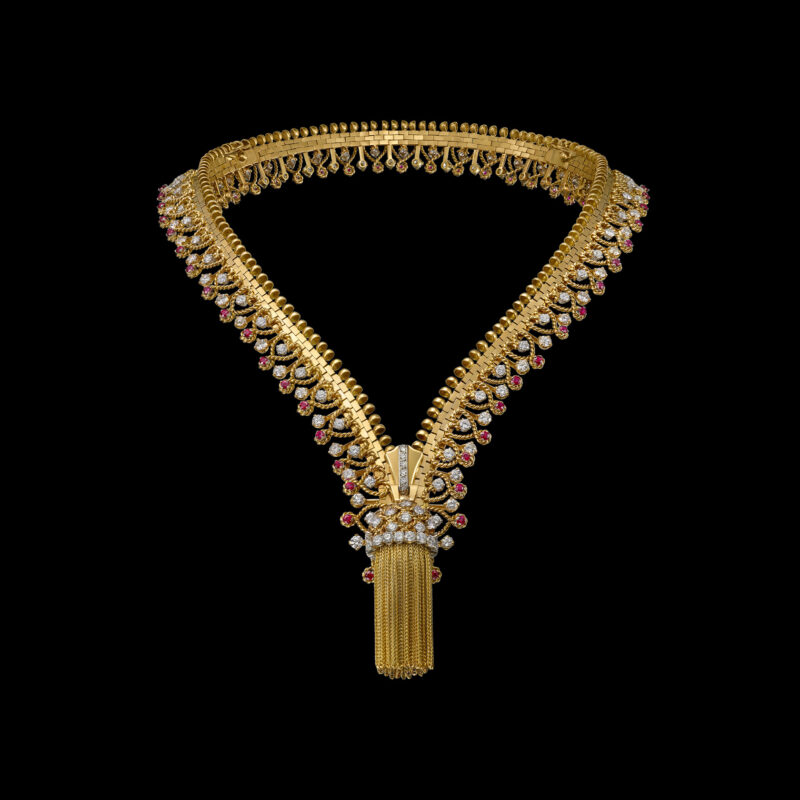
Zip necklace, 1951: platinum, yellow and pink gold, rubies and diamonds. Courtesy of Van Cleef & Arpels.
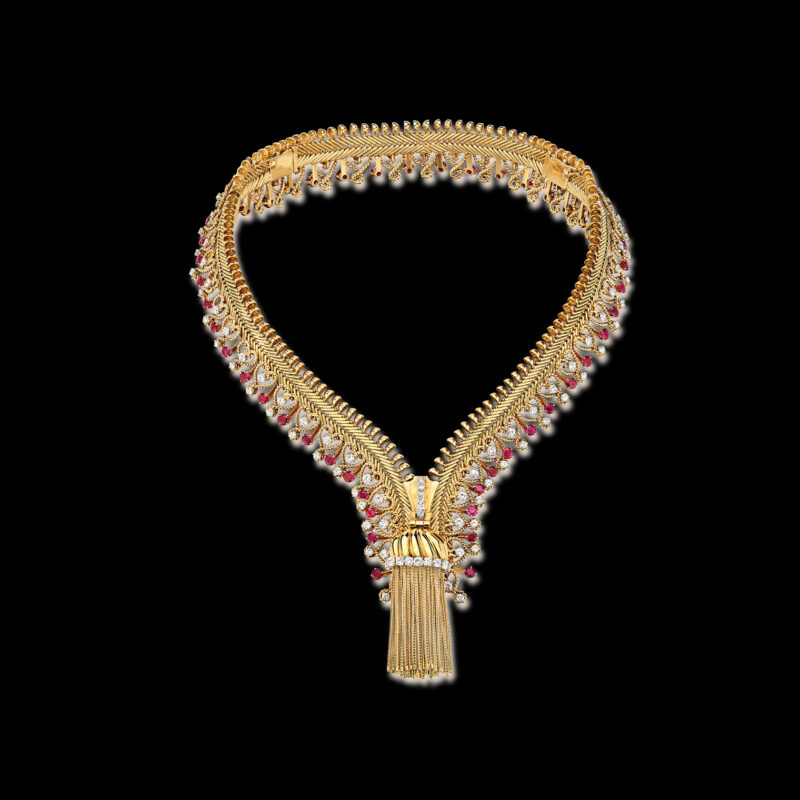
Zip necklace, 1954: platinum, yellow gold, rubies and diamonds. Courtesy of Van Cleef & Arpels.
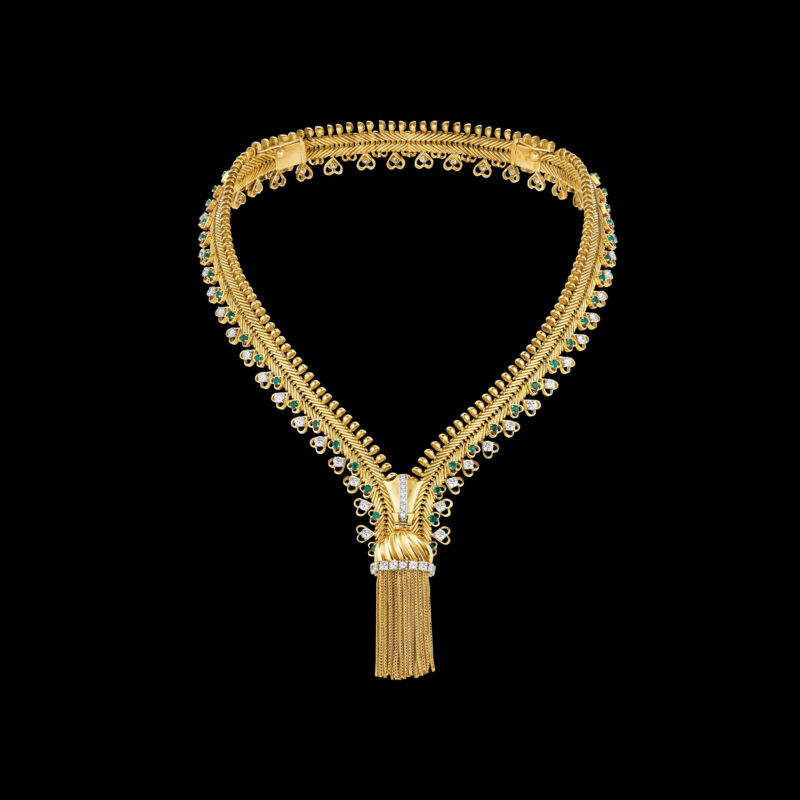
Zip necklace, 1952: platinum, yellow gold, emeralds and diamonds. Courtesy of Van Cleef & Arpels.
Start with the inner edge. Even at a distance, the repeated teeth hold the outline together. The precious stones sit around that working line, so the shape remains easy to recognise as the colours change. There is a satisfying clarity to the arrangement: the mechanism supplies the rhythm, and the border gives each example its own character.
In the 1951 jewel with rubies and diamonds, small loops spread away from the centre. The dark red stones interrupt the brighter line with a measured pulse of colour. The tassel gathers the composition into one point below the slider, bringing a different movement to the repeated forms above it.
The 1954 example gives the edge another cadence. Its outline feels more closely gathered, and the colour follows the curve towards the centre. Looking between the photographs makes a small distinction easier to appreciate: a change in the ornamental border can alter the whole necklace while the working teeth remain its organising line.
The 1952 emerald-and-diamond version introduces green at intervals around a finer-looking edge. The spaces between those accents become part of the pattern. Compare them with the denser ruby arrangement and the same family resemblance survives. A Zip can be recognised through the way it is drawn, before its individual stones are identified.
These photographs also make a case for looking at the entire jewel before moving closer. Its downward point, the meeting of the two sides and the pendant tassel form a single gesture. A macro view reveals the workmanship; the full view explains why the details belong together.
Leave the tassel visible when comparing the three. It acts as a common point of reference beneath borders that differ considerably. The photographs become easier to read once the eye has found that anchor and can move from the centre towards the edges.
From neckline to wrist
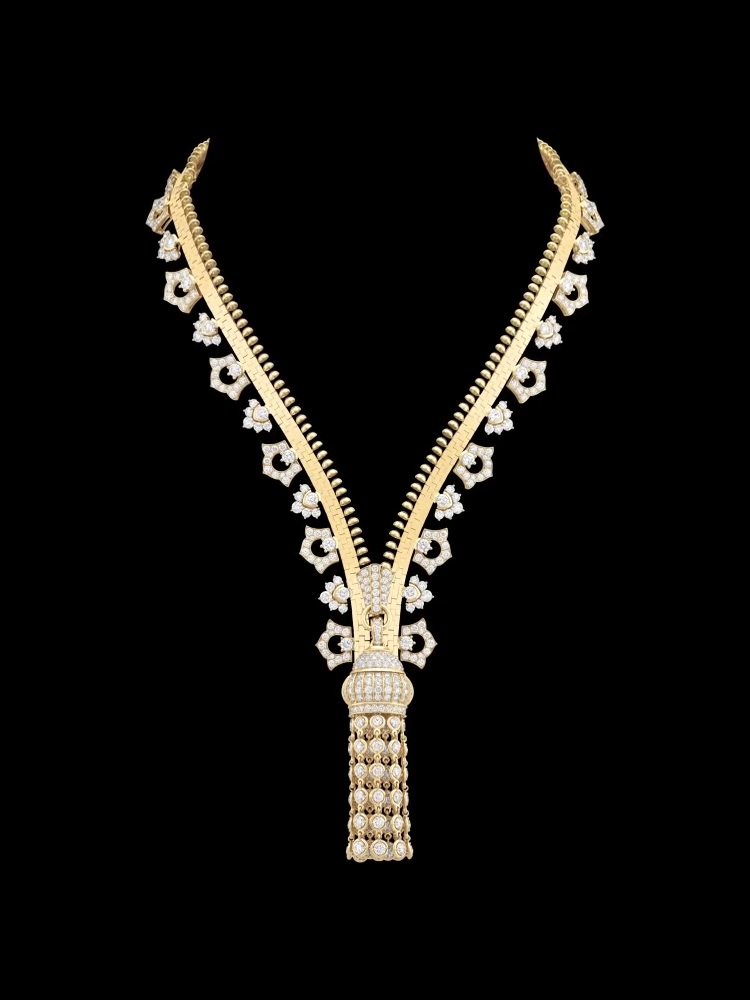
Necklace form, 1951, gold, platinum and diamonds. Still from the maison’s official Zip film. Courtesy of Van Cleef & Arpels.
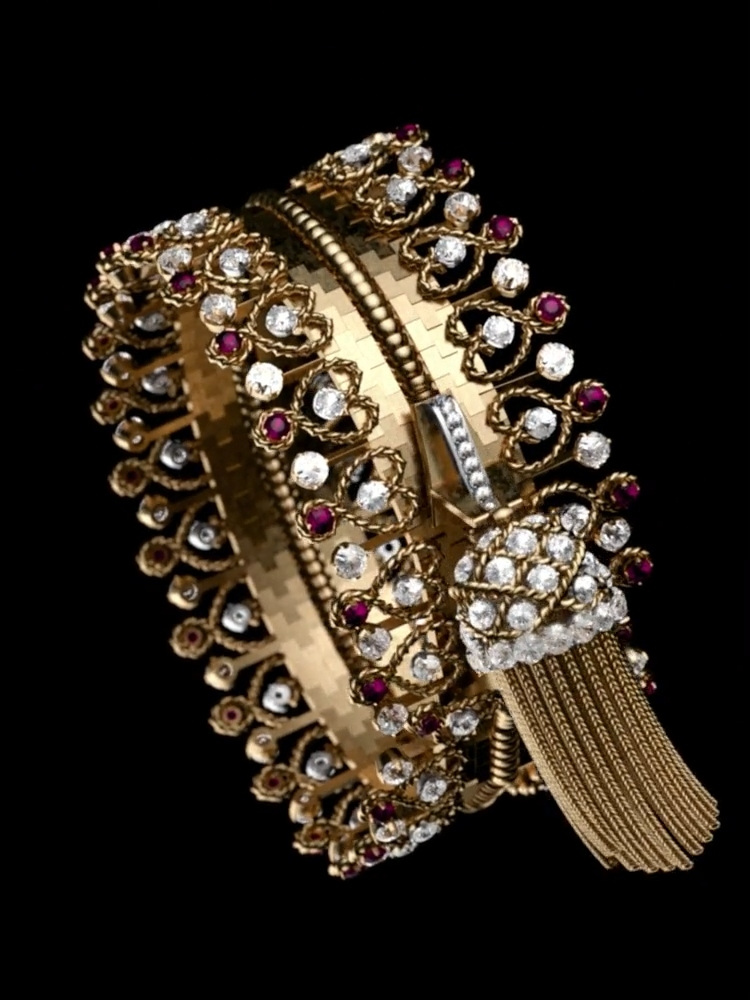
A second example in bracelet form, with coloured stones, from the maison’s film of its 1951 Zip creations. Courtesy of Van Cleef & Arpels.
The transformation begins with a removable section at the back. Once that section is detached, the slider can close the remaining length into a bracelet. The two examples from the maison’s film illustrate necklace and bracelet forms: an open V and a curved band, each retaining the tassel as a visible part of the design.
Notice how the arrangement changes. In necklace form, the border follows a long descent towards the centre of the body. In bracelet form, repeated motifs gather around a much smaller circumference. The edge acquires more visual density, and the tassel moves from the bottom of a long line to the side of a compact object.
The mechanism is therefore part of the jewel’s expression. Its movement provides a reason for the teeth, the slider and the flexible construction to remain visible. Looking at both forms helps explain the confidence of the design: the familiar fastener still gives the eye something immediate to understand.
A fastener becomes a signature
The useful line
The teeth run inside the ornament, close to the centre of the shape. Their small repeated forms create a continuous path for the slider. In the full necklace photograph, that path is visible even before the individual settings become clear. It gives the design a directness that survives an elaborate border.
The ornamental pull
The slider draws attention towards the meeting point of the two sides. Beneath it, the tassel exchanges the edge’s repeated loops for hanging strands. That change of rhythm is especially clear in bracelet form, where the hanging element sits beside the curved band. The part used to move the fastener becomes the part the eye remembers.
A code across two eras
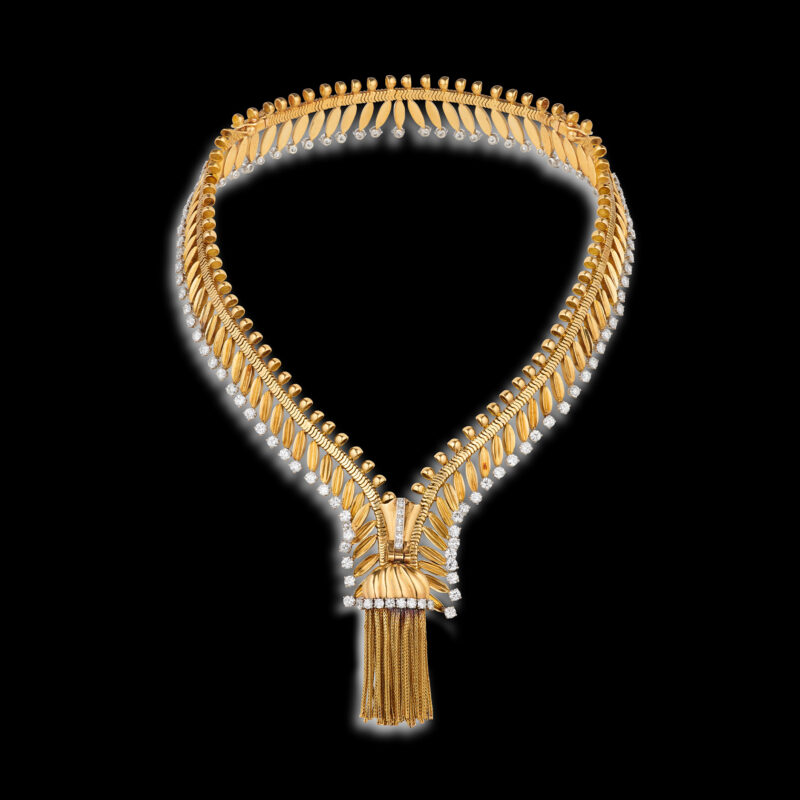
Chantilly Zip necklace, 1952: platinum, yellow gold and diamonds. Courtesy of Van Cleef & Arpels.
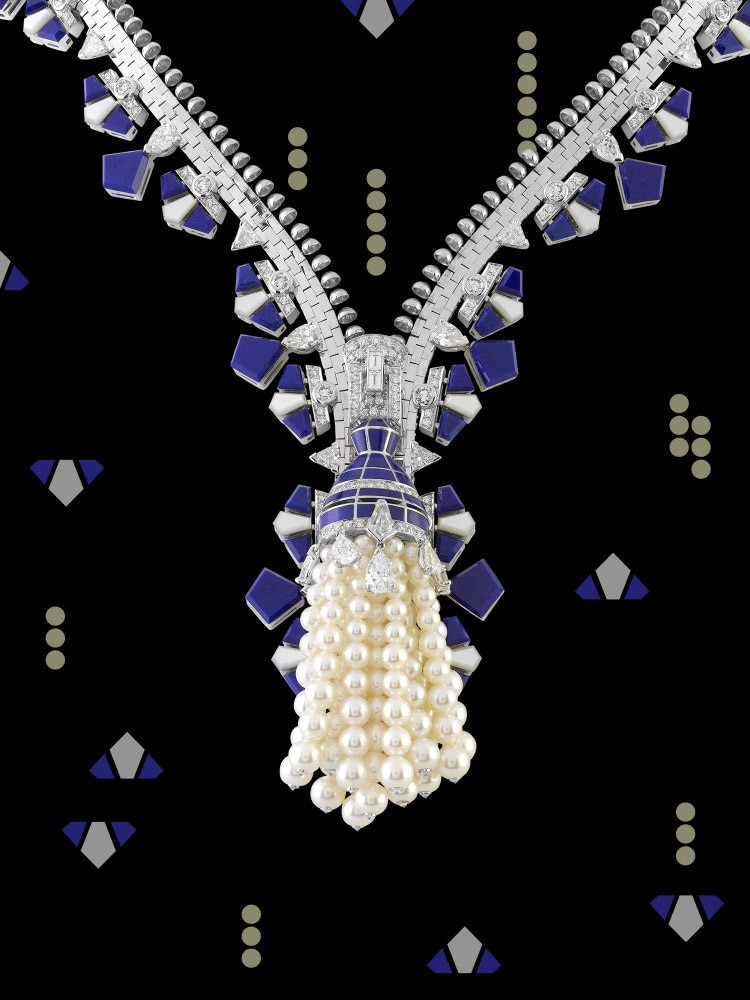
Detail of Zip Art Déco, 2010, as illustrated in the Heritage Gallery: gold, lapis lazuli, white mother-of-pearl, cultured pearls and diamonds. Courtesy of Van Cleef & Arpels.
The 1952 Chantilly Zip and the 2010 Art Déco version show how far that structure can travel. In the earlier jewel, pale diamonds and warm gold build a closely articulated border. The later example brings lapis lazuli, white mother-of-pearl and cultured pearls into the same transformable idea. Dark blue and white make a different sort of contrast around the line of teeth.
The maison’s archive distinguishes the jewellery-fastener patent of 1938 from the creation of the Zip necklace in 1950. These dates describe an idea taking shape over time. The surviving 1950s pieces then show that the result already allowed considerable variation in colour, outline and ornament.
That is the interest of placing the two eras beside one another. The later jewel can change the surrounding visual language while keeping the relationship between border, slider and tassel legible. Its identity comes from the arrangement of those parts as much as from any single motif.
The comparison invites a personal way of looking, too. One might be drawn first to the warmth of the gold, another to the blue-and-white contrast. Looking again at the working line reveals the common idea underneath those preferences. The materials change the mood; the structure gives the design its continuity.
What survives the change
A good final view of the Zip is the bracelet beside the open necklace. The difference in scale is considerable, yet the teeth and tassel keep the relationship clear. It is a jewel whose second life can be understood through its first. Once that connection becomes visible, the decorative border feels all the more persuasive: it has been designed to remain beautiful while the shape around it changes.
Sources & further reading
The Edit
Maisons & Heritage stories
Selected stories from the same editorial universe.
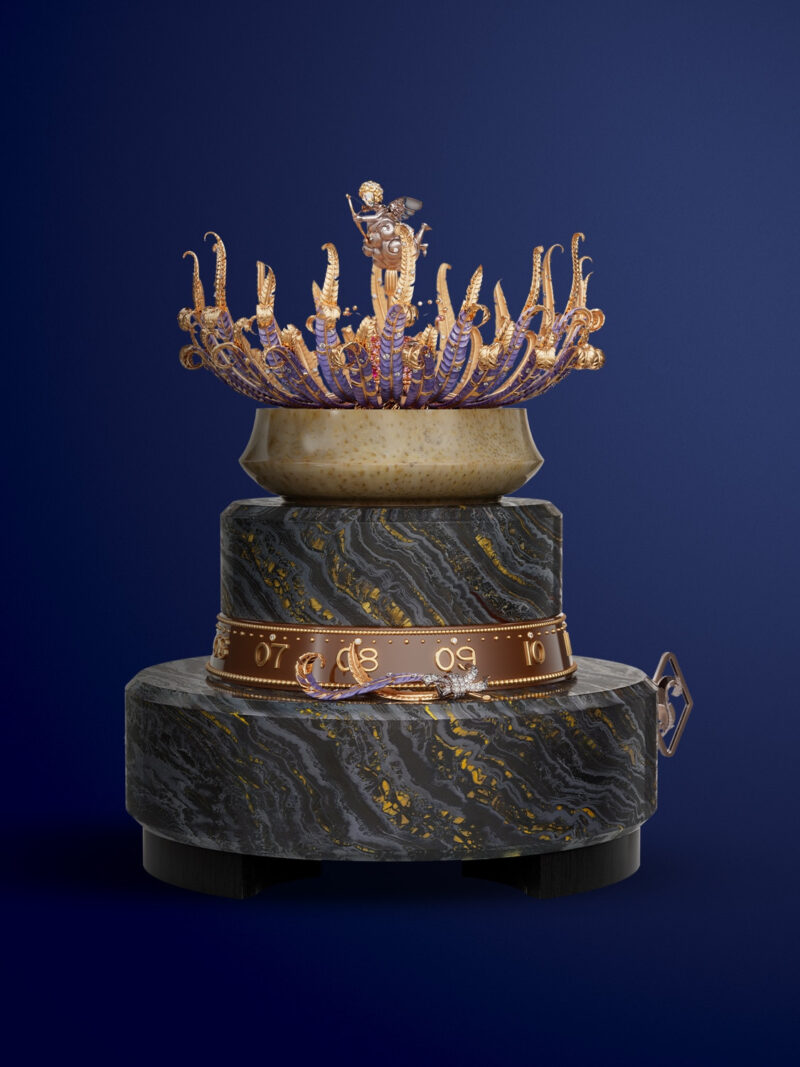
Van Cleef & Arpels Naissance de l’Amour: From Wax to Wingbeats
Green wax, a drawn gesture and a Cupid emerging from feathers. The making of
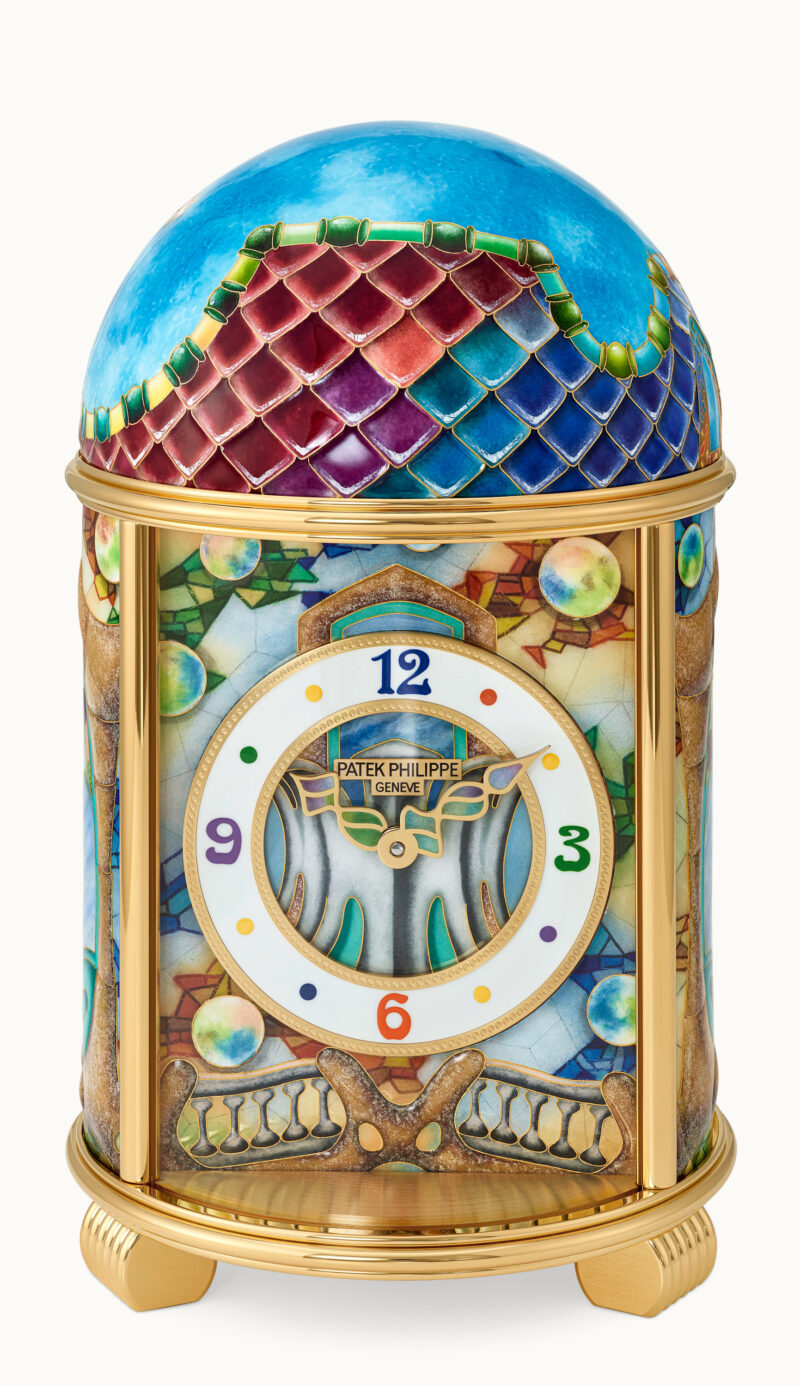
Patek Philippe The House of the Dragon: A Façade in Enamel
Gaudí’s architectural language becomes a dome table clock. Patek Philippe’s The House of the
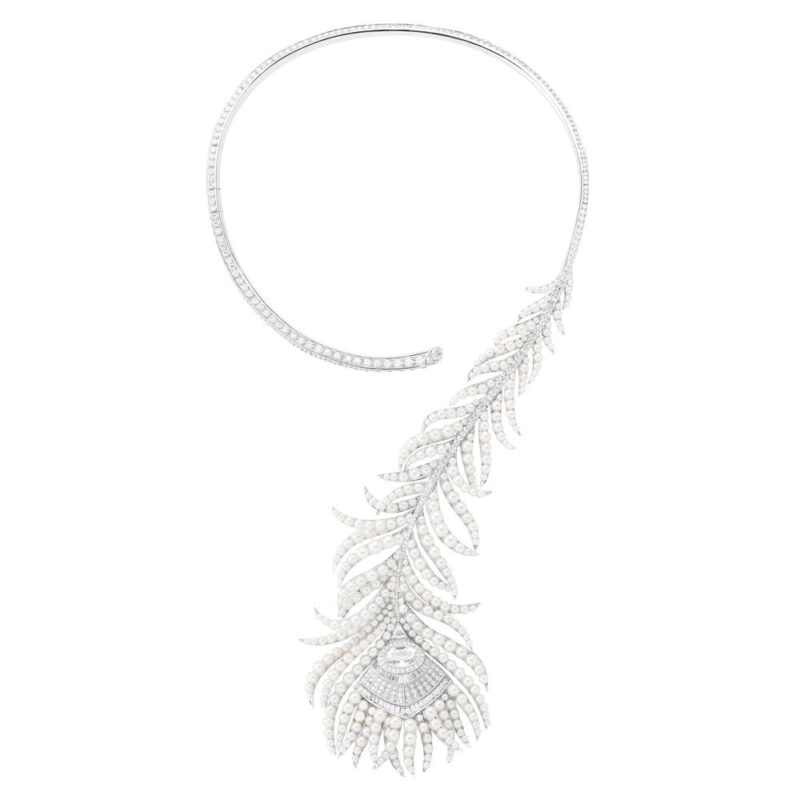
Boucheron Question Mark: The Freedom of an Open Line
A clasp-free curve and a feather that changes with the wearer. Boucheron’s Question Mark
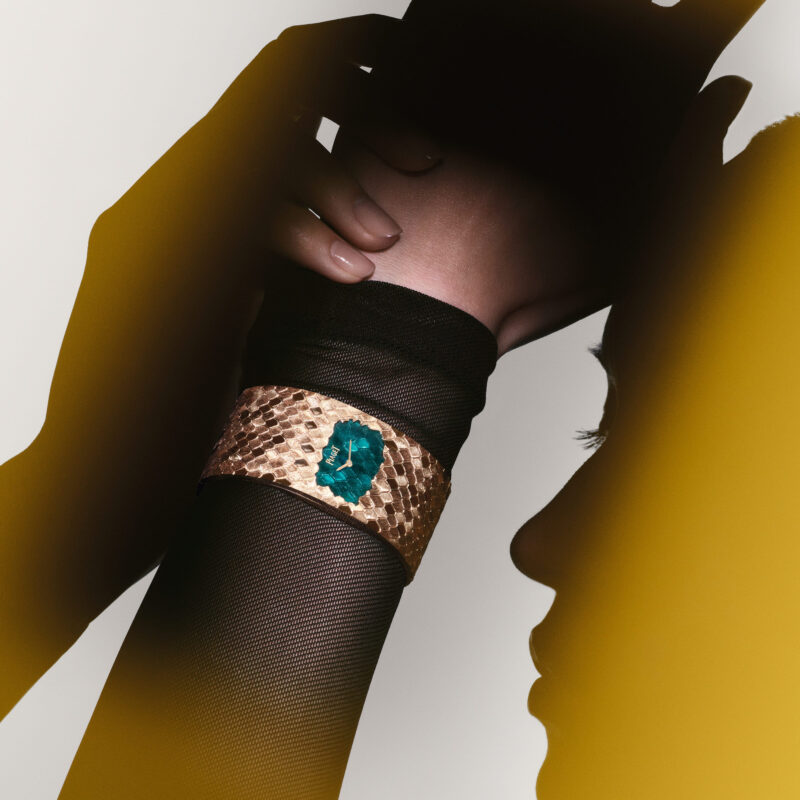
Piaget: Two Manufactures, One Language of Gold
From ultra-thin movements in La Côte-aux-Fées to goldsmithing in Plan-les-Ouates: two manufactures help explain
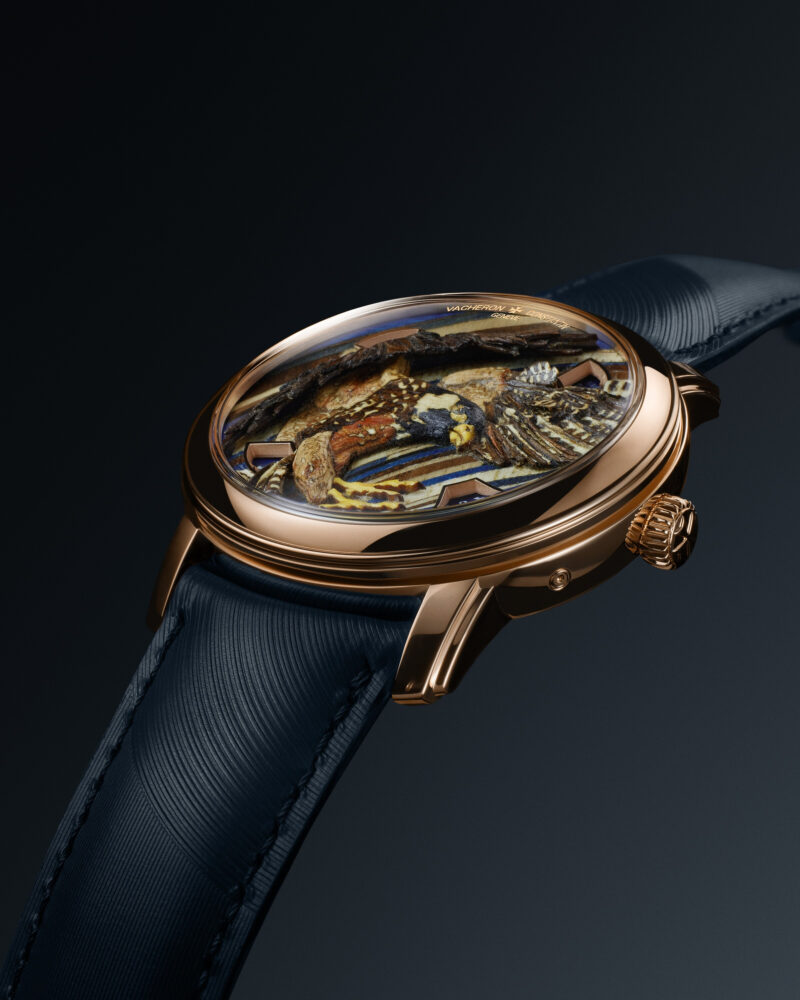
Vacheron Constantin Woodenwings: A Falcon Carved in Wood
A raised wing, a patterned ground and four small windows for the time. Anna
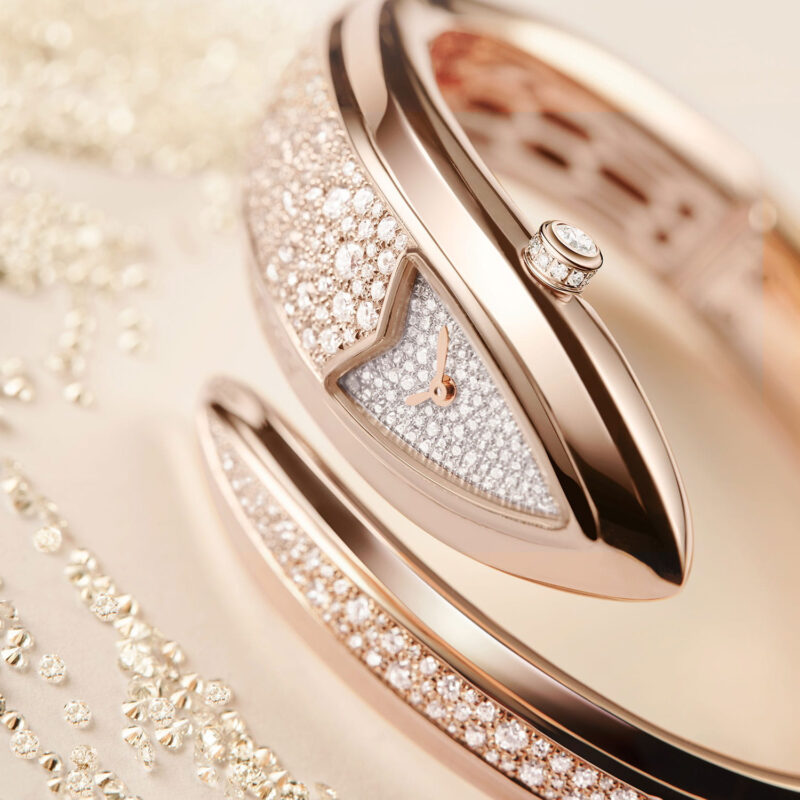
Bvlgari Serpenti Aeterna: The Snake Becomes a Line
A pointed head, an open coil and a fine seam of light. Serpenti Aeterna