
TheTimeo / Jewelry
EGYPT,
translated into jewellery
A century after its first Egyptian jewels, Van Cleef & Arpels returns to the subject through archive, Mystery Set surfaces, hardstones and transformable construction.
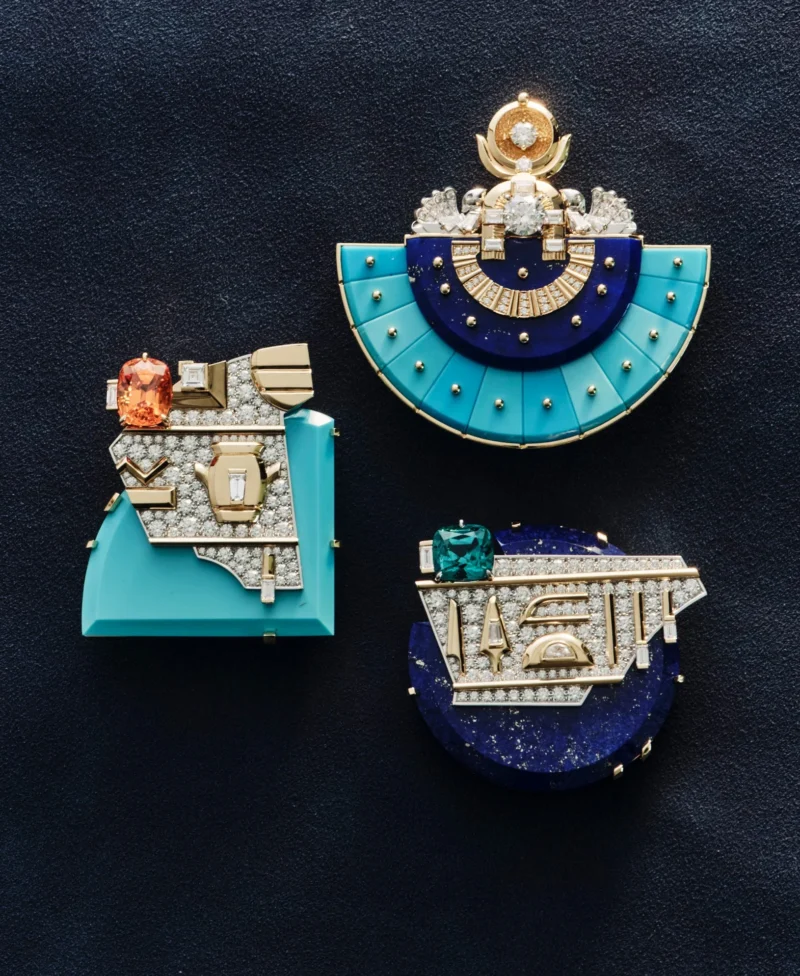
Fascinations d’Égypte moves between fragments, figures and transformable constructions rather than repeating a single symbol. Courtesy of Van Cleef & Arpels.
Explore the story
Egypt is an unusually dangerous subject for high jewellery.
The visual vocabulary is instantly recognisable: lotus flowers, winged figures, scarabs, hieroglyphics, lapis blue, gold, black outlines, falcons, cats, sun discs. That recognisability is useful, but it also makes the subject easy to flatten. A jewel can look “Egyptian” after only a handful of signals. Once that happens, craftsmanship risks becoming costume.
Van Cleef & Arpels has a particular reason to avoid that trap. Fascinations d’Égypte is not the Maison’s first encounter with Egypt. It arrives after more than a century of objects, drawings, royal commissions and collecting history. The House was making Egyptian-inspired jewellery in the 1920s, then later supplied major pieces to members of Egypt’s royal family. In 2026, it is therefore working with two archives at once: Ancient Egypt as a source of forms and symbols, and its own record of having interpreted those forms before.
That changes the standard by which this collection should be judged. The question is not whether a lotus looks convincing or whether a cat can be recognised as Bastet. The more useful question is what happens between source and object. Which motifs are abstracted? Which colours are allowed to carry the reference without literal imagery? Where does the Mystery Set change the surface? When does transformability become part of the idea? And where does the collection risk becoming too illustrative?
This is where Fascinations d’Égypte becomes interesting.
Key takeaways
- Van Cleef & Arpels’ official archive dates its first Egyptian-inspired jewels to 1923–1925, directly after the discovery of Tutankhamun’s tomb in 1922.
- Those early pieces did not reproduce antiquities literally. They translated Egyptian figures, hieroglyphics, lotus flowers and other motifs through Art Deco geometry, repeated patterns, hard colour contrasts and a palette of emerald, sapphire, ruby, diamond and onyx.
- The Maison’s public 2026 Fascinating Egypt experience currently presents a curated selection of 16 creations. Launch coverage from several specialist and fashion publications describes the complete collection as approximately 180 pieces.
- The 2026 collection combines a century-old Egyptian visual lineage with later house techniques, particularly the Mystery Set, patented in 1933, and transformable jewellery systems developed over subsequent decades.
- Pieces such as Princesse du Nil, Fleur de Lotus Mystérieuse, Déesse Ailée Mystérieuse, Vénus Égyptienne and the Fragment clips show several different ways of translating Egypt: through archive, colour, surface, mechanics and figure rather than through archaeological replication.
- The strongest pieces are those in which the Egyptian reference changes the construction of the jewel. Iconography alone is not enough.
The first Egyptian jewels were already translations
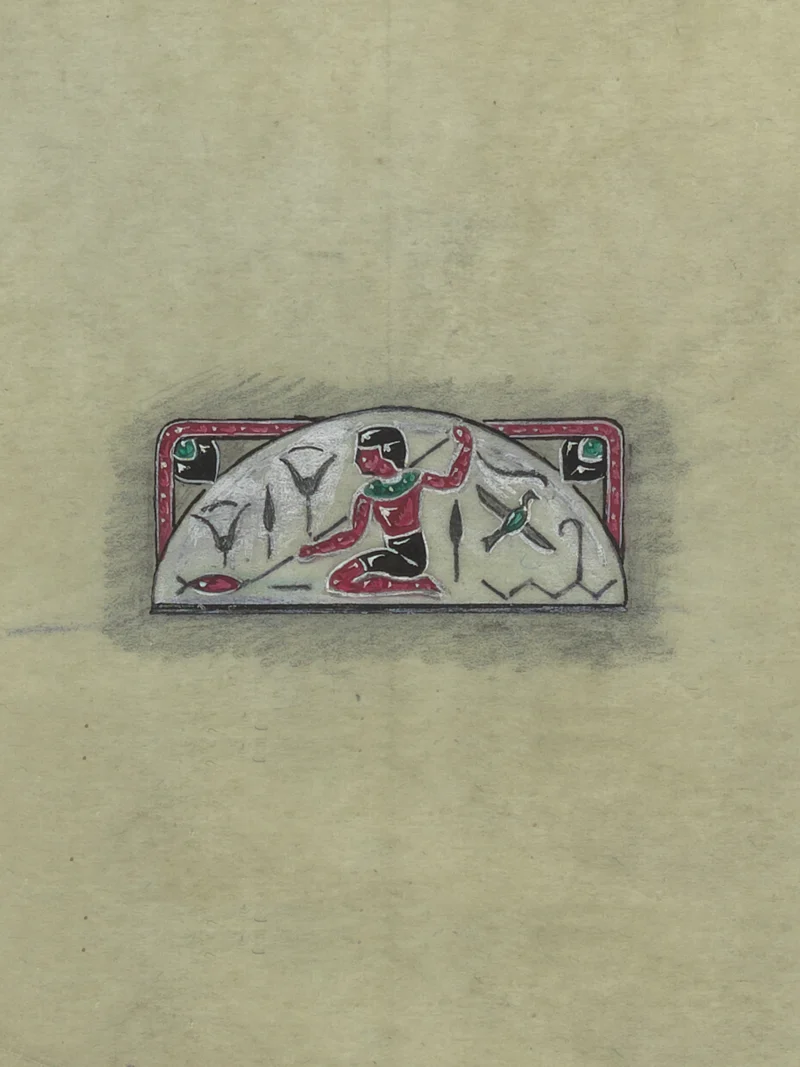
An Egyptian-inspired brooch design from circa 1925 records how the Maison translated figures and pattern into Art Deco geometry. Courtesy of Van Cleef & Arpels.
The easiest way to understand the 2026 collection is to start with a 1924 bracelet.
Van Cleef & Arpels’ patrimonial collection includes an Egyptian Pattern bracelet in platinum set with diamonds, emeralds, rubies, sapphires and onyx. Across its narrow band are winged figures, animal forms and pharaonic attributes. The Maison’s own catalogue describes the central female figure as a highly stylised possible representation of Isis, flanked by creatures resembling Anubis and Horus.
Nothing about the object pretends to be an archaeological artefact. The colour is too hard, the geometry too controlled, the platinum and diamond ground too clearly rooted in Parisian jewellery of the period. Egypt supplies the imagery. Art Deco supplies the grammar.
That distinction is documented by Van Cleef & Arpels itself. After Howard Carter’s discovery of Tutankhamun’s tomb in 1922 triggered an international wave of Egyptomania, the Maison produced Egyptian-inspired creations between 1923 and 1925. Its archive describes geometric lines, repeated patterns and strong contrasts as the means through which Egyptian symbols were converted into contemporary design. Offerings, sphinxes, amphorae, ostrich feathers, hieroglyphics and lotus flowers entered a palette of emeralds, sapphires, buff-top rubies, diamonds and onyx.
The important word is converted.
A buff-top ruby does not imitate ancient faience. Onyx does not become archaeological black stone simply because it sits beside a lotus. The materials work through contrast and graphic rhythm. The jewellery belongs to the 1920s even while its imagery points thousands of years backwards.
Fascinations d’Égypte inherits that method more convincingly than it inherits any single motif.
The archive is larger than Egyptomania
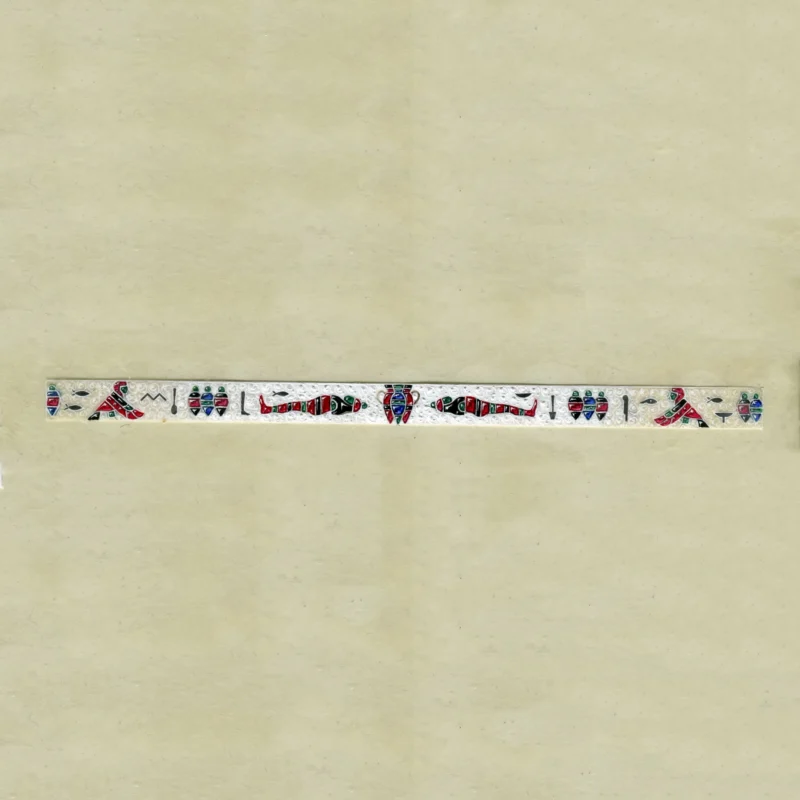
The bracelet drawing separates the source imagery from the finished jewel and makes the act of translation visible. Courtesy of Van Cleef & Arpels.
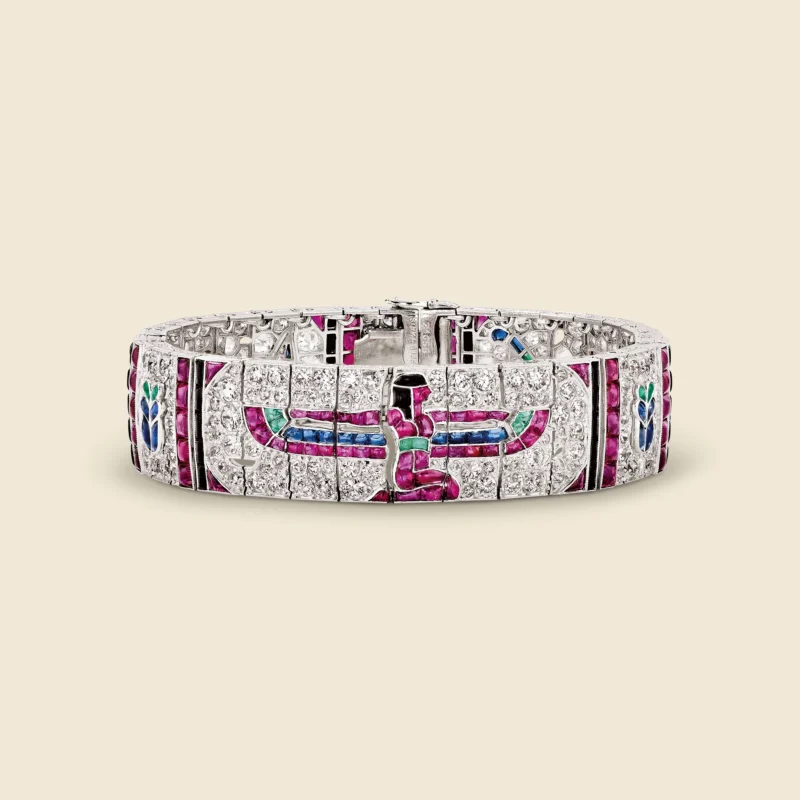
The Egyptian Pattern bracelet of 1924 sets hard colour and figurative motifs against a diamond and platinum ground. Courtesy of Van Cleef & Arpels.
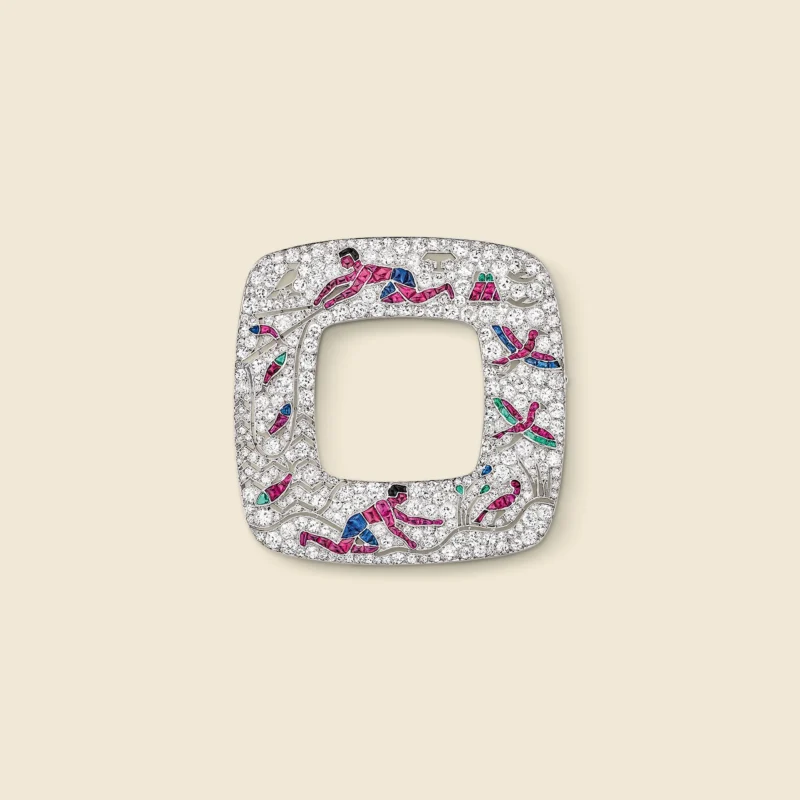
In the 1924 Egyptian Pattern brooch, compact geometry turns historical imagery into a distinctly Art Deco object. Courtesy of Van Cleef & Arpels.
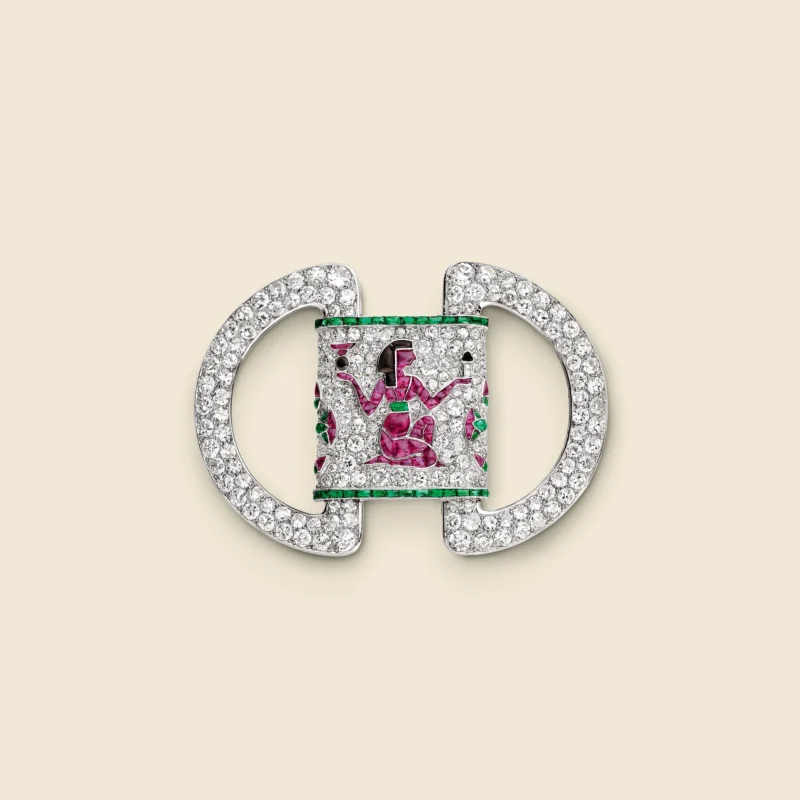
A patrimonial Egyptian-inspired creation from the Van Cleef & Arpels archive. Courtesy of Van Cleef & Arpels.
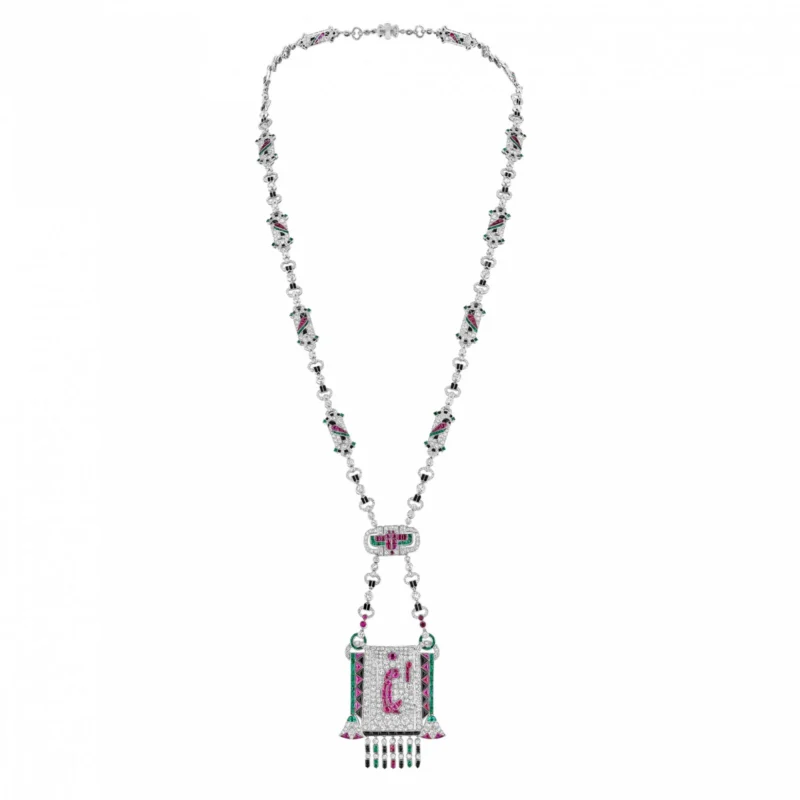
The Egyptian Pattern long necklace of 1923 shows how the Maison’s Egyptian vocabulary entered jewellery a century before the 2026 collection. Courtesy of Van Cleef & Arpels.
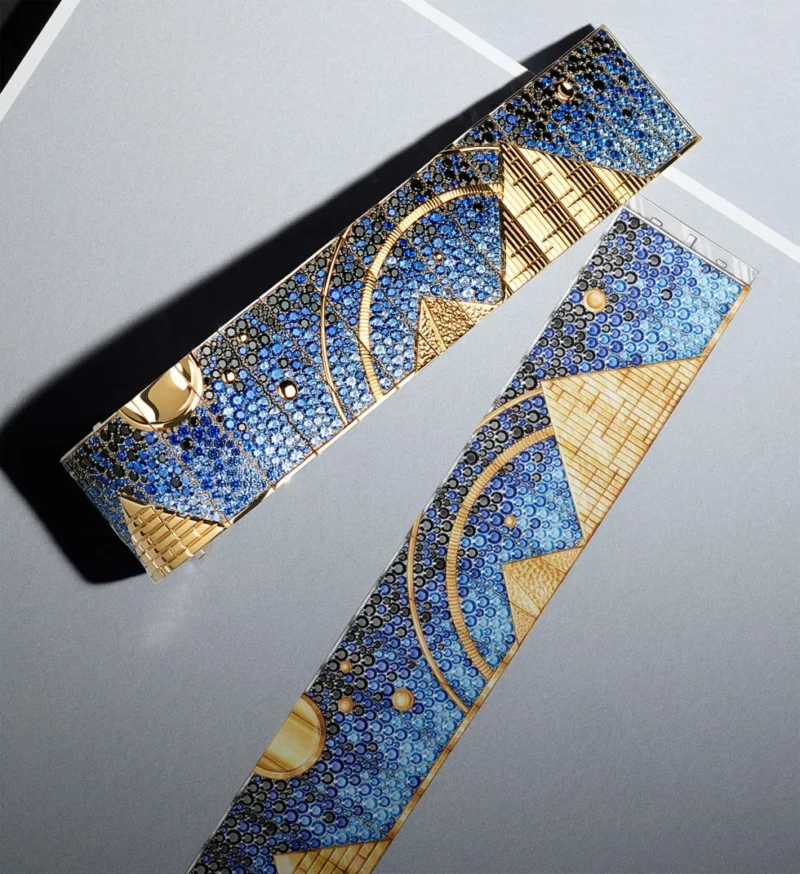
The Paysage Merveilleux pair reads like a night sky built from hardstone, gold and gem-set points of light. Courtesy of Van Cleef & Arpels.
Between the 1920s and the present collection, another layer entered the story: Egypt moved from imagined antiquity into the Maison’s client history.
In 1939, Van Cleef & Arpels created a major wedding parure for Princess Fawzia of Egypt ahead of her marriage to Mohammad Reza Pahlavi. The set included a tiara, necklace, earrings and ring in platinum and diamonds. The tiara alone used 54 pear-shaped diamonds totalling 92 carats and 530 baguette-cut diamonds totalling 72 carats, according to the Maison.
The Egyptian royal family continued to acquire important Van Cleef & Arpels pieces. The patrimonial record includes the 1937 Peony clip in Mystery Set rubies and a 1929 emerald-and-diamond collaret associated with the royal family. Those objects matter to the new collection for a reason that has little to do with pharaonic decoration. They created a second Egyptian history inside the Maison, one involving actual patrons, alterations, ownership and formal jewellery rather than archaeological motifs.
The 2026 Princesse du Nil necklace sits in that second lineage.
Launch documentation describes ten Colombian emerald drops totalling 107.37 carats, seven natural white pearls totalling approximately 85.13 carats and a structure in white gold, platinum and yellow gold. The relationship to the historical collaret is visible in the radiating geometry and descending emeralds, but the contemporary necklace is not a facsimile. It uses different proportions, pearls and a detachable back motif that changes the way the object occupies the body.
That is a much more sophisticated kind of quotation than copying an old necklace stone for stone. The archive provides a structural memory, not a pattern sheet.
There is a useful editorial caution here. Public sources do not tell this royal provenance with perfect consistency. Different pages and launch reports attach dates and individual members of the Egyptian royal family differently to related emerald collarets. The safe conclusion is narrower: the 2026 Princesse du Nil draws on a 1929 emerald-and-diamond collaret from Van Cleef & Arpels’ patrimonial Egyptian history. Anything more precise should be tied to the exact archival object record rather than repeated from memory.
That kind of restraint matters in a collection so dependent on history.
The 2026 collection is not a reconstruction
The strongest evidence that Fascinations d’Égypte is not trying to reproduce the 1920s comes from technique.
Van Cleef & Arpels patented the Mystery Set in 1933, roughly a decade after its first Egyptian-inspired pieces. The technique therefore could not have belonged to the original 1923–1925 group. In 2026, however, it becomes one of the most important ways the Maison interprets Egyptian colour and figure.
That chronological mismatch is productive.
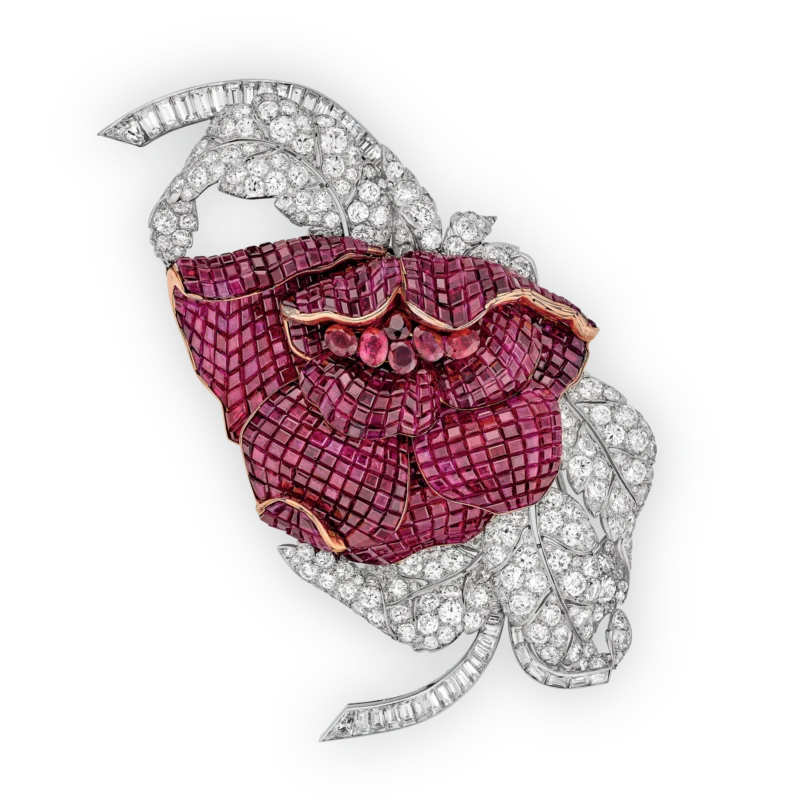
The Mystery Set hides most visible metal by sliding individually cut stones onto gold rails. The result is a continuous coloured surface, often in ruby, sapphire or emerald, where the setting seems to retreat behind the material. Van Cleef & Arpels says a typical clip can require around 300 hours between jeweller and Mystery Set lapidary, with individual stones sometimes taking hours to cut.
In Fleur de Lotus Mystérieuse, the technique does something that a conventional pavé surface would struggle to achieve. The ruby petals read as planes of saturated colour rather than as a field broken into separate stones and prongs. Diamonds introduce flashes and edges, while mirror-polished gold gives parts of the flower a different kind of brightness. The lotus reference is recognisable, yet the technical argument belongs squarely to Van Cleef & Arpels after 1933.
Déesse Ailée Mystérieuse pushes the idea further. Launch reporting describes Mystery Set rubies individually recut with a rounded upper surface and curved underside so that the winged form can articulate. This is where the collection is at its best. The Egyptian image is not simply applied to a jewel. It creates a mechanical problem, because wings need volume and movement, and the stones have to accommodate that movement without exposing the structure too aggressively.
The same principle applies to the mythological clips. Bénou Mystérieux and Bastet Mystérieuse are figurative enough to be immediately legible, but their success depends on surface and construction rather than recognition alone. Rubies, emeralds, sapphires, lapis, turquoise, spinel, mother-of-pearl and diamonds create zones of colour with very different optical behaviour. Opaque stone can hold a silhouette. Transparent faceted gems break it into light. Mystery Set surfaces sit somewhere else again, smooth enough to read as colour mass while remaining visibly precious.
That material hierarchy is what saves the pieces from becoming miniature illustrations.
Colour can do more work than iconography
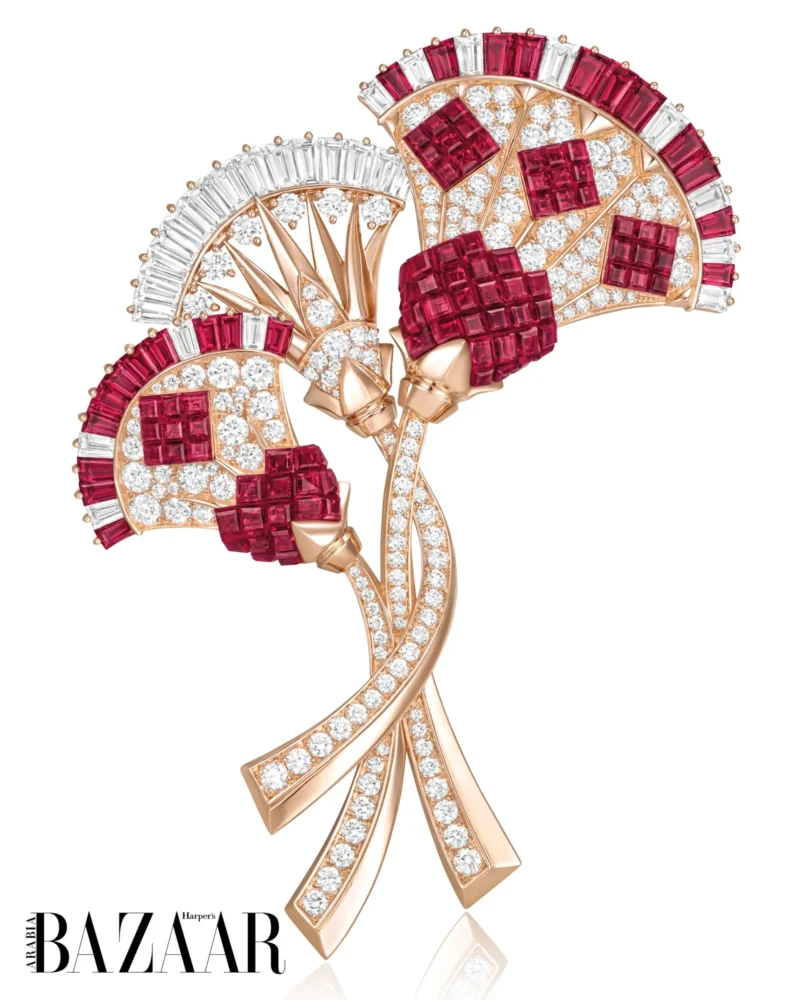
Fleur de Lotus Mystérieuse uses colour and surface to make the lotus a problem of construction rather than ornament alone. Courtesy of Van Cleef & Arpels.
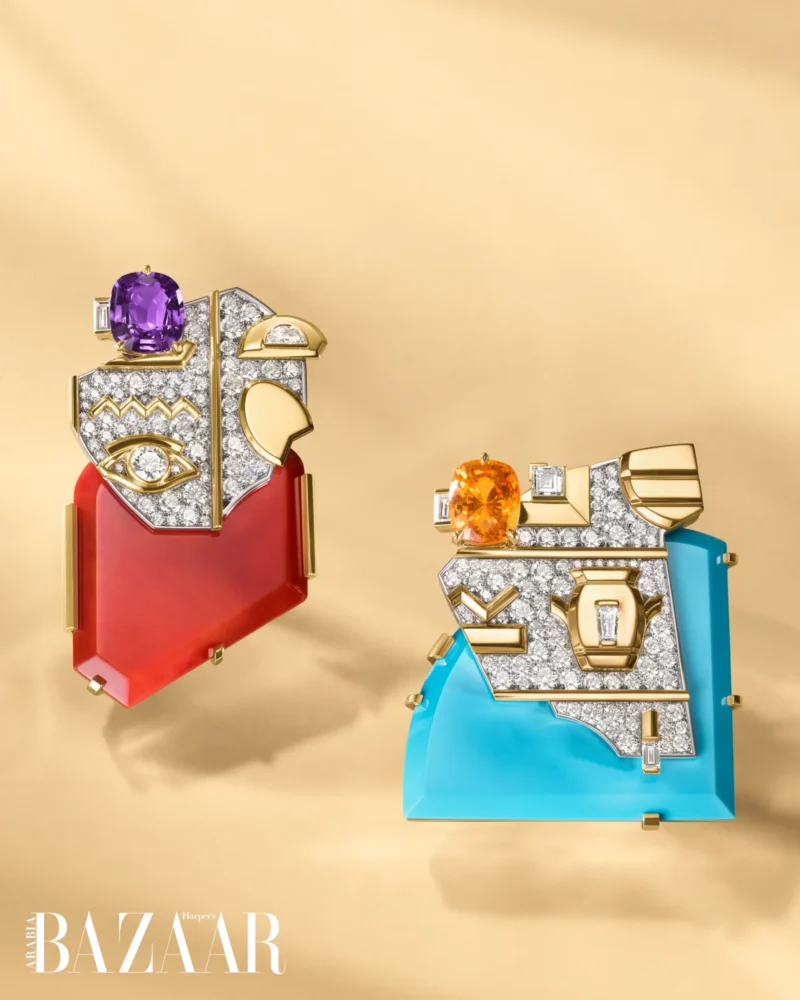
The Fragment clips reduce the Egyptian reference to portable arrangements of stone, colour and gold. Courtesy of Van Cleef & Arpels.
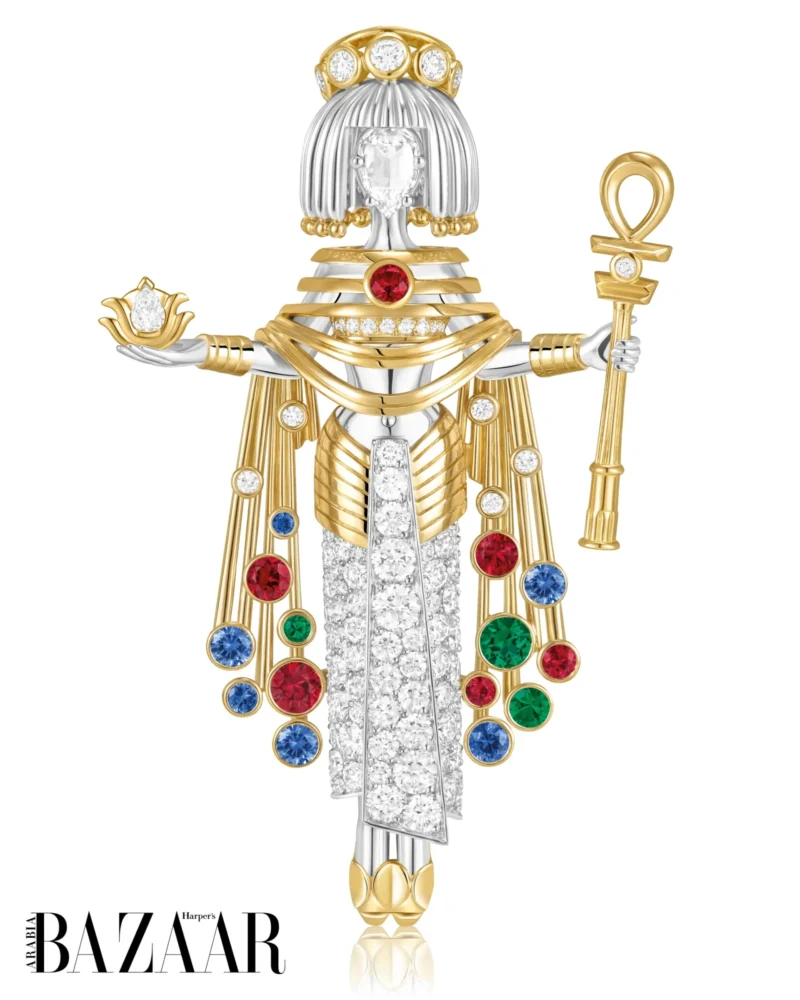
A figurative creation tests how much narrative a jewel can carry while remaining legible on the body. Courtesy of Van Cleef & Arpels.
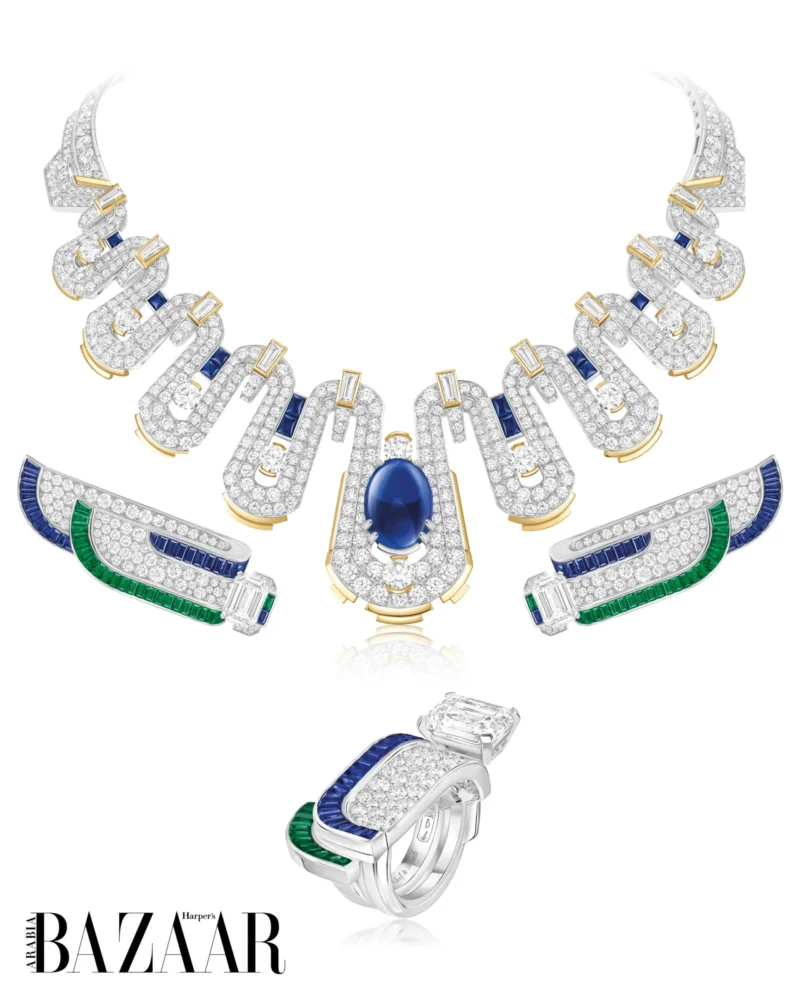
A necklace, bracelet and ring demonstrate how one thematic language changes with scale and placement. Courtesy of Van Cleef & Arpels.
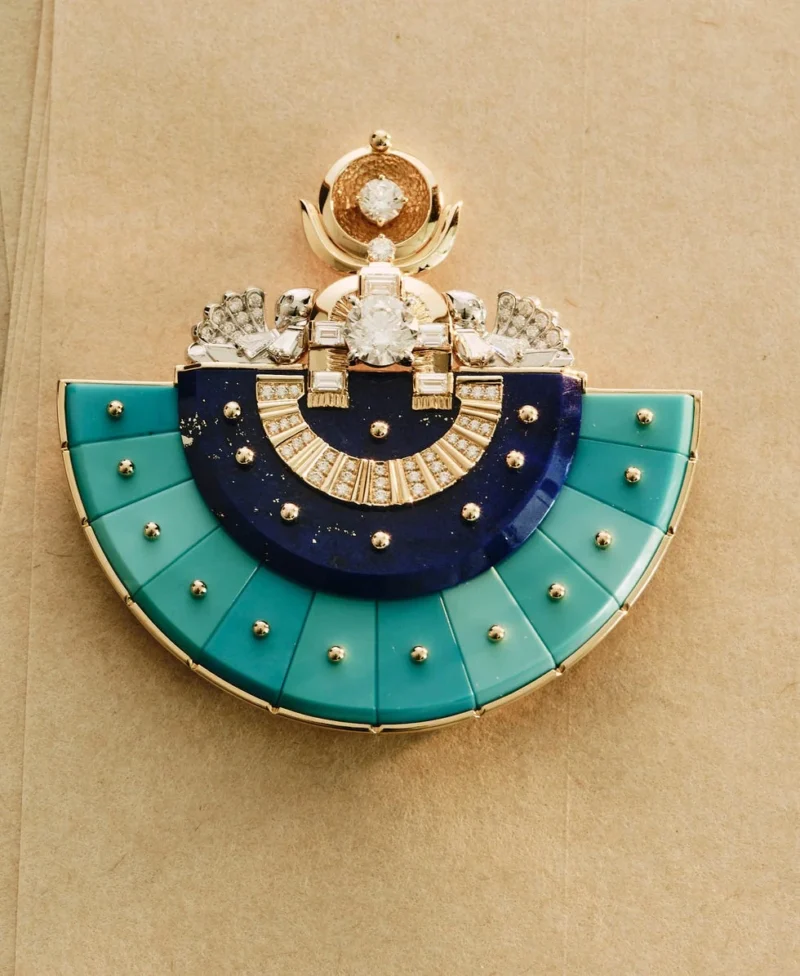
Vénus Égyptienne condenses figure, hardstone colour and fan-like geometry into a single composition. Courtesy of Van Cleef & Arpels.
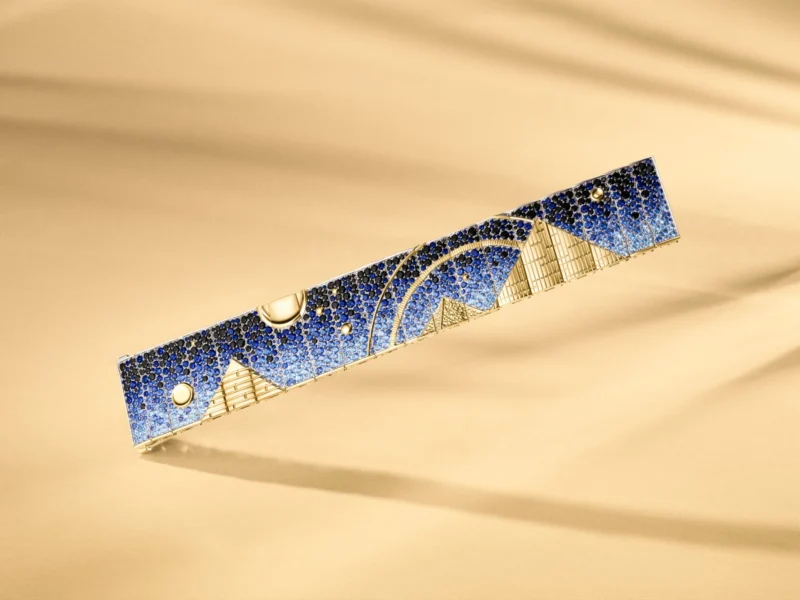
The bracelet turns celestial imagery into a continuous architectural band. Courtesy of Van Cleef & Arpels.
Some of the most persuasive Egyptian references in the collection are the least literal.
Vénus Égyptienne, for example, uses lapis lazuli, turquoise and gold to build an image that evokes the blue-and-gold intensity associated with Egyptian decorative arts. A solar-disc reference connects the piece to Hathor, but the immediate effect comes from material blocks rather than narrative detail.
The Fragment clips operate in a similar way. Fragment de Bonheur, Fragment Magnifique and Fragment de Beauté combine gemstones with turquoise, coral or lapis in small compositions that resemble pieces of a larger visual language. Launch reporting gives them different centre stones, including spessartite garnet, mauve sapphire and indicolite tourmaline. Gold hieroglyphic forms make the Egyptian source explicit, but the pieces still behave like jewellery first. The stone sets scale, the hardstone sets colour field, and the gold marks the graphic layer.
This matters because high jewellery often treats ornamental stones as supporting material. Here they can be structurally important to the visual identity. Lapis does not need the sparkle of diamond to command space. Turquoise can establish a flat blue field against which polished gold reads with unusual clarity. Onyx can provide an outline cleaner than most transparent stones. Coral introduces density and temperature rather than brilliance.
The 1920s Egyptian pieces already understood this. Their appeal came partly from the collision between diamonds and opaque colour. Fascinations d’Égypte expands the palette, but the principle remains recognisable.
There is also an important difference between using colour as cultural shorthand and using it as design structure. Blue and gold can signal Egypt almost instantly. That is the shorthand. The design work begins when the specific stone dictates thickness, curvature, joining method or the way a motif must be broken into sections.
The collection needs that second level. Without it, Egypt becomes a mood board.
Transformability gives the imagery a second life
Van Cleef & Arpels has spent much of its twentieth-century history building jewels that can change configuration. Fascinations d’Égypte uses that heritage selectively.
The Déesse Ailée Mystérieuse can move between necklace and ring configurations. Ornement de Saphir is reported as a multi-length transformable necklace whose central clip can be removed and whose components allow bracelet use. Princesse du Nil has a detachable back motif. Other pieces use clips as modular objects that can migrate from one position to another.
The value of these systems is not that they give the buyer “more ways to wear” an expensive jewel. That is true but shallow. Transformability changes how the design is engineered. A detachable motif needs a secure reverse. A section that moves between neck and wrist has to work at different curvature and tension. A winged jewel that becomes another object needs a transformation mechanism that does not destroy the front-facing image.
This is where Fascinations d’Égypte connects naturally with a broader Van Cleef & Arpels design history, from the Passe-Partout to the Zip. The Egyptian theme supplies figures and ornament. The Maison’s own mechanical vocabulary supplies choice.
For TheTimeo, that distinction is worth preserving because the two histories should not be collapsed. Ancient Egypt did not “inspire” the Zip mechanism. The Mystery Set is not an Egyptian technique. Transformability is not evidence of archaeological research. These are Van Cleef & Arpels systems brought into contact with a new thematic programme.
The collection becomes richer when those layers remain visible.
The figurative pieces walk the narrowest line
There are pieces in Fascinations d’Égypte that are intentionally direct.
Muse éternelle depicts Cleopatra. Other clips portray pharaohs, dancers and deities. Some figures hold lotus flowers, fans or instruments. Here the distance between jewel and illustration becomes smaller.
That is where the collection faces its hardest judgement.
Figurative jewellery can be technically remarkable and still feel overly literal. Recognition is not the same thing as invention. A perfectly made Cleopatra silhouette can remain a costume object if the jewellery merely traces an existing image in gems.
The better figurative pieces avoid this by allowing construction to interrupt illustration. A face may be reduced to polished gold and a few gem-set accents. A headdress can become a field of calibrated stones. Drapery can be expressed through articulated metal or repeated colour blocks. A deity’s attribute can become the place where a centre stone changes the whole balance of the object.
Muse éternelle is a useful example because Cleopatra is perhaps the most culturally overloaded figure available to an Egypt-themed jewellery collection. The piece cannot make her unfamiliar. What it can do is refuse photographic realism. The image is compressed into material contrast and line, which returns it to the graphic logic of a clip.
That is also why the 1920s archive remains relevant. Those early Egyptian figures were stylised aggressively enough to belong to Art Deco. The current collection is strongest when it remembers that lesson.
The exceptional objects widen the scale
Fascinations d’Égypte also extends beyond conventional body jewellery.
Gagosian’s 2026 Paris high-jewellery review identifies Nuit Étoilée, a secret table clock with a pivoting lapis-lazuli celestial dome. Even without treating every reported detail as a primary-source fact, its presence is useful to the collection’s logic. Egypt has always been read through the sky as well as through temples and rulers, and Van Cleef & Arpels has an established contemporary practice of extraordinary mechanical objects.
A table clock changes the problem again. It introduces volume, time display, moving or concealing parts and a different viewing distance. The object is no longer scaled to the wrist or neckline. Stone marquetry, metalwork and mechanics can occupy actual architectural space.
That makes Nuit Étoilée an important counterpoint to the clips. At one end of the collection, Egyptian symbols are compressed into tiny portable surfaces. At the other, the theme expands into an object with its own physical environment.
The shift in scale helps prevent the collection from becoming a catalogue of motifs.
180 pieces, or 16? The numbers describe different things
Explore the comparison
| Published view | What it describes |
|---|---|
| 16 creations | The Maison’s curated public digital selection |
| Approximately 180 pieces | The broader collection reported at launch |
There is one factual point that deserves clarification because public pages can be misleading when read quickly.
Van Cleef & Arpels’ current interactive Fascinating Egypt page says it presents a selection of 16 creations. That is the number a reader can directly explore in that specific digital experience.
Contemporary launch coverage from Vogue Arabia, Gagosian Quarterly, Natural Diamonds and other publications consistently describes the complete 2026 high-jewellery collection as approximately 180 pieces, with Vogue reporting that it was developed over four years.
Those figures are not contradictory. One describes a public digital selection; the other describes the broader collection presented to press and clients.
For an editorial article, the distinction is useful. It also sets a sensible limit. The public web experience does not expose a complete official object catalogue with all 180 entries, dimensions, materials and stones. Any attempt to manufacture a definitive database from scattered press captions would create more certainty than the sources justify.
The right approach is to analyse the documented objects closely and leave the invisible part of the collection invisible until primary documentation is available.
What Fascinations d’Égypte adds to Van Cleef & Arpels
A house archive can become a trap. Once a motif is recognisable and commercially successful, the easiest move is repetition with newer stones and larger scale.
Fascinations d’Égypte is more interesting when it resists that temptation.
The 1920s pieces establish the original act of translation: Egyptian imagery passed through Art Deco geometry and hard colour. The royal commissions add a historical relationship that is about ownership rather than ornament. The 2026 collection then introduces techniques that did not exist in those first Egyptian jewels, especially Mystery Set surfaces and more developed transformability. Hardstones become architectural fields. Large centre stones set proportions. Figurative clips compress myth into portable objects. Exceptional pieces expand the subject beyond the body.
The result is uneven by definition. A collection of this scale cannot make every Egyptian reference equally subtle. Some pieces are closer to illustration, others to abstraction. That is not a weakness that needs to be hidden. It is part of what makes the collection readable.
The best pieces are the ones where Egypt changes the problem the workshop has to solve.
A lotus asks for a surface that can read as petal rather than pavé. A winged goddess asks for articulation. An emerald archive necklace asks how historical proportion can be retained without reconstruction. A fragment asks how little imagery is needed before colour, stone and gold carry the rest. A celestial object asks how the theme behaves when jewellery scale is no longer the limit.
That is a more demanding standard than visual resemblance. It is also the one that makes Fascinations d’Égypte worth examining as a contemporary Van Cleef & Arpels collection rather than as another episode of Egyptomania.
The archive is present everywhere, but it is most convincing when it does not dictate the answer.
Sources & further reading
- Van Cleef & Arpels official Fascinating Egypt collection experience, Maison archive and Mystery Set heritage pages; selected launch imagery reproduced under the publisher’s documented authorisation.
- TheTimeo distinguishes official specifications from editorial interpretation and does not claim hands-on inspection.
The Edit
Jewelry stories
Selected stories from the same editorial universe.
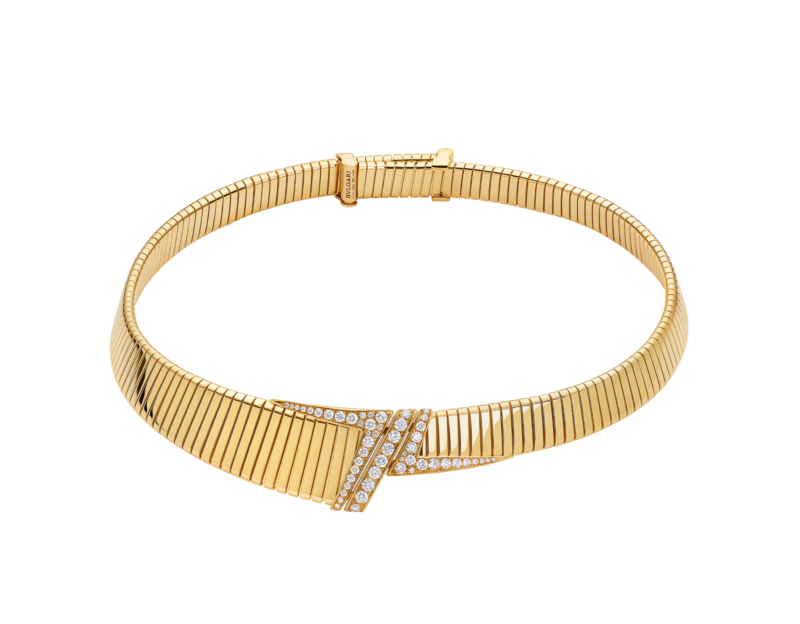
How Do You Make Gold Flexible Without Solder? Inside Bvlgari Tubogas 2026
Two interlocking gold ribbons, a temporary core and controlled tension: Bvlgari’s five 2026 pieces
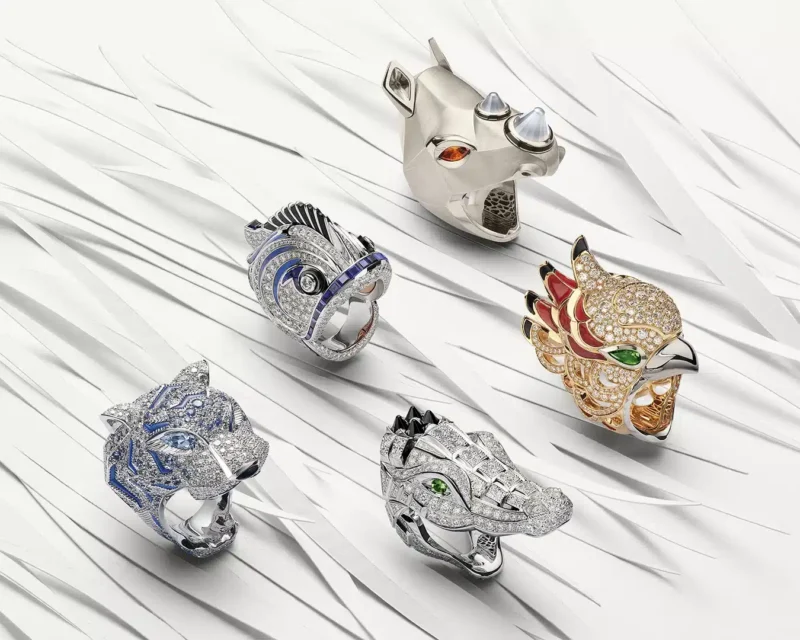
Cartier Into the Wild 2026: How Do You Make a Jewelled Animal Look Alive Without Copying It?
Tiger, parrot, carp, crocodile and rhinoceros push Cartier into five craft problems, from hardstone
The Signed Vintage Engagement Ring: A Collector’s Guide to Provenance and Fit
A signature narrows the field, but maker evidence, stone reports, alterations, condition, provenance and
Emerald or Sapphire? Choosing a Coloured-Stone Engagement Ring
Emerald and sapphire can both belong in an engagement ring, but setting, treatment history
When a Jewel Has Been Repaired: How to Read Restoration and Condition
Repair does not erase a jewel’s history. The useful question is what changed, what
Van Cleef & Arpels: inside the Mystery Set
Beneath a seamless surface of rubies or sapphires lies meticulous stone-cutting and hidden metalwork.