
TheTimeo / Jewelry
Van Cleef & ArpelsInside the Mystery Set
Beneath a seamless surface of rubies or sapphires lies meticulous stone-cutting and hidden metalwork. How Van Cleef & Arpels creates the effect.
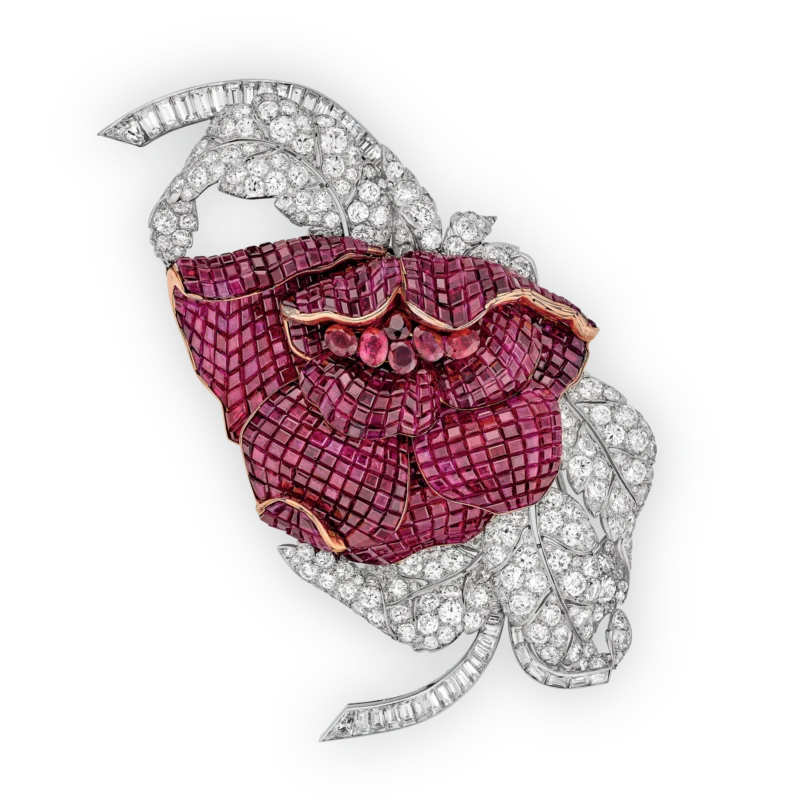
Van Cleef & Arpels Mystery Set Peony clip from 1937. Courtesy of Van Cleef & Arpels.
Explore the story
On Van Cleef & Arpels’ Peony clip, ruby petals curve around the centre of the flower. The colour seems to flow across them, with none of the familiar claws interrupting each small stone.
The effect comes from Mystery Set, a technique that places the supporting metal beneath the visible surface. Understanding how the stones fit into that hidden structure makes the jewel more impressive, rather than less mysterious.
Where the metal goes
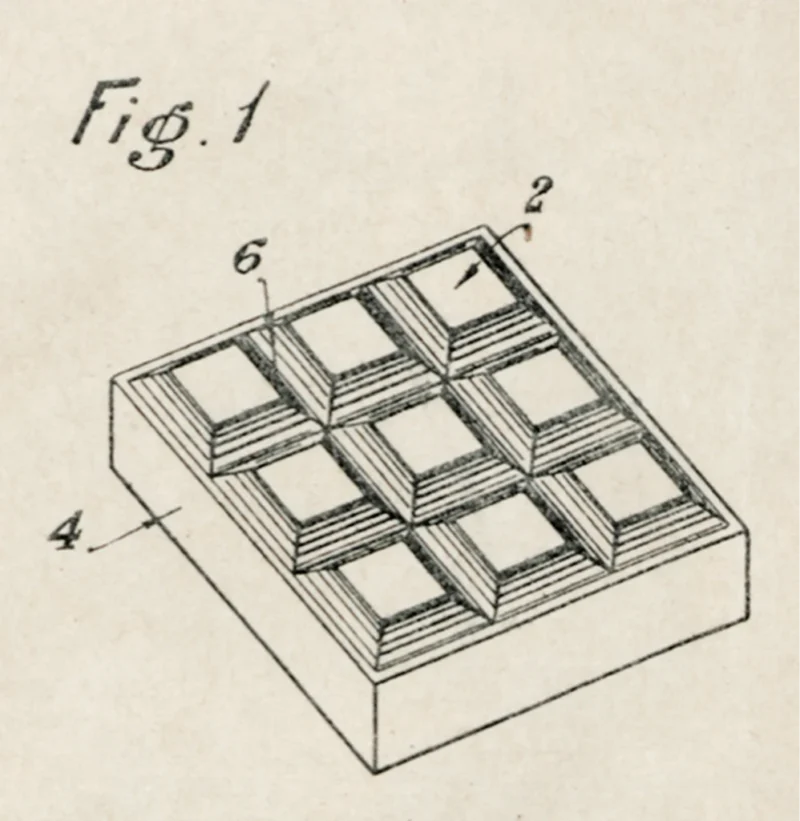
1933 patent document for an invisible gemstone-setting system. Courtesy of Van Cleef & Arpels.
In traditional Mystery Set, stones are specially prepared with grooves below their visible upper surfaces. Those grooves engage with rails in the metal support. The stones sit closely together, concealing the structure when the jewel is viewed from the front.
The patent illustration helps explain the principle. The gems and the mount are designed to meet beneath the surface; the metal has not disappeared. It has been placed where it can hold the stones without becoming the main thing the viewer sees.
This is why Mystery Set is more than a different arrangement of claws. Preparing the stone is part of making the setting. Its underside must work with the mount just as carefully as its top works with neighbouring gems.
The stones have to work together
A continuous field of colour makes differences between adjacent stones particularly noticeable. Their dimensions, height and appearance must suit the places they occupy. A beautiful ruby considered alone may not be the right ruby for one position in a larger surface.
The work brings the lapidary, who cuts and prepares the stones, into close contact with the jeweller. Fitting one element affects its neighbours. On a curved petal, the direction of the surface adds another challenge: the stones must follow the form while preserving the intended appearance.
Van Cleef & Arpels describes the preparation of a single stone as work that can take hours. The significance is not a universal labour-time formula. It is the degree of individual fitting behind a surface that appears regular.
From a patent to a flower
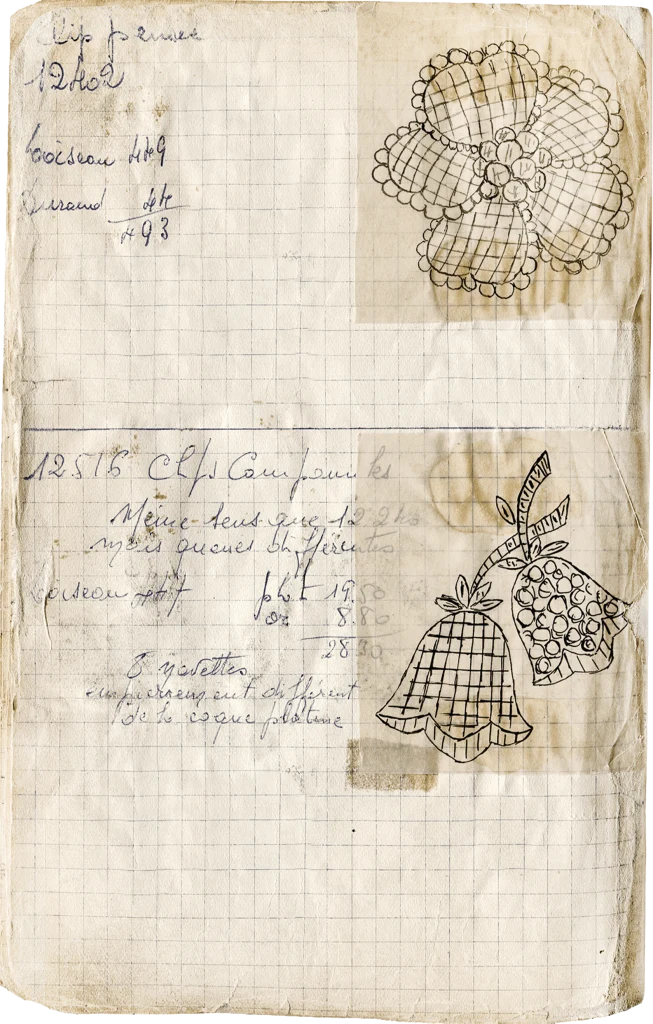
Jeweller’s notebook recording Mystery Set workshop construction. Courtesy of Van Cleef & Arpels.
Van Cleef & Arpels filed its first Mystery Set patent in 1933. Its own historical research places the work within a wider exploration of invisible settings and records the contribution of the Alfred Langlois workshop.
The technique developed from relatively flat applications towards more complex volumes. That change matters when looking at the Peony. A flat grid presents one set of fitting problems; petals that open, curve and overlap require the hidden structure to follow a much more complicated shape.
The preserved workshop notebook makes this planning visible. Lines divide an apparently organic form into individual stone positions. The finished jewel hides those decisions, but the drawing reminds us that each curve had to be resolved before the stones concealed the support.
Peony: colour given volume
The Peony clip dates to 1937. Van Cleef & Arpels records it in platinum and yellow gold with rubies and diamonds, and associates it with the Paris international exhibition of that year.
Its appeal lies in the contrast between the broad ruby petals and the surrounding diamond-set forms. The red surfaces do not read as a flat mosaic. Their changes of plane give the flower depth, while the central stones establish a separate focal point.
Look at the edges where one petal meets another. The outline does as much work as the colour. Mystery Set gives the designer an unusually continuous surface, but the shape of that surface is what turns a technical achievement into a convincing flower.
A vocabulary that kept developing
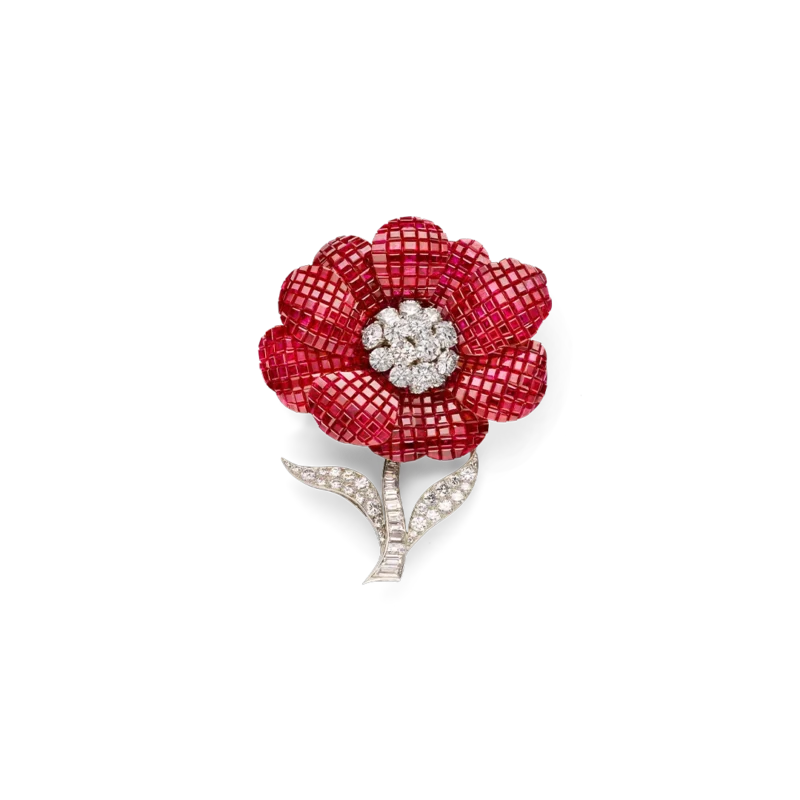
Van Cleef & Arpels Mystery Set Poppy clip from 1952. Courtesy of Van Cleef & Arpels.
The later Poppy clip pictured here uses the same broad idea to produce another floral composition. Comparing the two is more revealing than treating Mystery Set as a badge of complexity. Notice how the petals are arranged, where the diamond accents sit and how the outline controls the flower’s movement.
The house has also developed variations including Navette and Vitrail Mystery Set. These explore different stone forms and effects, including relief and greater transparency. They should not be assumed to have exactly the same construction as the traditional square-stone system.
For someone studying a particular jewel, the useful first question is therefore which technique it uses. The answer helps explain what to look for in the stones, the structure and the appearance of the finished surface.
Owning a carefully fitted surface
Close fitting also matters when a jewel needs attention. A replacement stone has to suit its position and its neighbours. Matching colour alone is not enough if the cut and hidden attachment do not fit the structure.
Before authorising repair, discuss the piece with the maison or a specialist demonstrably experienced in this work. Ask for an assessment of the stones and mounting, and retain the description of any intervention. Do not attempt to tighten or replace a stone as if it were held in an ordinary claw setting.
When considering an older example, photographs of the front, edges and back are useful, as are available archive or service records. A specialist examination remains important: a continuous-looking surface can reveal little about what has happened underneath.
Seeing the work without losing the pleasure
A patent explains the fastening principle; a notebook shows how a flower was divided into workable parts. Neither fully conveys the judgement needed to bring neighbouring stones together into a coherent colour and curve.
That is the pleasure of returning to the finished jewel after seeing how it was made. The ruby petals still look fluid. Now their apparent ease has a visible history of decisions behind it.
Sources & further reading
Van Cleef & Arpels’ historical study of Mystery Set, technical introduction and Peony collection record. Patent and workshop images are reproduced from the maison’s archive.
The Edit
Jewelry stories
Selected stories from the same editorial universe.

How Do You Make Gold Flexible Without Solder? Inside Bvlgari Tubogas 2026
Two interlocking gold ribbons, a temporary core and controlled tension: Bvlgari’s five 2026 pieces
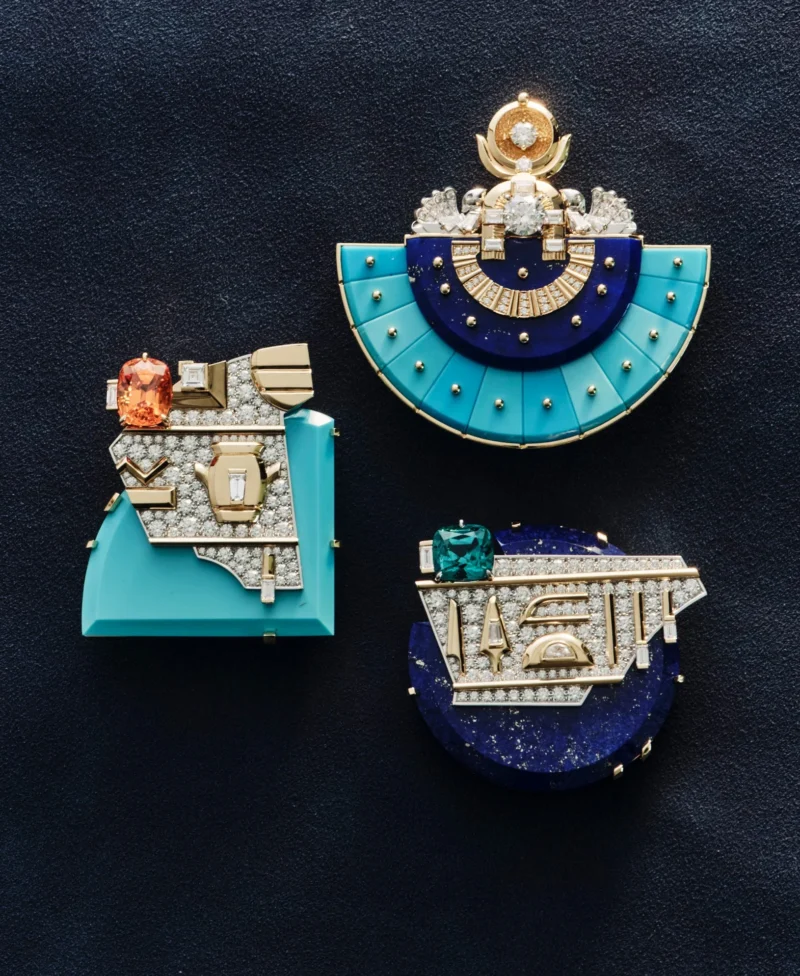
Van Cleef & Arpels Fascinations d’Égypte: How to Read Egypt Without Copying the Museum
A century after its first Egyptian jewels, Van Cleef & Arpels returns to the

Chaumet Envol: A Tiara in Motion
Blue wings move from hair to face and cloth. Chaumet’s Envol invites a bridal

Messika My Twin: Two Cuts, One Bridal Look
An emerald cut, a pear and an unequal pair: the small asymmetry of Messika

Longines Mini DolceVita: A Small Watch for the Life Ahead
A silver flinqué dial, blue hands and a closely linked steel bracelet: Longines Mini
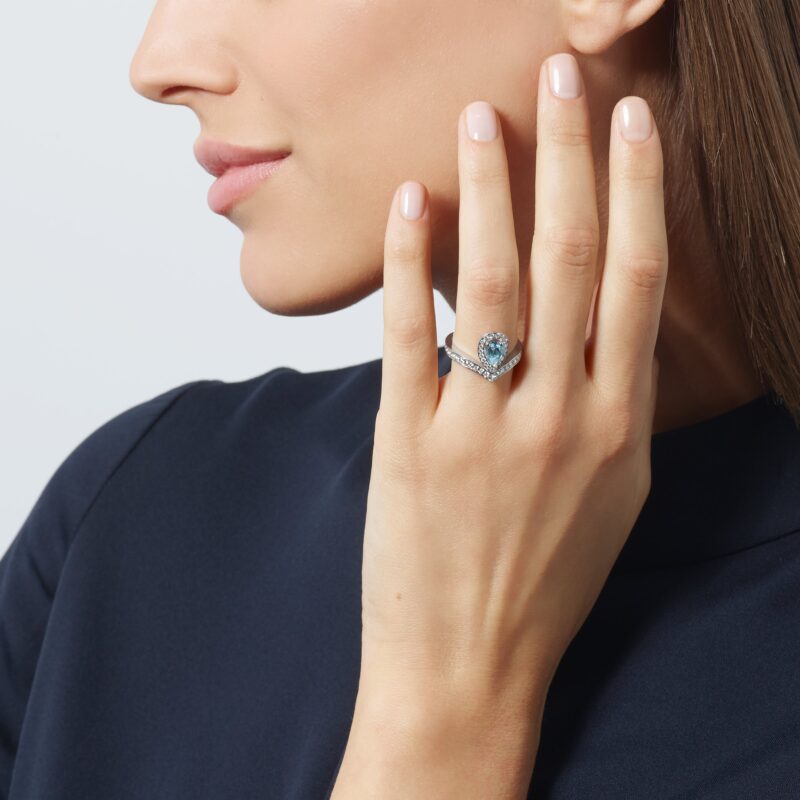
Chaumet Joséphine: Something Blue, Chosen Your Way
An aquamarine beside the face, a sapphire at the centre of a solitaire: Chaumet