
TheTimeo / Jewelry
SIGNED VINTAGE:
romance, documented
A signature narrows the field, but maker evidence, stone reports, alterations, condition, provenance and fit still need to be read separately.
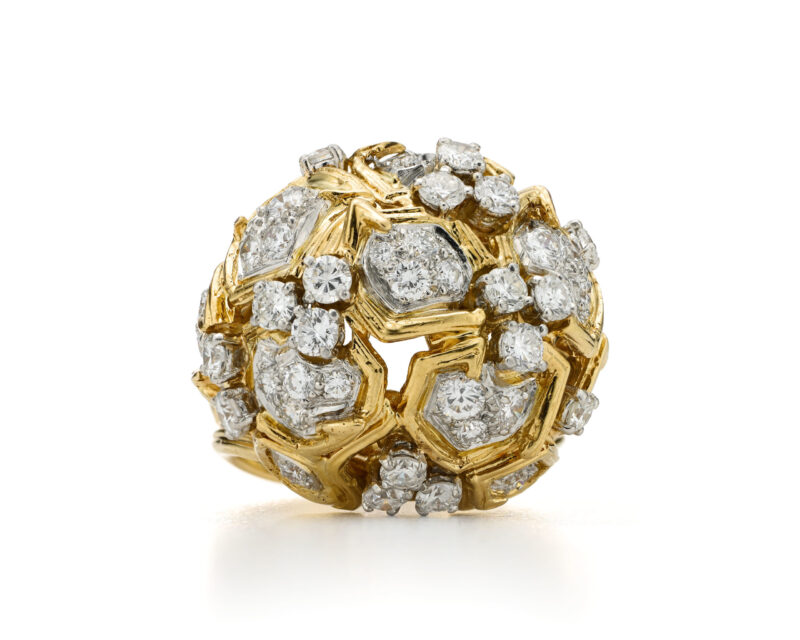
An archival object is strongest when the signature, design record and physical ring can be read together.
Explore the story
A vintage engagement ring can arrive with exactly the details buyers want to hear: a famous signature, an old cut diamond, a platinum setting, a red or blue box, perhaps even a family story.
None of those details should be ignored. None should be allowed to do the work of all the others.
A signed ring is an object with several identities at once. There is the maker. There is the mounting. There is the centre stone. There are hallmarks and numbers. There is the date or period assigned to the piece. There is its service and alteration history. There is the provenance that can actually be documented. And there is the practical question of whether the ring can be worn, resized or restored without losing information that matters.
Those questions become more important, not less, when the name inside the shank is Cartier, Tiffany & Co. or another major house.
The strongest purchase is therefore not the ring with the longest description. It is the ring whose description can be divided into claims and matched to evidence.
Key takeaways
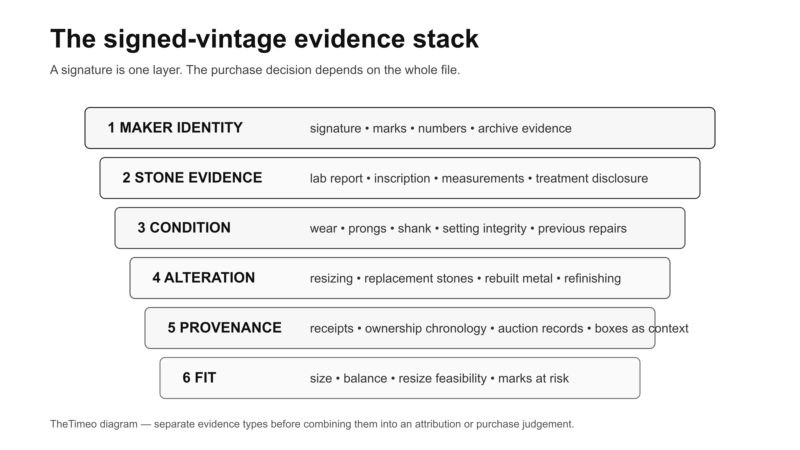
A signature is one layer inside a larger purchase file.
- A maker signature is one piece of identification evidence. It does not prove that every stone, component or finish remains as originally supplied.
- Archive evidence, maker numbers, assay or maker’s marks, period construction and documented provenance should be read together rather than as interchangeable proof.
- A laboratory report describes the gemstone within the report’s scope; it does not authenticate the signed mounting or reconstruct the ring’s ownership history.
- Resizing, stone replacement, re-shanking, polishing and setting work can be entirely legitimate while still changing how the ring should be described and compared.
- Fit should be considered before purchase. A vintage ring that needs substantial alteration may be a poor choice for daily wear if the intervention would compromise marks, structure or documentary integrity.
Start by separating the claims
A catalogue entry for a signed vintage ring may contain several statements in one sentence:
Cartier, circa 1930, platinum, signed, numbered, set with two old-cut diamonds, accompanied by a GIA report, with provenance to a previous auction.
That is not one claim. It is a group of claims supported by different kinds of evidence.
A useful buyer’s file should break them apart.
Explore the comparison
| Claim | Evidence that may support it | What it does not establish on its own |
|---|---|---|
| Maker / maison | Signature, maker’s mark, number, archive confirmation, specialist examination | Originality of every component |
| Date / period | Archive, hallmark chronology, design/construction, documented sale history | Exact manufacture date unless specifically documented |
| Metal | Assay marks, testing, catalogue description | Maker attribution |
| Centre stone | Laboratory report, measurements, inscription where applicable | Mounting authenticity or provenance |
| Originality | Archive/documentary comparison, construction evidence, repair history | Guaranteed absence of past work |
| Provenance | Invoice, family records, auction history, dated photographs | Technical condition |
| Condition | Physical examination, condition report, workshop evidence | Historical ownership |
| Fit / resize potential | Actual ring size, construction, marks, stones in shank, jeweller assessment | A universal safe resize range |
The habit of separating claims is the simplest defence against a familiar problem in vintage jewellery: allowing one strong piece of evidence to lend credibility to everything around it.
What a signature proves — and what it does not
A genuine maker’s signature can be highly informative. It can connect a ring to a house vocabulary, production system and archive. On some pieces it appears with a maker’s mark, assay mark, serial or inventory number.
But a signature should be treated as evidence, not as a verdict.
Christie’s catalogues demonstrate the level of detail specialists may record. A Cartier Art Deco twin-stone diamond ring catalogued circa 1930 is described as signed Cartier, mounted in platinum with a French mark, and linked to a previous Christie’s Geneva sale in 1998. Another Cartier diamond ring is described as signed and numbered and accompanied by a GIA report for its 15.19-carat centre diamond.
Those entries are useful because they do not collapse the evidence. Signature, metal marks, date attribution, gemstone report and provenance are listed separately.
That is the model a buyer should adopt.
A signature alone does not establish that the present centre stone is the stone originally supplied with the ring. It does not establish that the shank has never been replaced. It does not tell you whether the ring has been resized through the area where a serial number once appeared. It does not disclose whether small diamonds have been replaced, whether prongs were rebuilt, or whether the surface has been heavily refinished.
A signed ring can be authentic and altered at the same time.
That is not a contradiction. It is a description problem.
House archives matter because objects change
Cartier states that it systematically preserves the history of its production in confidential archives documenting creations from design through commercialisation. The Maison also describes Cartier Tradition as a programme in which antique Cartier pieces are selected and authenticated by its experts with the help of those archives, then restored by specialised craftspeople.
That distinction is important.
The existence of a restoration programme inside a major maison is a useful reminder that historical objects are not expected to remain physically untouched forever. A vintage jewel may require intervention to remain wearable or stable.
The editorial question is therefore not “Has this ring ever been worked on?”
It is:
What work has been done, what remains original, what changed, and how well is that history documented?
For a high-value signed ring, an archive-supported identification or maison-authenticated vintage programme can be materially stronger evidence than a seller simply pointing to a signature.
But even house documentation has a defined scope. It should be read carefully rather than treated as a certificate for claims it does not make.
Tiffany provides a useful counterexample to assumptions about authentication
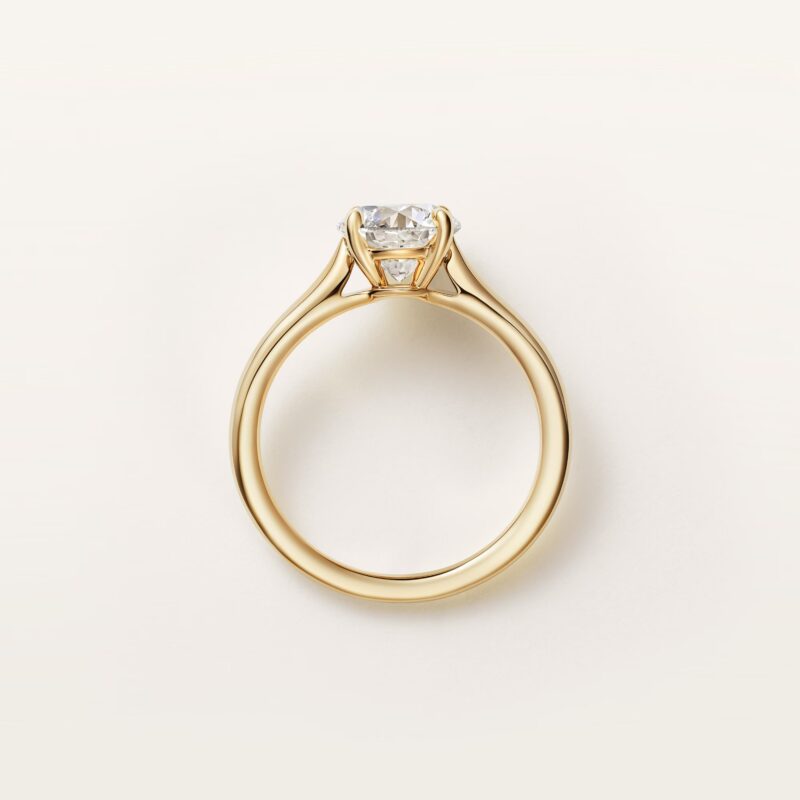
Tiffany & Co. currently states that it does not offer a general authentication programme for merchandise.
That matters because buyers sometimes assume that any signed vintage jewel can be taken back to the original house and formally authenticated on demand. That is not a safe assumption.
Tiffany does, however, issue a Tiffany Diamond Certificate for specific Tiffany engagement diamonds. The company describes that certificate as documenting the authenticity and integrity of serialized Tiffany diamonds and supporting its grading and lifetime warranty framework.
Those are different services.
A Tiffany Diamond Certificate relates to the diamond and the house’s own engagement-diamond system. It should not be casually reinterpreted as proof that a second-hand vintage mounting has never been changed, repaired or paired with a different component.
For older signed jewellery, the buyer may need to rely on a combination of period documentation, specialist examination, marks, provenance and any surviving maison records rather than expecting a single contemporary authentication document.
The stone report and the signed ring answer different questions
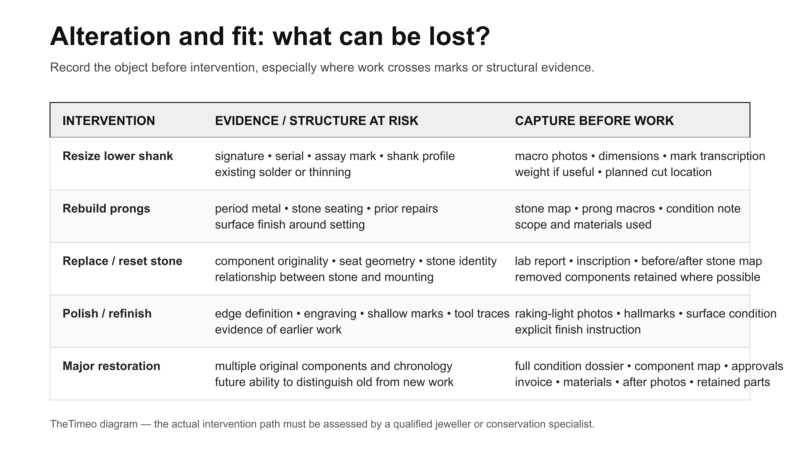
Before intervention, record every mark and structural feature that may be changed.
The centre diamond often dominates the purchase price and the sales description. That can make the laboratory report feel like the strongest document in the file.
It is strong evidence — for the questions it actually answers.
GIA diamond reports assess the diamond within the service scope. GIA also notes that when a service requires a loose stone, the laboratory does not unmount and remount it for the client. This practical point matters with a vintage signed ring because removing the centre stone solely to obtain or update a report is itself an intervention that should be considered carefully.
A laboratory report does not authenticate a Cartier or Tiffany mounting. It does not date the platinum work. It does not prove that the diamond and ring were born together. It does not establish family provenance.
If the report number is laser-inscribed on the stone, that may help connect the physical diamond to the report. It still does not connect the diamond to the complete historical life of the mounting unless separate evidence does that work.
Think of the report as the stone file, not the whole ring file.
Alteration is where many vintage descriptions become vague
Some interventions are easy to see. Others disappear under polishing and rhodium, or are hidden inside the lower shank.
The common ones include:
- resizing;
- re-shanking;
- replacement of worn prongs;
- replacement of small side stones;
- rebuilding of a setting edge or gallery;
- solder repairs;
- replacement of the centre stone;
- alteration from another jewel type;
- engraving added or removed;
- refinishing that softens hallmarks, numbers or period tool marks.
None of these automatically makes the ring unacceptable.
What matters is materiality.
Replacing a worn prong to secure an original stone is different from replacing the entire head. Enlarging a plain section of shank is different from cutting through a numbered or pavé-set area. Replacing a missing melee diamond with a period-appropriate stone is different from substituting the centre diamond.
The description should reflect those differences.
Resizing deserves particular attention before purchase

A vintage ring bought in the wrong size can turn a documentation problem into a structural one.
Current Tiffany guidance recommends professional resizing and cautions against repeated resizing of its engagement rings. Cartier’s current service information also treats sizing as subject to technical feasibility rather than as an automatic entitlement for every construction.
GIA’s bench-quality material shows why. Sizing can involve cutting, adding or removing metal, welding and refinishing. Rings with stones in the shank create additional constraints.
For a signed vintage ring, there is another issue: the lower shank often carries information.
That may include a signature, maker’s mark, assay mark, serial or inventory number, size stamp or later service mark. A resize carried out through that area can remove or distort evidence.
Before buying a ring that must be resized, ask:
- Where are the signatures and numbers?
- Where would the sizing work occur?
- Are there stones or decorative elements in the shank?
- Has the shank already been thinned or repaired?
- Will the proposed work alter the profile or shoulder geometry?
- Can all marks be photographed and recorded before intervention?
- Will the service provider document the work afterward?
There is no responsible universal answer to “How many sizes can this vintage ring be changed?” The answer depends on the actual ring.
Fit is not only the number inside the shank
Older rings can have proportions that behave differently from modern mass-market sizing expectations.
A wide shank may feel tighter than a narrow one at the same nominal size. A top-heavy centre stone may rotate. A low gallery may contact the neighbouring finger. An asymmetric or heavily rebuilt shank may alter balance.
The fit assessment should therefore include:
- nominal ring size;
- shank width and thickness;
- balance of the head;
- condition of the lower shank;
- how the ring passes over the knuckle;
- whether the head remains upright during ordinary movement;
- whether a wedding band is intended to sit beside it.
This is especially important when the ring will be worn every day rather than occasionally.
Provenance should be specific enough to audit
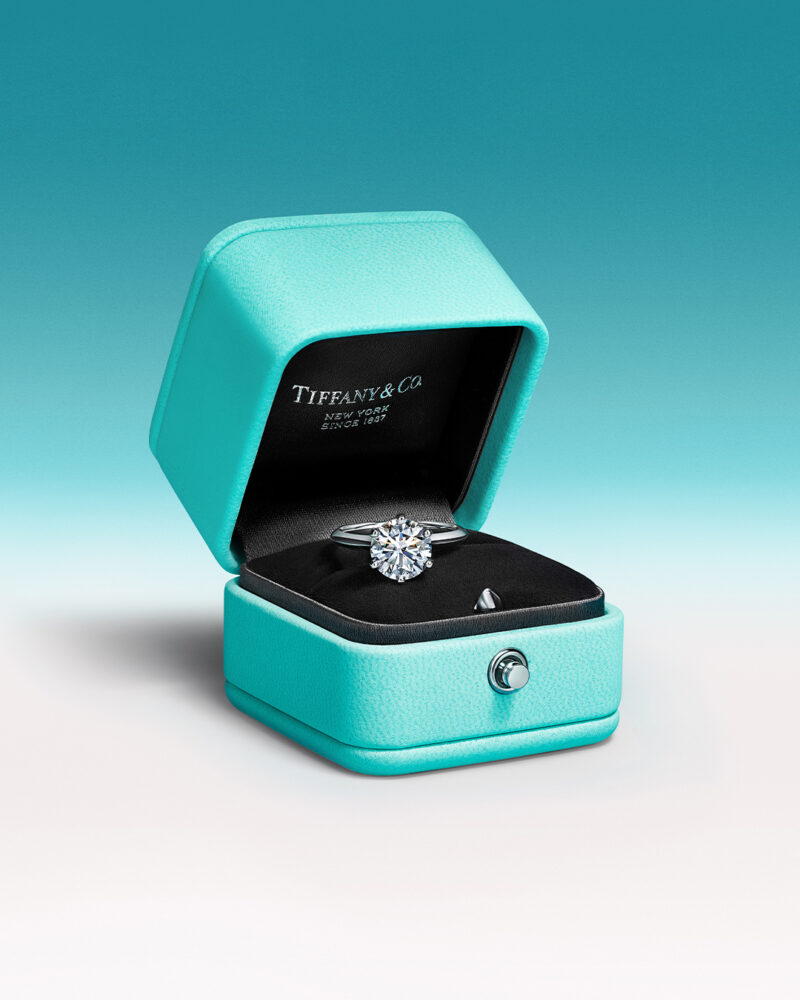
A presentation box can support context, but it is not provenance by itself.
“From a European family” is atmosphere.
“Purchased at Christie’s Geneva, November 1998, sale 1254, lot 330” is evidence.
The latter does not tell you everything about a ring, but it gives the next researcher somewhere to go.
Christie’s current catalogue for the circa-1930 Cartier twin-stone ring does exactly this: it identifies a previous Christie’s Geneva appearance in 1998. That creates a documented observation point in the object’s history.
A strong provenance file may contain:
- original or early invoice;
- dated insurance schedule;
- maison correspondence;
- auction catalogue and lot number;
- family inventory;
- dated photographs showing the ring;
- inheritance or estate documentation where appropriate;
- prior laboratory reports;
- service invoices;
- older appraisal photographs.
The standard should not be a romantic story. It should be a chain of identifiable records with gaps clearly marked as gaps.
A red box or blue box is not provenance by itself
Presentation boxes are useful evidence when they are documented with the ring, especially when they are period-correct and can be linked to the original purchase.
But boxes are movable objects.
A Cartier box does not authenticate the Cartier signature inside a ring. A Tiffany Blue Box does not prove that a second-hand diamond and mounting have remained together since sale.
Treat the box as an accessory in the file unless stronger evidence connects it to the object.
The same applies to receipts that describe a jewel too vaguely to identify it reliably.
Condition reports are not the same as authenticity opinions
An auction or dealer condition report may document wear, repairs, scratches, chips, replaced stones or signs of alteration.
That is valuable.
It is still a different task from maker attribution.
This distinction is worth protecting because a beautifully written condition report can create a general feeling of confidence that spills into areas it was not designed to address.
Ask who is making each judgement:
- Who identified the signature?
- Who dated the ring?
- Who examined the stone?
- Who assessed the repair work?
- Who established provenance?
- Which conclusions come from documents, and which from physical examination?
The file becomes stronger when those roles are visible.
The pre-purchase evidence stack
For a signed vintage engagement ring, the following sequence is more useful than starting with price.
1. Object identity
Record the exact ring: dimensions, weight where available, current ring size, metal, stone arrangement and clear photographs of front, side, underside and inner shank.
2. Maker evidence
Record the signature, maker’s mark, assay marks and numbers. Determine whether the attribution is seller opinion, auction-house specialist attribution, archive-supported identification or maison authentication.
3. Stone evidence
Read the current laboratory report. Match it to the stone where possible. Note whether the report is contemporary with the current setting or predates later alteration.
4. Condition and alteration
Identify visible repairs, resizing, replacement stones, re-shanking and refinishing. Ask what is known and what is merely suspected.
5. Provenance
Build a dated sequence of documentary observations. Keep seller stories separate from records.
6. Fit and future intervention
Determine whether the ring fits now and what must be altered if it does not. Get a qualified service opinion before purchase when the intervention could affect marks or structure.
7. Seller questions
Ask for material statements in writing: attribution basis, known repairs, replacement stones, report numbers, service history, return terms and any restrictions on independent inspection.
Questions to ask before buying
- Is the ring signed, and are the signature and numbers clearly photographed?
- Is there a maker’s mark or assay mark in addition to the signature?
- What evidence supports the stated date?
- Is the ring known to have been resized or re-shanked?
- Are all diamonds believed to be original to the mounting? On what evidence?
- Has the centre stone ever been removed or replaced?
- Is there an independent laboratory report for the centre stone?
- Does the seller know of replacement melee or rebuilt prongs?
- Is there a documented auction, invoice or family provenance trail?
- What is the current ring size, and has a qualified jeweller assessed resizing feasibility?
- Will independent inspection be permitted before the sale becomes final?
A serious seller should not be threatened by precise questions. The answers may include uncertainty. That is preferable to false completeness.
Romance is allowed. It just comes after identification
A signed vintage engagement ring can carry a kind of meaning that a new ring cannot reproduce. The marks may belong to a particular period. The handwork may reflect a different production culture. The diamond may have been cut long before modern grading. The object may have survived one marriage, several owners, a war, a move across countries or simply decades of ordinary domestic life.
That history is part of the appeal.
But history becomes more interesting when it is not blurred into legend.
A Cartier signature deserves attention, but it should not do all the work. The object, evidence and condition still need to make sense together. The same is true of a Tiffany ring: a blue box is useful context, not a substitute for identifying the ring itself.
A documented repair can be entirely acceptable. An alteration deserves more caution when it removes evidence you value more than the improvement in fit. Before resizing, understand where the work will occur. Keep an older report even when a new one is issued, and photograph the ring before any substantial intervention.
A vintage ring does not need to be untouched to be trustworthy. What matters is whether its present state, earlier changes and remaining uncertainties can still be read.
Sources & further reading
This article treats a signed vintage engagement ring as a multi-evidence object. Maison archives and service policies are used for what the houses themselves state; GIA is used for gemstone-report and bench-practice scope; Christie’s catalogue entries are used as concrete examples of how signature, marks, reports and provenance can be recorded separately. Auction catalogue attribution is not presented as equivalent to maison authentication.
Primary and authoritative sources
- Cartier — A Unique Heritage: https://www.cartier.com/en-us/high-jewelry/living-legacy/
- Cartier — Timeless Creations / Cartier Tradition: https://www.cartier.com/en-us/jewelry/cartier-jewelry/timeless-creations/
- Cartier — Jewellery care and services: https://www.cartier.com/it-it/services/your-purchase-concierge/faq/creations/jewellery
- Tiffany & Co. — Does Tiffany & Co. authenticate merchandise?: https://www.tiffany.com/faq/shopping-faq/does-tiffany-authenticate-merchandise/
- Tiffany & Co. — What is the Tiffany & Co. diamond certificate?: https://www.tiffany.com/faq/love-engagement-faq/what-is-the-tiffany-diamond-certificate/
- Tiffany & Co. — engagement-ring sizing: https://www.tiffany.com/faq/love-engagement-faq/how-do-i-resize-my-engagement-ring/
- GIA — Does GIA unmount and remount stones?: https://www.gia.edu/FAQ/gia-faq-analysis-grading-mounted-unmounted-gemstone
- GIA 4Cs — Types of GIA Reports: https://4cs.gia.edu/en-us/types-gia-reports/
- GIA — Diamond Buying Tips: https://www.gia.edu/gia-news-research-diamond-buying-tips
- Christie’s — Cartier Art Deco Twin-Stone Diamond Ring, circa 1930: https://www.christies.com/en/lot/lot-6481189
- Christie’s — Diamond Ring, Cartier, 15.19 carats: https://www.christies.com/en/lot/lot-6138166
- Christie’s — A Diamond Ring, by Cartier, 4.09 carats: https://www.christies.com/lot/lot-a-diamond-ring-by-cartier-4916859/
Limits: This article does not authenticate any individual second-hand ring. Vintage attribution, originality, gemstone identity, treatment, condition and resize feasibility require case-specific documentary review and physical examination by appropriately qualified specialists.
The Edit
Jewelry stories
Selected stories from the same editorial universe.

Chaumet Envol: A Tiara in Motion
Blue wings move from hair to face and cloth. Chaumet’s Envol invites a bridal

Messika My Twin: Two Cuts, One Bridal Look
An emerald cut, a pear and an unequal pair: the small asymmetry of Messika
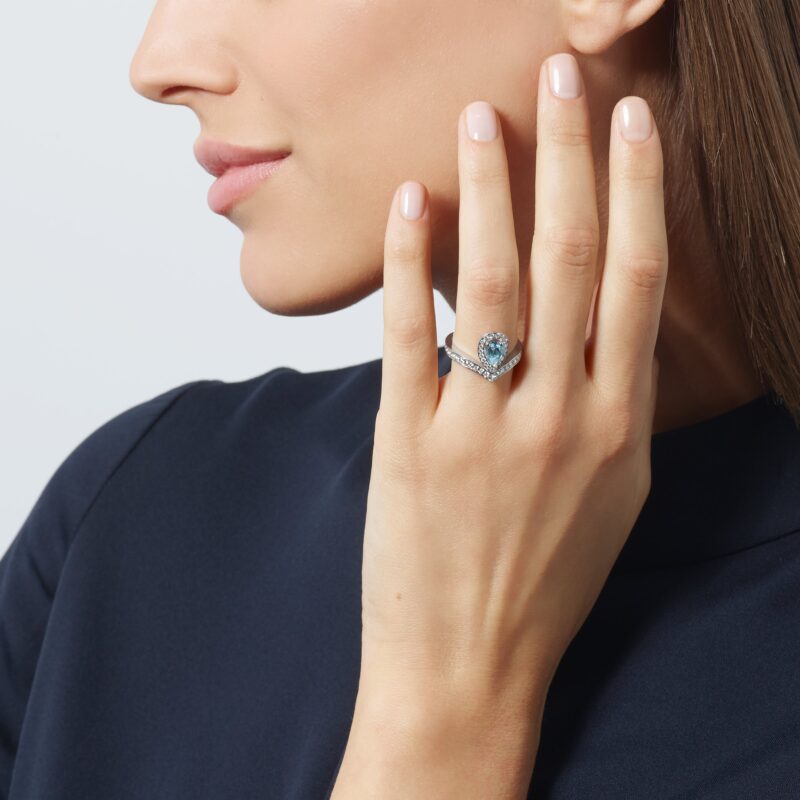
Chaumet Joséphine: Something Blue, Chosen Your Way
An aquamarine beside the face, a sapphire at the centre of a solitaire: Chaumet

Two Rings, Two People: A De Beers Wedding-Band Edit
A rose-gold court profile, a single diamond in platinum, a fine eternity line or

Buccellati Macri Giglio: Gold with a Grain
On the wrist, Buccellati Macri Giglio becomes a broad field of engraved gold. A

Mikimoto M: A Pearl with a Graphic Edge
White South Sea pearls, golden warmth and a sharply drawn setting: Mikimoto M offers