
TheTimeo / Insights & Investment
PROVENANCE:
a record that can travel
A collectible object needs more than a pile of accessories. Identity, ownership, service, condition, documents, images and uncertainty should remain connected over time.
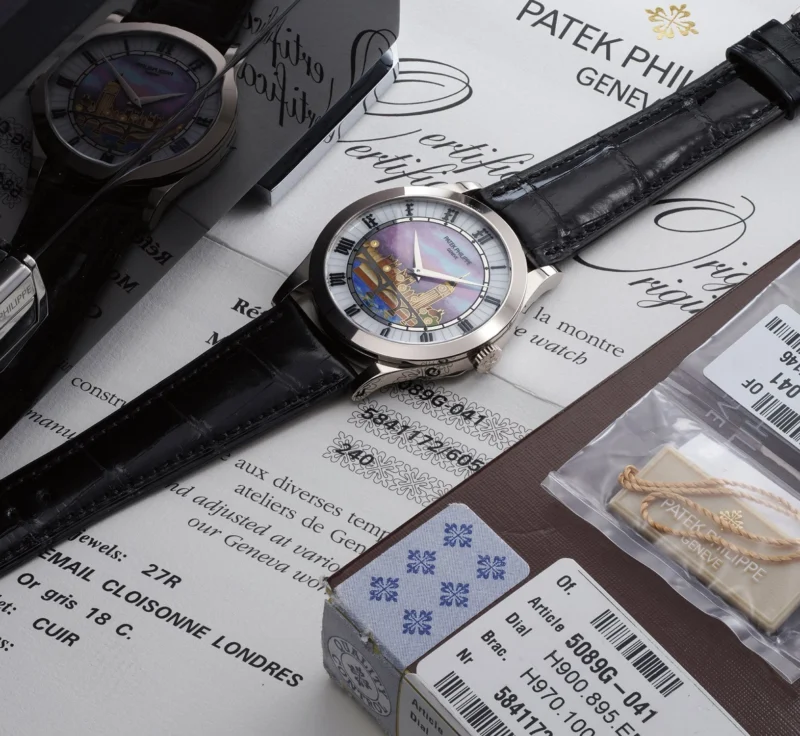
Patek Philippe wristwatch presented with its documentation. Courtesy of Phillips.
Explore the story
Category: Collecting Intelligence Format: METHOD_REPORT Series: The Ledger / Method
A watch can survive a century while the paper that once explained it disappears in a house move.
A ring can retain a maker’s mark while losing the invoice that tied it to a family. A service intervention can be remembered accurately by an owner and still leave no record of which parts were changed. An auction catalogue can preserve a useful description while repeating a provenance claim whose underlying documents are no longer visible.
The object remains. The evidence becomes uneven.
That is the problem this standard is designed to address.
TheTimeo Provenance Standard is not a certification system and it is not a promise of authenticity, title or value. It is a method for keeping the history of a collectible object intelligible over time. Its basic rule is simple: every important claim should travel with the evidence that supports it, the date on which that evidence was checked and the limits of what it establishes.
The result should be useful before a sale, after a service, during an insurance review, when an heir takes possession or when new research changes what was previously believed.
Key takeaways
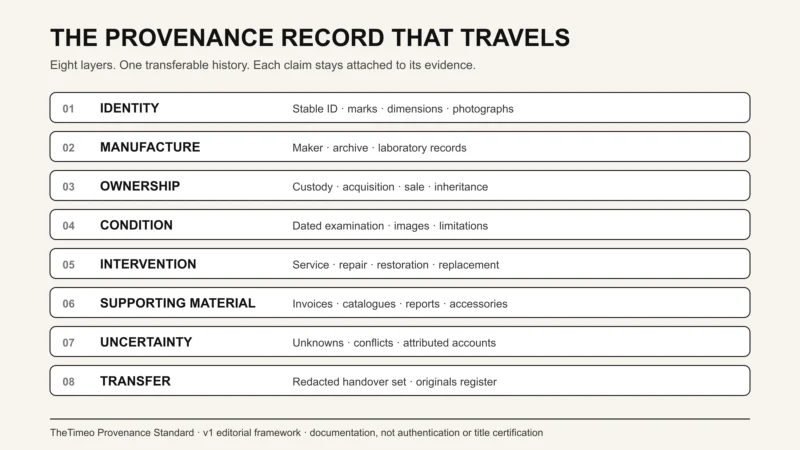
Eight connected layers keep identity, events, documents, condition and transfer history readable. Courtesy of TheTimeo.
- Provenance is a history of ownership, custody and movement; it is not another word for “box and papers”.
- The record begins with the object itself: stable identity, photographs, marks, materials, dimensions and distinguishing features.
- Manufacture records, invoices, laboratory reports, service documents, auction records and family recollections answer different questions and should not be collapsed into one confidence statement.
- Service, restoration and alteration belong in provenance because they explain how the physical object changed while it moved through time.
- Gaps should be recorded rather than repaired with plausible language.
Unknownis better evidence practice than an invented bridge. - A transfer file should separate a private master record from a redacted sharing copy so that security and personal data do not have to be sacrificed for useful provenance.
Provenance is a sequence, not a pile of paper
The museum world provides the clearest starting point. Getty describes provenance as the ownership and collecting history of an object from creation to the present, including transfers, public sales, dealers and periods where information is incomplete. Its guidance also makes an important point for collectors: gaps are normal and uncertainty should be expressed rather than hidden.
That definition is more demanding than the shorthand often used in the secondary market.
“Full set”, “full papers”, “from the original owner” and “important provenance” can all be useful descriptions, but none is a data structure. They do not tell the next custodian which statement is documented, which is attributed to a seller, which rests on the object itself and which remains unverified.
A robust file has two axes.
The first is chronology: what happened, when, and in whose custody.
The second is evidence: what supports each event or claim.
TheTimeo Standard keeps those axes separate. A 1987 invoice can be excellent evidence for a transaction. It does not prove what happened to the object between 1987 and 2004. A maison archive record can establish information copied from a production ledger. It may say nothing about later polishing, a replacement dial or a resized shank. A gemstone report can describe the laboratory’s findings about the submitted stone. It does not create an ownership chain for the jewel that contains it.
The file becomes stronger when those limits remain visible.
Layer 1 — establish the object before telling its story
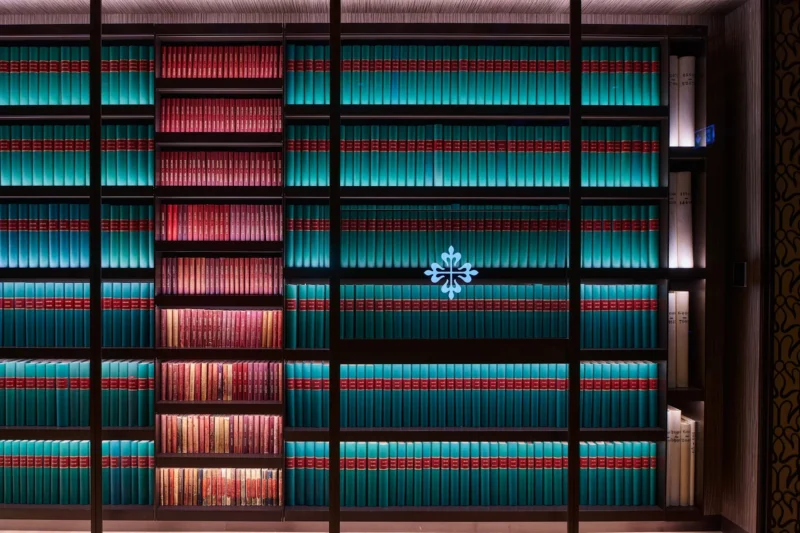
Historical archive books used to document Patek Philippe watches. Courtesy of Patek Philippe.
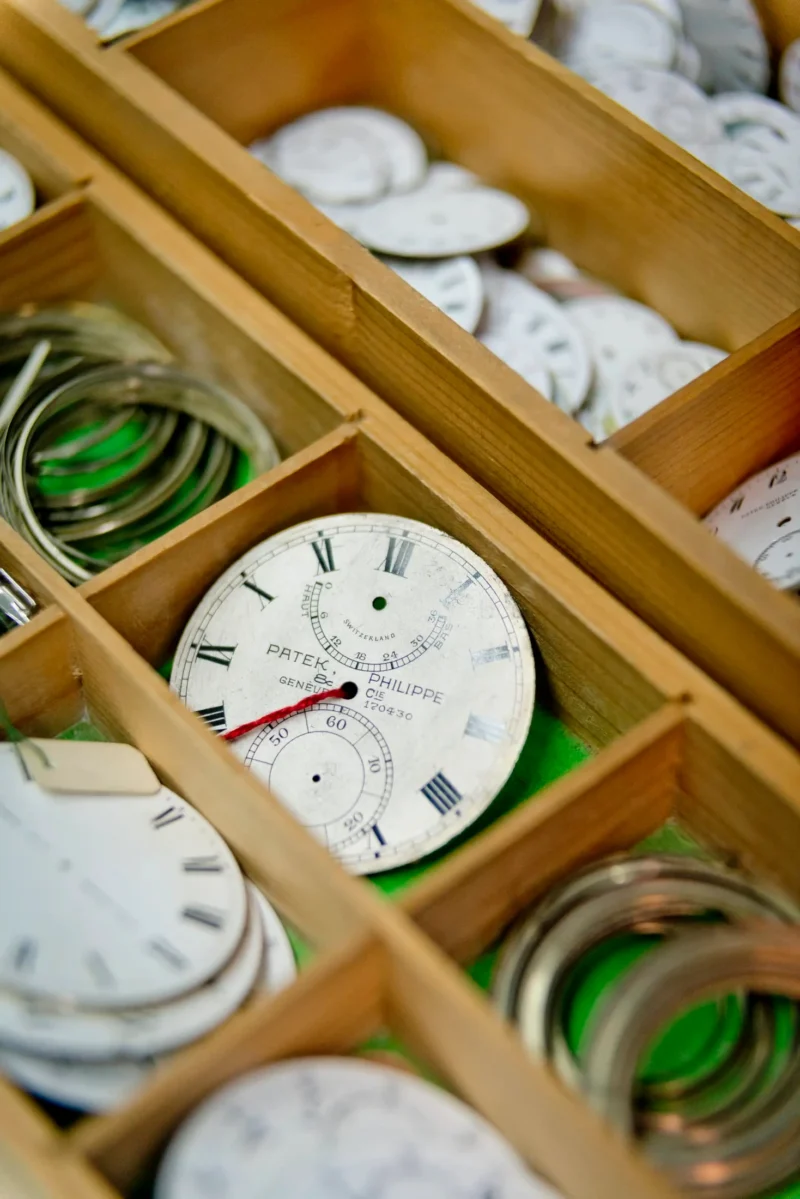
Historic components form part of the knowledge base behind a considered restoration. Courtesy of Patek Philippe.
The first record should be created from the object, not from a sales description.
INTERPOL’s Object ID standard was developed so cultural objects could be identified if stolen. It calls for photographs and basic descriptors such as measurements, materials, maker and distinguishing features. Getty’s cataloguing guidance similarly separates object type, materials, marks and other identifying information from ownership history.
A private collector does not need a museum database to apply the same discipline.
Create a stable internal ID that does not change when the object changes owner. Then record, where applicable:
- object type;
- maker or attributed maker;
- model, family or collection;
- reference number;
- movement, case, serial or inventory numbers;
- hallmarks, signatures, inscriptions and engravings;
- materials;
- dimensions and weight where useful;
- gemstone report numbers where applicable;
- distinguishing scratches, dents, repairs or manufacturing features;
- current accessories;
- current condition date;
- high-resolution photographs.
Photograph the front, back, sides and all evidence-bearing surfaces. For watches, add the bracelet, clasp, crown, caseback and visible reference or serial locations. A movement photograph should only be made when the case can be opened safely by a qualified person. For jewellery, record the underside, gallery, clasps, hallmarks, maker’s marks, setting architecture and any visible repairs.
Keep the original image files. A cropped social image is not a substitute for the evidentiary photograph from which it came.
This object record answers a narrow question: what are we trying to identify?
It does not answer who owned it.
Layer 2 — build an event ledger instead of a continuous story
Human memory prefers narrative. Evidence is usually messier.
The Standard therefore records provenance as events. Each event receives a date or date range, an event type, the relevant party or role, the source and a confidence label.
Useful event types include:
- manufacture or production record;
- first recorded sale;
- acquisition;
- inheritance or gift;
- consignment;
- auction;
- private sale;
- exhibition or publication;
- insurance appraisal;
- service;
- repair;
- restoration;
- component replacement;
- gemstone testing;
- loss or theft report;
- recovery;
- present transfer.
The event may be precise — 14 November 1998, auction lot 127 — or bounded — in the family by 1972. Getty’s provenance guidance uses date ranges and explicit uncertainty for exactly this reason. A collector file should do the same.
If ownership is unknown between two documented dates, write the gap into the ledger.
1974–1991: ownership not documented in the current file.
That sentence is more useful than silently joining two owners who may never have dealt with each other.
Five confidence labels
TheTimeo Standard uses five labels for material provenance statements:
DOCUMENTED — supported by a record whose issuer, date and relationship to the object can be identified.
ATTRIBUTED — stated by a named source, catalogue, owner or specialist, but not independently demonstrated by the material currently in the file.
INFERRED — reasoned from evidence without a direct document for the claim. The inference and its basis must be stated.
UNKNOWN — not established by the available evidence.
CONFLICTED — credible sources disagree or the evidence is internally inconsistent.
These labels do not rank people. They rank the state of a claim.
A family recollection can be valuable and should be preserved with the name of the speaker, their relationship to the object and the date of the account. It remains an attributed recollection until other evidence supports the chain.
An auction catalogue can be a strong historical source for what the house represented at the time. It is still good practice to write catalogued by Christie's as... when the underlying provenance cannot be inspected.
Layer 3 — separate the evidence classes
Most weak provenance files fail because documents are treated as interchangeable.
They are not.
- Maker and archive records
These connect an object or identifier to information held by a manufacturer or archive. Their scope is defined by the issuer.
Patek Philippe, for example, describes its Extract from the Archives as a partial transcript from its historical records. Its current FAQ distinguishes that extract from the Certificate of Origin supplied with a new watch. The certificate identifies the watch through movement, case and reference numbers; the extract transcribes archival information for an eligible older timepiece.
That distinction is exactly what the Standard requires.
Record issuer, document type, issue date, identifiers submitted, identifiers returned and stated scope. Do not upgrade an archive transcript into a blanket statement about the present object’s untouched condition.
- Transaction records
Invoices, auction settlement documents, receipts, bills of sale and consignment agreements establish transactions or contractual relationships.
Record the parties where disclosure is lawful and appropriate, date, object identifiers, amount if relevant, venue and document issuer. Keep tax or payment information in the private master copy and redact it from ordinary circulation.
An invoice is evidence of a transaction. It is not, on its own, expert authentication of every descriptive field printed on it.
- Laboratory and technical reports
A GIA report is a laboratory record with a defined scope. GIA Report Check allows a user to confirm that report information matches the data in GIA’s database. That is useful for document verification; it does not turn the laboratory report into a history of ownership.
For any lab record capture:
- laboratory;
- report number;
- report date;
- object or stone characteristics used for matching;
- treatment/origin language where applicable;
- inscription details where applicable;
- link to the issuer’s verification service;
- limitations.
If a stone is remounted, the report remains evidence about the stone only to the extent that the stone can be reliably matched to the report.
- Service, repair and conservation records
These are provenance records because they document physical events in the object’s life.
Record the provider, intake date, condition at intake, authorised scope, work performed, replaced parts or stones, refinishing, tests, returned components, invoice and warranty. Keep before-and-after images where possible.
Cartier’s current heritage material illustrates why this matters. The Maison describes Cartier Tradition as involving selected antique pieces authenticated with the help of archives and then restored by specialised craftsmen. The point is not that every restored object is Cartier Tradition. It is that authenticity and untouched condition are not synonyms. A legitimate historical object can accumulate documented interventions.
- Photographic and documentary association
A dated photograph can place an object in a particular setting or possession when identifying features are visible. A publication can establish that a specific object was known by a certain date. An exhibition label can connect it to an institutional event.
The image should be recorded with creator/source, date, file provenance and the precise feature used to make the association.
A photograph of a person wearing a similar model is not enough to identify a specific serialised object.
- Oral history
Oral history deserves preservation because it may contain information no archive holds.
Record the speaker, date, relationship to the object and the exact claim being preserved. If possible, retain an audio recording or signed note with permission. Keep the wording attributed.
“According to the owner’s daughter, the ring was given to her mother in 1962” is evidence-conscious prose.
“The ring was given in 1962” is a stronger claim.
Layer 4 — condition must have a date
Condition is not a permanent property.
A watch described as unpolished in 2010 may have been refinished in 2015. A ring with its original shank can later be resized. An emerald may be reset. A clasp can be replaced. A dial can remain visually similar while the movement receives extensive service work.
The provenance file therefore treats condition as a dated observation.
Every significant examination should record:
- examiner and role;
- date;
- inspection scope;
- photographs;
- visible condition;
- known previous interventions;
- newly observed interventions;
- tests performed;
- limitations of access;
- resulting recommendations.
Do not write excellent original condition into a permanent master field. Write who examined what, when, and what they observed.
This prevents an old catalogue adjective from becoming an inherited fact.
Layer 5 — accessories belong in the file, but not at the top of the hierarchy
Boxes, warranty holders, booklets, tags, pouches, tools and spare links matter. They can support chronology, explain how an object was supplied and make the transfer record more complete.
They are also movable.
A box can be added later. A booklet can be replaced. A warranty card can refer to a different object. Spare bracelet links may be genuine to the model but not original to that watch.
The Standard records accessories individually rather than compressing them into full set.
For each accessory note description, identifying marks, condition, photograph, how it entered the file and whether its connection to the object is documented or merely consistent.
This lets a future owner understand what is present without asking the accessory to prove more than it can.
Layer 6 — privacy and provenance must be designed together
A serious file can contain exactly the information that should not circulate casually: full serials, home addresses, bank details, insurance values, signatures and private correspondence.
The solution is not to strip provenance until it becomes useless. It is to maintain two outputs.
The private master record
Keep unredacted source documents, private owner identities where lawful, full identifiers, original image files, insurance and transaction records, permissions and correspondence.
Access should be limited and backed up securely.
The transfer or research copy
Retain the chronology, issuer, dates, document types, redacted transaction evidence, relevant images and confidence labels. Remove information that creates unnecessary fraud, theft or privacy risk.
A future owner should be able to see that a documented 2009 purchase exists without receiving the previous owner’s bank details.
Security is part of provenance stewardship.
Layer 7 — preserve negative evidence carefully
Collectors often give too much weight to a negative search.
No result in a stolen-object database can mean that no matching record was found under the identifiers searched at that time. It does not prove clean legal title.
No archive entry can mean the archive did not return a record under its process. It does not prove the object is false.
No visible repair under ordinary magnification does not prove that no repair exists.
The Standard therefore stores negative results with four fields:
service searched / identifiers used / date / result.
Then it states the limitation.
This makes the search reproducible without converting absence of evidence into a guarantee.
Layer 8 — every transfer should create a new provenance event
The final owner is not the end of the file. The act of transfer becomes the next event.
Before an object changes hands, prepare a transfer packet containing:
- current object identity record;
- current dated condition record;
- chronological provenance ledger;
- document index;
- service/repair/restoration history;
- lab and archive records;
- accessories inventory;
- high-resolution evidence images;
- unresolved questions and conflicts;
- redacted copies suitable for the recipient;
- a note listing originals retained or physically transferred.
If a claim is material to the transaction, the recipient should be able to locate the evidence for it without reconstructing the seller’s filing system.
The new owner then adds the acquisition event rather than rewriting the old chronology.
The TheTimeo Provenance Standard — field set
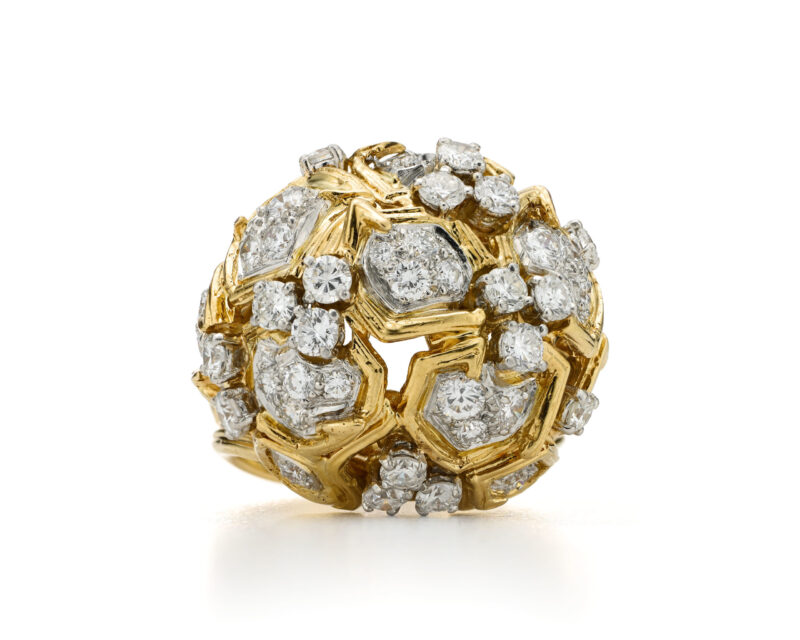
An archival object is strongest when the signature, design record and physical ring can be read together.
The following is the minimum structure TheTimeo recommends for a serious collectible-object file.
Explore the comparison
| LAYER | REQUIRED RECORD | CORE QUESTION | FAILURE TO AVOID |
|---|---|---|---|
| Identity | stable ID, object details, marks, photographs | What is this object? | starting from a seller’s description alone |
| Manufacture | maker/archive/lab records | What can be established about origin or production? | treating archive data as present-condition proof |
| Ownership | dated custody/transfer events | Who held it, when, and by what route? | smoothing gaps into a continuous story |
| Condition | dated examination and images | What is the physical state at this point in time? | turning an old condition adjective into a permanent fact |
| Intervention | service, repair, restoration, replacement | What changed? | hiding legitimate intervention because it complicates “originality” |
| Supporting material | invoices, catalogues, reports, accessories | What evidence supports each claim? | treating every paper as equivalent |
| Uncertainty | unknowns, conflicts, attributed accounts | What is not established? | filling gaps with plausible prose |
| Transfer | redacted package + originals register | What should the next custodian receive? | letting the file fragment when ownership changes |
This is a documentation standard, not a hierarchy of monetary value. A modest service invoice can be more useful to a future watchmaker than an expensive presentation box. A family photograph can be more relevant to a custody question than a modern appraisal. Evidence is judged by the question it answers.
A watch example
Consider a vintage watch with a maker archive extract, a 1970s warranty paper, no records for the 1980s or 1990s, a 2004 auction invoice and two authorised-service invoices from the current owner.
The weak description is:
Excellent provenance, full papers, regularly serviced.
The Standard produces something more precise:
- manufacture and recorded sale information: DOCUMENTED, archive extract;
- first retail transaction: DOCUMENTED, period warranty paper;
- custody 1970s–2004: UNKNOWN in the current file;
- 2004 acquisition: DOCUMENTED, auction invoice;
- 2018 service: DOCUMENTED, service invoice and intake images;
- 2024 service: DOCUMENTED, invoice, replaced crown noted;
- current condition: DOCUMENTED AS OBSERVED, dated specialist examination;
- claim that all other visible components are original to manufacture: NOT ESTABLISHED unless separately examined and supported.
Nothing has been diminished. The watch has become easier to understand.
A jewellery example
Now consider a signed ring with a laboratory report for the centre stone, a family statement that it belonged to a grandmother, evidence of resizing and no original purchase receipt.
The file should not convert those facts into single-family provenance from new.
It can record:
- maker’s signature and hallmarks: photographed and described;
- maker attribution: supported to the level established by a qualified source;
- centre stone: matched to the laboratory report using the available identifiers;
- family ownership: attributed to a named family source, with dates where known;
- original purchase: unknown;
- resizing: documented by present condition and repair record if available;
- present ownership: documented by inheritance or transfer papers where available.
The family history remains part of the object. It simply keeps the correct evidentiary label.
Digital integrity helps, but it does not authenticate the past
Store original scans and photographs using a consistent filename convention. Keep capture dates and source details. Create checksums for important digital files if the collection is significant enough to justify it. Maintain version history when a provenance statement changes.
A checksum can show that a digital file has not changed since the checksum was created.
It cannot prove that the invoice was genuine before it was scanned.
The same principle applies throughout the Standard: a tool can strengthen a chain of evidence without extending beyond its own scope.
Corrections should remain visible
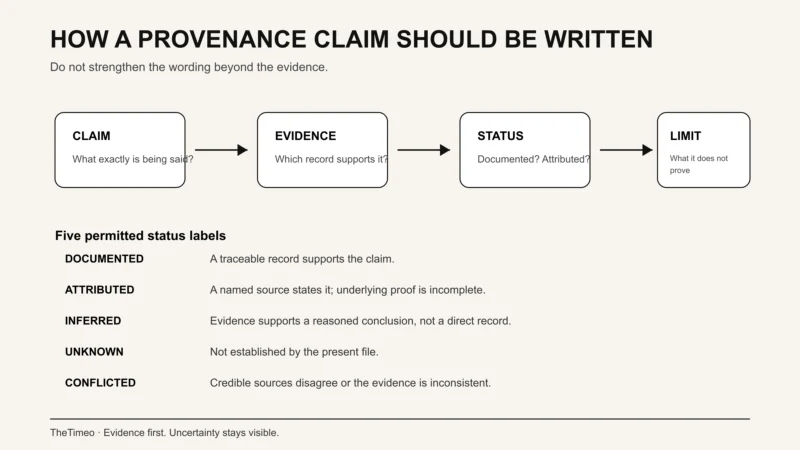
Confidence labels preserve what is verified, attributed, inferred, unresolved or contradicted. Courtesy of TheTimeo.
Provenance research does not end when an article or catalogue is published.
Getty notes that provenance records are updated as new findings emerge. Private collectors should be equally comfortable with revision.
If a date changes because an archive provides better evidence, retain the previous statement and add a correction note. If two sources disagree, store both and explain the conflict. If an owner previously described a watch as having its original dial and later examination identifies a service replacement, update the condition record without rewriting the ownership history.
A provenance file should become more accurate with time, rather than simply longer.
What this standard does not establish
TheTimeo Provenance Standard does not authenticate an object.
It does not certify clean legal title.
It does not guarantee that documents are genuine.
It does not replace laboratory testing, maison examination, a qualified watchmaker, a jewellery specialist, a professional appraiser, an insurer or legal advice.
It does something more modest and, in practice, extremely useful: it stops evidence from being separated from the claims built on it.
That makes later authentication easier to audit. It makes condition changes easier to see. It gives a future owner a starting point that is better than a box of papers and a story remembered from the previous owner.
The handover test
Before calling a provenance file complete, imagine handing the object to a careful stranger.
Could that person identify it without relying on your memory?
Could they reconstruct the documented ownership events without guessing across the gaps?
Could they see which parts have been serviced, restored or replaced?
Could they tell what an archive extract, grading report or invoice actually establishes?
Could they distinguish evidence from attribution and attribution from inference?
Could they continue the record without destroying what came before?
If the answer is yes, the provenance travels with the object.
That is the standard.
Sources & further reading
The documentation framework was checked on 5 September 2026 against Getty’s Categories for the Description of Works of Art and provenance guidance, INTERPOL’s Object ID standard, Patek Philippe’s current Extract from the Archives documentation, GIA Report Check and Cartier’s current heritage/Cartier Tradition material. TheTimeo’s existing watch-documentation, service-history and condition guides were reviewed for overlap; this article extends those principles into a cross-category transfer standard rather than repeating a watch-only document taxonomy.
- Getty — Ownership/Collecting History: https://www.getty.edu/publications/categories-description-works-art/categories/object-architecture-group/23/
- Getty — Research on Museum Collection Provenance: https://www.getty.edu/museum/provenance/
- Getty — Introduction to Object ID: https://www.getty.edu/publications-reports/item/247TQS
- INTERPOL — Object ID: https://www.interpol.int/Crimes/Cultural-heritage-crime/Object-ID
- Patek Philippe — Ordering an Extract: https://www.patek.com/en/service/extract-from-the-archives/ordering-an-extract
- Patek Philippe — Extract FAQ: https://www.patek.com/en/service/frequently-asked-questions/extract-from-the-archives
- GIA — Report Check: https://www.gia.edu/report-check-landing
- Cartier — A Unique Heritage: https://www.cartier.com/en-us/high-jewelry/living-legacy/
- TheTimeo — Watch Documents and Provenance: https://thetimeo.com/insights-investment/watch-documentation-provenance-guide/
- TheTimeo — Watch Service History: https://thetimeo.com/insights-investment/watch-service-history-guide/
- TheTimeo — Watch Condition and Originality: https://thetimeo.com/insights-investment/watch-condition-originality-guide/
The Edit
Insights & Investment stories
Selected stories from the same editorial universe.
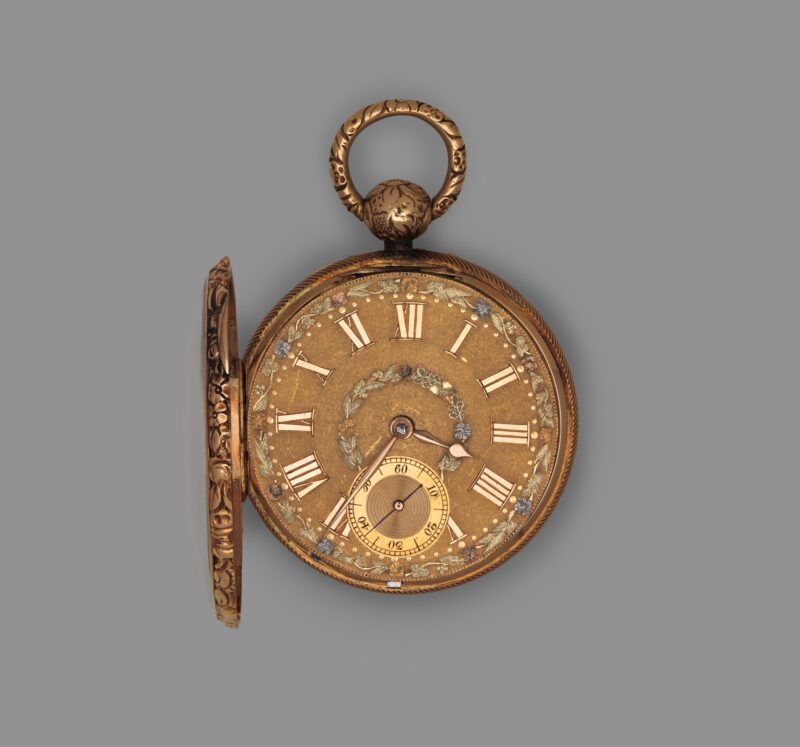
Inside a Gold Roskell: The Date in the Case
A richly worked gold dial, an engine-turned back and a signed movement: a Robert
How to Audit a Luxury Watch Listing: Nine Details That Matter
Before judging price, audit the listing: identity, configuration, condition, service, documents, photography, seller claims,
How to Read a Jewellery Auction Lot: Five Separate Lines of Evidence
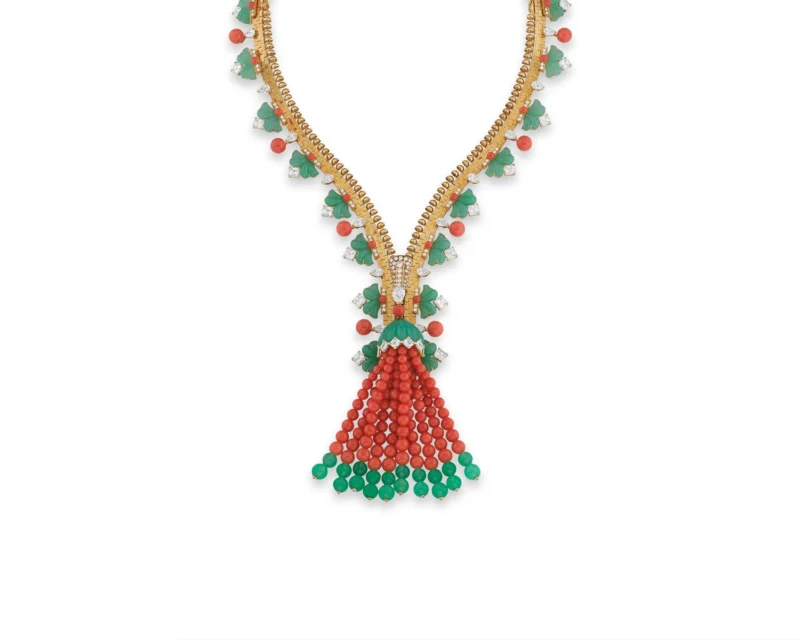
A laboratory report, maker’s mark, condition note, repair record and provenance answer different questions.
Auction Estimates, Hammer Price and Buyer’s Premium Explained
The fall of the hammer is wonderfully clear; the number that appears afterwards can

Watch Documents and Provenance: Build the File, Test the Claims
A watch can become more captivating when its past comes into focus. An archive
Watch Service History: Build a Record That Travels With the Object
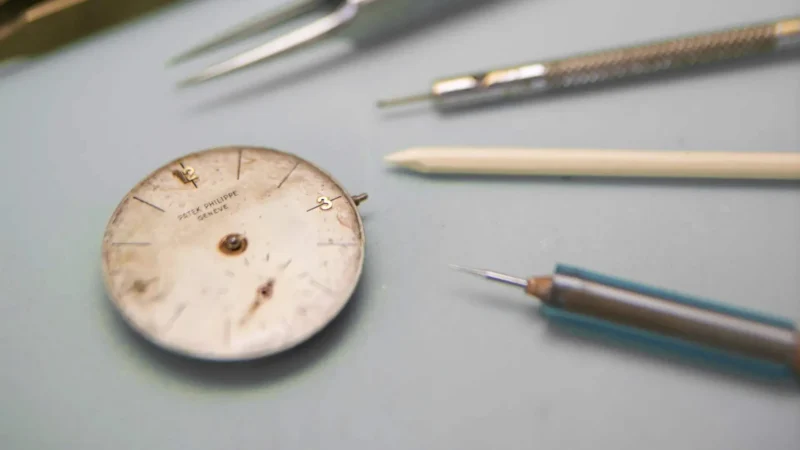
The best service history reads like a biography of the watch. It shows how