
Collecting Intelligence
Insights & Investment
How to Read Watch Condition and Originality
A fine watch carries its history in the smallest details: the sharpness of a lug, the warmth of a dial, the marks left by years of wear and the decisions made during every service. Learning to read those details does not diminish the romance of the object. It reveals it. Condition tells us how the watch presents today; originality asks how closely its components and finishes relate to the form in which it left the maker. Looking at both, patiently and component by component, gives a collector a richer and more honest understanding of what is on the wrist.
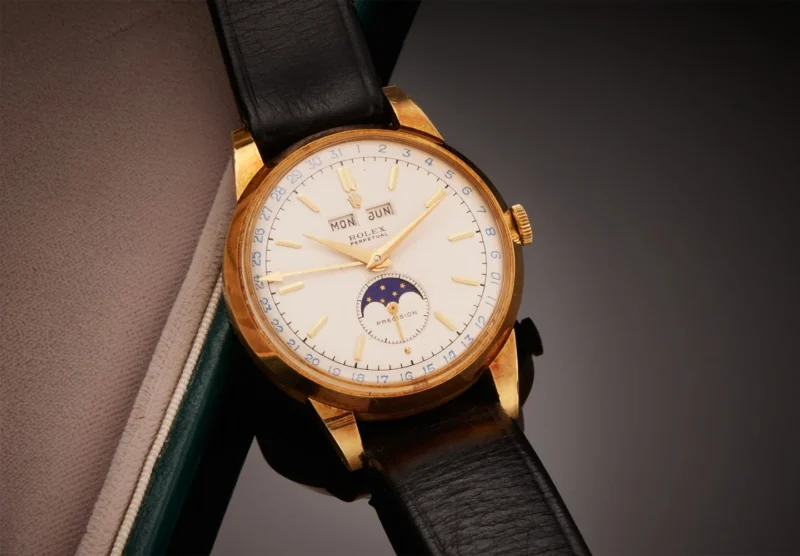
A Rolex reference 8171 Padellone, photographed to make case, dial and surface condition visible. Courtesy of Sotheby’s.
The visual edit
Objects that give the story its shape.
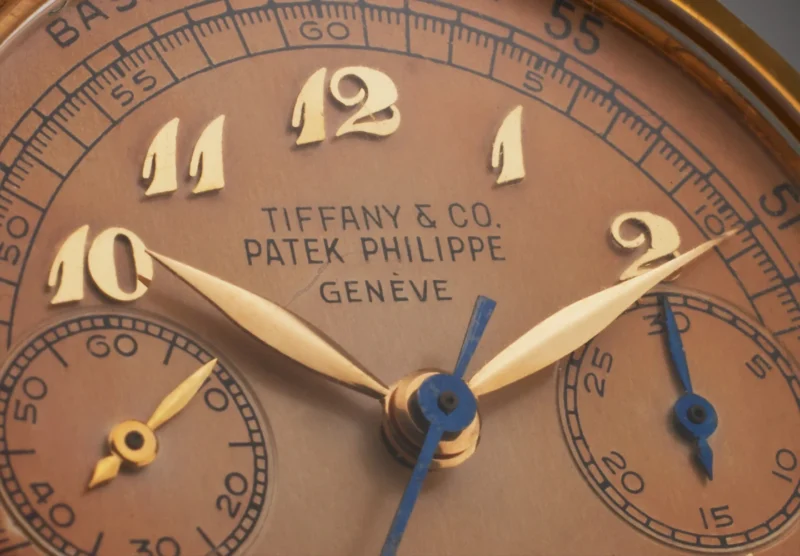
A Patek Philippe reference 1463 whose surfaces and dial reward close inspection. Courtesy of Sotheby’s.
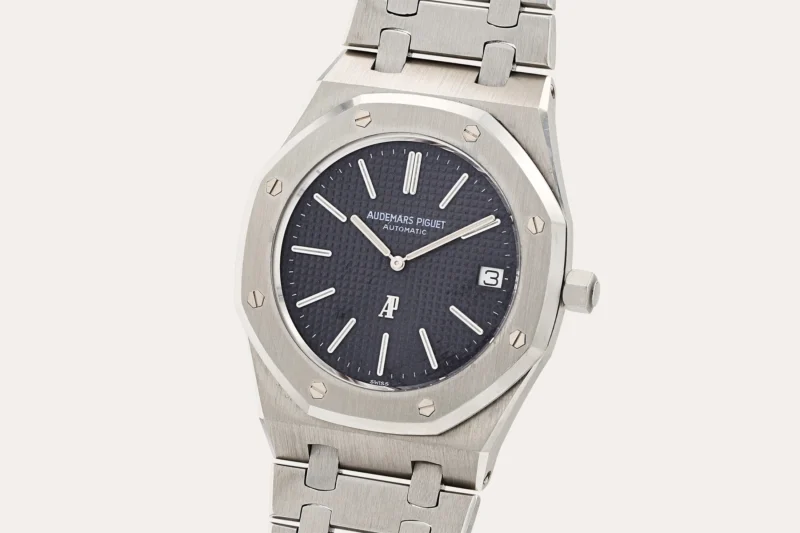
The geometry of an A-Series Royal Oak shows why polishing must be read in the context of the original design. Courtesy of Sotheby’s.
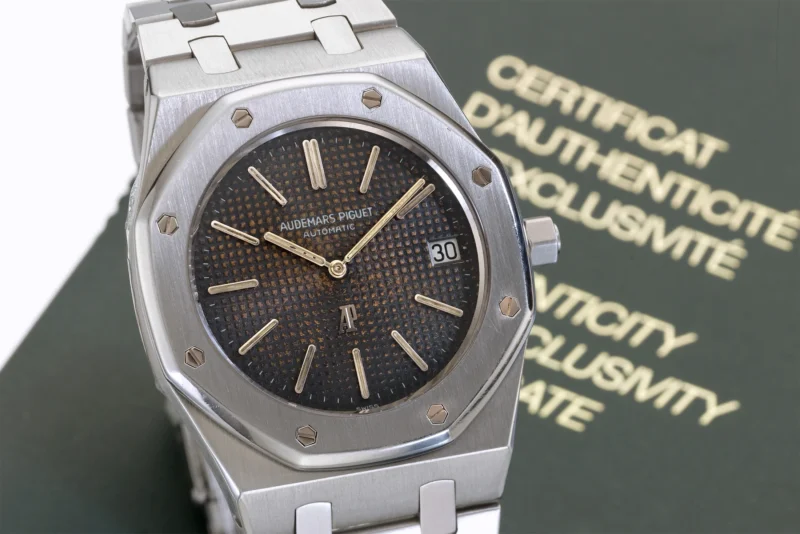
A tropical Royal Oak dial: patina can be beautiful, but must still be distinguished from damage. Courtesy of Sotheby’s.
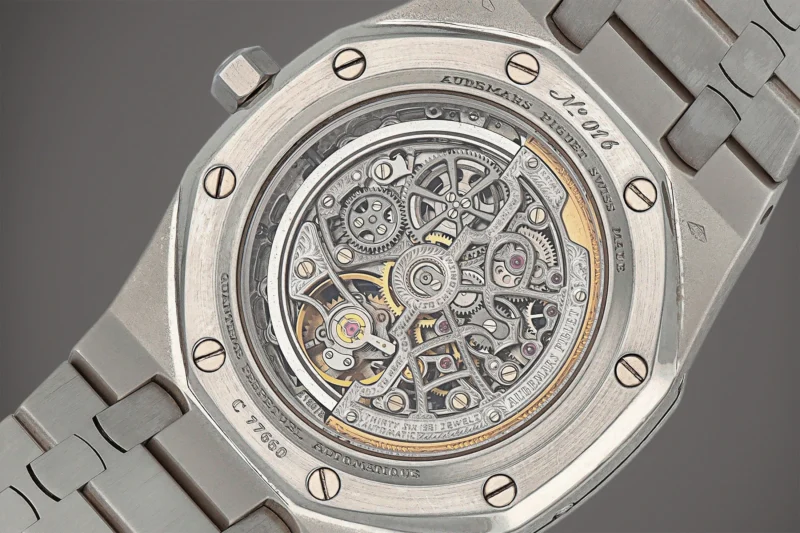
An openworked perpetual-calendar movement makes care, finish and mechanical condition part of the visible story. Courtesy of Sotheby’s.
The history held in a watch
A fine watch carries its history in the smallest details: the sharpness of a lug, the warmth of a dial, the marks left by years of wear and the decisions made during every service. Learning to read those details does not diminish the romance of the object. It reveals it. Condition tells us how the watch presents today; originality asks how closely its components and finishes relate to the form in which it left the maker. Looking at both, patiently and component by component, gives a collector a richer and more honest understanding of what is on the wrist.
What deserves a closer look
- “Original” should apply to a named component or configuration, not float as a promise over the whole watch.
- Wear, damage, repair, replacement and restoration are different conditions and should be recorded separately.
- A service part can be genuine to the maker yet not original to the watch at manufacture.
- Condition reports are useful professional opinions, but auction terms may limit what they guarantee.
- The inspection record should include high-resolution images, measurements, function tests and the identity of the examiner.
Condition and originality tell different stories
Collectors often compress condition and originality into one judgement. Separating them makes the description more accurate. Condition asks about wear, damage, corrosion, deformation, finish and function at a stated date. Originality asks whether the case, dial, hands, movement components, crown, bezel, crystal, bracelet and other elements correspond to the watch's documented production configuration.
A watch can answer those questions in different ways. An untouched case with scratches may preserve its historic geometry better than a polished case that looks cleaner. A replacement crown may improve water resistance while reducing component-level originality. A restored dial can be visually convincing but should not be described as an original finish. None of those observations automatically decides whether the watch is desirable; they define what the object is.
Sotheby's public condition guide makes the collector perspective explicit: proximity to the watch's first-sold appearance, original parts, paperwork and accessories all inform its use of “good condition.” The same guide notes that redials and replacement service dials can enter watches during maintenance. This is an auction-house explanation, not a universal grading standard, but it identifies the questions an inspection should resolve.
Begin with the dial
The dial carries typography, luminous material, printing, applied markers and surface finishes that can be altered independently. Begin with straight, diffused photographs from several angles. Look for printing that varies unexpectedly in weight or alignment, luminous plots whose colour or texture differs from the hands, scratches under the crystal and signs of moisture. Compare only with documented examples from a compatible reference and production period; makers changed suppliers and details over time.
Terms such as “tropical,” “spider,” “ghost” or “creamy” are descriptions used in the trade, not proof of a natural ageing process. A colour change may be valued by bidders, but its cause can require specialist examination. Do not infer originality from attractiveness. Record what is visible, note what is believed and keep the reason for that belief.
A service dial made or supplied by the original manufacturer is usually genuine in origin, but it may use later typography, luminous material or markings. The correct wording is therefore often “manufacturer service replacement,” followed by the evidence. “Authentic” and “original to this watch” answer different questions.
The quiet language of the case
Cases accumulate scratches and dents; refinishing removes material to change their appearance. The question is not whether every polished watch is unacceptable. It is whether the present geometry, surface transitions and hallmarks are accurately described. Examine lug thickness and symmetry, edges between brushed and polished surfaces, bezel profile, case-back fit, engravings and hallmarks. Side-by-side lighting can reveal waves or softened planes that frontal images hide.
Measurements help but need context. Calipers applied by an untrained person can damage a case, and catalogue dimensions are often approximate. A competent watchmaker or specialist can record width, thickness and lug form without pretending that a single measurement proves an untouched surface. Historic manufacturing tolerances and later wear complicate comparison.
Rolex's Certified Pre-Owned material illustrates a manufacturer's approach: the company says it verifies the original configuration and may use genuine replacement parts where necessary, while preferring to preserve the watch's integrity. That process is meaningful within the Rolex programme and carries its own documents and guarantee. It should not be generalized into a claim that any polished or serviced Rolex has the same status.
What the movement can reveal
Opening a watch can reveal calibre identity, movement and case numbers, corrosion, tool marks, replaced screws and service inscriptions. It can also damage seals or surfaces. Patek Philippe advises that case-back removal should be performed only by an authorised retailer or service centre for its watches. The broader lesson is to use a qualified examiner and record who opened the watch, when and under what conditions.
Movement originality is not a simple all-or-nothing state. Consumable or worn parts may have been replaced during legitimate maintenance. A bridge or rotor can be changed. A movement can match the correct calibre family but not the case's recorded number. The inspection should distinguish visible compatibility from an archival match and avoid claiming what cannot be seen.
Functional tests belong beside the visual record. Record amplitude or rate only with the instrument, positions, state of wind and measurement duration. Test complications through the correct operating sequence. A water-resistance rating from manufacture is not a current result; any current claim needs a dated pressure test and the test conditions.
Hands, crown, bezel, crystal and bracelet
Small exterior parts often change through service or damage. Their status can materially affect how a watch is described even when the core case and movement are consistent. Compare hand shape, length and luminous material; crown logo and tube; bezel font and insert; crystal profile and cyclops; bracelet reference, end links, clasp code and stretch.
These details should not become a game of declaring a watch “wrong” from one photograph. Parts can vary within a production run, and documented service replacements can be entirely appropriate for an owner who wears the watch. The aim is a transparent inventory. Where the evidence cannot settle a point, mark it “unresolved” and state the next examination that could help.
Rolex's service FAQ says components that no longer meet its functional and aesthetic specifications are replaced with genuine parts during a complete service. That is an official statement of the maker's current process, checked on 3 September 2026. It demonstrates why an authorised service can improve performance while changing the component history. Owners who care about retaining specific parts should discuss the proposed work before authorising it and keep the estimate and invoice.
Creating a portrait of the watch
Use a fixed record so that observations can be compared over time:
Explore the comparison
| Area | Record | Avoid |
|---|---|---|
| Identity | reference, case and movement numbers where safely visible | publishing full serials unnecessarily |
| Dial and hands | printing, lume, marks, moisture, replacement evidence | “perfect” without magnified inspection |
| Case | surfaces, edges, dents, engravings, measured dimensions | equating shine with preservation |
| Movement | calibre, visible corrosion, marks, current test data | guaranteeing unseen parts |
| Exterior parts | crown, bezel, crystal, bracelet and codes | calling maker service parts original to manufacture |
| Function | date, instrument, positions and test limits | treating a brief timing trace as long-term performance |
| Documents | source, issuer, date and exact scope | assuming a box authenticates the watch |
Photograph the watch before and after any intervention. Keep original files with capture dates and do not replace them with edited marketplace images. Include a neutral scale and colour reference when it helps, but never rest a hard object directly against a delicate surface.
Reading a condition report well
An auction condition report can focus attention on important observations, yet conditions of business may describe it as an opinion rather than a complete mechanical guarantee. Sotheby's watch conditions, for example, advise prospective buyers that reports may not specify every replacement or imperfection and recommend inspection by a qualified watchmaker. A bidder should read the lot description, report, online images, saleroom notices and conditions together.
Ask focused questions: Was the case opened? Is the movement running, and was it timed? Which components are believed original to the watch, and on what basis? Is the dial finish believed untouched? Are case dimensions available? Do photographs show hallmarks and numbers? Were any statements changed after catalogue publication?
Silence is not confirmation. “Not mentioned” does not mean “not present.” If an answer materially affects the decision and cannot be obtained, keep that uncertainty in the comparison rather than pricing it away with confidence.
Originality and the pleasure of wearing
A historically preserved watch and a daily-wear watch can require different compromises. Degraded luminous material, a damaged crown or failed seals can create practical concerns. Replacing a component may be the responsible ownership choice. The change should be documented and, where possible and permitted, the removed part retained.
This is why a single adjective cannot carry the discussion. A clear description might say: “case shows wear and is believed unpolished; dial believed original; hands are later manufacturer service replacements; crown replaced at the 2019 service; movement number matches the archive extract; water resistance not tested.” That sentence is more useful than “excellent original condition,” even though it sounds less glamorous.
Sources & credits
Sources
This guide was checked on 3 September 2026 against Sotheby's collector guide to watch condition and its published Geneva buyer guidance for watches. Manufacturer practice is bounded to Rolex's Certified Pre-Owned certification process and service FAQ. Patek Philippe's authenticity FAQ supports the caution about case opening. This is an inspection framework, not authentication, appraisal or purchase advice.
The Edit
Insights & Investment stories
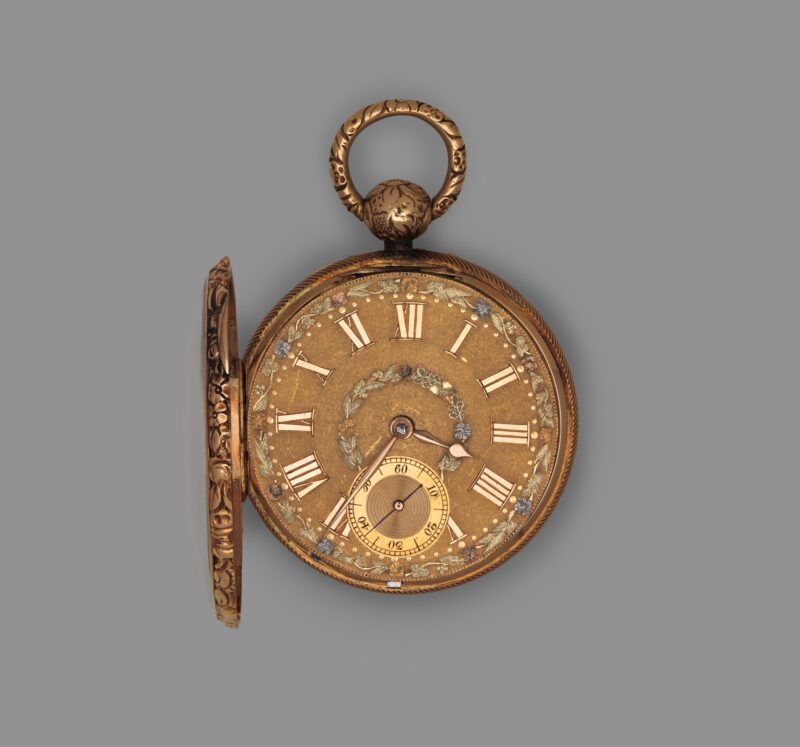
Inside a Gold Roskell: The Date in the Case
A richly worked gold dial, an engine-turned back and a signed movement: a Robert
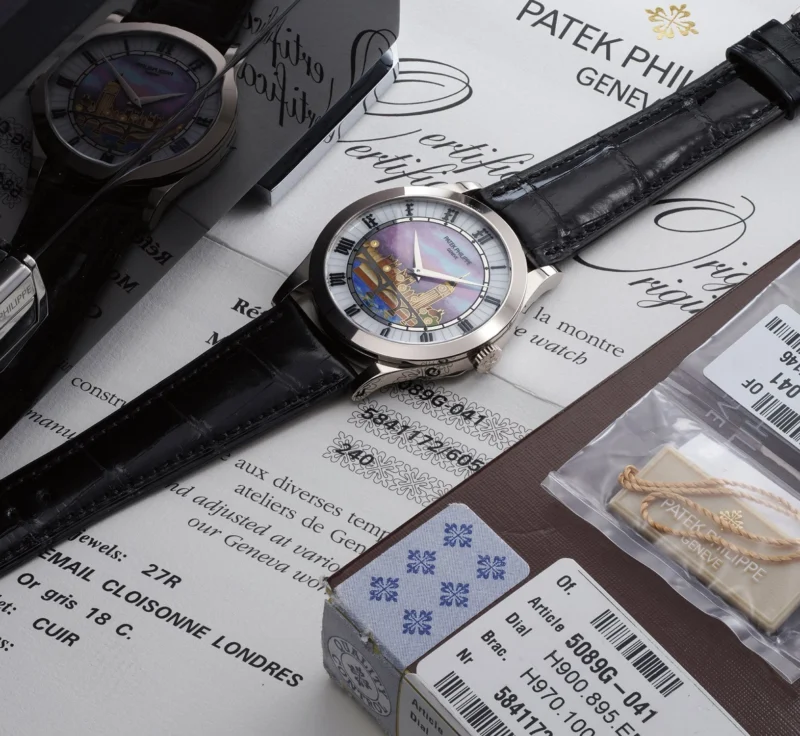
The TheTimeo Provenance Standard: What Should Travel With an Object
A collectible object needs more than a pile of accessories. Identity, ownership, service, condition,
How to Audit a Luxury Watch Listing: Nine Details That Matter
Before judging price, audit the listing: identity, configuration, condition, service, documents, photography, seller claims,
How to Read a Jewellery Auction Lot: Five Separate Lines of Evidence
A laboratory report, maker’s mark, condition note, repair record and provenance answer different questions.
Auction Estimates, Hammer Price and Buyer’s Premium Explained
The fall of the hammer is wonderfully clear; the number that appears afterwards can

Watch Documents and Provenance: Build the File, Test the Claims
A watch can become more captivating when its past comes into focus. An archive