
TheTimeo / Insights & Investment
THE LISTING:
under examination
Before judging price, audit the listing: identity, configuration, condition, service, documents, photography, seller claims, authentication and transaction terms.
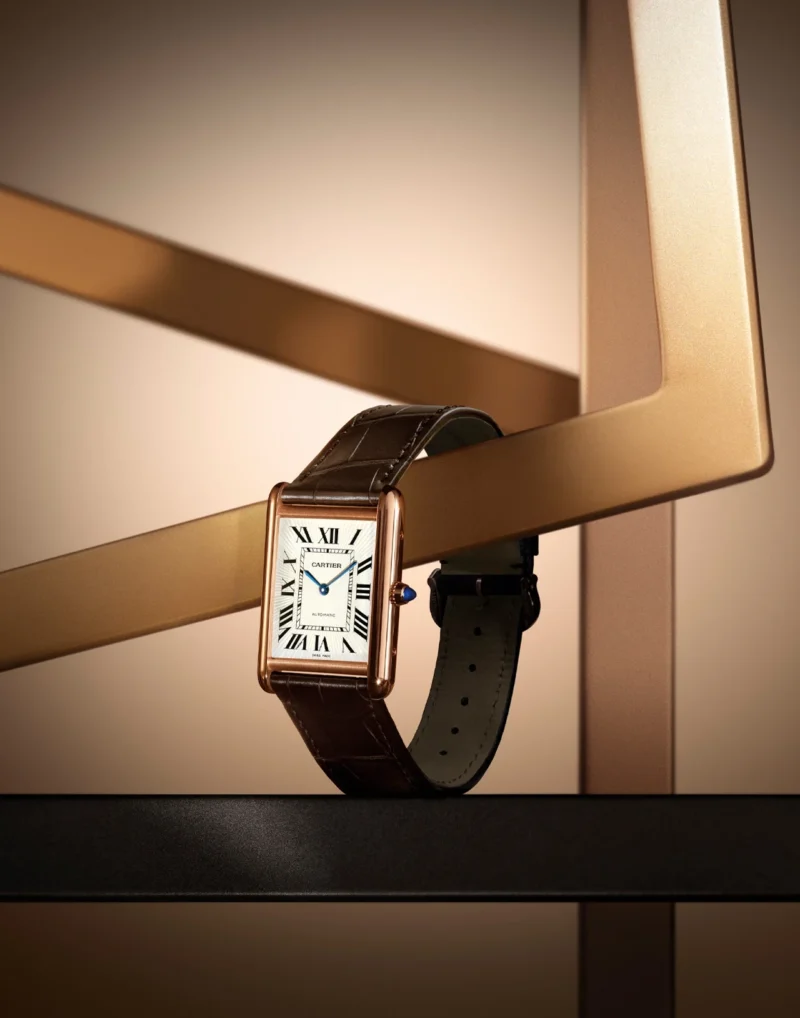
Tank Louis Cartier watch illustrating the collection’s enduring rectangular design. Courtesy of Cartier.
Explore the story
A watch listing can contain forty photographs and still leave out the one view that matters.
It can say “full set” without naming the documents. It can say “excellent condition” without mentioning a service dial. It can copy a factory water-resistance rating from the manufacturer’s current product page even though nobody has pressure-tested the used watch being sold. It can call a watch “authenticated” without explaining who performed the examination or what was excluded.
The problem is not that every seller is careless. The problem is that a listing has to do several jobs at once: identify the watch, describe its present state, show the evidence, explain the transaction and make uncertainty visible.
TheTimeo’s listing audit is built around one simple test: could another careful reader understand what this exact watch is without having to reverse-engineer the sales copy?
If the answer is no, the next step is not necessarily to walk away. It is to know what to ask.
Key takeaways
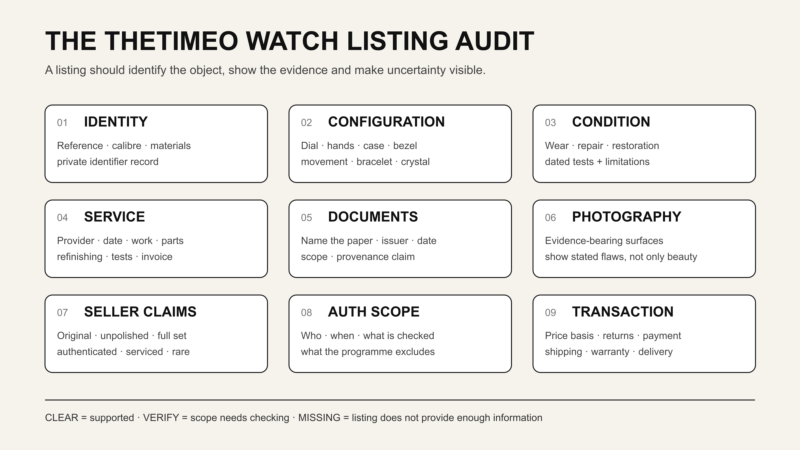
Nine fields turn a listing from sales copy into an evidence-bearing record.
- A listing should identify the actual watch rather than only repeat the specifications of the model family.
- Reference, calibre, case, bracelet, dial, hands and accessories should be described as separate fields when they matter to the object.
- “Original”, “unpolished”, “recently serviced”, “full set” and “water-resistant” are claims that need scope and evidence.
- A current condition description should distinguish wear, repair, replacement, restoration and functional testing.
- Documents should be named by issuer and type. Box and papers do not automatically establish provenance.
- Photographs should show evidence-bearing surfaces as well as attractive angles.
- Transaction terms — asking price, taxes, returns, authentication, payment and shipping — belong in the audit because they affect what the buyer is actually agreeing to.
Start with the watch, not the adjective
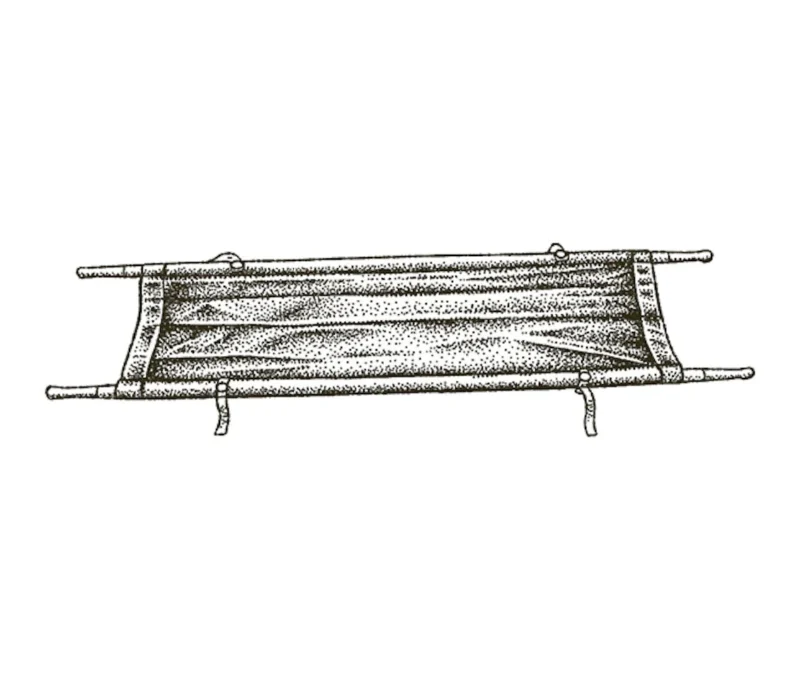
Cartier illustration explaining the Tank’s brancards. Courtesy of Cartier.
The quickest way to make a listing more useful is to remove the adjectives for a moment.
Imagine the words “rare”, “stunning”, “investment-grade”, “mint” and “collector condition” have disappeared. What remains?
A good listing should still tell you:
- who made the watch;
- which model and reference it is;
- which movement it contains or is represented to contain;
- the material and dimensions;
- what components are present now;
- what condition has been observed;
- what service or replacement history is known;
- which accessories and documents are included;
- which provenance claims are documented;
- what the photographs actually show;
- what the seller is promising about authentication, returns, payment and delivery.
That is the object record.
The sales language can come afterwards.
Field 1 — Identity: which watch is this?
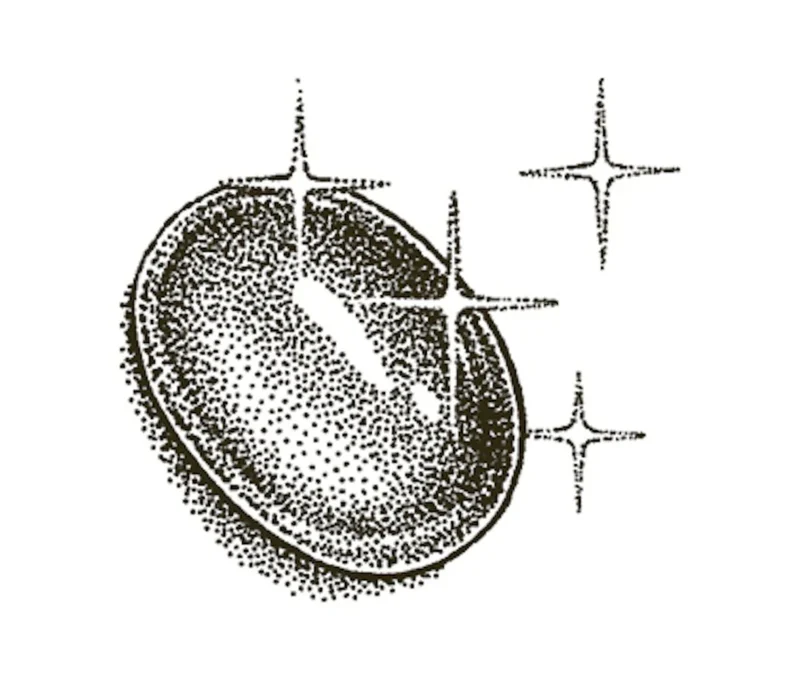
A Cartier illustration of the cabochon cut: a smooth, rounded surface rather than facets. Courtesy of Cartier.
A reference number is a starting point, not the whole identity.
Cartier’s current Santos de Cartier product pages show why. A manufacturer page can state a model name, reference, calibre, case material, width, thickness, bracelet system and factory water-resistance specification for a current production configuration. That is excellent reference data for the model.
A pre-owned listing has another job. It must connect those model facts to the specific watch in front of the seller.
Record, where applicable:
- maison or manufacturer;
- model or family;
- exact reference;
- case number or serial, held in full in the private transaction record;
- movement number where relevant and safely obtainable;
- calibre;
- case material;
- case dimensions;
- bracelet or strap reference;
- clasp or buckle reference;
- dial variant;
- production or sale period only when evidence supports it.
The serial question needs judgement. A full serial can be essential for manufacturer enquiries, stolen-item searches, authentication or final transaction records. It does not follow that every public page must display every character. A responsible listing can redact part of an identifier publicly while confirming that the full number is held privately and can be supplied through the appropriate inspection or transaction process.
That is an editorial security practice, not a universal industry rule.
What matters is that the seller has the exact identifier and does not replace it with a vague phrase such as “serial available”.
Field 2 — Configuration: what parts are on the watch now?
Two watches with the same reference can be materially different objects.
One may retain its period dial and hands. Another may have manufacturer service replacements. A bezel may be correct to the reference but later. A bracelet may be contemporary to the watch, a later manufacturer replacement or an aftermarket substitute. A crown, crystal, clasp or set of pushers may have changed during service.
The listing should not force all of those questions into the word “authentic”.
A useful configuration block names the components separately:
Explore the comparison
| Component | What to record |
|---|---|
| Dial | colour/variant, visible marks, service or restoration evidence, stated originality and basis |
| Hands | type, lume, replacement evidence, relationship to dial |
| Case | material, finish, engravings, apparent refinishing, visible damage |
| Bezel | type, insert, scale, replacement or damage evidence |
| Crown/pushers | present type, replacement evidence, operation if tested |
| Movement | calibre, visible identifiers, service evidence, examination scope |
| Bracelet/strap | reference, clasp, links, stretch/wear, later replacement status |
| Crystal | material/type where established, scratches/chips, replacement evidence |
This is where platform rules can be informative without becoming universal standards. eBay’s current Authenticity Guarantee terms for watches distinguish customised watches from eligible standard configurations and tell sellers to disclose known replacement parts. For eligible vintage watches, its terms also acknowledge that some replacement parts may be present even when a watch is authenticated.
That is an important collector lesson: authenticity and component history are related, but they are not identical questions.
Field 3 — Condition: describe the evidence, not the mood
“Excellent” is not useless, but it should be the last line of a condition description, not the first.
Christie’s current condition guidance says reports may cover previous damage, restoration and repair, while also warning that a condition report may not capture every issue. A recent Christie’s Rolex lot shows the value of precise language: the report states that the watch has a service dial and hands, notes scratches and nicks, says the movement was running when catalogued and separately states that accuracy had not been tested.
That description gives the reader something to work with.
A resale listing should do the same for the areas that matter:
Case: scratches, dents, corrosion, refinishing, hallmarks or engraving condition. Dial: marks, moisture evidence, printing, lume, restoration or replacement. Hands: condition, lume relationship, replacement history if known. Crystal: chips, scratches, replacement. Bezel/crown/pushers: damage, wear, operation. Bracelet: scratches, stretch, link count, repairs, clasp condition. Movement: whether examined, by whom, running state and any current measured results. Water resistance: only a dated test should support a current claim.
Cartier’s care guidance notes that seals deteriorate over time and recommends regular water-resistance checks. That makes the distinction easy to understand: factory specification belongs to the model; current performance belongs to the individual watch and the date of the test.
Do not write “water-resistant to 100 metres” on a used watch simply because the current version of that reference family carried that rating when new.
Field 4 — Service: “recently serviced” is not enough
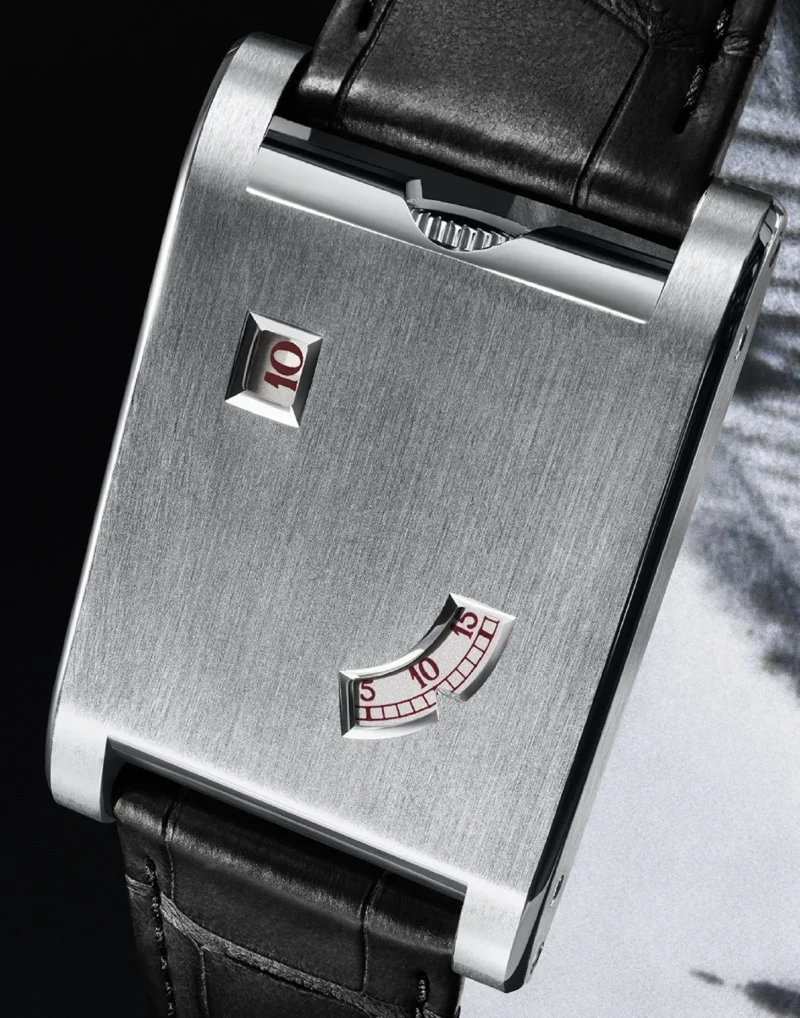
Tank à Guichets showing how Cartier reworks the Tank design language. Courtesy of Cartier.
Service history is one of the most common places where a listing sounds more precise than it really is.
“Serviced in 2024” can mean a manufacturer complete service, a local watchmaker’s movement overhaul, a battery change, a pressure test, a cosmetic refinish or a seller’s unverified recollection.
The listing should state:
- service provider;
- service date;
- whether the provider physically examined the watch;
- work performed;
- visible components replaced;
- whether refinishing or polishing was carried out;
- post-service tests supplied;
- service warranty, if any;
- document or invoice available.
Cartier’s current complete-service description says its process begins with a diagnosis and can include component replacement; polishing may also be included depending on the piece and service. That is exactly why a manufacturer service invoice is more useful than the phrase “factory serviced”. It tells the next owner what intervention actually occurred.
A service record can improve confidence in maintenance without proving untouched originality. Those are separate claims.
For a fuller framework, TheTimeo’s Watch Service History guide treats intake photographs, approved work, parts, tests and return condition as a record that should travel with the watch.
Field 5 — Documents and provenance: name the paper
“Box and papers” is convenient marketplace shorthand. It is not a provenance statement.
List each document separately:
- original warranty or certificate;
- dated sales invoice;
- manufacturer service invoice or card;
- archive extract;
- certificate of origin;
- authenticity report;
- auction invoice;
- insurance schedule or appraisal;
- prior listing or catalogue;
- correspondence tied to the watch;
- presentation box, tags, booklets and tools.
Then record issuer, date and identifiers.
Patek Philippe’s current FAQ gives a clean example of why document names matter. The maison distinguishes its Certificate of Origin, supplied with a new watch and carrying identifying numbers, from an Extract from the Archives, which is a partial transcript of archival information for a timepiece. They are not interchangeable documents.
The same discipline applies to provenance. A family account can be valuable. An auction invoice can establish a transaction. A service invoice can establish an intervention. A warranty card can support an early sale record. None automatically fills every gap in an ownership chain.
TheTimeo’s Watch Documents and Provenance guide goes deeper on those distinctions. For a listing, the practical rule is shorter: name the document, say what it supports, and do not let the word “papers” carry a claim it cannot prove.
Field 6 — Photography: show the surfaces that carry evidence
Photography should help a reader inspect the description.
Auction houses reveal how basic this principle is even before a property is accepted for sale. Christie’s asks owners requesting an online estimate for clear colour images including front, back and maker’s marks. Phillips asks consignors to upload multiple images, including front, back and signatures or marks.
A public resale listing should be at least as disciplined about the surfaces that matter.
A useful photographic set normally includes:
- straight-on dial view;
- three-quarter view;
- left and right case sides;
- crown and pushers where applicable;
- lug and bezel details;
- caseback;
- bracelet, clasp and end links;
- hallmarks, engravings and reference-bearing areas with sensitive identifiers handled appropriately;
- movement only when the watch can be opened safely by a qualified person;
- documents and accessories, with personal information redacted.
There is no magic number of photographs. Ten repetitive beauty shots are less useful than six images that answer six different questions.
Keep lighting honest. Do not retouch scratches out of a condition image. A cleaned background is fine; altered evidence is not.
If a flaw is mentioned in the description, show it.
Field 7 — Seller claims: turn adjectives into questions
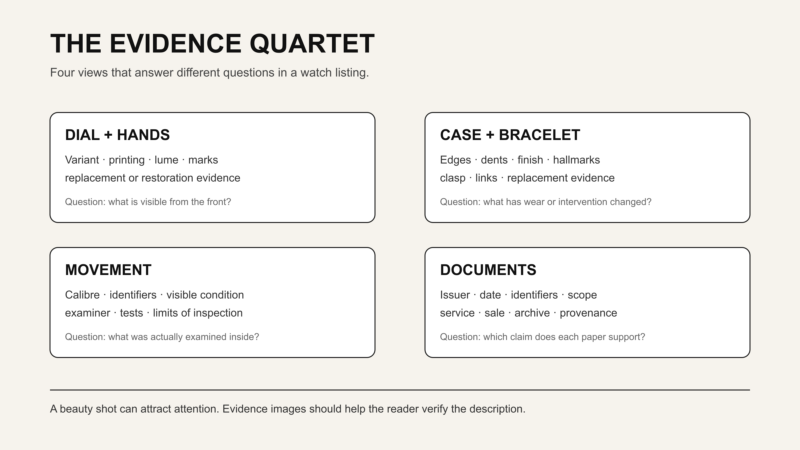
Dial, case, movement and documents answer different questions.
Some phrases should trigger a request for evidence rather than an argument.
Explore the comparison
| Listing claim | Better question |
|---|---|
| “Original” | Which components are believed original to manufacture, and on what evidence? |
| “Unpolished” | What case observations or service history support that statement? |
| “Full set” | Which exact box, papers, tags, booklets and accessories are included? |
| “Recently serviced” | By whom, when, and what work or parts are documented? |
| “Authenticated” | By which service, on what date, and what did the examination cover? |
| “One owner” | What transaction or family records support the ownership statement? |
| “Rare” | Rare in what sense: production, surviving configuration, auction appearance or current availability? |
| “Water-resistant” | What current test supports the claim, and when was it performed? |
| “Mint” | What component-level condition record sits behind the adjective? |
A seller does not need a museum dossier for an ordinary modern watch. The standard should rise with the importance of the claim.
If a phrase materially affects price, collectability or risk, the evidence should become more specific.
Field 8 — Authentication scope: what will happen after purchase?
Some platforms insert authentication after the buyer pays and before the watch reaches them. That can add an important control, but the listing still needs to explain the programme accurately.
eBay’s current US Authenticity Guarantee, for example, says eligible watches are sent to an authentication facility where the watch is checked against the listing and physically authenticated. Its terms also state that the service does not check waterproofing or timekeeping accuracy and does not authenticate aftermarket provenance documents.
That scope is useful precisely because it is bounded.
A listing should therefore state:
- whether authentication is mandatory, optional or absent;
- who performs it;
- at what stage it occurs;
- what happens if the watch cannot be authenticated or differs from the listing;
- whether returns pass through the same examiner;
- what the programme does not cover.
Do not rewrite a platform badge as “manufacturer certified” unless the manufacturer itself provides that certification.
Rolex’s Certified Pre-Owned programme, for example, is manufacturer-backed and has its own defined certification process. That is a different category of evidence from an independent marketplace authentication service.
Field 9 — Transaction terms: the listing is also a contract invitation
The watch may be beautifully documented and still be a poor transaction if the commercial terms are unclear.
Audit:
- asking price and currency;
- whether offers are accepted;
- buyer fees or platform fees that affect the buyer’s total;
- tax and duty treatment where stated;
- payment method;
- escrow or intermediary process where applicable;
- return window and exclusions;
- warranty, if any;
- authentication step;
- shipping method;
- insurance or declared-value basis;
- delivery signature requirements;
- expected dispatch time;
- who pays return shipping;
- what happens if the watch arrives damaged or differs materially from the description.
Price language matters here. An asking price is not a completed sale. An auction estimate is not a dealer offer. A premium-inclusive auction result is not the seller’s proceeds. TheTimeo’s Market Price Is Not One Number framework should be linked rather than rebuilding that taxonomy inside every listing article.
The TheTimeo listing audit
The audit uses three states, not a score out of 100.
CLEAR — the field is stated and supported to the level the claim requires. VERIFY — the field is stated, but the evidence or scope needs checking. MISSING — the listing does not provide enough information to evaluate the claim.
Explore the comparison
| Area | CLEAR looks like | VERIFY / MISSING trigger |
|---|---|---|
| Identity | exact reference, configuration and private full identifier record | model family only; serial status unclear |
| Components | dial, hands, case, bezel, crown, movement and bracelet described | “all original” without component basis |
| Condition | dated, component-specific observations | one overall adjective |
| Service | provider, date, work and document | “serviced” with no record |
| Documents | each paper named with issuer/date | “papers” or “full set” only |
| Provenance | sourced events and gaps stated | ownership story repeated without source |
| Photography | evidence-bearing views and flaws shown | beauty shots only; important areas absent |
| Authentication | examiner, timing, scope and limits stated | generic badge language |
| Transaction | price basis, returns, payment, shipping and warranty clear | important terms hidden or ambiguous |
A VERIFY result is not a red flag by itself. Vintage watches often contain genuine unknowns. A private seller may need time to locate an invoice. A movement may not have been opened. A complete service record may be unavailable.
The problem begins when uncertainty is dressed up as certainty.
What a strong listing sounds like
Weak wording:
Excellent, all-original example with box and papers. Recently serviced and keeping perfect time.
Stronger wording:
Stainless-steel reference XXXX. Case shows light wear; seller states it has not been polished during their ownership, but earlier refinishing history is not established. Dial believed period-correct; hands were replaced during manufacturer service in 2019 according to the attached invoice. Movement was running when inspected on 2 September 2026; no current water-resistance test is supplied. Includes warranty card dated 2008, manufacturer service invoice dated 2019, presentation box and two booklets. Full serial held privately and available to the appointed authenticator.
The second description is less glamorous. It is much easier to trust.
It tells the reader what is observed, what is documented, what is attributed and what remains unknown.
A listing should travel with the object
The best listing is not a temporary advertisement. It is the public-facing version of a record that can survive the transaction.
When the watch sells, the next owner should be able to receive a redacted copy of the useful material: identity, condition photographs, service records, document list, current test results, provenance notes and the transaction record they are entitled to keep.
That is why the audit connects directly to TheTimeo’s Provenance Standard. The listing is not the provenance file, but it should not contradict it.
For brands, auction houses, dealers and marketplaces, this is also a useful standard of communication. Clear scope protects credibility. It reduces the temptation to make one badge, one adjective or one document carry more meaning than it should.
For the collector, the benefit is simpler.
Before asking whether the price is good, you know what watch the price belongs to.
Sources & further reading
This article was checked on 5 September 2026 against Cartier’s current Santos de Cartier product specifications and official watch-service guidance; Christie’s current condition-report guidance, current watch-lot descriptions and online auction-estimate submission requirements; Phillips’ current consignment requirements and a current Geneva watch lot; Patek Philippe’s current Extract from the Archives FAQ; eBay’s current Authenticity Guarantee terms for watches; Rolex’s official Certified Pre-Owned certification process; and TheTimeo’s existing guides to watch condition, service history, documentation and auction-price terminology.
Marketplace eligibility, authentication rules, auction terms, manufacturer specifications and service policies can change. Recheck them for the specific watch and transaction. This article is a listing-audit framework, not an authentication, valuation or legal opinion.
The Edit
Insights & Investment stories
Selected stories from the same editorial universe.
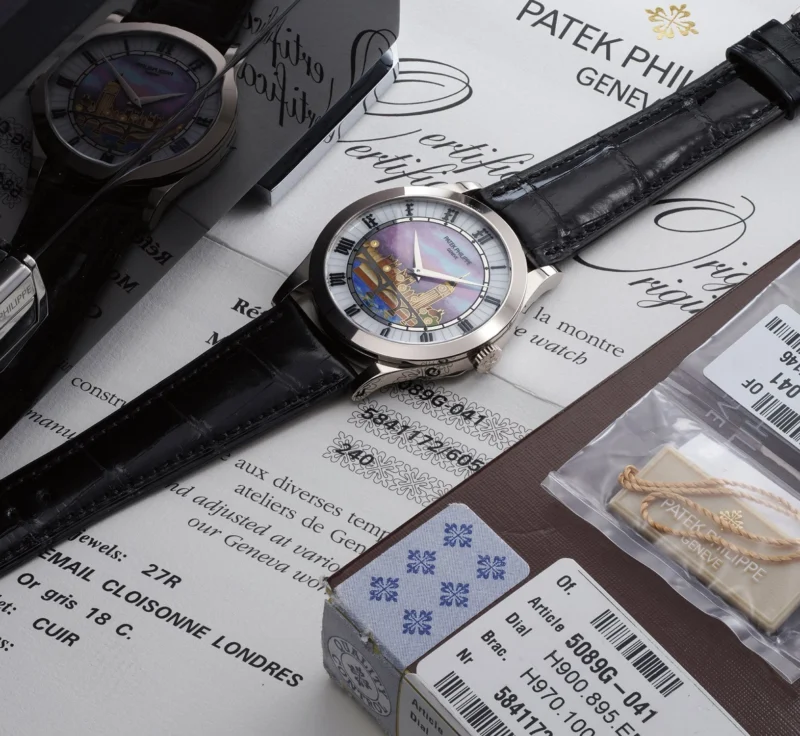
The TheTimeo Provenance Standard: What Should Travel With an Object
A collectible object needs more than a pile of accessories. Identity, ownership, service, condition,

Rolex GMT-Master II: a closer look
Beyond the bezel colour: understanding GMT-Master generations, original components, service history and the documents

Omega Speedmaster: originality, service and the watch you wear
A replacement dial or bracelet can change a vintage Speedmaster’s appeal. How to understand
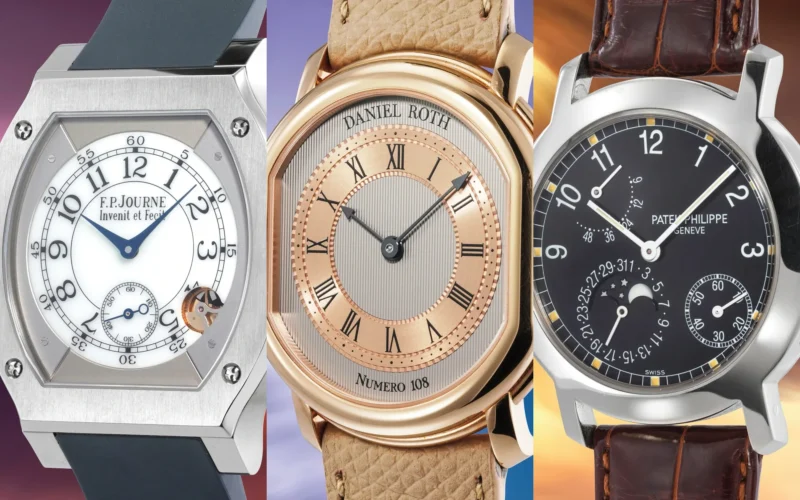
Auction Estimates, Hammer Price and Buyer’s Premium Explained
The fall of the hammer is wonderfully clear; the number that appears afterwards can
How to Read a Jewellery Auction Lot: Five Separate Lines of Evidence
A laboratory report, maker’s mark, condition note, repair record and provenance answer different questions.

Watch Documents and Provenance: Build the File, Test the Claims
A watch can become more captivating when its past comes into focus. An archive