
The collector’s eye
A name
on the dial.
A gold skeleton watch, a visible mechanism and a famous name: the Met’s attribution to an imitator of Breguet makes this an unusually revealing object to study.
Discover the story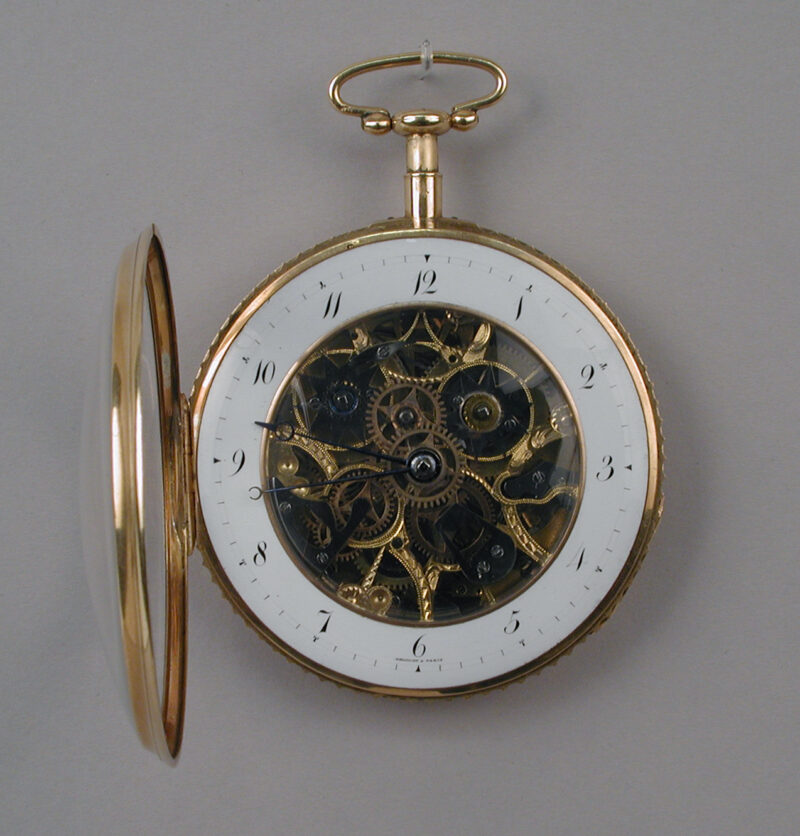
Skeleton watch, c. 1810, catalogued by the Met as the work of an imitator of Breguet in La Chaux-de-Fonds. The Metropolitan Museum of Art, New York.
Inside the story
A pale ring of hours surrounds a view into the mechanism. Gold curves around the case; an open cover catches the light beside it. The skeleton watch is immediately absorbing because it lets the eye move through the object instead of stopping at a conventional dial. Its most instructive detail, however, is the way a familiar name sits beside the museum’s description.
The Metropolitan Museum of Art catalogues this watch as the work of an imitator of Breguet, made in La Chaux-de-Fonds around 1810. The object offers a useful collecting lesson: a name on a watch, the watch’s construction and a specialist attribution should be considered together.
A watch from more than one side
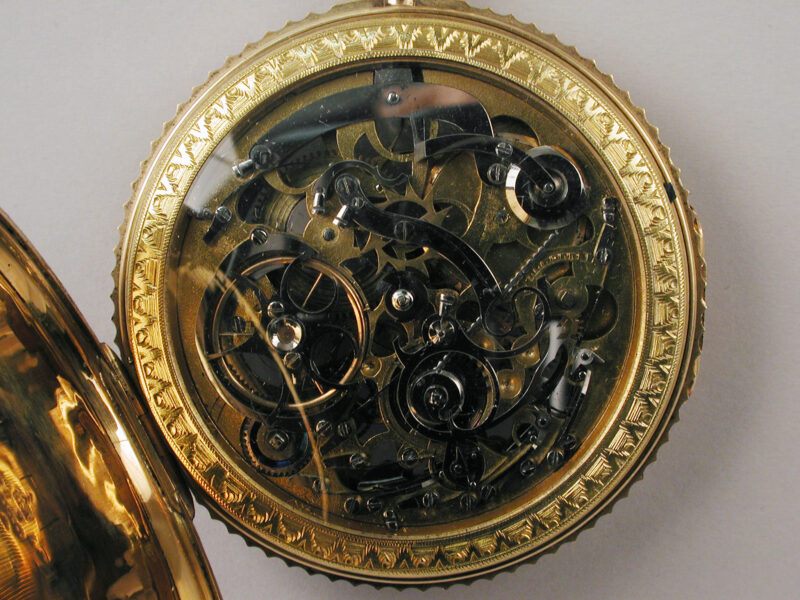
The museum’s closer photograph brings the open construction into focus. The Metropolitan Museum of Art, New York.
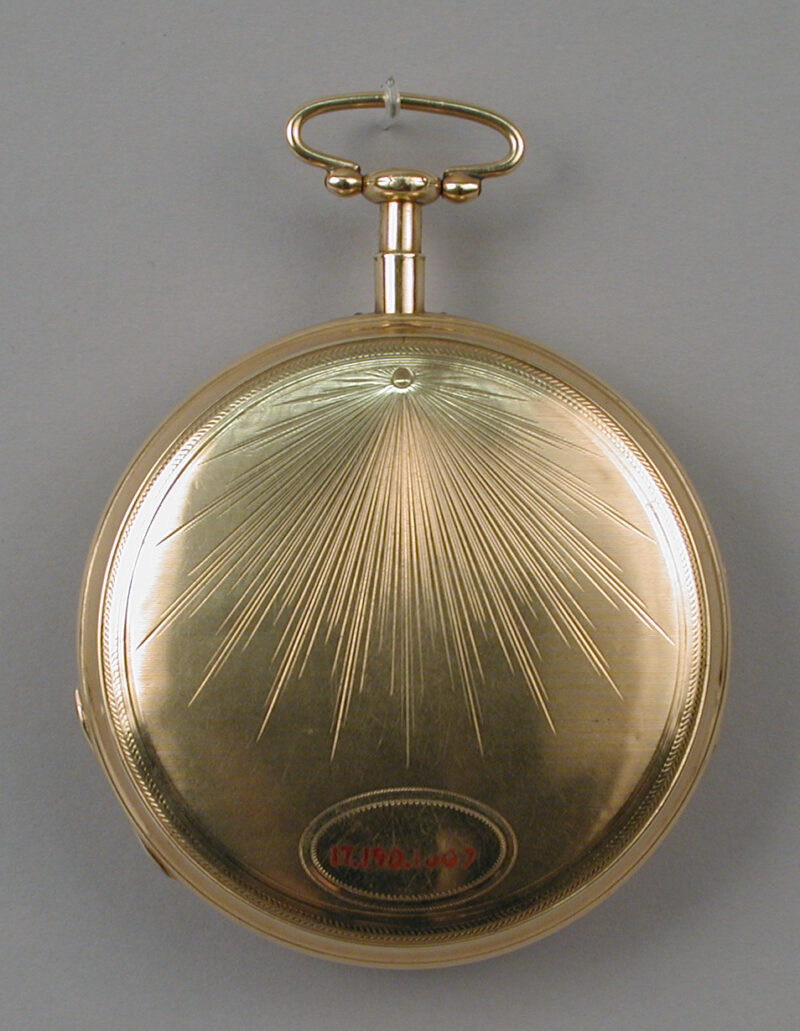
The closed back gives the watch a different character from its open dial. The Metropolitan Museum of Art, New York.
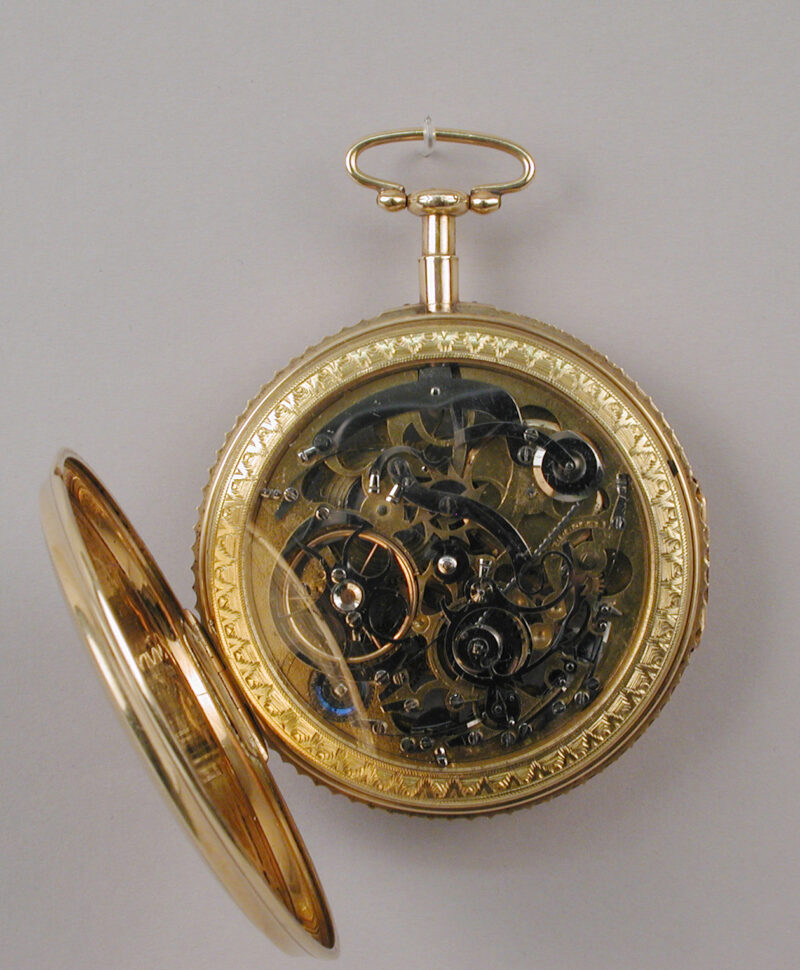
An open view connects the shape of the case with the arrangement of the mechanism. The Metropolitan Museum of Art, New York.
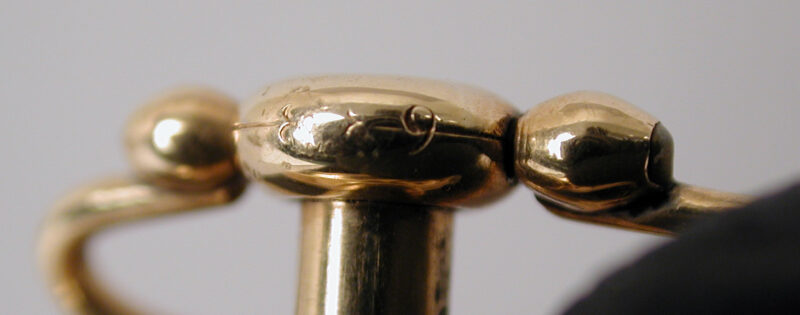
The pendant and ring complete the outline of the pocket watch. The Metropolitan Museum of Art, New York.
A closer lookOpen the detail
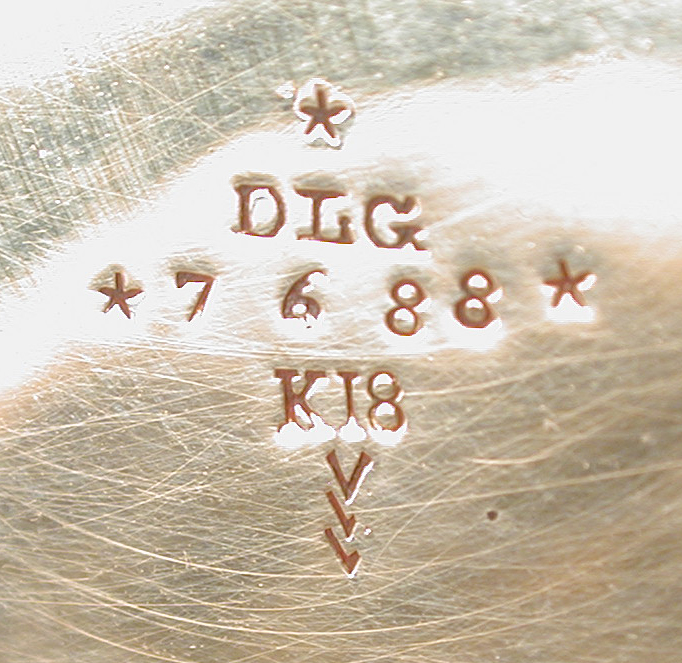
Stamped characters inside the case, photographed separately by the museum. The Metropolitan Museum of Art, New York.
The museum’s photographs move from the closed back to the open mechanism, then towards smaller marks and the pendant. That sequence changes the scale of attention. The case is first a rounded object; later it becomes a collection of surfaces, fastenings and identifying details.
Follow the order slowly. Notice which features remain recognisable when the view changes and which details need a separate photograph to become legible. An overall view establishes identity, while a close view helps explain a particular part. A collecting file benefits from both. Even an excellent macro photograph has more meaning when it can be placed within a view of the complete watch.
The pleasure of an open centre
The hour ring creates a quiet border around a much busier centre. Within it, the mechanism presents a shifting pattern of openings, wheels and bridges. The case provides a different rhythm: a broad circular outline, a decorative edge and the small loop through which a chain might pass. The eye moves between ornament and structure.
That contrast is worth enjoying before turning the watch into a question about a name. Skeletonised watches invite a particular kind of looking. They expose enough of the mechanism to make construction part of the appearance, while leaving the observer to follow connections across several levels. In photographs, changing the angle can make an area that seemed dark become much easier to read.
The Met records gold and glass as the materials and gives a diameter of 5.7 centimetres. These basic particulars help keep the object tangible. It is a pocket-sized construction with a case and covers, rather than the apparently enormous mechanism that a detailed screen image can suggest. Scale belongs alongside the more intricate observations.
Read the name and the attribution
What appears on the object
Record a signature as it appears, including its location. Photograph it in relation to the surrounding surface, then make a closer view if the lettering needs one.
How the object is catalogued
Keep the full maker attribution alongside that transcription. Here the Met identifies an imitator of Breguet. That qualification is an essential part of this particular watch’s identity.
A famous name is a beginning
The museum’s description gives the object a more interesting place in history than a familiar name alone could provide. It allows the watch to be considered as an example of the reach of Breguet’s reputation, while identifying a different origin for its manufacture. The distinction concerns authorship; the visible work still deserves close attention.
When reading a catalogue or discussing a watch with a seller, separate the transcription of a signature from the assessment of who made the piece. Ask how the attribution was reached and which features were considered. The answer may involve construction, numbering, archival information and the relationship between parts. A photograph of a name is one part of that conversation.
This museum object also shows why borrowed biographical details can travel too easily. An account of a celebrated watchmaker’s inventions is fascinating, but the story of a particular watch begins with its own identification. Let that identification establish which maker history belongs beside it. The result is usually a more distinctive story, with less dependence on an impressive label.
Make photographs work together
For a watch you are researching, begin with the complete object and add the views that answer a specific question. The front records the dial and general layout. The back establishes another recognisable surface. Specialist photographs of the movement and internal marks can then be connected to those views.
Internal examination belongs with someone equipped to handle the watch safely. The photographs here are museum images; they are an invitation to study a documented object rather than an instruction to open a personal watch at home. Asking a specialist for a useful set of images can preserve the pleasure of discovery while respecting the mechanism.
Keep the descriptions attached to the pictures. A close view of a stamped mark becomes far less useful if its location is forgotten. Note which surface it belongs to and retain the wider frame. If a specialist later updates an attribution, preserve the dated explanation with the images so that the reasoning remains available to a future custodian.
Let the object become more specific
The Met’s watch entered the collection as a gift of J. Pierpont Morgan in 1917 and is recorded under accession number 17.190.1007. Those references give the photographs and attribution a stable home. They also make it possible for a reader to return to exactly the same object.
There is satisfaction in that precision. The watch remains visually engaging, but it now has a clearer identity: a gold and glass skeleton watch, made around 1810, catalogued as the work of a Breguet imitator. A collector’s eye grows through just this movement, from attraction to a fuller description. The name draws attention; looking keeps it.
Sources & further reading
- The Metropolitan Museum of Art: object record and curatorial account.
- The Met: collection data and image record.
Last verified:18 October2026. Photographs: The Metropolitan Museum of Art, New York.
The Edit
Further discoveries
Objects, makers and the questions worth asking.
Inside a Gold Roskell: The Date in the Case
A richly worked gold dial, an engine-turned back and a signed movement: a Robert
The Emerald Brooch: A Jewel Worth Turning Over
An emerald, a fine platinum framework and the fittings on the reverse: a close
Market Price Is Not One Number: Seven Values, Seven Different Jobs
Retail, asking price, estimate, hammer, premium-inclusive result, dealer offer and insurance value answer different
The TheTimeo Provenance Standard: What Should Travel With an Object
A collectible object needs more than a pile of accessories. Identity, ownership, service, condition,
How to Audit a Luxury Watch Listing: Nine Details That Matter
Before judging price, audit the listing: identity, configuration, condition, service, documents, photography, seller claims,
How to Read a Jewellery Auction Lot: Five Separate Lines of Evidence
A laboratory report, maker’s mark, condition note, repair record and provenance answer different questions.