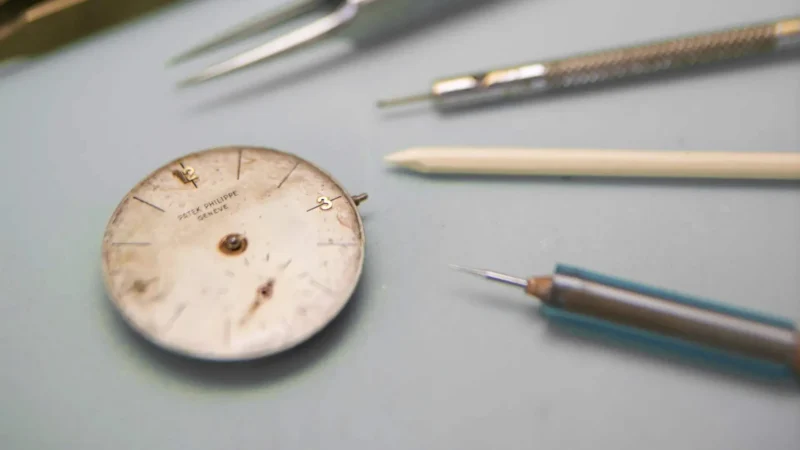
Insights & Investment
When a Watch Business Changes Hands: A Collector’s Guide
A new owner can make headlines without changing the watch on your wrist. How to read an acquisition announcement, distinguish the businesses involved and ask the questions that matter.
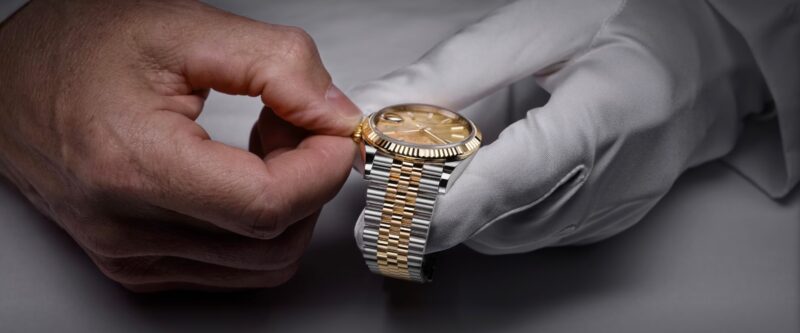
THE OWNER CHANGES. Read what follows.
A name on a dial carries a history. When the business behind it changes hands, the useful enquiry begins with the announcement and ends with the watch you own or are considering.
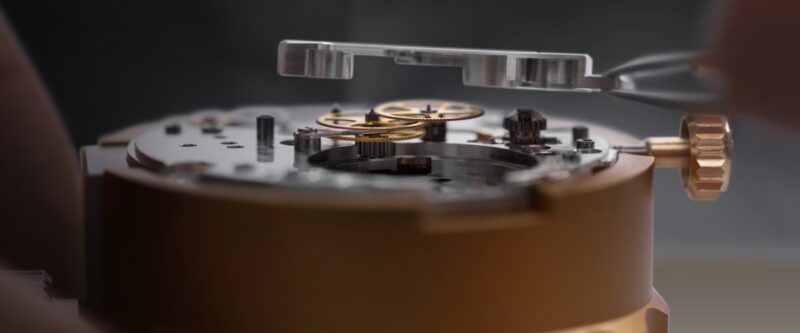


Begin with the business, not the rumour
The watch in a collection does not acquire a different dial when a company changes hands. Yet an ownership announcement can quickly gather stories around it: an assumed revival, a feared loss of identity, a confident prediction that older pieces will become more valuable. Some of those stories may be interesting. They are not the transaction itself.
Start with a less dramatic question: what has actually been bought? A retailer, a watch brand, a manufacturing business and a stake in a company are not the same subject. Once that is clear, the announcement becomes easier to read, and the questions for a collector become more practical.
This guide looks at two documented histories and a method for following other announcements. It is not a list of watches to buy before prices supposedly rise. The point is to understand the context without allowing a corporate story to stand in for the quality, condition or ownership needs of the object in front of you.
The retailer
A business selling several watch brands is not identical to every manufacture it represents. If a retailer changes ownership, read what the announcement says about that business. Do not assume it describes a transfer of ownership of every name in its windows.
The brand
An acquisition of a watch brand concerns a different subject: the business and rights specified in the transaction. A familiar dial signature may continue through changes of ownership. Ask which period and which actual reference you are discussing.
The stake
A shareholding announcement may not describe the purchase of the whole business. Read the stated interest and the parties named before calling it a takeover. Where the public information is limited, retain that limit rather than completing the story yourself.
The decision
An announced agreement and a regulatory decision have different dates and roles. Keep them separate. A historical approval can answer a question about that procedure without establishing every present-day detail of the companies’ operations.
Rolex and Bucherer: keep the dates separate
Rolex’s 24 August 2023 release announced its decision to acquire Bucherer, the watch retailer. It stated that Bucherer would retain its name and operate independently, with integration subject to competition-authority approval. That wording describes the announcement at its publication date; it should not be read as a perpetual statement that the transaction is still awaiting approval.
The European Commission’s published decision in Case M.11246 is dated 10 July 2024 and records non-opposition to the Rolex/Bucherer transaction. This is a distinct primary document with a distinct purpose. Neither document, on its own, tells a shopper that a particular watch is available or that an individual purchase will receive preferential treatment.
For a collector, the useful distinction is between corporate context and the practical purchase. Ask the retailer about the reference offered, the actual terms and the relevant service route. If an adviser makes a claim based on the acquisition, ask what supports that claim. The name of a new owner is not a substitute for the answer.
Name the parties
Write down the buyer and the business or interest being acquired as the source names them. If the article you first read abbreviates the names, follow it to the original announcement. A clear subject prevents several unrelated businesses from becoming one story.
Keep the announcement date
Save the publication date with the wording. A statement made before approval or integration may remain online for years. Treat it as a document of that moment rather than assuming its future tense describes today.
Look for the next document
If the announcement names an approval condition, seek the relevant later official decision or company statement before describing the outcome. Do not turn silence, an old headline or a retailer’s recollection into evidence of completion.
Separate stated plans
A buyer may describe ambitions for design, production or distribution. Read them as stated plans unless a later source documents implementation. You can be interested in the intention without writing the future as if it has already happened.
Ask about your watch
Bring the enquiry back to the exact piece: service, parts assessment, warranty terms and the appropriate contact. A corporate announcement may offer context, but these practical matters need an answer relevant to the watch and the service being requested.
Avoid a price prediction
Do not translate the transaction into an automatic scarcity or resale claim. A future selling price is a separate question with separate evidence. Keep the corporate history with the collection record, not in place of an assessment of the object.
Universal Genève: a name across different chapters
Universal Genève’s own history records its acquisition by Stelux in 1989 and an acquisition by Partners Group and CVC Capital Partners in 2023. These entries give a reader two dated points in the brand’s history. They do not turn every Universal Genève watch into a product of the same business period, or provide a complete current corporate register.
An earlier watch deserves to be understood as the particular object it is. Identify the reference and period, examine its condition, and ask what documentation and service information accompany it. Interest in a renewed brand story can be a reason to look more closely; it cannot establish the originality of a dial or the work already carried out on a movement.
If you are considering a contemporary piece, use the current official reference information and purchase terms. If you own an older example, seek an answer specifically about that example’s service needs. Do not assume that a corporate change creates an identical service promise for every historic watch carrying the name.
Give design and making their own attention
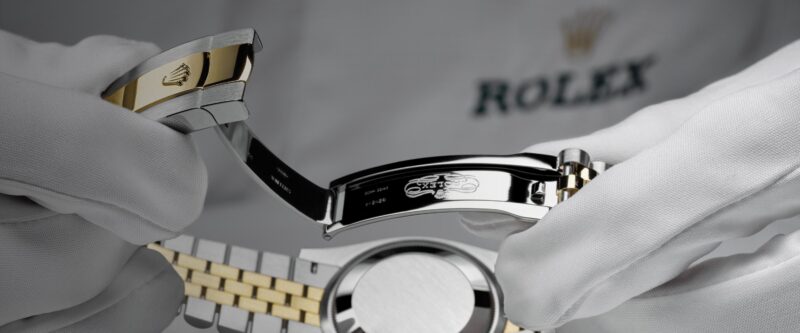
Ownership history can be fascinating, but it should not crowd the watch out of the conversation. Look at the piece before turning it into a symbol of a deal. Notice the case, the dial and the way the bracelet or strap joins the object. Ask what attracts you when the acquisition headline is taken away.
For a pre-owned watch, the condition enquiry remains separate. Request a clear account of disclosed interventions and supplied accessories, and consider an independent specialist where an unresolved question warrants one. Photographs of a manufacture or archive can enrich the story without assessing the watch being offered to you.
For a new purchase, return to the actual reference, fit and terms. The company behind the piece matters as context; what you are buying still needs to be described precisely. There is no conflict between enjoying the larger history and asking an unromantic question about the clasp, the warranty or where to send the watch for attention.
01Does buying a retailer mean buying all the brands it sells?
Do not infer that. Read the subject and scope of the actual transaction. This guide’s Rolex/Bucherer example concerns the named businesses and documents, not a claim that every brand stocked by a retailer changes ownership.
02Does a new owner guarantee service for an old watch?
No such guarantee is established by the transactions cited here. Ask the appropriate service contact about the particular watch, assessment and terms. Retain the answer rather than substituting a general corporate story for a service commitment.
03Will earlier watches become more valuable?
No automatic appreciation follows from the evidence in this guide. An ownership change does not establish a selling price, originality, condition or future demand for your example. Seek separate evidence if a future sale is material to your decision.
Let the history add depth, not certainty
A good account of a change of ownership leaves you with dates, named parties and a clear distinction between announcement and outcome. It also leaves room for what has not been established. That is more useful than either celebrating a deal as a guarantee or treating it as an inevitable loss of character.
Keep the documents as context for the collection. Then return to the watch: the reason you chose it, how it wears and what it needs from you. The larger business story can give an object another layer of interest without deciding its value or your affection for it.
Sources & credits
Sources & further reading
Sources checked directly on 13 September 2026. The examples are historical transactions and a dated regulatory decision, not a complete current register of corporate ownership. Rolex’s 2023 announcement is distinguished from the European Commission’s 10 July 2024 non-opposition decision. Universal Genève’s history supplies its own account of the named acquisitions. No inferred price rise, allocation advantage or investment return is included.
- Rolex — Bucherer acquisition announcement, 24 August 2023
- European Commission — Case M.11246, decision of 10 July 2024
- Universal Genève — official history
Practical reading and purchase questions are TheTimeo editorial method, not a guarantee of product availability, service terms or future value. Official photographs, original source pages, credits, file hashes and verification dates are recorded in the media provenance. Images illustrate objects and watchmaking; they are not demographic evidence or proof of a corporate transaction. No generated imagery or generative editing was used.
A corporate headline is context, not a condition report.
TheTimeo — editorial ownership principle
Further stories from this world

Insights & Investment
Market Price Is Not One Number: Seven Values, Seven Different Jobs

Insights & Investment
The TheTimeo Provenance Standard: What Should Travel With an Object

Insights & Investment
How to Audit a Luxury Watch Listing: Nine Details That Matter

Insights & Investment