
TheTimeo / Insights & Investment
MARKET VOLATILITY:
read the evidence, not the mood
A collector’s field guide to prices, premiums, liquidity and comparability—designed to replace market noise with disciplined observation.
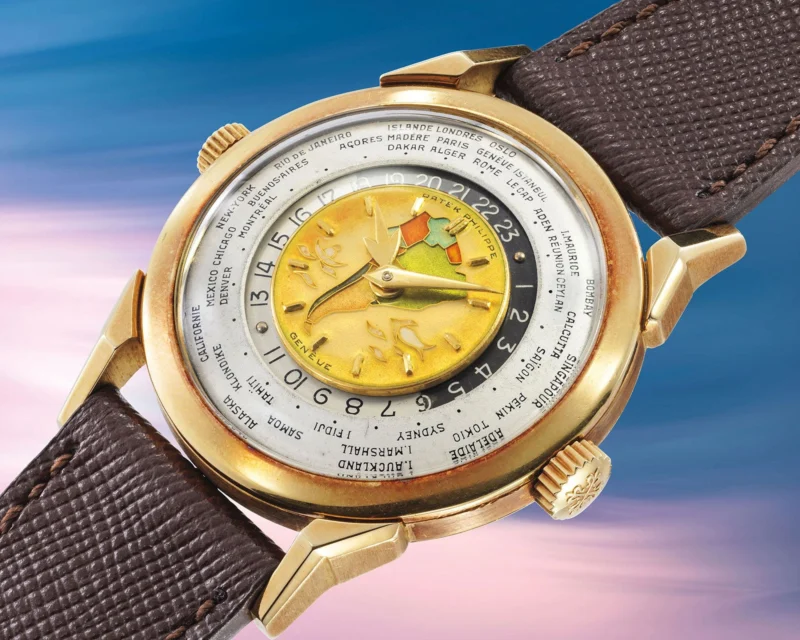
The Geneva Watch Auction: XXIII brought historic Patek Philippe and exceptional independent watchmaking into one sale. Courtesy of Phillips.
Explore the story
A watch can remain exactly the same while the market around it changes. The dial has not moved, the calibre has not forgotten its architecture, yet an asking price is revised, an auction room hesitates or a once-quiet reference suddenly appears everywhere. Volatility belongs to the transaction, not to the soul of the object.
The field guide
- Swiss export statistics describe cross-border trade, not secondary-market prices.
- An asking price is an offer; a completed sale is an observation.
- Auction totals, hammer prices and prices including premium must not be mixed.
- Reference, configuration, condition, provenance and date define a comparable.
- Liquidity and transaction costs can matter as much as the headline result.
- No past sale guarantees a future exit price or selling time.
There is no single watch market
“The watch market” is convenient language for several different systems. New watches move through authorised retail and direct maison channels. Pre-owned watches appear through dealers, platforms, auctions and private transactions. Each channel has its own inventory, disclosure, warranty, fees and speed.
Even broad industry data requires discipline. The Federation of the Swiss Watch Industry publishes export statistics based on customs data. Those figures help describe the flow and value of Swiss watch exports. They do not measure global retail sell-through, dealer margins or the resale price of a particular reference.
Survey research answers another question. Deloitte’s watch-industry studies report the views of executives and consumers within a stated sample. They can illuminate sentiment, channel preference and pre-owned behaviour; they are not a transaction tape. The first defence against market noise is to ask what a dataset actually observes.
One spectacular result is still one result
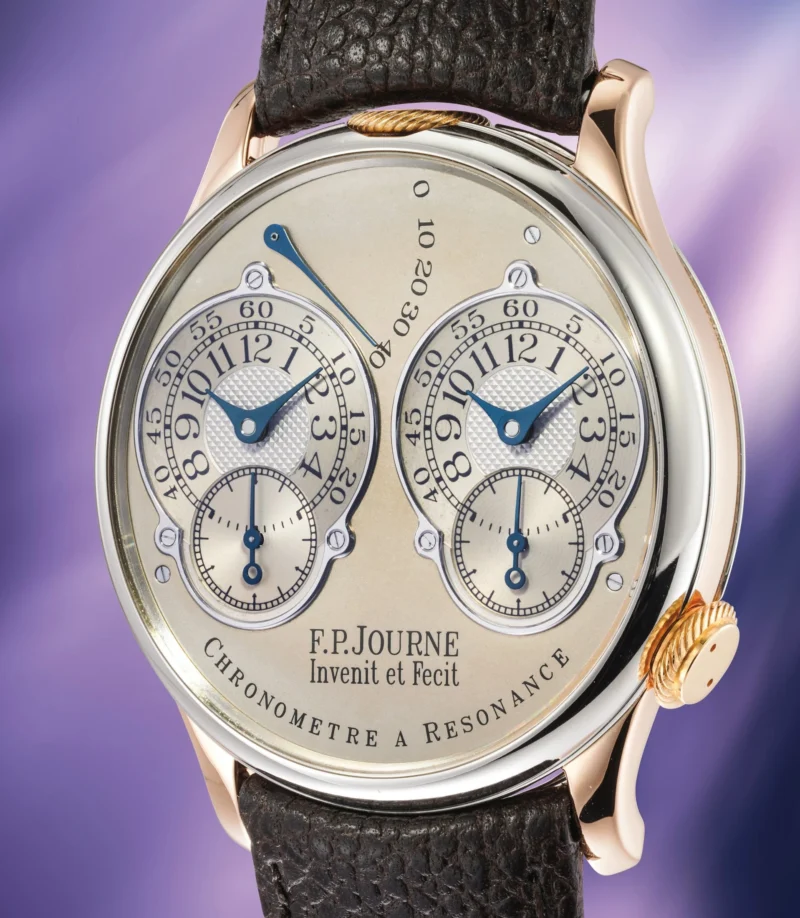
F.P. Journe Chronomètre à Résonance Souscription No. 18, a defining result of the sale. Courtesy of Phillips.
An auction can reveal genuine demand at a specific moment. It also concentrates theatre: a selected catalogue, a defined sale date, published estimates, marketing, bidder competition and a fee structure. An exceptional watch with rare configuration or provenance may attract participants who would not compete for an ordinary example.
The result should therefore remain attached to its lot number, currency, date and price basis. If the published price includes buyer’s premium, compare it with another price that includes premium. If the hammer is known, keep it in a separate field. Taxes, duties, shipping and currency conversion can further change the buyer’s cost.
The room may remember the record. The collector should remember the terms.
From headline to usable comparable
Explore the comparison
| Field | Record | Why it matters |
|---|---|---|
| Transaction | Sale, lot, date, currency, channel | Places the observation in time and venue |
| Price basis | Ask, hammer, premium-inclusive or private | Stops unlike numbers being compared |
| Identity | Reference, serial range, material, dial, calibre | Defines what is actually comparable |
| Condition | Wear, polishing, replacements, service | Explains differences hidden by the model name |
| Completeness | Documents, accessories, archive and service file | Shows what travelled with the watch |
| Friction | Premium, commission, tax, shipping, insurance | Separates headline price from economic reality |
Thin markets move in large steps
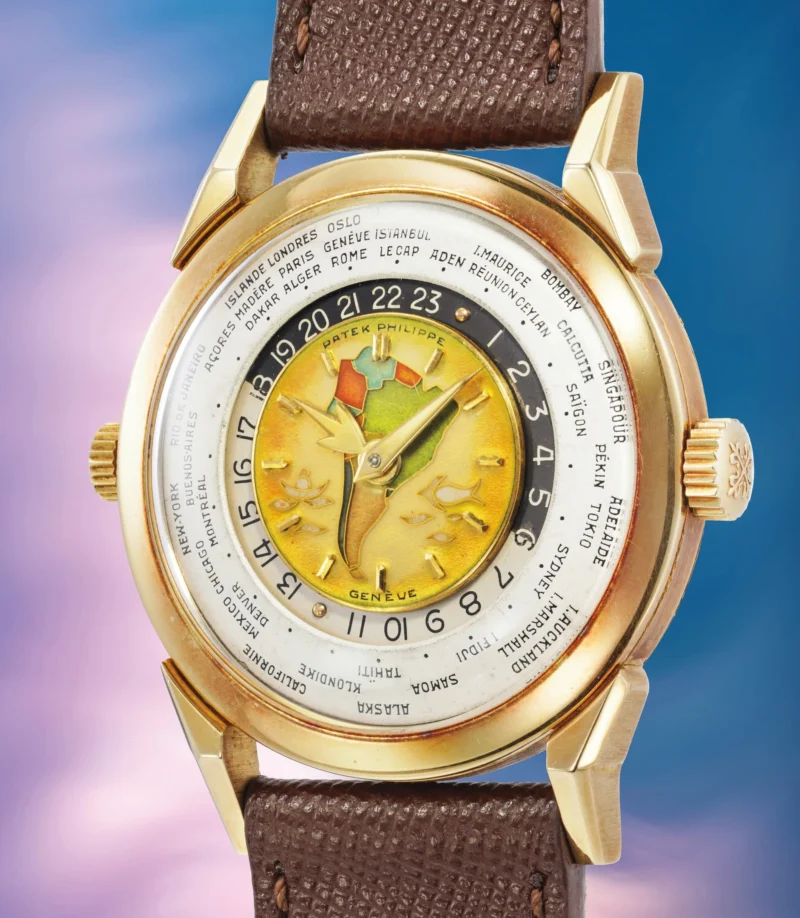
Patek Philippe reference 2523, the historic world-time wristwatch that led the Geneva auction. Courtesy of Phillips.
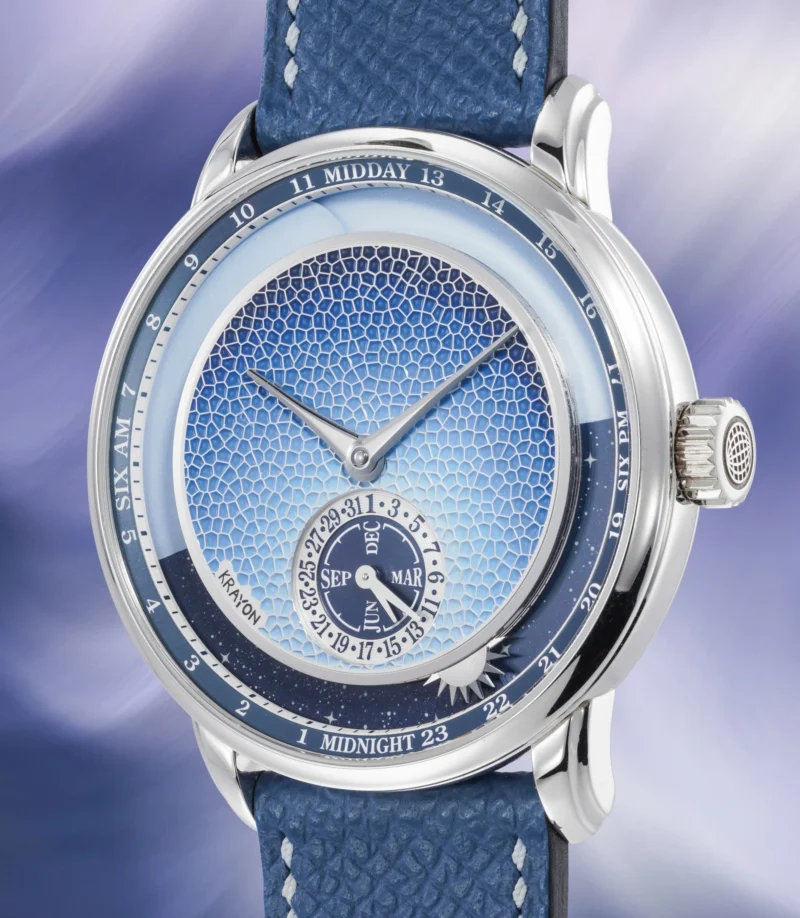
Krayon Anywhere Métiers d’Art Azur, representing the independent voice within the sale. Courtesy of Phillips.
A frequently traded object can produce a broad trail of observations. A genuinely rare watch may appear publicly only occasionally. That makes each result visually powerful but statistically fragile. A single bidder, an unusual provenance or a particularly strong example can move the visible level sharply.
Absence creates another problem. Private sales are not always disclosed, withdrawn lots may disappear from casual summaries and unsold lots receive less attention than records. A dataset made only from celebrated successes exaggerates confidence.
For rare references, the honest conclusion may be a range with substantial uncertainty rather than one precise value. Precision in the spreadsheet cannot create depth in the market.
Condition is part of the price story
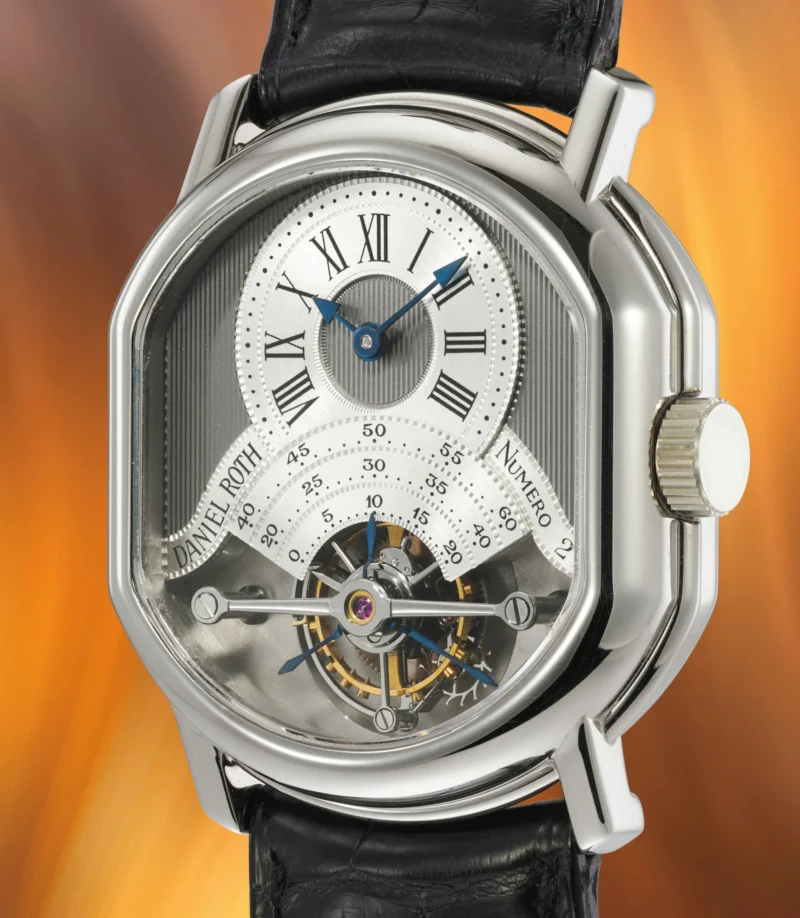
Daniel Roth Tourbillon Régulateur Double Face in white gold. Courtesy of Phillips.
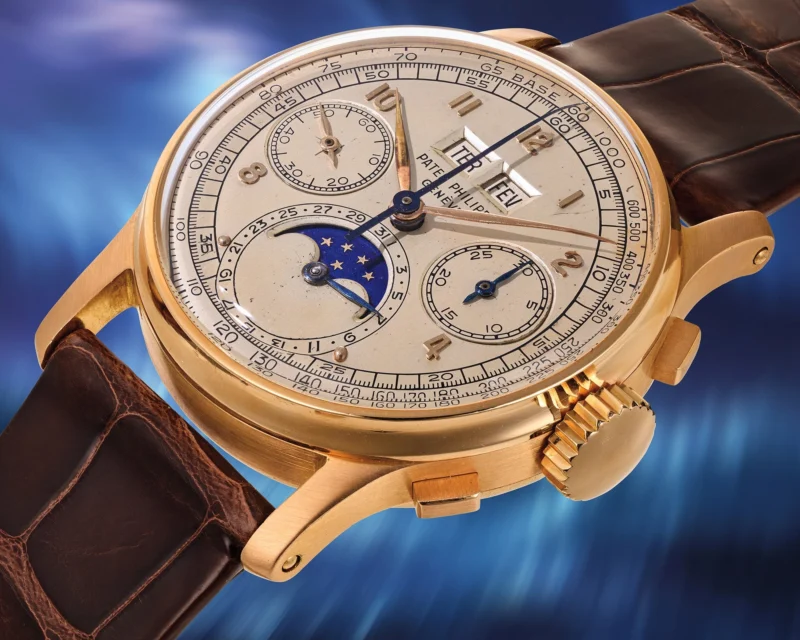
The New York Watch Auction: XIV assembled important independent and historic watches in Manhattan. Courtesy of Phillips.
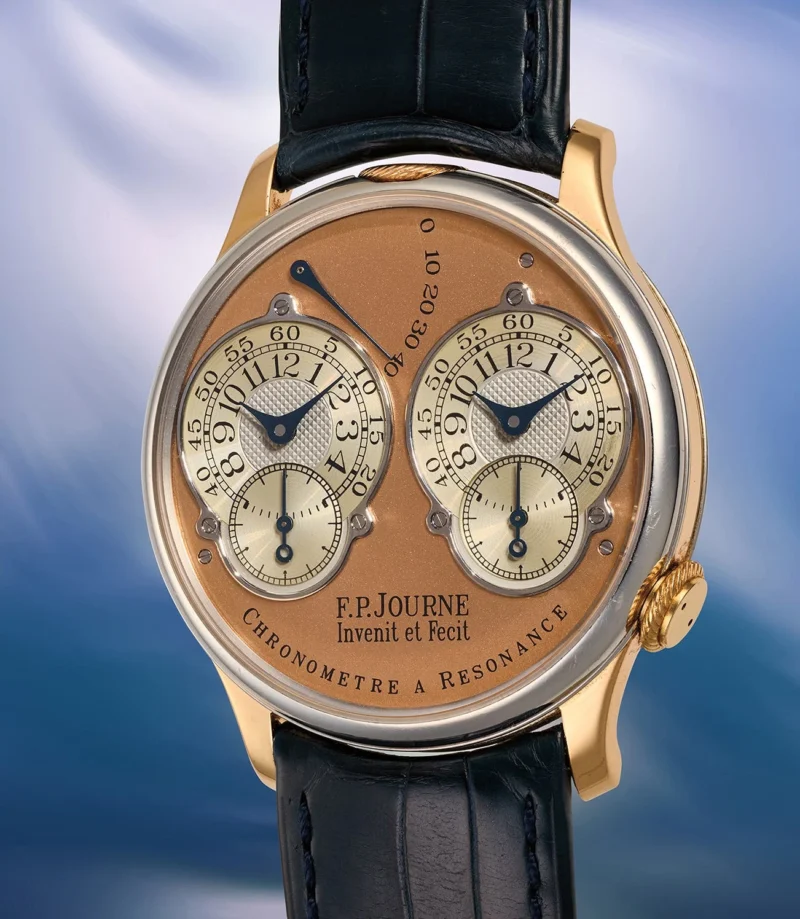
The F.P. Journe Souscription No. 007 that became the sale’s defining object. Courtesy of Phillips.
Two watches sharing a reference can be different collector propositions. Case geometry may have been softened by polishing. A dial may be original, serviced, restored or replaced. Hands, crown, bezel and bracelet can belong to different moments in the watch’s life. The movement may have excellent service documentation—or none.
These differences cannot be reduced to a standard percentage. Their relevance changes with the reference, the rarity of surviving components and the collector’s priorities. The correct practice is descriptive: record what is observed, distinguish known intervention from inference and obtain specialist examination when the stakes justify it.
Condition is not a moral verdict. A sympathetically serviced watch can be a better ownership object than an untouched watch with hidden mechanical risk. What matters is that the intervention is understood and priced into the comparison.
A volatility protocol for collectors
- Use several dated observations and preserve their original currencies.
- Separate dealer asks, auction estimates, hammer prices and premium-inclusive totals.
- Include unsold or withdrawn lots when the research question requires them.
- Reject comparables with materially different configuration, condition or provenance.
- Write down the probable selling channel, fees and time horizon before buying.
- Keep personal enjoyment separate from any expected financial outcome.
If a purchase only works under an optimistic resale assumption, the uncertainty is already visible. The appropriate response is not a stronger forecast. It is a smaller claim, a wider margin for error or no transaction.
The calm belongs to the method
Volatility becomes less theatrical when every number keeps its label. Export data returns to exports. Survey data returns to surveyed opinion. An auction result returns to one object, sold once, under stated terms.
The watch can then be seen again. Its design, history and condition remain available even when prices move. TheTimeo’s position is deliberately clear: collecting intelligence should improve the quality of a decision, not manufacture certainty. Observe widely, compare narrowly and never ask beauty to guarantee a return.
Sources & further reading
This guide was rechecked on 12 September 2026 against official Swiss export statistics, Deloitte’s stated watch-industry research methodology and current auction-house financial terms. Phillips photography comes from governed official auction pages already recorded in TheTimeo’s media provenance. No index, price target, resale estimate or investment recommendation is published.
The Edit
Insights & Investment stories
Selected stories from the same editorial universe.

Market Price Is Not One Number: Seven Values, Seven Different Jobs
Retail, asking price, estimate, hammer, premium-inclusive result, dealer offer and insurance value answer different

How to Read a Jewellery Auction Lot: Five Separate Lines of Evidence
A laboratory report, maker’s mark, condition note, repair record and provenance answer different questions.

The TheTimeo Provenance Standard: What Should Travel With an Object
A collectible object needs more than a pile of accessories. Identity, ownership, service, condition,

How to Audit a Luxury Watch Listing: Nine Details That Matter
Before judging price, audit the listing: identity, configuration, condition, service, documents, photography, seller claims,

Watch Documents and Provenance: Build the File, Test the Claims
A watch can become more captivating when its past comes into focus. An archive
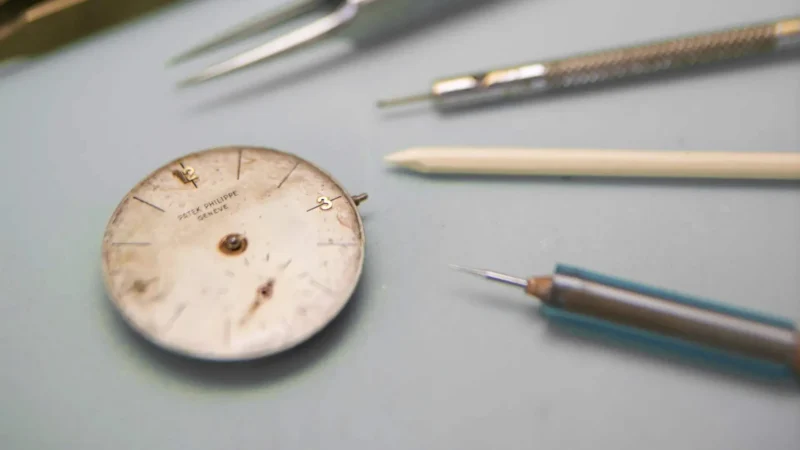
Watch Service History: Build a Record That Travels With the Object
The best service history reads like a biography of the watch. It shows how