Insights & Investment
Keeping Fine Jewellery and Watches Beautiful
The pleasure of ownership deserves thoughtful care. A reference-led guide to storage, cleaning, intervention and the history you keep with a much-loved piece.

Beauty, close enough to care for.
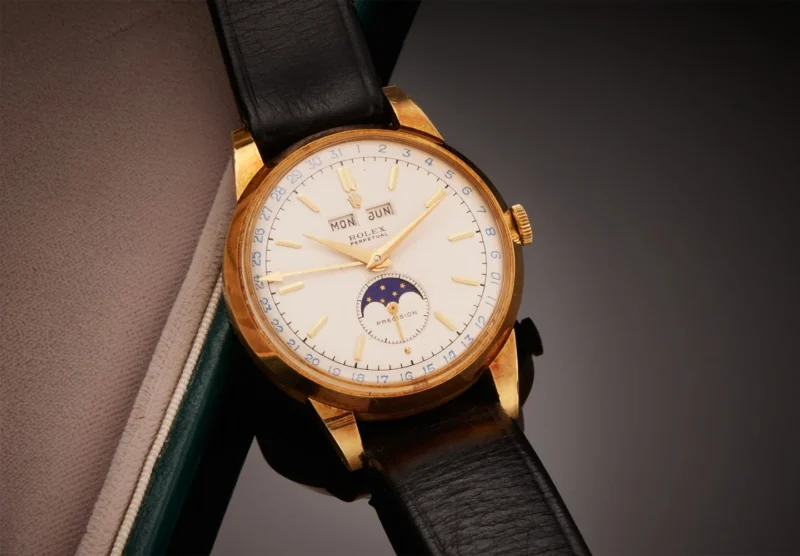
Official Van Cleef & Arpels photographs show jewellery and a watch as they are worn. They illustrate proportion and appearance, not a maintenance procedure, condition assessment or future selling price.



The piece you reach for again
A necklace laid against a dark dress. The glint of a bracelet as you turn a page. An old watch whose proportions still feel right beneath a cuff. The best reason to care for a collection is that you want these pleasures to continue. Its contents should not become objects you are afraid to touch.
Thoughtful ownership asks a quieter question than “What will it be worth?” How can this particular piece be worn, stored and maintained without losing the qualities that made you choose it? Begin with its materials, construction and present condition. Let its maker’s instructions guide the practical decisions.
This guide is about preserving beauty, function and a useful record of ownership. It does not promise a future price. A well-kept piece may still sell for less than you paid; caring for it and forecasting demand are different activities.
Know what you are looking after
Give each piece a short, private care note. Identify the watch reference or jewellery design, the materials you know are present and the guidance you have obtained. If a gemstone, treatment or previous alteration is uncertain, ask an appropriately qualified specialist rather than choosing a cleaning method by appearance.
The point is not to produce an elaborate catalogue before wearing a ring. It is to avoid an easy mistake: assuming that one familiar material describes the whole piece. A jewel may combine metal, stones and delicate decorative surfaces. A watch has a case, seals, controls and a bracelet or strap, each with its own considerations.
Van Cleef & Arpels makes watch instruction guides available by collection and movement through its care services. Use the corresponding reference information for your own watch. A manual from the same Maison is not necessarily the manual for the example in your hand.
Four moments that deserve attention
These are TheTimeo’s organising prompts, not a maintenance schedule. They make care part of ordinary life rather than a task postponed until something goes wrong. Adapt them to the piece and to the advice you receive.
Before putting it on
Notice whether a fastening feels different or a setting appears disturbed. Do not force anything to make the piece wearable for an occasion. If you are unsure, choose another piece and arrange an assessment.
During the day
Think about the activity, not just the outfit. Consult the maker’s precautions before exposing a piece to water, products or physical knocks. A habit of removing it at the appropriate moment is easier than dealing with an avoidable incident.
When taking it off
Put it in a deliberate place, not on the edge of a basin or loose among other jewellery. Follow its cleaning instructions when needed. Give necklaces and bracelets enough space to rest without being pushed into a tangled handful.
Before arranging work
Describe what concerns you and what you want to preserve. Ask for the proposed intervention in writing. Cleaning, repair, adjustment and cosmetic refinishing are different decisions; do not approve them as an indistinct promise to make everything new.
A case with room for each piece
A beautiful jewellery case earns its place through the way it holds the collection. Try the actual necklace in its compartment. See how a bangle rests, whether an earring is pressed against another piece and whether a watch fits without forcing its strap. The arrangement should serve the objects, not oblige them to conform to an attractive empty box.
Van Cleef & Arpels advises storing its jewels separately in fabric-lined cases, and its watches in an appropriate case away from other creations. That is a clear starting point for the Maison’s pieces. Our practical suggestion is to review your own arrangement with the collection in front of you, keeping items distinct and easy to retrieve.
Keep a record of which pouch or fitted box belongs to which piece. Store paperwork so that it is accessible without being mixed into the compartments used every day. For travel or longer absences, discuss security and insurance arrangements with the relevant provider; a fitted case is not a security guarantee.
Cleaning begins with a material, not a recipe
A single household cleaning routine is a poor substitute for material-specific advice. Van Cleef & Arpels describes gentle soapy-water cleaning for full-gold creations, while its mother-of-pearl guidance calls for a soft, dry cloth. Those are distinct instructions. Do not transfer the first method to a composite jewel simply because gold is visible.
The Maison also advises avoiding fragrance and cosmetics in contact with its jewellery. For its watches, it recommends a soft, dry cloth and particular precautions for leather. Its published watch guidance discourages immersion. Read each instruction within that scope, rather than treating the appearance of a bracelet as permission to wet the complete watch.
If the relevant guidance is missing or the piece has an uncertain history, obtain advice before using a bath, machine or product. A specialist conversation is a better first step than experimenting. Ask what can safely be done at home and what should be handled professionally; keep the answer with the care note.
Decide what “restored” should mean
You may want a ring comfortable again, a clasp secure or a watch ready to wear. Say so specifically. A functional concern does not, by itself, express a wish to change every visible surface. Bring photographs and describe the details you like: the contour of a case, the finish of a bangle, the feel of an inherited piece.
Van Cleef & Arpels recommends limiting polishing to preserve a jewel’s integrity. Its repair guidance also advises requesting attention when an element appears weakened or damaged. These are useful boundaries: do not ignore a practical concern, and do not confuse necessary repair with unlimited cosmetic intervention.
Before approving work, ask what will be cleaned, adjusted, repaired or replaced, and which cosmetic operations are optional. If your preferences cannot be met, resolve that before handing the piece over. There is no universal aesthetic verdict for every owner; the useful decision is an informed one about this piece.
Keep the history readable
The following six entries form an editorial ownership file. They are not six certificates of value. Keep the information proportionate, private where necessary and organised so that a future conversation does not depend on memory alone.
Identity and materials
Keep the stated reference or design, known materials and relevant private identifiers. Preserve the source of information and leave unresolved details marked as such. Do not turn a visual guess into a confirmed specification.
Purchase record
Retain the invoice, agreed description and correspondence that matters to the purchase. Note the seller and date. Store original packaging if you wish, without assuming that its presence establishes authenticity or a future price.
Condition photographs
Take clear, dated views before commissioning work and after its return. Use ordinary light without filters that conceal marks. These photographs record appearance; they do not replace a qualified assessment of construction or condition.
Care instructions
Keep the maker’s advice for the exact piece, plus any specific guidance obtained following assessment. Record who supplied it. Recheck if a component is changed or the piece’s circumstances make earlier instructions uncertain.
Intervention record
Retain the approved scope, invoices and descriptions of work performed. Ask what was changed and what was retained. Keep repairs distinct from routine cleaning so that the history remains understandable.
Separate valuation documents
Label documents by their actual purpose and issuer. Ask the relevant professional what a valuation covers and when it needs review. A care invoice, insurance document and potential selling price should not be presented as interchangeable.
An inherited piece need not be frozen in time
An inherited watch or jewel can carry a particular responsibility. Perhaps you remember it being worn and want that memory to continue through use. Start by learning its present condition before deciding that it should either remain untouched or receive a comprehensive restoration.
Write down the personal history separately from the verified technical record. A family recollection can be meaningful without proving a manufacture date or the originality of a component. If you commission work, preserve both the specialist’s findings and your reason for choosing that intervention. The story then remains yours without asking it to answer questions it cannot.
Questions worth asking first
A pause before care can be useful. These answers express our editorial approach; individual manufacturer guidance and assessed condition take precedence.
01Should every visible scratch be removed?
No automatic refinishing is recommended here. Discuss the material, construction, previous work and your preference with the appropriate specialist. Agree cosmetic operations separately from necessary repairs.
02Does careful storage ensure the piece holds its value?
This guide makes no price-retention promise. Storage and care concern the physical piece; future selling price is a separate question. Choose a routine that helps you enjoy ownership without relying on appreciation.
03What if the care instructions do not cover my vintage piece?
Seek advice about the actual example before acting. Explain its known history and any recent concerns. Do not substitute instructions for a current model merely because the name or outward appearance is similar.
Wear it with understanding
Once the practical questions are settled, the purpose of care comes back into focus. Fasten the necklace, close the clasp, put the watch on. Familiarity is part of the pleasure: you know how it sits, what it asks of you and where it belongs at the end of the day.
A collection does not need to look untouched to be cherished. It needs owners who pay attention, make considered decisions and leave a record clear enough for the next chapter.
Sources & credits
Sources & further reading
Methodology and sources. Rechecked on 13 September 2026 against Van Cleef & Arpels’ official daily jewellery care, jewellery care and repair, watch care and Care & Services pages. Material-specific advice is attributed within its published scope. Storage prompts, intervention questions and the ownership file are TheTimeo’s editorial recommendations, not repair instructions or financial guidance. Official photographs are illustrative; original endpoints, source pages, credits, dimensions and hashes are retained. No generated imagery or future-price guarantee is included.
Care should let a piece remain itself—and leave you free to enjoy wearing it.
TheTimeo — editorial care principle
Further stories from this world

Insights & Investment
The TheTimeo Provenance Standard: What Should Travel With an Object

Insights & Investment
How to Read a Jewellery Auction Lot: Five Separate Lines of Evidence

Insights & Investment
Watch Documents and Provenance: Build the File, Test the Claims
Insights & Investment