
TheTimeo / Luxury Living
Piaget:
Time, set
in stone.
A long gold chain, a smooth stone and two hands. Swinging Pebbles gives time a different place in the silhouette.
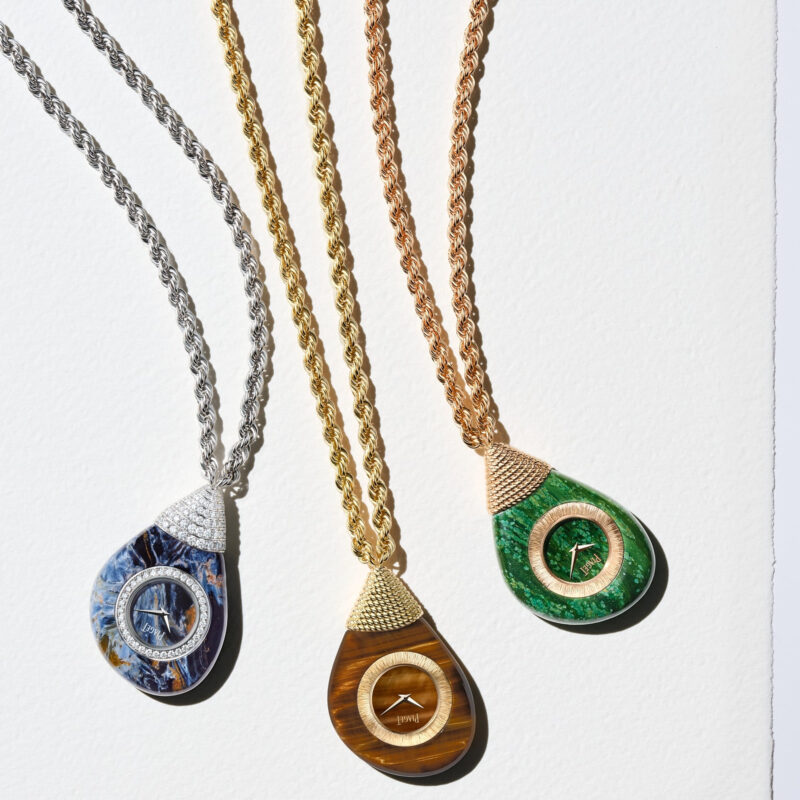
Swinging Pebbles in pietersite, tiger’s eye and verdite. Courtesy of Piaget.
Explore the story
Three stone pendants descend from gold chains. One is blue, one green, one striped with brown and gold. Their outlines lean gently to one side; a small dial sits within each rounded surface. Seen together, Piaget’s Swinging Pebbles make the watch feel like an object you might first notice for its shape, then discover can tell the time.
Presented at Watches and Wonders 2026, the trio brings ornamental stone into the centre of the sautoir, a long necklace whose pendant hangs down the body. Its appeal lies in that change of position. A watch leaves the wrist and begins to participate in the line of clothes, chain and movement.
From a striped stone to a rounded pendant
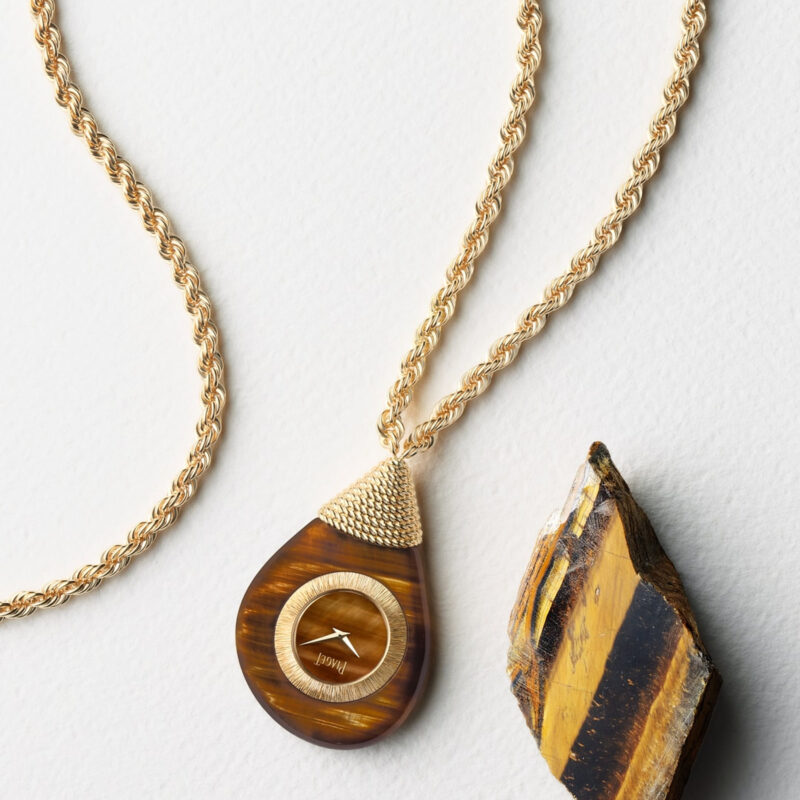
Tiger’s eye, from a striped stone to the polished pendant. Courtesy of Piaget.
The tiger’s-eye pendant lies beside a piece of stone with a rougher, more angular outline. Bands of gold and dark brown travel across both surfaces. In the watch, the polished contour gathers that pattern into a compact shape; a small gold-toned circle establishes a dial within it.
The comparison makes the material’s role easy to see. The outer stone supplies more than a coloured border. Its bands continue around the time display, so the surface remains the principal visual event. The two hands introduce a precise, familiar sign within a much less regular drawing.
Above it, the chain changes scale. Individual links create a repeated rhythm leading towards a finely textured cap at the pendant’s top. The junction between chain and stone is narrow enough for the rounded lower form to remain dominant. Small details give the eye a route into a broad field of colour.
That balance is part of the pleasure of a sautoir. From a distance, you read the line of the chain and the weight of the pendant at its end. Closer in, the pattern of the stone begins to take over. Each distance offers a different reason to keep looking.
Let the whole necklace draw its line
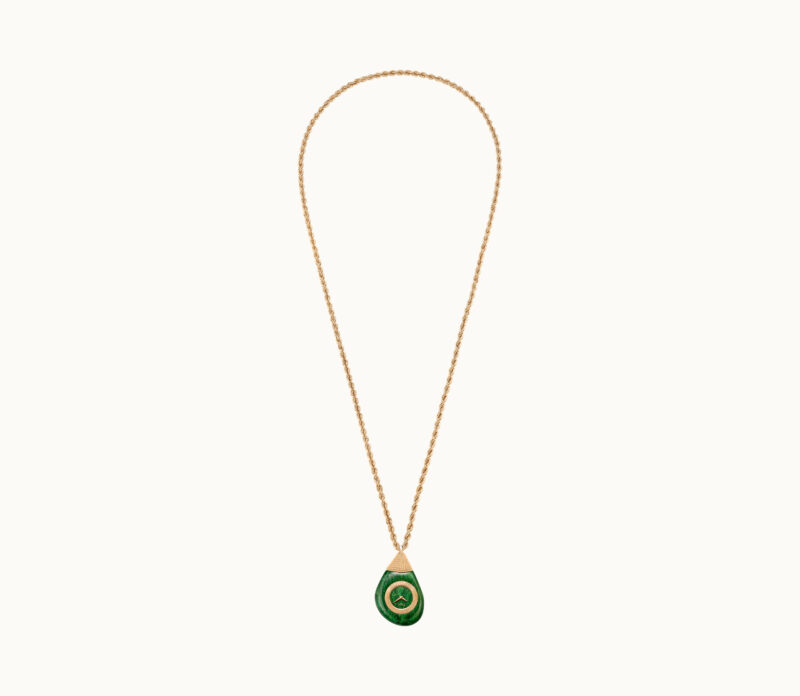
The complete verdite sautoir, G0A51408. Courtesy of Piaget.
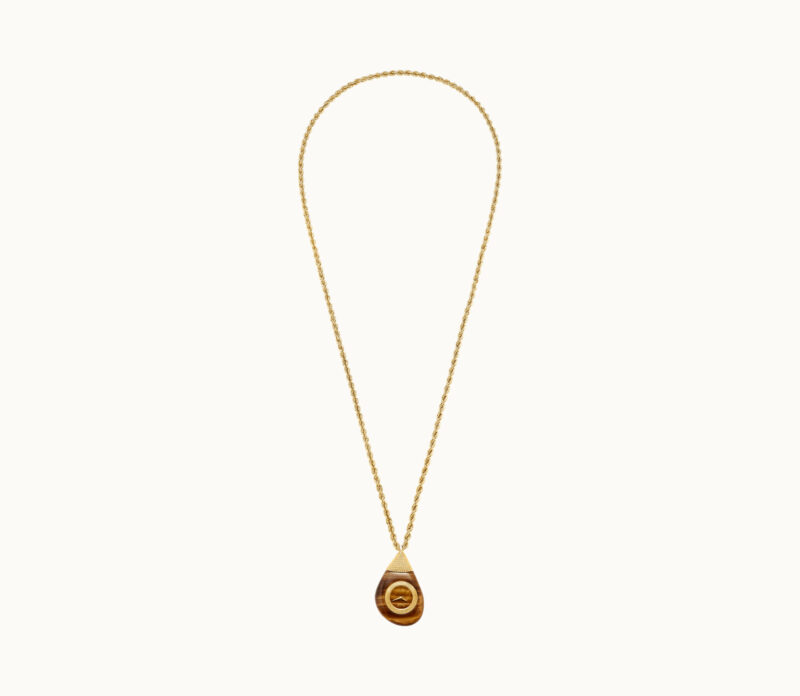
The complete tiger’s-eye sautoir, G0A51410. Courtesy of Piaget.
The complete verdite and tiger’s-eye necklaces show how much space belongs to the chain. It describes a long, slender loop before arriving at the small pendant below. In these views, the stone occupies only a fraction of the whole composition, but its concentrated colour gives the loop a clear point of arrival.
Green reads as a compact field within the warm metal; the striped brown pendant introduces a more directional pattern. The outline remains related across the pair. The change of material is enough to shift the character of the necklace without requiring a new arrangement of elements.
Piaget’s sautoir history reaches back to the 1969 21st Century Collection. The house describes watches worn on long chains and allowed to move with their wearers. That idea remains persuasive here: a pendant watch belongs to the upper body’s larger gestures, rather than to the turning of a wrist.
When trying on a long necklace, give the whole silhouette time to settle. Notice where the pendant arrives in relation to a shirt opening, a seam or the upper edge of a jacket. Walk a few steps. The position you enjoy in a still mirror and the line you enjoy in motion are both part of choosing it.
Blue, held inside a drawing
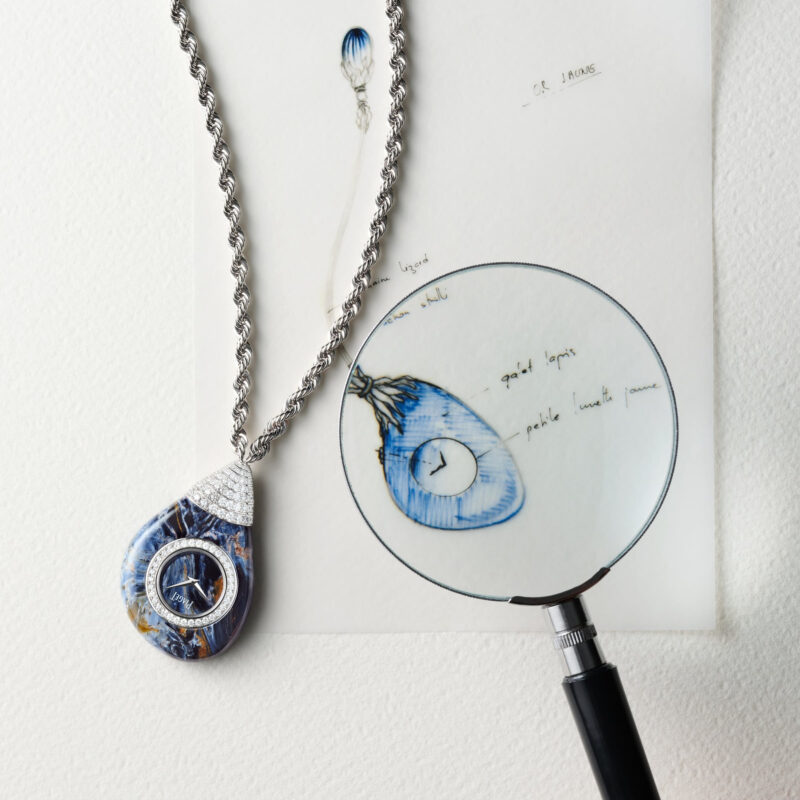
Pietersite, diamonds and the pendant’s unequal curves. Courtesy of Piaget.
A magnifying glass rests above the pietersite version, beside a drawn outline of the pendant. The blue stone is crossed by lighter and darker passages; a bright circular setting surrounds the dial. The nearby sketch makes the unequal curves around that circle more apparent.
Piaget identifies this reference, G0A51409, as white gold with pietersite and diamonds, driven by its 355P quartz movement. The small dial is nested within a larger stone surface, so the watch can retain a rounded, sculptural identity around the familiar arrangement of two hands.
The photograph invites a particular order of attention. First follow the outside edge. Then find the dial. Finally, look at the interval between the two. The distance changes as you move around the circle, giving the pendant an asymmetry that would be lost if you looked only at the face of the watch.
That is a rewarding way to approach an ornamental-stone design. Let the material’s drawing and the object’s contour establish their own character before asking which familiar watch shape they resemble. Here, the stone provides the starting point for the whole impression.
A small shape with a long reach
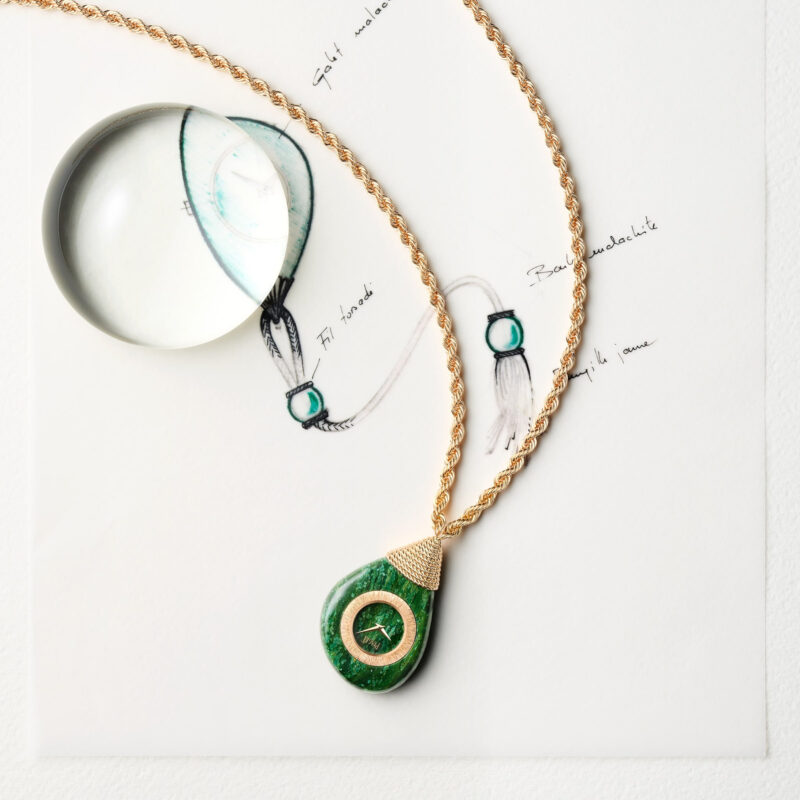
The verdite pendant beside studies of its outline. Courtesy of Piaget.
The green pendant sits on a sheet of design studies. A magnifying glass, small outlined shapes and the curling chain share the pale surface. The photograph brings the compact object close enough for its edge to matter, while leaving part of the chain visible to suggest its larger life as a necklace.
Compare this image with the complete view. One shows the whole proportion; the other concentrates attention on the transition between pendant and chain. Both are needed to understand why such a small object can establish a strong line across the body.
There is room for personal style in that relationship. A quiet expanse of fabric can give the stone an uninterrupted background; an open neckline introduces a different boundary above it. The pendant’s placement and the clothes around it become part of the design you actually wear.
The watch returns as jewellery
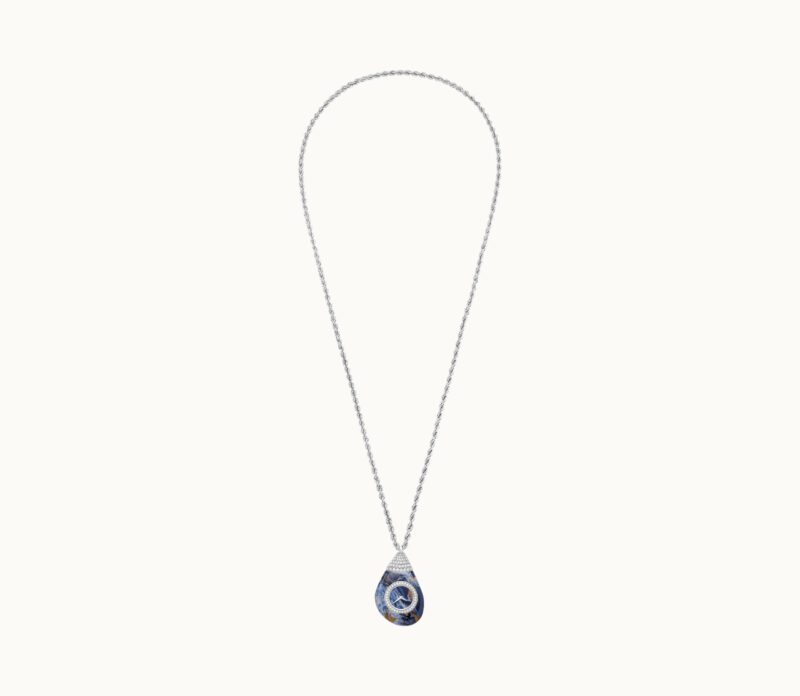
The complete pietersite sautoir, G0A51409. Courtesy of Piaget.
The complete pietersite necklace ends the sequence at a different distance. The long pale chain makes a generous loop, and the blue pendant sits low within the frame. After the closer still life, its small scale feels more deliberate: an intimate surface carried at the end of a much larger line.
A sautoir offers a distinctive kind of companionship with a watch. Its presence can be read across an outfit before its dial is examined at all. In Swinging Pebbles, the stone rewards that first glance with colour and the closer one with an irregular, absorbing pattern.
The most interesting choice may therefore begin with a simple attraction. Follow the striped warmth, return to the green, or keep looking into the blue. The time is there in every version. The surface you want to live with is your own discovery.
Sources & further reading
The Edit
Luxury Living stories
Selected stories from the same editorial universe.
Schiaparelli: The Body as a Jewel
A necklace shaped like lungs, a ribbon hung with pine cones, an earring beside
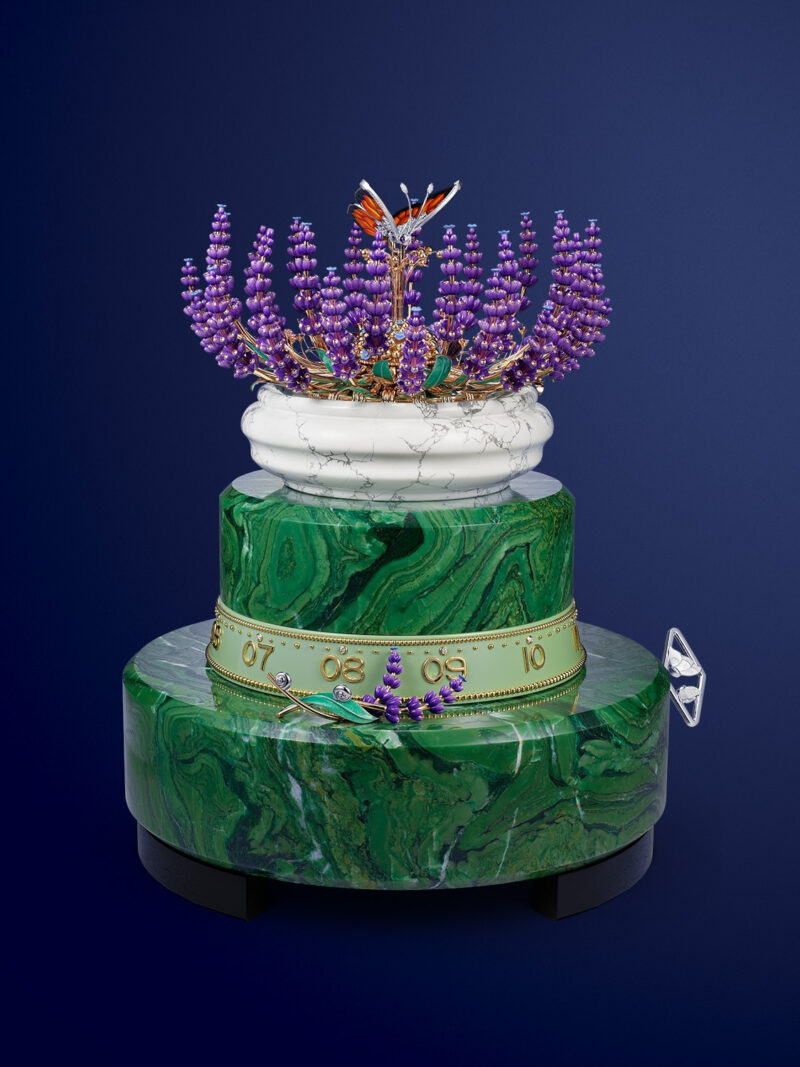
Brassée de Lavande: A Garden That Keeps Time
A butterfly waits among purple flowers. In Van Cleef & Arpels’ Brassée de Lavande,
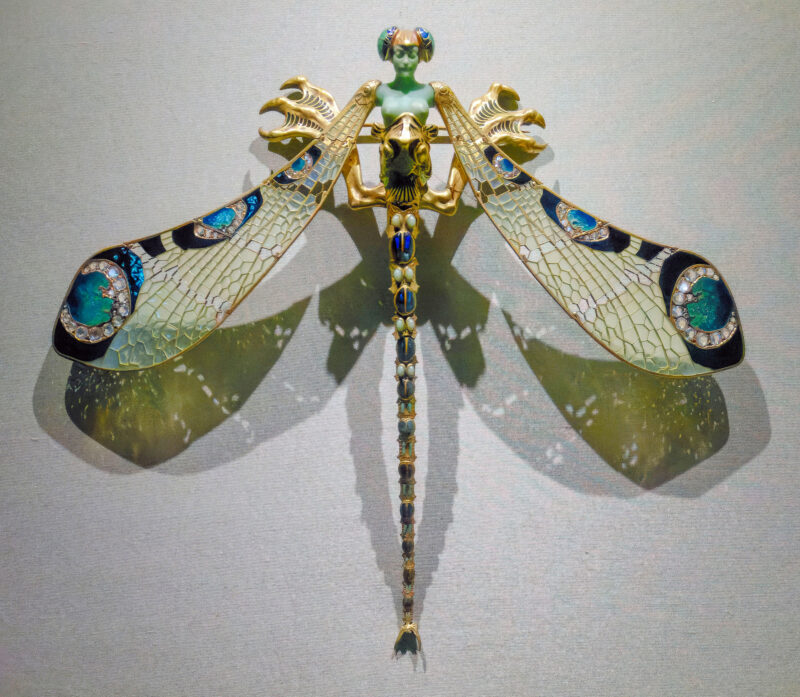
Lalique’s Dragonfly-Woman: A Jewel at the Scale of the Body
A carved green face, hinged wings and a silhouette 26.5 centimetres across. Lalique’s Dragonfly-Woman

CHANEL Première Galon: When a Braid Becomes Gold
A gold braid, a small octagonal face and the edge of a sleeve. Première
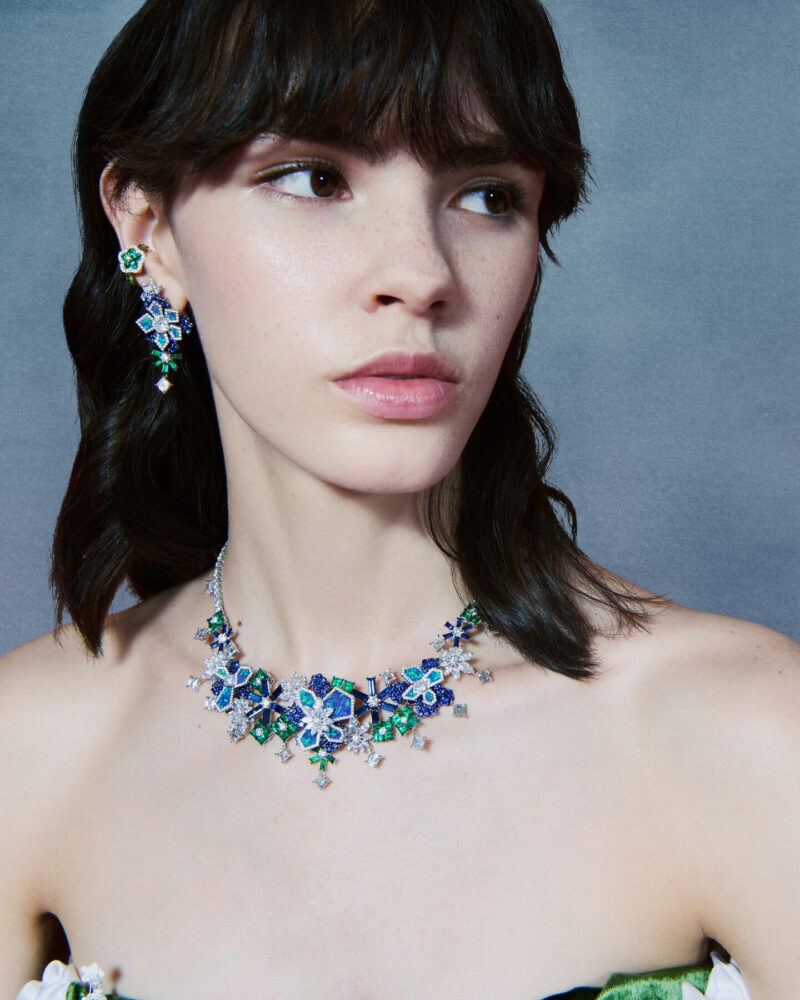
Diorissima: A Garden Composed in Gemstones
A green flower beside blue, a jewel above an open back, a brush at
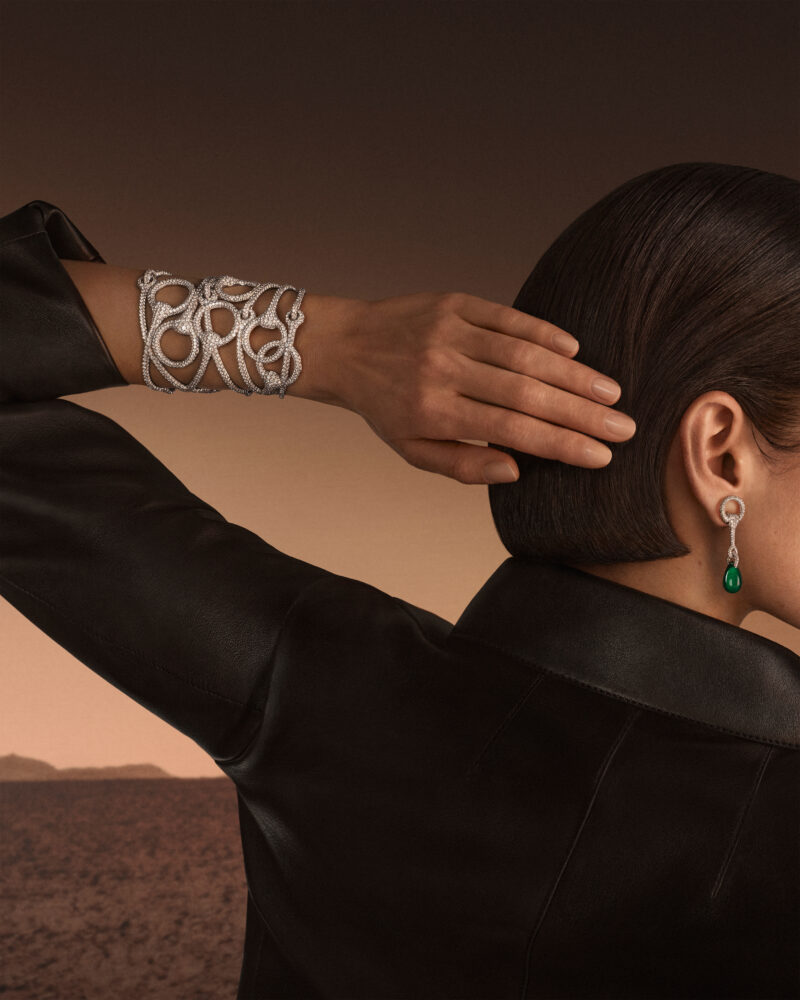
Hermès Horsescape: The Horse in the Line
A saddle at the wrist, a stirrup held against the sky, bright lines beside