
TheTimeo / Luxury Living
BEFORE THE WRIST,
time was already jewellery
From an enamelled chatelaine to Santos, Tank, Tutti Frutti and Crash: Cartier shows how time was worn as jewellery before the modern wristwatch became ordinary.
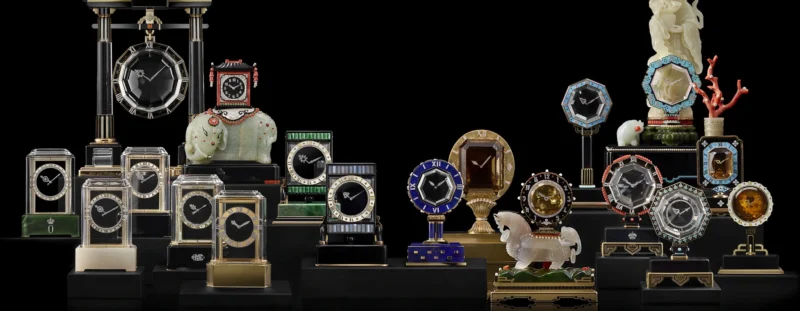
A panoramic selection of Cartier clocks shows how architecture, material and the display of time became one visual language. Courtesy of Cartier.
Explore the story
Long before checking the time became a turn of the wrist, a watch could hang from the waist, disappear inside enamel or sit among gemstones without asking to be recognised first as a machine. Cartier’s own collection makes that history unusually clear. An enamelled watch on a chatelaine from 1874 belongs to dress before it belongs to the modern category of the wristwatch: chain, colour, miniature painting and movement arrive as one object.
That is the key to reading the archive. Portable timekeeping did not begin as an instrument that later acquired ornament. It entered the body through jewellery, clothing and gesture. The twentieth-century wristwatch changed where the object sat and how quickly the hour could be read, but it did not end the older conversation between mechanism and adornment. Cartier carried it forward through shaped cases, mystery displays, bracelet-watches and designs in which the dial sometimes yields to colour, architecture or silhouette.
Key takeaways
- Cartier’s 1874 enamelled watch on a chatelaine was designed to hang at the waist as part of dress.
- The visible exterior could carry as much cultural meaning as the movement inside.
- Santos-Dumont, Tonneau, Tank and Tortue show that the wrist did not produce one inevitable watch shape.
- Panther-pattern, Tutti Frutti and citrine bracelet-watches keep jewellery central to timekeeping.
- A wristwatch succeeds on the body through proportion, attachment and gesture, not through the dial alone.
A watch could hang from the body
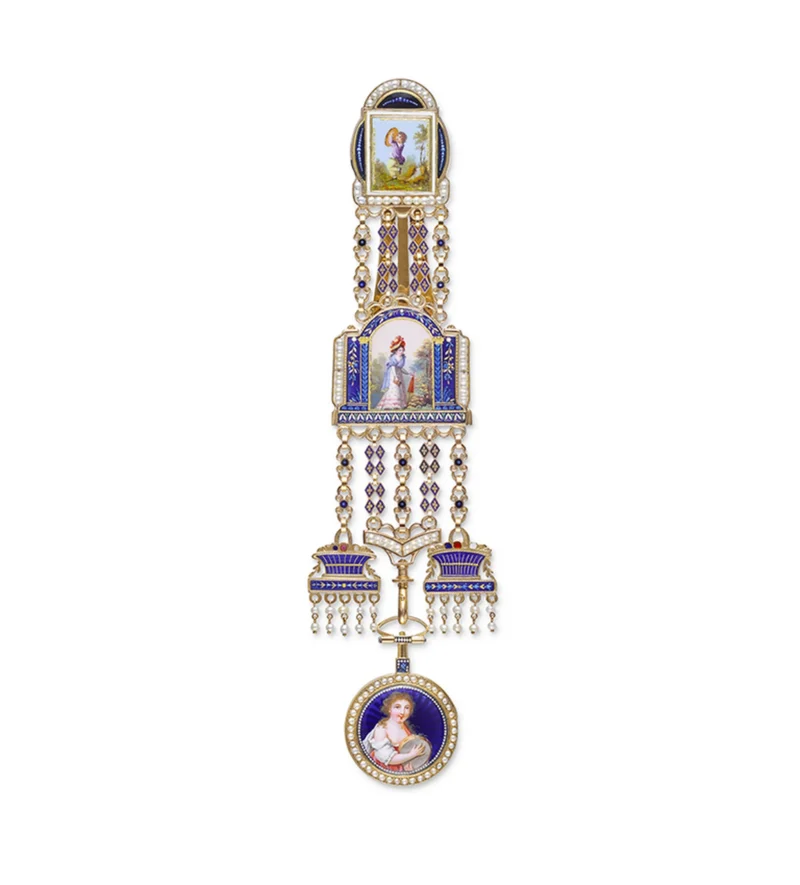
Gold, polychrome enamel and pearls turn wearable time into a vertical composition attached to dress. Courtesy of Cartier.
The enamelled chatelaine in the Cartier Collection was made in Paris in 1874 from gold, polychrome enamel and pearls. Cartier describes a chatelaine as a long chain worn at the waist by women and men. The definition sounds functional. The object is anything but neutral.
Its vertical construction turns timekeeping into a sequence. The fastening meets the garment; linked sections create length and movement; painted enamel and pearls lead the eye downward; the watch appears at the end. To consult it, the wearer lifts an object that has already been moving with the body. Time is revealed through handling.
This is why it makes little sense to treat early wearable watches as small clocks with decorative cases. The attachment is part of the design. So are the weight, the textile beneath it and the way the object changes orientation when it is raised. A chain can sway. A brooch fixes a watch to a chosen place. A pendant turns reading the time into a private gesture close to the body.
The broader history is older still. Around 1600, Nicholas Vallin made the movement for the Metropolitan Museum of Art’s Watch in the form of a Lesser George, a gold, rock-crystal and enamel insignia representing Saint George and the dragon. Its movement sits inside an object associated with ceremony and rank. The example matters here because it shows how long the watch had occupied the territory of the jewel before Cartier’s archive begins.
Cartier turned the case into architecture
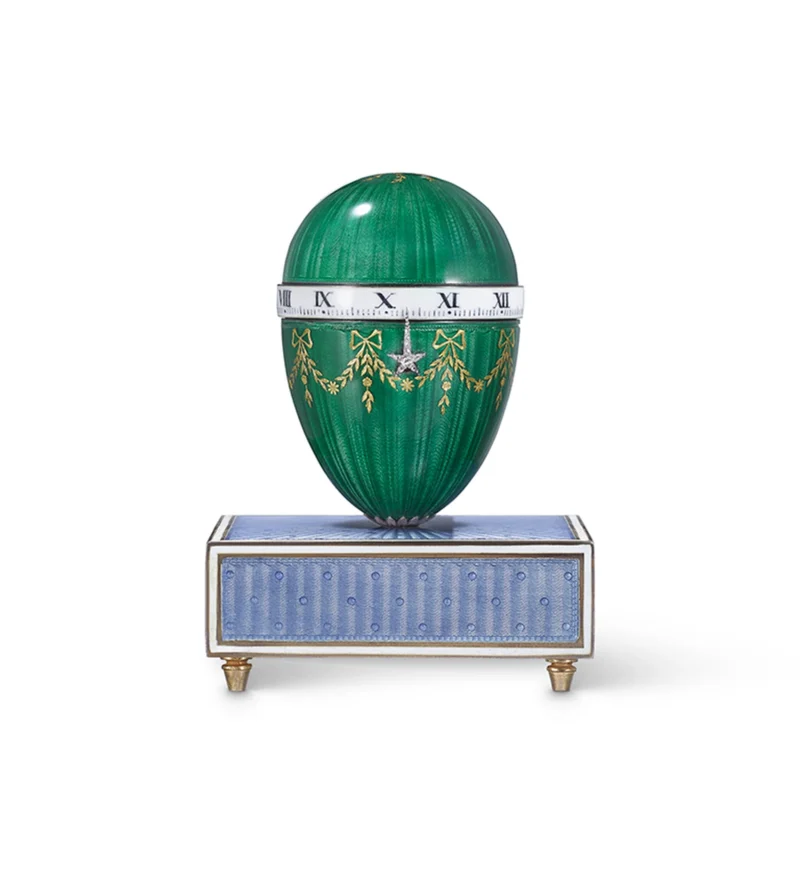
The dial travels around an enamelled egg form: time is integrated into the object rather than placed on its face. Courtesy of Cartier.
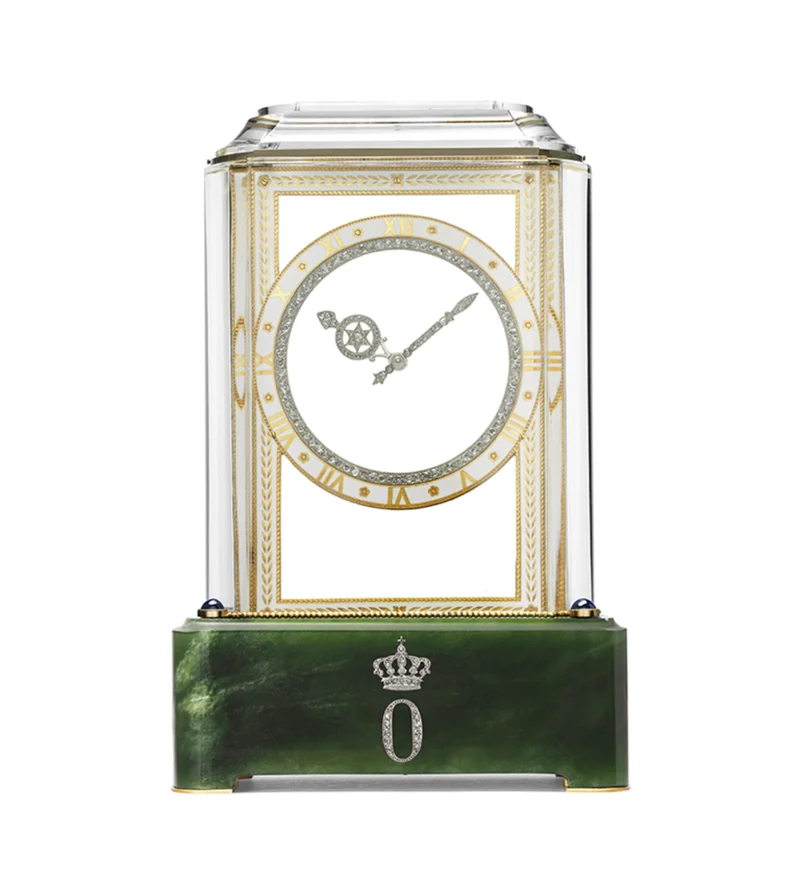
Rock crystal and diamond-set hands create the illusion that the time display floats without a visible connection to a movement. Courtesy of Cartier.
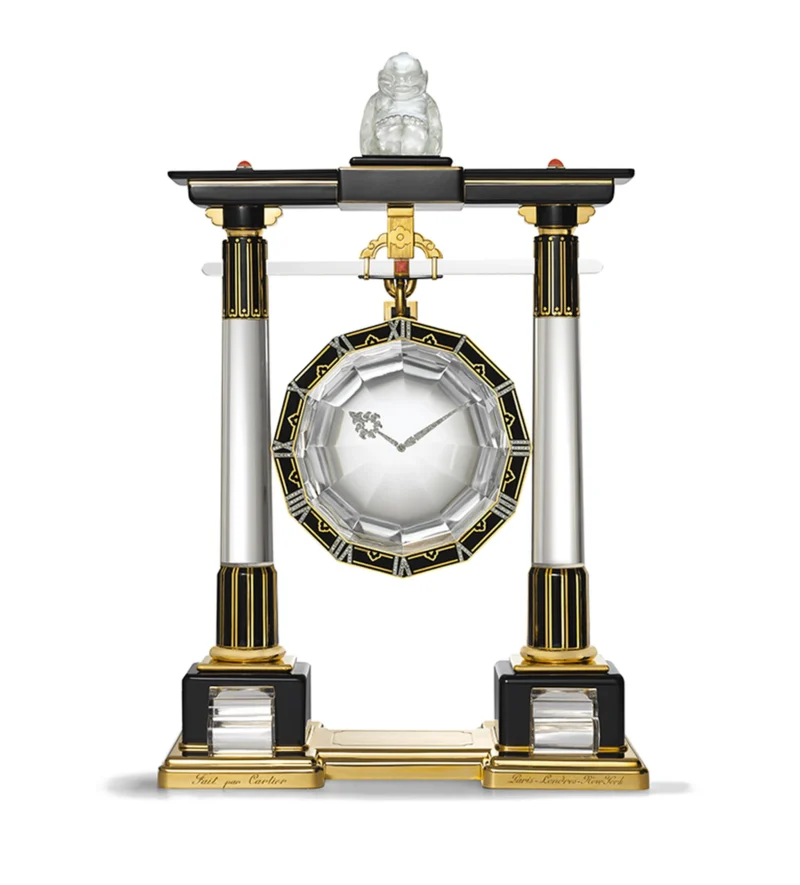
A Shinto-inspired gate in rock crystal, onyx, coral and enamel turns the clock into an architectural object. Courtesy of Cartier.
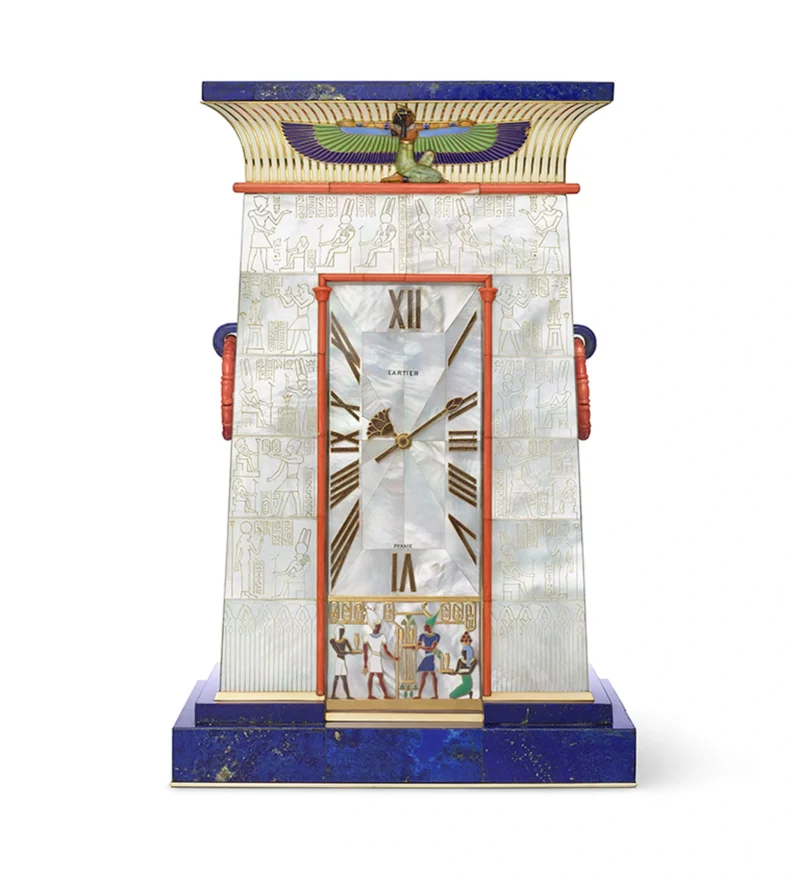
Mother-of-pearl, coral, lapis lazuli and carved imagery organise the entire face around the display of time. Courtesy of Cartier.
Once a movement can be carried, its exterior becomes a field of design. Cartier’s clocks make the principle visible at a larger scale. An egg-shaped desk clock places an annular dial around a green enamel dome. The Model A mystery clock lets its hands appear disconnected from any mechanism. The Portique mystery clock builds a Shinto-inspired gate from rock crystal, onyx, coral, diamonds and enamel. An Egyptian striking clock turns mother-of-pearl, coral, lapis lazuli and carved imagery into a complete architectural face.
These are not wristwatches, but they clarify a method that Cartier repeatedly brings to wearable time. The mechanism does not dictate a generic shell. Form, material and cultural reference determine how the hour will appear. Sometimes the display is central. Sometimes it is suspended. Sometimes the material surrounding it becomes the principal experience.
The mystery clock is an especially useful comparison. Its technical achievement is inseparable from an illusion: the hands seem to float. The viewer understands the object first as an impossible image and only afterwards as a piece of horology. Jewellery watches often reverse the hierarchy in the same way. They make colour, surface or concealment the first reading, while precise timekeeping remains present underneath.
The result is not a conflict between design and engineering. It is a collaboration. A movement maker, case maker, jeweller, stone setter, enameller and designer solve different parts of the same object. What reaches the wearer is not a list of crafts. It is a single gesture.
The wrist became a field of forms
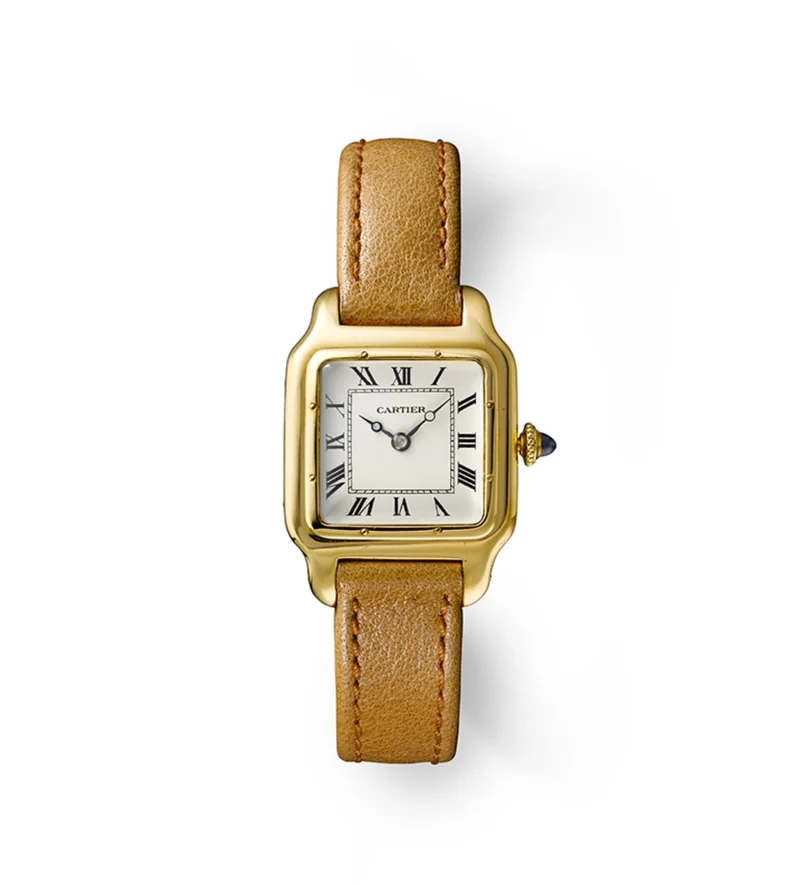
One of Cartier’s earliest Santos wristwatches makes the square case and visible construction part of its identity. Courtesy of Cartier.
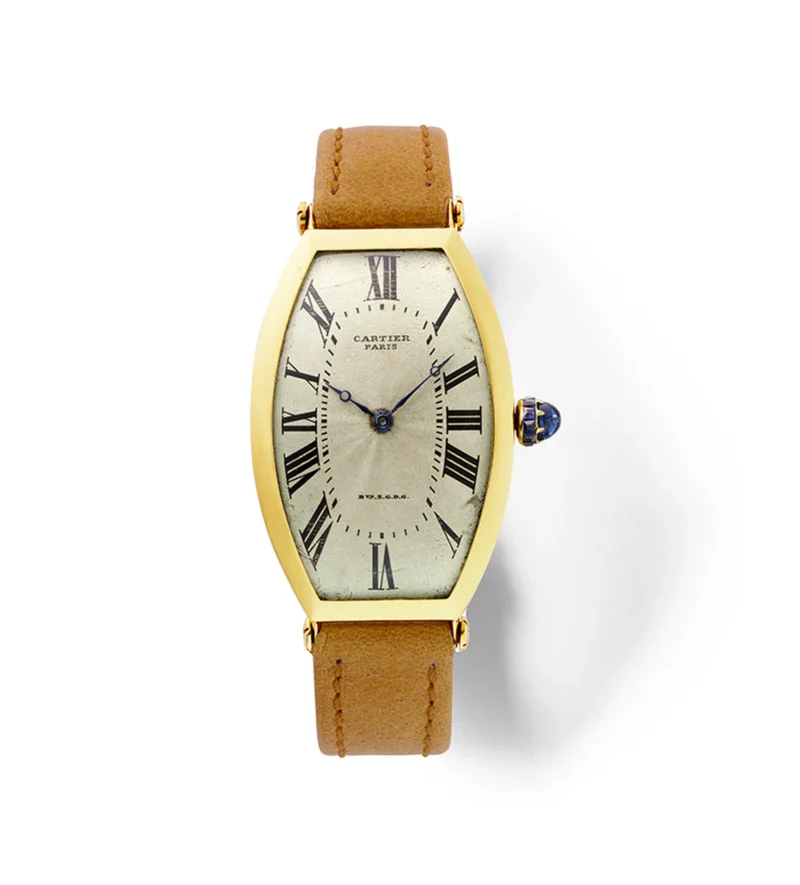
The curved barrel case shows that the early wristwatch did not settle into one inevitable outline. Courtesy of Cartier.
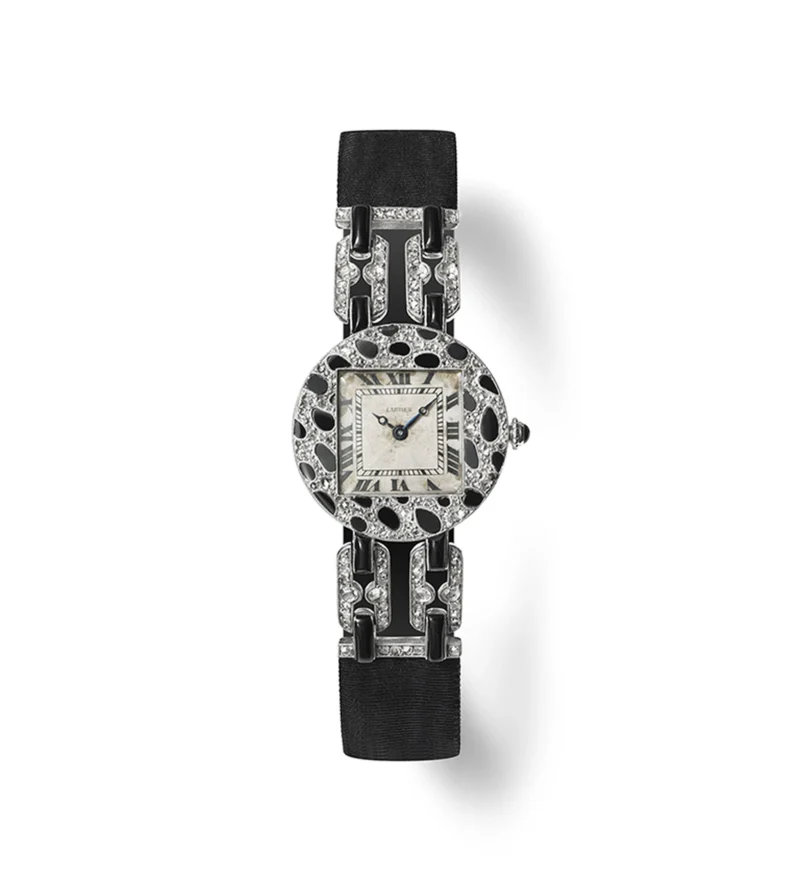
Diamonds and onyx surround the dial in Cartier’s first recorded use of the panther-skin motif. Courtesy of Cartier.
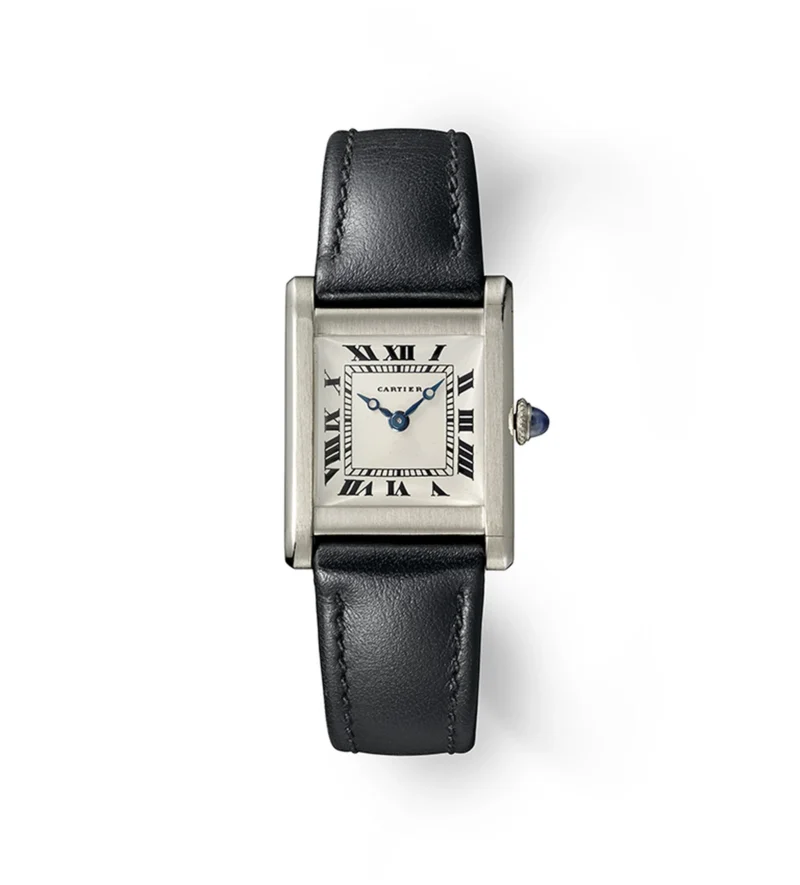
Parallel brancards carry the architecture of the case directly into the strap. Courtesy of Cartier.
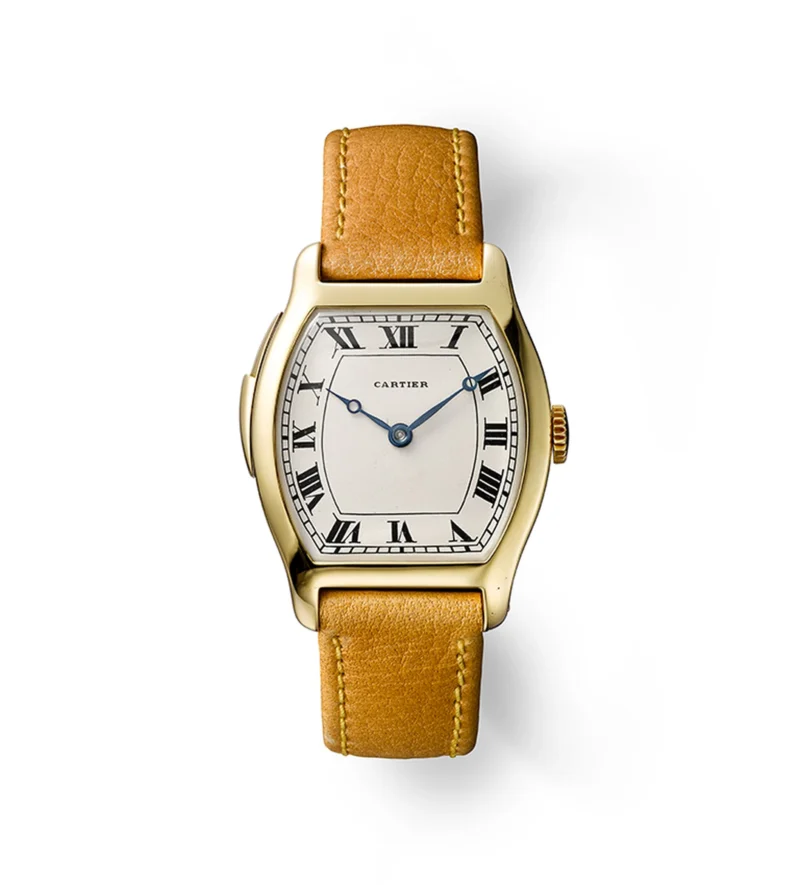
A softened shaped case contains a minute-repeating mechanism without sacrificing the clarity of the silhouette. Courtesy of Cartier.
The arrival of the wristwatch did not create one inevitable outline. Cartier’s early examples move in several directions almost at once.
The Santos-Dumont from 1912 is compact and square, with visible screws and a leather strap that makes the transition from case to wrist explicit. The 1915 Tonneau stretches that relationship into a curved barrel shape. A panther-pattern wristwatch from 1914 surrounds a square dial with diamonds and onyx, making the watch read as jewellery before the panther had become a fully figurative Cartier animal. The Tank from 1920 makes two parallel brancards carry the line of the case into the strap. The Tortue minute repeater from 1928 encloses a complicated striking mechanism in a softened, sculptural profile.
Seen together, these watches resist the idea that modernity meant stripping ornament away. What changed was the organisation of the object. The wrist imposed curvature, movement and a stable reading position; Cartier answered with geometry rather than a single formula.
The sequence also explains why shaped watches remain so important to the Maison. A round dial can be placed inside many cases without the exterior becoming a complete proposition. A shaped watch has to resolve every transition: crystal to bezel, bezel to case, case to lugs, lugs to strap or bracelet. Its identity is carried at the edge as much as at the centre.
Jewellery never left the watch
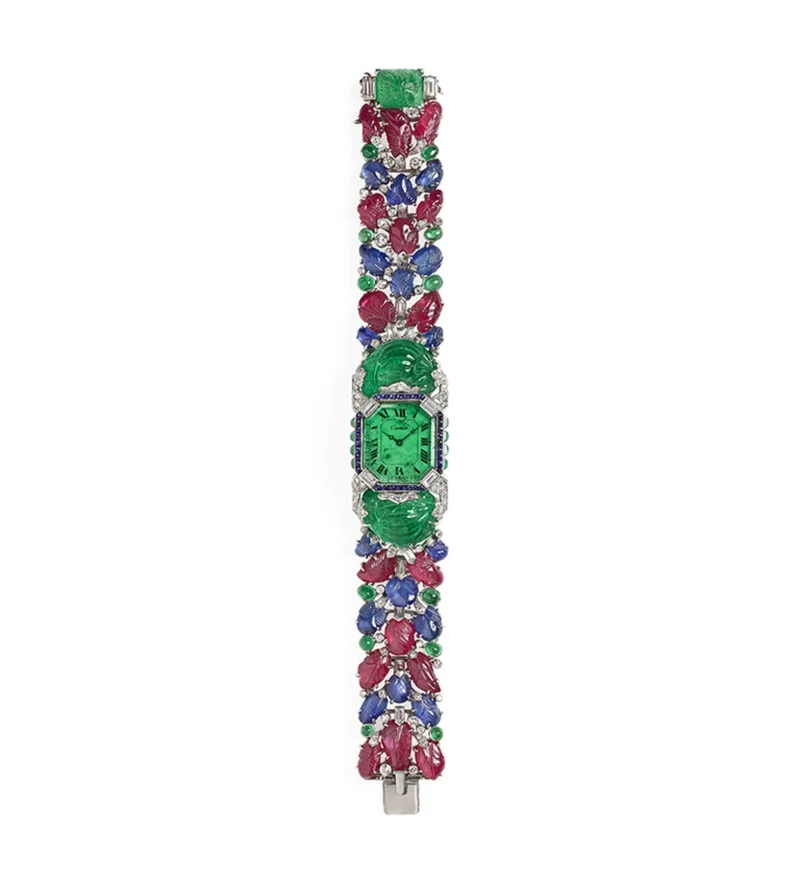
Carved sapphires, rubies and emeralds absorb the dial into a continuous jewellery composition. Courtesy of Cartier.
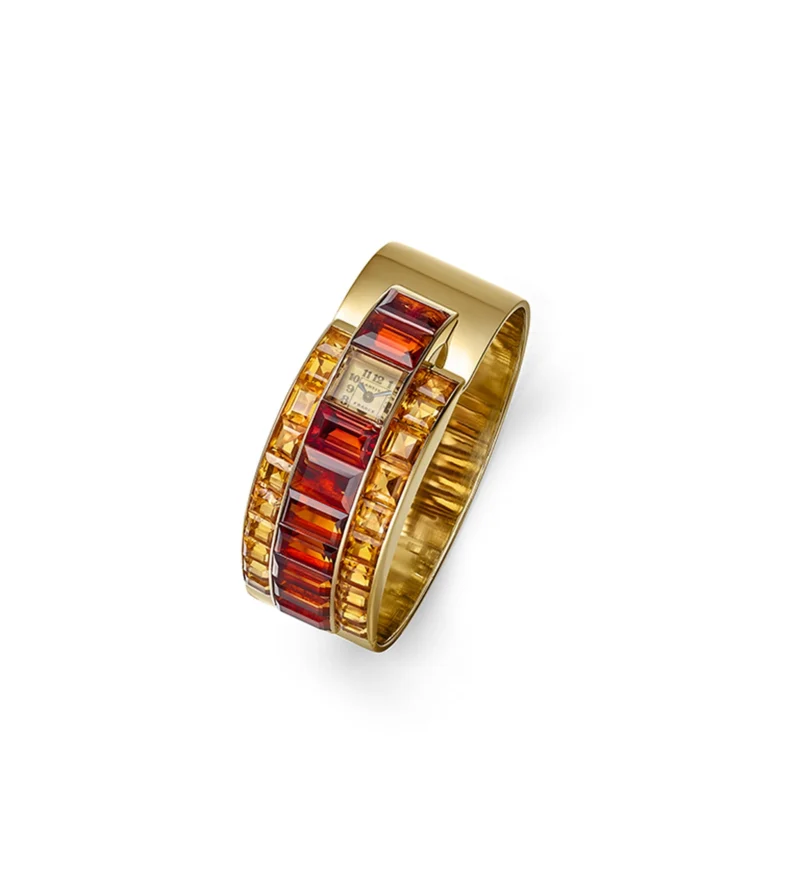
Faceted citrines create warm architectural rhythm while a small dial remains embedded in the bracelet. Courtesy of Cartier.
The Tutti Frutti bracelet-watch from 1929 makes the argument without restraint. Platinum, carved sapphires, rubies and emeralds form a continuous field around a green dial. The watch is not a small instrument attached to a jewel. It is one interval inside the bracelet’s colour and rhythm.
Cartier’s 1938 gold bracelet-watch with faceted citrines takes a different route. Its stones are architectural rather than botanical. Warm orange and yellow planes organise the bracelet, while the tiny dial interrupts the central line just enough to reveal the function. The piece can be read across the wrist as volume, light and colour before it is read as time.
Both objects make the same point in different languages. Jewellery is not an accessory added after the watch has been designed. It determines scale, flexibility and visual hierarchy from the beginning. The practical questions remain exacting: links must articulate, settings must protect the stones, the bracelet must sit securely, and the dial must remain legible when the wearer chooses to consult it.
Concealment is therefore only one way for a jewellery watch to control attention. A cover can hide the dial completely, but gemstones can also absorb it into a larger composition. The wearer decides whether the hour is the first thing seen or a discovery within the object.
Shape becomes the signature
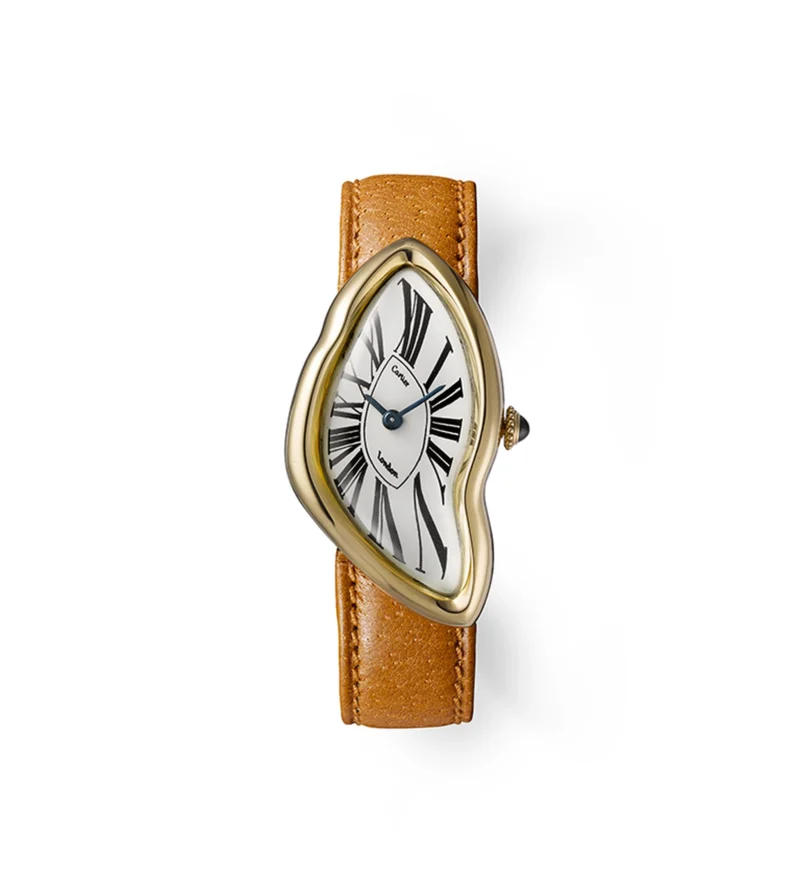
The London Crash makes distortion itself the identity of the case. Courtesy of Cartier.
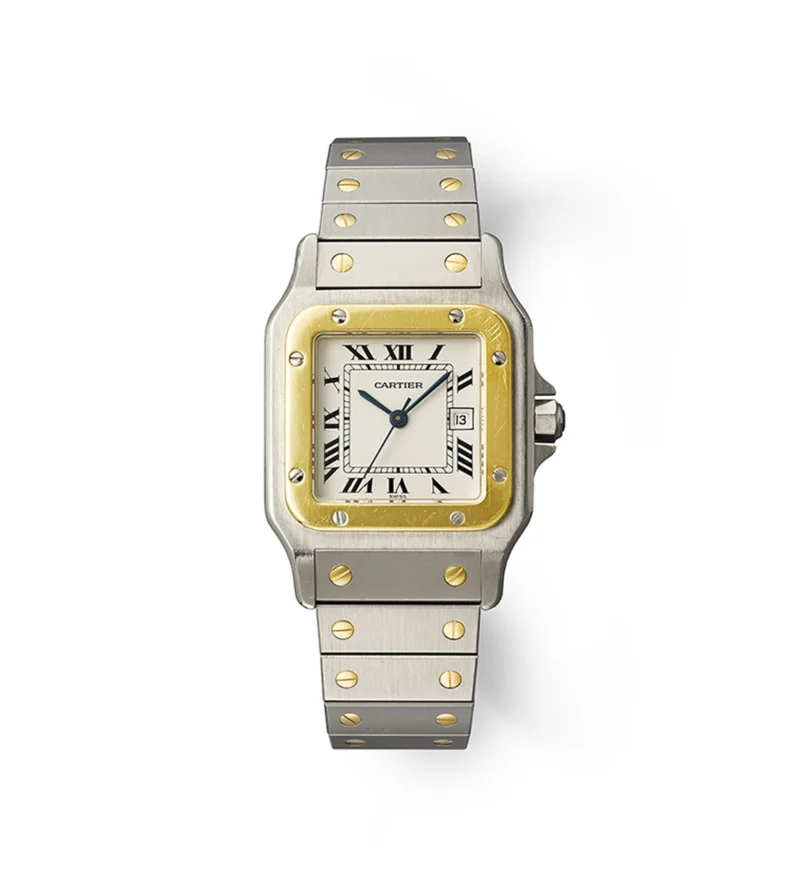
The square case, visible screws and integrated bracelet make construction part of the design language. Courtesy of Cartier.
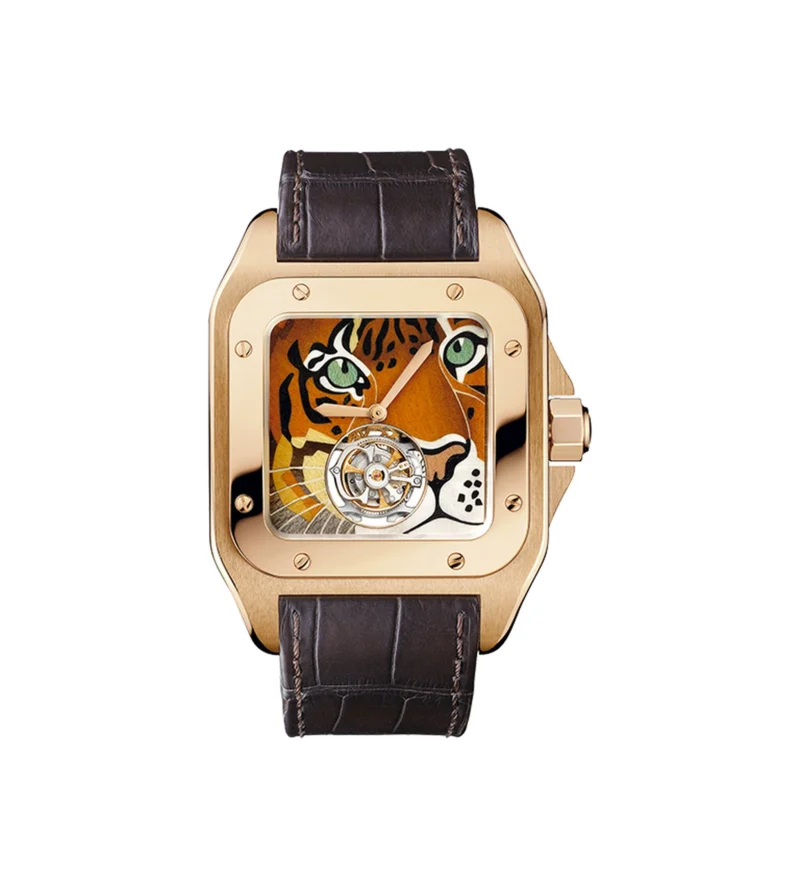
A pictorial dial changes the surface while the Santos framework preserves the family resemblance. Courtesy of Cartier.
By the time of the Crash, Cartier could make the case itself behave like an expressive line. The 1967 London model bends the familiar language of Roman numerals and a sapphire-set crown into an asymmetrical silhouette. It is recognisably a watch, but it refuses the visual stability normally associated with one.
Later Santos interpretations show the opposite kind of confidence. The square case, screws and integrated bracelet can carry steel and gold with almost industrial clarity. A decorative Santos can turn the dial into a pictorial surface and still remain legible as part of the same family. The strength lies in the framework: once the proportions and structural cues are established, material and image can change without dissolving the identity.
This is where the history before the wrist becomes useful rather than merely picturesque. Cartier’s most convincing watches do not start by asking how a movement should be packaged. They ask how time should occupy the body. The answer might be a chain, a curved case, a jewelled bracelet, an architectural square or a shape that seems to melt in motion.
The forms differ because the gesture differs. A chatelaine is lifted. A mystery clock is contemplated. A Tank slips beneath a cuff. A Tutti Frutti bracelet surrounds the wrist with colour. A Crash turns the act of reading into an encounter with silhouette.
What the wrist changed
The wrist gives the dial a stable orientation and places it in frequent view. It is efficient, but it is also demanding. The object sits on a joint; the case meets skin; the crown approaches the hand; the strap or bracelet must follow curvature and survive repeated movement. A successful wristwatch belongs to anatomy before it belongs to a display case.
Clothing changes the reading again. The watch occupies the border where a sleeve ends and the hand begins. It may appear fully, disappear beneath a cuff or emerge only during a gesture. Proportion therefore cannot be reduced to diameter. Thickness, lug length, case shape and the articulation of the attachment determine how the watch lives with dress.
Cartier’s shaped watches make these relationships visible. The Tank extends the case into the strap. The Tonneau bends its outline. The Santos uses screws and geometry to make construction part of its face. The bracelet-watches allow metal and gemstones to continue around the wrist until the distinction between watch and jewel becomes unnecessary.
TheTimeo view
The clean division between watchmaking and jewellery is convenient for shops, catalogues and categories. On the body, it is often false.
A movement and an enamel case require different expertise. A bracelet and a dial solve different problems. Yet the wearer receives them together. Weight, colour, attachment, visibility and the gesture of reading all happen in one experience.
That is what Cartier’s archive preserves so well. Before the wristwatch became ordinary, time was already being carried, displayed and occasionally hidden in dress. The wrist did not end that history. It gave the same question a new location: how can a technical object become part of the person wearing it?
Cartier’s answer has never been one shape. It has been the freedom to make time behave like jewellery.
Sources & further reading
- Cartier Collection, official watchmaking archive. Object names, dates and materials follow Cartier’s public records.
- Metropolitan Museum of Art, Watch in the form of a Lesser George, and the museum’s research publication An Extravagant Jewel: The George Watch.
- Victoria and Albert Museum, research on Huguenot enamellers and the movement of specialist decorative skills between European centres.
- Sources and official image records were checked on 8 September 2026. The article does not claim a single inventor or a simple linear origin for the wristwatch.
The Edit
Luxury Living stories
Selected stories from the same editorial universe.
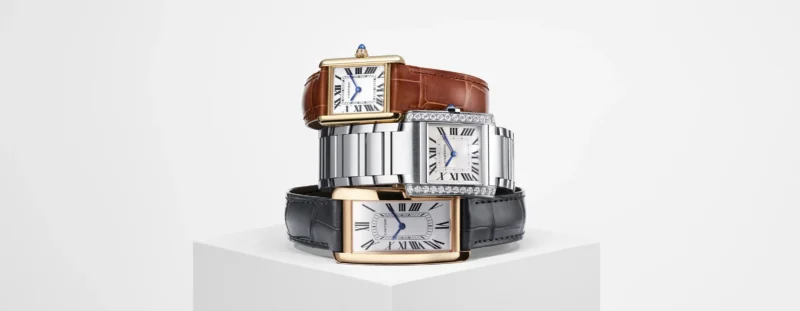
The Cartier Tank: A Rectangle in Conversation with Dress
A close reading of the Cartier Tank through proportion, brancards, strap, bracelet and the
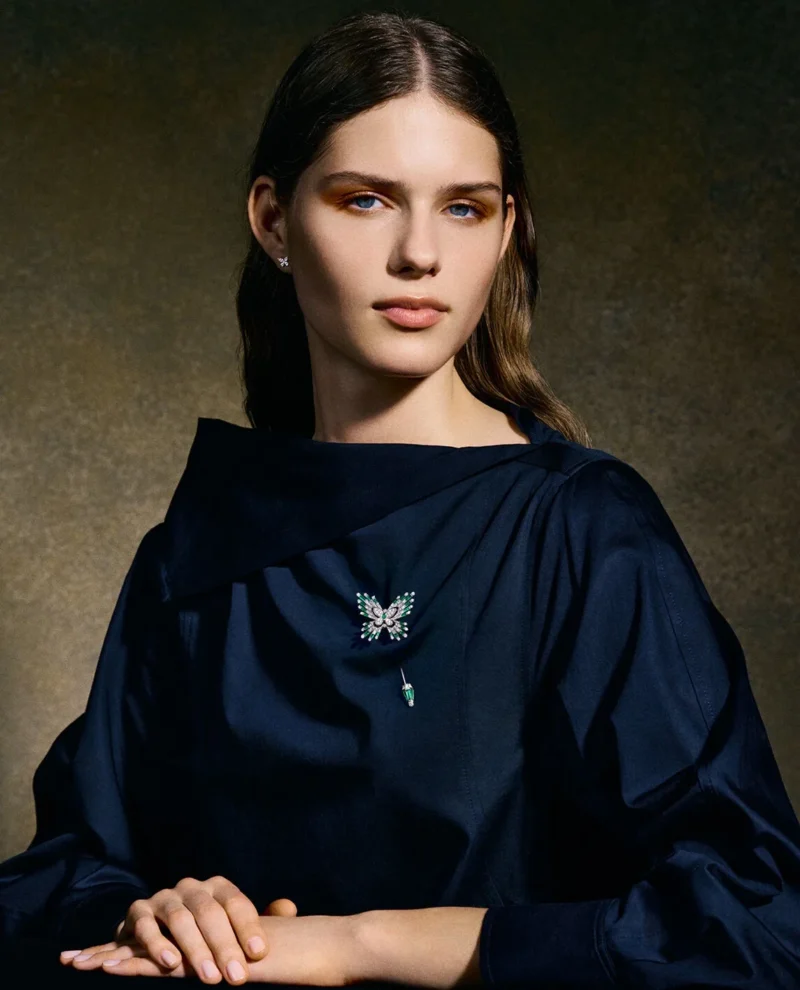
The Brooch in Motion: Placement, Gesture and Dress
A brooch changes the line of a garment through placement, scale and movement. This
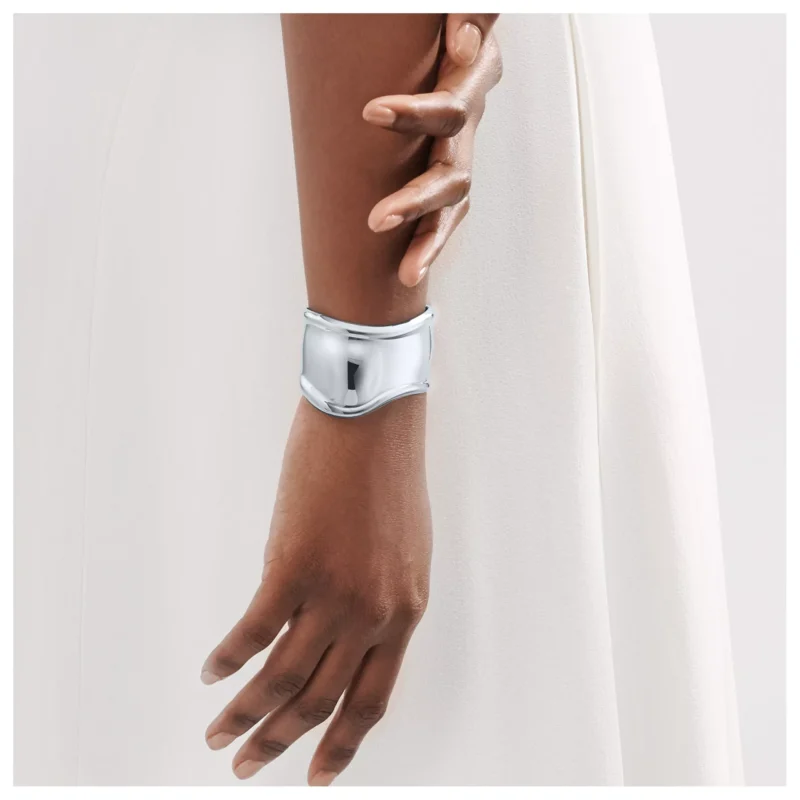
Elsa Peretti’s Bone Cuff: When Jewellery Follows the Body
Elsa Peretti’s Bone cuff begins with anatomy: a side-specific, asymmetric silver form whose surface
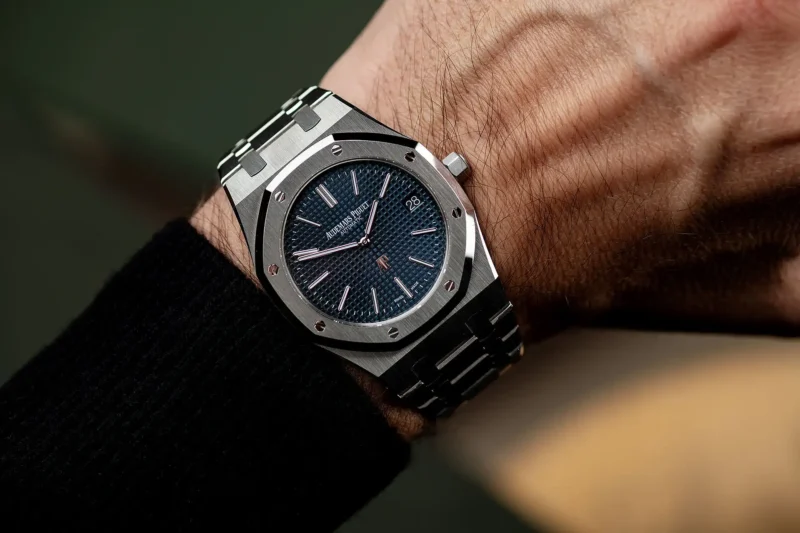
Watches in High Fashion: Blurring the Line Between Horology and Couture
Luxury watches have evolved from simple timekeeping devices into status symbols and integral fashion
Celebrity Endorsements: How A-List Icons Are Influencing Watch Trends in 2024
Luxury watches and celebrity culture have long been intertwined, with A-list icons driving major
The Watch as a Fashion Icon: How to Make Your Timepiece the Focal Point of Any Outfit
Luxury watches have transformed from simple timekeeping devices into powerful fashion statements. Whether attending