
Collecting Intelligence
Insights & Investment
Phillips Geneva Watch Auction XXIII: What the Results Record
Across two days in Geneva, Phillips brought together early independent watchmaking, important Patek Philippe wristwatches and historic pocket watches in a catalogue that felt broader than its CHF 74,846,995 total suggests. Of 225 lots, 224 sold. The fascination is in the contrast: one room could move from the intimacy of a pioneering F.P. Journe to the scholarship of a nineteenth-century complicated watch. Reading the sale object by object reveals where collectors found rarity, beauty and mechanical significance—and why the most rewarding result is often the story behind the headline lot.
The Geneva Watch Auction: XXIII brought historic Patek Philippe and exceptional independent watchmaking into one sale. Courtesy of Phillips.
The visual edit
Objects that give the story its shape.
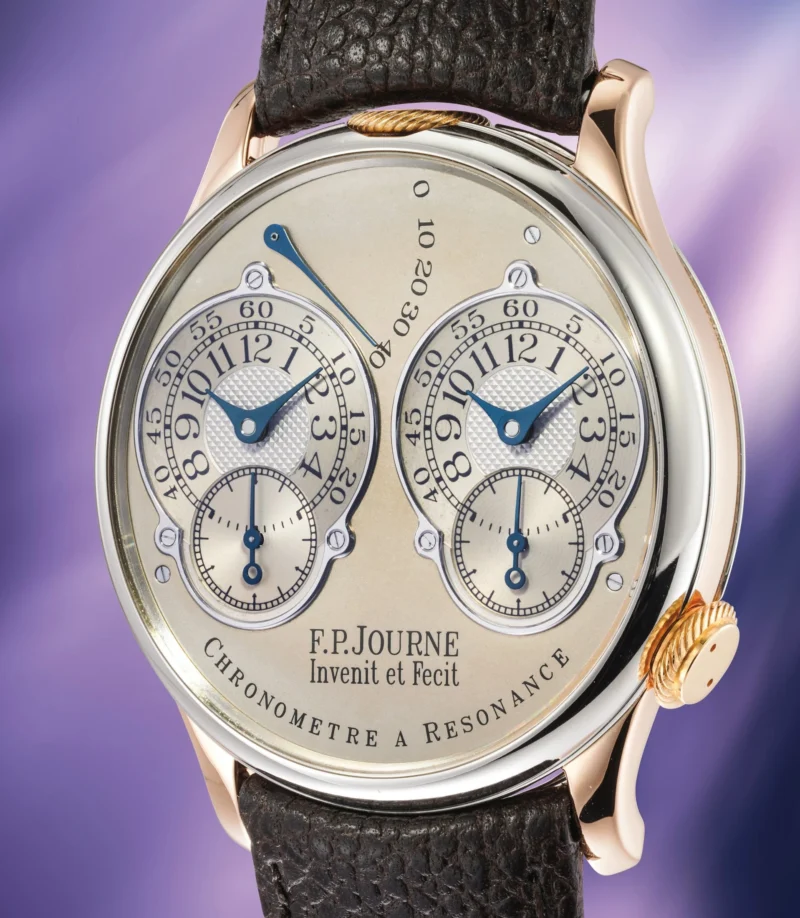
F.P. Journe Chronomètre à Résonance Souscription No. 18, a defining result of the sale. Courtesy of Phillips.
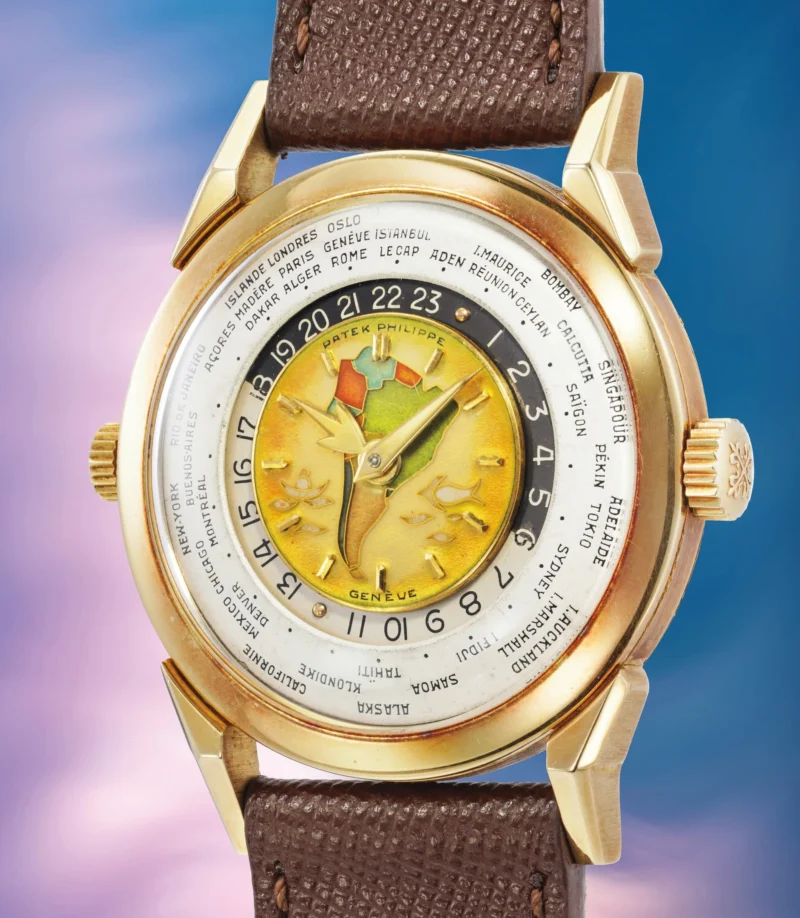
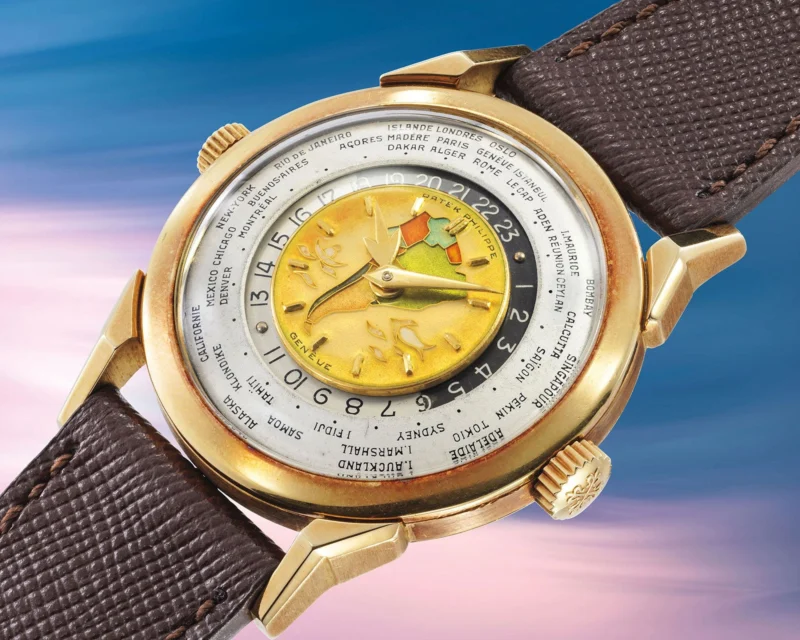
Patek Philippe reference 2523, the historic world-time wristwatch that led the Geneva auction. Courtesy of Phillips.
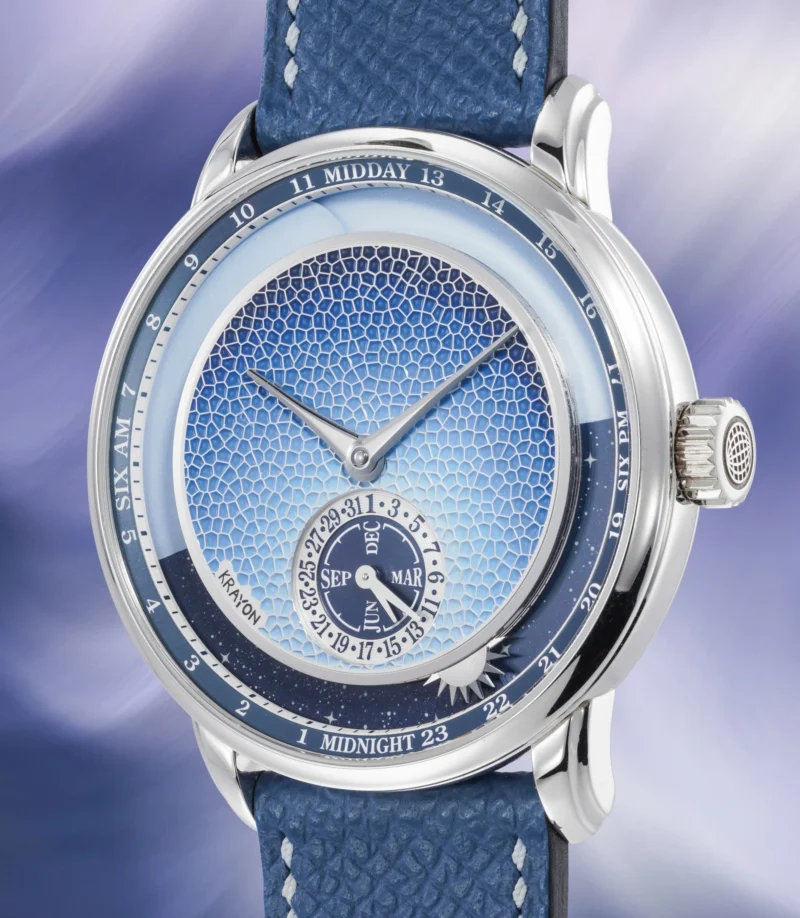
Krayon Anywhere Métiers d’Art Azur, representing the independent voice within the sale. Courtesy of Phillips.
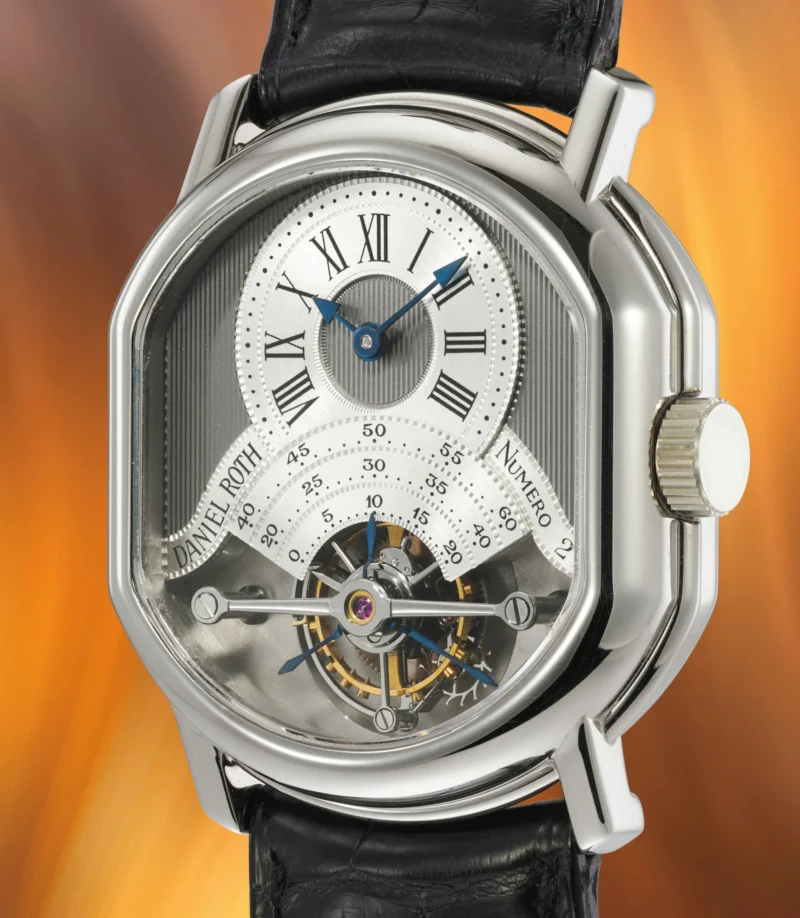
Daniel Roth Tourbillon Régulateur Double Face in white gold. Courtesy of Phillips.
Two days that widened the view
Across two days in Geneva, Phillips brought together early independent watchmaking, important Patek Philippe wristwatches and historic pocket watches in a catalogue that felt broader than its CHF 74,846,995 total suggests. Of 225 lots, 224 sold. The fascination is in the contrast: one room could move from the intimacy of a pioneering F.P. Journe to the scholarship of a nineteenth-century complicated watch. Reading the sale object by object reveals where collectors found rarity, beauty and mechanical significance—and why the most rewarding result is often the story behind the headline lot.
The objects that shaped the room
- Phillips reported CHF 74,846,995, with 99.6 per cent sold by lot and 99.9 per cent sold by value.
- The Patek Philippe reference 2523 “South America” led the sale at CHF 7,961,000 against an estimate stated as above CHF 5,000,000.
- The sale included high results for F.P. Journe and for historic pocket watches by Louis Richard and Louis Audemars & Co.
- Published sold prices include buyer's premium; catalogue estimates do not.
- One exceptional auction can reveal where bidding concentrated, but it cannot establish a general return expectation.
The official record
Explore the comparison
| Measure | Phillips figure | Unit and date | Reading limit |
|---|---|---|---|
| Sale total | CHF 74,846,995 | Swiss francs, 9–10 May 2026 | Aggregate reported by Phillips, including premium |
| Lots sold / offered | 224 / 225 | lots | One unsold or withdrawn outcome cannot be identified from the ratio alone |
| Sold by lot | 99.6% | percentage of lots | Describes this selected catalogue |
| Sold by value | 99.9% | percentage of value | Depends on the house's estimate and value methodology |
| Lots above CHF 1 million | 14 | reported sold prices | Crosses makers and object types |
| Registered bidders | more than 1,815 | 74 countries | Registrations are not the same as unique winning buyers |
Phillips also published US-dollar and euro conversions—US$96,328,083 and €81,732,919—for the sale total. This article keeps the Swiss-franc results as the working unit because Geneva estimates and premiums were denominated in CHF. Mixing house conversions with an exchange rate from another date would create false precision.
A Patek Philippe at the centre of the sale
Lot 27 was a Patek Philippe reference 2523 two-crown world-time wristwatch with a polychrome cloisonné enamel map of South America. Phillips listed the estimate as in excess of CHF 5,000,000 and the sold result as CHF 7,961,000. The result exceeded the stated threshold by at least CHF 2,961,000, or at least 59.22 per cent, calculated as `(7,961,000 – 5,000,000) / 5,000,000`. Because “in excess of” does not disclose a closed upper range, this is only a floor comparison, not a conventional estimate multiple.
The lot is unsuitable as a comparator for an ordinary reference 2523 without first aligning dial subject, enamel authorship or attribution, case, condition, archive documentation and prior history. The map is not a decorative footnote; it is central to the object's identity. The seven-figure result therefore records competition for this particular watch in this particular sale.
Independent watchmaking in many voices
Phillips highlighted several F.P. Journe results. A two-tone Chronomètre à Résonance “Souscription No. 18” sold for CHF 4,875,500 against CHF 450,000–900,000. A Chronomètre à Résonance “Pisa” sold for CHF 2,334,500 against the same range. An Octa Chronographe with “Straight Côtes de Genève” sold for CHF 1,714,500 against CHF 150,000–300,000. These are distinct references and configurations; grouping them under one maker is useful for navigation, not valuation.
The Souscription result was about 5.42 times its high estimate, calculated as `4,875,500 / 900,000`. The Octa Chronographe was about 5.72 times its high estimate, calculated as `1,714,500 / 300,000`. Those ratios are mathematically reproducible but editorially incomplete. They can reflect rarity, early serial significance, condition, provenance, conservative estimating or unusually deep competition. Without a broader comparable set and the bidding path, they should not be turned into a statement that “F.P. Journe rose by” any percentage.
The same care applies to Akrivia's AK-06, which sold for CHF 3,000,000 against CHF 350,000–700,000. The result identifies a transaction for a specified watch. It does not supply a current quotation for every AK-06 or for independent watchmaking as an asset class.
Pocket watches changed the shape of the sale
Two of the auction's striking results came from names less familiar to many wristwatch buyers. A Louis Richard triple-detent, constant-force, one-minute tourbillon chronometer sold for CHF 3,968,000 against CHF 100,000–200,000. The reported result was 19.84 times the high estimate. A Louis Audemars & Co “La Royale” super complication sold for CHF 2,516,000 against CHF 400,000–800,000, or 3.145 times the high estimate.
These multiples show the inadequacy of assuming the estimate alone describes the object. They also resist a simple brand-demand explanation. Historic maker, mechanism, survival, scholarship and the presence of bidders able to assess a complex pocket watch may all matter. An auction can bring such an object into a more visible comparison set, but one result does not create a liquid category.
The pocket-watch outcomes also explain why the sale total cannot be compared casually with a wristwatch-only auction. Category composition matters. A total that includes several singular horological works has a different denominator from a catalogue dominated by repeatable modern references.
From the final bid to the published result
Phillips' 2026 watch-auction pages state that bids exclude buyer's premium. For Geneva Watches, the house's published premium schedule checked on 3 September 2026 was cumulative: 27 per cent of hammer up to CHF 1,600,000, 21 per cent on the portion from CHF 1,600,000 to CHF 7,000,000, and 14.5 per cent above CHF 7,000,000, excluding applicable taxes.
That schedule allows an approximate reconstruction when the published result is known to include premium and no other amount is folded into the displayed figure. It should not be applied blindly. Lots may carry tax symbols, and the invoice can include VAT, import charges, shipping or other costs. The sale catalogue and invoice remain authoritative.
For a simple CHF 1,000,000 hammer example under that schedule, the buyer's premium would be CHF 270,000 and the price before tax would be CHF 1,270,000. For a CHF 2,000,000 hammer, the first CHF 1,600,000 attracts CHF 432,000 and the remaining CHF 400,000 attracts CHF 84,000, producing CHF 516,000 premium and CHF 2,516,000 before tax. The tier is marginal: the higher rate is not applied to the entire hammer.
What 224 sold lots reveal
Selling 224 of 225 lots is an observable outcome. It suggests that reserves, estimates, catalogue selection and bidder demand aligned sufficiently for nearly every offered lot to transact. Sold-by-value of 99.9 per cent offers another view of the same event. Neither measure tells a collector how much negotiating occurred before consignment, whether guarantees shifted risk or how the results compare with private transactions.
The 1,815 registrations across 74 countries indicate reach, not purchasing depth. One person can register without bidding; one lot can attract many bidders; a country count says nothing about the value won by each location. The figure is useful when kept in its original frame: Phillips' registration count for this sale.
Building a comparison with character
A defensible comparison begins at lot level. Start with the same reference or mechanism, then tighten the set by case material, dial, production sequence, condition and documentation. Record whether each result includes premium, and keep the auction date and currency. If conversion is necessary, state the source and date of the exchange rate; do not overwrite the original figure.
Next, explain exclusions. A private commission, unique dial, historic owner or newly documented object may deserve its own group. An unsold lot provides information too, but the reserve and highest bid may be unavailable. A withdrawn lot is not an unsold lot. A result reported by the house may later be revised, so the retrieval date belongs in the ledger.
Finally, resist averaging unlike objects. The mean of a Patek enamel world timer, a contemporary independent watch and a nineteenth-century pocket chronometer is mathematically valid but editorially meaningless. The catalogue's breadth is a story about collecting attention, not permission to collapse every lot into one trend line.
The wider pleasure of the sale
The lasting impression of Auction XXIII is its range. Familiar names drew formidable attention, yet scholarship and mechanical history also gave less obvious objects a stage. A pocket watch could be as intellectually absorbing as a modern wristwatch; an early independent piece could make a maker's entire evolution feel newly visible.
For an owner, the lesson is quietly practical: preserve the photographs, service decisions and documents that allow a watch to be understood. For everyone else, the sale is an invitation to look past the brand name and discover how much individuality can live inside a catalogue of 225 lots.
Sources & credits
Sources
Sale totals, participation and highlighted results were rechecked on 3 September 2026 against Phillips' official Geneva XXIII result release. Estimates and sold prices were checked against the official auction catalogue and results. The historical framing for the Agassiz de Gaulle watch comes from Phillips' official pre-sale release. Premium tiers were checked against Phillips' published buyer's premium schedule. Calculations use the figures shown in the article, without exchange-rate or inflation adjustment. House descriptions of records remain attributed to Phillips.
The Edit
Insights & Investment stories
The TheTimeo Provenance Standard: What Should Travel With an Object
A collectible object needs more than a pile of accessories. Identity, ownership, service, condition,
How to Audit a Luxury Watch Listing: Nine Details That Matter
Before judging price, audit the listing: identity, configuration, condition, service, documents, photography, seller claims,
Auction Estimates, Hammer Price and Buyer’s Premium Explained
The fall of the hammer is wonderfully clear; the number that appears afterwards can
How to Read a Jewellery Auction Lot: Five Separate Lines of Evidence
A laboratory report, maker’s mark, condition note, repair record and provenance answer different questions.

Watch Documents and Provenance: Build the File, Test the Claims
A watch can become more captivating when its past comes into focus. An archive
Watch Service History: Build a Record That Travels With the Object
The best service history reads like a biography of the watch. It shows how