
TheTimeo / Insights & Investment
THE RESULT IS PUBLIC.
The stone is singular.
A gemological reading of the auction room: what a result records, what the laboratory can establish and what remains singular to the stone.
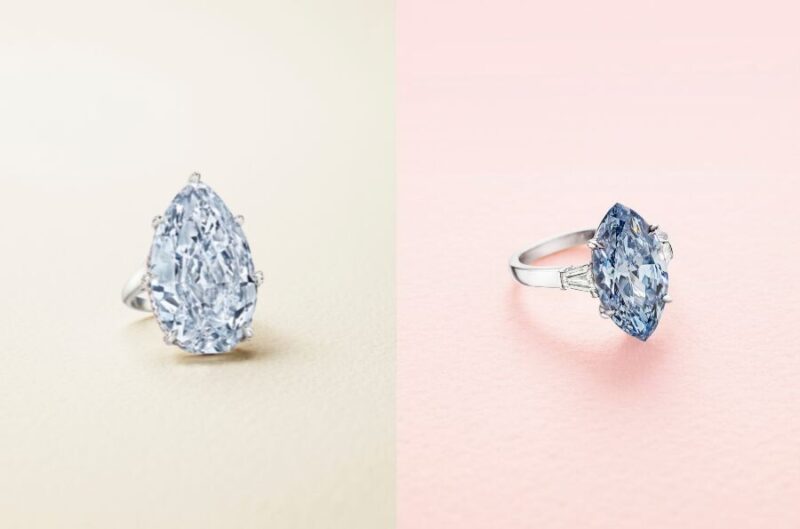
The Azure Blue led Christie’s New York Magnificent Jewels sale in June 2026. Courtesy of Christie’s.
Explore the story
The hammer falls in a few seconds. The number travels everywhere. The stone itself remains particular: one colour, one cut, one history of treatment and one report written within a defined scope.
What happened in New York
Christie’s reported $49.69 million for its 9 June 2026 Magnificent Jewels sale in New York, with every lot sold. The 31.62-carat Azure Blue diamond realised $8.371 million; a 5.04-carat fancy vivid blue diamond realised $8.127 million. A sapphire ring realised $2.271 million.
These are precise, useful facts. They belong to named lots, a named auction and stated sale terms. They are not a gemstone index, and they do not erase the differences between two blue diamonds or two sapphires.
The intelligent response to a remarkable result is not immediate extrapolation. It is a better question: what made this stone, in this jewel, with this documentation, persuasive on that day?
The catalogue is a beginning
“A price becomes meaningful only after the object and the terms behind it are named.”
Read the lot description, condition report, laboratory documents, estimate basis and buyer’s premium language together. Then identify which statements come from the auction house, which come from an independent laboratory and which remain opinions or attributions.
Inside the laboratory sequence
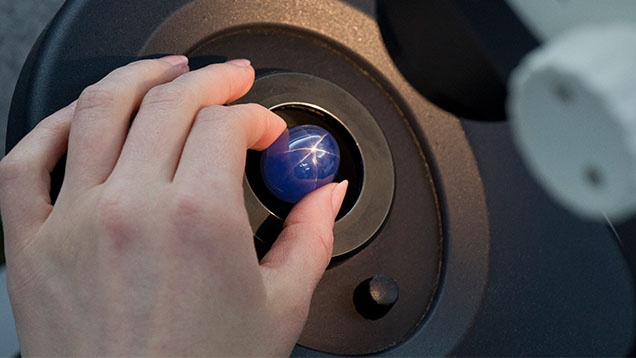
Magnification can reveal features that colour alone cannot explain. Courtesy of GIA.
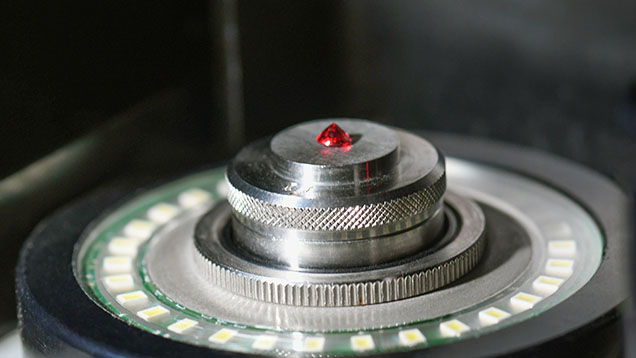
Measurement is one part of a wider identification sequence. Courtesy of GIA.
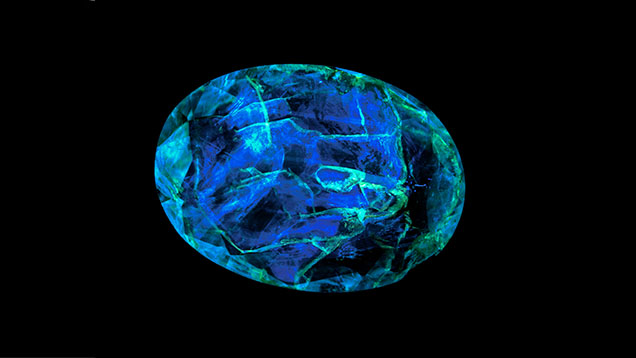
Treatment disclosure can materially change how two apparently similar stones are read. Courtesy of GIA.
A sale-room image is made to communicate presence. Laboratory work asks different questions. GIA describes a sequence that can include examination under magnification, measurement and analytical instruments chosen for the material under study. The objective is identification and, where the report service provides it, disclosure of detectable treatments and an opinion on geographic origin.
Move through the images at one consistent scale. The sapphire under magnification, the ruby positioned for measurement and the filled emerald show why an attractive colour cannot carry the entire description. Internal features, physical properties and evidence of treatment each add a separate line to the stone’s identity.
A laboratory report does not set a price or authenticate the authorship of the finished jewel. Its authority is strongest when its scope is respected.
Four records, four different jobs
Explore the comparison
| Record | Useful for | Keep in view |
|---|---|---|
| Lot description | Seller’s presentation, stated dimensions, reports and provenance | Read qualifications and symbols in the full catalogue |
| Laboratory report | Findings included in that report type on the date issued | Scope, report number, date and stone matching |
| Condition report | Observed state of stone, mounting and repairs | Inspection limits and later change |
| Published result | Outcome of one transaction under stated terms | Hammer versus premium-inclusive figure, currency and date |
The words that change a comparison
Two stones can share a species and still answer very different descriptions. Before placing results side by side, align the attributes that can materially change the comparison.
- Colour description
Use the wording on the relevant report and catalogue. Photographs, screens and room lighting can alter perception; they are invitations to look, not substitutes for examination.
- Treatment disclosure
Heating, filling and other treatments need exact language. “Natural” describes formation, not automatically an absence of treatment. Read what the report actually says.
- Origin opinion
When included, geographic origin is a laboratory opinion based on observed and analytical evidence. It should travel with the issuing laboratory, report number and date.
- The jewel around the stone
Mounting, design, maker, period, condition and provenance can contribute meaning and desirability that a per-carat comparison cannot capture.
Data and vision belong together
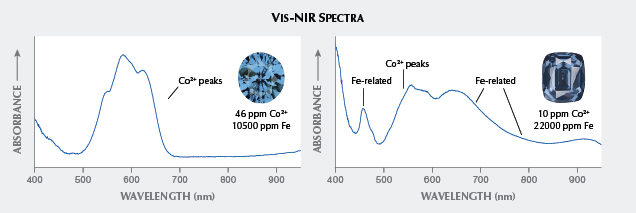
Instrument data contributes evidence that cannot be supplied by a sale-room photograph. Courtesy of GIA.
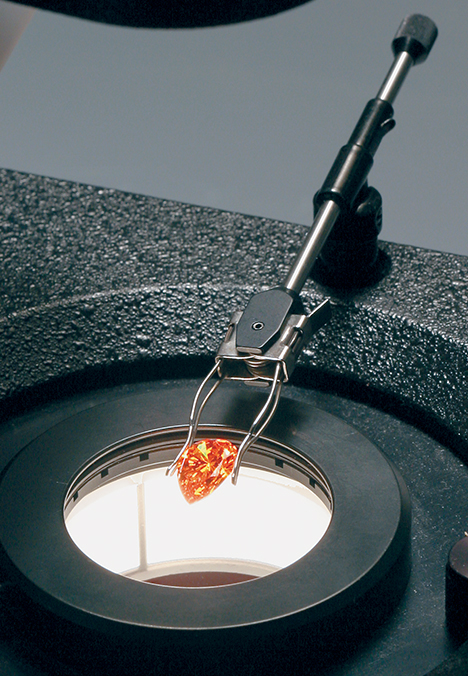
Controlled illumination gives the gemologist a different view of the stone. Courtesy of GIA.
An absorption spectrum and a stone under controlled illumination are not competing views. One records instrument response; the other helps reveal internal features and optical behaviour. The gemologist builds an opinion by bringing observations into agreement.
The collector can borrow that discipline without pretending to replace the laboratory. Keep the report attached to the stone. Confirm that identifying details correspond. Ask whether the report is current enough for the transaction and whether a mounting limits examination. If the conclusion matters, use a qualified independent specialist.
Before using a result as a comparable
- Match the materialSpecies, variety and colour description come before a broad label such as “blue stone.”
- Match the reportNote laboratory, number, date, report type, treatment findings and any origin opinion.
- Match the scaleCarat weight matters, but cut proportions and face-up appearance keep it from becoming a complete comparison.
- Match the jewelMaker, mounting, date, provenance and condition can move the conversation beyond the loose stone.
- Match the priceUse one basis throughout: hammer or premium-inclusive, with currency and sale date.
- Keep the outlier visibleAn exceptional result may be important precisely because it is not representative.
Why the spectacular lot can mislead
A headline lot concentrates attention. It may carry unusual size, colour, provenance, design or rarity of appearance; it may also attract two determined bidders. The published total records the outcome, not the private hierarchy of reasons behind each bid.
Dividing that total by carat weight can be informative when stones are genuinely comparable. It becomes theatrical when the calculation hides differences in colour grade, treatment, origin opinion, cut, report, mounting or sale terms. A clean number is not always a clean comparison.
Estimate ranges deserve the same care. They frame an auction house’s expectations for a particular sale; they are neither laboratory findings nor promises of the final bid.
The better reading is slower. Establish the stone, then the jewel, then the documentation, then the transaction. Only after those steps should the result be allowed to illuminate another object.
Let the stone keep its individuality
Auction records are valuable because they are public, dated and specific. Their limits are part of that value. They show where desire met evidence and competition for one lot; they do not promise where another stone will travel.
Look closely enough and the headline recedes. Colour, inclusions, cut, treatment, origin evidence, setting and provenance come back into view. That is where confidence becomes earned—and where the beauty of the stone becomes more, not less, compelling.
Sources & further reading
Methodology and sources. Sale figures and lot descriptions were rechecked on 12 September 2026 against Christie’s official 9 June 2026 Magnificent Jewels results release. Laboratory process and report scope were checked against GIA’s official identification process, its guide to coloured-stone analysis, the official report guide and its 2026 report update. A result is reported only as one dated transaction; it is not used as a price index, valuation or prediction. No resale-price target or investment-return claim is included.
The Edit
Insights & Investment stories
Selected stories from the same editorial universe.

The TheTimeo Provenance Standard: What Should Travel With an Object
A collectible object needs more than a pile of accessories. Identity, ownership, service, condition,

How to Audit a Luxury Watch Listing: Nine Details That Matter
Before judging price, audit the listing: identity, configuration, condition, service, documents, photography, seller claims,

Auction Estimates, Hammer Price and Buyer’s Premium Explained
The fall of the hammer is wonderfully clear; the number that appears afterwards can

How to Read a Jewellery Auction Lot: Five Separate Lines of Evidence
A laboratory report, maker’s mark, condition note, repair record and provenance answer different questions.

Watch Documents and Provenance: Build the File, Test the Claims
A watch can become more captivating when its past comes into focus. An archive
Watch Service History: Build a Record That Travels With the Object
The best service history reads like a biography of the watch. It shows how