
TheTimeo / TheTimeo Encyclopedia
VAN CLEEF & ARPELS:
movement hidden inside beauty
An evergreen guide to Van Cleef & Arpels: Place Vendôme, Mystery Set, transformable jewels, Alhambra, nature and collector checks.
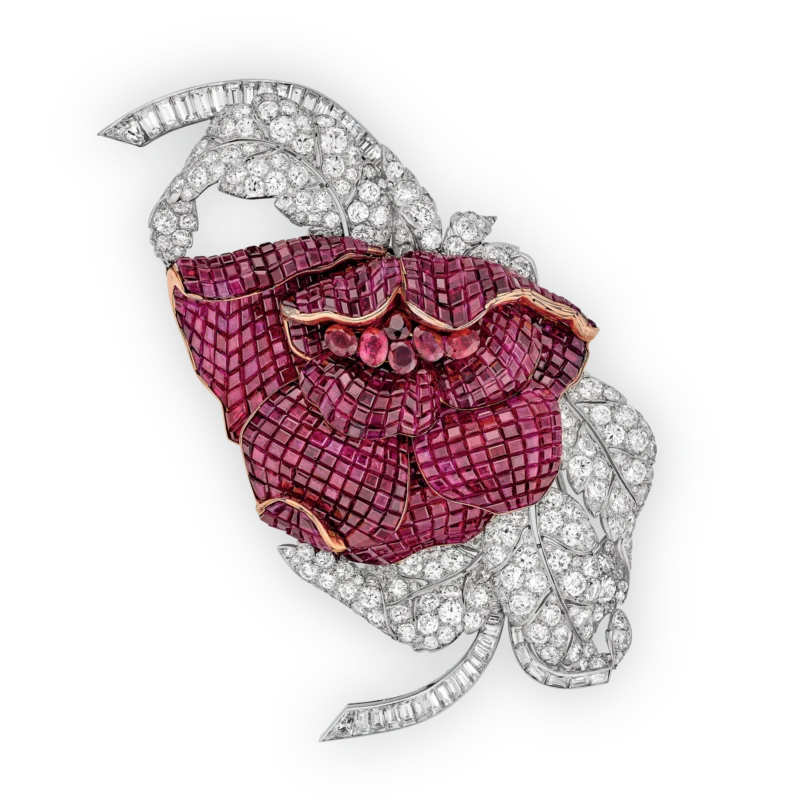
Van Cleef & Arpels Mystery Set Peony clip from 1937. Courtesy of Van Cleef & Arpels.
Explore the story
Van Cleef & Arpels is a Parisian jewellery and watch house established at Place Vendôme in 1906. Its most useful signatures are not a single stone or silhouette but ways of making an object move, change and suggest life: hidden rails beneath a field of gems, a necklace that becomes a bracelet, flowers with curved petals and lucky motifs built from repeated outlines.
This House Guide follows those ideas from Mystery Set and the Zip necklace to Alhambra, nature and watchmaking, with the checks needed to distinguish a design family from a particular jewel.
Definition and scope
The Maison works across high jewellery, jewellery, watches and extraordinary objects. Its official history ties its origin to the marriage of Estelle Arpels and Alfred Van Cleef and to the opening at Place Vendôme. Love, nature, couture, dance, luck and astronomy recur as subjects, but technique determines whether they become convincing objects.
Three principles provide a practical map. First, metal can be concealed so colour reads continuously. Second, articulation and transformability allow a jewel to change on the body. Third, repeated motifs—from clover outlines to petals and dancers—create recognition while leaving room for different materials and scales.
Foundation and development
- 1906: Van Cleef & Arpels came into being at Place Vendôme in Paris.
- 1930s: the house developed objects and jewels around modern life, including the Minaudière, and pursued invisible-setting research.
- 1933: a patent established the technique now associated with Mystery Set.
- 1937: the Peony clip translated the setting into curved ruby petals and diamond-set forms.
- 1938–1950: a jewellery zipper was patented in 1938; the transformable Zip necklace was realised in 1950, with documented examples from 1951.
- 1968: the first Alhambra long necklace used twenty clover-shaped motifs in creased yellow gold with beaded borders.
The chronology belongs to documented designs. A later production date, signature style or collection name must be established from the specific piece and its records.
Aesthetic and design identity
Nature in volume
Flowers, leaves, birds, butterflies and animals are frequently built to imply motion rather than static symmetry. Petals overlap, wings open, bodies articulate and clips sit at an angle on clothing. The outline and the reverse construction deserve as much attention as the colour seen from the front.
Couture and transformability
The Zip makes a garment fastening both subject and mechanism. Its slider operates while the jewel changes from necklace to bracelet. Other transformable pieces may detach, reverse or recombine. The transformation should be documented and tested carefully; the word cannot be inferred merely because a component looks removable.
Luck and repetition
Alhambra’s four-lobed form is derived from the four-leaf clover. Beaded borders, connecting chains and repeated motifs create rhythm. Material changes—from textured gold to hard stones or mother-of-pearl—alter colour, opacity, pattern and care requirements while the outline preserves family resemblance.
Technical contributions and making
- Mystery Set
In traditional Mystery Set, specially prepared stones carry grooves beneath the visible surface. Those grooves engage with rails in the metal support, allowing neighbouring gems to conceal most of the setting from the front. The metal has not vanished; it has been engineered below the field of colour.
The method joins lapidary and jewellery work. Each stone must suit its position and neighbours, particularly on a curved form. Variants such as Navette or Vitrail Mystery Set pursue different cuts, volumes or transparency and should not be assumed to share every detail of the classic square-stone construction.
- Articulation and reversible mechanisms
Flexible necklaces, clips and transformable jewels distribute stress through hinges, links, catches and concealed structures. Their beauty depends on reliable movement. A mechanism can be historically important and still require careful condition assessment; rarity of technique does not prove present function.
- Stones as design material
A continuous surface makes variations in hue, saturation, translucency and cut especially visible. Ornamental materials in Alhambra bring their own pattern and fragility. Descriptions should name what is documented, avoid assigning origin without evidence and distinguish natural surface character from damage or repair.
Fundamental collections and objects
Mystery Set flowers and clips
The 1937 Peony is a reference object for curved invisible setting. Later flowers and animals show how the technique moved beyond a flat grid. Identify the exact variation, stone cuts and mount.
Zip
A transformable necklace conceived from the zipper, patented in jewellery form in 1938 and realised in 1950. Surviving examples differ in stones, tassels and detail; safe operation matters as much as the visual idea.
Alhambra
Introduced as a twenty-motif long necklace in 1968 and developed in different scales, lengths and materials. Vintage, Magic, Sweet and other designations denote distinct proportions and arrangements, not simply colours.
Cadenas, Perlée and watchmaking
Cadenas angles the dial towards the wearer and joins watch and bracelet; Perlée develops beaded gold as a repeated structure. Poetic Complications and Extraordinary Dials connect watch mechanisms with narrative display and decorative craft. Calibre, function and decorative technique must be checked by reference.
What matters to a collector
- Read front, edge and reverse
Photograph and inspect the jewel from several angles. The front reveals design and colour; the edge shows stone height and joins; the reverse explains rails, hinges, catches and repairs. A seamless face can conceal an altered support.
- Verify the complete construction
Record signature, serial or inventory numbers where present, hallmarks, dimensions, weight when documented, materials, stone counts, transformation and component configuration. On Alhambra, check motif size, bead edges, links, clasp and matching of materials. On clips, test the fitting only with appropriate handling.
- Treat repair as specialist work
A replacement Mystery Set stone must fit its hidden rail and neighbouring surface; colour alone is insufficient. Articulated and transformable pieces need someone demonstrably experienced with the construction. Obtain a written assessment, proposed intervention and returned-component policy, then retain photographs and final records.
Terminology and related references
- Mystery Set: a patented invisible-setting technique in which grooved stones engage with concealed rails.
- Lapidary: the specialist who cuts and prepares gemstones and ornamental materials.
- Transformable: designed to change configuration or manner of wear.
- Clip: a jewel secured by a sprung fitting, often designed for clothing.
- Minaudière: a compact precious case developed for carrying small personal objects.
- Related reading: invisible setting, pavé, articulation, hallmarks, ornamental stones, jewellery watches and conservation.
Sources & further reading
This evergreen guide was rechecked on 9 September 2026 against Van Cleef & Arpels’ official Maison history, 1930s timeline, Collection study of Mystery Set, Peony record, Zip Heritage Gallery and Alhambra history. Promotional descriptions have been reduced to dated objects, documented mechanisms and observable design codes. The sources do not authenticate or grade an individual jewel.
- Van Cleef & Arpels — The Maison
- Van Cleef & Arpels — 1930s timeline
- Van Cleef & Arpels Collection — The Mystery Set
- Van Cleef & Arpels Collection — Peony clip
- Van Cleef & Arpels — Zip Heritage Gallery
- Van Cleef & Arpels — History of Alhambra
Media: official Van Cleef & Arpels photography of the 1937 Mystery Set Peony clip, retained as WordPress media 6686 and reverified against the governed source article and file hash.
The Edit
TheTimeo Encyclopedia stories
Selected stories from the same editorial universe.
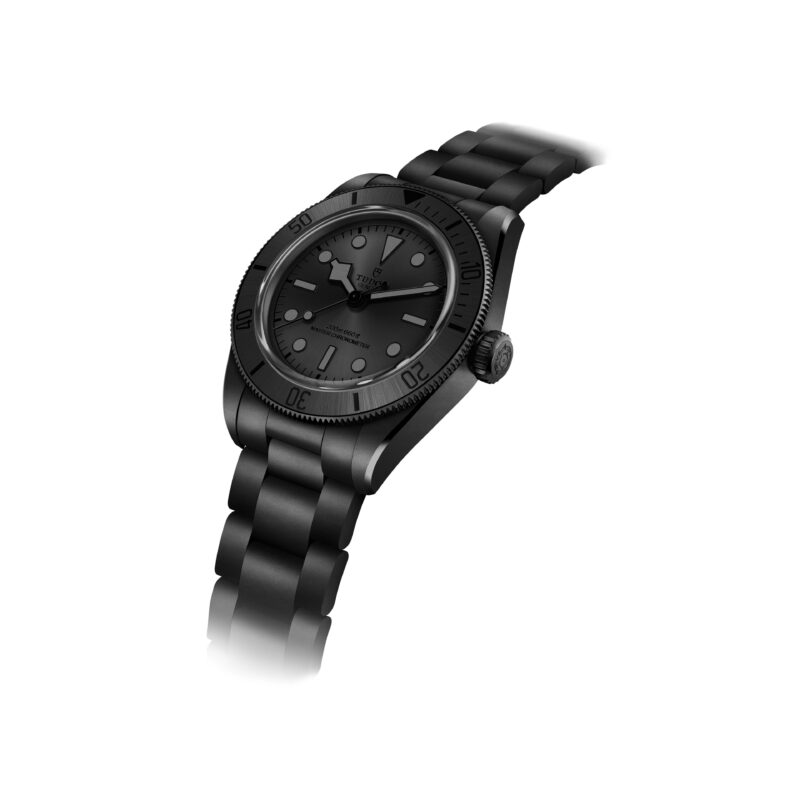
Tudor: tool-watch clarity and modern manufacture
An evergreen guide to Tudor: its 1926 origins, Oyster Prince and diving-watch history, Black

TAG Heuer: chronographs, instruments and design systems
An evergreen guide to TAG Heuer: its 1860 origins, timing instruments, Carrera and Monaco
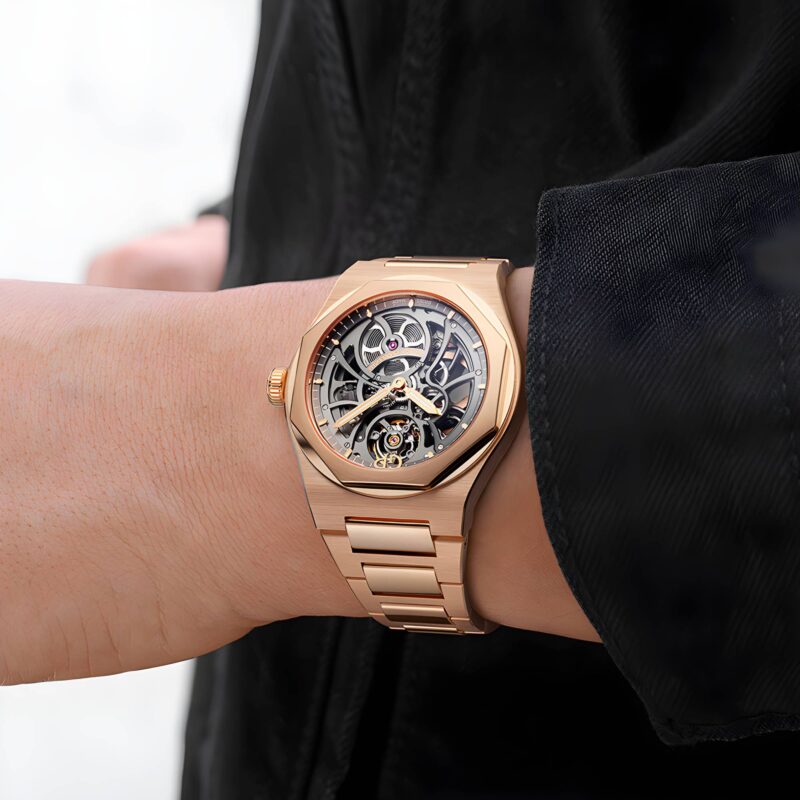
Girard-Perregaux: architecture, Three Bridges and the Laureato
An evergreen guide to Girard-Perregaux: the Bautte and Girard-Perregaux lineages, Three Bridges, movement manufacture,

Hublot: material fusion, Big Bang and Unico
An evergreen guide to Hublot: the 1980 gold-and-rubber premise, Big Bang architecture, Unico chronographs,