
TheTimeo / TheTimeo Encyclopedia
HUBLOT:
contrast engineered into a case
An evergreen guide to Hublot: the 1980 gold-and-rubber premise, Big Bang architecture, Unico chronographs, material work and collector evidence.
Explore the story
Hublot is a Swiss watch manufacture founded in 1980 around a deliberate contrast: a precious-metal case paired with a rubber strap. The Big Bang, launched in 2005, expanded that premise into a layered case assembled from visibly different components. Unico, introduced in 2010, gave the house a manufacture chronograph architecture designed to be read from the dial side.
This guide treats “fusion” as a documented design and materials method, not a judgement of quality. A collector still needs the full reference, calibre, material specification, serial information and service history.
Definition and scope
Hublot produces mechanical and connected watches in Nyon across Big Bang, Classic Fusion, Spirit of Big Bang, Square Bang and manufacture-piece families. Its most consistent language is contrast: polished against satin surfaces, precious metals against rubber or ceramic, and traditional mechanisms inside contemporary case structures.
Materials such as ceramic, carbon composites and sapphire require exact names. Colour, coating, alloy and composite construction vary by reference; a broad collection label is not enough.
Foundation and historical development
- 1980: Hublot introduced a watch combining a gold case with a natural-rubber strap.
- 2004: Jean-Claude Biver joined the company and led the development that preceded Big Bang.
- 2005: Big Bang established the layered, multi-material case as the house’s dominant design.
- 2008: Hublot opened its manufacture in Nyon.
- 2010: the first Unico manufacture chronograph calibre entered the collection.
- 2011: the MP-05 LaFerrari programme demonstrated an extended-power-reserve, vertically organised movement approach.
- 2016 onward: transparent and coloured sapphire cases became a recurring materials programme.
- 2025–2026: the twentieth anniversary and Big Bang Original Unico connected the 2005 exterior with current Unico mechanics.
The dates describe the house and collections. Case-back references and documents must date an individual watch.
Aesthetic and design identity
Porthole origin
The name and early case used a bezel secured by visible screws, recalling a porthole. That circular vocabulary continues in Classic Fusion and Big Bang, though bezel geometry, screw count and orientation must be checked by reference.
Layered construction
Big Bang separates bezel, case middle, composite inserts, pushers and strap attachments into distinct visual layers. Alternating finishes make the assembly readable and allow material contrast to become part of the form.
Visible mechanics
Open dials place the chronograph controls, date and gear train close to the surface. Legibility varies with colour and transparency, so condition assessment should include hands, applied markers, crystal and dial-side components.
Technical and manufacturing ideas
- Unico chronograph
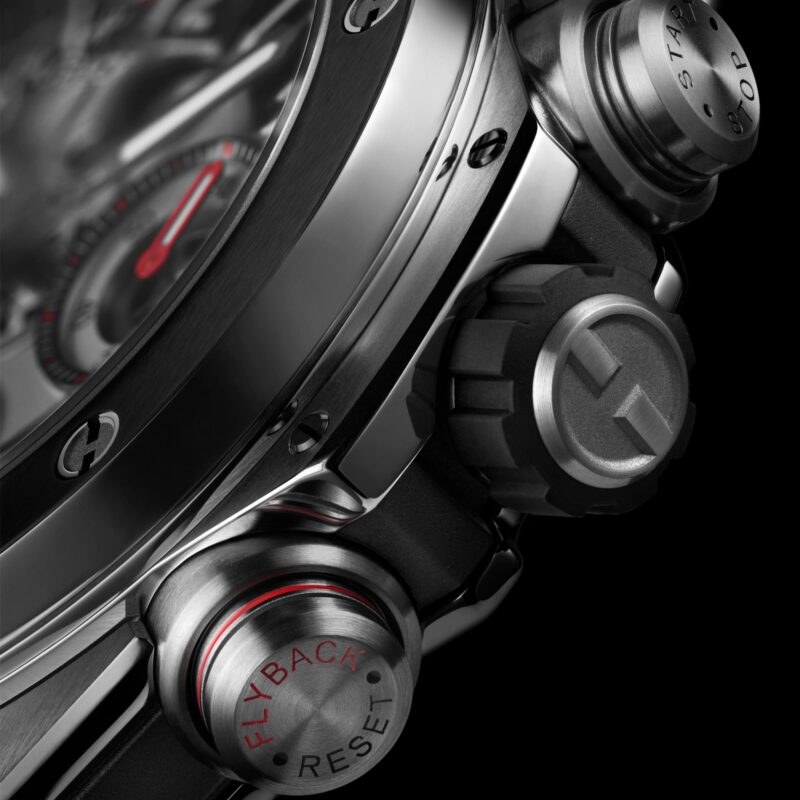
Unico is Hublot’s manufacture automatic chronograph family. The architecture uses a flyback function and places the column wheel where it can be seen from the dial side. Calibre numbers and power reserves differ between generations.
- Material vocabulary
Hublot uses titanium, ceramic, carbon-based composites, sapphire and named gold alloys. These materials differ in scratch response, impact behaviour, repair options and finishing. Confirm the exact specification before proposing refinishing.
- Big Bang Original Unico
The 2026 Original Unico family revisits the proportions and component layering of the original Big Bang while using current Unico mechanics. The titanium reference is listed at 43 mm; related ceramic and gold configurations should be documented separately.
Fundamental collections and models
Big Bang
The core family spans time-only, chronograph, tourbillon and connected forms in multiple sizes and materials. Big Bang is a design platform, not one specification.
Classic Fusion
Classic Fusion pares back the case layering into a thinner, more restrained expression of the porthole bezel and rubber-strap premise. Movement and complication vary by reference.
Spirit of Big Bang
This family translates Big Bang codes into a tonneau case. Curved sapphire, strap integration and modular case parts require careful inspection for impact and sealing condition.
MP and sapphire watches
Manufacture Pieces prioritise unusual movement architecture, while sapphire-cased references make transparency and colour part of the structure. Specialist handling and documented service are particularly important.
What matters to a collector
- Identify every material
Record case middle, bezel, inserts, screws, pushers, clasp and strap separately. Descriptions such as ceramic or carbon may omit coatings, composite layers or metal components.
- Inspect edges and interfaces
Check bezel edges, screw seats, sapphire surfaces, strap attachments and the joins between case layers. Damage can be material-specific and may not suit conventional polishing.
- Verify calibre and service trail
Photograph the dial and case back, record the calibre and serial data, and retain service invoices and pressure-test results. On openworked chronographs, cosmetic appearance is not a substitute for functional testing.
Terminology and related references
- Art of Fusion: Hublot’s name for combining contrasting materials, techniques and design references.
- Unico: a manufacture automatic flyback-chronograph calibre family introduced in 2010.
- Column wheel: a control component coordinating chronograph operations.
- Flyback: a chronograph that can reset and restart with one action while running.
- Related reading: ceramics, sapphire cases, composite materials, chronographs and water resistance.
Sources & further reading
This evergreen guide was rechecked on 11 September 2026 against Hublot’s official accounts of the 1980 material premise, the 2005 Big Bang, the Unico manufacture calibre and the current Big Bang Original Unico. Material and technical statements are limited to named families or references.
- Hublot — Big Bang Original Unico: twenty years in the making
- Hublot — The singularity of an icon
- Hublot — News and manufacture archive
- Hublot — Big Bang Original Unico Titanium 43 mm
Media: official Big Bang photography retained as WordPress media 6381 and reverified against its governed manufacturer provenance and stored file.
The Edit
TheTimeo Encyclopedia stories
Selected stories from the same editorial universe.
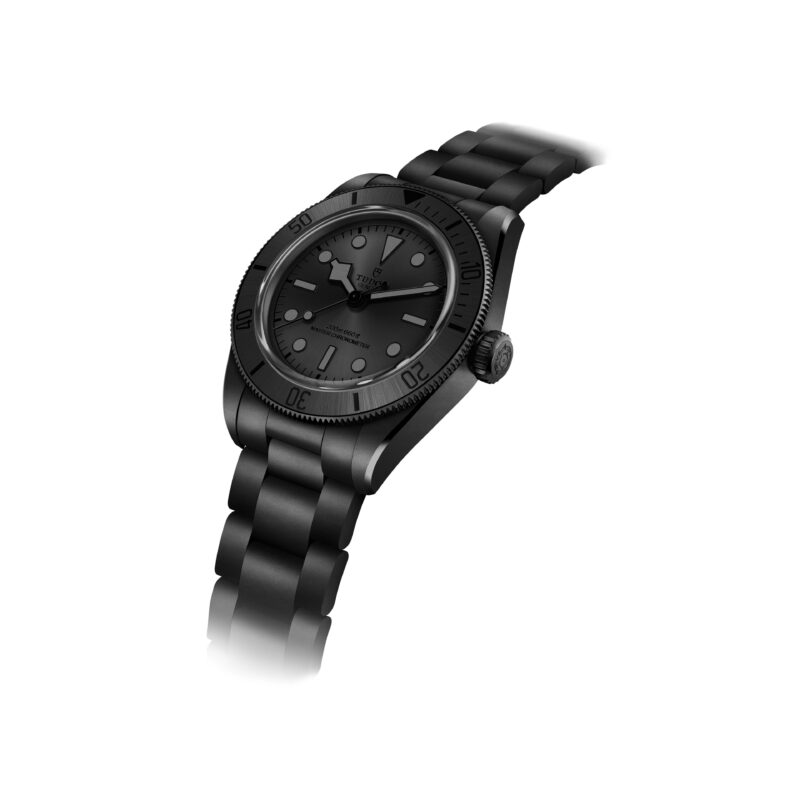
Tudor: tool-watch clarity and modern manufacture
An evergreen guide to Tudor: its 1926 origins, Oyster Prince and diving-watch history, Black
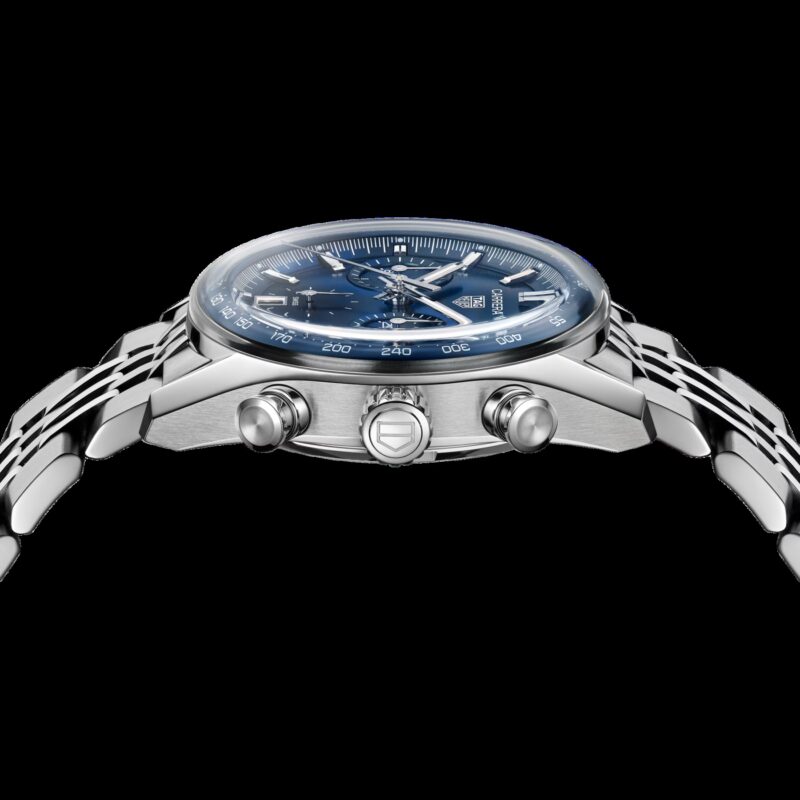
TAG Heuer: chronographs, instruments and design systems
An evergreen guide to TAG Heuer: its 1860 origins, timing instruments, Carrera and Monaco
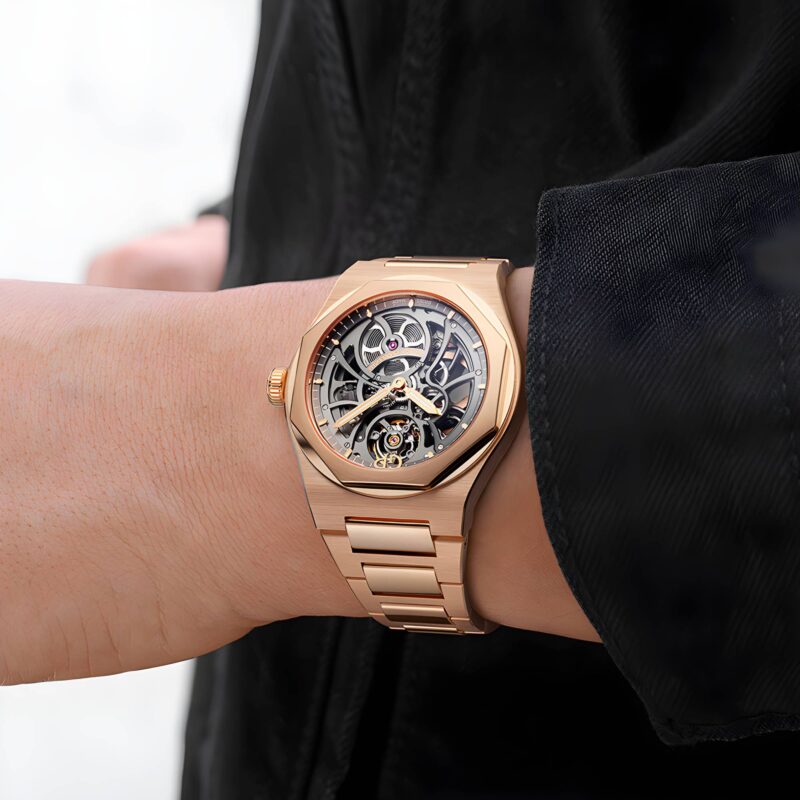
Girard-Perregaux: architecture, Three Bridges and the Laureato
An evergreen guide to Girard-Perregaux: the Bautte and Girard-Perregaux lineages, Three Bridges, movement manufacture,
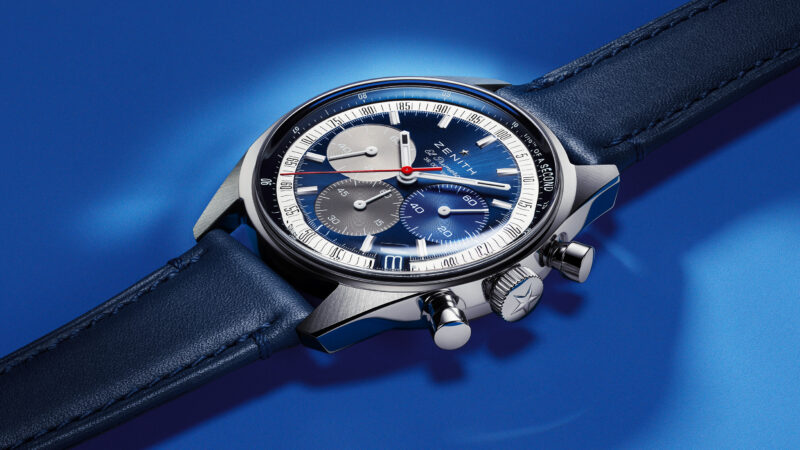
Zenith: El Primero and high-frequency chronography
An evergreen guide to Zenith: the Le Locle manufacture, El Primero, high-frequency chronography, defining