
TheTimeo / TheTimeo Encyclopedia
TUDOR:
purpose made visible
An evergreen guide to Tudor: its 1926 origins, Oyster Prince and diving-watch history, Black Bay and Pelagos design, manufacture calibres and collector evidence.
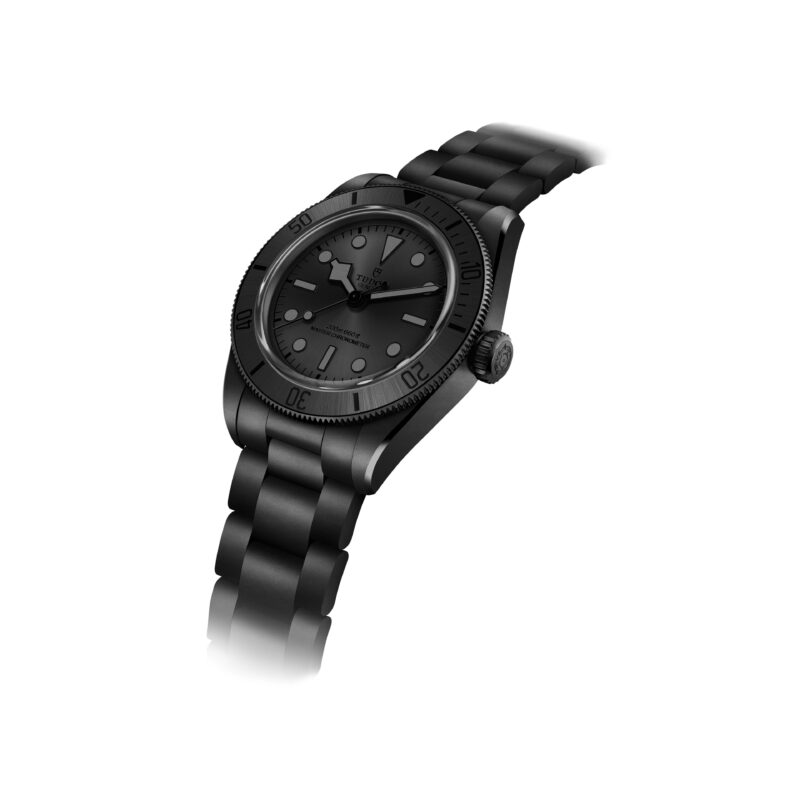
Tudor Black Bay Ceramic. Courtesy of Tudor.
Explore the story
Tudor is a Swiss watch brand whose public identity combines robust Oyster-derived construction, highly legible tool-watch design and, since 2015, a growing family of manufacture calibres. Its modern Black Bay and Pelagos collections draw on documented diving watches without reproducing one historical reference wholesale.
Definition and scope
What the name covers
Hans Wilsdorf registered “The Tudor” in 1926 and established Montres TUDOR S.A. in 1946. The brand was conceived to pair dependable construction with a more accessible position than Rolex. That corporate relationship is historical context, not evidence that parts, specifications or values are interchangeable.
How to use this guide
Collection names describe families. Identification requires the full reference, calibre, serial data, case and dial configuration, plus service documentation.
Foundation and historical development
- 1926: the Tudor trademark was registered.
- 1946: Montres TUDOR S.A. was founded.
- 1952: Oyster Prince joined waterproof Oyster construction to automatic winding.
- 1954: reference 7922 began the Tudor Oyster Prince Submariner line.
- 1969: new Submariner references introduced the angular hands later called “snowflake”.
- 2012: Black Bay consolidated several historic diving-watch cues.
- 2015: Tudor introduced its first manufacture calibre.
- 2021: Black Bay Ceramic became Tudor’s first METAS-certified Master Chronometer.
The chronology dates house developments, not an individual watch.
Aesthetic and design identity
Legibility before ornament
Large hands, luminous plots and strong dial contrast make elapsed or remaining time easy to read. Gilt-effect printing, domed crystals and rivet-style bracelets add historical texture in selected Black Bay references.
A vocabulary assembled from archives
The large crown recalls reference 7924; angular hands derive from Tudor diving watches from 1969. Their combination is contemporary and should not be described as a replica.
Pelagos as a distinct system
Titanium cases, protective crown structures and purpose-led bracelets give Pelagos a more technical identity. Specifications still vary by reference.
Technical and manufacturing ideas
- Manufacture calibres
Modern MT-family movements use reference-specific architectures, power reserves and certification. “Manufacture” does not replace the need to record the exact calibre engraved or documented for the watch.
- COSC and METAS
COSC certifies a movement as a chronometer; METAS Master Chronometer testing covers the finished watch and includes magnetic resistance, precision, power reserve and water resistance. Only named references carrying the certification should inherit the claim.
- Black Bay Ceramic
Reference M79210CNU-0001 has a 41 mm ceramic case, 200-metre water resistance and calibre MT5602-1U. Tudor specifies 4 Hz and about 70 hours of reserve. These figures are not universal Black Bay specifications.
Fundamental collections and models
Black Bay
A broad platform spanning diving watches, GMTs and chronographs in multiple sizes and metals. Bezel, crown, bracelet and calibre must be recorded separately.
Pelagos
A professional-diving family with titanium prominent in several references. Pelagos 39, Pelagos FXD and larger models differ materially.
Ranger and 1926
Ranger expresses field-watch simplicity; 1926 uses a dressier patterned-dial vocabulary. Neither should be identified from dial style alone.
What matters to a collector
- Read the reference first
Nicknames such as “smiley”, “snowflake” or “Harrods” can conceal generation and market differences. Match the complete reference to official documentation.
- Separate service parts from alteration
Replacement crowns, hands, bezels and bracelets may be legitimate service components. Their status should be disclosed rather than guessed from ageing.
- Test the tool-watch claims
Water resistance is not permanent. Request recent pressure-test and movement-service records before use in water.
Terminology and related references
- Oyster Prince: Tudor’s historic pairing of waterproof case construction and automatic winding.
- Snowflake: collector shorthand for angular hands used from 1969.
- Master Chronometer: a METAS certification applying to the tested finished watch.
- Related reading: dive bezels, luminous materials, chronometer testing and service parts.
Sources & further reading
Rechecked on 12 September 2026 against Tudor’s official origin, history, watchmaking and ateliers pages, plus the official Black Bay Ceramic press kit. Historical design cues are separated from current reference specifications; no investment, scarcity or return claim is included.
- Tudor — Origins, 1926–1949
- Tudor — History
- Tudor — Watchmaking
- Tudor — Ateliers and Black Bay
- Tudor — Black Bay Ceramic press kit
Media: official Tudor photography retained as WordPress media 6594; stored-file hash and governed manufacturer provenance were reverified.
The Edit
TheTimeo Encyclopedia stories
Selected stories from the same editorial universe.

TAG Heuer: chronographs, instruments and design systems
An evergreen guide to TAG Heuer: its 1860 origins, timing instruments, Carrera and Monaco
Girard-Perregaux: architecture, Three Bridges and the Laureato
An evergreen guide to Girard-Perregaux: the Bautte and Girard-Perregaux lineages, Three Bridges, movement manufacture,
Hublot: material fusion, Big Bang and Unico
An evergreen guide to Hublot: the 1980 gold-and-rubber premise, Big Bang architecture, Unico chronographs,
Zenith: El Primero and high-frequency chronography
An evergreen guide to Zenith: the Le Locle manufacture, El Primero, high-frequency chronography, defining