
TheTimeo / TheTimeo Encyclopedia
TAG HEUER:
the chronograph as an instrument
An evergreen guide to TAG Heuer: its 1860 origins, timing instruments, Carrera and Monaco design, chronograph mechanics and collector evidence.
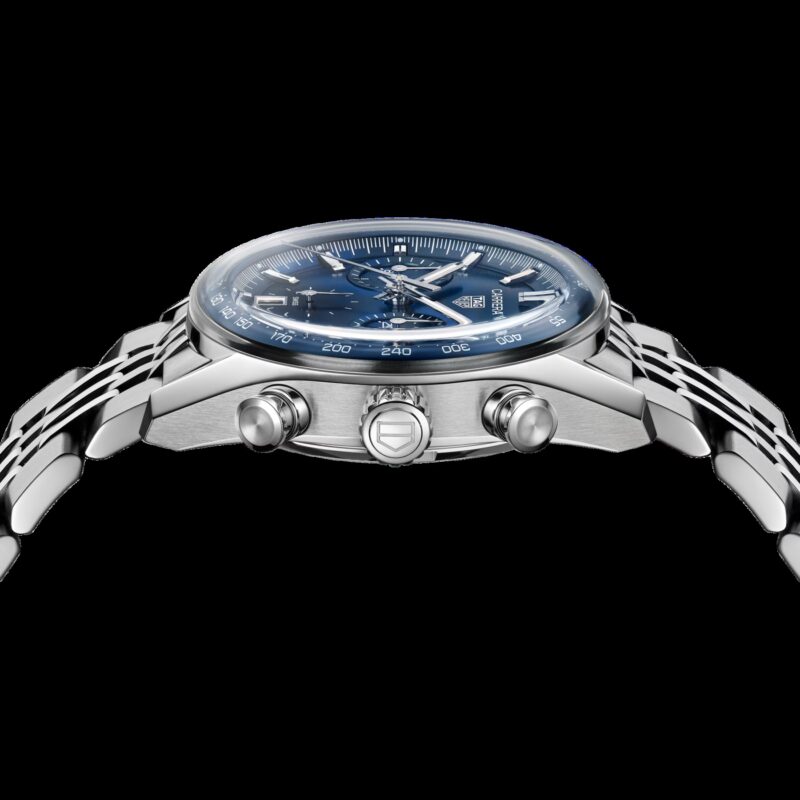
TAG Heuer Carrera Chronograph CBS2212.BA0048. Courtesy of TAG Heuer.
Explore the story
TAG Heuer is a Swiss watchmaker founded as Heuer by Edouard Heuer in Saint-Imier in 1860. Its identity was built through chronographs, stopwatches, dashboard instruments and sports timing. Carrera and Monaco convert that instrument history into two very different design systems: one circular and legibility-led, the other square and deliberately unconventional.
This guide uses the current name for the house and Heuer where the historical record requires it. A model name or racing association cannot establish originality; the full reference, calibre, case, dial and documentary trail remain essential.
Definition and scope
TAG Heuer makes mechanical, quartz and connected watches across Carrera, Monaco, Aquaracer, Formula 1, Link and Connected families. Chronograph design is the central thread, but the catalogue also includes dive watches, three-hand watches and digital products.
The house’s instrument language depends on clear scales, decisive hands and controls that can be operated quickly. These are functional principles rather than proof that every watch was made for professional competition.
Foundation and historical development
- 1860: Edouard Heuer established his workshop in Saint-Imier.
- 1887: Heuer patented an oscillating-pinion system for engaging a chronograph.
- 1916: the Mikrograph brought timing to one-hundredth of a second in a mechanical stopwatch.
- 1933: Autavia dashboard instruments combined timing functions for automobiles and aviation.
- 1963: Jack Heuer introduced the Carrera wrist chronograph.
- 1969: Heuer participated in the Calibre 11 automatic-chronograph project and launched automatic Carrera, Autavia and Monaco models.
- 1985–1986: the company joined Techniques d’Avant-Garde and adopted the TAG Heuer name.
- 1999: LVMH acquired TAG Heuer.
The timeline establishes house milestones; serial, reference and construction evidence must establish an individual watch.
Aesthetic and design identity
Carrera clarity
The original Carrera used the tension ring at the edge of the crystal to carry the scale, leaving the dial comparatively open. Modern glassbox references reinterpret that depth with a curved flange and crystal while changing the movement and construction.
Monaco geometry
Monaco introduced a water-resistant square case and a bold dial arrangement in 1969. Crown and pusher positions vary across calibre generations, so the square outline alone does not identify the movement.
Functional colour
Red accents, contrasting subdials and scale typography help separate elapsed-time information from normal time. Their placement can also be reference-specific evidence when compared with official records.
Technical and manufacturing ideas
- Oscillating pinion
The oscillating pinion is a compact mechanism that couples the going train to the chronograph. Heuer’s 1887 patent made it an important part of the house story; later calibres use different architectures and should be named precisely.
- Calibre 11
Calibre 11 was developed through a consortium and belongs among the earliest automatic chronographs offered internationally in 1969. Its left-side crown and modular construction differ from present manufacture movements.
- TH20-00
Carrera reference CBS2212.BA0048 uses the automatic TH20-00 with bidirectional winding. TAG Heuer lists a 39 mm steel case and 80-hour power reserve. These figures should not be extended to every modern Carrera.
Fundamental collections and models
Carrera
Introduced in 1963 and named for the Carrera Panamericana, the family ranges from restrained chronographs to openworked and complicated references. Dial scale, case profile and calibre vary widely.
Monaco
The 1969 square chronograph is available in several movement, crown and dial configurations. Record the exact reference and do not assume that every blue Monaco reproduces the original layout.
Autavia
The name began on dashboard instruments and later identified wrist chronographs. Contemporary uses of Autavia must be separated from both the dashboard units and vintage wristwatch generations.
Aquaracer and Formula 1
Aquaracer centres on water-oriented cases and bezels; Formula 1 spans accessible quartz and mechanical references. Water resistance, movement and bezel function belong to the specific watch.
What matters to a collector
- Read the reference before the nickname
Names such as glassbox, reverse panda and Gulf are useful shorthand but can group materially different watches. Record the engraved reference and match it to the official configuration.
- Check chronograph operation
Start, stop and reset should be assessed by a qualified watchmaker where condition is uncertain. Counter return, hand alignment and pusher feel are evidence, not a substitute for inspecting the movement.
- Preserve dial and case evidence
Refinishing can alter brushing, edges, printing and luminous plots. Keep macro photographs, service invoices, timing results and records of replacement hands, dials, bezels or pushers.
Terminology and related references
- Chronograph: a mechanism that measures elapsed intervals while the watch continues to display time.
- Oscillating pinion: a coupling component used to engage a chronograph.
- Glassbox: current shorthand for a curved crystal and flange construction that recalls vintage acrylic profiles.
- Calibre 11: the consortium-developed automatic chronograph used by Heuer from 1969.
- Related reading: chronographs, tachymeter scales, dashboard timers, water resistance and service documentation.
Sources & further reading
This evergreen guide was rechecked on 11 September 2026 against TAG Heuer’s official history, Carrera archive material, Monaco and Calibre 11 account, and the Carrera CBS2212.BA0048 reference page. Consortium work is not presented as a single-company invention, and collection history is kept separate from current specifications.
- TAG Heuer — History
- TAG Heuer — Vintage Heuer Carrera
- TAG Heuer — Calibre 11 and Monaco Chronomatic
- TAG Heuer — Carrera CBS2212.BA0048
Media: official Carrera photography retained as WordPress media 6600 and reverified against the governed manufacturer product source and stored file hash.
The Edit
TheTimeo Encyclopedia stories
Selected stories from the same editorial universe.
Tudor: tool-watch clarity and modern manufacture
An evergreen guide to Tudor: its 1926 origins, Oyster Prince and diving-watch history, Black
Girard-Perregaux: architecture, Three Bridges and the Laureato
An evergreen guide to Girard-Perregaux: the Bautte and Girard-Perregaux lineages, Three Bridges, movement manufacture,
Hublot: material fusion, Big Bang and Unico
An evergreen guide to Hublot: the 1980 gold-and-rubber premise, Big Bang architecture, Unico chronographs,
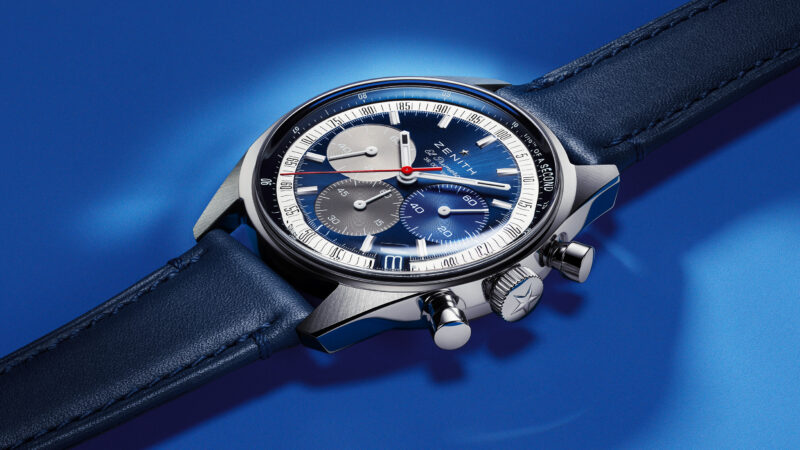
Zenith: El Primero and high-frequency chronography
An evergreen guide to Zenith: the Le Locle manufacture, El Primero, high-frequency chronography, defining