
TheTimeo / TheTimeo Encyclopedia
PATEK PHILIPPE:
reference discipline and continuity
An evergreen guide to Patek Philippe: its Geneva origins, design families, complications, reference discipline, archives and long-term service.
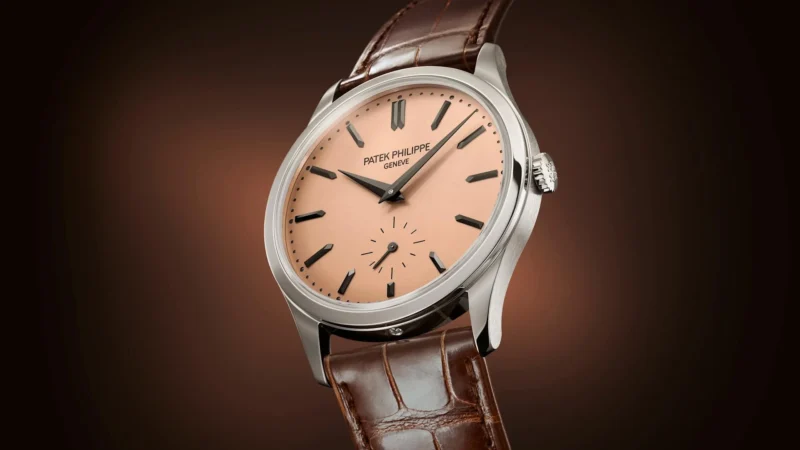
Patek Philippe Calatrava reference 6196P-001. Courtesy of Patek Philippe.
Explore the story
Patek Philippe is a Geneva watch manufacture founded in 1839. Its catalogue spans restrained time-only watches, shaped designs, sports watches, pocket watches, rare handcrafts and some of mechanical watchmaking’s most involved complications. Across that breadth, the reliable way to read the house is through exact references, calibres and documents—not through a famous family name alone.
This House Guide sets out the historical and design framework. It also explains where an official archive extract, service record and physical examination each belong when studying an individual watch.
Definition and scope
Patek Philippe combines recognisable design families with movement families that may cross several collections. Calatrava, Gondolo, Golden Ellipse, Nautilus, Aquanaut, Cubitus and Twenty~4 describe different visual and wearing propositions. Complications and Grand Complications organise watches by function. A collector therefore needs two maps at once: what the watch looks like and what its calibre does.
The distinction prevents easy mistakes. Two Calatrava references may share a movement while differing in case metal, bezel, dial and proportion. Conversely, watches with related case architecture can contain different generations of movement. The complete reference is the beginning of research, not a shorthand to be expanded from memory.
Foundation and historical development
- 1839: Antoine Norbert de Patek and Franciszek Czapek established Patek, Czapek & Co. in Geneva.
- 1844–1851: Patek encountered Jean Adrien Philippe and his keyless winding system in Paris. Philippe joined the Geneva business; the company name evolved before becoming Patek, Philippe & Cie in 1851.
- 1932: the Calatrava wristwatch collection was introduced. Its round, economical geometry remains an important baseline for reading the house.
- 1968: Golden Ellipse established a slim shaped-watch identity between circle and rectangle.
- 1976: Nautilus introduced a rounded octagonal bezel, lateral case construction and an integrated-bracelet sports-watch language.
These dates locate designs in the house chronology. They do not date a particular example. Case and movement numbers, original records and the features of the watch itself are needed for that.
Aesthetic and design identity
Patek Philippe does not rely on one universal case or dial. The continuity lies in proportion and legibility: a Calatrava can reduce the composition to bezel, indexes, hands and subsidiary seconds; a Golden Ellipse makes the outline itself the principal gesture; a Nautilus organises attention around bezel, ears, horizontal dial texture and bracelet.
Small changes carry weight. A hobnail bezel alters how a round watch catches light. Applied indexes and printed tracks create different depths. Leaf, baton or syringe-like hands belong to different references and periods. On a complicated watch, information may be dense, but the hierarchy among date, calendar, chronograph or astronomical indications is still part of the design.
Rare Handcrafts form another strand. Enamel, engraving, marquetry and gem setting should be identified by the technique and object, rather than gathered under a vague idea of decoration. The relevant catalogue or archive record controls the description.
Technical contribution and manufacture
- Keyless winding and setting
Jean Adrien Philippe’s early keyless mechanism allowed a watch to be wound and set without a separate key. It belongs to the company’s foundation story and to the wider development of modern watch operation. It should not be presented as though one nineteenth-century mechanism were identical to every later crown-wound calibre.
- Movement families
Movement numbers are essential. A calibre such as the slim automatic 240 creates relationships across watches that may look quite different; a hand-wound calibre can support several case and dial treatments. Complication modules, diameters and generations also vary. Confirm the calibre from the watch and the correct technical record before transferring specifications.
- Complications and finishing
The catalogue includes calendars, chronographs, world time, travel time, minute repeaters and astronomical displays, sometimes in combination. “Grand complication” is a collection designation, not a complete technical description. The sequence of adjustment, water resistance, power reserve and service requirements remain reference-specific.
Collections and fundamental models
Calatrava
The central round dress-watch family, useful for studying changing bezel treatments, small-seconds layouts, movements and proportions without losing a clear formal baseline.
Golden Ellipse and Gondolo
Golden Ellipse explores an elliptical outline and slim profile; Gondolo gathers shaped cases linked to Art Deco geometry. Neither should be reduced to “non-round Patek”: the exact case construction is the identity.
Nautilus and Aquanaut
Nautilus is defined by its bezel and integrated case-and-bracelet composition; Aquanaut uses a distinct rounded-octagonal form and textured dial-and-strap relationship. Materials, clasp, bracelet or strap and movement differ by reference.
Complications, Grand Complications and other families
These headings contain very different mechanisms. Twenty~4, Cubitus, pocket watches and Rare Handcrafts add further design and use cases. Always move from collection to reference, then calibre.
What matters to a collector
- Build an identification chain
Record the complete reference, case and movement numbers, calibre, case metal, dial description, bracelet or strap and approximate production period. Keep full numbers private in public material. Compare the object with the correct period documentation, not only with a current product page.
- Give each document one job
An original Certificate of Origin belongs to the first delivery. An Extract from the Archives transcribes information present in the manufacture’s historical records; it is not a replacement certificate and does not narrate every later event. Service papers document a particular intervention. Together they can clarify a watch, but none removes the need to inspect it.
- Read condition before polish
Examine case geometry, dial printing, hands, crown, pushers, bracelet, movement and signs of replacement or refinishing. A familiar reference does not prove originality. For complications, obtain operating and timing evidence from someone qualified to assess the calibre, and retain dated service estimates and reports.
Terminology and related references
- Reference: the model or configuration identifier, shared by multiple watches.
- Case and movement numbers: identifiers used to distinguish an individual object and its movement.
- Extract from the Archives: a later document reporting eligible information held in the manufacture’s records.
- Micro-rotor: a compact automatic winding mass integrated into the movement plane.
- Related reading: perpetual calendar, minute repeater, chronograph, world time, enamel, provenance and service history.
Sources & further reading
This evergreen guide was rechecked on 9 September 2026 against Patek Philippe’s official account of its founders, current collection map, Calatrava and Nautilus histories, archive-extract terms and service process. House superlatives have not been adopted as editorial findings. The sources establish chronology, terminology and documented services; they do not authenticate or grade an individual watch.
- Patek Philippe — The Founders
- Patek Philippe — Collections
- Patek Philippe — The Calatrava Cross
- Patek Philippe — Nautilus
- Patek Philippe — Golden Ellipse
- Patek Philippe — Extract from the Archives
- Patek Philippe — Steps of servicing
Media: official Patek Philippe Calatrava 6196P-001 photography, retained as WordPress media 6661 and reverified against the governed source article and file hash.
The Edit
TheTimeo Encyclopedia stories
Selected stories from the same editorial universe.
Tudor: tool-watch clarity and modern manufacture
An evergreen guide to Tudor: its 1926 origins, Oyster Prince and diving-watch history, Black
TAG Heuer: chronographs, instruments and design systems
An evergreen guide to TAG Heuer: its 1860 origins, timing instruments, Carrera and Monaco
Girard-Perregaux: architecture, Three Bridges and the Laureato
An evergreen guide to Girard-Perregaux: the Bautte and Girard-Perregaux lineages, Three Bridges, movement manufacture,
Hublot: material fusion, Big Bang and Unico
An evergreen guide to Hublot: the 1980 gold-and-rubber premise, Big Bang architecture, Unico chronographs,