
TheTimeo / TheTimeo Encyclopedia
NFT CERTIFICATE OF AUTHENTICITY:
token, record and physical object
A practical definition of NFT-linked certificates, the evidence they can preserve and the gap between a blockchain token and a luxury object.
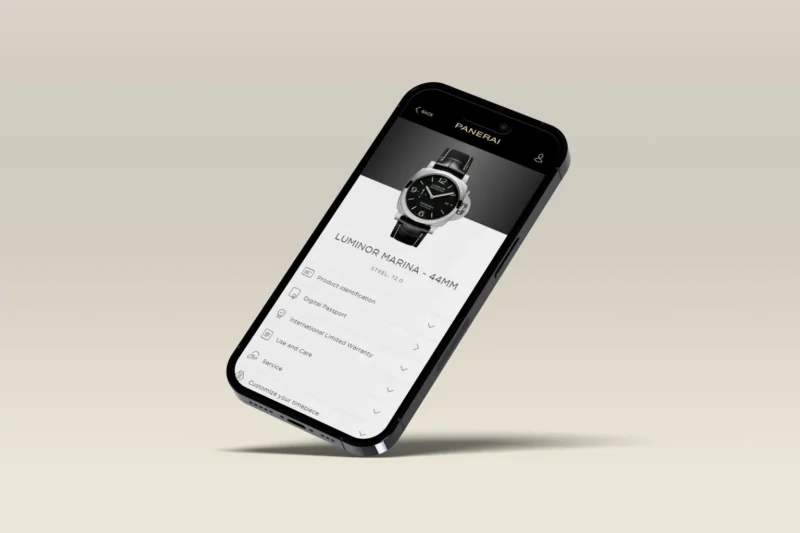
A Panerai watch and its digital product passport illustrate the link a certificate system must maintain between a physical object and its digital record. Courtesy of Arianee.
Explore the story
An NFT certificate of authenticity is a digital record in which a non-fungible token is used to identify a certificate or product passport associated with an object. The token can make issuance, control and transfer events visible on a blockchain. It cannot, by its existence alone, prove that the physical watch or jewel is genuine, that its metadata are correct or that the current token holder possesses the object.
A sound system therefore has three layers: the token and its smart contract; the metadata and issuer records; and a durable link to the physical item. The quality of the certificate depends on all three, plus the procedures used when the object is first enrolled and whenever it changes hands or is serviced.
What ERC-721 standardises
ERC-721 defines a common interface for non-fungible tokens. Within a given contract, a token ID identifies one token; in practice the contract address and token ID are read together. The standard provides ways to determine an on-chain owner and to transfer control. It may expose a token URI pointing to metadata.
That URI is a reference, not the physical object and not necessarily permanent. The standard allows metadata but does not prescribe the truth of an authenticity claim, the storage durability of images or documents, or the procedure connecting a token to a serial-numbered watch. Those properties belong to the issuer’s system.
The three links that must hold
Issuer to record
The reader needs to know who created the certificate and whether the issuing address or account is controlled by the claimed organisation. A technically valid token minted by an unknown party is only evidence that the party created a token.
Record to object
The certificate should identify the physical item through suitable, non-public and public attributes: reference and serial data, photographs, measured features, embedded chips, secure labels or other identifiers. Each method has failure modes. A copied QR code is not the same as an unclonable link; a serial number can be transcribed incorrectly; a replacement component can alter the object’s state.
Control to possession
Transfer of a token changes the blockchain’s account-level control. It does not automatically deliver the object, settle title under every legal system or confirm that the recipient inspected the item. A transaction process should synchronise digital transfer with physical handover and preserve evidence of both.
Certificate, passport and rights
A certificate makes a claim about an object at a point in time. A digital product passport is broader: it can organise product information and lifecycle events for different authorised users. The EU Ecodesign for Sustainable Products Regulation describes a data architecture involving product information, data carriers and interoperability. It does not make “digital product passport” synonymous with “NFT”, nor does it impose the same data requirement on every watch or jewel without product-specific rules.
Likewise, owning an NFT is distinct from owning copyright, design rights or other rights in an associated image or work. WIPO’s analysis emphasises that the token and the referenced content must be separated. Any contractual entitlement has to be stated outside the bare ERC-721 ownership record and interpreted in its applicable context.
A documented luxury implementation
Arianee’s Panerai case study shows one implementation in which a customer can claim a digital passport and use it to record services or transfer the record. The accompanying image is useful because it presents the physical watch beside the phone-based passport. It remains a vendor-published case study: it demonstrates a workflow, not universal proof that every passport uses the same controls or reaches the same result.
How to examine an NFT-linked certificate
- Verify the issuer. Obtain the contract address from an official channel and check who controls issuance.
- Identify the token. Record blockchain, contract address and token ID; a marketplace title alone is insufficient.
- Inspect metadata. Determine where it is stored, whether it can change, who can change it and what happens if the service closes.
- Match the object. Compare identifiers and condition with the certificate. Ask how copied, removed or replaced physical links are handled.
- Read the event history. Separate on-chain transfers from service notes, custody claims and issuer attestations.
- Coordinate transfer. Make the physical handover, account transfer and any issuer re-registration part of one documented process.
- Keep conventional evidence. Invoices, service records, expert examination and statutory rights do not become unnecessary because a token exists.
Failure modes and terminology
- False initial claim: an immutable record can preserve incorrect input.
- Broken physical link: the label, chip or identifier is copied, removed or no longer matches the object.
- Mutable metadata: the token remains while the referenced file or server response changes.
- Lost control: keys are lost or compromised even though the object remains in the same hands.
- Token: the on-chain identifier and ownership state.
- Attestation: a statement by an identified party about a fact or event.
- Digital product passport: a structured product-information record; it may use blockchain but need not be an NFT.
- Related reading: provenance, chain of custody, smart contract, metadata persistence and digital gemstone mapping.
Sources & further reading
This reference was rechecked on 9 September 2026 against ERC-721, WIPO analysis, Arianee’s protocol documentation and Panerai case study, and Regulation (EU) 2024/1781. Standards establish technical capabilities; issuer documentation establishes a particular workflow; neither is treated as independent authentication of an object or as legal advice.
The Edit
TheTimeo Encyclopedia stories
Selected stories from the same editorial universe.
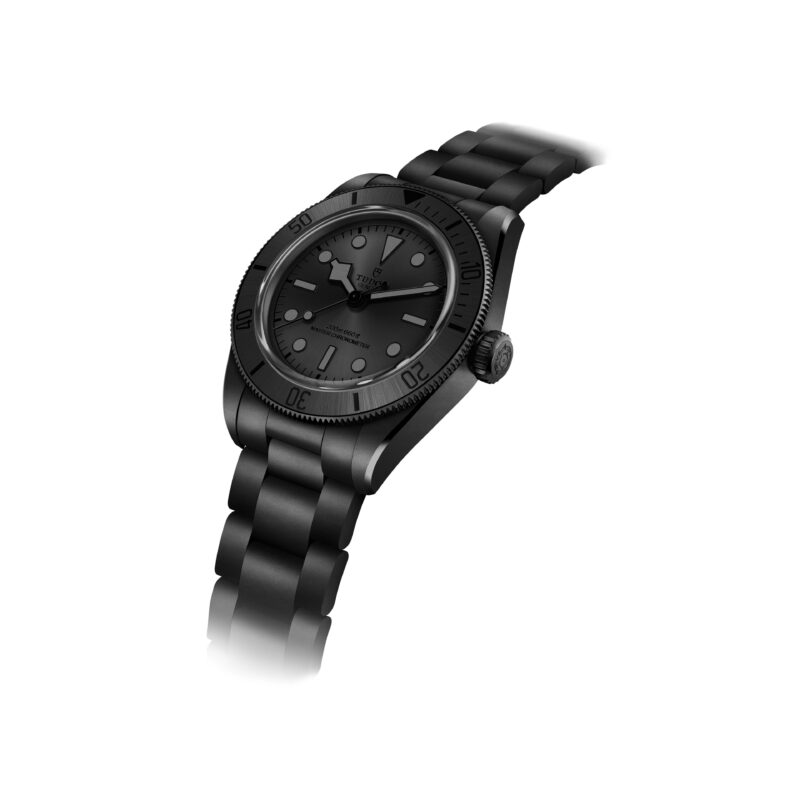
Tudor: tool-watch clarity and modern manufacture
An evergreen guide to Tudor: its 1926 origins, Oyster Prince and diving-watch history, Black

TAG Heuer: chronographs, instruments and design systems
An evergreen guide to TAG Heuer: its 1860 origins, timing instruments, Carrera and Monaco
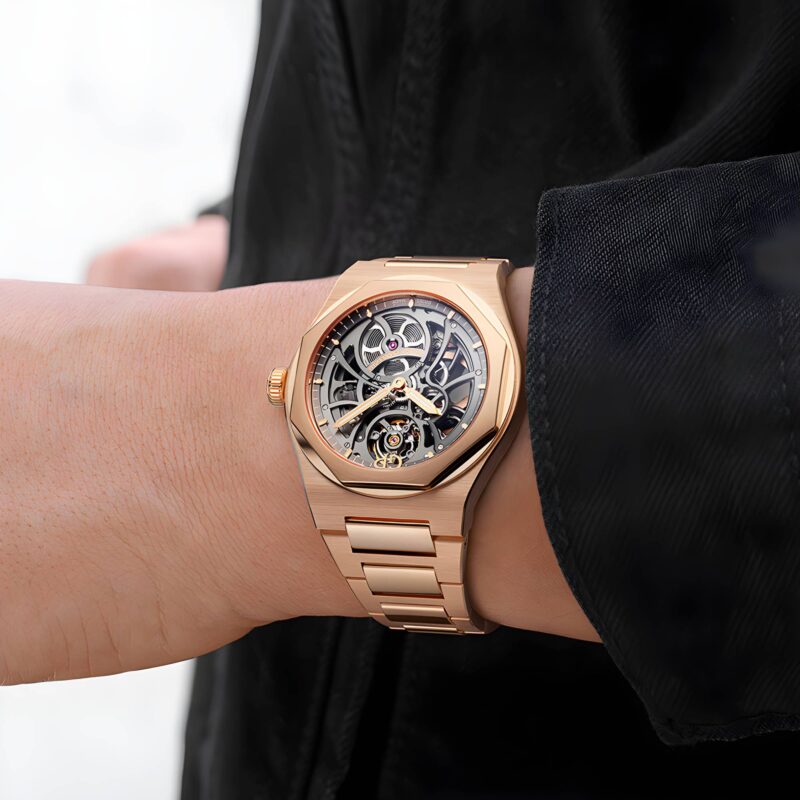
Girard-Perregaux: architecture, Three Bridges and the Laureato
An evergreen guide to Girard-Perregaux: the Bautte and Girard-Perregaux lineages, Three Bridges, movement manufacture,

Hublot: material fusion, Big Bang and Unico
An evergreen guide to Hublot: the 1980 gold-and-rubber premise, Big Bang architecture, Unico chronographs,