
TheTimeo / TheTimeo Encyclopedia
MINUTE REPEATER:
mechanical time, heard on demand
A reference guide to the racks, snails, hammers and gongs that translate the displayed time into hours, quarters and minutes on demand.
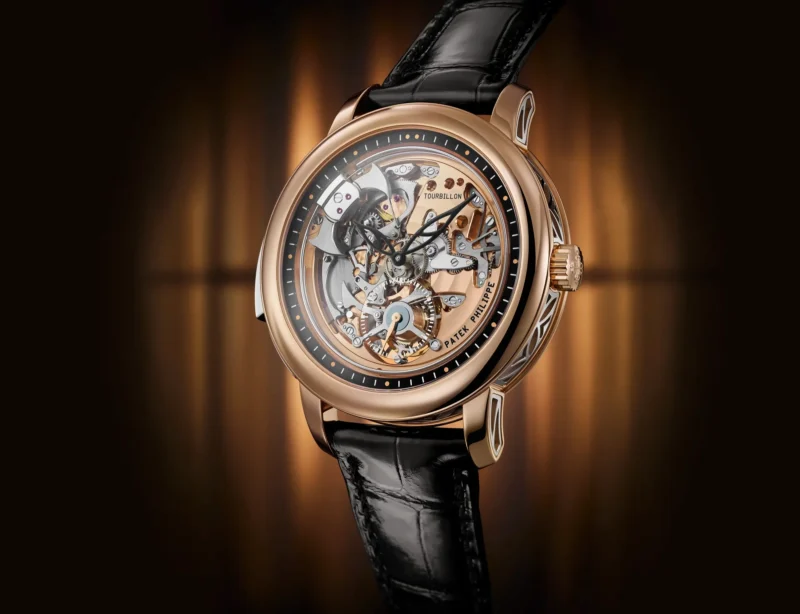
Reference 5303R exposes the hammers and gongs of its minute-repeater mechanism on the dial side. Courtesy of Patek Philippe.
Explore the story
A minute repeater is a watch that sounds the displayed time when its striking mechanism is deliberately activated. In the conventional sequence it chimes the hours, the quarter-hours since the last full hour, then the remaining minutes. It is a mechanical read-out, not an alarm and not the same thing as a clock or watch that strikes automatically as time passes.
The definition is simple; the mechanism is not. A repeater has to sample the position of the time display, translate it into three quantities, release the correct number of blows and complete the sequence without losing synchronisation. Its sound is produced by tiny hammers striking tuned gongs inside a case whose material, construction and condition all influence what reaches the ear.
What happens when the slide is moved
On a traditional wristwatch repeater, moving the case slide winds a separate spring for the striking train and prepares the reading sequence. Shaped cams called snails encode the positions of the hour, quarter and minute indications. Racks feel those steps and determine how many blows the mechanism must release. An all-or-nothing device prevents an incomplete activation from producing a misleading partial sequence.
The usual acoustic vocabulary uses a low note for hours, a paired high-and-low sequence for quarters and a high note for individual minutes. At 12:59 that arrangement produces twelve hour strikes, three double quarter strikes and fourteen minute strikes: thirty-two hammer blows in total. Exact pitch, tempo and notation vary by maker and calibre; the sequence, not a particular musical interval, defines the function.
The mechanism, component by component
Snails and racks
A snail is a stepped cam. Its depth tells the matching rack how far it may fall, and that travel sets the number of strikes. Separate reading elements deal with hours, quarters and minutes. Their relationship to the motion works matters: the repeater must report a coherent time even close to the instant when the hands advance.
Hammers and gongs
Hammers provide the impulse. Gongs are hardened metal wires, commonly fixed around the movement and attached to the case or movement structure. Their profile, attachment, clearance and tuning affect the result. Patek Philippe’s Reference 5303R is a useful visible example because its two hammers and two classic gongs are arranged on the dial side; that display is reference-specific, not a requirement of the complication.
Governor
The governor controls the speed of the striking train. Without regulation, the stored energy would be released too quickly. Older mechanisms may buzz audibly; modern constructions can use quieter centrifugal systems. Tempo should be assessed against the maker’s specification and the watch’s service condition rather than against a universal ideal.
Repeater, sonnerie and alarm are different
A repeater sounds only when requested. A petite or grande sonnerie strikes automatically according to its own programme, although some watches combine automatic striking and repetition. An alarm uses a separately set indication to produce sound at a chosen time. These functions may share hammers, gongs or energy-management problems, but the terms are not interchangeable.
Nor does every repeater resolve time to the minute. Quarter repeaters sound hours and quarters; five-minute repeaters add five-minute intervals. Decimal repeaters commonly divide the hour into ten-minute units before sounding remaining minutes. The displayed and audible sequence must therefore be identified from the actual calibre.
What shapes the sound
Volume alone is a poor description. Collectors also listen for clarity between high and low notes, even decay, stable tempo and the absence of mechanical interference. Case material and geometry influence transmission, as do water-resistance architecture, crystals and the way the gong is fixed. Audemars Piguet’s documented use of the case back as a soundboard is one solution among several, not a rule for the category.
Condition can change the performance. Dirt, dried lubricant, incorrect clearances, a damaged gong or previous case work may affect both operation and sound. Recordings are useful for comparison only when microphone, room and playback conditions are known; they cannot replace an examination of the watch.
Operating and examining a repeater
- Identify the exact reference and calibre, then use its own instructions. Activation direction, slide travel and prohibited actions can differ.
- Complete the activating movement smoothly. Do not force a resistant slide or repeatedly interrupt the sequence.
- Do not set the hands or operate another complication while the watch is striking unless the maker expressly permits it.
- Check that the audible sequence agrees with the displayed time at several positions, including around a quarter-hour transition.
- Have irregular tempo, missing blows, contact noise or weak activation assessed by a watchmaker experienced with striking work.
Patek Philippe’s Reference 5531 instructions illustrate why model-specific guidance matters: they define an exact activation sequence and cautions for that watch. They are evidence for the documented model, not a universal operating manual.
Terminology and related references
- Rack: a toothed reading component whose travel determines a number of strikes.
- Snail: a stepped cam encoding the current time for the striking train.
- All-or-nothing: a safeguard intended to block an incomplete or incorrect strike after partial activation.
- Governor: the regulator controlling striking tempo.
- Gong: the resonating element struck by a hammer.
- Related reading: grande sonnerie, petite sonnerie, alarm, decimal repeater and motion works.
Sources & further reading
This reference was rechecked on 9 September 2026 against the Fondation Haute Horlogerie’s technical definition, Patek Philippe’s manufacture and product documentation, a model-specific instruction manual and Audemars Piguet’s account of chiming research. Manufacturer examples explain particular constructions; they do not establish a universal hierarchy of sound.
The Edit
TheTimeo Encyclopedia stories
Selected stories from the same editorial universe.
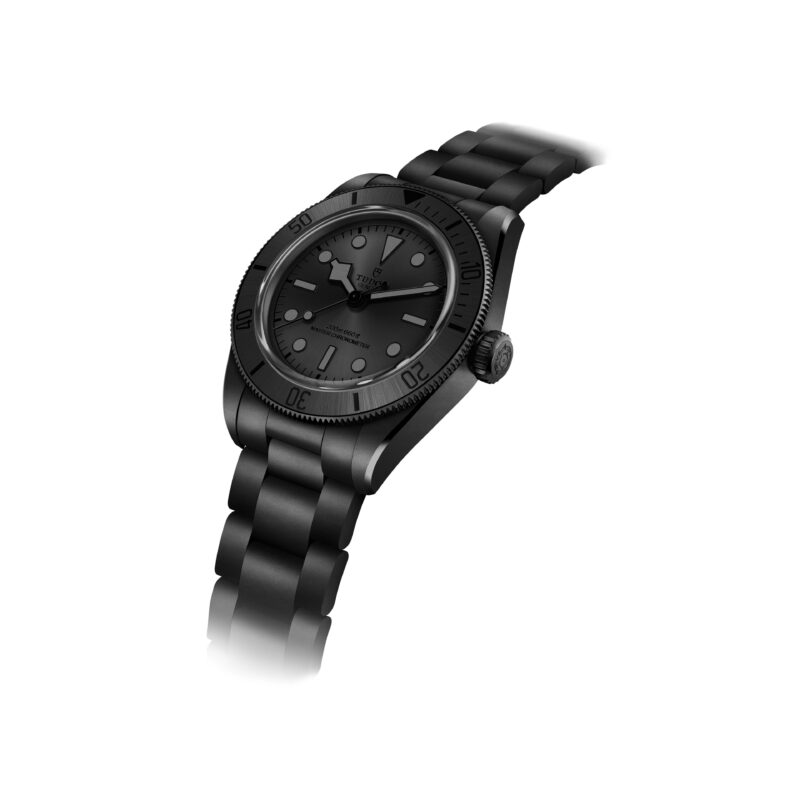
Tudor: tool-watch clarity and modern manufacture
An evergreen guide to Tudor: its 1926 origins, Oyster Prince and diving-watch history, Black

TAG Heuer: chronographs, instruments and design systems
An evergreen guide to TAG Heuer: its 1860 origins, timing instruments, Carrera and Monaco
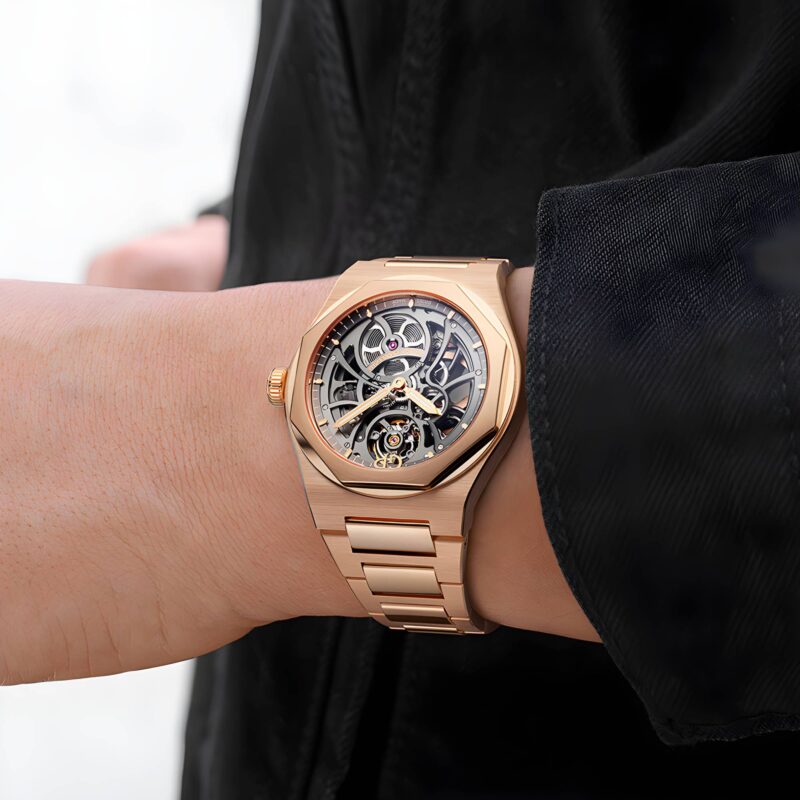
Girard-Perregaux: architecture, Three Bridges and the Laureato
An evergreen guide to Girard-Perregaux: the Bautte and Girard-Perregaux lineages, Three Bridges, movement manufacture,
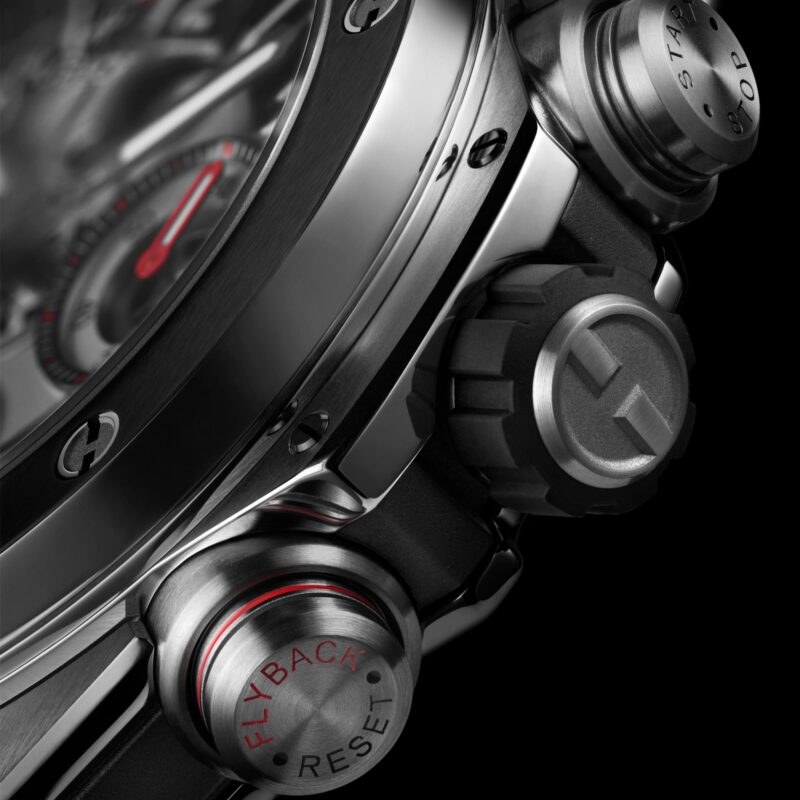
Hublot: material fusion, Big Bang and Unico
An evergreen guide to Hublot: the 1980 gold-and-rubber premise, Big Bang architecture, Unico chronographs,