
TheTimeo / TheTimeo Encyclopedia
LONGINES:
precision organised at scale
An evergreen guide to Longines: Saint-Imier since 1832, the 1867 factory, winged hourglass, chronographs, aviation and Spirit Zulu Time collector checks.
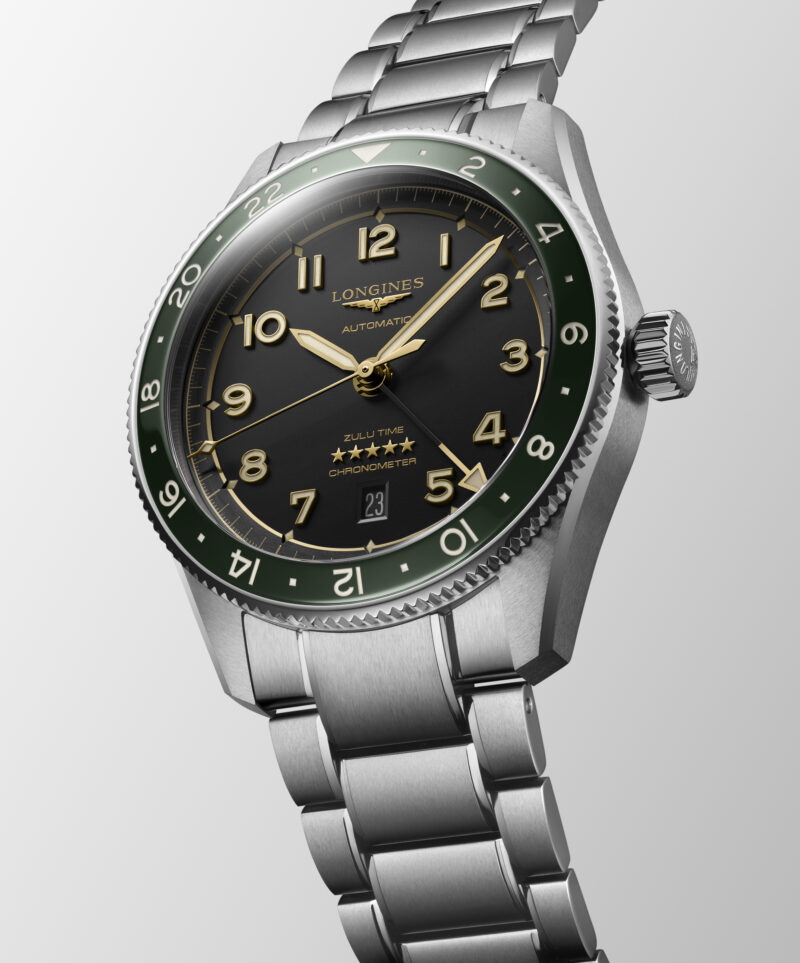
Spirit Zulu Time. Courtesy of Longines.
Explore the story
Longines is a Swiss watch company based in Saint-Imier since 1832. Its history links the transition from dispersed établissage to factory production with serial archives, chronographs, sports timing and instruments for aviation. The winged hourglass provides visual continuity; Spirit Zulu Time translates the dual-time strand into a contemporary watch.
This guide treats the archive as a tool, not a shortcut. A logo or collection name cannot establish the date, originality or condition of a watch without its serial number, reference, movement and supporting records.
Definition and scope
Longines produces mechanical and quartz wristwatches across heritage, classic, sport and instrument-derived collections. Its importance to reference work lies partly in industrial organisation: the Saint-Imier factory brought manufacture and finishing under one roof, while serial records provide a structured route into production history.
Chronographs, multiple time zones and timing equipment form recurring technical themes. Modern watches may quote historic dials or functions, but contemporary case, calibre and certification must be described on their own terms.
Foundation and historical development
- 1832: Auguste Agassiz joined a watch trading office in Saint-Imier that became Agassiz & Co.
- 1867: Ernest Francillon established a factory at a site known as Les Longines, consolidating production; serial archives date from this year.
- 1878: the manufacture produced the calibre 20H chronograph movement.
- 1889: Francillon registered a trademark combining the Longines name and winged hourglass.
- 1911: Longines filed a patent for a pocket watch displaying two time zones.
- 1925: a series of dual-time wristwatches used the Zulu flag to identify universal time.
- 16 June 1936: patent protection was granted for the house’s flyback chronograph mechanism.
These milestones organise the official record. The date of an individual watch should be checked against its serial and archive evidence.
Aesthetic and design identity
Instrument hierarchy
Longines aviation and timing watches separate scales, counters and hands through contrast. Legibility depends on the relationship between dial printing, hand length, luminous material and bezel, not simply on the presence of large numerals.
The winged hourglass
The trademark connects name and symbol across movements, dials, crowns and cases. Its design and placement vary over time. A mark must be assessed alongside construction and serial evidence rather than used alone.
Heritage without equivalence
Modern reissues can preserve sector dials, fluted bezels or case proportions while changing size, movement and materials. Describe the contemporary reference first, then state the documented historic source.
Technical and manufacturing ideas
- Chronograph and flyback
A conventional chronograph is stopped before reset. A flyback permits the running chronograph to be reset and immediately restarted with one action, useful for successive intervals. Correct operation and calibre differ by reference.
- GMT and Zulu Time
A GMT watch displays an additional time reference, often through a 24-hour hand and bezel. Reference L3.812.4.50.6 uses calibre L844, a bidirectional ceramic bezel and a local-hour setting system. Its 42 mm dimensions and other figures belong only to that reference.
- Serial archives
Longines states that it has preserved serial information since 1867. An extract reports information found in the archive; it is distinct from a certificate issued after physical authentication. Neither document provides a market valuation.
Fundamental collections and models
Spirit Zulu Time
A modern multiple-time-zone family linked by the house to its 1925 dual-time wristwatches. Diameters, materials, bracelets and calibres vary; identify the full reference.
Heritage Classic and Avigation
These models reinterpret documented archive designs. Compare dial, case and function to the cited source while keeping vintage and modern references clearly separated.
Master Collection
A broad mechanical family spanning calendar, moon-phase, chronograph and GMT configurations. The collection name does not specify complication or calibre.
HydroConquest and Conquest
Sport-oriented families with differing bezel, water-resistance and movement specifications. Current pressure testing matters more than the printed rating for practical use.
What matters to a collector
- Begin with serial and reference
Photograph case, movement and serial information where safely accessible. Compare it with the official archive service and distinguish recorded delivery facts from later replacement parts or restoration.
- Check scales and hands as a system
On chronographs and aviation watches, verify that hands reach their intended scales, counters reset correctly and luminous material is described without unsupported age claims.
- Document service and water testing
Retain movement work, pressure results and replaced components. Polishing can soften case geometry and marks; dial or hand work can remove historic evidence. Agree the scope before intervention.
Terminology and related references
- Établissage: production organised through specialised home or workshop suppliers before centralised factory assembly.
- Flyback: a chronograph that can reset and restart directly while running.
- Zulu time: aviation usage for UTC, associated with the letter Z.
- Archive extract: a document reporting matching information held in the maker’s historical records.
- Related reading: chronographs, GMT watches, serial archives, trademarks, restoration and water resistance.
Sources & further reading
This evergreen guide was rechecked on 11 September 2026 against Longines’ official corporate history, archive service, flyback-patent record and Spirit Zulu Time reference L3.812.4.50.6. Product specifications remain tied to the named reference, and archive extraction is distinguished from authentication. The text does not authenticate, value or grade an individual watch.
- Longines Media Center — Corporate history
- Longines — Spirit Zulu Time L3.812.4.50.6
- Longines — History of my watch
- Longines Media Center — 90 years of the flyback patent
Media: official Spirit Zulu Time photography retained as WordPress media 6613 and reverified against the governed media-centre master and scaled-file hashes.
The Edit
TheTimeo Encyclopedia stories
Selected stories from the same editorial universe.
Tudor: tool-watch clarity and modern manufacture
An evergreen guide to Tudor: its 1926 origins, Oyster Prince and diving-watch history, Black
TAG Heuer: chronographs, instruments and design systems
An evergreen guide to TAG Heuer: its 1860 origins, timing instruments, Carrera and Monaco
Girard-Perregaux: architecture, Three Bridges and the Laureato
An evergreen guide to Girard-Perregaux: the Bautte and Girard-Perregaux lineages, Three Bridges, movement manufacture,
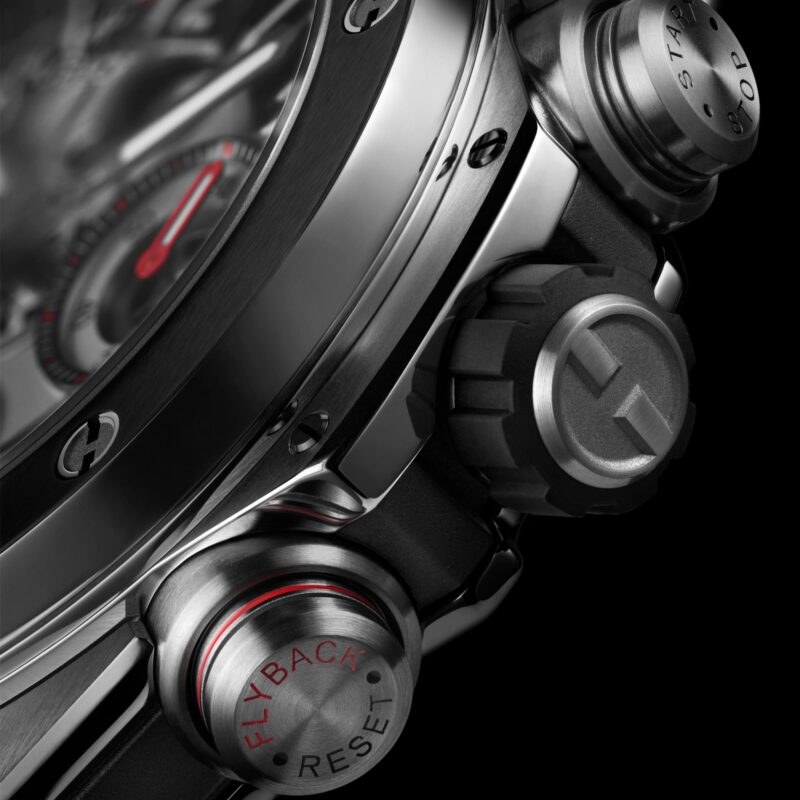
Hublot: material fusion, Big Bang and Unico
An evergreen guide to Hublot: the 1980 gold-and-rubber premise, Big Bang architecture, Unico chronographs,