
TheTimeo / TheTimeo Encyclopedia
H. MOSER & CIE.:
minimal dials, substantial mechanics
An evergreen guide to H. Moser & Cie.: its 1828 origin, modern Neuhausen manufacture, fumé dials, hairspring capability and core Endeavour, Pioneer, Heritage and Streamliner families.
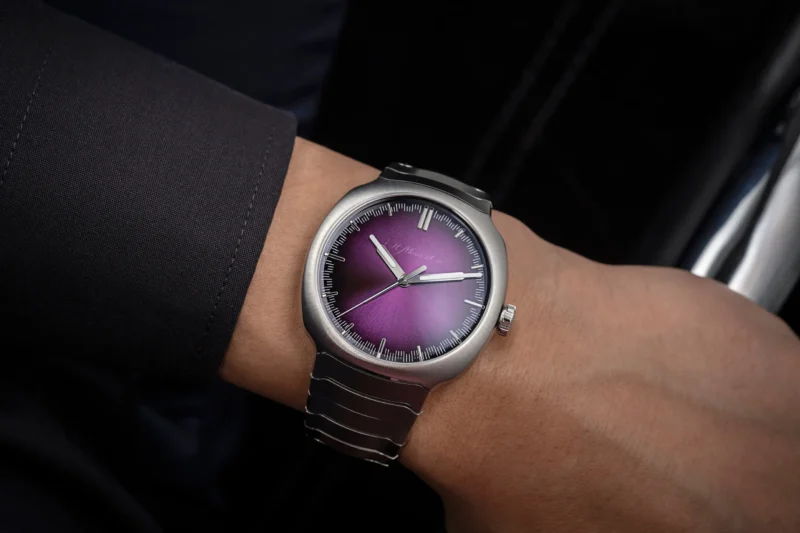
Streamliner Centre Seconds Purple Haze. Courtesy of H. Moser & Cie.
Explore the story
H. Moser & Cie. is a Swiss watch manufacture whose historical name dates to Heinrich Moser’s company, founded in 1828. The modern Maison works in Neuhausen am Rheinfall and is recognised for reduced dial design, graduated fumé colour, in-house mechanical calibres and regulating components made with its sister company Precision Engineering.
The apparent simplicity is the point of entry, not the full definition. Behind logo-free Concept dials and three-hand watches sits a catalogue that includes perpetual calendars, tourbillons, minute repeaters and chronographs. This House Guide explains how to connect those two sides without treating every Moser as mechanically or aesthetically identical.
Definition and scope
Moser’s current identity rests on three connected layers. The first is historical: Heinrich Moser, born into a Schaffhausen watchmaking family, built his business after working in Saint Petersburg and later contributed to the industrial development of Schaffhausen. The second is the modern manufacture and its movement capability. The third is a contemporary visual language built around clarity, colour and selective omission.
The present collection is organised primarily around Endeavour, Pioneer, Heritage and Streamliner. Complications move across those families, so case name and function must be recorded separately. A perpetual calendar can appear in more than one design context; a fumé dial can sit on a simple centre-seconds watch or a complicated calibre.
Foundation and development
- 1828: Heinrich Moser founded H. Moser & Cie. after establishing his reputation in Saint Petersburg. The company’s official history links his production to both straightforward watches and grand complications.
- Nineteenth century: Moser’s activity extended beyond watchmaking to Schaffhausen infrastructure, including hydro-mechanical power generation. This local history explains the Maison’s present emphasis on Schaffhausen without proving continuity of every corporate structure.
- Modern revival: the name returned to contemporary production in the early twenty-first century, with the manufacture established in the Neuhausen area and a renewed programme of proprietary calibres.
- 2000s: the Endeavour Perpetual Calendar established a concise display using a central month hand and movement-side leap-year indication.
- 2020 onward: Streamliner introduced a fluid cushion-shaped case and integrated steel bracelet, extending the house beyond its more classical round cases.
The distinction between historical name, modern company and individual watch is essential. Archival provenance should be established from the object and its documents, not inferred from the 1828 date printed in current material.
Aesthetic and design identity
A Moser fumé dial moves from a lighter centre to a darker perimeter. Sunburst brushing, lacquer, enamel or textured grounds can produce different effects, so “fumé” describes the gradient rather than one manufacturing recipe. Colour names are reference-specific and should be copied from the correct official record.
Minimalism often goes further than removing numerals. Concept dials may omit the logo and even conventional indices, relying on proportions, handset and colour for recognition. Other watches use applied markers or historic Arabic numerals. Leaf-shaped hands suit Endeavour; bolder luminous hands suit Pioneer; Streamliner uses its own handset and a continuous, articulated bracelet whose links echo the rounded case.
The Streamliner case is neither a conventional circle nor a sharp sports-watch polygon. Its cushion outline, recessed crown and integrated bracelet create a continuous profile. Heritage watches deliberately refer to early wristwatches and pocket-watch conversions, while Pioneer is designed as the more robust, everyday branch. These are functional design differences, not simply dial changes.
Technical contributions and manufacture
- Movements and regulating components
H. Moser develops and manufactures mechanical calibres, while Precision Engineering produces regulating components including hairsprings. That structure is unusual and important, but it should be described precisely: access to hairspring production is not evidence that every component of every reference is made under one roof. The calibre and technical sheet remain the controlling evidence.
- Double hairspring and interchangeable escapement
Selected movements use two matched hairsprings intended to counter positional effects on the balance. Some calibres use a removable escapement module designed to simplify servicing. Neither feature is universal. A collector should confirm the calibre number and generation before expecting it.
- Perpetual calendar display
Moser’s perpetual calendar replaces separate month and day subdials with a small central hand pointing to twelve hour markers as months. The date remains prominent, while the leap-year indication moves to the movement side. The Maison also documents forward or backward calendar adjustment without the usual restricted time window on its mechanism. That operating principle must still be followed through the correct user manual.
- Complications within restraint
Tourbillons, minute repeaters and chronographs are often integrated without abandoning the open dial. On some models the mechanism becomes visually prominent; on others it is deliberately secondary. The collector’s task is to identify the specific calibre architecture rather than assume “minimal” means mechanically simple.
Collections and fundamental models
The four current pillars provide a practical map.
Endeavour
The clearest expression of modern Moser minimalism: round cases, leaf hands, fumé or Concept dials and a range from centre seconds to major complications. The Endeavour Perpetual Calendar is the key technical reference for the house’s simplified calendar display.
Pioneer
A more robust case language with luminous hands and markers, intended for broader everyday use. Water resistance and case material vary by reference and should never be assumed from the family name.
Heritage
Large crowns, historic numerals and wire-lug or early-wristwatch cues connect this family to the archive. Modern movements and specifications distinguish it from an actual vintage Moser.
Streamliner
The integrated-bracelet family introduced with a flyback chronograph and expanded to centre seconds, tourbillons, perpetual calendars and other variants. Bracelet condition, articulation and fit are central to evaluating an individual example.
Earlier modern references
Venturer, Swiss Alp Watch and earlier calibre generations remain relevant on the secondary market even when absent from the current four-family navigation. Archive the exact reference rather than forcing it into a present-day collection.
What matters to a collector
- Start with reference and calibre
Moser’s visual continuity can make different generations look deceptively close. Record the complete reference, case material, dial name, calibre and serial information. Confirm whether the movement is hand-wound or automatic and whether advertised features such as double hairsprings or an interchangeable escapement apply to that calibre.
- Examine the dial under controlled light
Assess the gradient, surface texture, printing, marker alignment and handset without relying on saturated listing photographs. A fumé dial’s appearance changes strongly with light. Concept layouts make replacement or refinishing especially consequential because there are so few elements to distract the eye.
- Inspect cases and bracelets by family
Polishing affects Endeavour’s soft transitions and Streamliner’s continuous case-and-bracelet geometry differently. Check bracelet link movement, clasp, removable links and fit. On Pioneer and Heritage models, verify crown, seals and declared water resistance against the correct reference and recent service evidence.
- Operate complications from the manual
The perpetual calendar’s permissive adjustment is a specific engineering feature, not an invitation to use generic instructions. Repeaters, chronographs and calendar models need the correct manual and, where condition is uncertain, professional examination before operation.
Terminology and related references
- Fumé: a graduated dial colour that darkens toward the perimeter.
- Concept dial: Moser’s deliberately reduced display, commonly without a visible logo and sometimes without hour markers.
- Double hairspring: two paired hairsprings used in selected regulating systems.
- Interchangeable escapement: a removable regulating module present in specific calibre generations.
- Precision Engineering: the sister company associated with Moser’s hairspring and escapement-component capability.
- Related reading: hairspring, escapement, perpetual calendar, minute repeater, flyback chronograph, integrated bracelet and enamel.
Sources & further reading
This evergreen guide was rechecked on 9 September 2026 against H. Moser & Cie’s official history, manufacture account, current collection navigation and perpetual-calendar explanation. Company language has been reduced to factual chronology, named constructions and observable design codes. It does not authenticate an individual watch or establish uninterrupted corporate continuity from 1828.
- H. Moser & Cie. — Who We Are
- H. Moser & Cie. — The Manufacture
- H. Moser & Cie. — current collections
- H. Moser & Cie. — Perpetual Calendar Explained
Media: Streamliner Centre Seconds Purple Haze official Maison photography, retained as WordPress media 6611 and reverified against its governed source record.
The Edit
TheTimeo Encyclopedia stories
Selected stories from the same editorial universe.
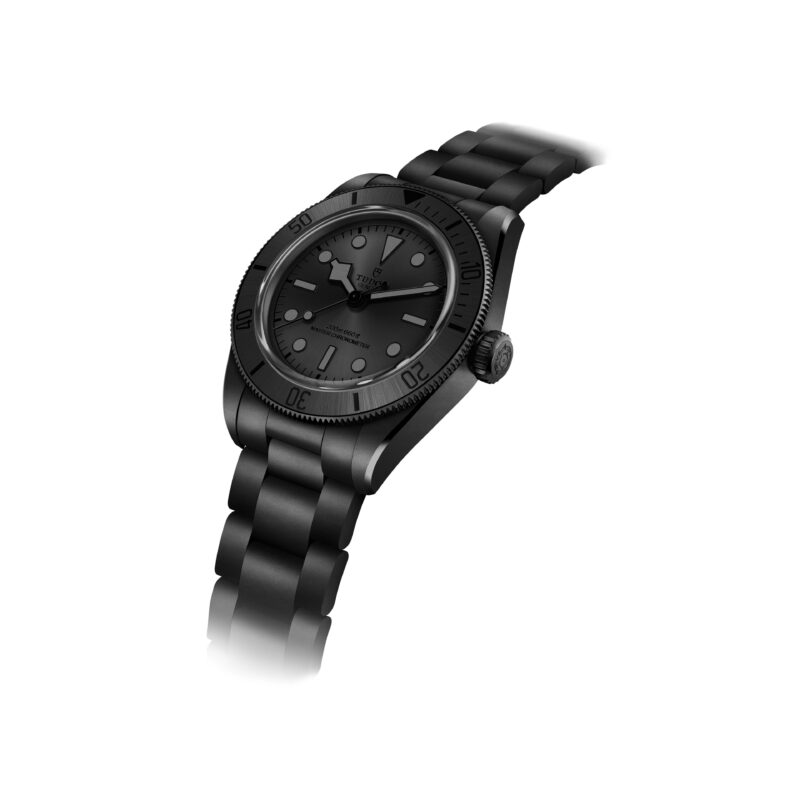
Tudor: tool-watch clarity and modern manufacture
An evergreen guide to Tudor: its 1926 origins, Oyster Prince and diving-watch history, Black

TAG Heuer: chronographs, instruments and design systems
An evergreen guide to TAG Heuer: its 1860 origins, timing instruments, Carrera and Monaco
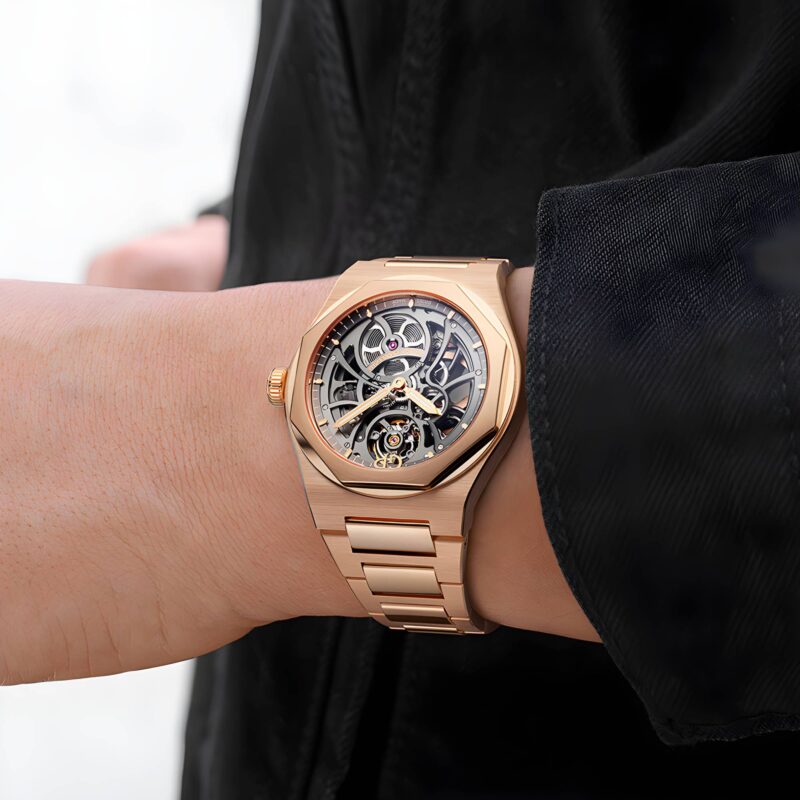
Girard-Perregaux: architecture, Three Bridges and the Laureato
An evergreen guide to Girard-Perregaux: the Bautte and Girard-Perregaux lineages, Three Bridges, movement manufacture,
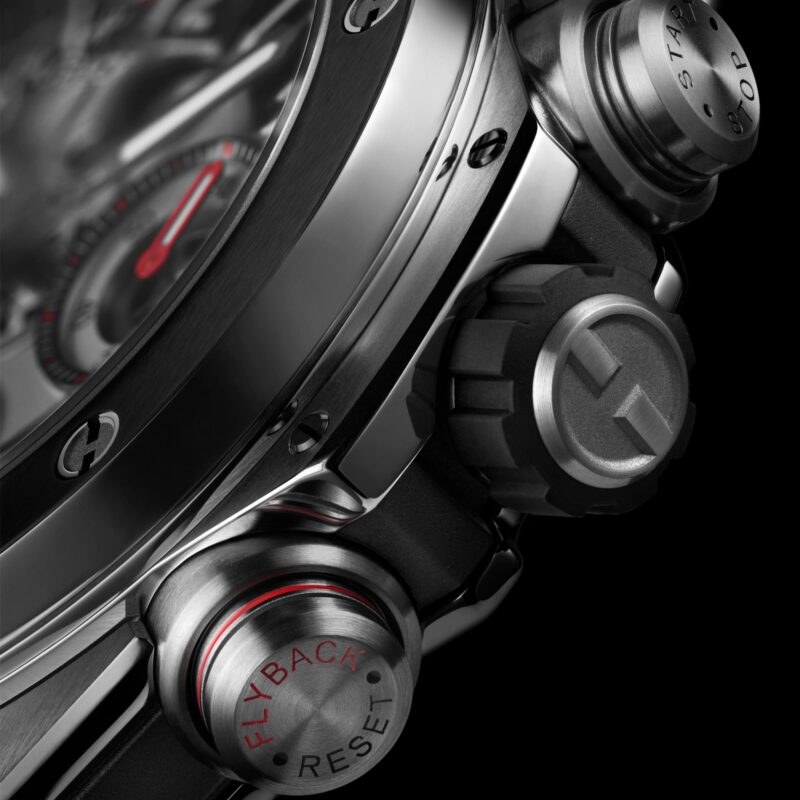
Hublot: material fusion, Big Bang and Unico
An evergreen guide to Hublot: the 1980 gold-and-rubber premise, Big Bang architecture, Unico chronographs,