
TheTimeo / TheTimeo Encyclopedia
GLASHÜTTE ORIGINAL:
Saxon structure, made visible
An evergreen guide to Glashütte Original: the 1845 Saxon lineage, 1990 legal succession, manufacture practice, Pano layout, Panorama Date and collector checks.
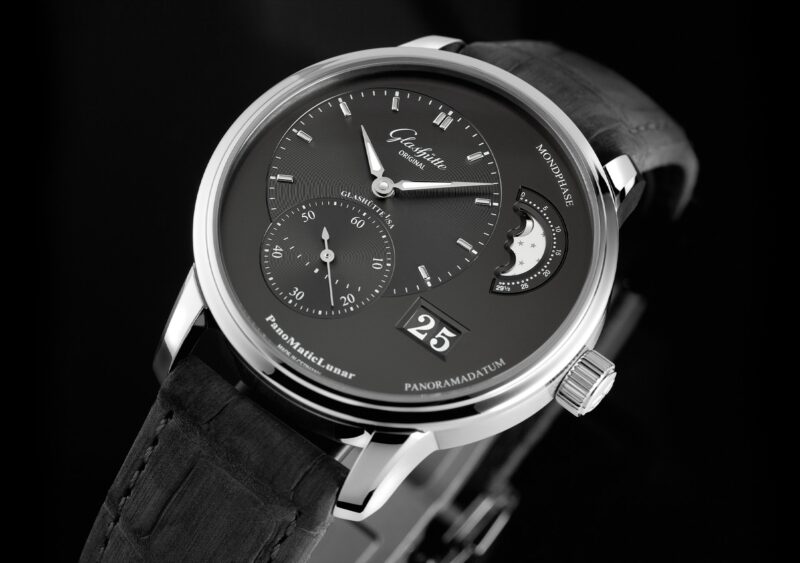
PanoMaticLunar. Courtesy of Glashütte Original.
Explore the story
Glashütte Original is a German watch manufacture whose institutional roots are traced to the Saxon watchmaking industry established in Glashütte from 1845. The present company was registered after German reunification in 1990 and describes itself as legal successor to the former consolidated enterprise. Its watches make construction visible through three-quarter plates, distinctive regulating systems, in-house dials and asymmetric Pano displays.
This guide distinguishes regional vocabulary from maker and reference. “Glashütte” is a place and watchmaking tradition; “Glashütte Original” identifies the present house. The case, calibre, dial, serial information and documents establish an individual watch.
Definition and scope
Glashütte Original designs and produces movements, dials and watches in Saxony with substantial production depth. Its official account combines hand operations with contemporary machining, prototyping, testing and final assembly. The result should be described through observable components rather than broad claims about nationality or craft.
The catalogue spans Pano, Senator, Spezialist, Vintage and ladies’ collections. Across them, Saxon movement architecture, Panorama Date displays and carefully separated surface finishes provide recurring points of reference.
Foundation and historical development
- 1845: watchmakers settled in Glashütte with support from the Kingdom of Saxony, training local workers and establishing a specialised industry.
- 1878: the German School of Watchmaking Glashütte was founded to preserve and transmit technical knowledge.
- 1951: the town’s watchmaking companies were consolidated into the state-owned VEB Glashütter Uhrenbetriebe.
- 16 October 1990: Glashütter Uhrenbetrieb GmbH was entered in the commercial register after German reunification.
- 1994: the company adopted the Glashütte Original brand name, drawing on the historic “Original Glashütte” quality designation.
- 2000: Glashütte Original joined the Swatch Group.
- Contemporary manufacture: movement development, component production, dial making, assembly and testing remain centred in the Glashütte operation.
This institutional history is precise but complex. It should not be simplified into uninterrupted ownership by one nineteenth-century firm.
Aesthetic and design identity
Asymmetric Pano composition
Pano watches place hours and minutes, small seconds, date and other indications on distinct axes rather than around one central stack. The overlap and spacing create balance through proportion, not bilateral symmetry.
Saxon movement architecture
A three-quarter plate covers much of the wheel train and gives the movement a broad visual field. Glashütte stripes, blued screws, polished steel and engraved or skeletonised regulating components create contrast. Their presence and execution vary by calibre.
Dials as manufactured objects
The house produces dials through galvanic treatments, lacquer, printing, applied markers and specialised finishing. On the green PanoMaticLunar reference used here, a dark dégradé is built through layered surface processes. That description belongs to the named dial, not every Pano.
Technical and manufacturing ideas
- Panorama Date
The large date uses adjacent numeral discs to create a broad two-digit display without a strong central divider. Alignment, changeover and colour matching are functional details. Corrector operation must follow the manual for the calibre.
- Duplex swan-neck fine adjustment
On Calibre 90-02, the visible regulating system combines two swan-neck springs for rate and beat adjustment. It is a specific mechanism, not a generic label for all German movements. Adjustment belongs with a trained watchmaker.
- Automatic Calibre 90-02
Reference 1-90-02-13-32-70 uses an automatic movement with hours, minutes, small seconds, Panorama Date and moon phase. The official specification gives about 42 hours of power reserve and a 4 Hz frequency. These figures must not be transferred to other Pano references.
Fundamental collections and models
PanoMaticLunar
An automatic Pano model combining off-centre time, small seconds, Panorama Date and moon phase. Case material, dial treatment, strap, bracelet and calibre generation identify the reference.
PanoReserve and PanoInverse
PanoReserve brings the power reserve into the asymmetric dial composition. PanoInverse exposes movement architecture on the dial side. Similar visual grammar does not imply the same movement or dimensions.
Senator
A more conventionally organised family that includes calendar, chronometer and chronograph references. Note certification or complication only when supported by the exact model documentation.
Spezialist and Vintage
Spezialist includes purpose-led watches such as SeaQ, while the Vintage families revisit twentieth-century Glashütte design. Water-resistance, bezel and bracelet checks remain reference-specific.
What matters to a collector
- Separate house, place and predecessor
Describe a watch as Glashütte Original only when its signatures, serial information and reference support that attribution. Regional style or the word Glashütte alone is insufficient.
- Inspect calendar operation safely
Confirm the correct setting sequence before using date, moon-phase or other correctors. Avoid calendar adjustment during restricted hours specified by the manufacturer. Resistance should be assessed, not forced.
- Preserve movement and case finishes
Three-quarter plates, blued screws, polished steel and case edges reveal previous intervention. Request photographs and written service scope before refinishing or component replacement, and retain timing and water-resistance results where relevant.
Terminology and related references
- Three-quarter plate: a large movement plate supporting several train components.
- Panorama Date: Glashütte Original’s large two-disc date display.
- Glashütte stripes: parallel decorative bands applied to movement surfaces.
- Swan-neck fine adjustment: a shaped spring used in a regulator mechanism for controlled adjustment.
- Related reading: German watchmaking, calendar setting, automatic movements, dial manufacture and service records.
Sources & further reading
This evergreen guide was rechecked on 11 September 2026 against Glashütte Original’s official history, manufactory account, Pano collection and PanoMaticLunar reference 1-90-02-13-32-70. Institutional succession is stated narrowly, and technical specifications remain tied to the named reference. The text does not authenticate or grade an individual watch.
- Glashütte Original — History
- Glashütte Original — The brand and manufactory
- Glashütte Original — Pano collection
- Glashütte Original — PanoMaticLunar 1-90-02-13-32-70
Media: official PanoMaticLunar photography retained as WordPress media 6610 and reverified against the governed manufacturer source and file hash.
The Edit
TheTimeo Encyclopedia stories
Selected stories from the same editorial universe.
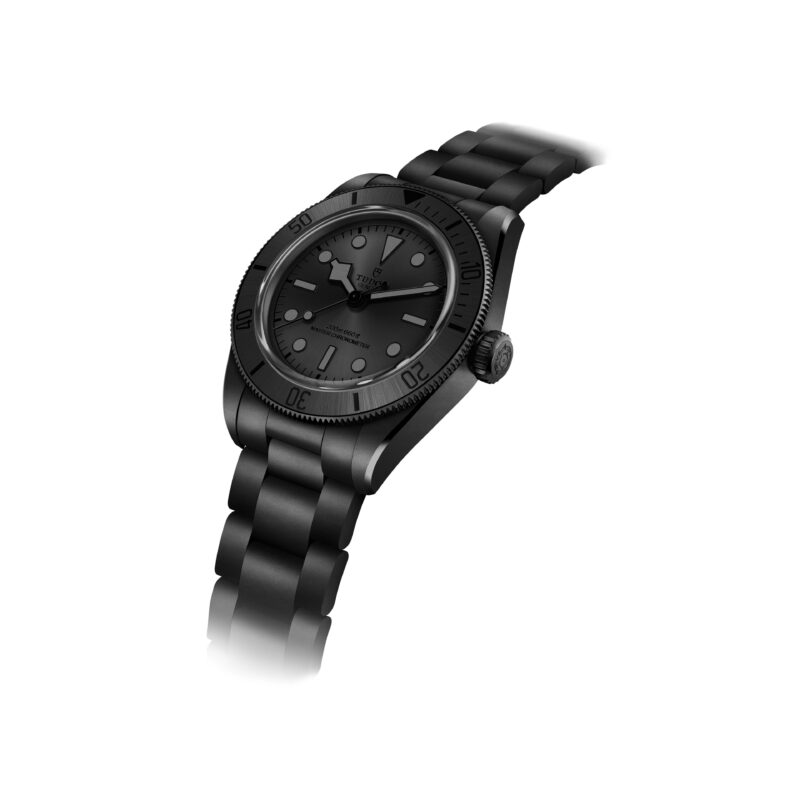
Tudor: tool-watch clarity and modern manufacture
An evergreen guide to Tudor: its 1926 origins, Oyster Prince and diving-watch history, Black
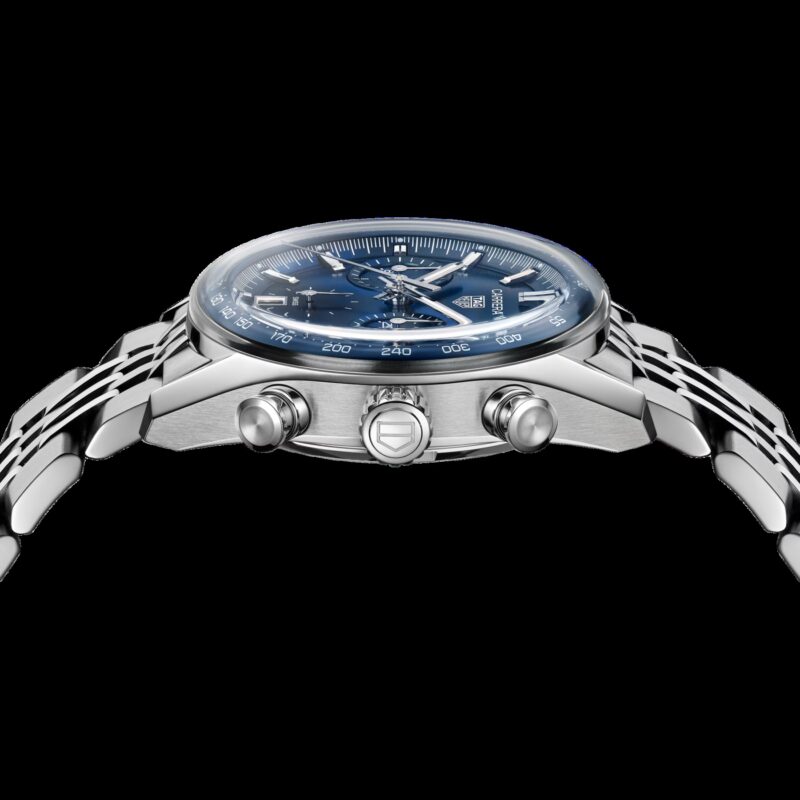
TAG Heuer: chronographs, instruments and design systems
An evergreen guide to TAG Heuer: its 1860 origins, timing instruments, Carrera and Monaco
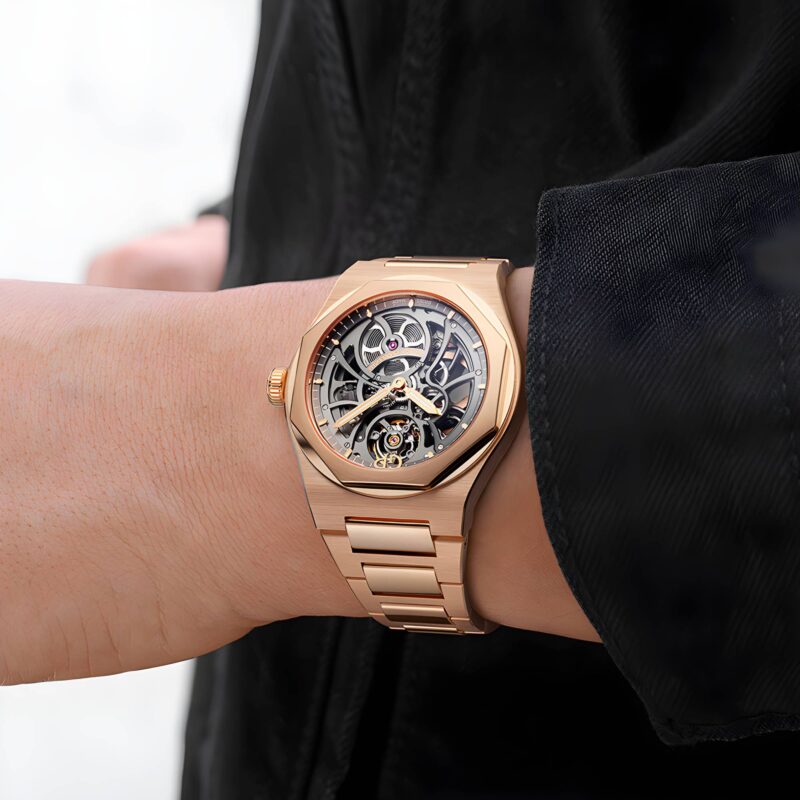
Girard-Perregaux: architecture, Three Bridges and the Laureato
An evergreen guide to Girard-Perregaux: the Bautte and Girard-Perregaux lineages, Three Bridges, movement manufacture,

Hublot: material fusion, Big Bang and Unico
An evergreen guide to Hublot: the 1980 gold-and-rubber premise, Big Bang architecture, Unico chronographs,