TheTimeo Encyclopedia

Blancpain

Blancpain, established in 1735 in Villeret, Switzerland, is one of the oldest continuously operating watchmaking brands. The company is celebrated for its Fifty Fathoms dive watch and intricate mechanical movements.

The Timeo 8 min read
Founded1735 — Villeret, Switzerland
Founder(s)Jehan-Jacques Blancpain
HeadquartersPaudex/Le Brassus, Switzerland
Parent GroupSwatch Group
Known ForFifty Fathoms dive watch, complicated movements, classical designs
Price Range£8,000 to £500,000+, GBP, 2024
Revenue / ProductionN/A
Official Websiteblancpain.com

Blancpain, established in 1735 in Villeret, Switzerland, is recognised as one of the oldest watchmaking brands in continuous operation. The company is celebrated for its contributions to horological innovation, its iconic Fifty Fathoms dive watch, and its commitment to classical watchmaking traditions. Blancpain is currently owned by the Swatch Group.

History and Founding

The history of Blancpain began with Jehan-Jacques Blancpain, who registered himself as a watchmaker in Villeret in 1735 (Wikipedia). His workshop was located on the upper floor of his house. This marked the foundation of what would become the Blancpain watchmaking company. For nearly two centuries, the Blancpain family directly managed the business, transitioning from one generation to the next. During this period, the company evolved from a small artisan workshop into a manufacturing operation, adapting to the changing industrial landscape while maintaining a focus on quality and craftsmanship.

In the early 19th century, Frédéric-Louis Blancpain, a descendant of Jehan-Jacques, modernised the company’s production methods. He introduced innovations such as the use of cylinder escapements, moving away from traditional crown-wheel mechanisms (N/A). This adaptation to new technologies allowed Blancpain to increase production and improve the precision of its watches.

Historical Timeline

Year Event
1735 Jehan-Jacques Blancpain registers as a watchmaker in Villeret, establishing the Blancpain company.
Early 19th Century Frédéric-Louis Blancpain modernises production, introducing cylinder escapements.
1926 Blancpain partners with John Harwood to produce the first automatic wristwatch.
1932 The Blancpain family relinquishes control of the company; Betty Fiechter and André Léal become the new owners.
1953 Blancpain creates the Fifty Fathoms, one of the first modern dive watches.
1983 Blancpain is acquired by the Swatch Group (then SMH Group).
1991 Blancpain introduces the 1735, a grand complication wristwatch.
2002 Marc Hayek becomes CEO of Blancpain.

Key Collections and Iconic References

Blancpain’s collections reflect a blend of traditional watchmaking and innovative design. The brand is known for several key collections, each with its distinct characteristics and horological significance.

  • Villeret: The Villeret collection represents Blancpain’s most classical and traditional designs. Named after the brand’s birthplace, these watches often feature clean lines, understated elegance, and complications such as moon phases and calendars. The Villeret collection embodies the essence of traditional watchmaking, with a focus on refined aesthetics and horological precision (blancpain.com).

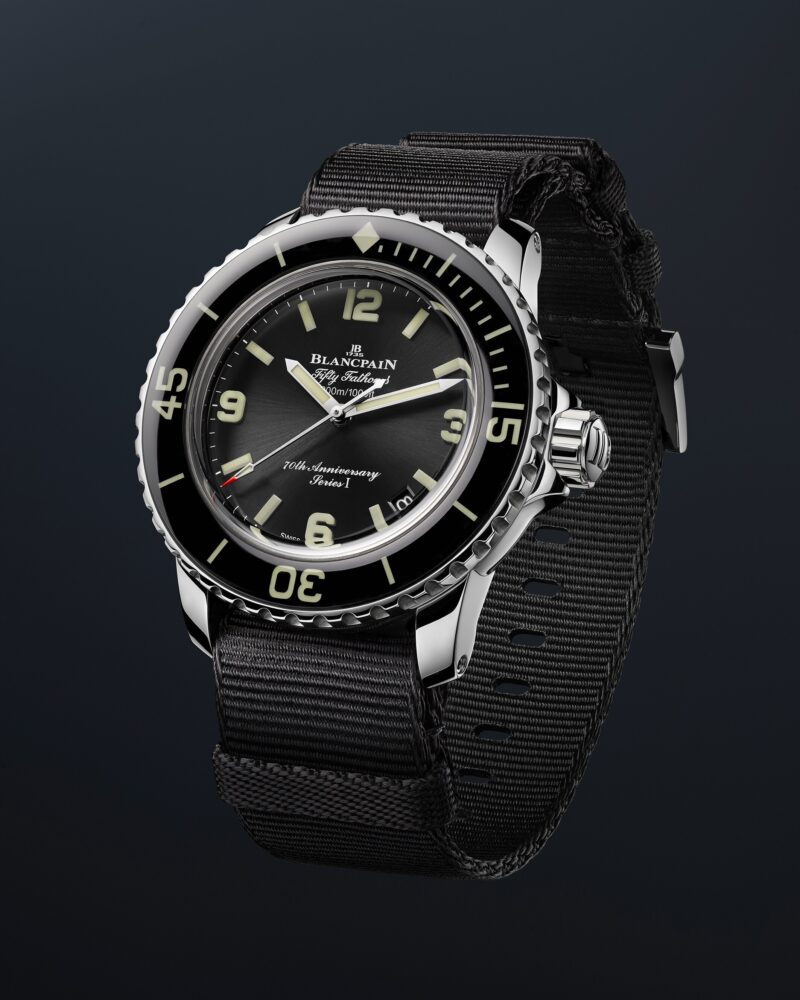
  • Fifty Fathoms: Introduced in 1953, the Fifty Fathoms is one of the first modern dive watches. Developed in collaboration with the French Navy’s Nageurs de Combat (combat swimmers), the Fifty Fathoms set a new standard for dive watches with its water resistance, unidirectional rotating bezel, and high legibility. The collection remains a cornerstone of Blancpain’s offerings, with modern iterations retaining the key design elements of the original while incorporating contemporary materials and technologies (blancpain.com).

  • Léman: The Léman collection offers a sportier aesthetic compared to the Villeret, while still maintaining Blancpain’s commitment to quality and craftsmanship. These watches often feature complications such as chronographs and GMT functions, catering to a more active lifestyle.

  • Women: Blancpain offers a dedicated collection of watches designed specifically for women. These timepieces often incorporate precious materials, intricate designs, and complications tailored to feminine tastes.

Iconic References:

  • Fifty Fathoms (1953): The original Fifty Fathoms is an iconic reference in the history of dive watches. Its robust construction, unidirectional bezel, and high legibility made it a favourite among divers and military personnel.

  • Blancpain 1735: The Blancpain 1735, introduced in 1991, is a grand complication wristwatch featuring a tourbillon, minute repeater, perpetual calendar, and split-seconds chronograph. This watch showcases Blancpain’s mastery of haute horlogerie and its ability to combine multiple complex functions into a single timepiece.

Technical Heritage and Innovation

Blancpain has a long history of technical innovation in watchmaking. The brand has consistently pushed the boundaries of horological engineering, developing new movements, complications, and materials.

  • Automatic winding: In 1926, Blancpain partnered with John Harwood to produce one of the first automatic wristwatches (Wikipedia). This collaboration marked a significant milestone in the development of self-winding watch technology.

  • Fifty Fathoms innovations: The Fifty Fathoms introduced several innovations that became standard features in dive watches, including the unidirectional rotating bezel with luminous markings, which allowed divers to accurately track their underwater time.

  • Complicated movements: Blancpain is renowned for its expertise in creating complicated movements. The brand has produced numerous watches with complications such as tourbillons, minute repeaters, perpetual calendars, and chronographs. The Blancpain 1735 is a prime example of the brand’s ability to combine multiple complex functions into a single timepiece.

  • Silicon balance springs: Blancpain has been at the forefront of using silicon in watch movements. Silicon balance springs offer several advantages over traditional metal springs, including improved accuracy, stability, and resistance to magnetic fields.

Ownership and Corporate Structure

For nearly two centuries, Blancpain was managed directly by the Blancpain family. However, in 1932, the last member of the Blancpain family to run the company, Frédéric-Emile Blancpain, passed away. As his daughter, Bertie Blancpain, did not wish to take over the business, the company was sold to Betty Fiechter and André Léal (N/A). Fiechter became the first woman to head a watchmaking company.

In 1983, during the quartz crisis, Blancpain was acquired by the Société Suisse de Microélectronique et d’Horlogerie (SMH), which later became the Swatch Group (Wikipedia). This acquisition provided Blancpain with the resources and stability to continue its commitment to traditional watchmaking.

Blancpain operates as a subsidiary of the Swatch Group, benefiting from the group’s extensive network of suppliers, distributors, and retailers. However, Blancpain maintains its own distinct identity and operates independently in terms of product development, manufacturing, and marketing.

Key Figures

  • Jehan-Jacques Blancpain: The founder of Blancpain, who established the company in 1735.

  • Frédéric-Louis Blancpain: A descendant of Jehan-Jacques who modernised the company’s production methods in the early 19th century.

  • Betty Fiechter: The first woman to head a watchmaking company, who took over Blancpain in 1932 with André Léal.

  • Jean-Claude Biver: As CEO of Blancpain in the 1980s and 1990s, Biver played a crucial role in revitalising the brand and re-establishing its reputation for haute horlogerie.

  • Marc Hayek: The current CEO of Blancpain, who has continued to build on the brand’s legacy of innovation and craftsmanship since 2002 (Wikipedia).

Auction Records

Blancpain watches, particularly vintage models and limited editions, have performed well at auction. Several factors contribute to the value of Blancpain watches at auction, including their rarity, historical significance, condition, and provenance.

Notable auction results for Blancpain watches include:

  • Vintage Fifty Fathoms: Early examples of the Fifty Fathoms dive watch, especially those with military provenance, have achieved high prices at auction. These watches are highly sought after by collectors due to their historical significance and robust design.

  • Complicated Blancpain watches: Watches with complex complications, such as the Blancpain 1735, have also fetched significant sums at auction. These timepieces showcase Blancpain’s mastery of haute horlogerie and its ability to combine multiple functions into a single watch.

  • Limited edition watches: Blancpain has produced several limited edition watches over the years, which have become highly collectible. These watches often feature unique designs, materials, or complications, making them attractive to collectors.

According to Phillips in Association with Bacs & Russo, a Blancpain Fifty Fathoms Ref. Milspec 1 (circa 1950s) in exceptional condition can command prices upwards of £50,000 (Phillips 2024). Sotheby’s has also noted strong interest in Blancpain’s complicated pieces, with examples of the 1735 fetching prices in the hundreds of thousands of pounds (Sotheby’s 2024).

Cultural Legacy and Influence

Blancpain has had a significant impact on the watchmaking industry and popular culture. The brand’s contributions to dive watch technology, its commitment to traditional watchmaking, and its support for various cultural initiatives have all contributed to its legacy.

  • Dive watch innovation: The Fifty Fathoms set a new standard for dive watches and influenced the design of countless other dive watches. Its key features, such as the unidirectional rotating bezel and high legibility, became standard features in the dive watch category.

  • Preservation of traditional watchmaking: During the quartz crisis, when many Swiss watchmakers were struggling to compete with inexpensive quartz watches from Asia, Blancpain remained committed to traditional mechanical watchmaking. This commitment helped to preserve the art of haute horlogerie and paved the way for the resurgence of mechanical watches in the late 20th and early 21st centuries.

  • Sponsorship and partnerships: Blancpain has supported various cultural initiatives, including partnerships with Michelin-starred chefs and sponsorship of motorsports events. These partnerships reflect Blancpain’s commitment to excellence and its appreciation for the finer things in life. Blancpain’s association with the culinary world, for example, highlights the shared values of precision, craftsmanship, and attention to detail.

Legacy and Significance

Blancpain’s legacy as one of the oldest and most respected watchmaking brands is firmly established. The brand’s contributions to horological innovation, its iconic Fifty Fathoms dive watch, and its commitment to classical watchmaking traditions have all contributed to its enduring appeal.

Blancpain’s significance in the watchmaking world can be attributed to several factors:

  • Historical importance: As one of the oldest watchmaking brands in continuous operation, Blancpain has played a significant role in the development of the watchmaking industry.

  • Technical expertise: Blancpain is renowned for its expertise in creating complicated movements and its commitment to using innovative materials and technologies.

  • Design aesthetic: Blancpain’s watches are characterised by their elegant designs, refined details, and high-quality craftsmanship.

  • Cultural influence: Blancpain has had a significant impact on popular culture, particularly in the realm of dive watches.

Blancpain continues to be a leader in the luxury watch market, producing high-quality timepieces that are prized by collectors and enthusiasts around the world. The brand’s commitment to innovation, craftsmanship, and tradition ensures that it will remain a significant force in the watchmaking industry for years to come.

The Edit

Stories selected by TheTimeo