
TheTimeo / Maisons & Heritage
Buccellati:
Gold,
with air inside.
At the bench, a sheet of gold becomes a network of tiny openings. Across earrings, pendants and a tiara, Buccellati turns that structure into a language of light.
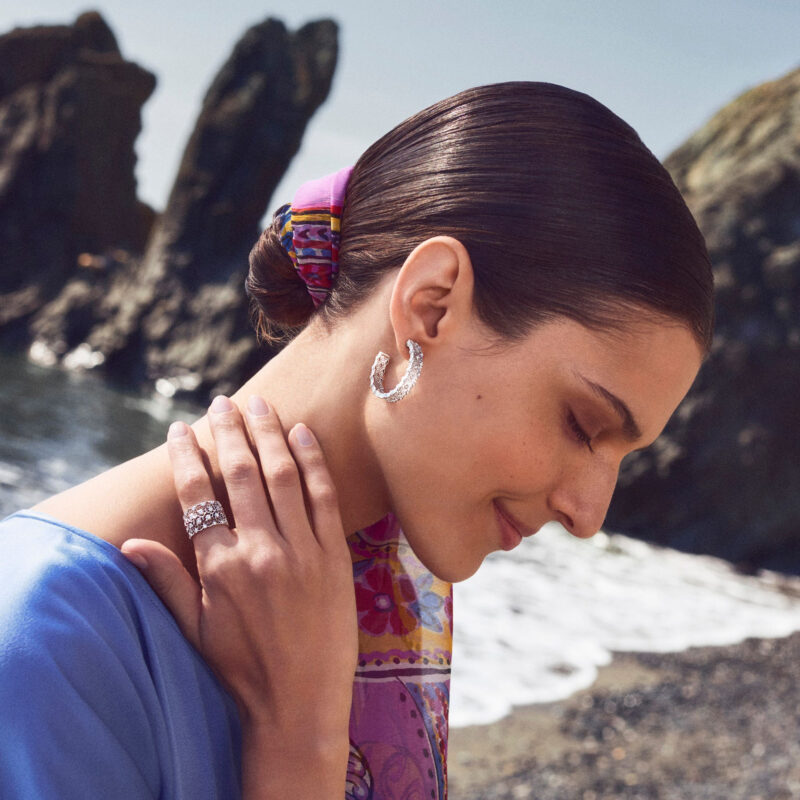
Buccellati’s Tulle edit, seen on the body. Courtesy of Buccellati.
Explore the story
A hoop catches the light beside the face. On the hand below it, a broad ring seems almost embroidered: bright flowers sit above a surface broken into small openings. The jewels have presence, yet the spaces within them keep their outlines from becoming heavy. In Buccellati’s Tulle imagery, the eye is drawn as much through the metal as across it.
That effect begins at the bench. Tulle is the maison’s honeycomb openwork, formed by piercing a sheet of precious metal into a fine network of cells. A finished jewel can suggest the ease of a textile. The working photographs reveal the concentration needed to make that apparent lightness convincing.
The work behind the open surface
01 / 04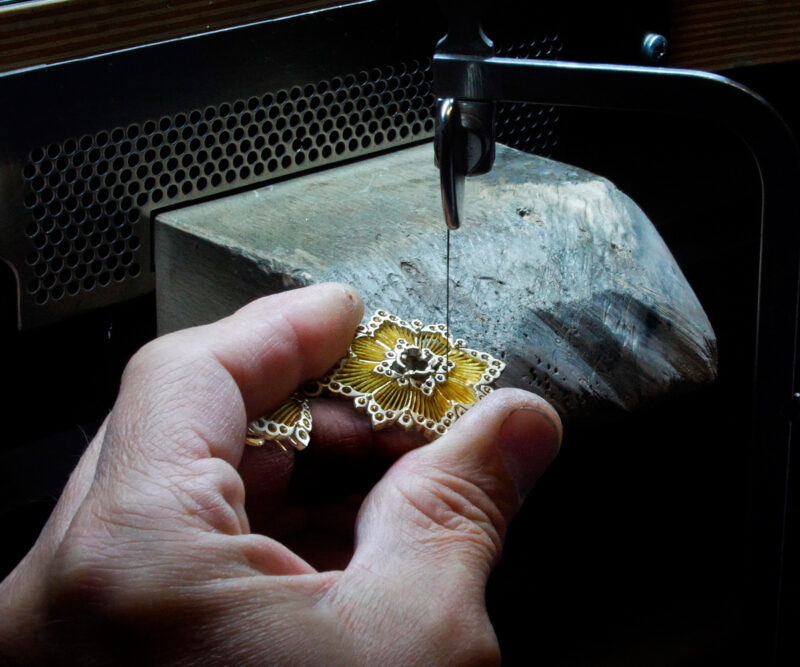
Working a pierced gold element at the bench. Courtesy of Buccellati.
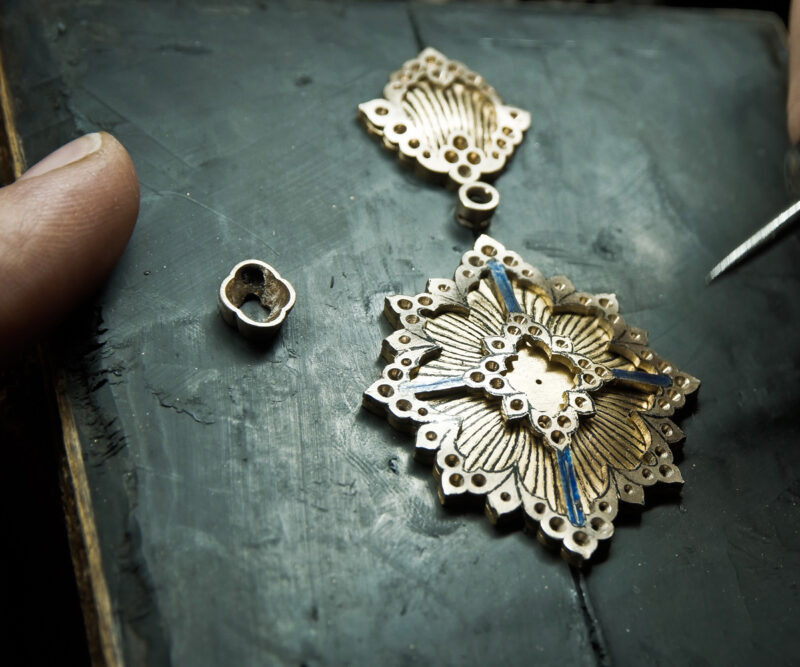
An openwork element seen close up. Courtesy of Buccellati.
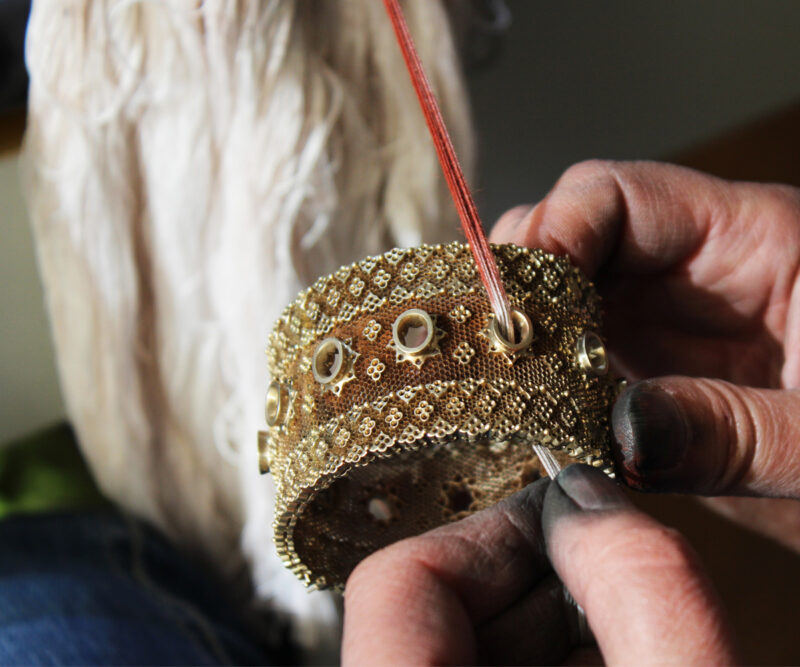
Cleaning small spaces with an abrasive-charged cotton thread, as described by the maison. Courtesy of Buccellati.
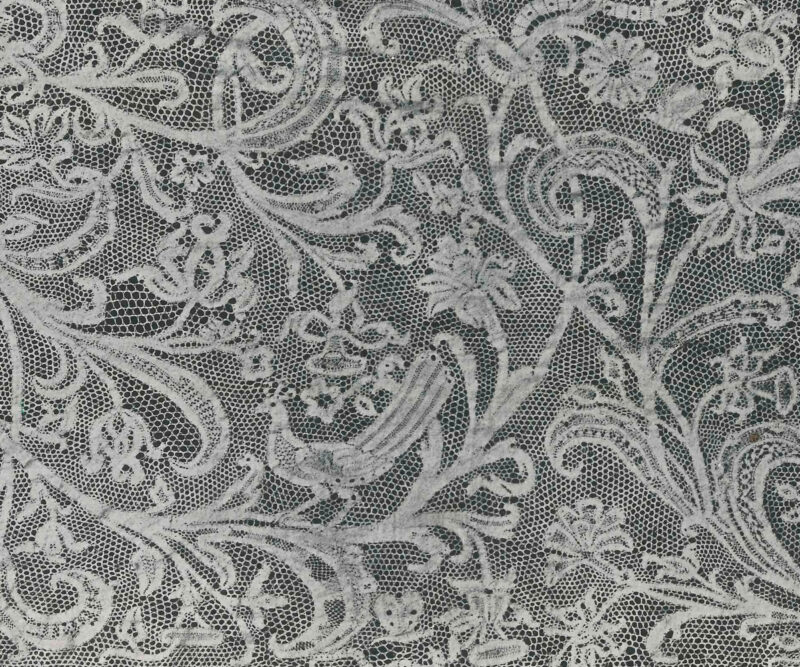
Venetian lace, the textile reference in Buccellati’s craft account. Courtesy of Buccellati.
A small gold element rests against the edge of a wooden support. One hand keeps it steady while a narrow tool approaches the pattern. The scale is intimate: a fingertip occupies almost as much space as the piece itself. Tiny openings have to remain distinct within a metal surface that still holds together.
Buccellati describes the work as a process of piercing and refining individual cells with a hand saw. Each opening has an edge, and each edge becomes part of the drawing. Across a larger surface, a slight difference in shape or spacing would change the rhythm of the whole field. The attraction of the finished pattern depends on that close attention being sustained.
The next photograph brings a pierced element closer. Openings spread around a raised central motif, with small circular intervals marking the perimeter. Here, the empty areas are easy to recognise as designed shapes. They have their own direction and proportion, contributing to the ornament as clearly as the gold that surrounds them.
Then a red thread passes through a broad bracelet. The maison describes using thin cotton threads charged with abrasive paste during the cleaning of these small spaces. The photograph gives that explanation a human scale: the thread is pulled through the work while the other hand supports the curved metal. Surfaces hidden within an opening need attention too.
The final image is Venetian lace. Its pale, branching pattern makes the textile reference immediate. Buccellati associates this kind of lace with Mario Buccellati’s inspiration for translating a fine weave into gold. The comparison draws attention to the intervals between forms: a mesh can organise flowers, leaves and curling lines while allowing each to remain visible.
Two kinds of lightness
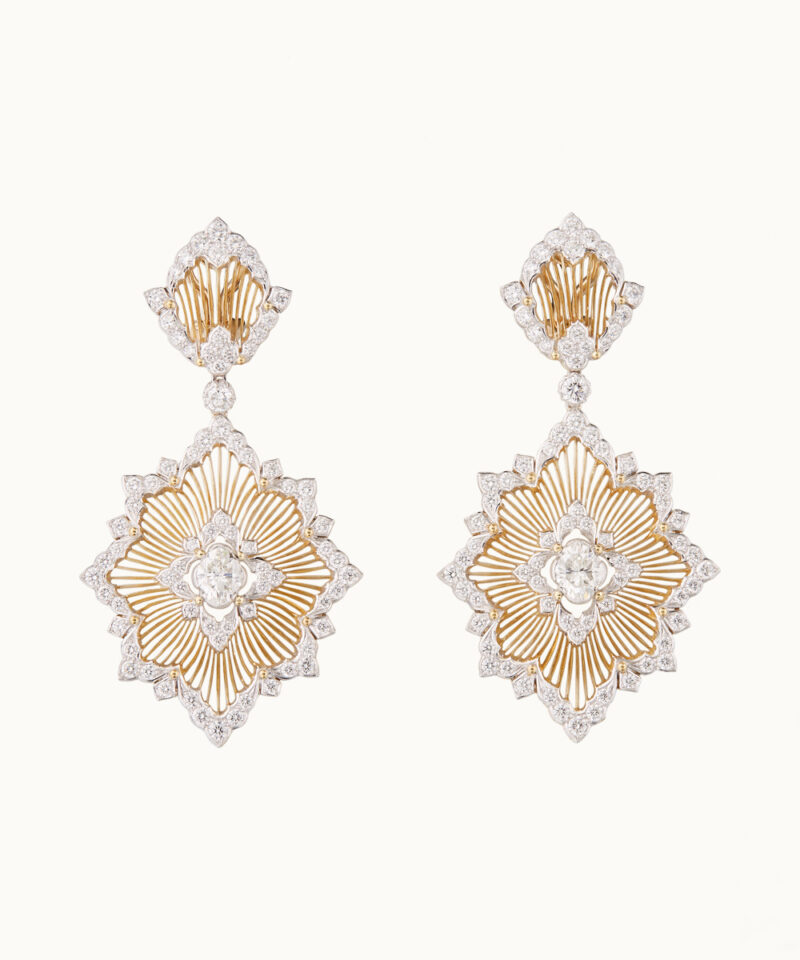
A radial pattern gives the drops a clear outward movement. Courtesy of Buccellati.
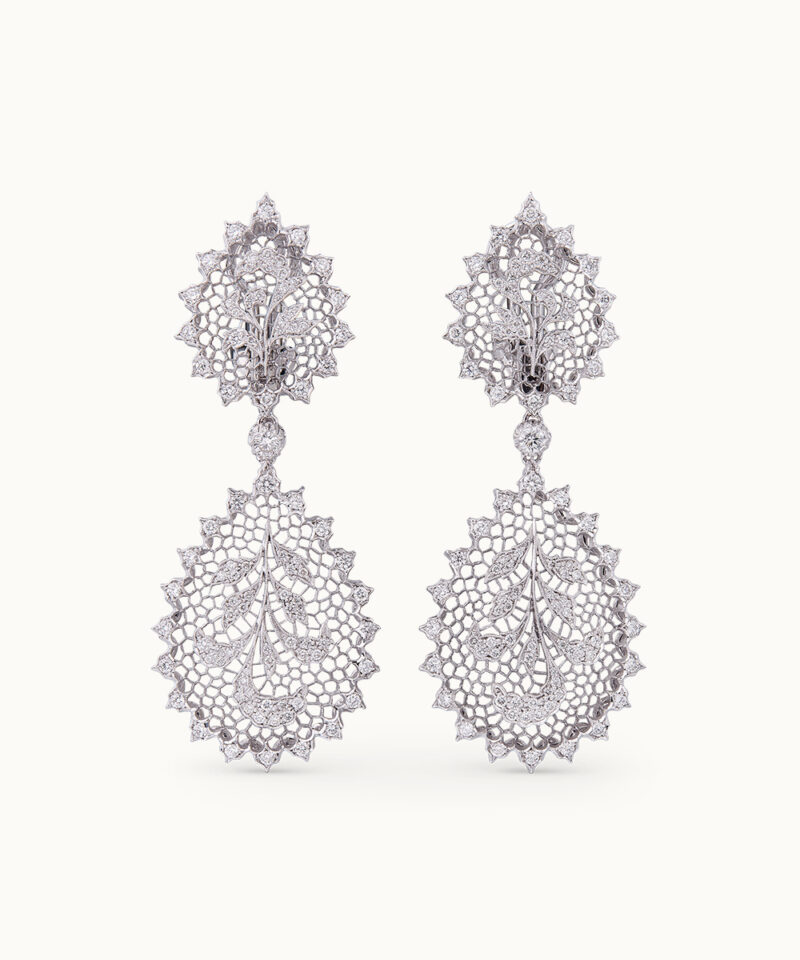
White-gold and diamond earrings, with ramage over honeycomb. Courtesy of Buccellati.
The two pairs of earrings offer a useful comparison. In the warmer pair, long openings travel outward from the centre. They establish a clear radial movement, drawing the eye towards the outer edge of each drop. The upper and lower elements repeat the idea at different scales, giving the earrings an internal continuity.
Buccellati calls this elongated, radiating variation tulle raggiera. Its effect is particularly legible beside the second pair, where a finer honeycomb supports a more intricate ramage pattern. Flowers and leaves gather over the small cells, creating a layered surface. From a distance, the outline holds the composition together; in close view, another level of drawing appears within it.
The differences matter when jewellery is worn. A strong radial pattern can remain clear beside a plain neckline or a smooth length of hair. A finely branching surface invites closer attention, especially when the surrounding clothes leave it room. Both give the wearer ornament with visible air inside it, although the route taken by the eye changes.
There is also a distinction between the colour of a jewel and the way it divides light. The warmer and cooler palettes establish an immediate impression. The openings then give each surface a particular texture of shadow and brightness. Colour and structure contribute together, and either can become the reason a piece feels right beside someone’s face.
A larger field for the same idea
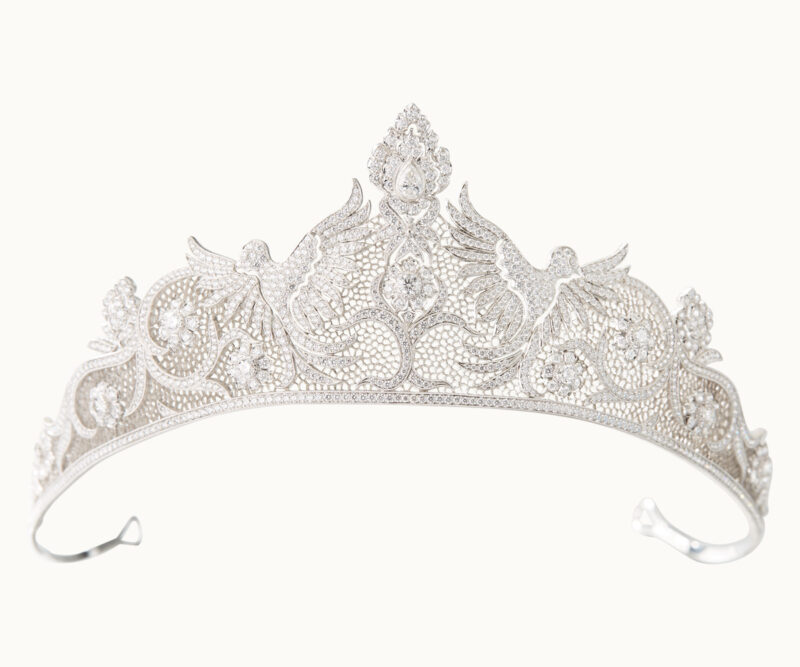
Andrea Buccellati’s white-gold and diamond tiara, 2017, in the maison’s craft record. Courtesy of Buccellati.
In the tiara, openwork moves across a much wider contour. The outer edge rises and falls through pointed forms, while smaller curls and openings fill the space beneath. The photograph makes the relationship between perimeter and interior especially clear. An elaborate centre can remain readable when the outline gives it a firm boundary.
The maison identifies this white-gold-and-diamond tiara as a design by Andrea Buccellati from 2017. Its scale gives the honeycomb a different role from that of the earrings. Across the broader field, the small openings become a continuous background from which the decorative motifs emerge. Fine detail supports a form intended to be understood at a greater distance.
This is one of the pleasures of studying a technique across several objects. A small drop and a tiara cannot share the same proportions, but they can share a way of organising a surface. Repeated openings, raised ornament and a considered edge form a language that remains recognisable as the silhouette changes.
Honeycomb, sunburst, labyrinth
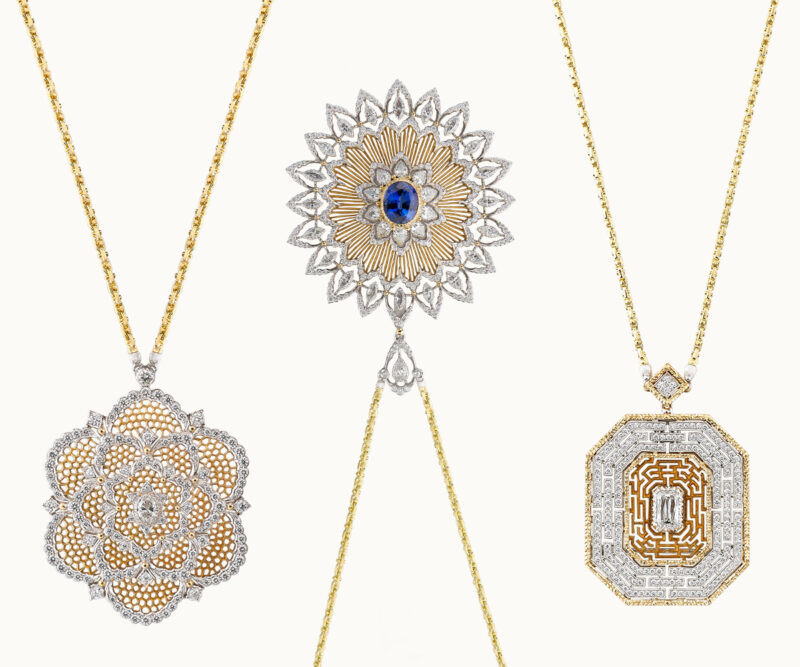
From left: honeycomb, sunburst and labyrinth variations. Courtesy of Buccellati.
Three brooch-pendants bring those possibilities into a single view. Buccellati identifies the variations, from left to right, as honeycomb, sunburst and labyrinth. Each gives the interior of the jewel a different kind of movement. A rounded network, a set of outward rays and a turning geometric pattern ask the eye to follow different paths.
The outlines help hold the comparison steady. One pendant spreads broadly around its central ornament; another concentrates attention along a vertical axis. The right-hand piece gathers its turning lines inside a compact frame. The empty spaces are the small decisions through which those larger characters emerge.
Tulle becomes more rewarding when it is considered at two distances. First, take in the complete jewel: its contour, proportion and relationship with the body. Then move closer to the tiny intervals within it. The fine network brings depth to an object whose first impression may have been almost effortless.
On the wrist, at the ear or above the face, that is the appeal of Buccellati’s openwork. The gold has been given an intricate inner life. Light can travel through it, and the ornament seems to have room to breathe.
Sources & further reading
The Edit
Maisons & Heritage stories
Selected stories from the same editorial universe.
12 Vendôme: Where Chaumet Keeps Memory and Making Together
At Chaumet’s 12 Place Vendôme, boutique, heritage salons and High Jewellery workshop share one
Bvlgari Serpenti Aeterna: The Snake Becomes a Line
A pointed head, an open coil and a fine seam of light. Serpenti Aeterna
Boghossian: Where One Gemstone Meets Another
A diamond crossing an emerald changes both. A close look at Boghossian’s Kissing designs
Boucheron, Through Frédéric: Four Jewels, One Point of View
An architectural pendant, an open curve, diamonds over the shoulders and a branch of
Hemmerle: Why a Diamond Can Belong in Iron
Dark iron, pale diamonds, wood and patinated copper. At Hemmerle, the character of a
Tiffany Blue Book 2026: How Hidden Garden Rewrites Schlumberger
Hidden Garden treats Jean Schlumberger’s archive as a living design language, translating flora, birds,