
TheTimeo / Bridal
The line
of light.
A pearl strand draws the eye towards the face. With Mikimoto Akoya, length, rhythm and the smallest ribbon of diamonds become part of dressing for the day.
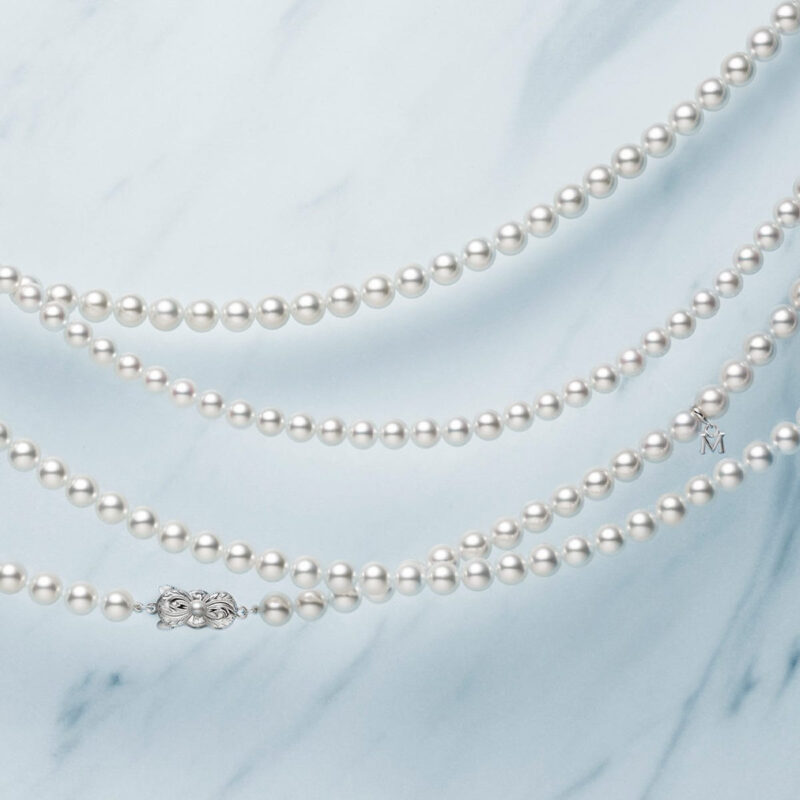
Pearl strands in Mikimoto’s official pearl imagery. A study of rhythm and surface, rather than a single product reference. Courtesy of Mikimoto.
Explore the story
A pearl necklace changes an empty neckline before anything else is added. The eye follows its curve towards the face, then notices the small intervals of light between one pearl and the next. For a bride considering Mikimoto Akoya, that line is a more useful starting point than the idea of a perfectly matched set. Where should it sit? How much skin should surround it? And what happens when one row becomes two?
A ribbon, close to the skin
01 / 03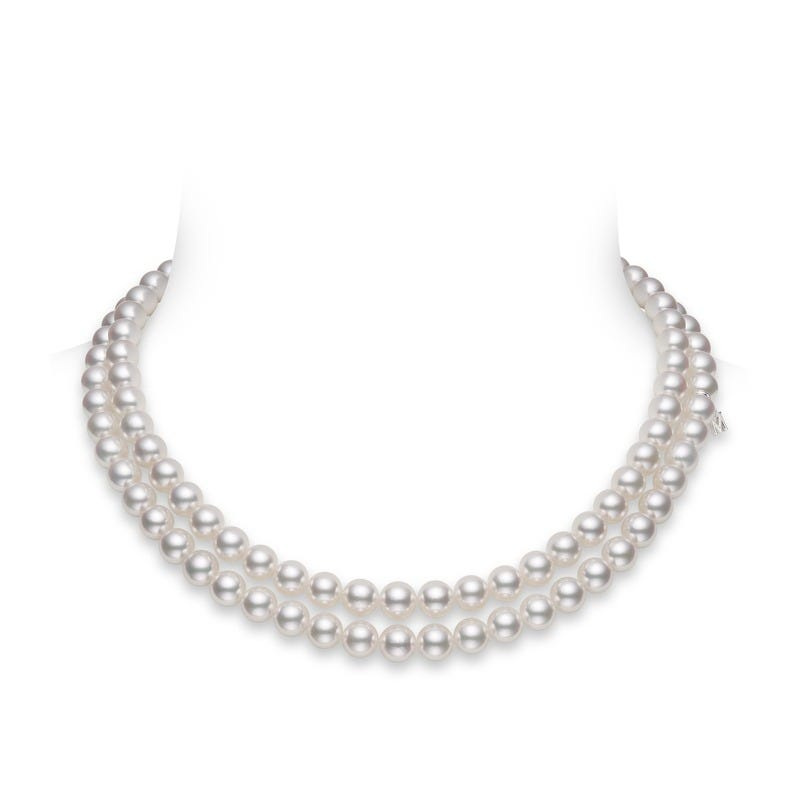
Jeux de Rubans, WG 1800D W: two rows of Akoya cultured pearls and a ribbon clasp in 18K white gold. Courtesy of Mikimoto.
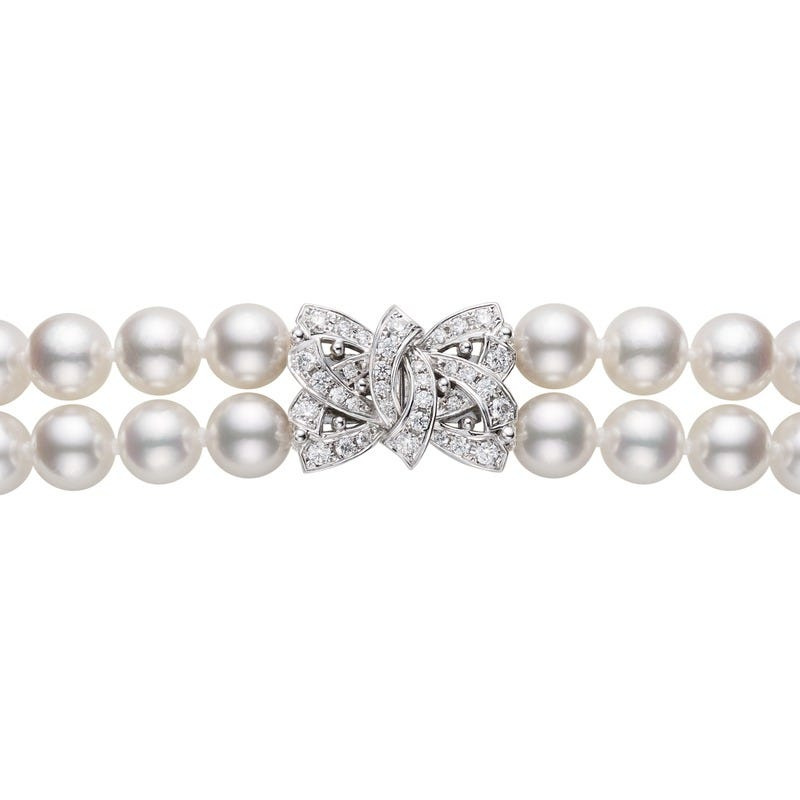
The ribbon clasp, with 0.40ct of diamonds specified for this reference. Official detail photograph, courtesy of Mikimoto.
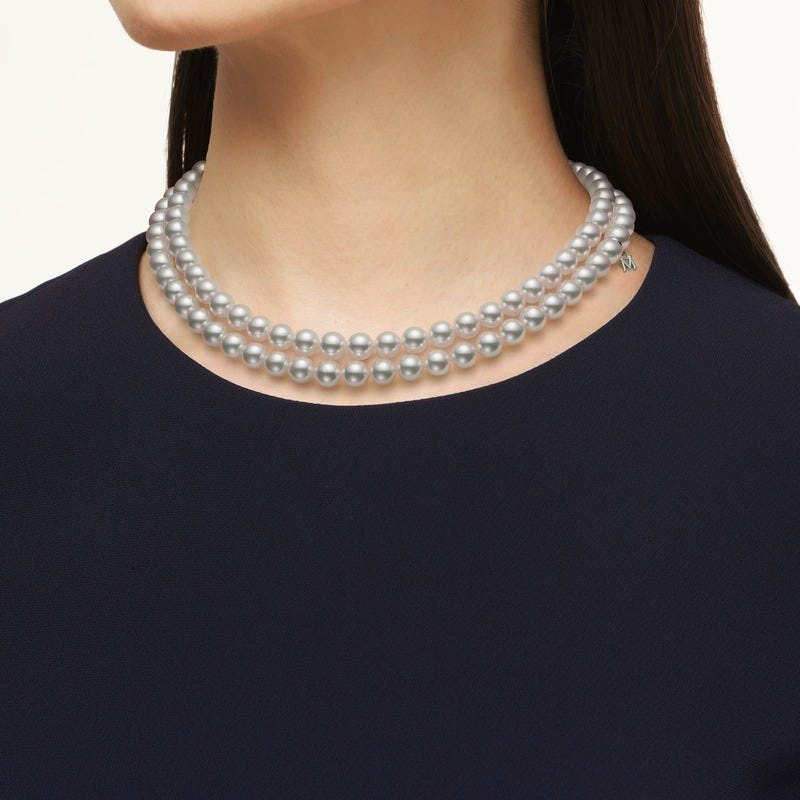
The same Jeux de Rubans reference, worn with a dark top in the house’s product photograph. Courtesy of Mikimoto.
Jeux de Rubans gives those questions a particular shape. Two rows of Akoya cultured pearls draw close, parallel curves; a diamond-set ribbon joins them. Mikimoto specifies pearls of 7.00–8.50mm, 18K white gold and 0.40ct of diamonds for the necklace shown here, reference WG 1800D W. Its approximate 16/17-inch lengths describe the two strands, rather than a single line doubled at will.
In the complete portrait, the curve feels composed and continuous. The close photograph gives the ribbon its own moment: loops and tails turn the fastening into an ornament. Then the worn view changes the reading again. Against a dark top, the pale rows become clear, compact marks around the neck. These are three ways of looking at the same jewel: its outline, its small construction and its presence on a person.
For a bridal fitting, bring that sequence back to the dress. A clean, open neckline may give the two rows space to speak together. A detailed edge asks a different question: can the fabric and pearls remain individually legible? Try the necklace with the actual neckline and look from a few steps away before concentrating on the clasp.
Three lengths. Three gestures.
Length changes the space a strand describes. Mikimoto’s guide illustrates a choker at about 40cm, a matinée at about 60cm and an opera at about 80cm. The busts below make the differences easy to see. These are reference lengths: your neck, the size of the pearls and the construction of the necklace will change where a particular piece falls.
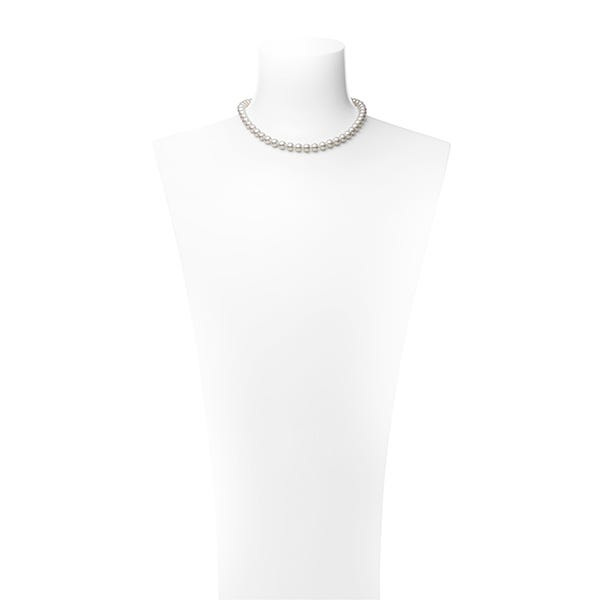
Choker: approximately 40cm in Mikimoto’s illustrated length guide. Reference illustration, not a fit prediction. Courtesy of Mikimoto.
Close to the face — about 40cm
A short curve keeps the emphasis high. The relationship to the jaw and collarbone becomes part of the composition, which is why it is worth trying this length with the intended earrings and hairstyle. Look at the whole silhouette rather than each jewel in isolation. If a fabric edge sits nearby, check whether the two lines meet comfortably when you turn your head.
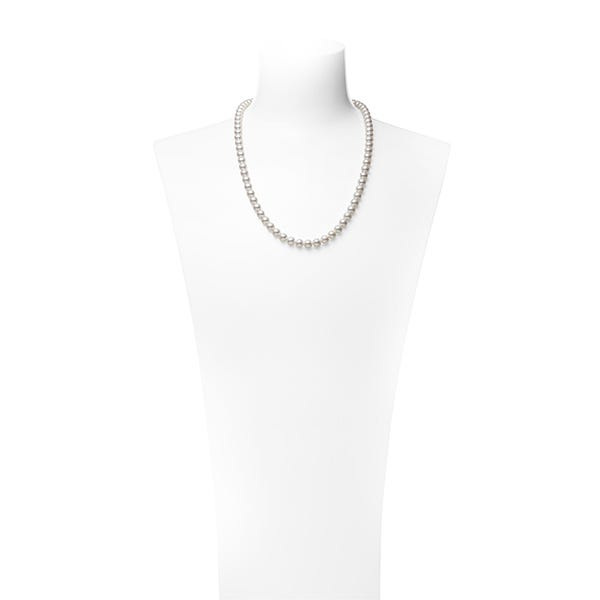
Matinée: approximately 60cm in the house’s illustrated guide. Reference illustration, courtesy of Mikimoto.
Into the neckline — about 60cm
The longer drop brings the strand into the space of the clothing. On a plain surface, that curve can become a clear drawing; over an elaborate bodice, it may meet folds, embroidery or a seam. Follow the lowest point with your eye. Its position helps you judge whether the necklace has enough room, or whether a shorter line would make the outfit feel more resolved.
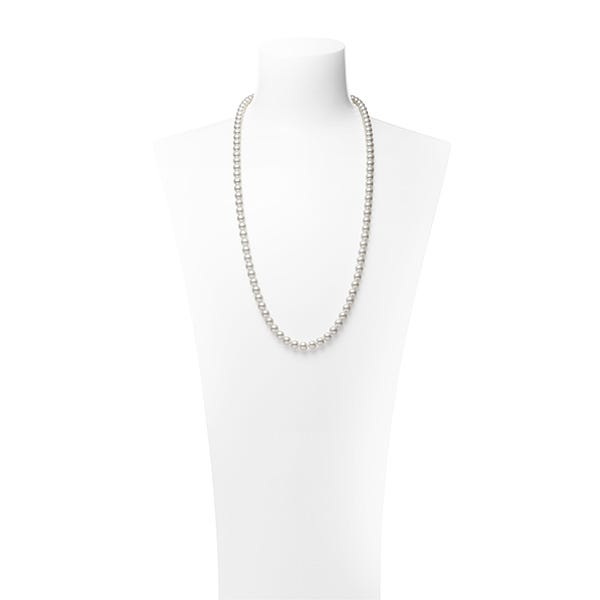
Opera: approximately 80cm in the house’s illustrated guide. Reference illustration, courtesy of Mikimoto.
Along the body — about 80cm
An opera length extends the gesture further. It makes the front of the garment part of the picture and gives the strand a different relationship to the waist and movement. Think beyond a still mirror view: sit, walk and see how the necklace settles against the fabric. If you would like to wear a long strand doubled, ask about the possibilities for that exact construction and clasp.
The rhythm is made by hand
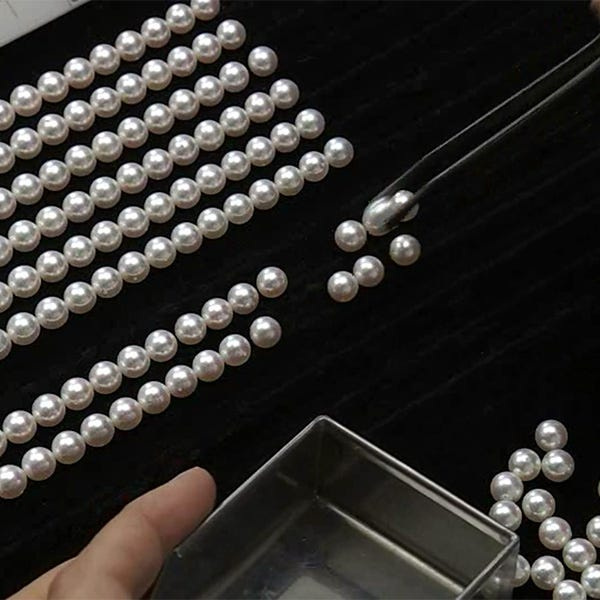
Pearl matching in Mikimoto’s official craftsmanship imagery. Courtesy of Mikimoto.
The quietness of a strand depends on many small choices. Mikimoto describes matching pearls for colour, size, shape and lustre. Seen in the sorting photograph, rows of separate pearls begin to suggest the judgement required to make a continuous line. A necklace needs each pearl to belong beside the next while retaining the surface that makes it interesting to look at closely.
That is a useful way to approach a fitting. First notice the overall rhythm. Then move nearer and follow the light across a few neighbouring pearls. Consider the necklace against the colour of the dress, rather than judging it on a display alone. Ivory satin, a cool white shirt and bare skin offer different surroundings to the same pale strand.
You do not have to translate that response into a technical grade to know which composition attracts you. Ask the maison to explain the qualities of the particular necklace, then give yourself time to compare it in the clothing you intend to wear. The pleasure of a strand is both immediate and cumulative: the curve reads at a distance; the individual surfaces reward coming closer.
For the life after the day
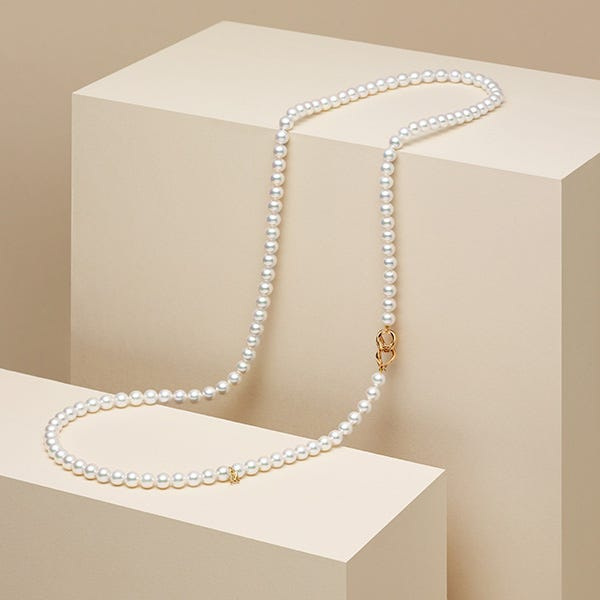
Infinity Opera, in the house’s Pearl Necklace Collection imagery. A different design from Jeux de Rubans. Courtesy of Mikimoto.
A wedding can be the first occasion for a pearl necklace without determining every occasion that follows. The long Infinity Opera strand in Mikimoto’s collection imagery offers a different gesture from Jeux de Rubans: it passes over edges and through space, inviting the eye to travel further. It is a separate design, shown here as a way to think about another kind of line.
Imagine the necklace with the clothes already in your life. A plain evening dress, an open collar or a fine knit gives you something more personal to compare than a complete new wardrobe. The question is which length and presence you would choose again. A strand that feels right with your own clothes can carry a memory without needing to recreate the ceremony.
The small habits around it matter too. Mikimoto’s care guidance recommends wiping pearls gently after wear, keeping them away from cosmetics and chemicals, and storing them separately from other jewellery. Leave a place for that ritual alongside the place you have imagined for the necklace itself.
Leave room for yourself
At the fitting, look once with all the elements together: dress, pearls, earrings, hair. Then remove one piece and look again. The result may favour a single clear strand, two close rows or a longer movement across the fabric. There is no need for every part to make an equal claim on the eye.
The necklace you remember may be the one that brings the whole picture into focus. A line of pearls, a little space around it, and the person wearing it.
Sources & further reading
The Edit
Jewelry stories
Selected stories from the same editorial universe.
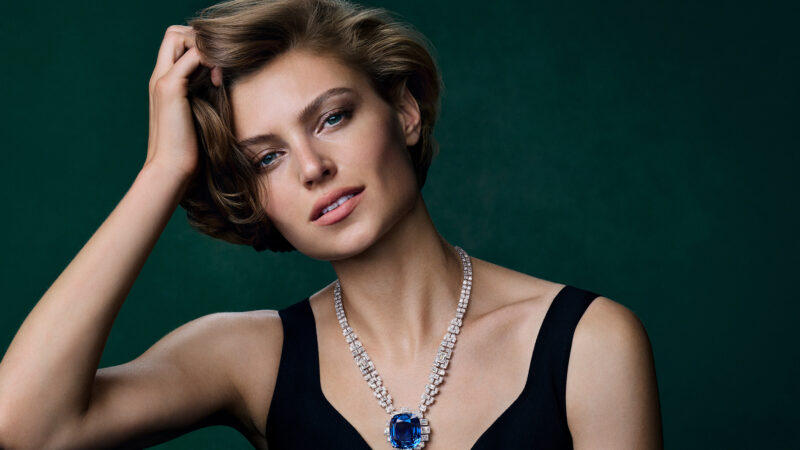
Graff’s Art of Colour: Blue at the Centre, Green in Motion
A blue centre, an emerald line and the clothes around them: Graff’s September campaign
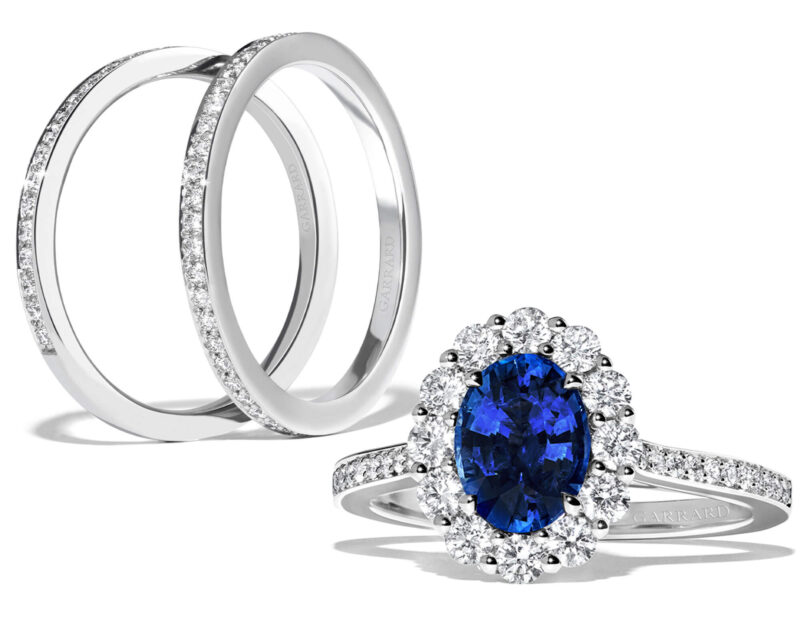
Garrard 1735: A Sapphire Ring with Room for Two
A sapphire cluster establishes the centre; a narrow diamond band adds a second line.
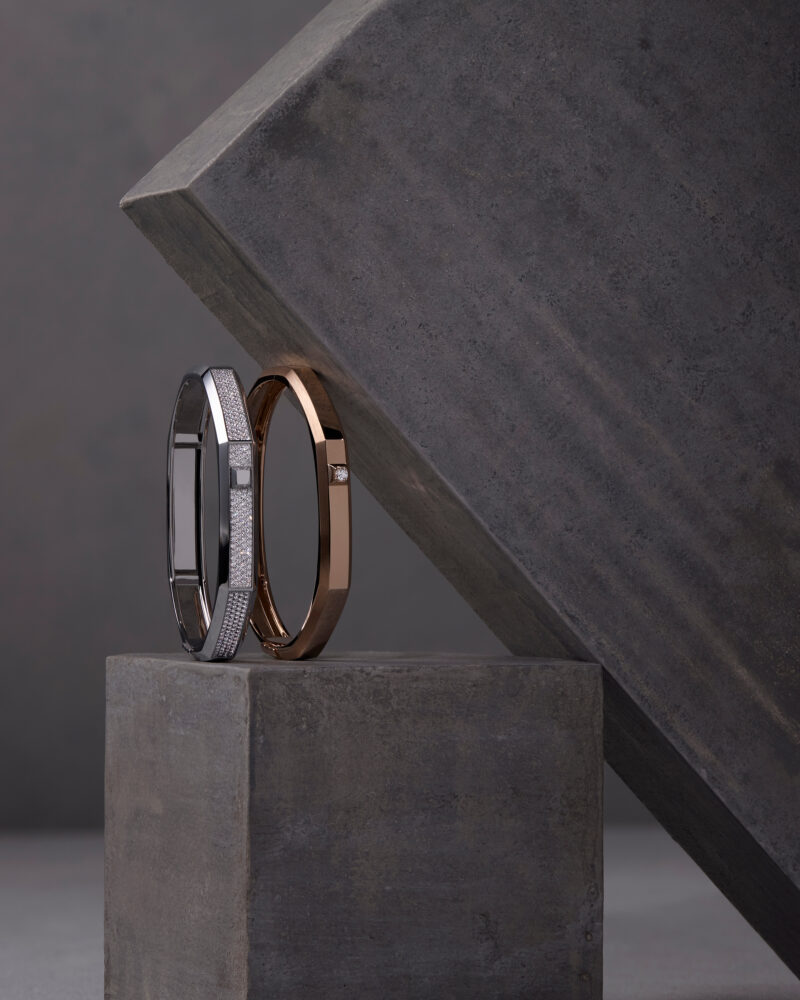
Messika Moderniste: Gold with an Architectural Edge
A broad gold plane, a brushed surface and a small diamond held at the
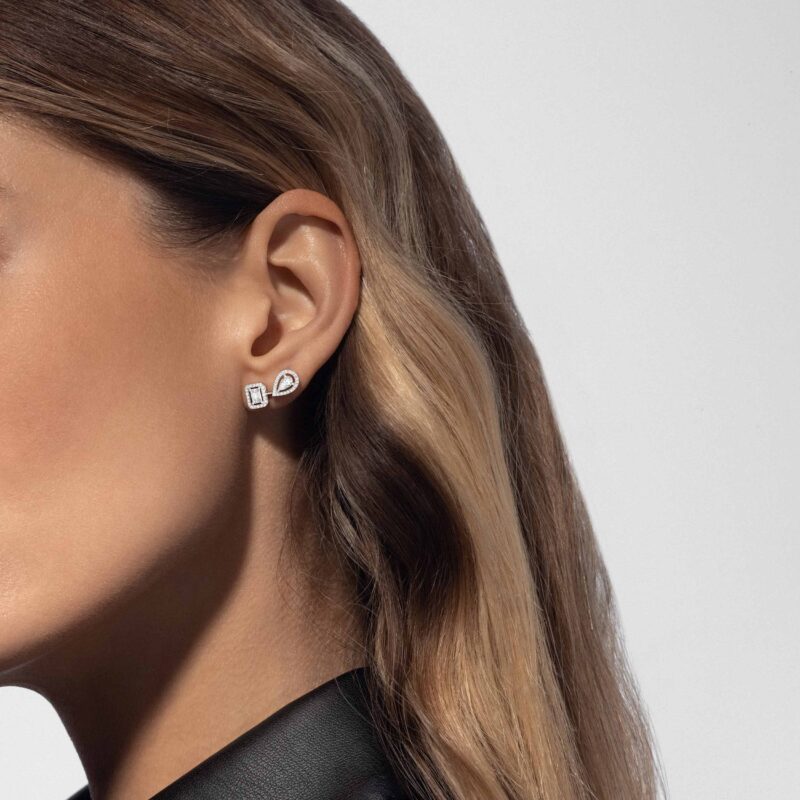
Messika My Twin: Two Cuts, One Bridal Look
An emerald cut, a pear and an unequal pair: the small asymmetry of Messika
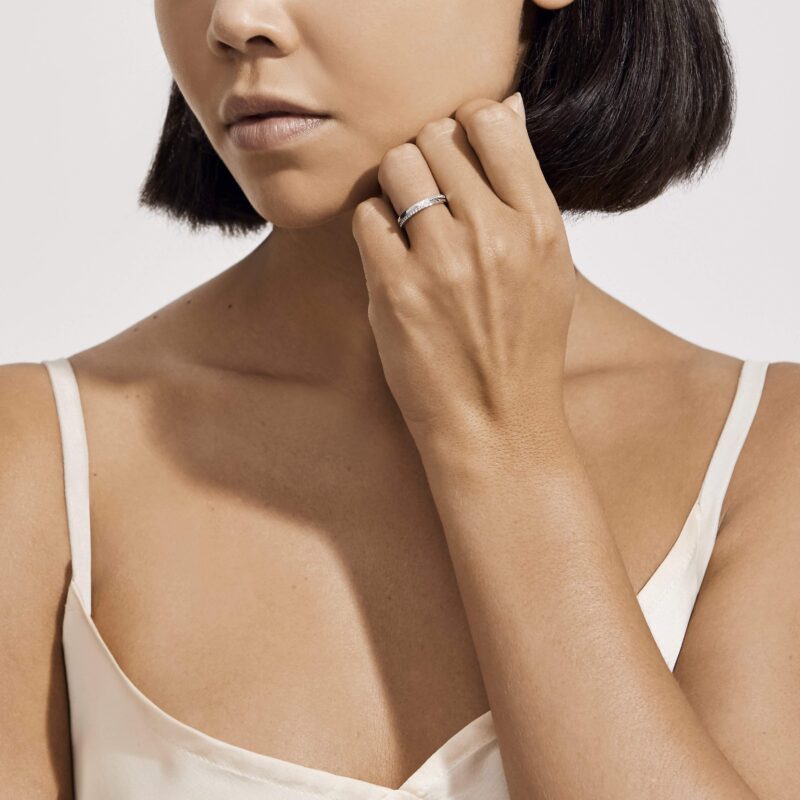
Two Rings, Two People: A De Beers Wedding-Band Edit
A rose-gold court profile, a single diamond in platinum, a fine eternity line or

Mikimoto M: A Pearl with a Graphic Edge
White South Sea pearls, golden warmth and a sharply drawn setting: Mikimoto M offers