High Jewellery Atelier
JewelryCartier Nature Sauvage: The Jewelled Fauna Reimagined
Cartier Nature Sauvage turns the maison’s fauna into a high jewellery language of camouflage, geometry and movement, from Panthère Jaillissante to Koaga and Mochelys.
In brief
Why this creation matters
Cartier Nature Sauvage tests a century of animal vocabulary by making the panther, zebra, turtle and reptiles move, hide, detach, guard and reappear through high jewellery engineering.
Nature Sauvage matters because Cartier tests its own heritage: the animal remains recognisable, but becomes more interesting the longer one looks.
TheTimeo editorial desk
Object first
A closer reading of the creation


Editorial dossier
Cartier fauna, made alive again
Nature Sauvage is Cartier refusing to let its bestiary become habit. The animal is not treated as a motif placed onto a jewel. It becomes structure: stripes become openwork, scales become geometry, a turtle becomes a brooch, and a panther becomes a fully articulated hand jewel that responds to the body.
Atelier reading
The animal as structure
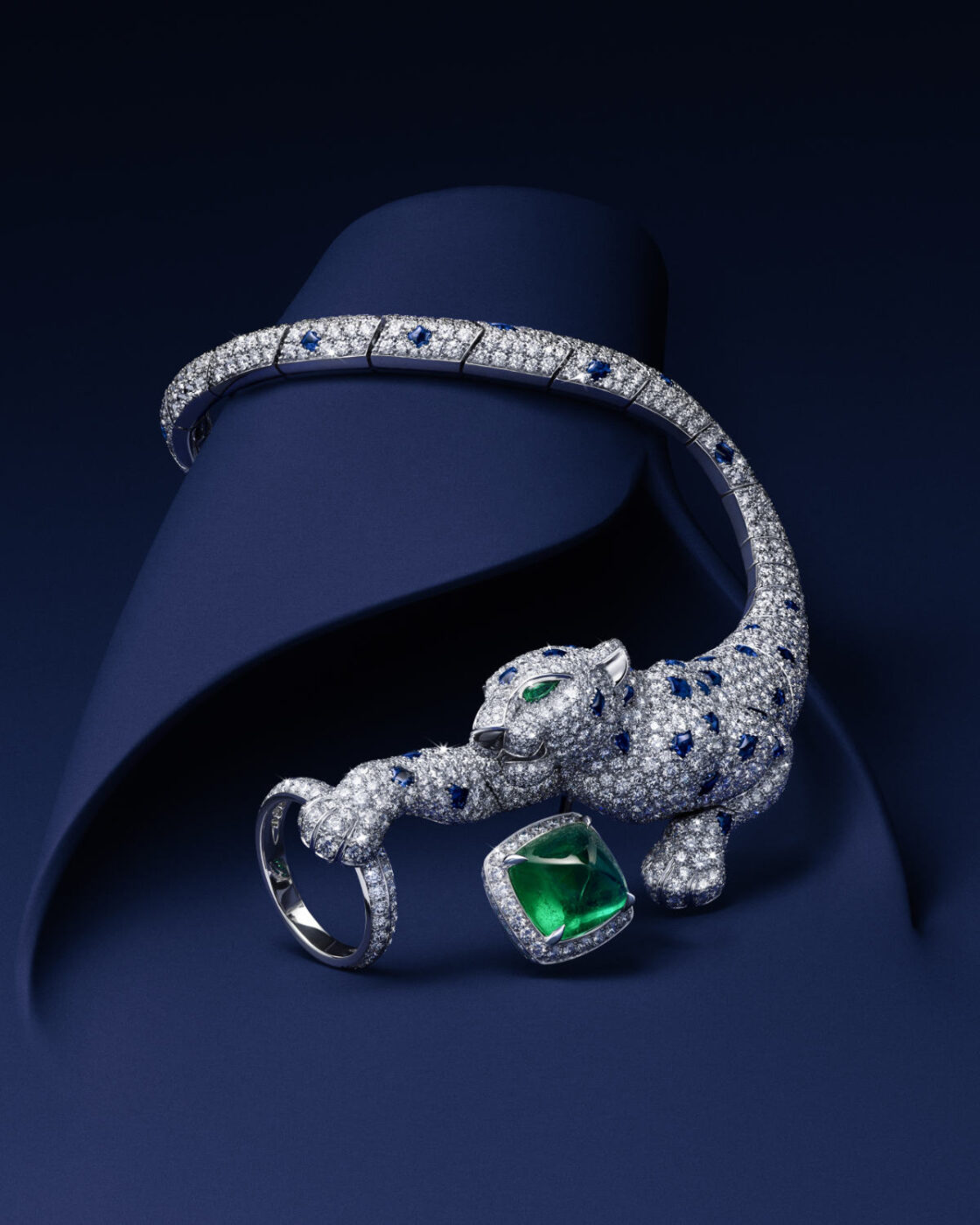
Panthère Jaillissante does not place a panther on a jewel. It makes the panther into the jewel’s logic: a fully articulated form somewhere between ring and bracelet, guarding an 8.63-carat Zambian emerald. Koaga applies the same intelligence to the zebra, where stripes become openwork, profile becomes architecture and pattern leads to a 6.25-carat pear-shaped rubellite.
Atelier reading
Colour with house memory
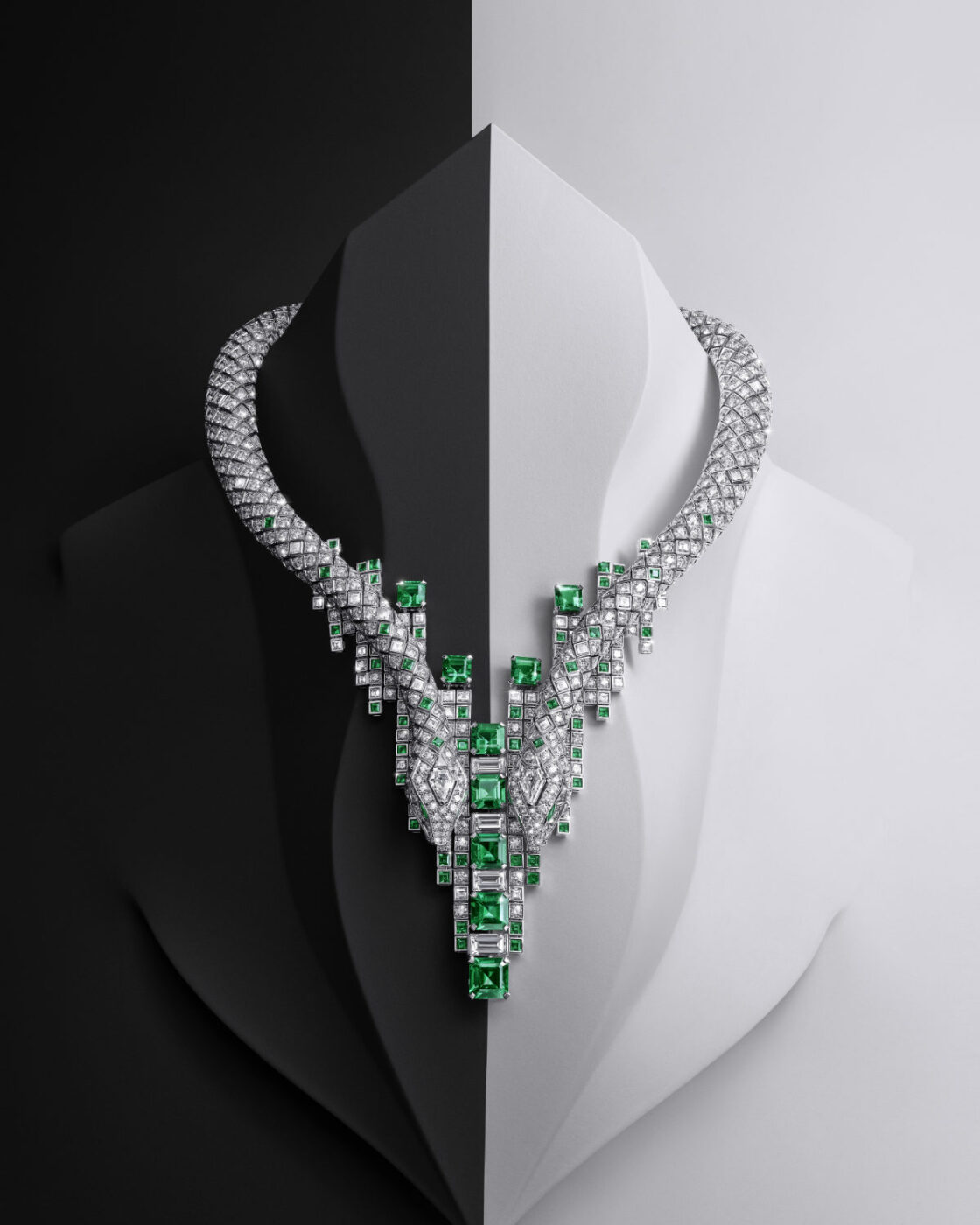
Chryséis connects the collection to butterfly wings and Cartier’s historic taste for high-contrast natural palettes. A 63.76-carat rubellite anchors chalcedony beads and black-and-white patterning. Amphista takes the same principle into metropolitan territory, with two reptiles around the neck and nine Colombian octagonal emeralds totalling 14.72 carats.
Atelier reading
A collector’s reading
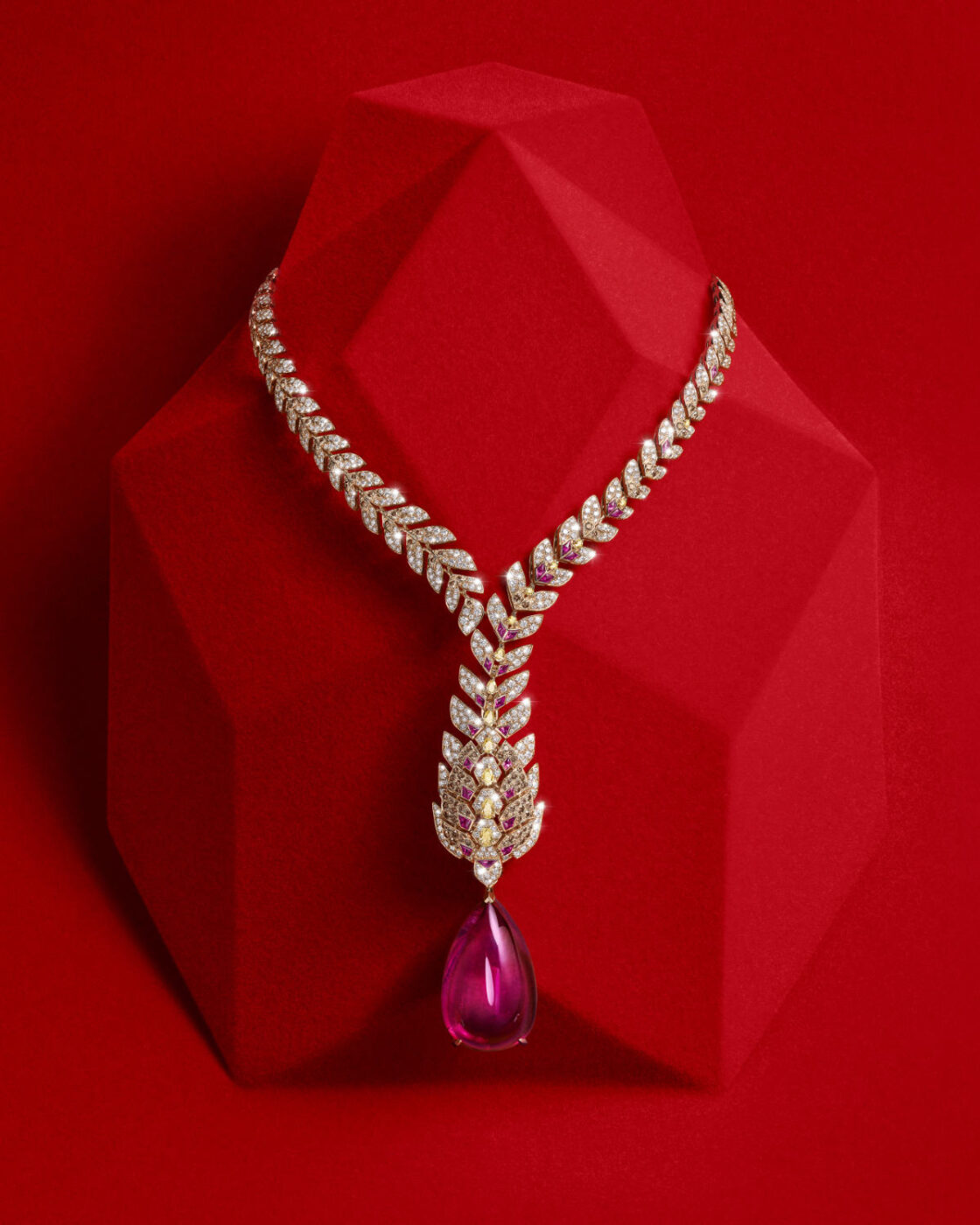
Mochelys is the collection’s most patient jewel. A necklace built around a 71.90-carat rubellite appears first as architectural abstraction; the turtle is concealed inside it and reveals itself only when detached as a brooch. That is not a trick. It is an argument about time and discovery.
Visual dossier
The image sequence behind the story
Cartier has been drawing animals since the early twentieth century, and the danger of a century of vocabulary is always the same: the code becomes a logo, the logo becomes a habit, and the habit becomes invisible. Nature Sauvage is Cartier’s answer to that risk.
The collection does not retire the panther, the tiger, the turtle or the zebra. It puts them in situations they have never been in before: a jungle, an icecap, a necklace that first reads as abstract, a hand jewel that moves with the smallest gesture. Cartier’s fauna is not simply represented here. It is translated into geometry, articulation, colour and concealment, then asked to prove it is still alive.
A fauna made of encounters, not illustrations
The strongest reading of Nature Sauvage begins with Cartier’s own language: the collection is built around new and unexpected encounters. That phrasing is important. Cartier is not asking the viewer to admire a catalogue of animal motifs. It is staging moments where an animal crosses into another visual world: a jungle, an icecap, a geometric mesh, a reed bed, a necklace that at first seems abstract.
This is why the collection feels precise rather than decorative. In high jewellery, fauna can easily become literal, sentimental or purely spectacular. Cartier’s advantage is that the house has more than a century of animal vocabulary behind it, especially through the panther, and can therefore afford to fragment the motif. Nature Sauvage often lets one detail carry the identity: spots, scales, eyes, a beak, a curve, a claw, the posture of a body in motion.
The result is a collection that rewards a closer look. A jewel may read first as a graphic necklace, then as a hidden creature. A ring may seem architectural before the reptile source becomes visible. A hand jewel may reveal its meaning only through the way it moves on the wearer.
The key creations to understand
Cartier’s official presentation gives the collection a broad bestiary, but several creations define the editorial architecture of Nature Sauvage.
Panthère Canopée places the maison’s emblematic feline in an imaginary jungle, watching over a 26.53-carat Ceylon sapphire. The importance of the piece is not only the stone, but the way the panther becomes guardian and structure at once. It is the familiar Cartier animal placed inside a more demanding architectural scene.
Tigre is the collection’s lesson in realism and surface. Cartier describes the tiger coat through yellow, orange, brown and white diamonds, with onyx spots cut individually in varied directions and planes. That detail is crucial because it shows the atelier thinking like both jeweller and image-maker: the animal is built through calibrated contrast, not painted onto the metal.
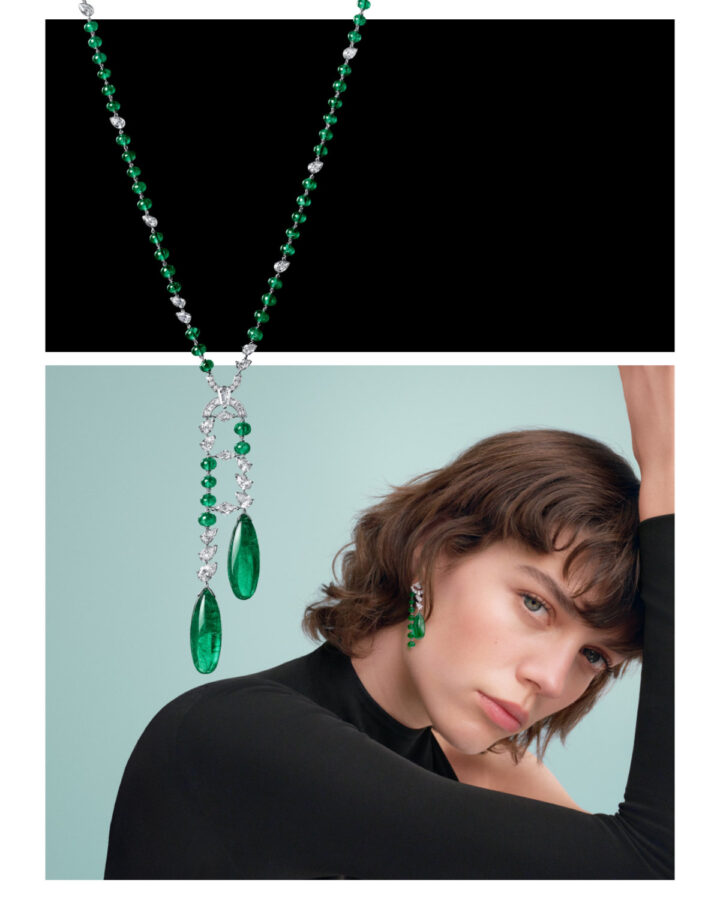
Chryséis brings the collection into colour. Cartier links the necklace to butterfly wings, using black-and-white patterning against chalcedony beads and a 63.76-carat rubellite. The chromatic tension is pure Cartier: red, green and black are not used as decoration, but as a house code made vivid again through naturalist movement.
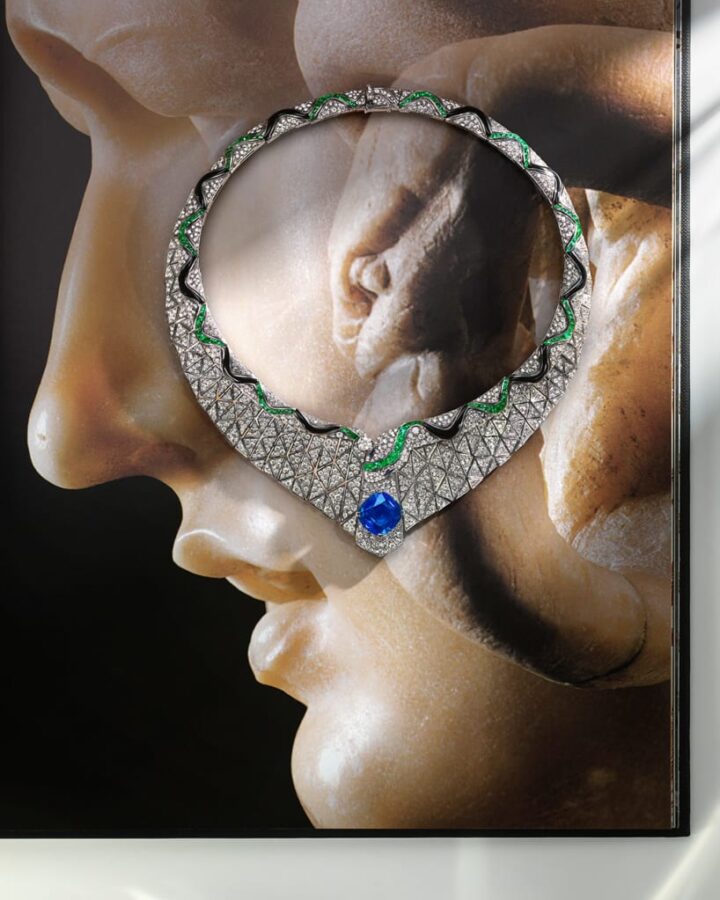
Vamana turns the elephant into a meeting point between figuration and abstraction. Ears, trunk and emerald eyes emerge from a necklace structured around triangular, lozenge and kite-shaped diamonds. It is a good example of Nature Sauvage at its most architectural: the animal is present, but the jewel never stops behaving like a rigorous composition.
Panthère Jaillissante is perhaps the clearest expression of kinetic Cartier. The panther becomes a fully articulated hybrid jewel, somewhere between ring and bracelet, guarding an 8.63-carat Zambian emerald. Its diamond coat is flecked with sapphires and its eyes are emerald. The point is not only technical virtuosity; it is that the animal is designed to activate the hand.
Koaga translates the zebra into graphic rhythm. Cartier notes an emerald-cut diamond and a 6.25-carat pear-shaped rubellite, with onyx stripes and diamond-set lines allowing openwork to reveal the skin. In a collection full of creatures, Koaga stands out because it uses the animal as pattern, profile and architecture at the same time.
Mochelys is the collection’s lesson in camouflage and transformation. A turtle is concealed inside what first appears to be an abstract necklace, built around a 71.90-carat rubellite; when detached, the animal becomes a brooch. This is high jewellery as delayed recognition: the wearer and viewer discover the animal through movement and mechanism.
Amphista gives Nature Sauvage its metropolitan edge. Two reptiles wrap around the neck, with diamond scales, emerald-set forms and nine Colombian octagonal emeralds totaling 14.72 carats. The piece is important because it compresses organic movement and urban geometry into one visual sentence.
Why the collection feels Cartier
The collection’s authority comes from the tension between two Cartier instincts: animal vitality and design discipline. The maison could rely on the panther alone and still be understood. Nature Sauvage is more ambitious because it treats fauna as a route into shape, structure, engineering and colour.
There is also a specific historical intelligence at work. Cartier’s animalier language is not a seasonal idea. The panther has been part of the house’s vocabulary since the early twentieth century, and the wider bestiary has long allowed Cartier to combine preciousness with attitude. Nature Sauvage updates that lineage by making the animal less static. The creature is caught mid-action, hidden, broken into signs or transformed into a jewel that changes function.
That is why the collection feels contemporary without losing the house. It does not abandon Cartier codes; it sharpens them. Onyx and diamond become more graphic. Emeralds become eyes, reeds or reptile scales. Rubellites become centres of gravity. Lacquer, openwork and articulation help the jewels carry movement even before they are worn.
Craft, movement and the high jewellery problem
The central challenge in animal high jewellery is credibility. A creature must feel alive, but the jewel must remain wearable. It must suggest movement, but it cannot collapse into costume. Cartier addresses this through engineering: articulated bodies, transformable elements, openwork structures, hidden mechanisms and stone setting that serves anatomy rather than surface alone.
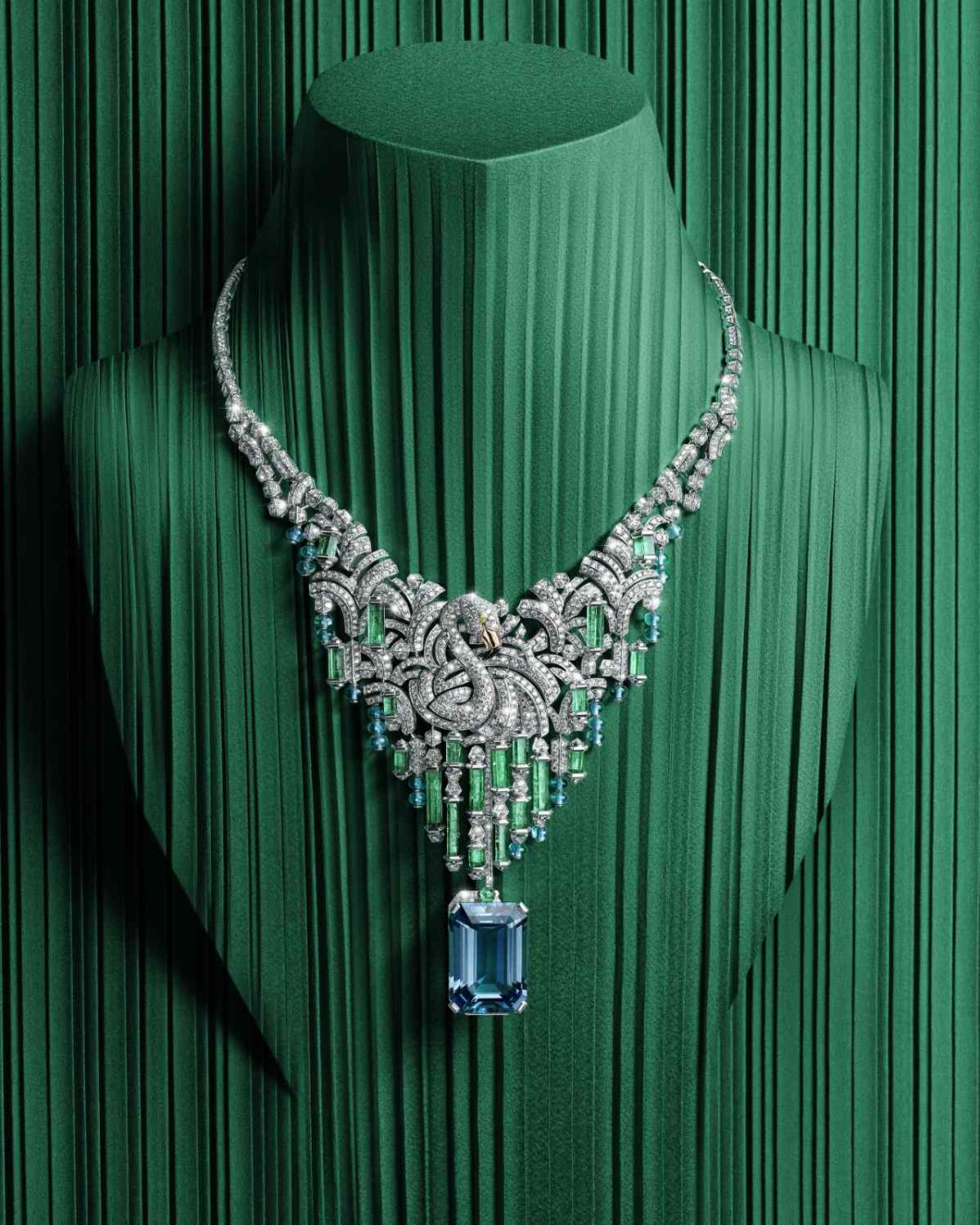
This is especially visible in the transformable pieces. Mochelys changes the reading of a necklace by allowing the turtle to detach into a brooch. Panthère Jaillissante turns a panther into a hand jewel, asking the animal to move with the smallest gesture. Celestun, the flamingo subject, builds a stylized landscape of reeds, aquamarine and emeralds around a bird that is less portrait than apparition.
The high jewellery value here is not only in carat weight, although the important stones are central. The value is in the successful negotiation between stone, silhouette and body. Nature Sauvage uses exceptional gems as anchors, but the collection’s strongest pieces are those where the animal logic and the mechanical logic become inseparable.
Collector relevance
For collectors, Nature Sauvage sits in a privileged category: it is recognizably Cartier, image-led, technically complex and anchored in a house code that has long-term cultural memory. The animalier vocabulary makes the collection legible; the transformations and abstractions make it more than a repetition of heritage.
That distinction matters. A collector does not need another generic panther. A collector needs a piece where Cartier’s history has been advanced, not merely quoted. Nature Sauvage offers that advancement through pieces that are graphic, kinetic and often unexpectedly playful. The jewels are serious, but they are not solemn.
The Vienna presentation also matters in context. Reports from the launch described an 87-piece display, with a wider collection planned beyond that first showing. The scale signals confidence: Cartier treated Nature Sauvage not as a capsule, but as a major high jewellery statement.
Key Nature Sauvage references
| Creation | Animal or idea | Verified detail | Why it matters |
|---|---|---|---|
| Panthère Canopée | Panther in an imaginary jungle | 26.53-carat Ceylon sapphire | Cartier’s emblematic feline becomes guardian and composition. |
| Chryséis | Butterfly wing language | 63.76-carat rubellite with chalcedony beads | Colour and pattern turn naturalism into a house-code palette. |
| Panthère Jaillissante | Panther hand jewel | 8.63-carat Zambian emerald | Articulation makes the animal respond to the hand. |
| Koaga | Zebra, line and openwork | 6.25-carat pear-shaped rubellite | Graphic contrast becomes animal identity. |
| Mochelys | Hidden turtle | 71.90-carat rubellite; detachable brooch function | Camouflage and transformability become the story. |
| Amphista | Twin reptiles | Nine Colombian octagonal emeralds totaling 14.72 carats | Organic movement is disciplined into urban geometry. |
TheTimeo view
Nature Sauvage succeeds because it understands that Cartier’s fauna is strongest when it is not treated as a logo. The panther, the tiger, the turtle, the flamingo, the zebra and the reptiles are not simply placed onto jewels. They are transformed into structure, rhythm, concealment and movement.
The collection’s strongest argument is that heritage has to be tested to remain alive. A familiar animal is not enough. Cartier makes the creature move, hide, detach, guard, frame and reappear. That is what gives Nature Sauvage its authority: the wild remains wild, but only after the atelier has disciplined it through drawing, gem selection, engineering and the intelligence of the body.