High Jewellery Atelier
Bridal
Toi et Moi: The Ring Design That Started With Napoleon, and Why Van Cleef & Arpels Still Owns It
A TheTimeo bridal reading of the Toi et Moi ring — a design whose name means simply “you and me,” whose documented history begins with a famously late groom in 1796 and a future First Lady in 1953, and whose contemporary life at Van Cleef & Arpels continues through the Perlée collection.
In brief
Why this creation matters
Two stones, set side by side, of nearly equal size, meant to be read together rather than separately. That is the entire idea behind Toi et Moi — and it is, perhaps, the simplest and most literal way that jewellery has ever managed to say the words "you and me" without using a single letter.
you and me
Toi et Moi translation
Object first
A closer reading of the creation
Editorial dossier
Two elements, paired
A design whose name means simply "you and me," whose documented history begins with a famously late groom in 1796 and a future First Lady in 1953, and whose contemporary life at Van Cleef & Arpels continues through the Perlée collection, born in 2008.
Atelier reading
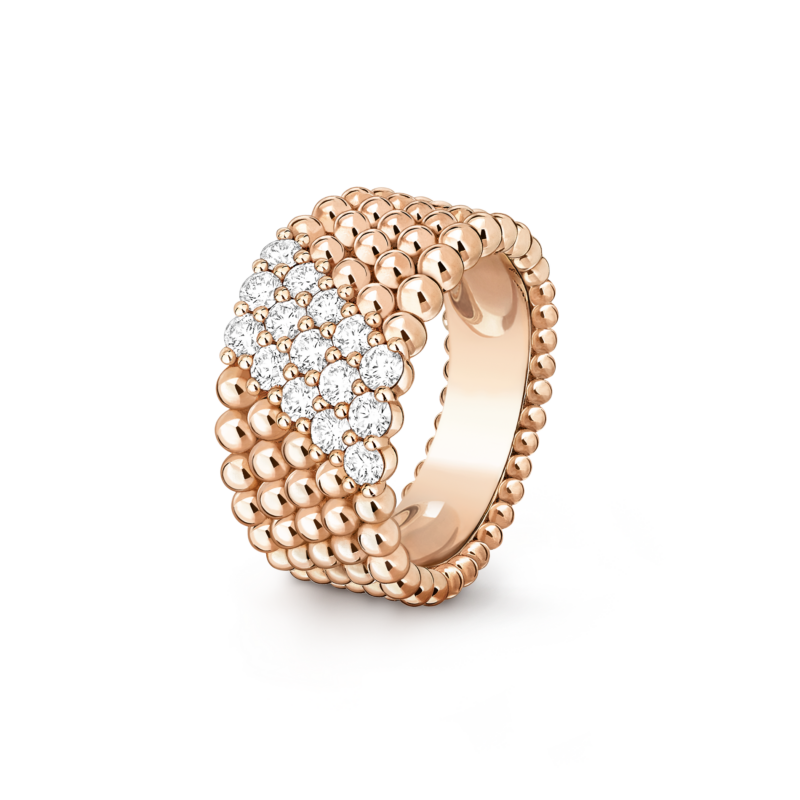
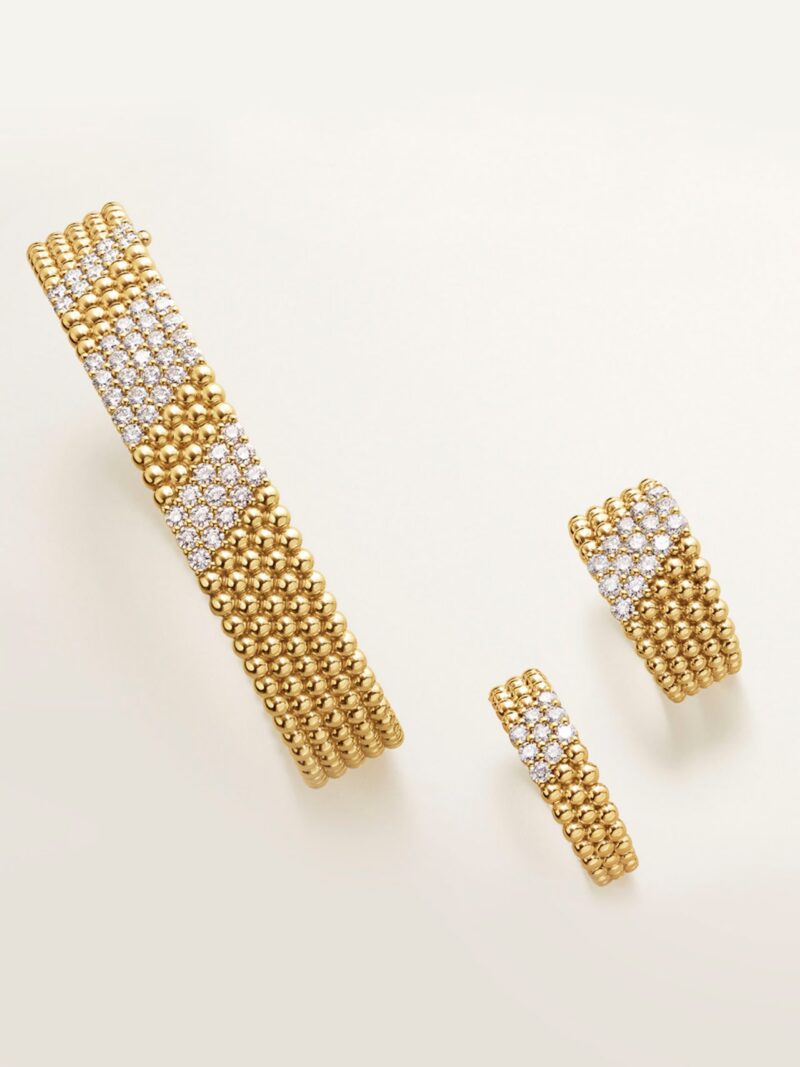
The Perlée Golden Bead
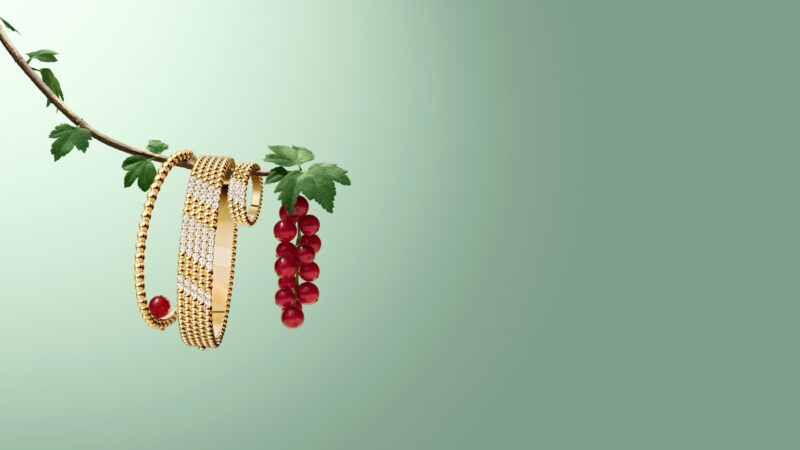
Born in 2008, the Perlée collection showcases precious spheres that give rise to rounded volume, suggesting a soft, tactile gold textile.
Atelier reading
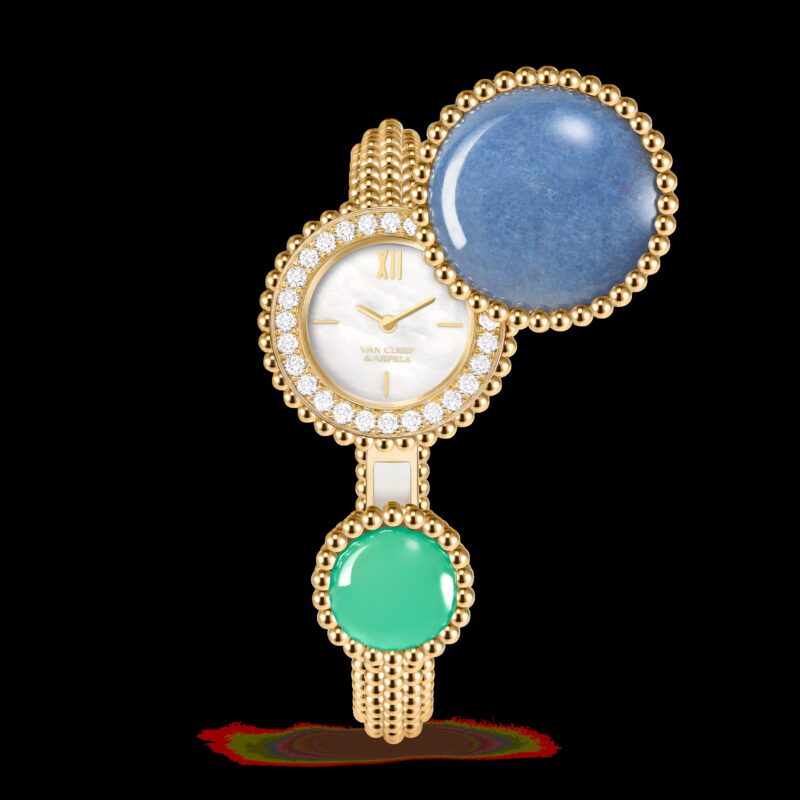
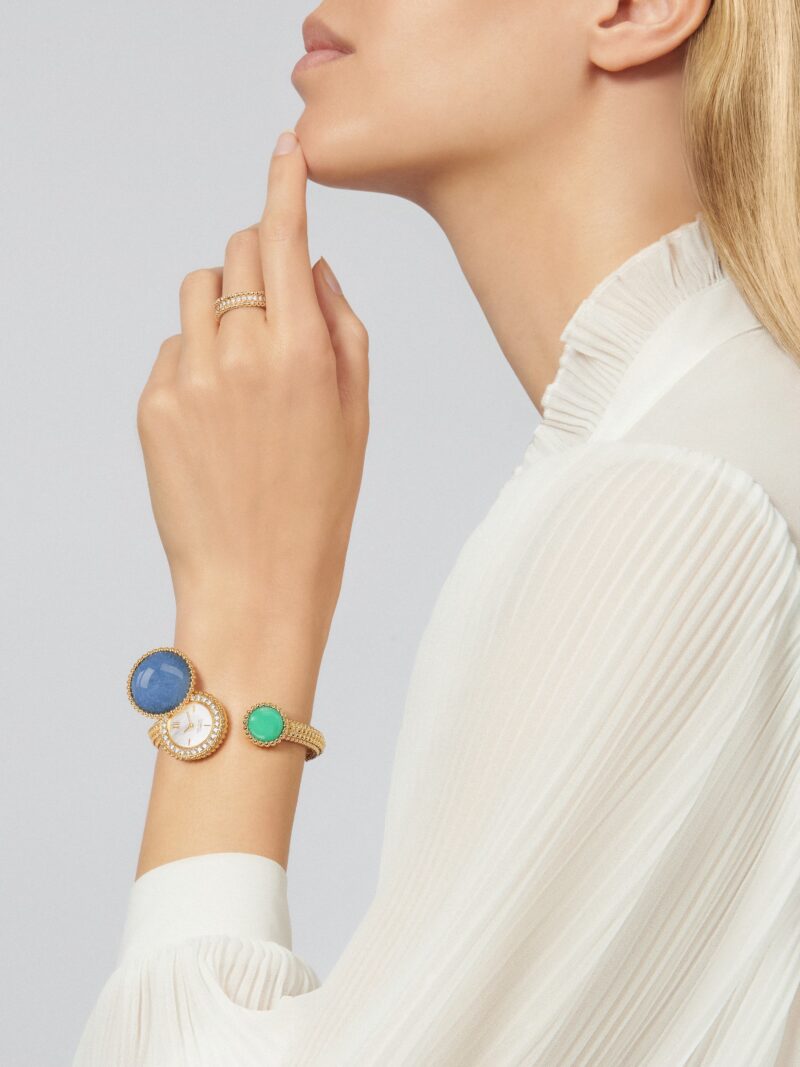
Perlée Toi & Moi secret watch
Rose and yellow gold secret timepieces conceal their dials beneath cover configurations of blue chalcedony, diamonds, and green malachite.
Atelier reading
Continuous Heritage: 1953 to 2026
From the square-cut diamond and emerald ring of Jackie Kennedy to contemporary golden beads, Van Cleef & Arpels keeps the pairing principle alive.
Visual dossier
The image sequence behind the story
In brief — Why a 230-year-old idea still anchors modern bridal jewellery
Few ideas in bridal jewellery have a documented history as long, or as well-attested by genuinely significant historical moments, as the Toi et Moi ring. Translated from French, the name means simply “you and me” — and the design’s core proposition is just as simple: two gemstones, generally of similar size and often of different character (a diamond and a coloured stone, most classically), set beside one another so that neither dominates, and the eye is invited to read them as a pair rather than as a centre stone with an accent.
The design’s most famous early appearance dates to 1796, in a proposal involving a young military general — Napoleon Bonaparte — who arrived two hours late to his own wedding to Joséphine. “Napoleon may have started the trend,” as one historical account puts it, and “some seriously stylish women have kept it going” in the centuries since — most famously Jacqueline Bouvier, whose 1953 engagement ring from John F. Kennedy, created by Van Cleef & Arpels, remains one of the most-referenced Toi et Moi rings in modern jewellery history. Today, the Toi et Moi principle lives on at Van Cleef & Arpels through the Perlée collection — introduced in 2008 around an entirely different motif, the golden bead, but one that, in its “Toi & Moi” configurations, continues the same essential idea: two elements, paired, read together.
1796 — A general, two hours late, and a ring with a story already attached
The earliest widely-cited account of a Toi et Moi engagement ring places the design at one of the most consequential weddings in modern European history. “Picture this,” as one account frames it: “it’s 1796 in Paris, the city of love is still finding its post-revolution footing, and a young, ambitious military general named Napoleon Bonaparte is about to propose. He’s two hours late to his own wedding, his bride-to-be Joséphine is waiting in a simple white dress.”
The detail of Napoleon’s lateness is, on its surface, an anecdote about a famous person’s poor timekeeping — but it’s worth noting for what it reveals about why the Toi et Moi design might have resonated in this specific context. A ring built around two stones, side by side, of comparable size and significance — neither one subordinate to the other — is, structurally, a design about balance and equivalence between two parties. For a marriage between two people whose own historical roles would soon become extraordinarily, almost incomparably significant in different ways (Napoleon’s military and political ascent, Joséphine’s role as Empress), a ring whose entire design logic insists on two equal elements, read as a pair, carries a resonance that would be difficult to achieve with a single-stone design, however large or fine the single stone might be.
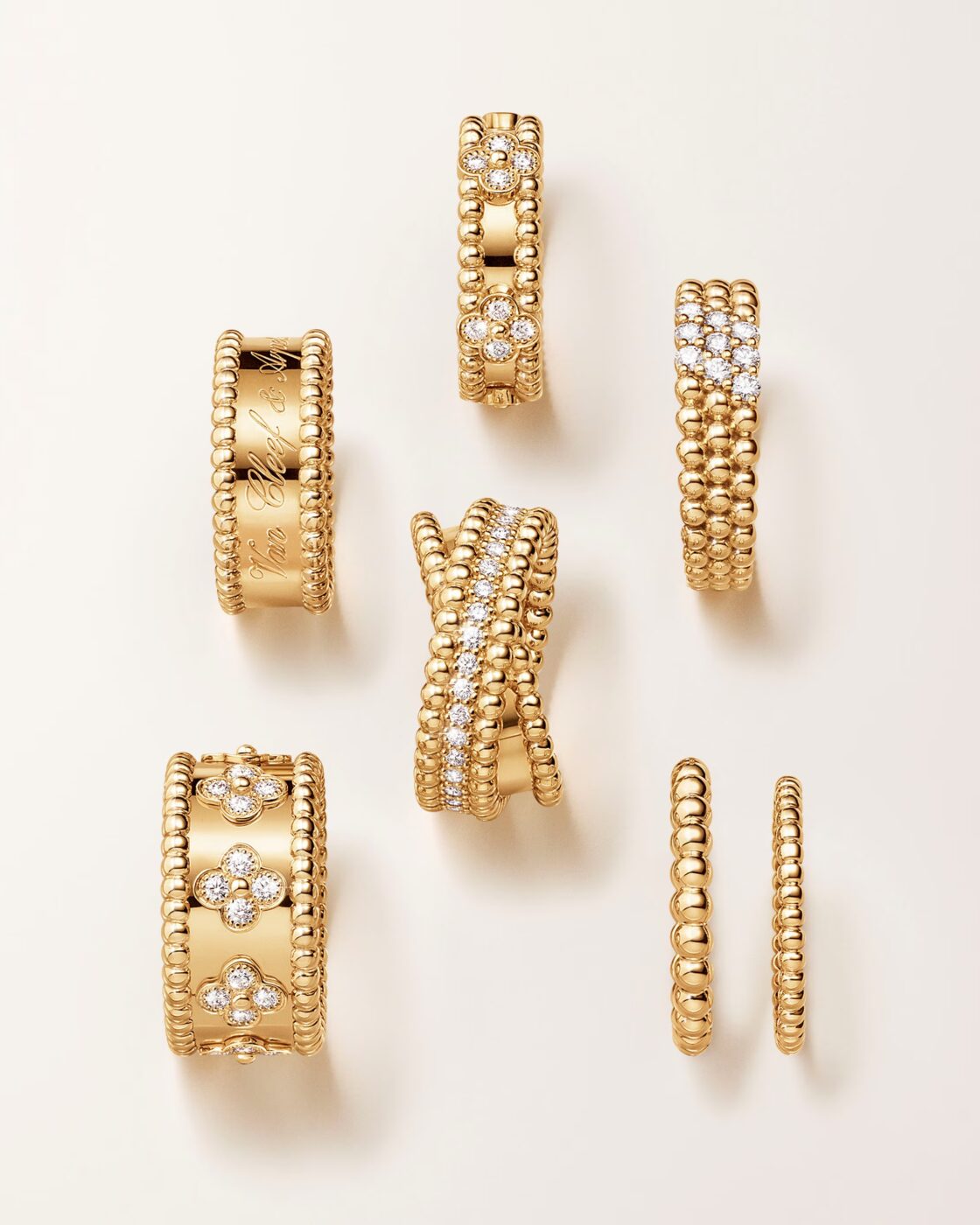
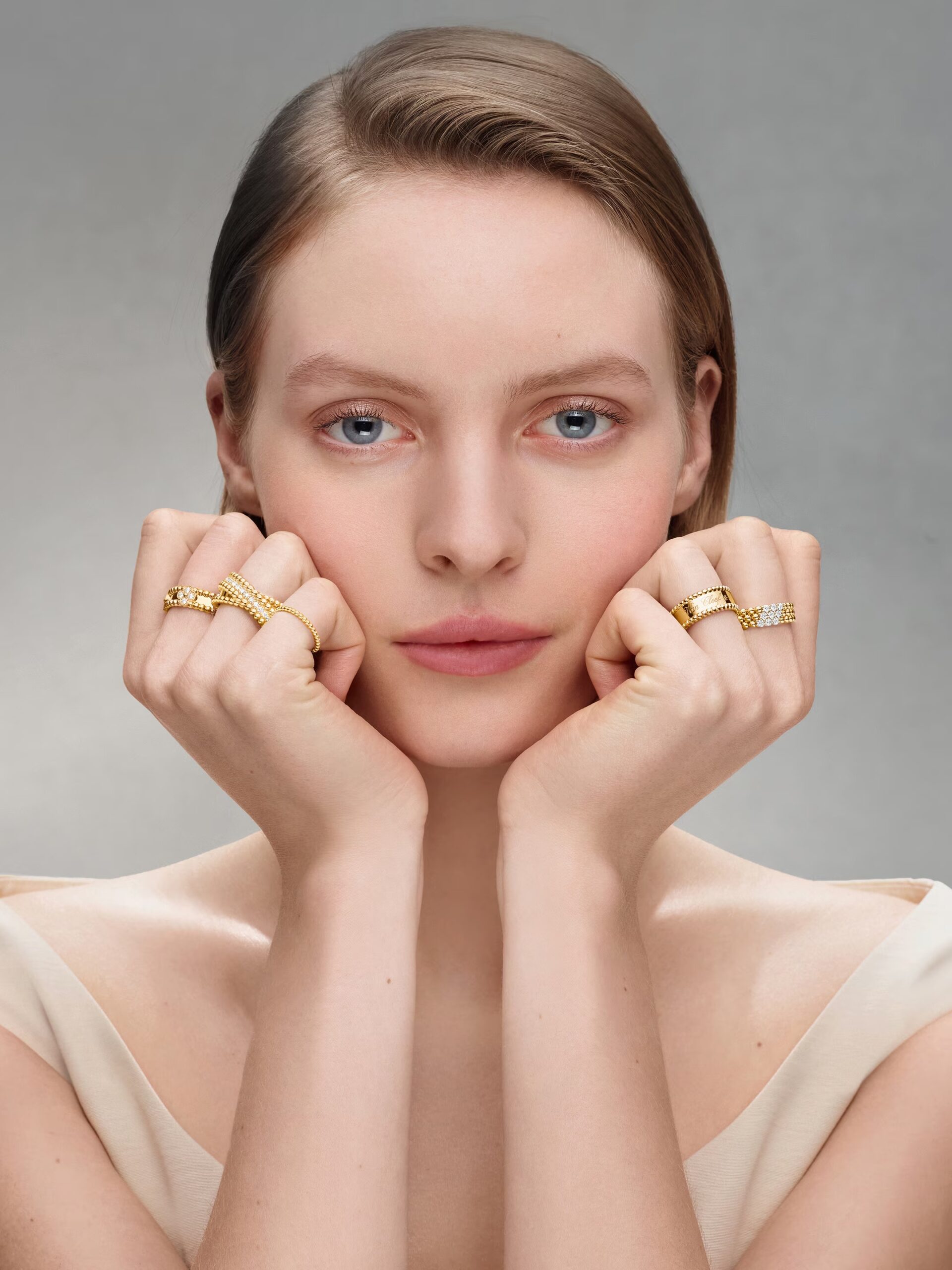
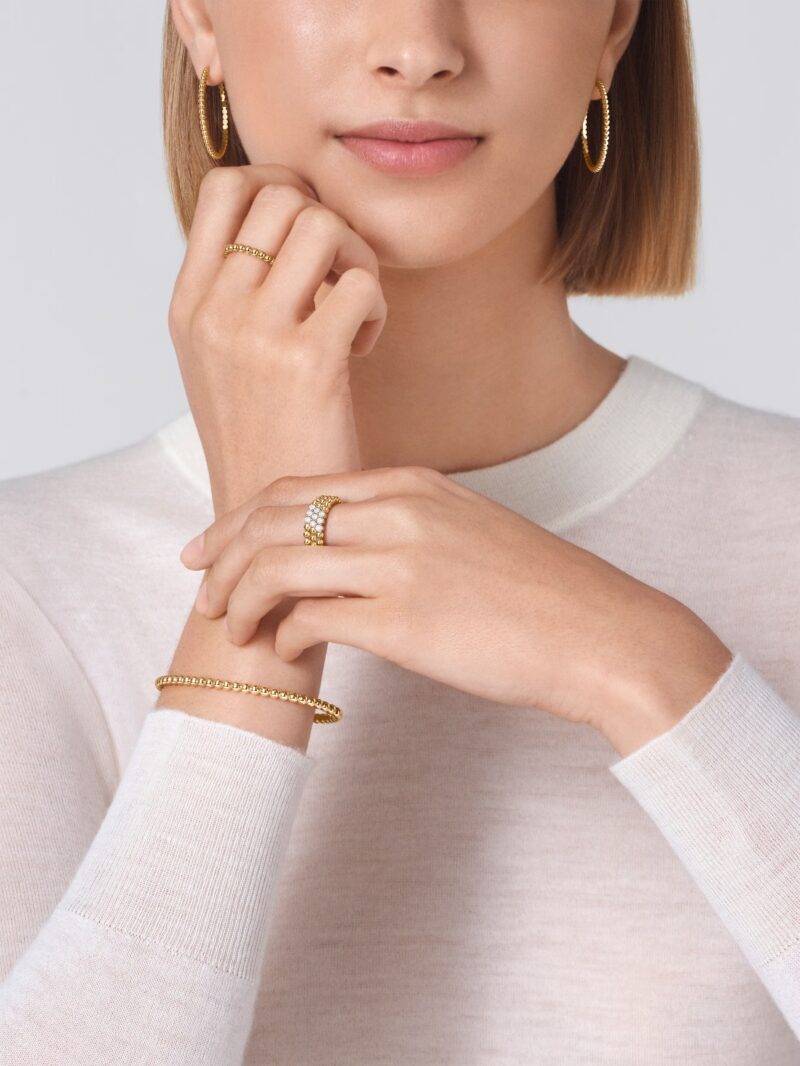
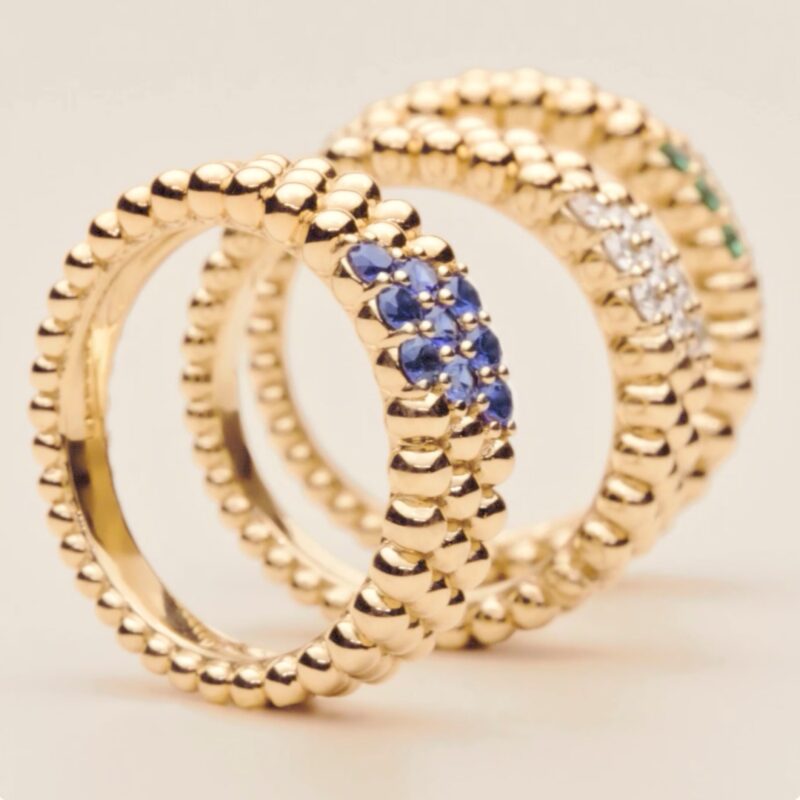
Golden bead architecture.
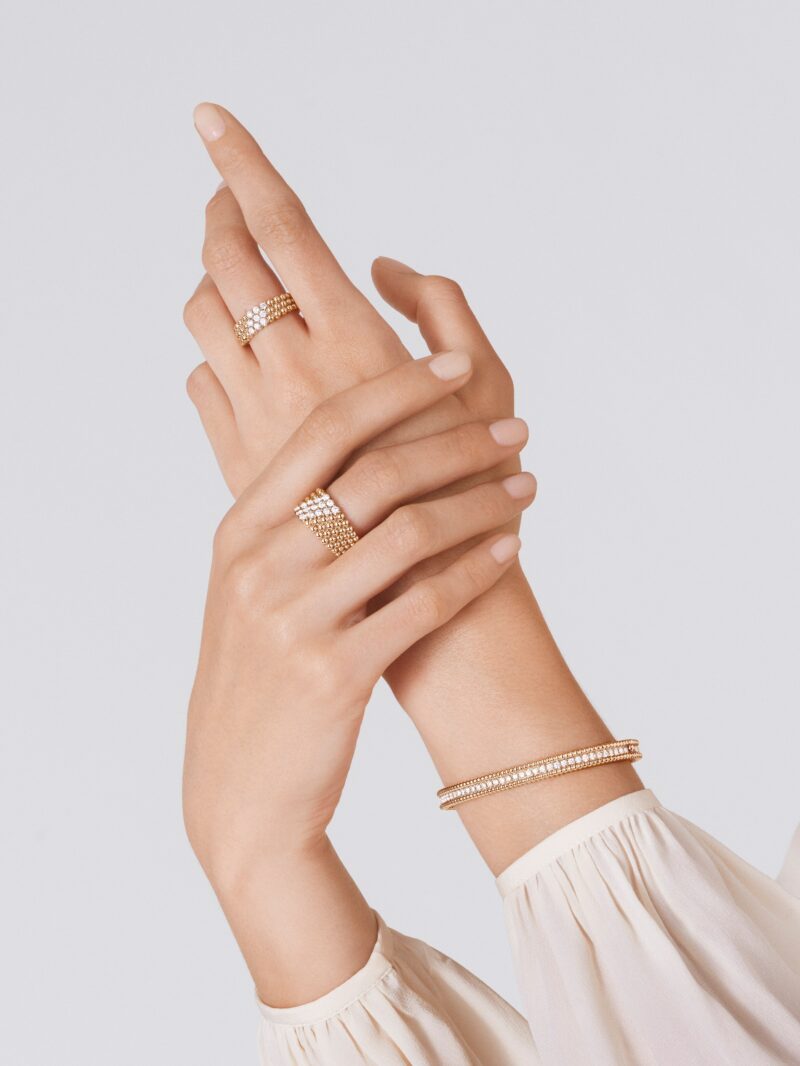
Van Cleef & Arpels’ contemporary Perlée collection takes the iconic golden bead motif and organizes it into multiple rows, crossover forms, and signature details that wrap gracefully around the finger.
1953 — Jackie Bouvier, a 2.88-carat diamond, and a 2.84-carat emerald
The Toi et Moi design’s most consequential 20th-century moment came in 1953, when John F. Kennedy proposed to Jacqueline Bouvier with a ring created by Van Cleef & Arpels. The ring “paired a stunning 2.88-carat diamond with a 2.84-carat emerald, both in elegant square cuts, surrounded by glittering baguette diamonds” — a pairing whose near-equivalence in carat weight (2.88 versus 2.84) makes explicit, in numerical terms, the “you and me” principle the design is named for: two stones, different in colour and character (a colourless diamond, a green emerald) but essentially equal in size and presence, set together.
One detail adds an unexpected layer to the story: “when the couple posed for their official engagement portrait, Jackie wasn’t wearing the now-iconic ring” — and according to Lauren DeYoung, a sixth-generation jeweller with expertise in vintage and antique jewellery, the ring was actually selected by Jackie’s soon-to-be father-in-law, Joseph Kennedy, rather than by John Kennedy himself. This detail complicates the simple “groom proposes with ring he chose” narrative that often surrounds famous engagement rings — and, if anything, it reinforces how the Toi et Moi design functions as a kind of family or dynastic statement as much as a purely romantic one: two significant stones, brought together, in a ring whose selection involved more than just the couple themselves.
Jackie later had the ring redesigned — “proving,” as one account puts it, “that even a legend can get a glow-up.” This detail, too, is instructive: a Toi et Moi ring’s two-stone structure lends itself to redesign and reinterpretation in a way that some more architecturally fixed engagement ring designs do not. The two stones remain the constant; the setting around them can evolve.
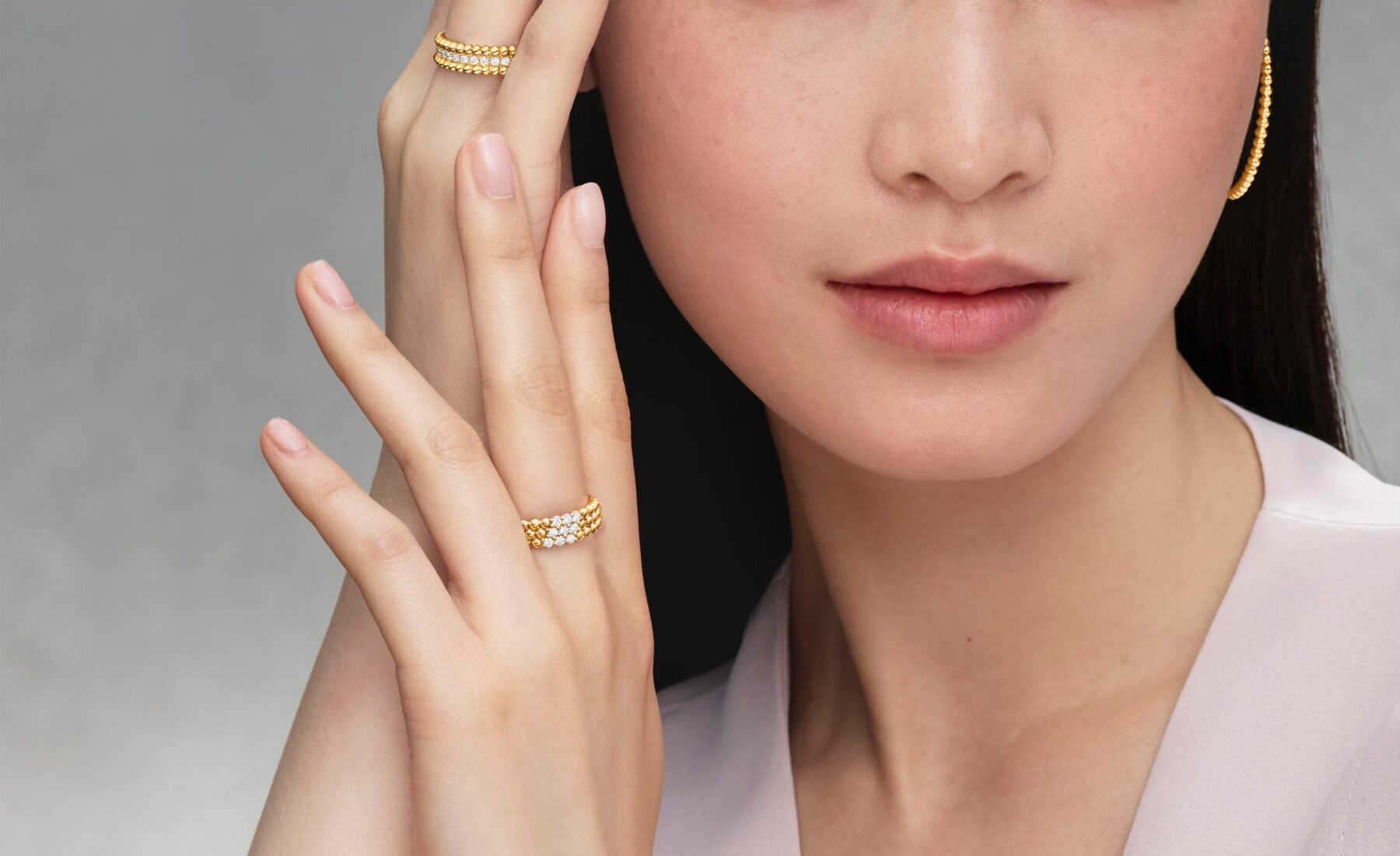
“You and me” — Why the translation matters more than almost any other ring name
Many bridal jewellery designs carry names that are evocative, aspirational, or simply branded — names chosen for how they sound, or for an association with a place, a person, or a historical moment, without the name itself describing what the design actually does. Toi et Moi is different: the name is a literal, complete description of the design’s structure and its meaning, in four syllables, in a language widely recognised as the language of romance.
“Toi et Moi rings, translated from French to ‘you and me,’ are a symbol of unity and love” — and the directness of this translation is, itself, part of the design’s enduring appeal. A couple choosing a Toi et Moi ring is not selecting a design whose name requires explanation, historical context, or a story about what a particular symbol has “come to represent.” The name says exactly what the ring does: here are two things, together, and that togetherness is the entire point.
This directness may explain why Toi et Moi has never really gone out of fashion in the way that more decoratively or symbolically complex bridal designs sometimes cycle in and out of favour. A trend that requires no explanation is, by definition, harder to make feel dated — “you and me” meant the same thing in 1796, in 1953, and means the same thing now.
21st Century — The modern revival among public figures
The Toi et Moi design’s continued relevance is visible in its adoption by a notably wide range of contemporary public figures, each bringing the design into a different configuration and context. “Celebrities have revived the Toi et Moi ring trend,” with examples including “Megan Fox’s emerald and diamond ring from Machine Gun Kelly, Emily Ratajkowski’s princess cut and pear-shaped diamond ring, Ariana Grande’s ring with an oval diamond and her grandfather’s pearl, and Kylie Jenner’s stylish design.”
The Ariana Grande example is particularly worth pausing on, because it illustrates something important about how the Toi et Moi structure can carry personal, biographical meaning beyond the general “you and me” symbolism. A ring pairing “an oval diamond” with “her grandfather’s pearl” is not simply a two-stone design chosen for aesthetic balance — it is a design that allows two objects with entirely different sources of meaning (a diamond selected for the engagement, and a pearl carrying family history) to be presented as equals, side by side, neither one diminishing the significance of the other. This is, in a sense, the Toi et Moi structure doing something that very few other ring designs can do as naturally: holding two different kinds of meaning — one chosen for this moment, one inherited from another — in the same visual frame, without forcing a hierarchy between them.
Perlée — Van Cleef & Arpels’ 2008 answer, built on a different motif with the same spirit
Where Toi et Moi is, at its origin, a story-driven design — Napoleon’s lateness, Jackie’s emerald and diamond, a redesign decades later — the Perlée collection, born in 2008, began from the opposite direction: a motif. “Born in 2008, the Perlée collection showcases the golden bead, a signature motif in Van Cleef & Arpels’ creative heritage. In single or multiple rows, the collection’s emblematic precious spheres give rise to pieces of rounded volume.”
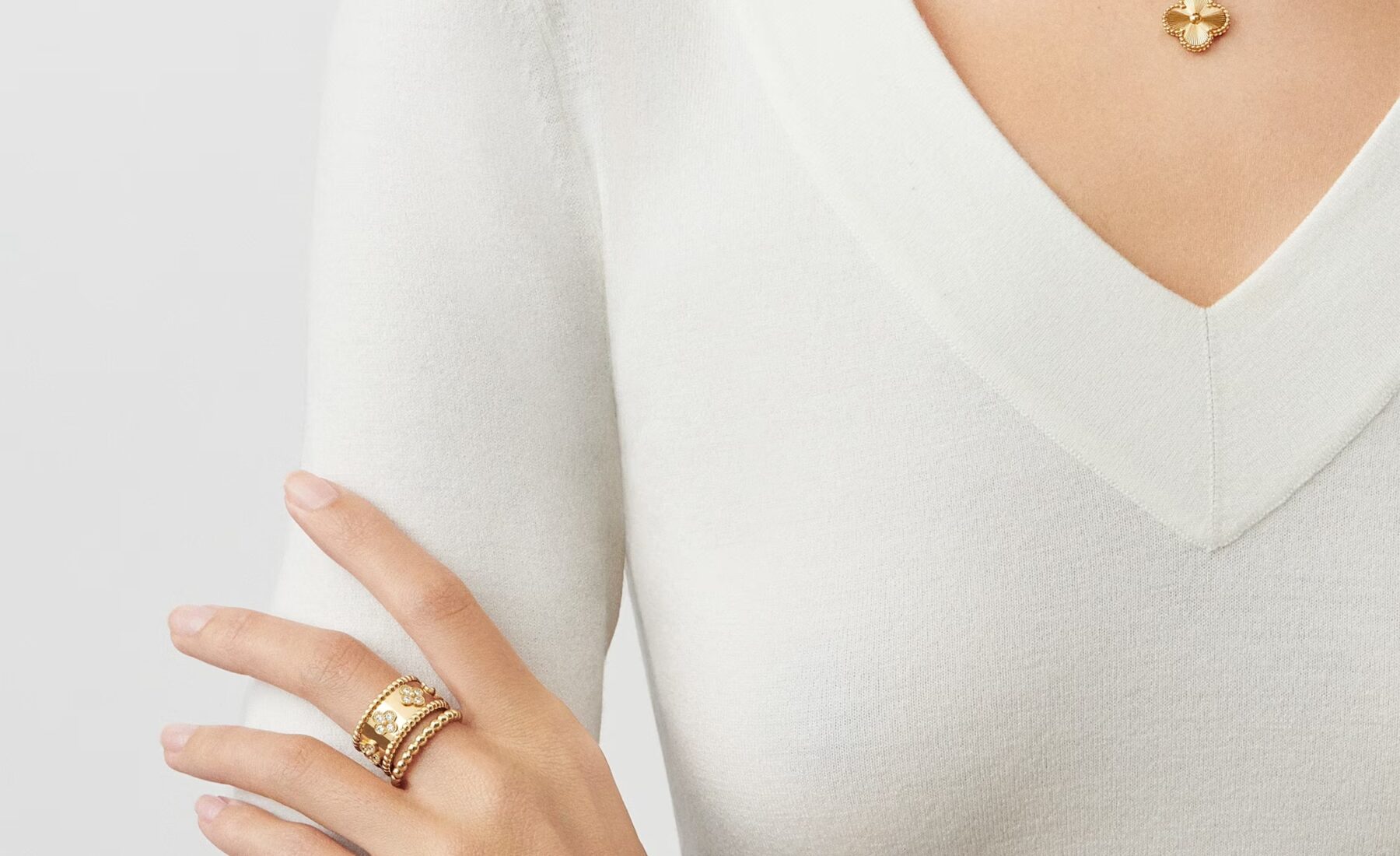
The golden bead, repeated in rows, produces what the Maison describes as pieces with “rounded volume” — a tactile, almost textile quality (the beads are frequently compared, informally, to a string of pearls rendered in gold) that gives Perlée pieces a softness distinct from the sharper geometric lines of much contemporary fine jewellery. “United by their abstract aesthetic around the golden bead, these creations are an invitation to an elegant play of layering and pairing” — and it is in that final phrase, “layering and pairing,” that Perlée’s connection back to the Toi et Moi tradition becomes explicit.
Perlée Toi & Moi — The motif, applied to the principle
Within the broader Perlée collection, the “Toi & Moi” configurations — available across rings and watches — take the golden bead motif and apply it specifically to the two-elements-paired structure that Toi et Moi has represented since 1796. A Perlée Toi & Moi ring is not a literal continuation of the “diamond beside an emerald” structure of Jackie Kennedy’s 1953 ring — Perlée’s vocabulary is built around the bead motif rather than paired centre stones — but the underlying principle, two elements in relationship with one another, read as a pair rather than as a single dominant form with supporting details, carries forward.
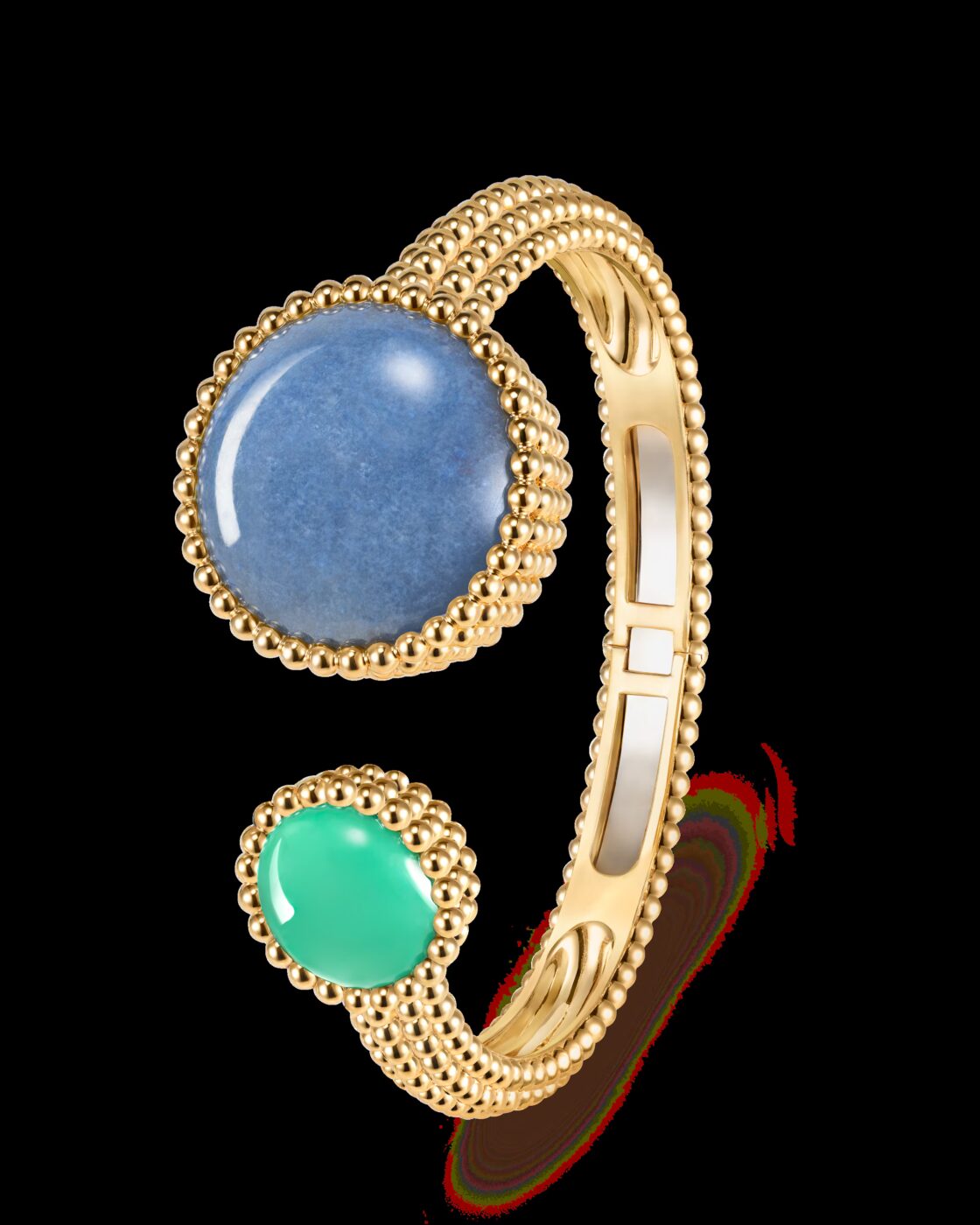
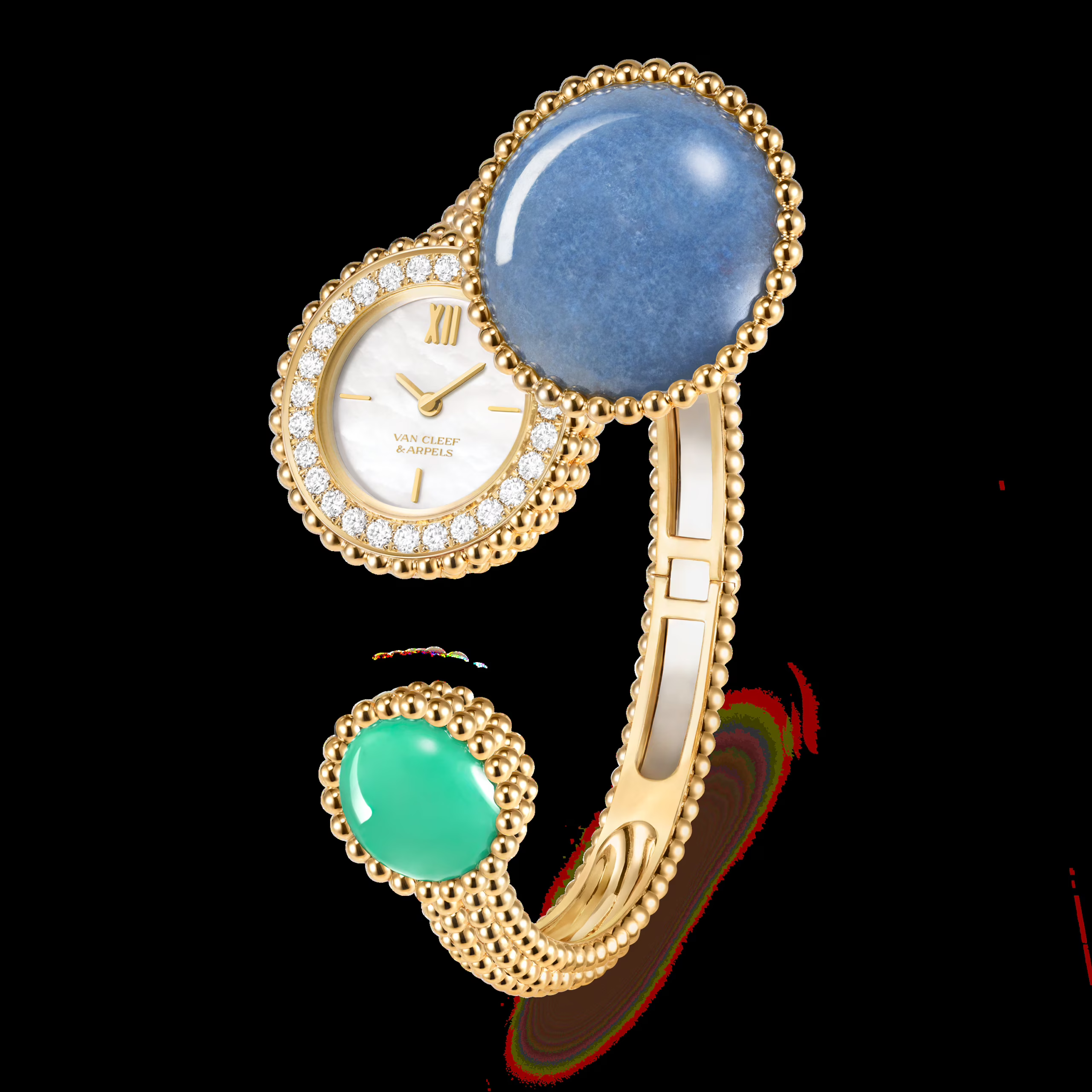
Perlée watches & bangles.
The secret watch and matching open bangles showcase the Perlée Toi & Moi design, pairing gold beads with contrasting hardstones like blue chalcedony and green malachite.
The Perlée Toi & Moi watches extend this principle into timekeeping: the “Perlée Toi & Moi watch, medium model” in 18-karat rose gold combines diamond-set elements with mother-of-pearl, while the “Perlée Toi & Moi secret watch, small model” in yellow gold adds turquoise to the diamond and mother-of-pearl combination — a “secret watch” being a category of timepiece, with a history at Van Cleef & Arpels stretching back decades, in which the watch face is concealed beneath a cover (often itself a piece of jewellery, such as a flower or bow) that opens to reveal the time. A “secret” Toi & Moi watch — an object that conceals one thing (the time) within or beneath another (a jewelled cover) — extends the “two things, paired” logic into an object that quite literally contains two layers of meaning, one hidden until revealed.
Reading “Perlée” against “Toi et Moi” — Update, not replacement
For a bridal-focused reader, the relationship between Perlée and the broader Toi et Moi tradition is best understood as an update in vocabulary rather than a replacement of the underlying idea. The two-stones-paired structure that defined Toi et Moi from Napoleon’s era through Jackie Kennedy’s 1953 ring remains a recognisable and requestable design — many jewellers, including Van Cleef & Arpels’ peers and competitors, continue to produce rings built on exactly that structure, and the broader bridal market continues to refer to this category of ring as “Toi et Moi” regardless of which house produces it.
Perlée, meanwhile, represents Van Cleef & Arpels’ own contemporary design language — born from a different motif (the golden bead, rather than paired centre stones), but one whose “Toi & Moi” configurations make explicit that the Maison sees its own modern vocabulary as continuous with, rather than separate from, the broader tradition its own 1953 Jackie Kennedy ring helped define. A bridal buyer drawn to the emotional logic of Toi et Moi — two things, presented as equals, read together — has, at Van Cleef & Arpels specifically, both the option of a more literally paired-stone configuration and the option of Perlée’s bead-based “Toi & Moi” pieces, each expressing the same underlying idea through a different visual language.
Key Specifications — Reference table
Explore the comparison
| Specification | Toi et Moi (general tradition) | Perlée Toi & Moi (Van Cleef & Arpels) |
|---|---|---|
| Origin | 1796 (Napoleon), 1953 (Jackie Kennedy) | 2008 (Perlée Collection) |
| Core structure | Two stones, similar size, paired side-by-side | Golden bead motif, paired elements / secret covers |
| Materials | Diamond + coloured stone, various metals | Yellow, rose, white gold; diamonds, hardstones, mother-of-pearl |
| Configurations | Rings (most common) | Rings and secret watches |
| Meaning | “You and me” — literal translation | Continuation of pairing principle through gold spheres |
TheTimeo view
Most bridal jewellery traditions that endure for over two centuries do so because they’ve been continually reinterpreted — each generation finding a new reason for an old design to feel current. Toi et Moi’s endurance is unusual because it has needed almost no reinterpretation at all. “Two things, together, read as a pair” meant exactly the same thing to Napoleon in 1796 as it did to a teenage Jacqueline Bouvier in 1953, and means exactly the same thing to anyone choosing a Toi et Moi ring in 2026. The design’s emotional logic is so direct — so close to a literal translation of “you and me” into physical form — that it has never required the kind of symbolic scaffolding (a specific number of bands, a particular claw configuration, a named setting technique) that most enduring bridal designs eventually accumulate.
What Van Cleef & Arpels has done with Perlée, since 2008, is not to replace that logic but to give it a new material vocabulary — the golden bead instead of the paired gemstone, “layering and pairing” instead of “diamond beside emerald.” For a Maison whose own 1953 creation remains one of the most cited Toi et Moi rings in jewellery history, that continuity is not incidental. It’s the clearest possible statement that some ideas in bridal jewellery don’t need updating because they were never really about an era in the first place. They were about two people, choosing to be read as a pair — and that idea, however it’s rendered, in diamonds and emeralds or in rows of golden beads, has not aged a single day since 1796.
Sources & credits
Official sources
- Explore the official Van Cleef & Arpels Perlée collection.
- Read more at the Van Cleef & Arpels official site.