High Jewellery Atelier
Bridal
Harry Winston: The House Where the Diamond Designs the Ring, Not the Other Way Around
A TheTimeo bridal reading of the Harry Winston bridal collection — “The One” and the Classic Winston Engagement Ring, built on a founding philosophy that has guided the House since 1932: that diamonds, not settings, dictate design.
In brief
Why this creation matters
A founding philosophy that has guided the House since 1932: that diamonds, not settings, dictate design, and that the rarest stones — D, E, F colour, VS2 or better, eye-clean — deserve a setting whose only job is to disappear.
diamonds, not settings, dictate design
Harry Winston
Object first
A closer reading of the creation
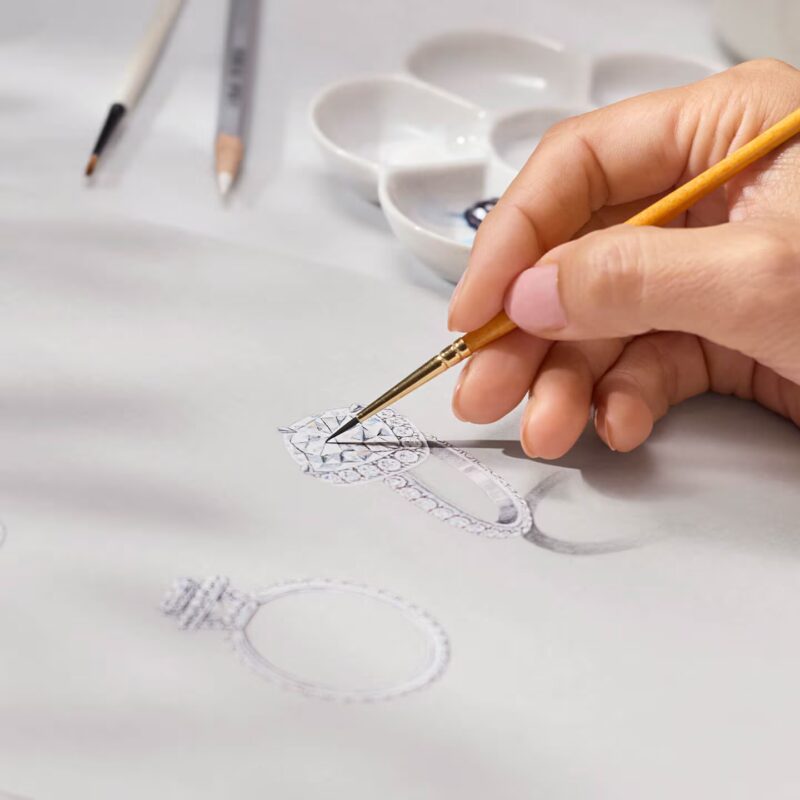
Editorial dossier
The stone designs the ring
Harry Winston's defining belief was simple, and almost nobody else in jewellery has ever fully committed to it: the diamond comes first, and everything else — the setting, the band, the design — exists to get out of its way. Ninety-four years later, the House's bridal collection is still built on that single idea.
Atelier reading
Classic Winston: Minimalist strength
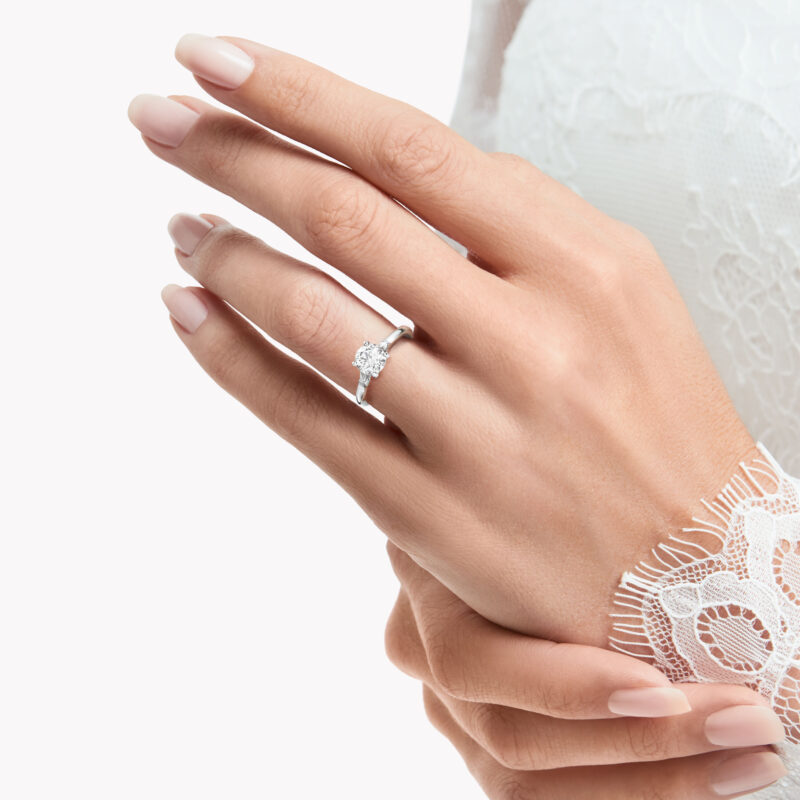
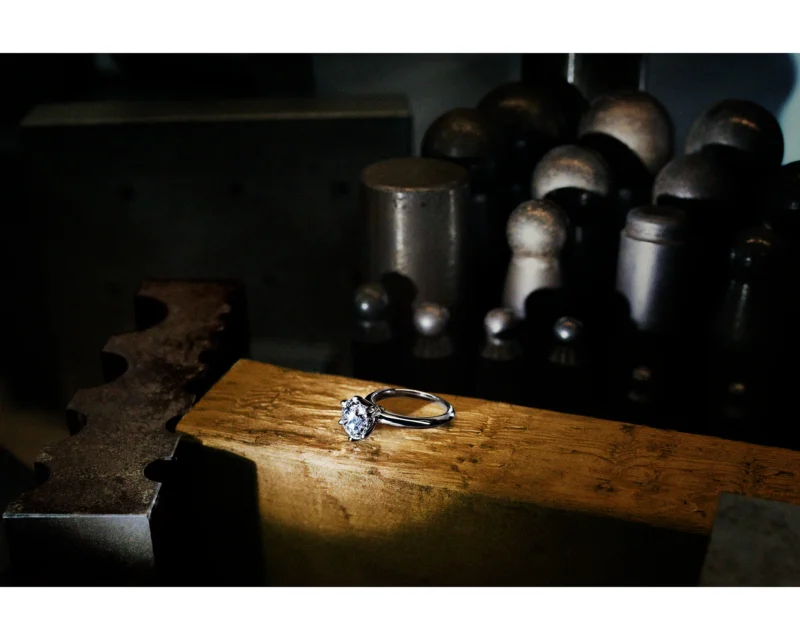
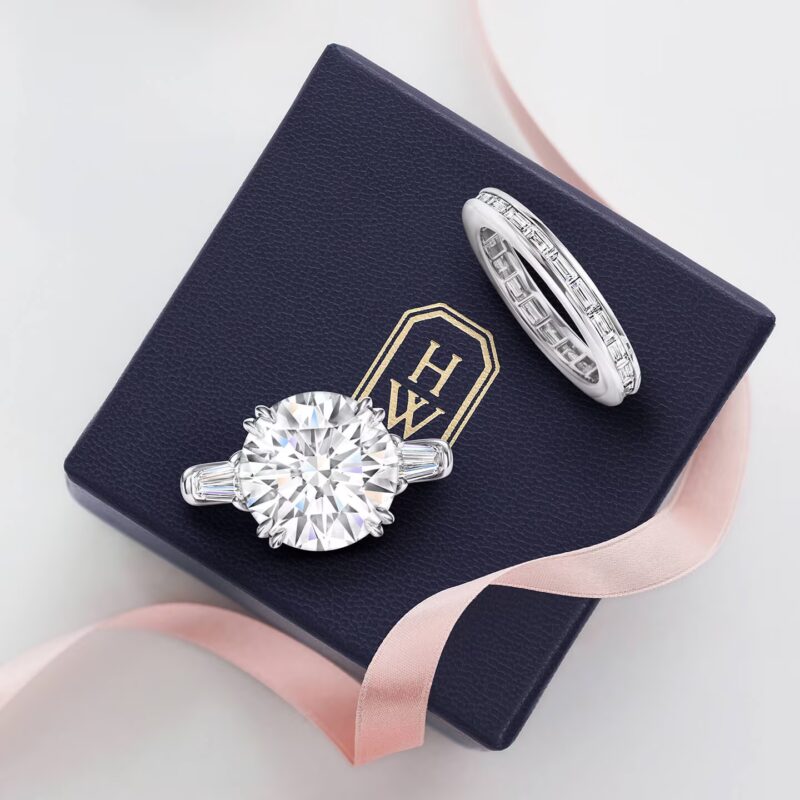
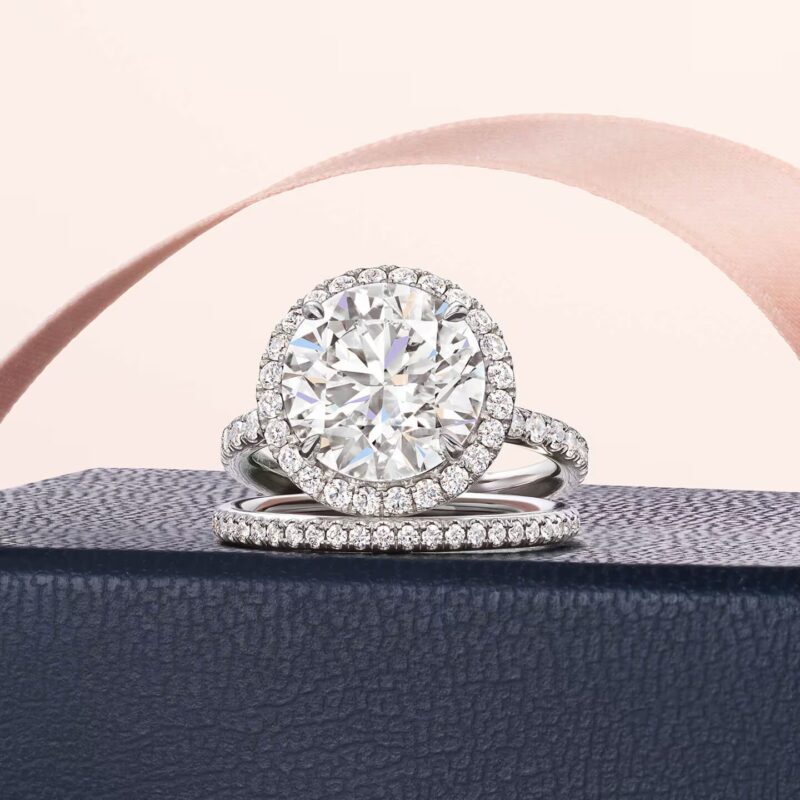
Offered in six centre stone shapes, the Classic Winston uses tapered platinum prongs and near-invisible underpinnings to showcase the diamond with maximum structural security and minimum visual presence.
Atelier reading
The One: A final conclusion
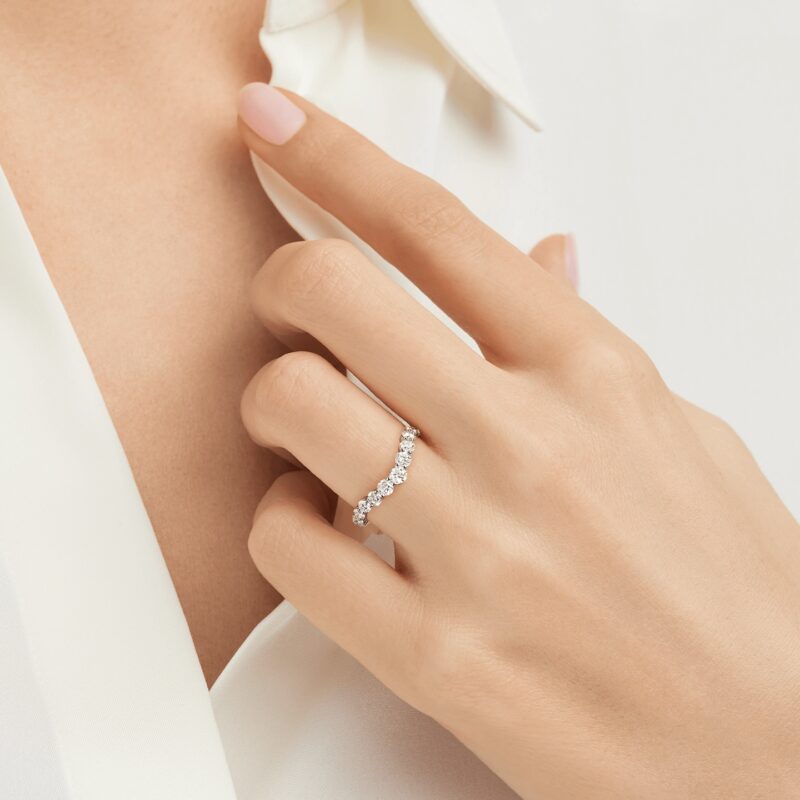
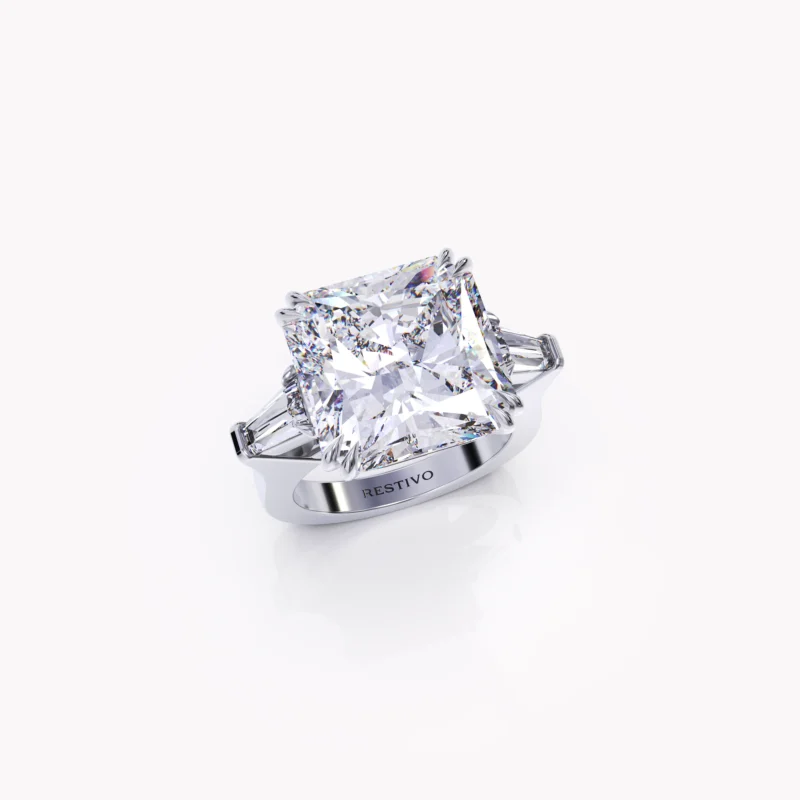
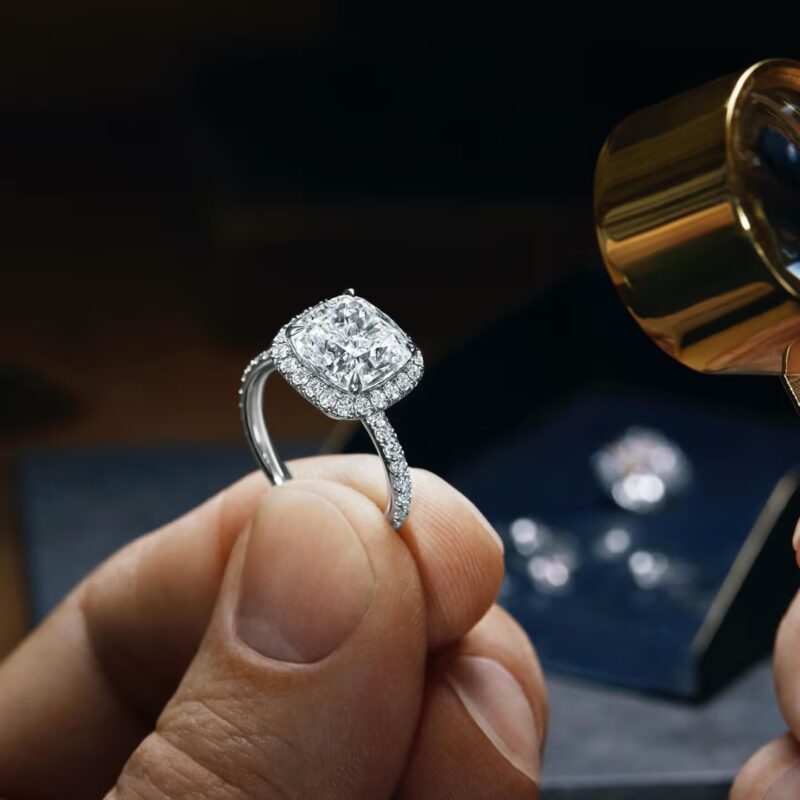
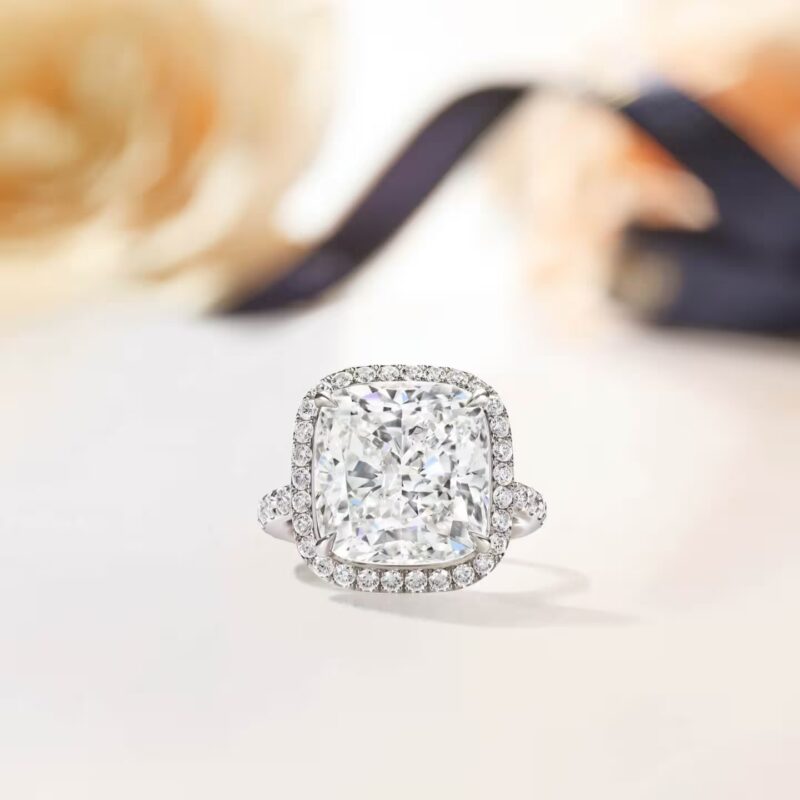
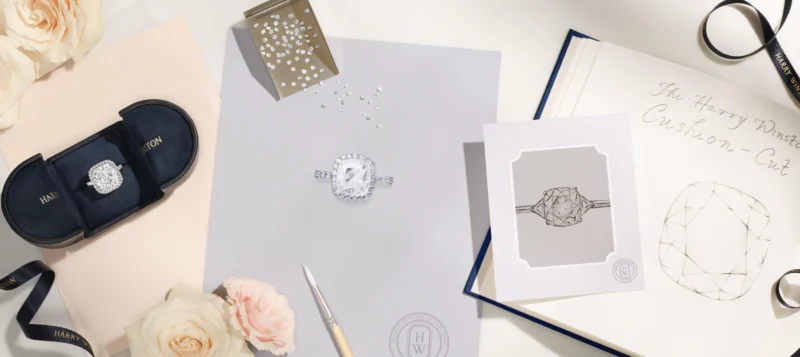
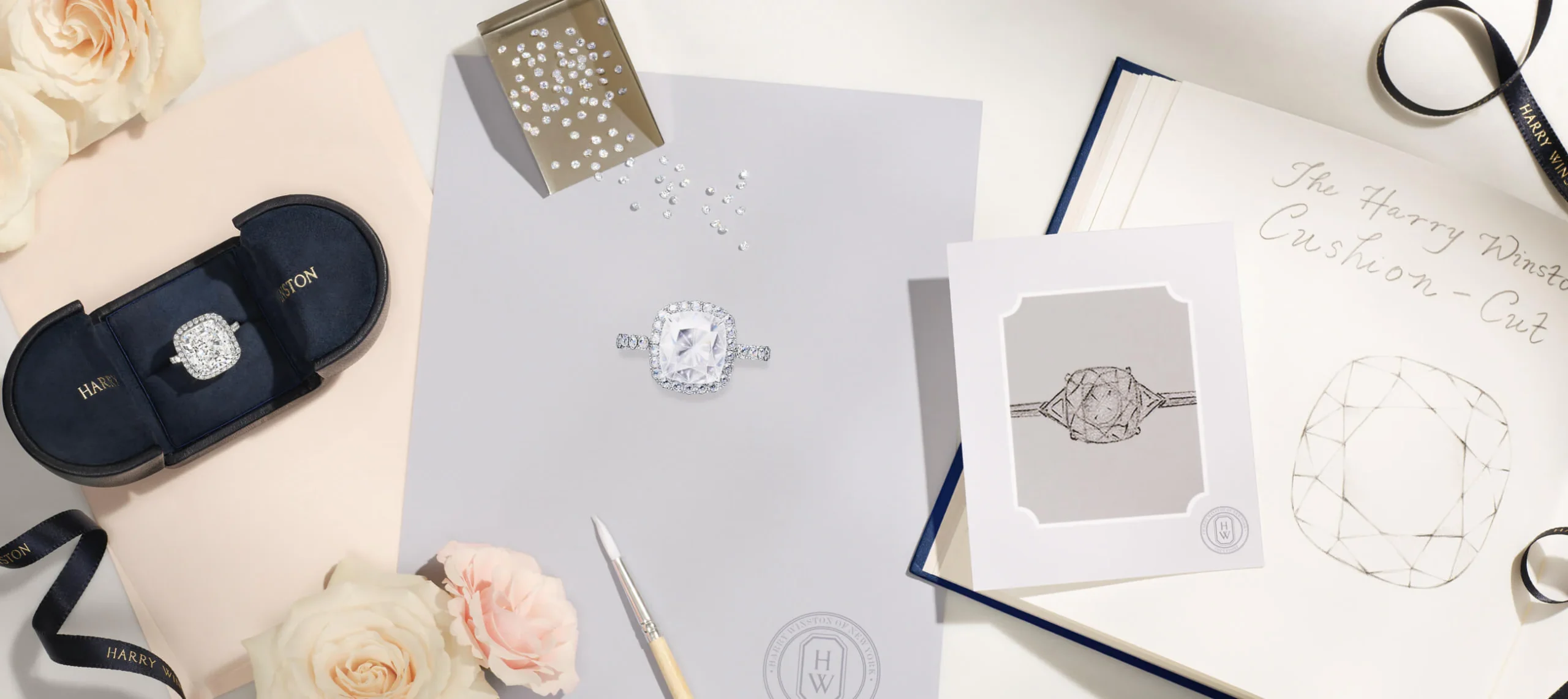
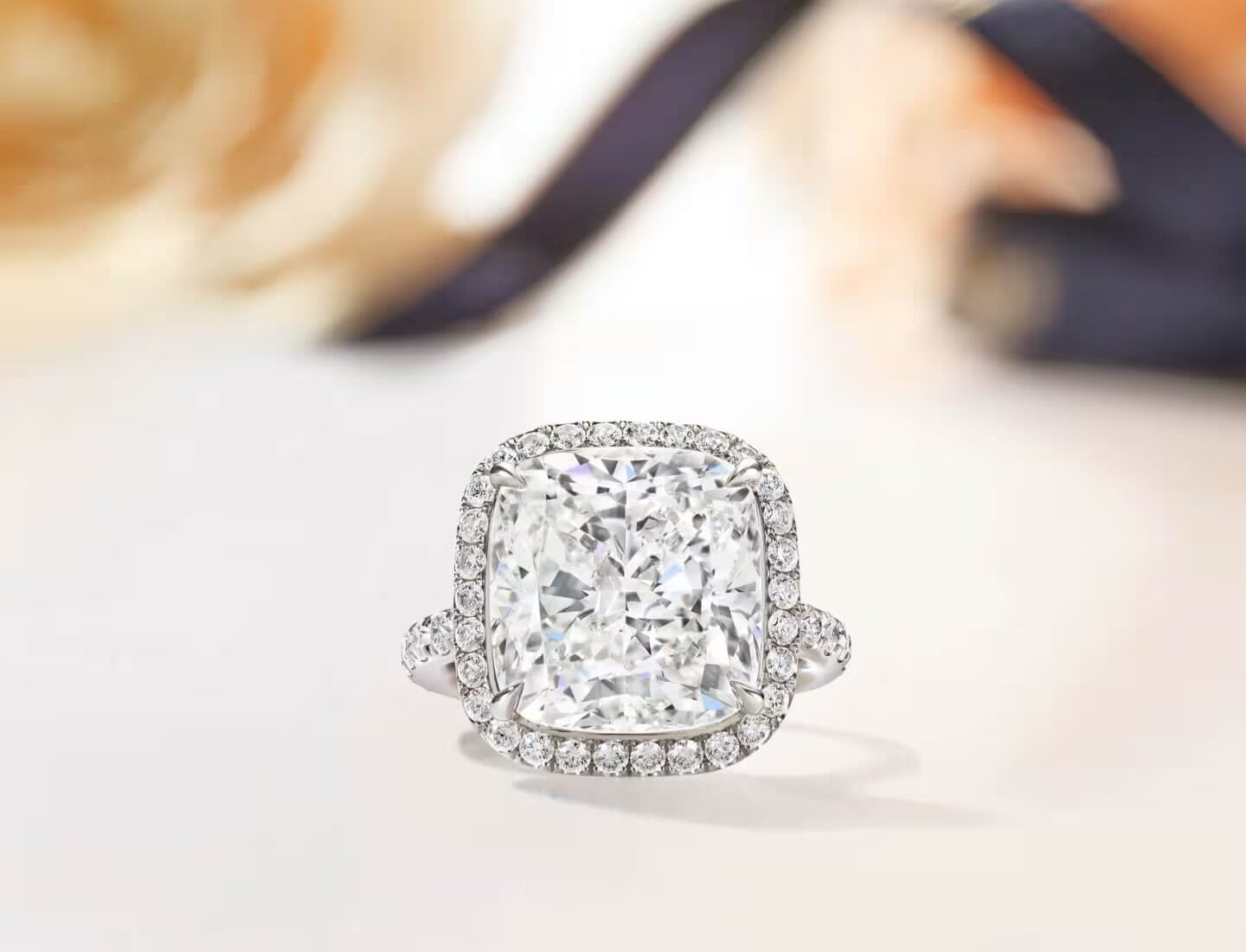
Combining a cushion-cut diamond with a delicate micropavé halo and band, The One offers a continuous field of brilliance that extends the centre stone's light outward, stating a final conclusion in design.
Atelier reading
The Winston Standard: D, E, F only
By selecting only D, E, and F colourless diamonds with VS2 clarity or better, Harry Winston establishes an uncompromising floor that ensures every solitaire carries the pedigree of the "King of Diamonds."
Visual dossier
The image sequence behind the story
In brief — Why “King of Diamonds” is a design philosophy, not a slogan
Harry Winston founded his eponymous business in New York in 1932, and across the following decades built a reputation that earned him two titles still used today: “King of Diamonds” and “Jeweler to the Stars.” But behind both titles is a specific, stated design philosophy — “that diamonds, not settings, dictate design” — that distinguishes Harry Winston’s approach from nearly every other major bridal house, including the others covered in TheTimeo’s bridal series.
Where Tiffany’s innovation was a setting (the six-prong Tiffany Setting, 1886), where Cartier’s icons are named for a year and a design concept (1895, Trinity), and where Bulgari’s bridal vocabulary imports meaning from architecture and mythology, Harry Winston’s bridal philosophy begins by refusing to let the setting be the story at all. “The refined design emphasizes delicate details: the subtlety of platinum prongs, the tapered platinum setting that supports the diamond visually and structurally, the near invisible underpinnings, and the grace of the ring shank” — every element of that description is in service of invisibility. The setting’s job, in Harry Winston’s vocabulary, is to be felt rather than seen.
1932 — A jeweller’s son, and an empire built on “buying it back”
Harry Winston’s path to “King of Diamonds” began modestly: as a young man, he “often accompani[ed] his father in his small jewelry business,” developing what’s described as “a unique eye for diamonds… even from a young age” well before founding his own eponymous business in New York in 1932.
The House’s early reputation was built substantially on Winston’s willingness to acquire — and, critically, to redesign — significant historical jewellery collections. One documented case involved Winston purchasing a major collection for $1.2 million, “an astonishing figure at the time,” with the help of bank financing. What distinguished this purchase from a simple acquisition was what came next: “he didn’t just buy the jewels; he reinvented them. While others would have left the ornate designs untouched, Winston redesigned” them. This pattern — acquiring historically significant stones and then redesigning their settings according to his own philosophy — is, in miniature, the entire Harry Winston approach: the stone’s value and significance travel with the stone itself; the setting is a contemporary decision, made fresh, regardless of how the stone arrived.
1944 — Inventing the red carpet loan
In 1944, Winston “pioneered the practice of lending jewelry to Hollywood stars for red carpets and award shows” — a practice now so universal across luxury jewellery that it’s easy to forget it was, at some point, an innovation rather than an industry default. His first muse for this practice was actress Jennifer Jones, but the practice quickly expanded: Katharine Hepburn wore the Inquisition Necklace in 1947, and Harry Winston’s creations subsequently appeared in films including Alfred Hitchcock’s Notorious (1946) and The Graduate (1967), with Anne Bancroft wearing a Harry Winston diamond engagement ring in the latter.
This pattern — pairing extraordinary diamonds with extraordinary public moments — culminated in a piece of cultural immortality that few jewellery houses can claim: in 1953, Marilyn Monroe sang, in Gentlemen Prefer Blondes, the line “Talk to me, Harry Winston! Tell me all about it!” — a moment that placed the House’s name directly into one of the most enduring songs in American film history, sung by one of the era’s most significant cultural figures, as a stand-in for diamonds themselves.
1949 — The Court of Jewels, and “diamonds for the public”
Winston’s approach to diamonds was not purely about exclusivity for its own sake — in 1949, he launched The Court of Jewels, “a traveling exhibition showcasing his most spectacular gems,” explicitly framed around “bringing diamonds to the public.” This detail matters for understanding the House’s bridal philosophy specifically: the same diamonds that defined Harry Winston’s reputation among the era’s most significant private collectors and Hollywood stars were also, deliberately, made visible to a much broader public — a combination of extreme exclusivity at the level of individual stones, and extreme visibility at the level of cultural presence, that few jewellery houses have managed simultaneously before or since.
The diamond standard — Narrower than the industry default, by design
D, E, F colour: “The rarest and the most valuable”
Harry Winston’s stated diamond standard is more restrictive than the general 4Cs framework that underlies most fine jewellery grading. On colour, the House states explicitly that it carries “only D, E and F colorless diamonds because they are the rarest and the most valuable.” To understand what this means in practice: the standard diamond colour grading scale runs from D (completely colourless) through to Z (visibly tinted), with D, E, and F representing the three highest grades — diamonds with no detectable colour, or colour so minimal it requires expert comparison under controlled lighting to distinguish from a D grade at all.
By restricting its bridal collection to D, E, and F exclusively, Harry Winston excludes the entire G-through-Z range — a range that includes grades (G, H, particularly) that many buyers, and indeed many jewellers, would describe as “near colourless” and visually indistinguishable from D-F to an untrained eye, especially once a diamond is set. The House’s choice to exclude these grades anyway is a statement about where the floor sits for a Harry Winston diamond: not “good enough that most people couldn’t tell the difference,” but “among the rarest grades that exist, full stop.”
VS2 or better, eye-clean
On clarity, the House selects “only eyeclean VS2 or better diamonds.” Clarity grading assesses internal characteristics (inclusions) and surface characteristics (blemishes) within a diamond, on a scale running from Flawless (FL) through Internally Flawless (IF), Very Very Slightly Included (VVS1, VVS2), Very Slightly Included (VS1, VS2), Slightly Included (SI1, SI2), down to Included (I1, I2, I3). VS2 represents a grade where minor inclusions are present but are typically difficult to see even under 10x magnification — and “eye-clean” specifically means that, regardless of a stone’s technical clarity grade, no inclusions are visible to the naked eye under normal viewing conditions.
The combination of these two standards — D/E/F colour, VS2-or-better and eye-clean clarity — represents, as one comparison notes, “a pretty common practice… seen in other big international brands like Tiffany and Cartier,” where major houses establish a quality floor that excludes a substantial portion of the broader diamond market regardless of price. What distinguishes Harry Winston’s framing is the directness with which it connects this standard back to the founder’s specific reputation: this is not simply “a quality floor a luxury brand maintains,” but “the standard a man known as the King of Diamonds would accept” — a standard with a name and a history attached to it, rather than simply a corporate quality policy.
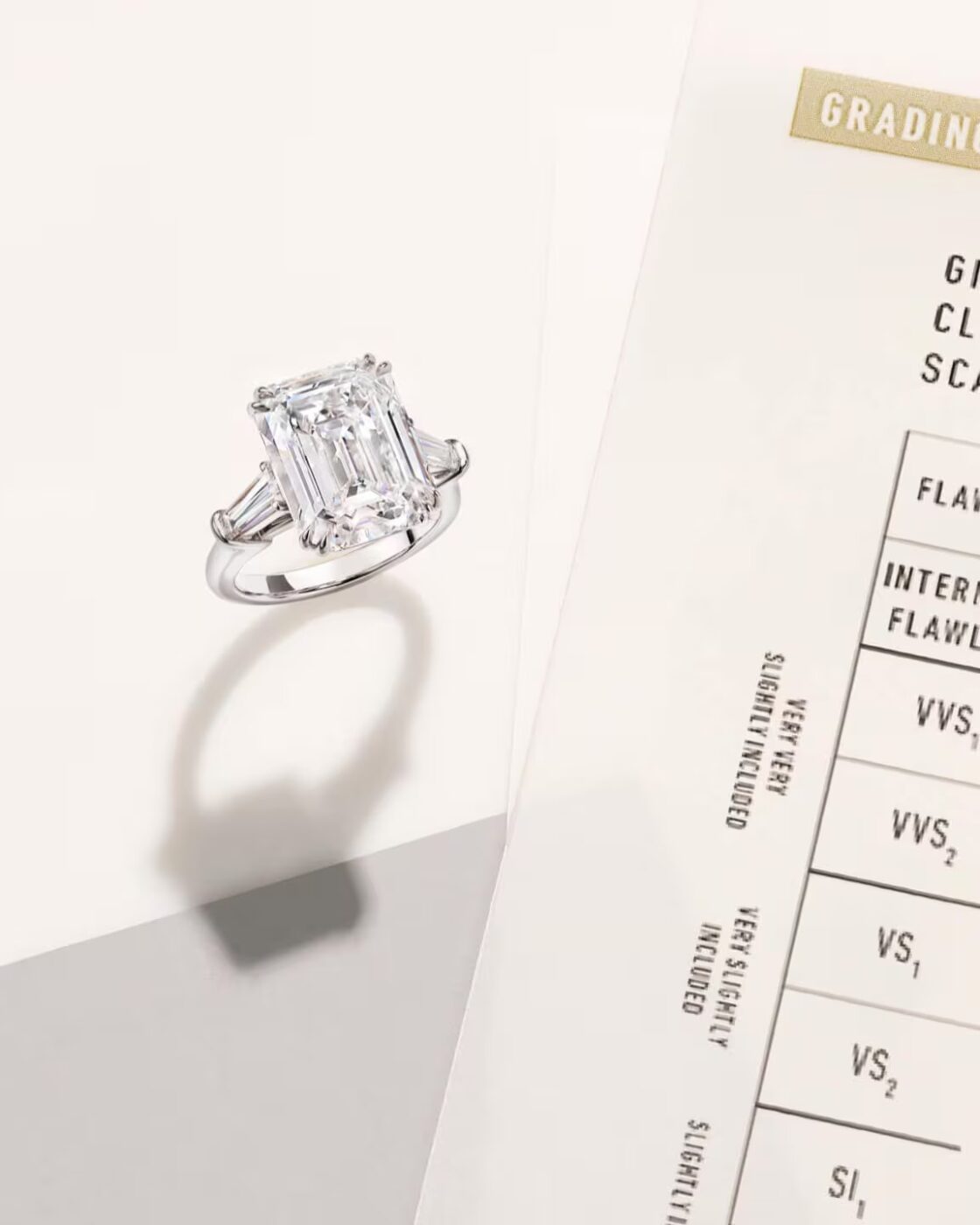
The Winston floor: GIA grading.
Every solitaire ring is accompanied by a GIA certificate, verifying that the stone meets Harry Winston’s strict criteria of D, E, F colour and eye-clean VS2 clarity or better.
Classic Winston — Six shapes, one underlying logic
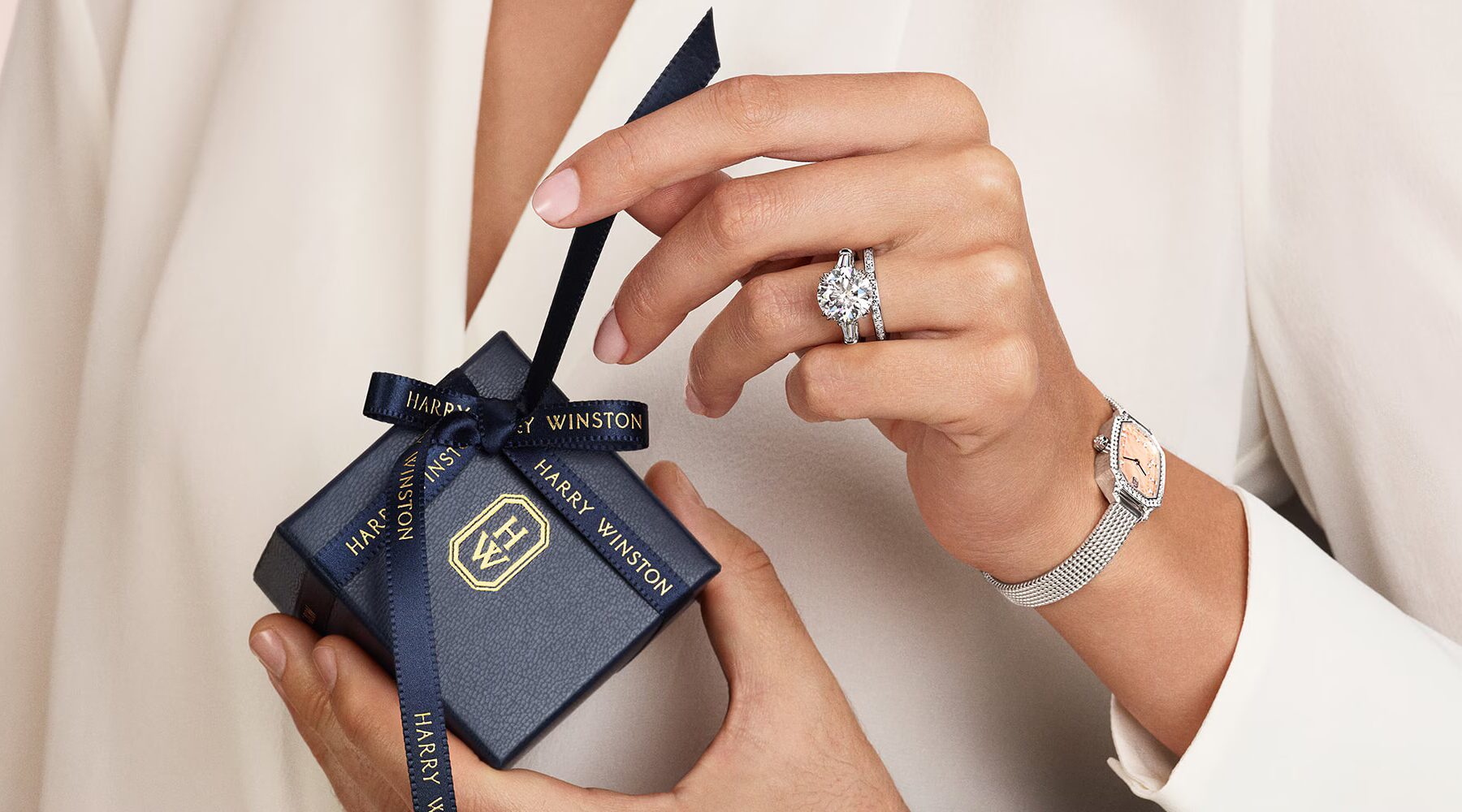
The Classic Winston Engagement Ring is offered across an unusually wide range of centre stone shapes for a single named design — round brilliant, pear-shaped, cushion, oval, radiant, or marquise. This breadth is itself a reflection of the House’s underlying philosophy: if the setting’s role is to disappear in service of the stone, then the setting’s core construction — platinum prongs, tapered to minimise visual presence, with “near invisible underpinnings” — can remain essentially consistent across very different stone shapes, because the setting was never designed around the specific geometry of one shape in the way that, for instance, a setting built specifically to showcase a round brilliant’s facet pattern might be.
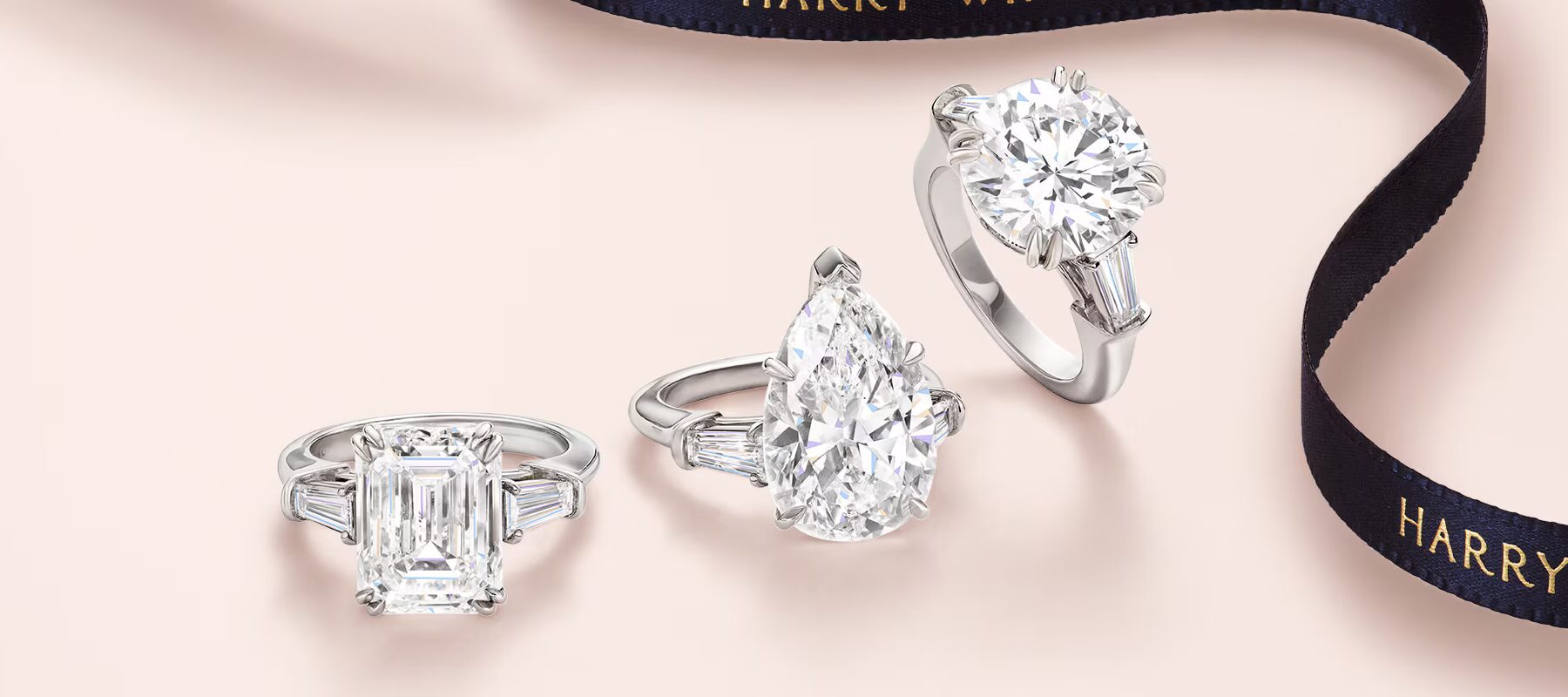
“The refined design emphasizes delicate details: the subtlety of platinum prongs, the tapered platinum setting that supports the diamond visually and structurally, the near invisible underpinnings, and the grace of the ring shank.” Read closely, this description contains a small but significant claim: the setting “supports the diamond visually and structurally” — meaning the same elements that provide the diamond’s physical security (the prongs, the underpinnings) are described first in terms of their visual function, and only secondarily in terms of their structural one. This ordering — visual function named before structural function, even though structural function is, in any practical sense, the setting’s primary job — reflects the House’s founding conviction: a Harry Winston setting’s first responsibility is to how the diamond looks, with security as a given rather than as the design’s starting point.
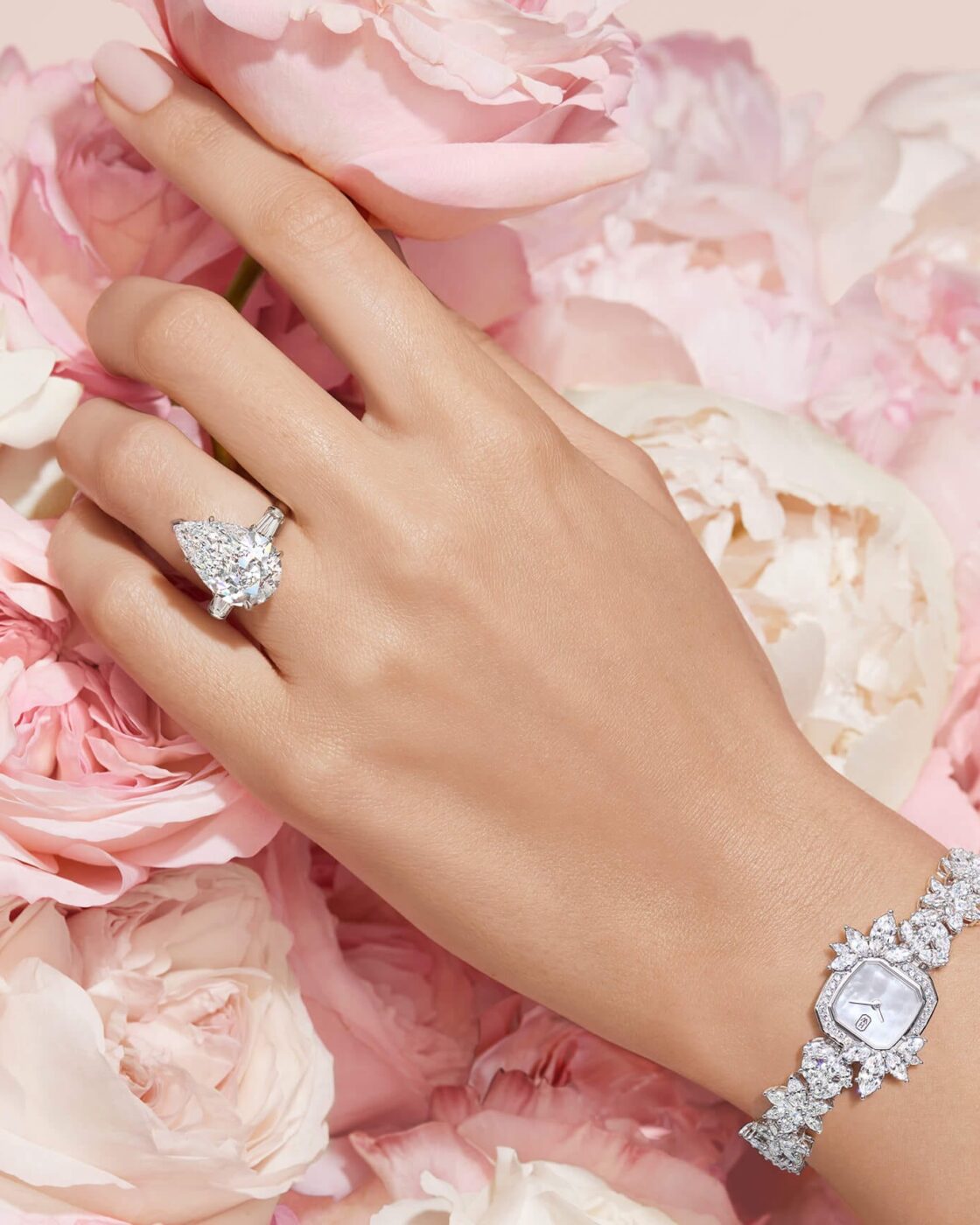
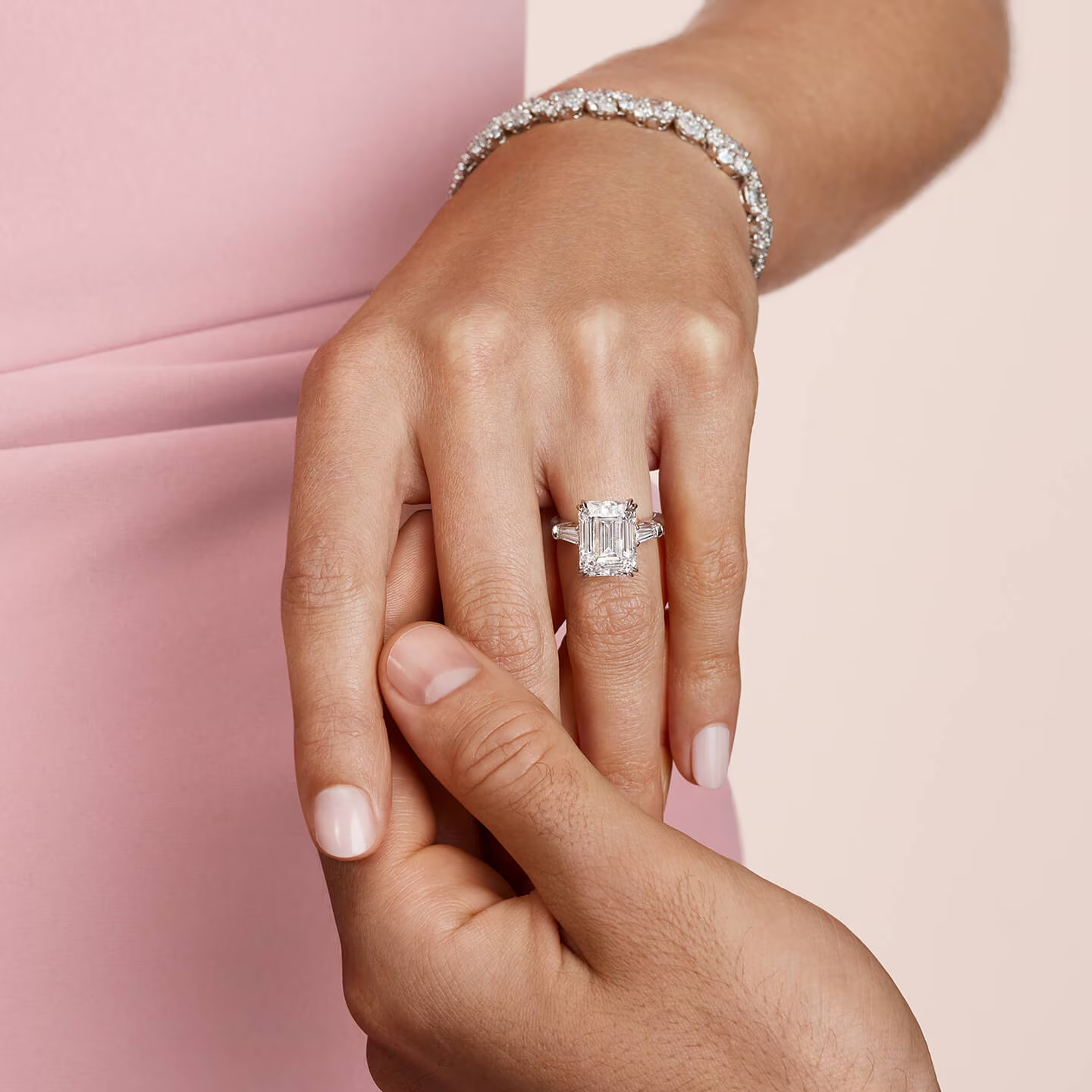
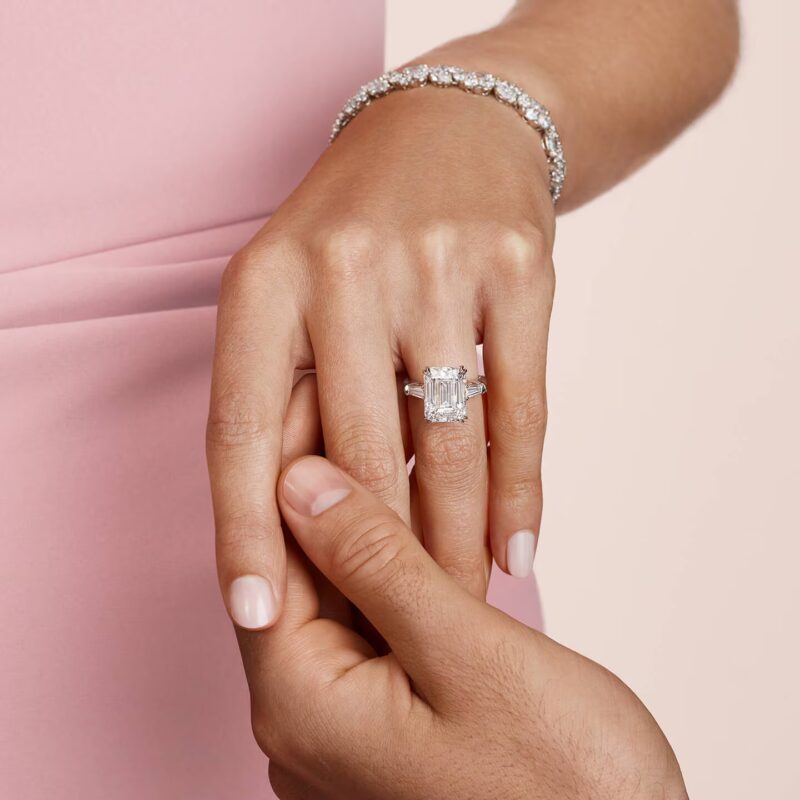
A study in proportions.
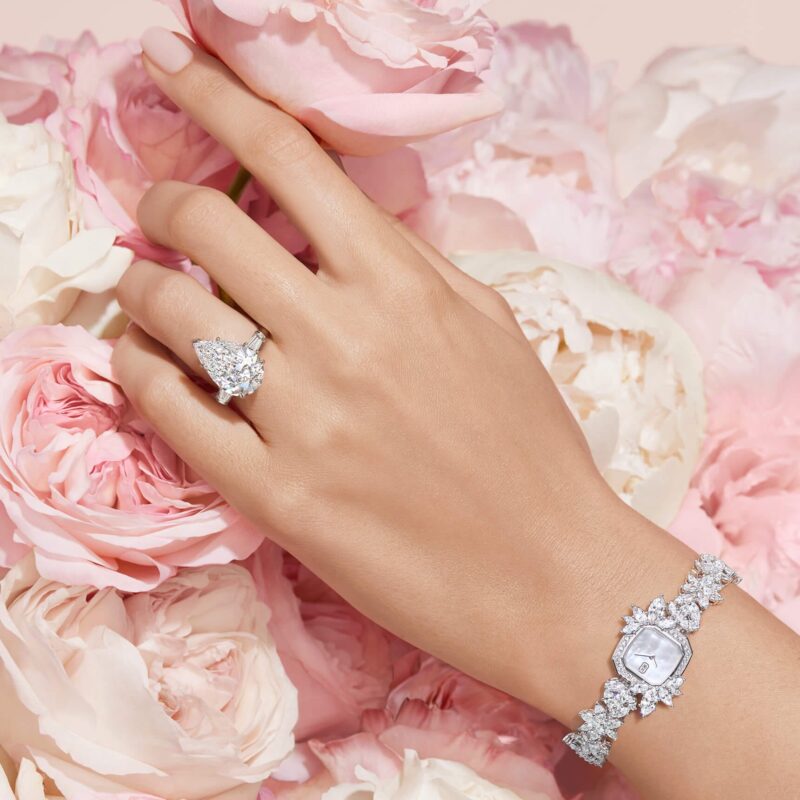
The Classic Winston setting adapts dynamically to different stone cuts. Whether a pear-shaped solitaire or a classic emerald-cut diamond, the platinum setting remains minimal and supportive.
“The One” — Cushion-cut, micropavé, and a name that states a conclusion
Among Harry Winston’s named bridal designs, “The One” — featuring a cushion-cut centre diamond in a micropavé setting — carries a name that, like Bulgari’s MarryMe, states its purpose with minimal symbolic mediation. Where “Classic Winston” describes a design tradition and “Wedding Day Jewels” describes an occasion, “The One” describes a conclusion: this is the ring for the person whose search has ended.
The cushion cut — a square or rectangular shape with rounded corners and larger facets, historically one of the oldest diamond cutting styles still in widespread use — paired with micropavé (a setting technique using very small diamonds, set extremely close together, typically along a band or halo, producing a continuous field of sparkle rather than individual visible settings) gives “The One” a different visual character from the Classic Winston’s more architecturally minimal platinum prong construction. Where Classic Winston’s logic is “as little setting as possible, so the stone reads alone,” The One’s micropavé logic is closer to “the centre stone, supported by a continuous field of smaller stones that extend its brilliance outward” — a logic that has some kinship with the halo concept discussed in TheTimeo’s coverage of Tiffany Soleste, though executed through micropavé’s denser, more continuous small-stone treatment rather than a distinct halo ring.
Legendary Diamonds — Lesotho III and the Burton-Taylor diamond
Harry Winston’s bridal reputation is inseparable from a small number of individual diamonds whose stories have become part of 20th-century cultural history, two of which involve engagement specifically.
The Lesotho III diamond was “given to Jacqueline Kennedy by her soon-to-be [husband] Aristotle Onassis” — a diamond whose name (Lesotho, the southern African nation where significant diamond discoveries have occurred) and Roman numeral (III, indicating its place within a sequence of stones cut from an original larger rough diamond) situate it within the broader tradition of named historical diamonds, each with a documented provenance from rough stone to cut gem to specific owner.
The Burton-Taylor diamond — “the flawless pear-shaped stone presented to the equally flawless Elizabeth Taylor by her husband Richard Burton in 1969” — generated a level of public fascination that, as one account describes it, “drew a line of thousands in New York and Chicago hoping to catch a glimpse of the rarified gemstone.” This detail is worth dwelling on: a diamond, given as a gift between two private individuals (however famous), generated public exhibition-level interest comparable to an art exhibition or a museum piece — a level of cultural significance that very few individual gemstones, before or since, have achieved.
Both stories reinforce the same point that runs through Harry Winston’s entire bridal positioning: the House’s most significant bridal moments have always been moments where the diamond itself — its size, its rarity, its specific cut and history — was the story, with the engagement or the relationship functioning as the occasion for that story to become public, rather than the setting or design providing the narrative on its own.
Wedding Day Jewels — Beyond the ring
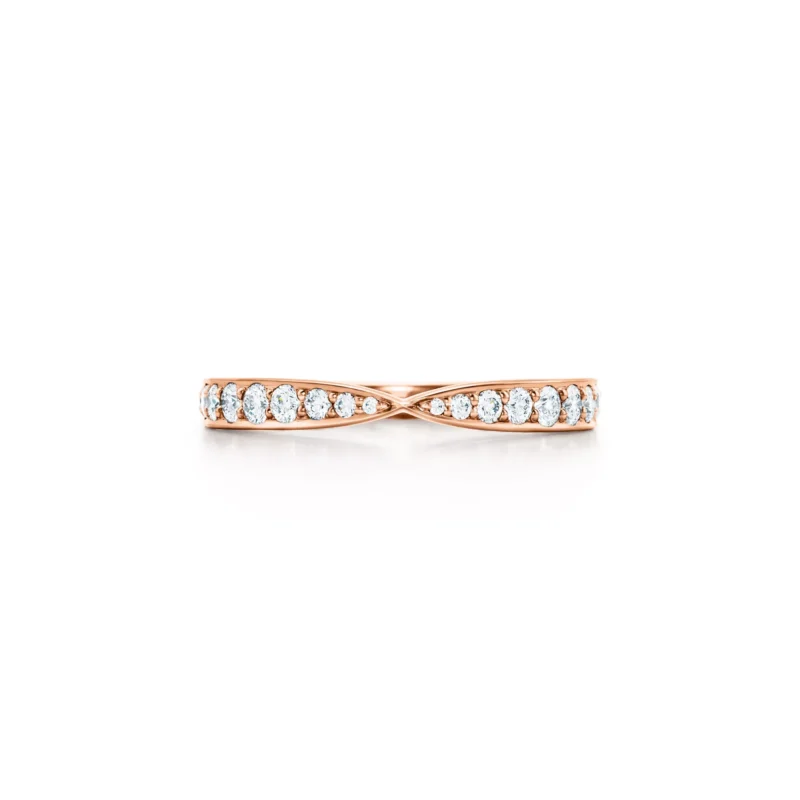
Harry Winston’s bridal offering extends beyond engagement rings into “Wedding Day Jewels” — described as paying “tribute to the House’s enduring love affair with the world’s most incredible diamonds,” spanning “classic jewelry styles, iconic Design Collections, and High Jewelry creations for the ultimate wedding day brilliance.” This category includes wedding bands, but also extends to occasion jewellery beyond the rings themselves — a detail consistent with Harry Winston’s broader identity as a House whose reputation was built as much on red-carpet and exhibition-level diamonds (The Court of Jewels, the Hollywood loans) as on bridal jewellery specifically. For a Harry Winston bride, “wedding day brilliance” is framed as extending across the full range of what might be worn on that day, not solely the ring exchanged during the ceremony itself.
Bridal category — Reading Harry Winston against the broader bridal landscape
Across TheTimeo’s bridal coverage — Tiffany’s engineered six-prong solitaire, Cartier’s interlocking Trinity and reductive 1895 Solitaire, Van Cleef & Arpels’ paired Toi et Moi tradition, Bulgari’s architecturally and mythologically derived B.zero1 and Serpenti — each House’s bridal identity centres on a design with its own history: a setting, a structure, a motif.
Harry Winston is the exception, and the exception is the point. The House’s bridal identity centres on a standard — D/E/F, VS2-or-better, eye-clean — applied to a setting whose explicit job is to recede. Where every other Maison covered in this series asks “what shape carries our meaning?”, Harry Winston’s bridal philosophy asks a different question entirely: “how rare does a diamond need to be before the question of shape becomes secondary?” The Classic Winston Engagement Ring’s six available centre stone shapes aren’t six different design statements — they’re six different answers to the same underlying commitment, because the commitment was never to a shape in the first place. It was to the diamond, full stop, and to the conviction — stated as the House’s founding philosophy and unchanged across ninety-four years — that everything else in an engagement ring exists in service of that one thing.
Key Specifications — Reference table
Explore the comparison
| Specification | Detail |
|---|---|
| Maison | Harry Winston (Founded 1932, New York) |
| Positioning | “King of Diamonds,” “Jeweler to the Stars” |
| Colour Standard | D, E, F only (Colorless) |
| Clarity Standard | VS2 or better, eye-clean |
| Setting Material | Platinum |
| Classic Winston shapes | Round brilliant, pear, cushion, oval, radiant, marquise |
| The One configuration | Cushion-cut center stone, micropavé halo and band |
| Wedding Day Jewels | Wedding bands and fine jewellery collections |
| Notable historic gems | Lesotho III, Burton-Taylor diamond |
TheTimeo view
Of the bridal traditions covered in this series, Harry Winston’s is the hardest to photograph in the way the others invite — there is no spiral to trace, no interlocking mechanism to demonstrate, no halo to count. And that difficulty is, in the end, the entire argument. A Harry Winston engagement ring is built around the conviction that the most important thing in the room is not a design decision at all — it’s a stone whose colour grade sits in the top three letters of an alphabet that runs to twenty-three, whose clarity is invisible even to a magnified eye, and whose presence in the setting is the entire reason the setting exists.
Ninety-four years after a young man who learned the trade alongside his father founded a business in New York, “King of Diamonds” remains a description of a philosophy rather than simply a title: that when a diamond is rare enough, the most sophisticated thing a jeweller can do with it is very little at all — tapered platinum, near-invisible underpinnings, a shank with grace and nothing more — and let the thing that took the earth a billion years to make do the rest of the talking. For a couple whose own conviction is that the diamond itself, more than any design tradition wrapped around it, is what their engagement is really about, no other House in this series makes that argument as completely, or as deliberately, as Harry Winston.
Sources & credits
Official sources
- Explore the official Harry Winston Engagement Rings.
- Discover the available Harry Winston Wedding Bands.
- Browse the full collection of Harry Winston Wedding Day Jewels.