
TheTimeo / Jewelry
DIAMOND IDENTITY:
read the report in order
Natural or laboratory-grown describes origin; treatment describes what happened later. A diamond report should keep identity, growth and treatment separate.
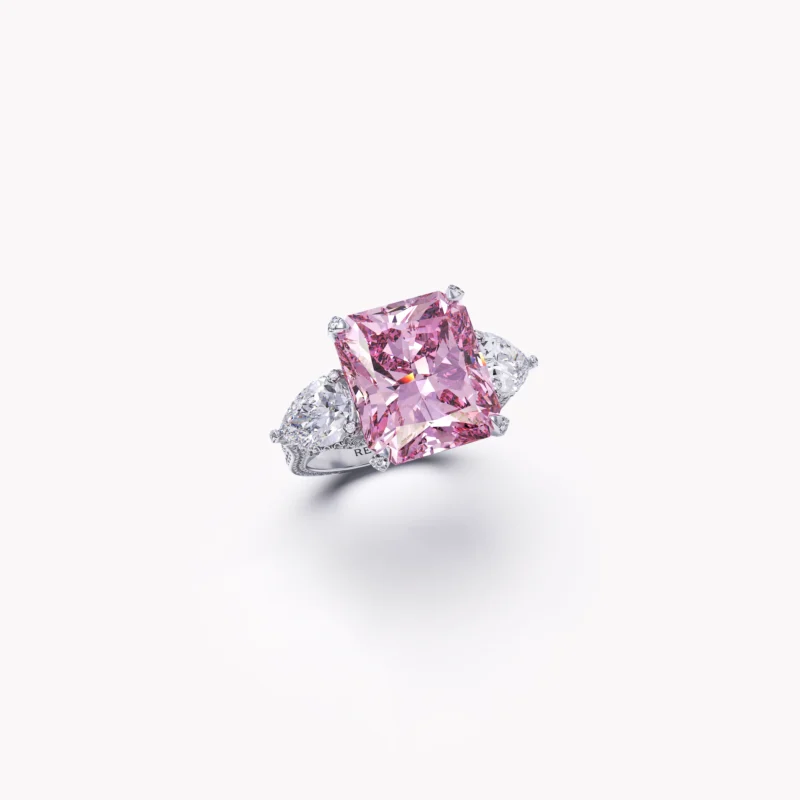
A pink diamond becomes the centre of the composition; the surrounding diamonds resolve its scale and direction. Courtesy of Restivo Diamonds.
Explore the story
A diamond can be natural and treated.
A laboratory-grown diamond can be untreated.
A laboratory-grown diamond can also be treated after growth.
And a stone that looks like diamond may not be diamond at all.
Those four sentences remove much of the confusion around modern diamond reports.
The mistake is grammatical before it is gemological. “Natural”, “laboratory-grown” and “treated” are often spoken as if they occupy the same field.
They do not.
Natural or laboratory-grown answers a question about growth origin.
HPHT or CVD, when relevant, answers a question about how a laboratory-grown diamond crystal was produced.
Treated or untreated answers a question about what happened to the material after formation or growth.
Before any of those, the laboratory first has to establish that the material is actually diamond rather than a simulant such as cubic zirconia or moissanite.
Only after identity, growth origin and treatment are understood should the collector move to colour, clarity, cut, weight and price.
The order matters because otherwise familiar words begin to carry claims they were never designed to support.
First question: is it actually diamond?
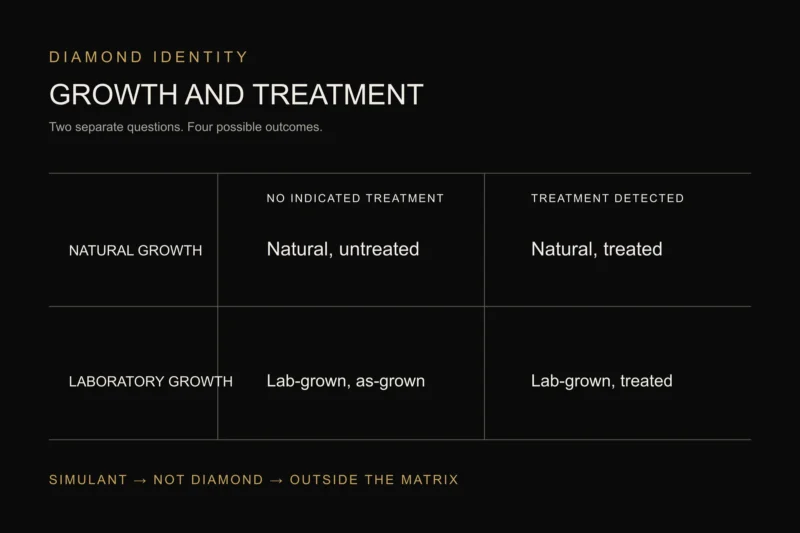
Growth origin and treatment are separate questions; simulants sit outside the diamond matrix. Courtesy of TheTimeo.
Laboratory-grown diamond is diamond.
Moissanite is not.
Cubic zirconia is not.
This distinction is easy to lose because all three can be manufactured and all three can be sold as colourless faceted stones.
GIA describes natural and laboratory-grown diamonds as sharing essentially the same chemical composition, crystal structure and closely comparable optical and physical properties. Laboratory-grown diamonds are therefore not diamond simulants.
Moissanite and cubic zirconia belong to a different category.
They imitate the appearance of diamond but have different compositions, crystal structures and physical properties.
This gives a report an identity gate before the more familiar grading questions begin:
Material: diamond or non-diamond?
If diamond:
Growth origin: natural or laboratory-grown?
A document that says only “diamond” but does not make the growth origin clear is not enough for a modern collector file.
Natural and laboratory-grown are growth histories
A natural diamond crystallised through geological processes.
A laboratory-grown diamond crystallised through a controlled manufacturing process.
The finished materials can be difficult or impossible to distinguish by eye.
GIA says that natural and laboratory-grown diamonds can be separated through differences created by their growth environments: atomic-scale defects, impurity patterns, growth structures, fluorescence and spectroscopic characteristics.
That means a loupe is not a reliable natural-versus-laboratory-grown test for an otherwise convincing modern stone.
The report conclusion should be treated as a laboratory identification result, not as something the buyer is expected to recreate from photographs.
For the collector file, use a dedicated field:
Growth origin: Natural diamond
or:
Growth origin: Laboratory-grown diamond
Do not use:
Real diamond: Yes
That language is too vague to carry the distinction.
A laboratory-grown diamond has another origin question
Once the report identifies a laboratory-grown diamond, a second question can appear:
How was it grown?
The two principal commercial methods are:
HPHT — High Pressure, High Temperature
and:
CVD — Chemical Vapour Deposition.
They both produce diamond.
They do it differently.
HPHT growth
GIA describes HPHT growth as using very high pressures and temperatures, with carbon crystallising around a diamond seed in a press.
The method recreates some of the physical conditions associated with natural diamond formation, but in a controlled manufacturing environment and on a radically compressed timescale.
CVD growth
Chemical Vapour Deposition operates at much lower pressure.
A carbon-containing gas is activated into a plasma, and carbon is deposited layer by layer onto diamond seed material.
The resulting growth structure is different enough that a laboratory can distinguish it from HPHT production and from natural growth.
The important collector point is not which acronym sounds more advanced.
It is that growth method is not the same thing as treatment.
HPHT can mean two completely different things
This is one of the most important pieces of vocabulary in the entire subject.
HPHT can be a growth method.
A diamond can be grown by High Pressure, High Temperature synthesis.
But:
HPHT can also be a treatment method.
High pressure and high temperature can be applied to a diamond after it already exists in order to alter colour.
That later processing can be performed on natural diamonds or on some laboratory-grown diamonds.
So a report or catalogue using the letters HPHT needs context.
Ask:
HPHT-grown?
or:
HPHT-treated?
Those are different histories.
A diamond described only as “HPHT” has not been described precisely enough.
CVD-grown does not mean untreated
The same mistake appears in another form.
A CVD-grown diamond is a diamond whose crystal was produced by Chemical Vapour Deposition.
That says nothing, by itself, about whether the finished crystal was later treated.
GIA’s research on recent laboratory-grown diamonds reports that post-growth processing is common in CVD production, particularly treatment intended to improve colour.
GIA has documented CVD-grown diamonds subsequently subjected to HPHT processing, irradiation and annealing.
Therefore:
CVD-grown
is a growth conclusion.
CVD-grown, post-growth treated
is a fuller history.
And:
CVD-grown, no indication of post-growth treatment
is different again.
The collector should preserve the complete wording used by the issuing laboratory.
“As grown” does not mean natural
IGI provides useful wording for understanding this distinction.
Its laboratory-grown reporting can identify the growth process and, for untreated examples, use language such as:
“as grown with no indication of post-growth treatment.”
That phrase does not mean the diamond is natural.
It means the laboratory-grown diamond has no indicated later treatment after its laboratory growth.
This is exactly why “natural” and “untreated” cannot share one database field.
A good diamond record has both:
Growth origin
and:
Treatment status.
Treatment can apply to natural diamonds too
Natural origin does not mean untouched.
GIA documents several treatments used on natural diamonds.
HPHT processing
Can alter or improve colour in certain natural diamonds.
Irradiation
Can create or modify colour by changing colour centres within the diamond.
Annealing
Heat treatment can be used alone or after irradiation to modify colour.
Laser drilling
A laser can create a channel to reach a dark inclusion, allowing the appearance of the inclusion to be reduced.
These are later interventions on a naturally grown diamond.
The correct description is therefore not:
natural versus treated.
It can be:
natural diamond, treated colour
or:
natural diamond, laser drilled
or:
natural diamond, no indicated treatment
depending on the laboratory result.
Treatment status does not replace growth origin.
It sits beside it.
Some treatments are reportable; others can stop the report
Not all treatment types are handled the same way by laboratories.
GIA currently says it issues grading reports for diamonds subjected to treatments it regards as stable, including processes such as irradiation, annealing, laser drilling and HPHT colour treatment, with the treatment prominently disclosed.
GIA does not issue grading reports for diamonds with treatments it considers unstable or non-permanent, such as:
- fracture filling;
- surface coating.
That absence can itself become meaningful evidence.
If a seller presents a “GIA graded fracture-filled diamond”, the wording should trigger immediate verification because it conflicts with GIA’s stated report policy.
Do not assume every treatment belongs to the same disclosure system.
“Treated colour” and “treated clarity” are not the same claim
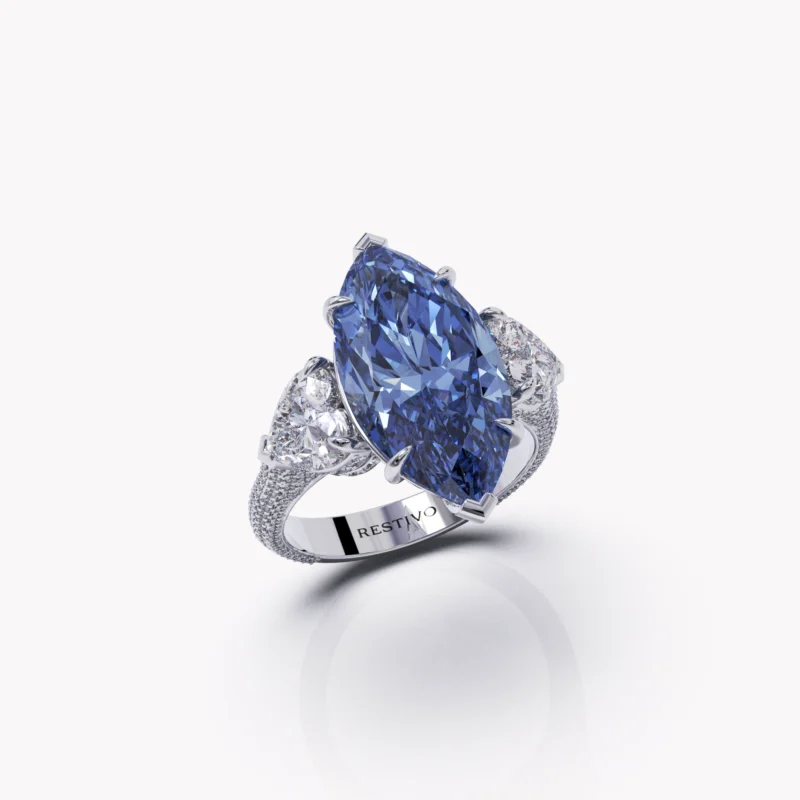
A blue diamond asks for a different balance of contrast, proportion and surrounding light. Courtesy of Restivo Diamonds.
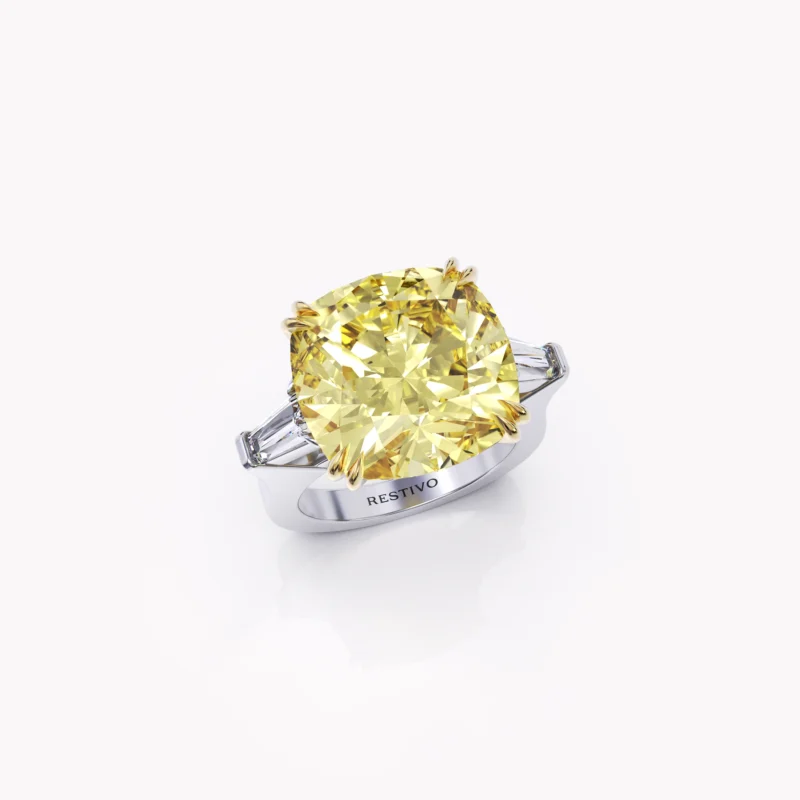
Yellow diamond colour is legible because the construction leaves the central stone room to speak. Courtesy of Restivo Diamonds.
Treatment should also be broken down by purpose.
A diamond can undergo intervention intended to affect colour.
Another treatment can alter the visible effect of an inclusion.
The report or collector file should preserve what kind of intervention was detected.
Examples:
Colour treatment
- HPHT processing;
- irradiation;
- annealing;
- coating.
Clarity-related treatment
- laser drilling;
- fracture filling.
These categories can have different permanence, care implications and laboratory-report consequences.
A single field marked:
Treatment: Yes
throws away useful information.
A better file records:
Treatment detected
Treatment type
Purpose / effect
Laboratory wording
Report date
The report language itself changed in 2025
A collector reading laboratory-grown diamond reports in 2026 has another problem: the vocabulary can depend on when the report was issued.
On 1 October 2025, GIA changed its reporting system for colourless-to-near-colourless laboratory-grown diamonds.
GIA no longer applies the natural-diamond colour and clarity nomenclature to its current D-to-Z laboratory-grown quality assessment.
Instead, the current GIA Laboratory-Grown Diamond Quality Assessment classifies eligible loose laboratory-grown diamonds as:
Premium
or:
Standard
based on a combined assessment of colour, clarity, polish, symmetry and cut.
A stone falling outside the defined criteria does not receive either designation.
That is a significant reporting change.
An older GIA laboratory-grown diamond report can still show familiar D-to-Z colour and clarity terminology because it was issued under the earlier system.
GIA stated when introducing the change that existing laboratory-grown reports remain valid.
So two genuine GIA documents can use different quality languages simply because they belong to different reporting eras.
The report date matters.
Do not generalise GIA’s change to every laboratory
GIA’s current system is not a universal industry format.
IGI’s current 2026 Laboratory Grown Diamond Report still uses individual 4Cs-style fields including carat weight, colour, clarity and cut where applicable.
IGI also says growth method and treatment information may be noted in report comments and continues to identify whether the material is laboratory-grown.
That means a current IGI report and a current GIA report can describe comparable laboratory-grown diamonds using different systems.
This creates a simple rule:
never compare report words without first identifying the laboratory and report format.
“Premium” on a current GIA quality assessment is not an alternative spelling of “D VVS2”.
A D/VVS2 laboratory-grown diamond on an IGI report is not automatically equivalent to every GIA Premium assessment.
They are different reporting systems.
Quality comes after identity
Natural-diamond grading has trained buyers to start with the 4Cs.
That is appropriate only after the material question is settled.
GIA’s current natural Diamond Grading Report provides a full 4Cs assessment for eligible loose natural D-to-Z diamonds, including a plotted clarity diagram. Standard round brilliant diamonds also receive a GIA cut grade.
But colour, clarity, cut and carat do not answer:
- natural or laboratory-grown;
- CVD or HPHT;
- treated or untreated;
- stable or unstable treatment;
- whether the stone matches the document in front of you.
Those are different layers.
A collector should therefore read the report in this order:
1. Material identity
2. Growth origin
3. Growth method, where reported
4. Treatment status
5. Quality assessment
6. Physical reconciliation
7. Price
Starting at colour and clarity is starting in the middle.
Laboratory-grown coloured diamonds make the separation even clearer
Current GIA services for laboratory-grown coloured diamonds explicitly combine several layers in one report.
GIA says its Laboratory-Grown Colored Diamond Report can include:
- a full quality assessment;
- a plotted clarity diagram;
- growth type;
- post-growth treatment.
A related colour-identification format can report:
- colour;
- colour distribution;
- growth type;
- post-growth treatment.
This is exactly the structure collectors should learn to preserve.
One diamond can have:
Growth origin: laboratory-grown.
Growth method: CVD.
Post-growth treatment: detected.
Colour: Fancy Vivid orangy pink.
None of those lines makes another redundant.
A treated laboratory-grown diamond is not a contradiction
Marketing language sometimes makes treatment sound like something performed only on natural material.
GIA research shows otherwise.
Post-growth treatment is part of the modern laboratory-grown diamond landscape.
CVD-grown diamonds in particular may undergo HPHT processing intended to reduce unwanted colour.
Fancy-colour laboratory-grown diamonds can undergo combinations of treatment to create or modify colour.
This does not mean every laboratory-grown diamond is treated.
It means the reporting system has to ask.
That is the point of the treatment field.
Natural, lab-grown and treated are a matrix, not three boxes
A more accurate way to think about the market is:
Explore the comparison
| Growth origin | Treatment state | Possible description |
|---|---|---|
| Natural | No indicated treatment | Natural diamond, no indicated treatment |
| Natural | Treated | Natural diamond, treatment disclosed |
| Laboratory-grown | No indicated post-growth treatment | Laboratory-grown, as-grown / untreated under report wording |
| Laboratory-grown | Post-growth treated | Laboratory-grown, treatment disclosed |
Simulants sit outside this matrix because they are not diamond.
That table is more useful than dividing a jewellery tray into:
Natural / Lab-Grown / Treated.
The third label overlaps the first two.
The laser inscription is useful — and not sufficient
GIA laser-inscribes its current laboratory-grown assessed diamonds with an identifying report or assessment number and the term Laboratory-Grown.
That is useful object-level evidence.
It is not infallible.
GIA has repeatedly documented fraud involving laboratory-grown or treated diamonds carrying counterfeit inscriptions linked to genuine GIA natural-diamond reports.
In 2024, GIA announced a same-day verification service after seeing laboratory-grown diamonds deliberately cut to dimensions close to natural diamonds and then given fraudulent GIA report-number inscriptions.
In a 2025 Gems & Gemology laboratory note, GIA documented four stones with counterfeit inscriptions: two were laboratory-grown and two were HPHT-treated natural diamonds rather than the untreated natural stones described by the copied reports.
This changes the collector workflow.
Do not stop at:
The inscription number exists in Report Check.
Ask whether the physical diamond matches the report:
- weight;
- measurements;
- shape;
- cutting style;
- clarity characteristics;
- inscription style;
- other report data.
A valid report number can still be attached fraudulently to the wrong stone.
Report Check verifies the document record, not the stone by itself
GIA Report Check is essential.
It allows the user to confirm that a report number corresponds to data held by GIA.
That helps detect fabricated or altered documents.
It does not eliminate the need to reconcile the physical diamond.
The logic is:
Report Check: Is this a real report record?
Physical reconciliation: Is this the diamond described by that report?
Those are separate tests.
For an important transaction, both matter.
Mounted jewellery changes what can be verified
Loose-diamond reports offer the laboratory the most direct access to the stone.
Once a diamond is mounted:
- the girdle inscription may be partly hidden;
- exact weight may not be independently measurable;
- some inclusions may be obscured;
- pavilion access can be restricted;
- measurements may be limited.
IGI currently offers reports for finished jewellery containing natural and laboratory-grown diamonds, documenting mounted stones as the setting permits.
GIA’s current D-to-Z laboratory-grown Quality Assessment is specified for loose stones.
Therefore the report attached to a ring can depend partly on when and how the stone was examined.
Record whether the report was issued:
loose
or:
mounted
Do not assume the same scope.
Old reports should not be rewritten into current terminology
Suppose a laboratory-grown diamond carries a genuine 2024 GIA report with D colour and VVS2 clarity.
In 2026, GIA uses a different D-to-Z lab-grown assessment system.
The correct collector record is not to convert the old report retrospectively into Premium.
Preserve the historic document exactly.
Record:
GIA report, 2024 — D / VVS2 under the reporting system then in force.
If the diamond is submitted later for a new service, keep the new report separately.
A report is evidence created at a date.
Updating the laboratory’s terminology does not rewrite the object’s documentary history.
The laboratory name is part of the data
Collector databases often extract only:
- carat;
- colour;
- clarity;
- cut.
That loses the reporting authority.
With contemporary laboratory-grown diamonds, the omission is especially serious because reporting systems are no longer fully parallel.
Every stored grade should travel with:
laboratory
report type
report number
report date
report version/system where relevant
That allows future readers to interpret the wording correctly.
Without those fields, “D VVS2” becomes contextless data.
What the report cannot tell you
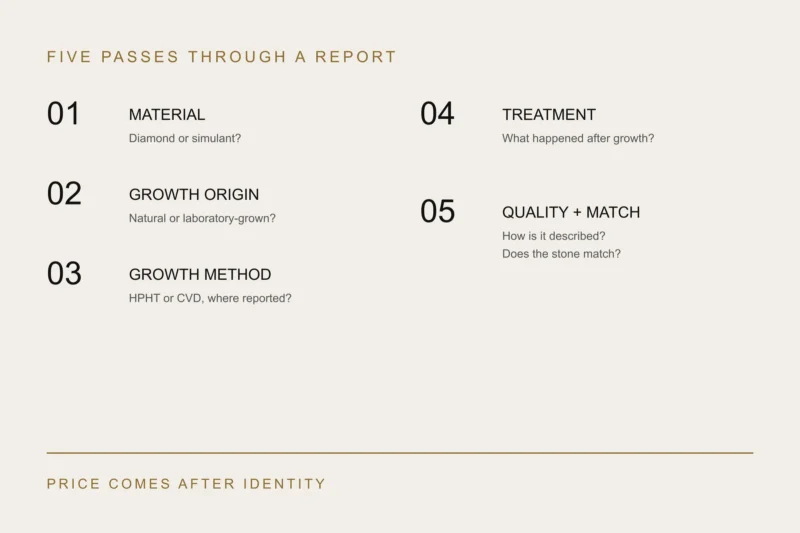
Read material, growth origin, growth method, treatment and quality before considering price. Courtesy of TheTimeo.
Even a strong report does not establish:
- retail price;
- resale price;
- future price performance;
- ethical superiority;
- environmental superiority;
- emotional suitability;
- complete chain of custody;
- jewellery workmanship outside the report scope.
A laboratory-grown designation is not a sustainability certificate.
A natural-diamond report is not a mining-practice audit.
A treatment disclosure is not a valuation.
If those claims matter, they require separate evidence.
This article is about material identity and gemological condition.
Do not make the report carry a commercial or ethical conclusion it was never designed to support.
A collector’s diamond identity file
For any important diamond, keep the following fields.
Material
Diamond confirmed?
If not, exact simulant or material identification.
Growth origin
Natural.
Laboratory-grown.
Exact laboratory wording.
Growth method
HPHT.
CVD.
Not reported.
Not applicable.
Do not infer from appearance.
Treatment
No indication under report scope.
HPHT treated.
Irradiated.
Annealed.
Laser drilled.
Other laboratory wording.
Unstable treatment / no grading report where applicable.
Quality system
GIA natural 4Cs.
GIA current lab-grown Premium/Standard assessment.
Older GIA LGDR terminology.
IGI laboratory-grown 4Cs.
Other laboratory system.
Do not merge them.
Report
Laboratory.
Report type.
Number.
Date.
Digital/paper format.
Report Check / verification result.
Physical link
Laser inscription.
Weight.
Measurements.
Shape.
Clarity characteristics.
Photographs.
Any discrepancy.
Jewellery context
Loose or mounted when reported.
Setting.
Maison / maker.
Reset history.
Service history.
Ownership
Invoice.
Seller.
Acquisition date.
Transfer history.
Insurance documentation.
The objective is not to make diamond collecting bureaucratic.
It is to preserve the distinctions that the market keeps trying to collapse.
The first question is not “natural or lab?”
The strongest buying question is slightly earlier.
What is the material, and what has the laboratory actually established about it?
Then:
How did this diamond form?
Then:
If laboratory-grown, how was it grown?
Then:
Was it treated after formation or growth?
Then:
How is its quality described under this laboratory’s current or historical reporting system?
Only then should the collector look at price.
Natural, laboratory-grown and treated are not three competing labels.
They are answers to different questions.
A serious report keeps them separate.
A serious collector file should do the same.
Sources & further reading
Material identification, growth-method and treatment claims were prioritised to GIA laboratory and research documentation. IGI is used as a second primary laboratory source to demonstrate that current laboratory-grown diamond report formats are not uniform across laboratories. No market-price, investment, environmental or ethical-superiority claim is made.
- GIA — Natural Diamond Reports & Services
- GIA — Natural Diamond Reports & Services Details
- GIA — Laboratory-Grown Diamond Services
- GIA — Updated Laboratory-Grown Diamond Services launched 1 October 2025
- GIA — Laboratory-Grown Diamond Assessment Criteria
- GIA — Difference Between Natural and Laboratory-Grown Diamonds
- GIA — HPHT and CVD Diamond Growth Processes
- GIA — Laboratory-Grown Diamond Trends
- GIA — Diamond Treatments
- GIA — Disclosure of Treated or Laboratory-Grown Material
- GIA — Simulants, Moissanite and Laboratory-Grown Diamonds
- GIA — Same-Day Report Verification / counterfeit inscriptions
- GIA — HPHT-Processed Natural and Laboratory-Grown Diamonds with Counterfeit Inscriptions, 2025
- GIA — Laboratory-Grown Diamond Report authenticity FAQ
- IGI — Laboratory Grown Diamond Report
- IGI — How to Read an IGI Laboratory Grown Diamond Report
- IGI — Natural Diamond Report
- IGI — Post-Growth Treatment Added to Reporting
Current GIA reporting change — checked 5 September 2026
GIA introduced its current Laboratory-Grown Diamond Quality Assessment for colourless-to-near-colourless laboratory-grown diamonds on 1 October 2025.
The current assessment:
- is for loose laboratory-grown colourless-to-near-colourless diamonds of 0.15 ct or more;
- classifies qualifying stones as Premium or Standard;
- combines criteria involving colour, clarity, polish, symmetry and cut;
- laser-inscribes the girdle with
Laboratory-Grownand the GIA quality-assessment number; - does not use the natural-diamond colour/clarity nomenclature as the final quality description.
GIA stated that older laboratory-grown reports remain valid.
Cross-laboratory note
IGI’s current 2026 Laboratory Grown Diamond Report continues to document individual 4Cs-style colour, clarity, cut and carat information and can note laboratory-grown origin, growth process and treatment information in its reporting system.
TheTimeo therefore does not normalise a current GIA Premium assessment into an IGI D/VS/VVS-style grade or vice versa.
Treatment note
GIA currently says it can report stable treatments including irradiation, annealing, laser drilling and HPHT processing, while it does not issue grading reports for diamonds with unstable/non-permanent treatments such as fracture filling or coating.
Counterfeit-inscription note
GIA documented cases in 2024–2025 where laboratory-grown and treated natural diamonds were cut to closely match genuine natural-diamond report data and given counterfeit GIA inscriptions.
A report number and inscription should therefore be verified against the physical stone; confirming that the number exists in a database is not enough.
The Edit
Jewelry stories
Selected stories from the same editorial universe.
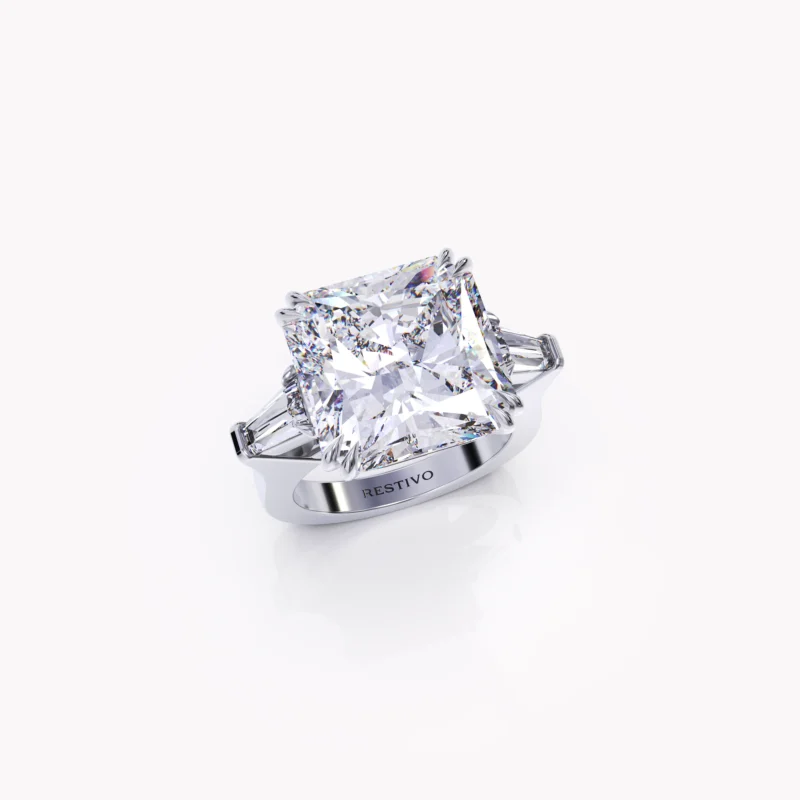
Beyond the 4Cs: Choosing an Engagement Ring for Everyday Life
The diamond report is only half the decision. Height, setting, shoulders, sizing and the

Boucheron Human Being: One Shape, Five Ways of Making It
Rain, Flower, Light, Tattoo and Checkers repeat one high-jewellery silhouette while changing material, technique,
Restivo Diamonds: When High Jewellery Begins with the Stone
Restivo Diamonds makes a stone-first proposition: natural diamonds and coloured gems lead the brief;
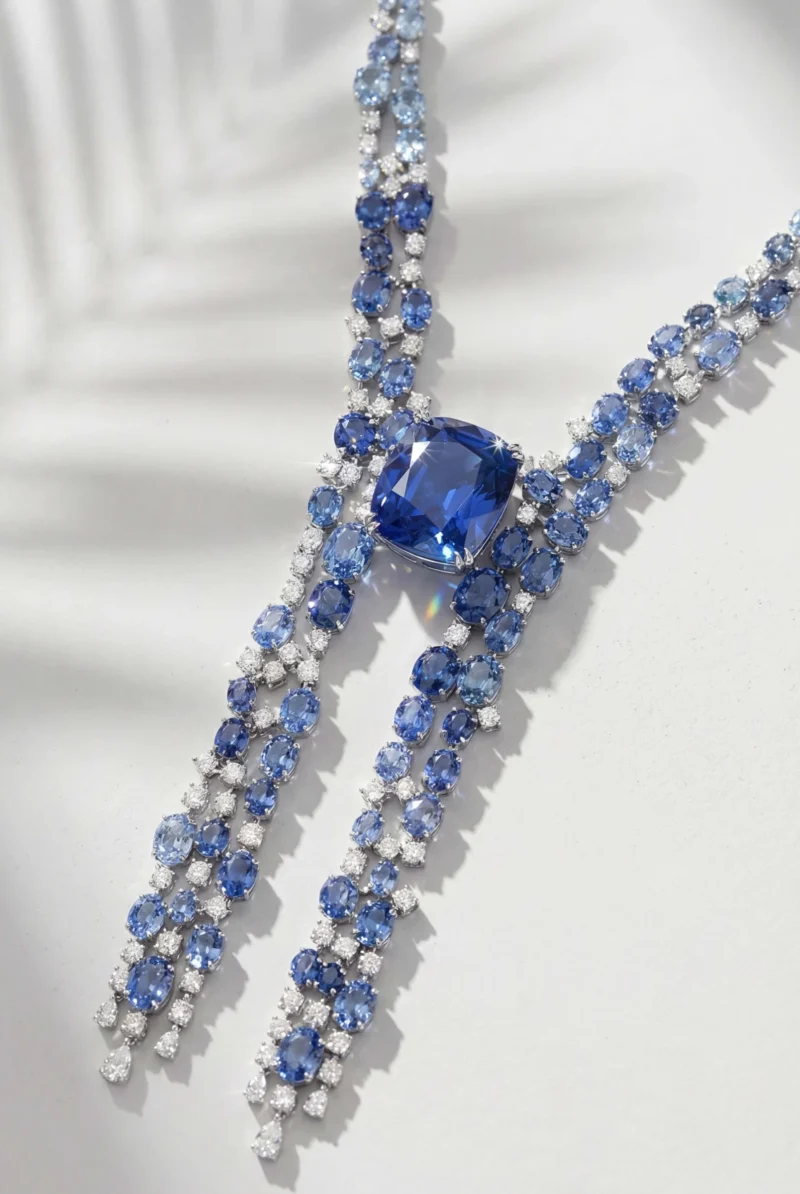
Chopard Miracles 2026: How 79 High Jewellery Pieces Avoid Becoming One Idea
Chopard’s Red Carpet Collection becomes most compelling when the festival theme recedes and each

One Butterfly, Twelve Constructions: How Graff Turns a Motif into High Jewellery
Graff holds one butterfly silhouette still, then changes colour, volume, surface and movement across
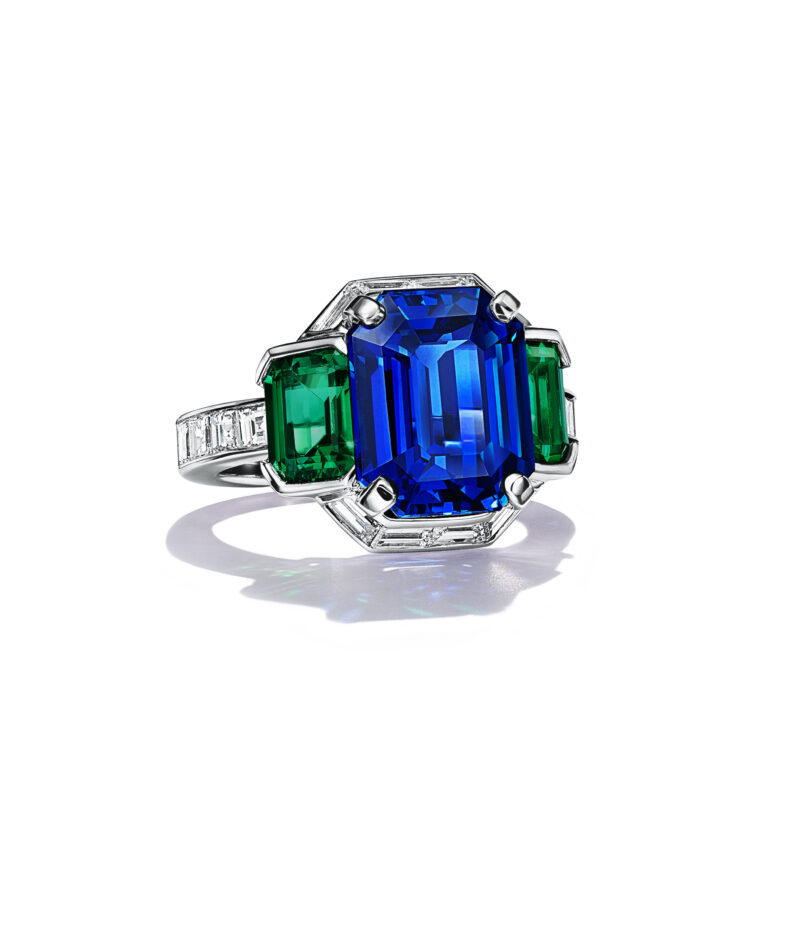
Emerald or Sapphire? Choosing a Coloured-Stone Engagement Ring
Emerald and sapphire can both belong in an engagement ring, but setting, treatment history