
TheTimeo / Jewelry
GraffWhen the stone leads
Cut, colour and setting shape the way an exceptional stone is seen. A closer look at Graff’s stone-led approach to high jewellery.
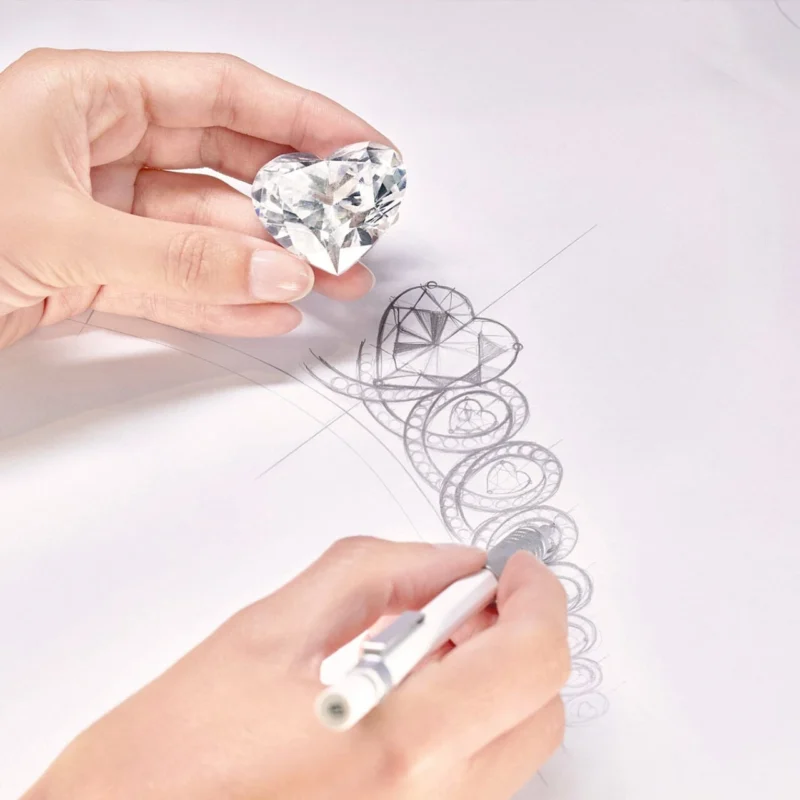
Graff Infinity Diamond placed over its tiara design drawing. Courtesy of Graff.
Explore the story
In Graff’s workshop photographs, a heart-shaped diamond is held above a drawing. Its outline already sets the centre of the composition; the pencil lines around it explore what the jewel might become.
The stone is the 157.80-carat Infinity Diamond, and the design is a tiara. The images offer a more revealing introduction to Graff than a list of exceptional carat weights. They show the practical question behind the spectacle: how do you build a jewel around a stone with such a strong presence?
Begin with the outline
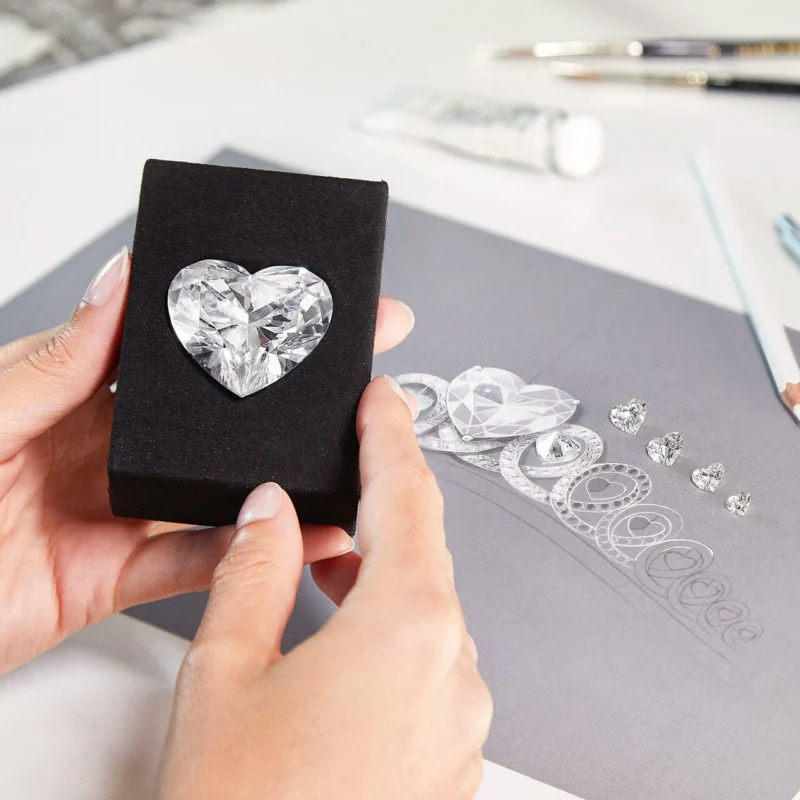
Graff Infinity Diamond with the developing jewellery composition. Courtesy of Graff.
A heart has a clear direction. Its point draws the eye downwards, while the two lobes spread the form above it. A setting that suits a round diamond cannot simply be enlarged to accommodate that shape.
In the Infinity drawings, curved forms develop around the centre. They echo its outline without competing with it as another large focal point. The smaller stones help carry the composition outwards, so the diamond belongs to a tiara rather than appearing attached to an unrelated frame.
This is what stone-led design means in practice. The designer starts with the gem’s actual dimensions and appearance, then decides how the rest of the jewel should respond. There is still room for invention, but the central object is specific.
Cutting is already a design decision
A polished diamond is the result of choices made before a mounting exists. Cutting removes material to create an outline and arrangement of facets. Weight, internal characteristics and the intended visual effect all enter that decision.
Graff records that the Infinity Diamond was cut from a rough weighing approximately 373 carats. The difference is a reminder that the finished stone was not simply uncovered intact. Its proportions were achieved through the removal of precious material.
For a reader looking at a finished jewel, this makes cut worth considering alongside size. A long step-cut diamond presents light differently from a round brilliant. A heart or pear also introduces a direction that the surrounding design must acknowledge. Two stones of similar weight can set quite different challenges.
The drawing has to become metal
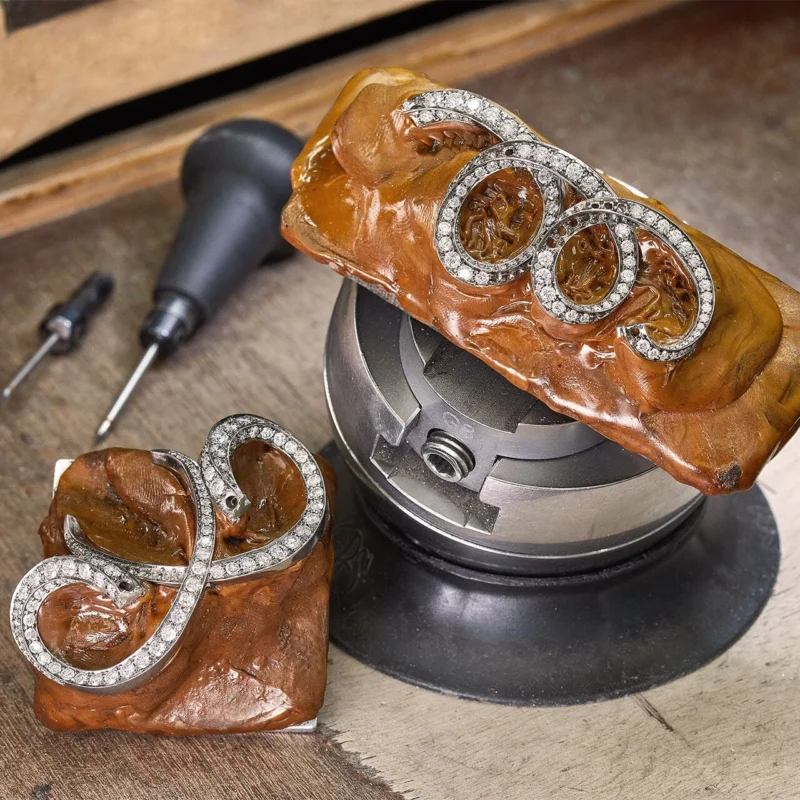
Metalwork for the Graff Infinity tiara before the centre stone is set. Courtesy of Graff.
The workshop sequence is especially interesting before the centre stone is fitted. Separate curved sections and their stone seats are visible. The jewel has to provide support, connections and a secure place for every gem, even when the final photograph makes most of that structure easy to overlook.
Here, the metalwork is part of the composition. If it is too visually prominent, it competes with the stones. If the proportions are unresolved, the central diamond can look isolated from the rest of the jewel. The workshop must turn a convincing drawing into a physical object.
Graff’s published making-of material describes designers and craftspeople working through that process. The images are useful because they let us look past the finished surface. A polished jewel may appear effortless; the intermediate stages show where that impression has been constructed.
A ring poses the same question at another scale
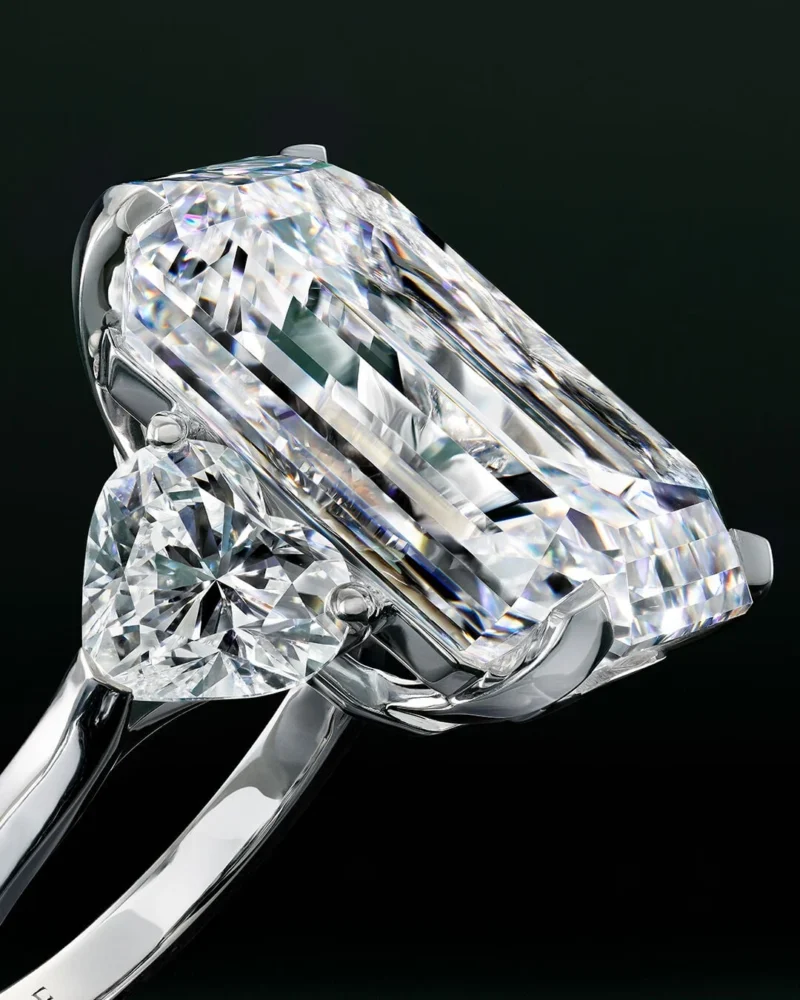
Macro view of a Graff emerald-cut diamond ring and its setting. Courtesy of Graff.
The emerald-cut diamond ring pictured here provides a more compact example. The centre has long, straight facets and a pronounced outline. Heart-shaped shoulder stones soften the transition towards the band, while the pale metal remains visually secondary.
“Emerald cut” describes the diamond’s cut, not its material. The long step-like facets create broad reflections rather than the smaller pattern associated with a brilliant cut. In this ring, the shoulders add a different rhythm without displacing the centre.
Look at the profile as well as the face. The height of the stone, the position of its supports and the way the shoulders meet the band all affect the complete design. These qualities can be missed when a jewel is described only by its centre-stone weight.
Colour is a relationship
The apparent balance of a jewel depends on what surrounds the principal stone. White diamonds can create contrast around a coloured centre; the metal can blend into that composition or introduce another colour of its own.
There is no single successful formula. A restrained mount may let an unusual stone dominate, while a more elaborate design can give it a larger setting in which to be seen. The useful question is whether the supporting elements make the main stone clearer and the whole jewel more convincing.
When comparing pieces, view them in more than one lighting condition where possible. Photographs and grading information serve different purposes, and neither completely substitutes for seeing how the finished jewel looks. A laboratory report describes the stone examined; your response to the composition is another part of the decision.
What to ask when looking closely
Start with the centre: its type, dimensions, cut and accompanying report. Then move outwards. Why were these side stones selected? How does the mount support the main gem? Does the profile seem balanced, and is the piece comfortable for its intended use?
For a previously owned jewel, ask whether the stone has been repolished or reset and whether the mounting has been altered. Relevant reports, original drawings and service documents can help explain the object without turning the conversation into a catalogue of superlatives.
Graff’s workshop photographs make the appeal of this approach tangible. The stone commands attention, but the decisions around it create the jewel. Looking at both is what makes an exceptional gemstone interesting beyond its size.
Sources & further reading
Graff’s Infinity Diamond account and workshop photographs, Making of a Masterpiece and emerald-cut diamond ring with heart-shaped shoulders. The discussion of proportion and visual balance is TheTimeo’s analysis of the published objects and images.
The Edit
Jewelry stories
Selected stories from the same editorial universe.
Messika My Twin: Two Cuts, One Bridal Look
An emerald cut, a pear and an unequal pair: the small asymmetry of Messika
Two Rings, Two People: A De Beers Wedding-Band Edit
A rose-gold court profile, a single diamond in platinum, a fine eternity line or
Norman Silverman Bridal: A Ring with Presence
A pear solitaire on the hand, a radiant seen in profile and an emerald-cut
Harry Winston Beyond the Ring: Choosing the Wedding-Day Jewels
The engagement ring does not have to carry the whole wedding look. Harry Winston’s
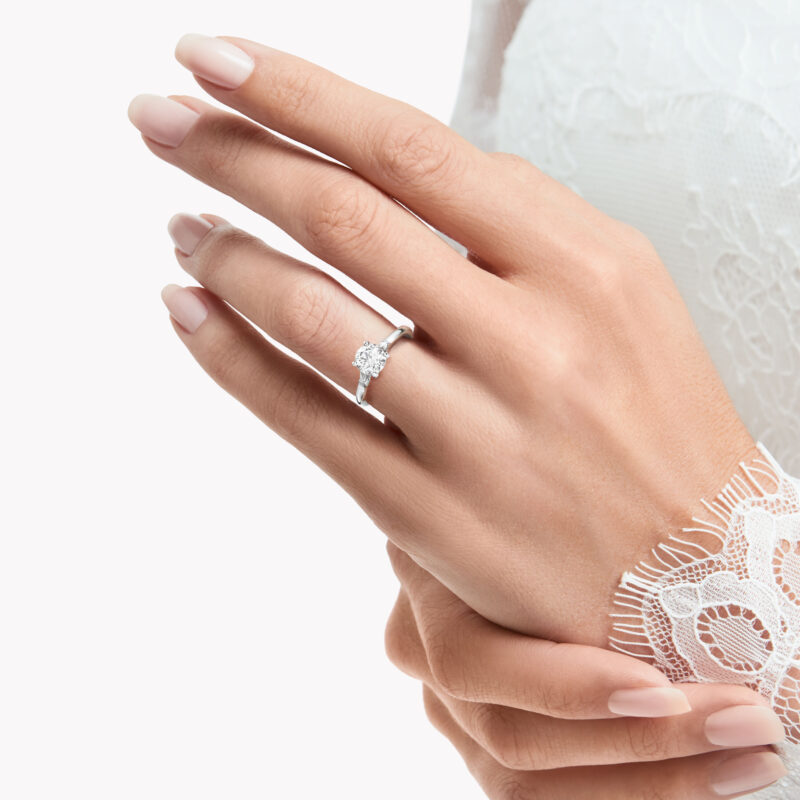
The Shape of a Promise: Reading Graff Engagement-Ring Silhouettes
Choosing a Graff Promise ring becomes clearer when you read the whole silhouette: round,
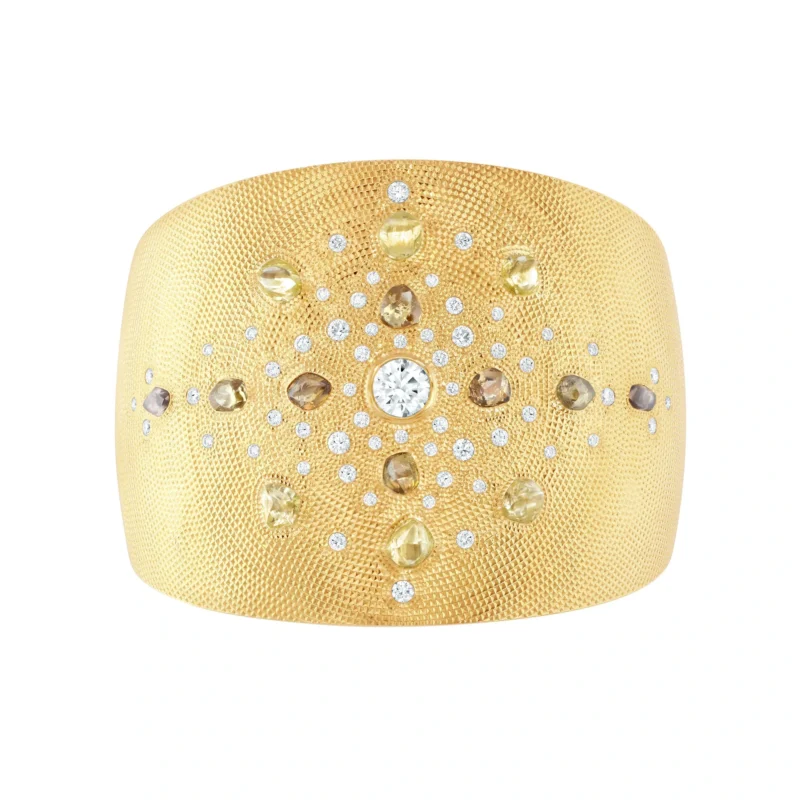
Why Leave a Diamond Rough? What De Beers Talisman Still Preserves After Twenty Years
A rough diamond arrives with its own geometry. Twenty years after Talisman, De Beers