High Jewellery Atelier
BridalBulgari Bridal: The Engagement Ring for Someone Who Was Never Going to Choose a Solitaire
A TheTimeo bridal reading of Bulgari's "Wonders of Love" collection — where B.zero1, born from the Colosseum's geometry, and Serpenti, transforming since 1948, sit alongside a dedicated line called simply MarryMe, offering a bridal vocabulary built on Roman architecture and Mediterranean myth rather than on the solitaire tradition that defines most engagement ring collections.
In brief
Why this creation matters
Bulgari's Wonders of Love bridal collection presents an unconventional bridal vocabulary, centering its identity on the Maison's own structural icons — the spiral geometry of B.zero1 and the coiling architecture of Serpenti — letting diamonds live inside these shapes rather than building the shape around the stone.
Bulgari does not build settings around diamonds; it creates structural icons that capture past, present, and future, letting diamonds live inside their Roman geometry.
TheTimeo editorial desk
Object first
A closer reading of the creation
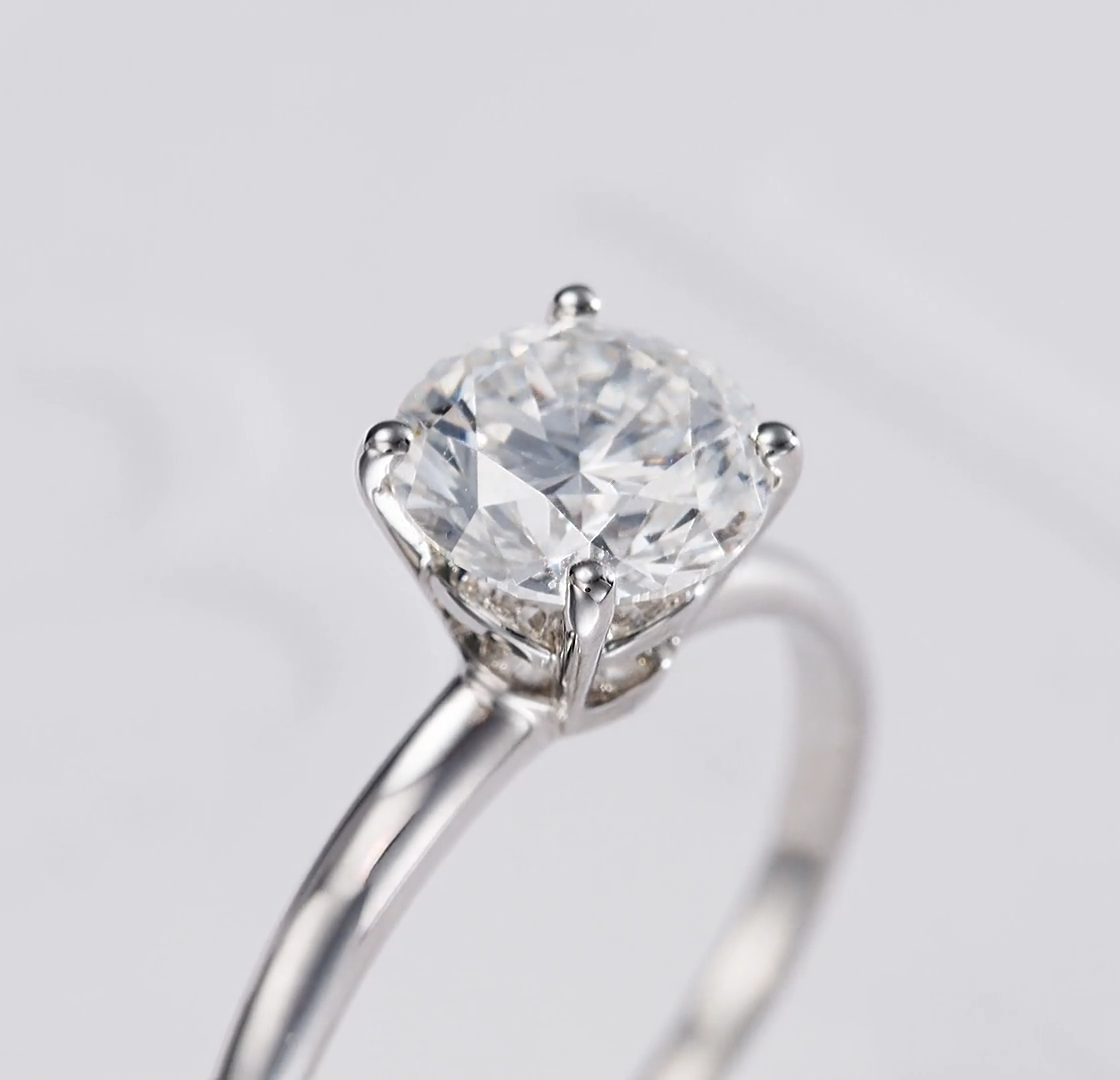
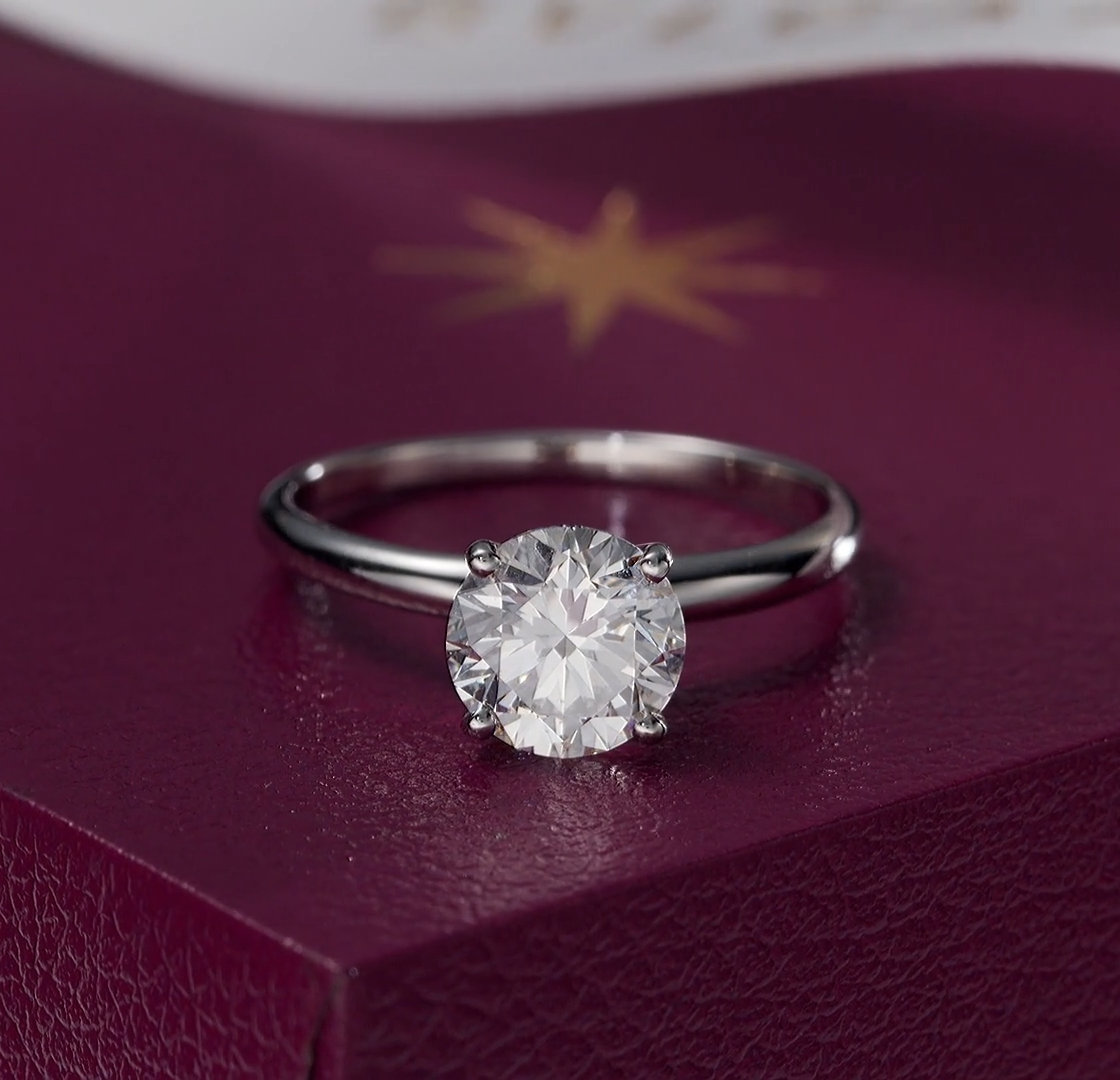
Editorial dossier
A Roman reading of love & continuity
Marrying Roman architectural heritage with Mediterranean mythological symbols, Bulgari's bridal range approaches the engagement ring as a structural promise of future, past, and present, using GIA certification to ground its design-first philosophy in certified gemstone quality.
Atelier reading
B.zero1: The geometry of Colosseum
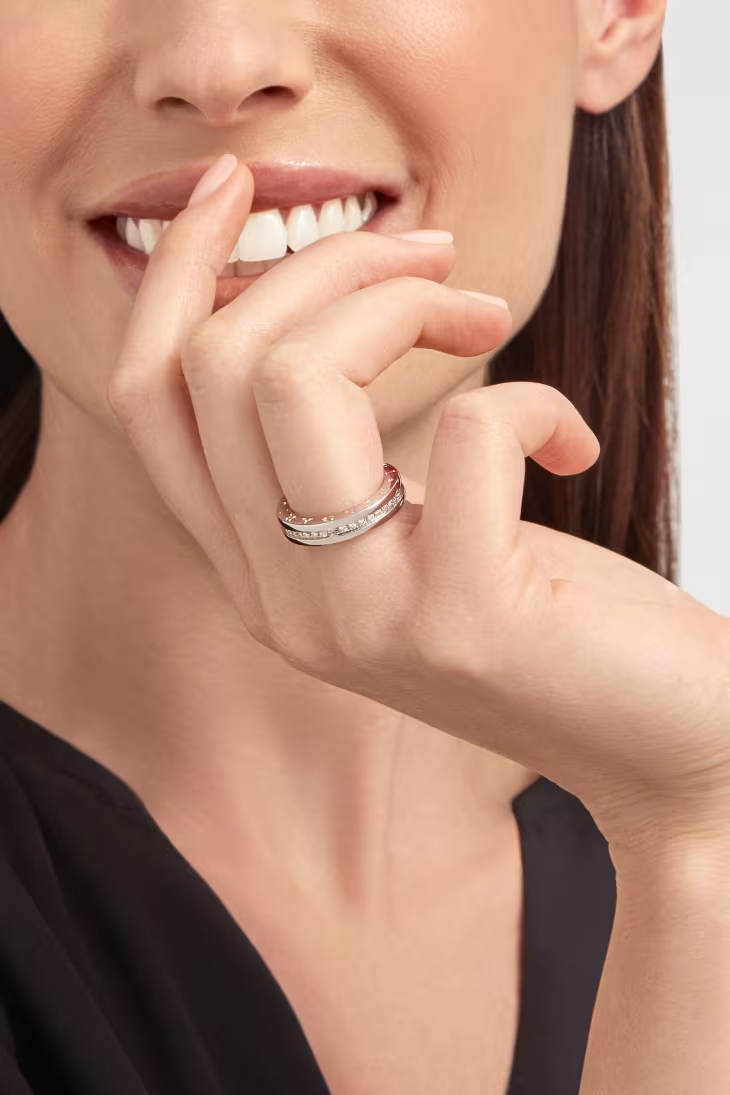
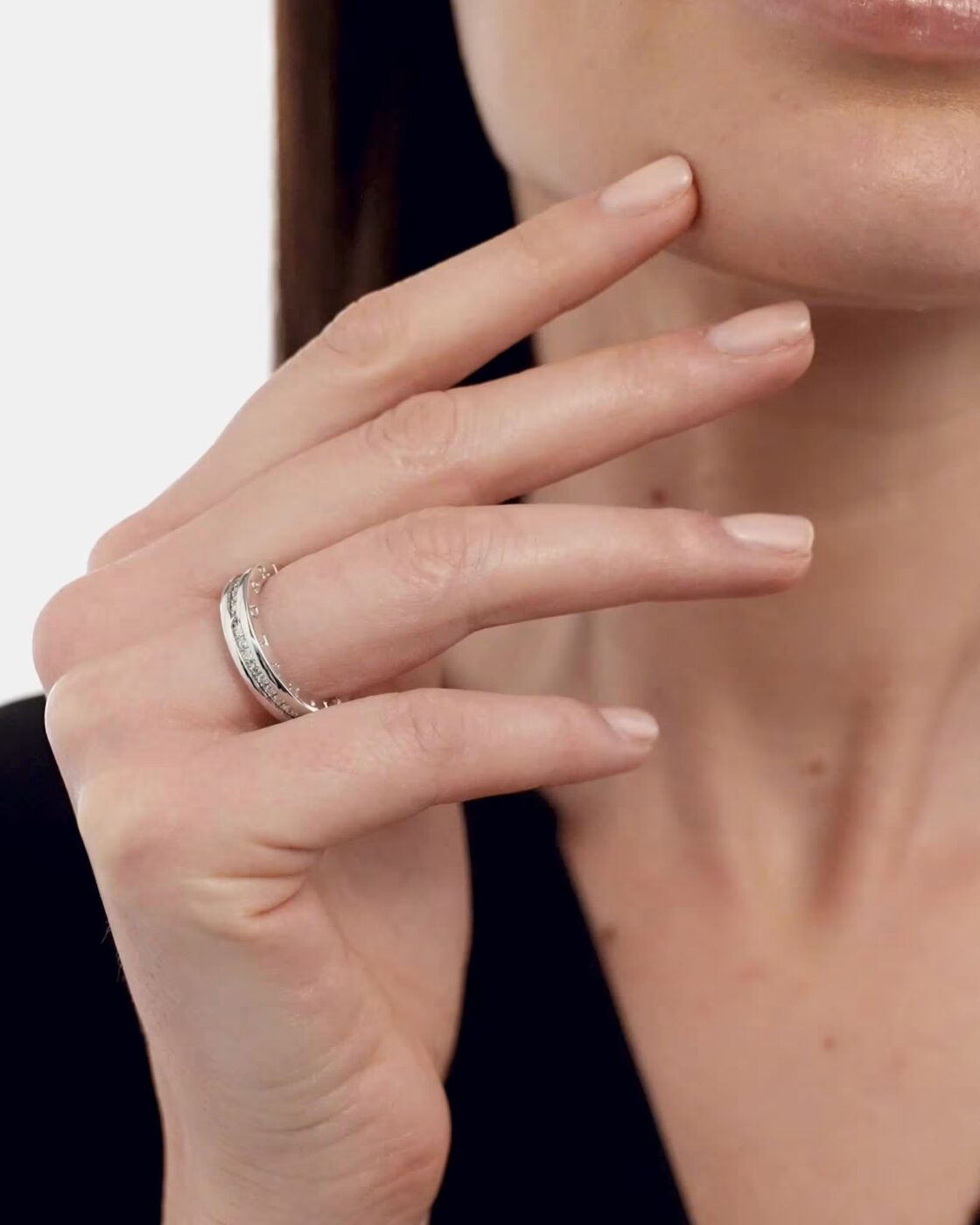
Defying conventional bridal settings, B.zero1 embeds diamonds within a continuous, architectural spiral that stands as a direct metaphor for past, present, and future, offering a bold statement for those who bypass traditional solitaire rings.
Atelier reading
Serpenti Viper: Transformation & renewal
With seventy-eight years of design history, the Serpenti Viper scale coils represent a living visual language. Diamonds are distributed along the winding form rather than isolated in a single point, symbolizing growth and renewal in a marriage.
Atelier reading
MarryMe: Straightforward commitment
Fitted in platinum or rose gold, the MarryMe rings communicate their purpose with immediate legibility, offering a simple and elegant setting for buyers seeking direct bridal presentation without interpretive mythology.
Visual dossier
The image sequence behind the story
In brief — Why Bulgari’s bridal logic is genuinely different
Bulgari frames its entire bridal offering under a single phrase: “Wonders of Love.” The collection’s own description sets expectations clearly from the outset — “spanning from daring designs to more classic styles, Bulgari couple and promise rings celebrate the singularity of your relationship with one-of-a-kind aesthetics,” built around “an assortment of the Maison’s most loved icons — such as Serpenti, B.zero1 and Bulgari Bulgari — to be matched with creativity and freedom.”
This framing matters because it inverts the logic that defines most major bridal collections. Tiffany’s Setting and Soleste, Cartier’s Solitaire 1895 — both are, fundamentally, settings: structures engineered around the presentation of a single centre stone, with the design’s identity emerging from how that stone is held and lit. Bulgari’s bridal collection works the other way around. B.zero1 and Serpenti are shapes with their own independent identity, originated decades apart and for reasons that had nothing to do with engagement rings — the Colosseum’s geometry, the symbolism of a coiled serpent in Greco-Roman myth — and the bridal application asks how a diamond, or a pair of wedding bands, can exist within those shapes, rather than how a shape can be built around a diamond.
B.zero1 — Born at the dawn of the new millennium, and the geometry of the Colosseum
B.zero1 entered Bulgari’s catalogue at the turn of the millennium, and its design takes its core form — a spiral band, often combined with smooth outer loops — directly from “the most renowned amphitheater of the world, the Colosseum.” This is not a vague gestural reference to “Roman heritage” in the way many luxury brands invoke history as atmosphere; the B.zero1’s spiral geometry is a specific translation of the Colosseum’s architectural structure — its concentric, layered, continuous form — into a wearable object.

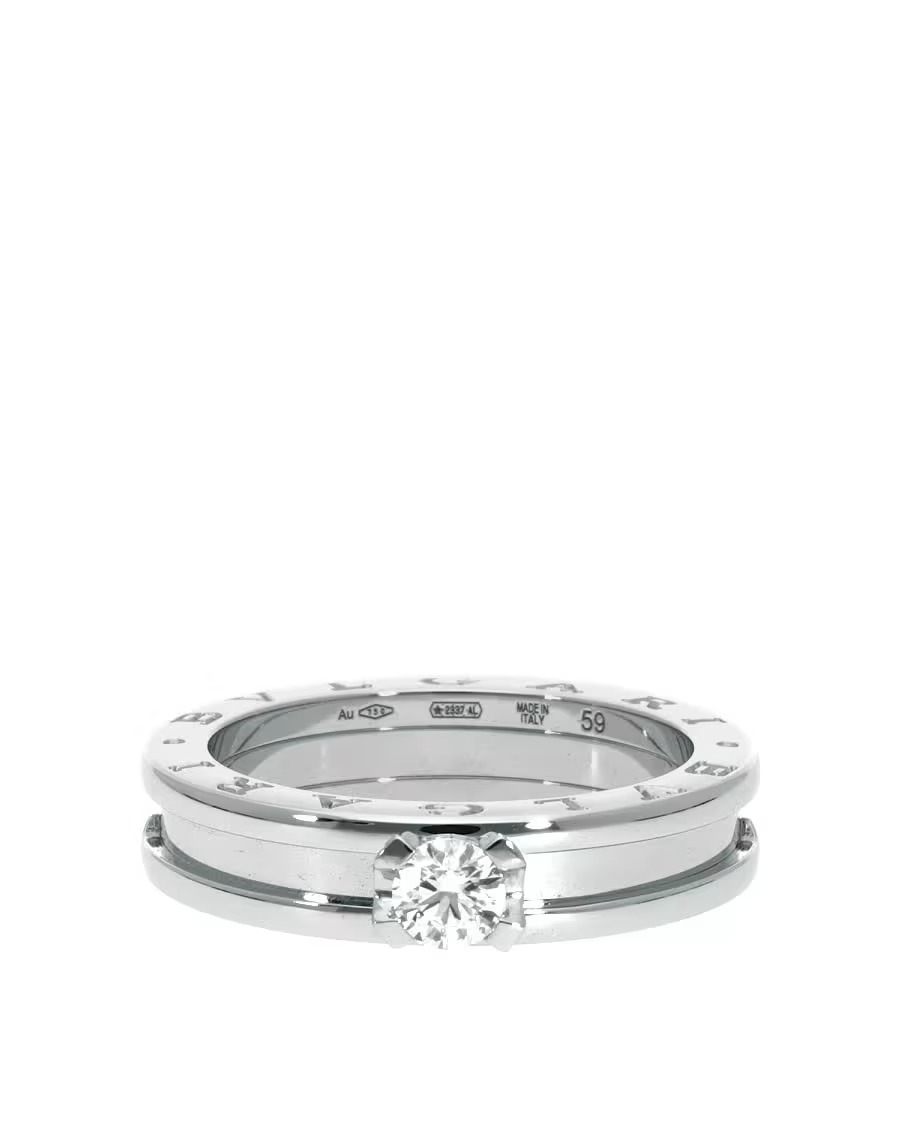
Roman architecture as love’s continuum.
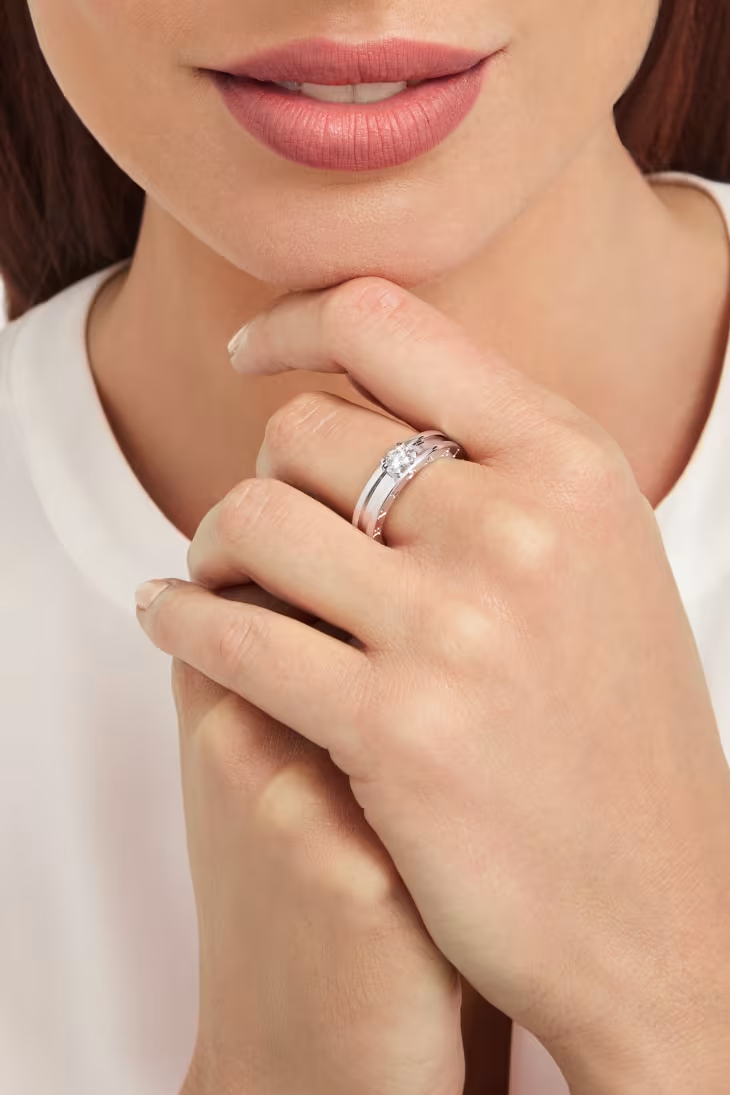
The white gold and diamond bands showcase Bulgari’s signature architectural structure. The continuous spiral, layered details, and pave borders wrap around the finger, integrating the diamond seamlessly into the band rather than suspending it above the metal.
What makes B.zero1 relevant to a bridal context specifically is the meaning Bulgari attaches to that spiral: “the purity of its distinctive spiral is a metaphor for the harmony of past, present, and future — reflected in the magnificence of the eternal city.” This is a strikingly direct piece of symbolic framing for an engagement or wedding ring. Where many bridal symbols require some interpretive work — three bands meaning love, fidelity, and friendship; a six-prong setting meaning “nothing comes between you and the light” — B.zero1’s spiral arrives with its meaning already legible in its form: a continuous line, without a beginning or end that the eye can easily locate, standing in for the continuity of past, present, and future. For a ring exchanged as a promise about the future built on a present commitment and a shared past, this is about as direct a visual metaphor as bridal jewellery offers.
For a bridal buyer, this framing is significant because engagement and wedding rings are, more than almost any other jewellery category, governed by convention — by expectations about what a ring “should” look like, inherited from generations of prior tradition. B.zero1’s explicit positioning as a design that “defies” and “breaks free from” those conventions offers something specific: a bridal choice for a couple who want their rings to be unmistakably theirs, rather than a version of a design whose meaning has been defined primarily by everyone who has worn it before.
Serpenti — Seventy-eight years of “infinite transformation”
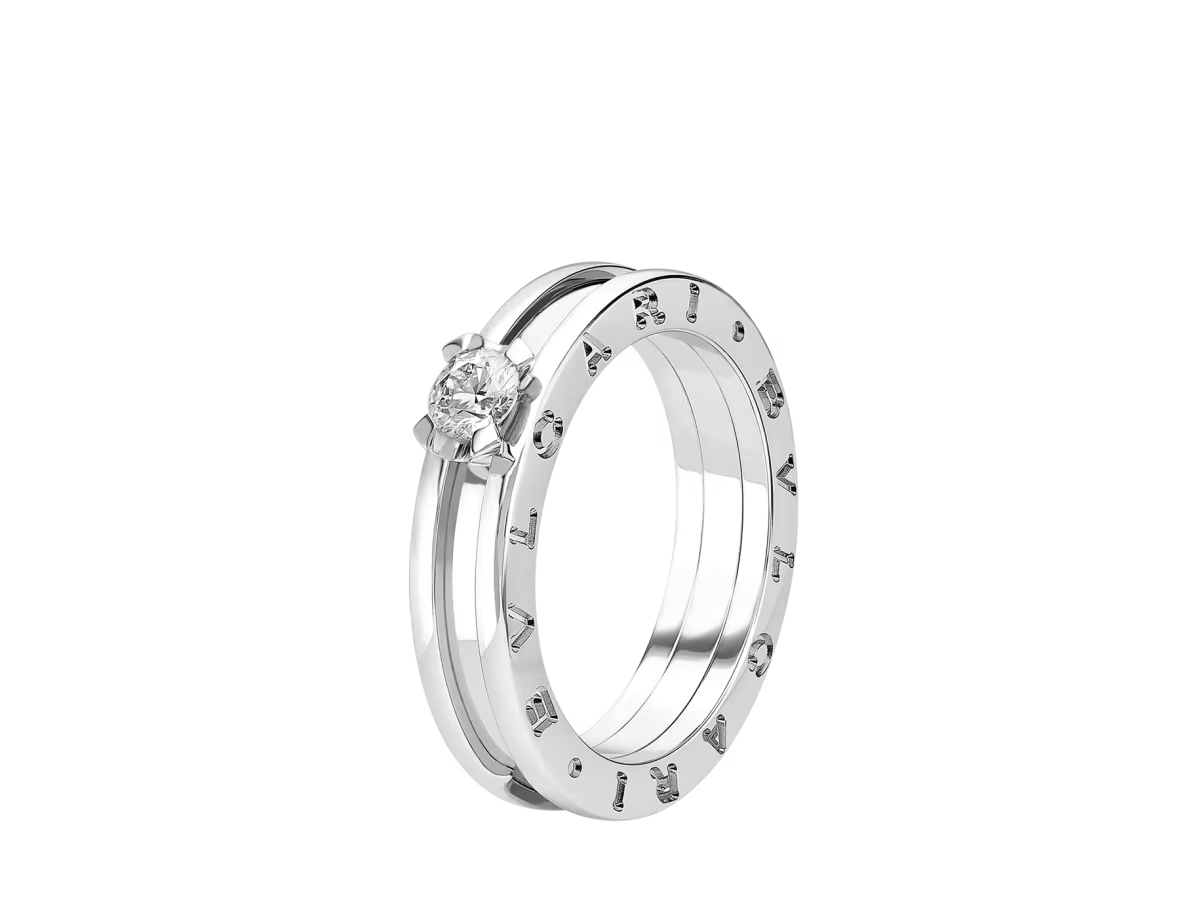
Serpenti’s history at Bulgari dates to 1948, and the collection’s own framing leans directly into the symbolic weight a serpent carries across “ancient Greek and Roman mythology” — describing the collection as speaking to “the wisdom, vitality, and allure of this fascinating creature.” Bulgari describes Serpenti as “an icon of infinite transformation, crafted with mastery and reinvented many times over since 1948” — language that positions the serpent not as a fixed motif applied consistently across decades, but as a form whose entire identity is built around the idea of continuous change.
This is worth dwelling on for a bridal audience specifically, because “transformation” is an unusual quality to build a wedding or engagement ring around. Most bridal symbolism emphasises permanence, constancy, unchanging commitment — the eternity band, the unbreakable bond, the ring that “lasts forever” in its form as much as its material. Serpenti’s symbolic register is different: a serpent, in the mythological traditions Bulgari references, is associated with shedding and renewal — the same creature, continuously becoming a new version of itself, without ceasing to be itself. For a marriage — an institution that, lived honestly over decades, involves both partners continuously changing, growing, and becoming different people while remaining committed to the same relationship — “infinite transformation” may be a more accurate symbolic match for what a long marriage actually is than “unchanging forever” is.
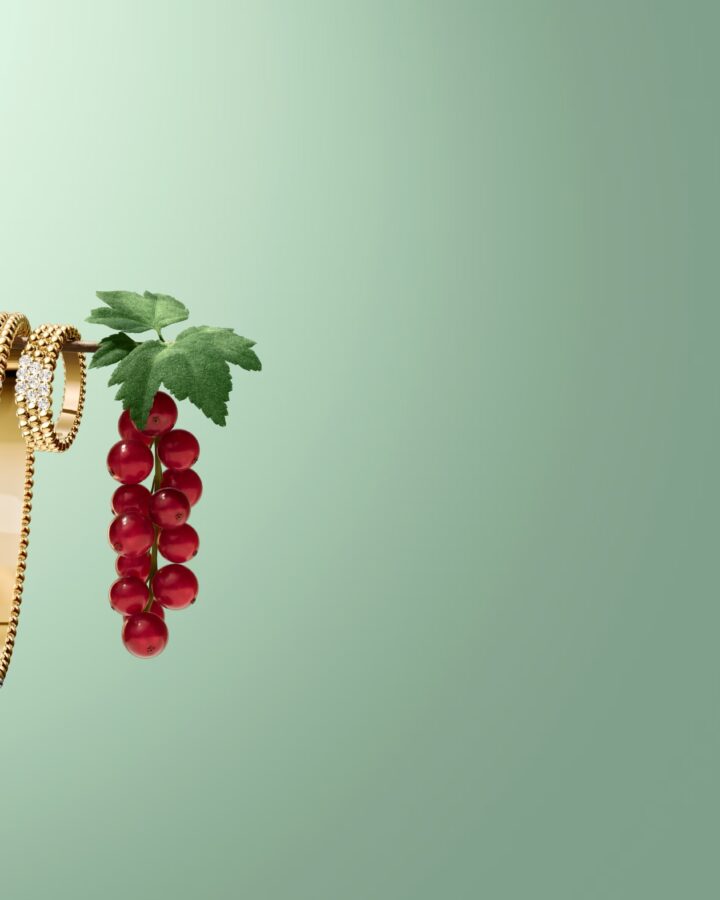
Within the broader Serpenti collection, the Serpenti Viper rings represent the line’s bridal-relevant configuration — available in white gold and rose gold, with diamond-set versions ranging up to over $10,300. The “Viper” naming and the ring’s coiled-band construction translate Serpenti’s serpent identity into a wearable band form — the ring’s structure itself evokes the coil of a serpent’s body, with the diamond-set versions distributing brilliance along that coiled form rather than concentrating it in a single centre stone. This is a genuinely different visual proposition from the solitaire tradition. A solitaire’s entire visual logic depends on a single point of maximum brilliance. A Serpenti Viper ring, by contrast, offers brilliance as a continuous quality of the form itself — the diamonds are part of what the coil is, rather than a destination the coil leads the eye toward.
MarryMe, Fedi and Infinito — Simple foundations and plain bands
Among Bulgari’s bridal offerings, the MarryMe line is notable simply for the directness of its name — in a category where most collection names carry inherited meaning, MarryMe states its purpose without any symbolic mediation at all. MarryMe rings and wedding bands are available across rose gold and platinum, with MarryMe wedding rings specifically offered in platinum configurations ranging from approximately $1,920 to $3,400 depending on diamond content and design. This directness positions MarryMe as the most conventional entry point into Bulgari’s bridal range — a line whose name immediately communicates its occasion-specific purpose, for buyers who want that immediate legibility rather than the more interpretive symbolism of B.zero1’s spiral or Serpenti’s transformation narrative.
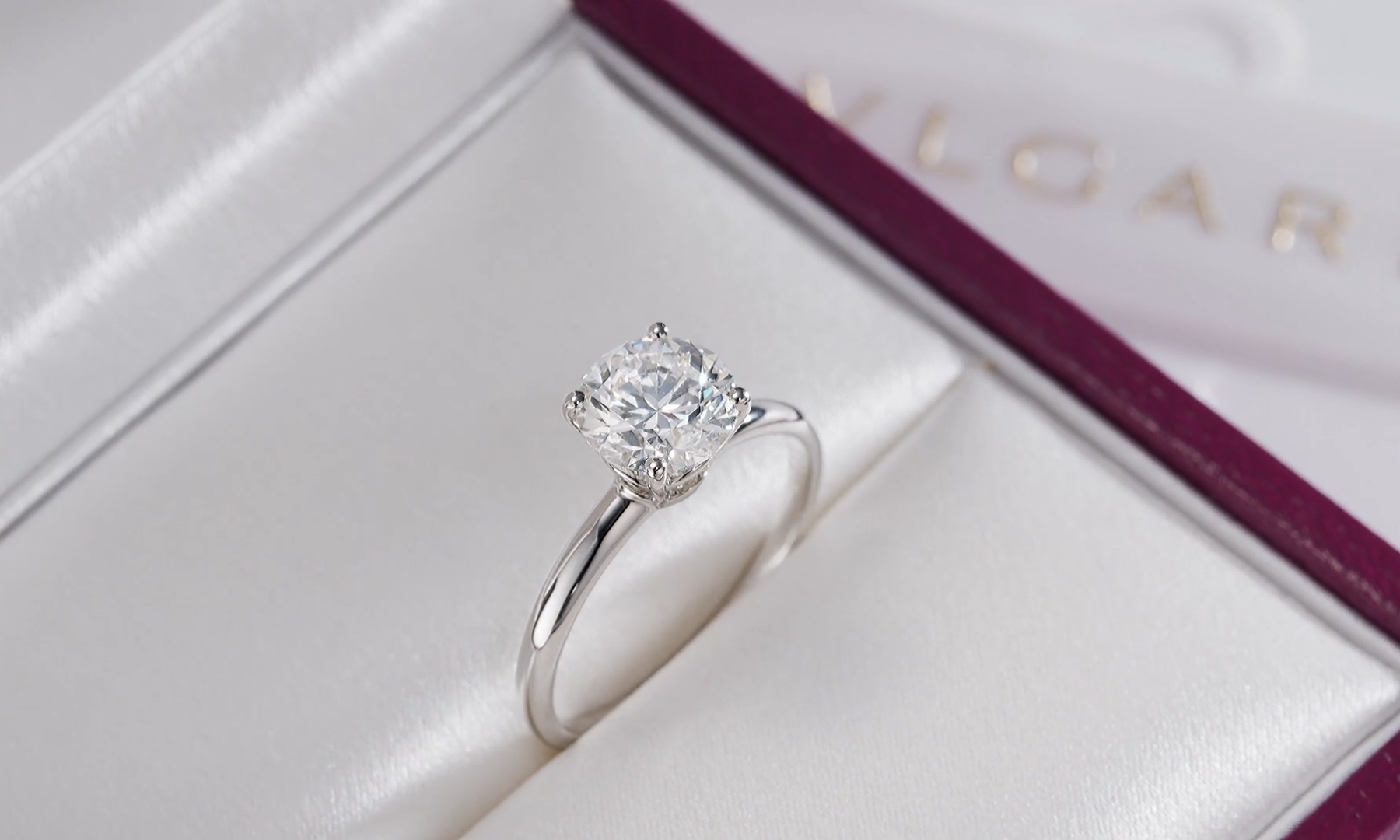
Beneath B.zero1, Serpenti, and MarryMe, Bulgari’s bridal collection includes Fedi — simple wedding bands available across yellow gold, platinum, and other metals, starting from approximately $820 for yellow gold configurations up to approximately $1,930 for platinum — and Infinito, wedding bands in platinum ranging from approximately $1,920 to $5,650 depending on width and diamond content. These lines serve a function that’s easy to overlook: not every bridal purchase is built around a design statement, and a couple choosing a B.zero1 or Serpenti engagement ring may pair it with a Fedi or Infinito band that makes no symbolic statement of its own — a plain band, in a matching or complementary metal, whose role is simply to sit alongside the more expressive piece without competing with it.
The diamond standard — 4Cs and GIA certification
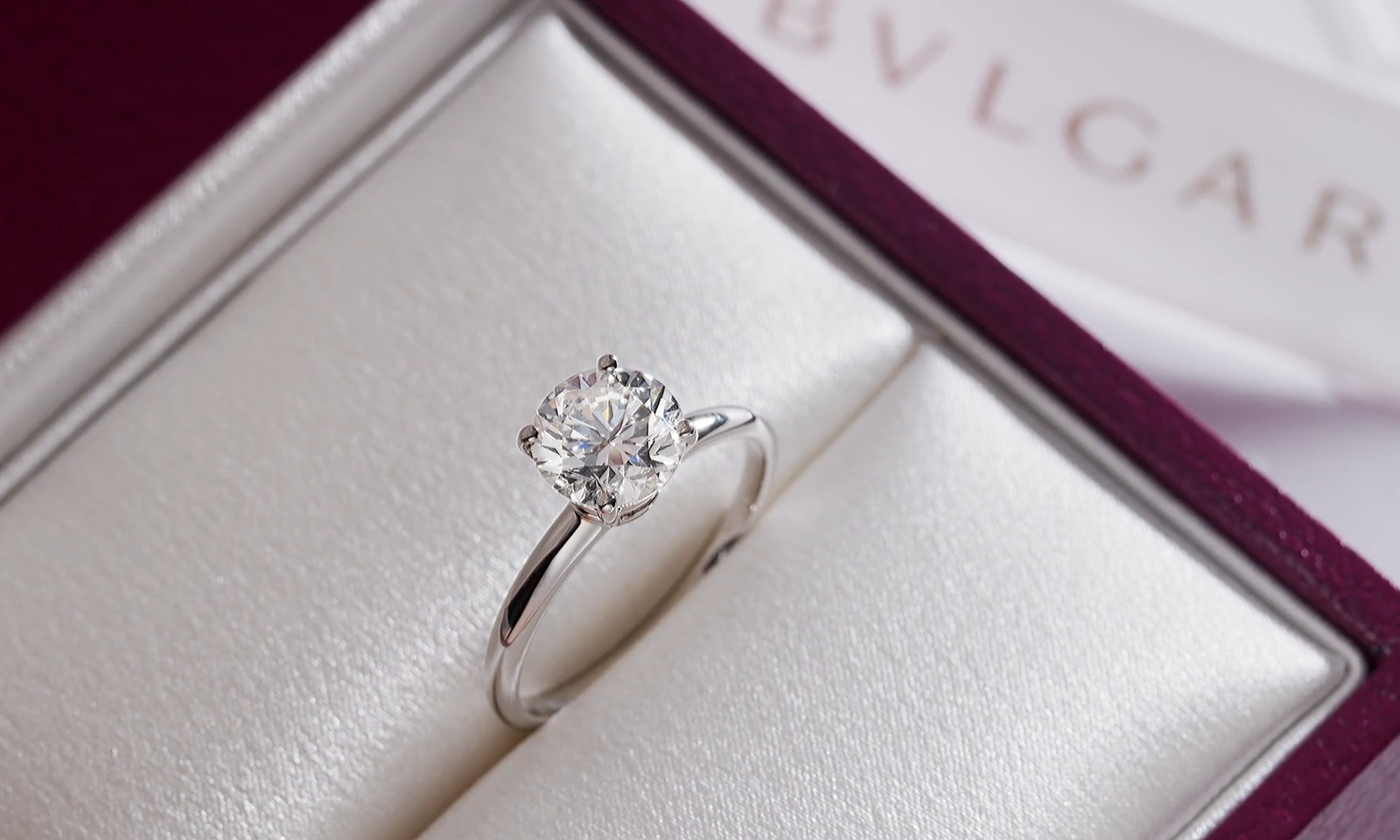
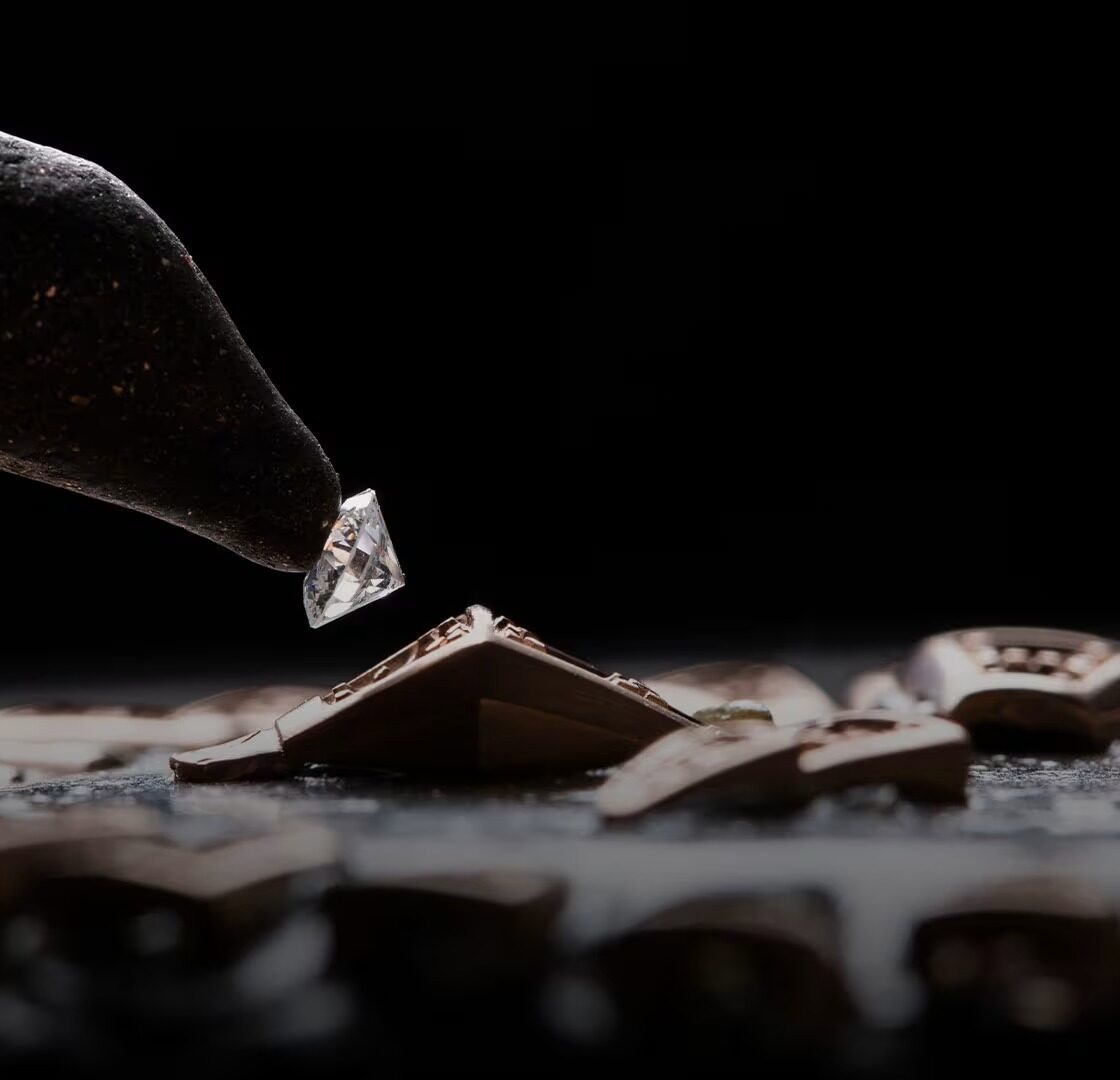
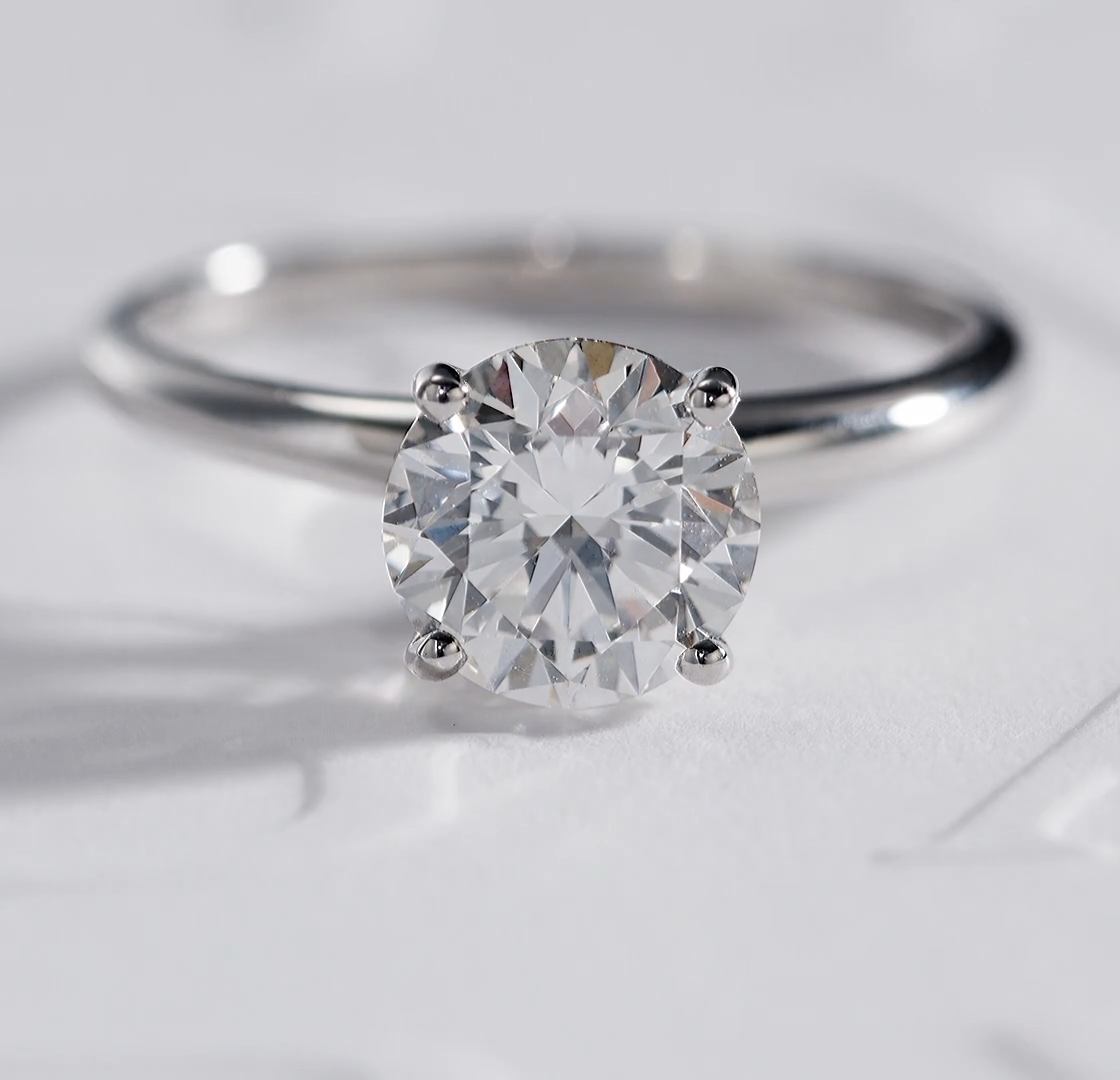
Renowned for being eternal, diamonds are the universal symbol of love. Bulgari selects its diamonds according to the globally accepted 4 Cs standards, assessing the quality of Cut, Colour, Clarity and Carat Weight. As further testament to their quality, each creation comes with a certification from the Gemological Institute of America (GIA).
This is worth noting in comparison to the in-house grading standards of Tiffany and Cartier. Bulgari’s approach — explicit reliance on GIA — represents a different philosophy: rather than asking a buyer to trust the Maison’s own internal grading expertise, Bulgari pairs its design and craftsmanship with third-party verification from the diamond industry’s most widely recognised independent certification body. GIA certification offers independent, third-party verification that travels with the stone regardless of which jeweller sold it, a credential a buyer can verify against an external, universally recognised standard rather than against the claims of the selling Maison alone.
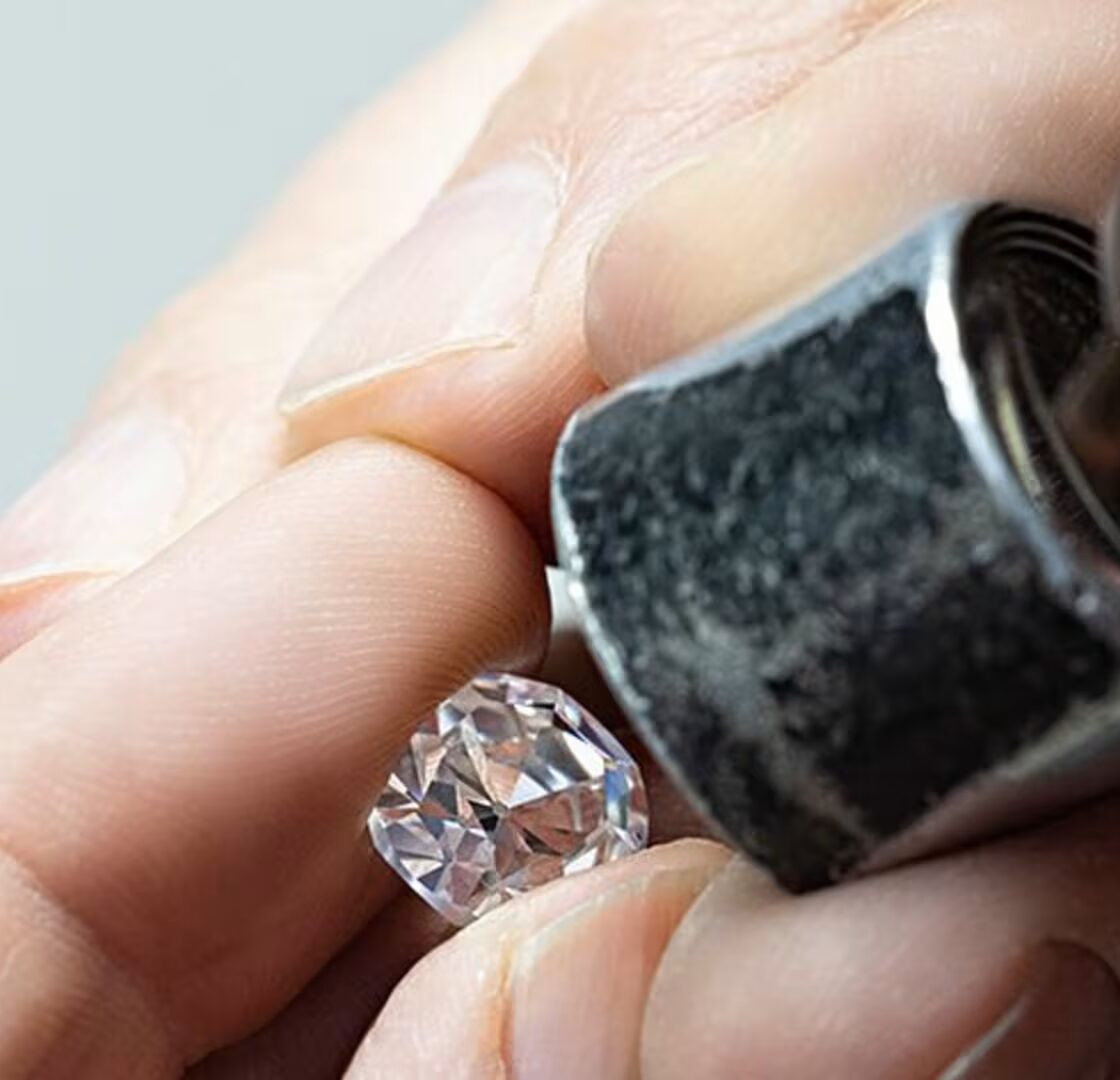
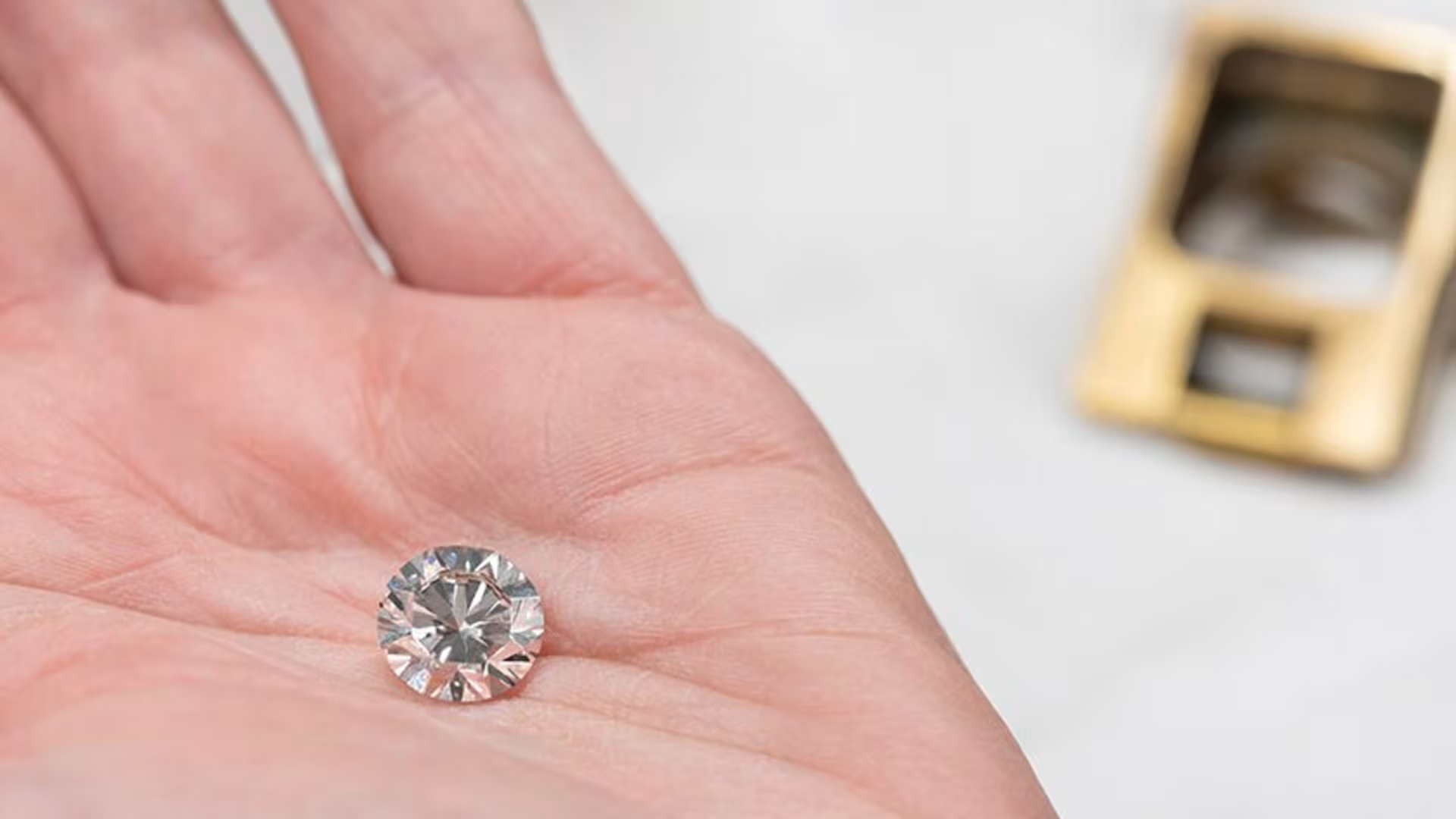
GIA 4Cs diamond standards.
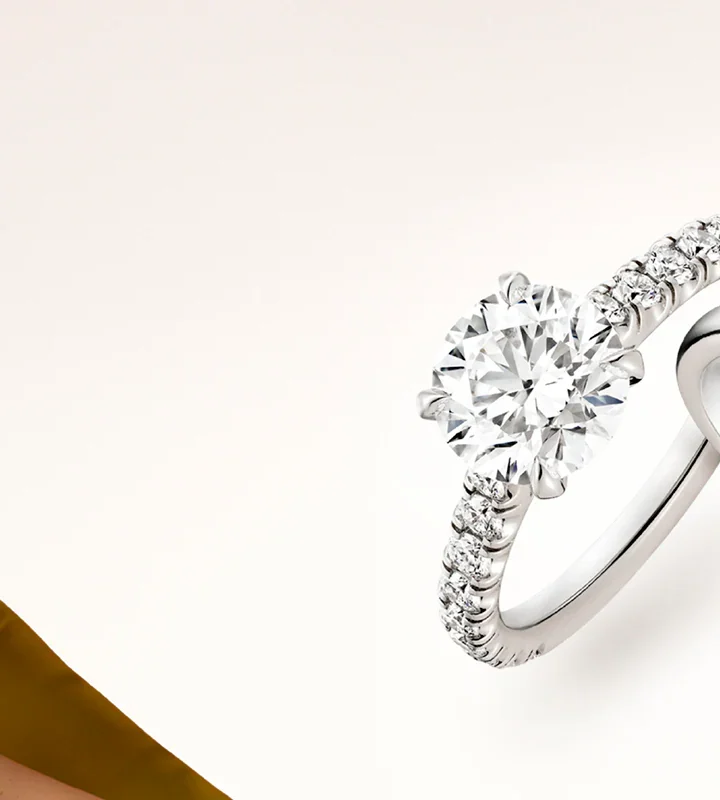
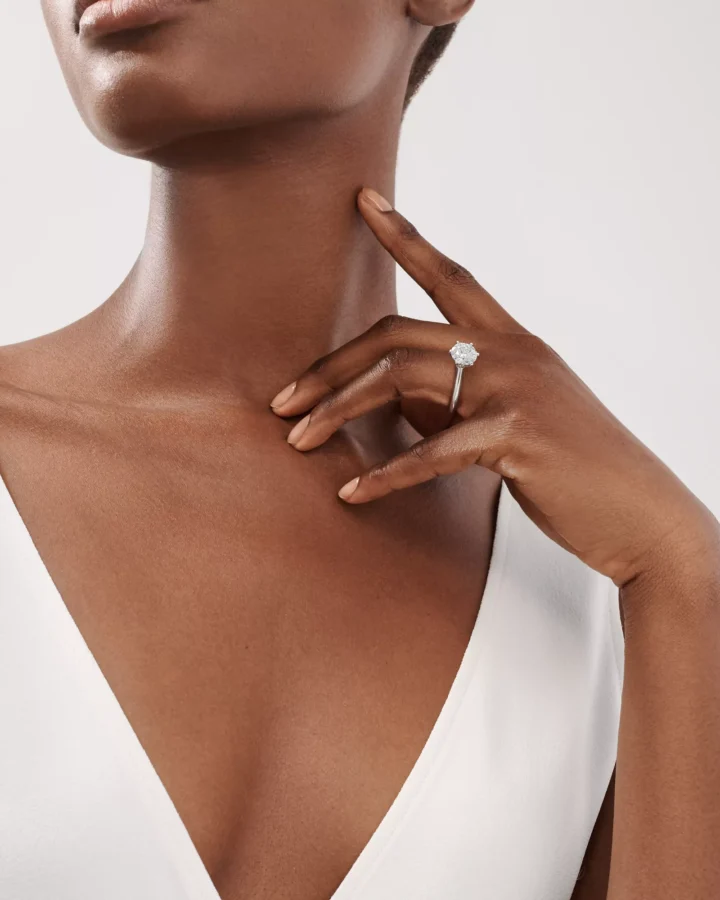
Bulgari selection criteria align with GIA standards, verifying Cut, Color, Clarity, and Carat Weight parameters through independent scientific grading certificates accompanying every solitaire ring.
Reference guide — Bulgari Bridal in Numbers
| Line | Origin/symbolism | Materials | Price range (approx.) |
|---|---|---|---|
| B.zero1 couples’ rings | Colosseum spiral; “harmony of past, present, future” | Platinum, rose/white/yellow gold, ceramic | From ~€2,080 |
| Serpenti Viper | 1948; “infinite transformation,” Greco-Roman myth | White gold, rose gold, diamonds | Up to $10,300+ |
| MarryMe | Direct, occasion-specific naming | Rose gold, platinum | $1,230–$3,400 |
| Fedi (wedding bands) | Simple band tradition | Yellow gold, platinum | ~$820–$1,930 |
| Infinito (wedding bands) | Platinum band tradition | Platinum | ~$1,920–$5,650 |
TheTimeo view
The most useful way to understand Bulgari’s bridal collection is not as an alternative to the solitaire tradition, but as evidence that the solitaire tradition was never the only available answer to the question bridal jewellery exists to ask: how do you make an object that carries the weight of a promise? Tiffany’s answer was engineering — six prongs, maximum light. Cartier’s answers were interlocking equality and four-claw reduction. Van Cleef & Arpels’ answer was literal pairing — two things, read as one. Bulgari’s answer is borrowed from somewhere else entirely: a building that has stood for two thousand years, and a creature that myths across the Mediterranean have always associated with renewal rather than ending.
For a couple choosing between these traditions, the choice is rarely really about which design is more beautiful — all of them are beautiful, by any reasonable measure. It’s about which pre-existing story a couple wants their own story to sit inside. A six-prong Tiffany Setting says: this is about the diamond, and the diamond is about light. A Bulgari B.zero1 says: this is about continuity — past, present, future, the eternal city — and the diamond, if there is one, lives inside that continuity rather than defining it. Neither is more romantic than the other. They’re simply different shapes for the same impossible task: making something small enough to wear carry something large enough to last.
Official sources
- Explore the official Bulgari bridal universe at bulgari.com.
- Read more about the B.zero1 collection.
- Discover the Serpenti collection.
- Check available Bulgari wedding bands.