TAG Heuer
TAG Heuer, founded in 1860 by Edouard Heuer, is a Swiss luxury watch manufacturer. The brand is known for its chronograph technology and motorsport timekeeping.
| Founded | 1860 — Saint-Imier, Switzerland |
|---|---|
| Founder(s) | Edouard Heuer |
| Headquarters | La Chaux-de-Fonds, Switzerland |
| Parent Group | LVMH |
| Known For | Chronographs, motorsport timekeeping, avant-garde design |
| Price Range | £1,200 to £150,000, GBP (2024) |
| Revenue / Production | N/A |
| Official Website | tagheuer.com |
TAG Heuer S.A., established in 1860 in Saint-Imier, Switzerland, by Edouard Heuer, is a Swiss luxury watch manufacturer renowned for its contributions to chronograph technology, its strong ties to motorsport, and its avant-garde design ethos. The company has consistently pushed the boundaries of watchmaking, securing its position as a significant player in the luxury watch market.
History and Founding
Edouard Heuer founded Uhrenmanufaktur Heuer AG in 1860 in Saint-Imier, a town nestled in the Swiss Jura mountains. Heuer’s initial focus was on producing pocket watches, and he quickly gained recognition for his innovative approach to watchmaking. In 1869, Heuer patented his first chronograph mechanism, marking the beginning of the company’s long association with timekeeping and sports. This early innovation laid the groundwork for Heuer’s future success in the burgeoning field of chronograph watches.
In 1887, Heuer patented the oscillating pinion, a simplified chronograph clutch mechanism that significantly improved the functionality and reliability of chronographs. This invention became an industry standard and solidified Heuer’s reputation as a leader in chronograph technology. The oscillating pinion allowed for a more efficient and robust connection between the chronograph mechanism and the watch’s movement, leading to greater accuracy and ease of use.
The early 20th century saw Heuer expand its product line and further refine its chronograph designs. The company developed wrist-worn chronographs, catering to the growing demand for portable and practical timekeeping devices. Heuer’s chronographs were particularly popular among pilots and sportsmen, who valued their accuracy and durability.
Historical Timeline
- 1860: Edouard Heuer founds Uhrenmanufaktur Heuer AG in Saint-Imier, Switzerland.
- 1869: Heuer patents his first chronograph mechanism.
- 1887: Heuer patents the oscillating pinion.
- 1911: Heuer patents the “Time of Trip,” the first dashboard chronograph for automobiles and aircraft.
- 1916: Heuer introduces the Mikrograph, the first stopwatch accurate to 1/100th of a second.
- 1920: Heuer serves as the official timekeeper for the Olympic Games in Antwerp.
- 1933: Heuer introduces the Autavia, a dashboard timer for automobiles and aviation (a portmanteau of “AUTomobile” and “AVIAtion”).
- 1958: Jack Heuer, Edouard Heuer’s great-grandson, joins the company.
- 1962: Heuer becomes the first Swiss watch brand in space, with a Heuer stopwatch worn by John Glenn aboard the Mercury-Atlas 6 mission.
- 1963: Heuer introduces the Carrera chronograph, designed by Jack Heuer.
- 1969: Heuer, in collaboration with Breitling and Hamilton-Büren, introduces the Caliber 11, one of the first automatic chronograph movements.
- 1969: Heuer launches the Monaco, a square-cased chronograph made famous by Steve McQueen in the film Le Mans.
- 1985: Techniques d’Avant Garde (TAG) acquires a majority stake in Heuer, forming TAG Heuer.
- 1999: LVMH (Moët Hennessy Louis Vuitton) acquires TAG Heuer.
- 2010: TAG Heuer celebrates its 150th anniversary.
- 2015: TAG Heuer launches the Connected, its first smartwatch.
Key Collections and Iconic References
TAG Heuer boasts a diverse portfolio of collections, each with its own distinct design and historical significance. Several models have achieved iconic status, becoming highly sought after by collectors and enthusiasts.
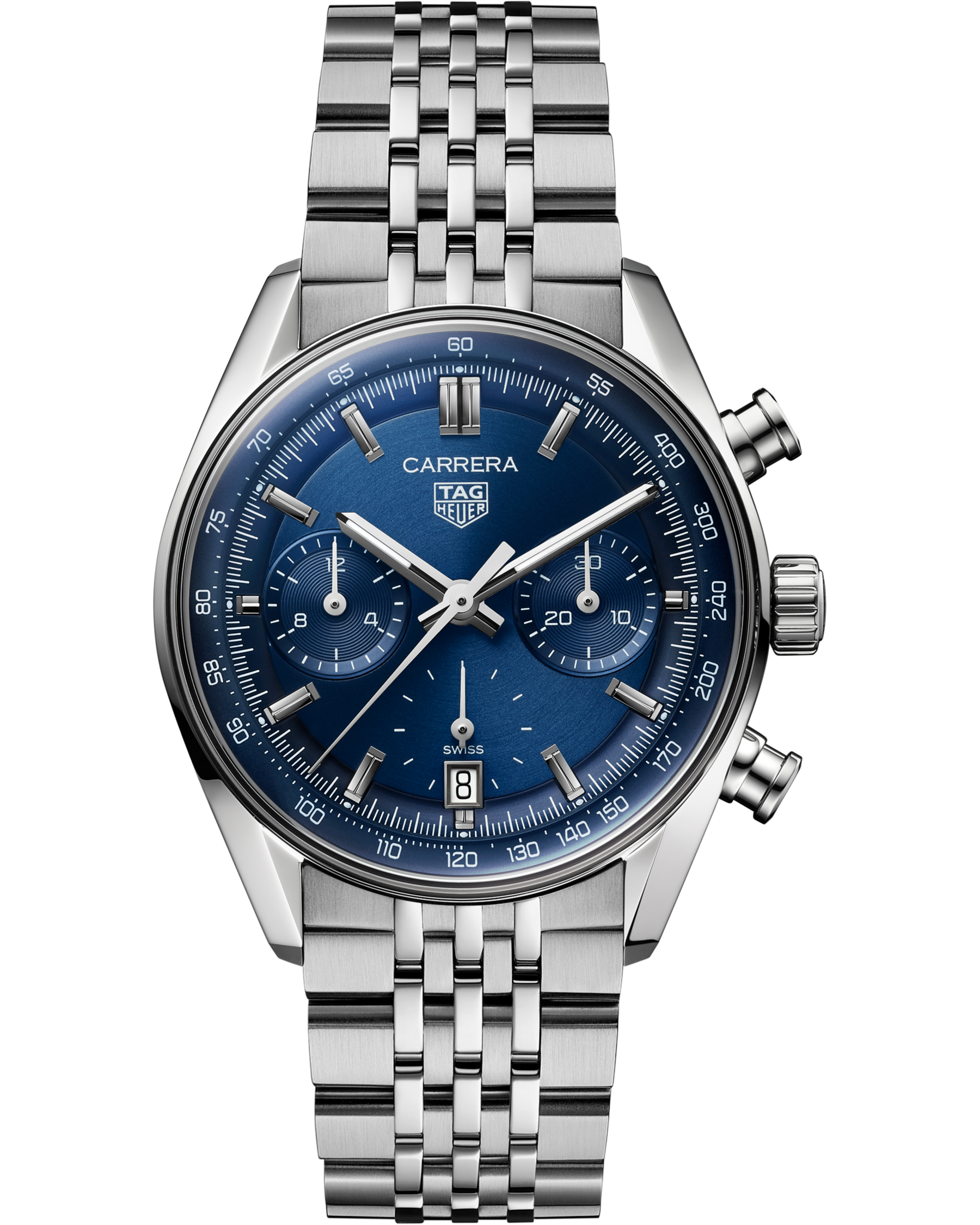
- Carrera: Introduced in 1963, the Carrera is arguably TAG Heuer’s most recognisable collection. Designed by Jack Heuer, the Carrera was inspired by the Carrera Panamericana, a dangerous road race in Mexico. The Carrera is characterised by its clean lines, legible dial, and focus on functionality. Notable references include the Carrera 1153, an early automatic chronograph, and the Carrera Dato 45, a rare chronograph with a date display at 9 o’clock.
- Monaco: Launched in 1969, the Monaco is famous for its square case and its association with Steve McQueen, who wore a Monaco in the 1971 film Le Mans. The Monaco was one of the first automatic chronograph watches with a square case, and its distinctive design made it an instant classic. The original Monaco, reference 1133B, remains highly collectible.
- Autavia: Originally introduced as a dashboard timer in 1933, the Autavia was revived as a chronograph wristwatch in 1962. The Autavia is known for its rotating bezel and its robust construction. Early Autavia models, such as the reference 2446, are particularly prized by collectors.
- Aquaracer: The Aquaracer is TAG Heuer’s line of dive watches. Known for their durability, water resistance, and sporty design, Aquaracers are popular among divers and water sports enthusiasts.
- Formula 1: The Formula 1 collection offers sporty and accessible watches inspired by TAG Heuer’s long-standing involvement in motorsport. These watches often feature bold colours and designs, reflecting the dynamic world of Formula 1 racing.
- Connected: TAG Heuer’s Connected collection represents the brand’s foray into the smartwatch market. These smartwatches combine TAG Heuer’s design aesthetic with advanced technology, offering features such as GPS, heart rate monitoring, and smartphone connectivity.
- Link: The Link collection is distinguished by its signature bracelet with S-shaped links. These watches offer a blend of sporty and elegant design, making them suitable for both casual and formal occasions.
Technical Heritage and Innovation
TAG Heuer has a rich history of technical innovation, particularly in the field of chronograph technology. The company has consistently pushed the boundaries of precision and accuracy, developing groundbreaking movements and timekeeping devices.
- Oscillating Pinion: As mentioned earlier, Heuer’s 1887 invention of the oscillating pinion was a significant advancement in chronograph technology. This simplified clutch mechanism improved the reliability and efficiency of chronographs, becoming an industry standard.
- Mikrograph: In 1916, Heuer introduced the Mikrograph, the first stopwatch accurate to 1/100th of a second. This groundbreaking achievement established Heuer as a leader in high-precision timekeeping. The Mikrograph was used to time sporting events around the world, solidifying Heuer’s reputation for accuracy and reliability.
- Caliber 11: In 1969, Heuer, in collaboration with Breitling and Hamilton-Büren, introduced the Caliber 11, one of the first automatic chronograph movements. This revolutionary movement eliminated the need for manual winding, making chronographs more convenient and user-friendly. The Caliber 11 was a significant milestone in the history of watchmaking, paving the way for the widespread adoption of automatic chronographs.
- Monaco V4: Introduced in 2004, the Monaco V4 was a groundbreaking concept watch that featured a belt-driven movement. This innovative design replaced traditional gears with belts, offering a unique and visually striking alternative to conventional watch movements. The Monaco V4 demonstrated TAG Heuer’s commitment to pushing the boundaries of watchmaking technology.
- Mikrotimer Flying 1000: In 2011, TAG Heuer introduced the Mikrotimer Flying 1000, a chronograph capable of measuring time to 1/1000th of a second. This exceptional level of precision was achieved through the use of a high-frequency balance wheel that oscillated at 3.6 million vibrations per hour. The Mikrotimer Flying 1000 showcased TAG Heuer’s expertise in high-precision timekeeping and its ability to develop innovative solutions for measuring extremely short intervals of time.
- Connected Watch Technology: TAG Heuer has embraced smartwatch technology with its Connected collection, integrating advanced features and functionalities into its timepieces. The Connected watches combine traditional watchmaking aesthetics with modern technology, offering users a blend of style and functionality.
Ownership and Corporate Structure
Throughout its history, TAG Heuer has undergone several changes in ownership.
- Family Ownership: From its founding in 1860 until 1985, Heuer remained a family-owned business. The company was passed down through generations of the Heuer family, each contributing to its growth and success.
- TAG Acquisition: In 1985, Techniques d’Avant Garde (TAG), a group specialising in high-tech industries, acquired a majority stake in Heuer, forming TAG Heuer. This acquisition brought new resources and expertise to the company, allowing it to further expand its product line and market reach.
- LVMH Acquisition: In 1999, LVMH (Moët Hennessy Louis Vuitton), the world’s leading luxury goods conglomerate, acquired TAG Heuer. This acquisition provided TAG Heuer with access to LVMH’s vast network of resources and distribution channels, further solidifying its position in the luxury watch market.
As a subsidiary of LVMH, TAG Heuer operates with a degree of autonomy while benefiting from the group’s overall strategic direction and financial support.
Key Figures
Several individuals have played pivotal roles in shaping the history and success of TAG Heuer.
- Edouard Heuer: The founder of the company, Edouard Heuer, was a visionary watchmaker who laid the foundation for TAG Heuer’s reputation for innovation and precision. His early inventions and his commitment to quality established the company as a leader in the watchmaking industry.
- Jack Heuer: Edouard Heuer’s great-grandson, Jack Heuer, joined the company in 1958 and played a crucial role in its modern development. He was responsible for designing some of TAG Heuer’s most iconic watches, including the Carrera and the Monaco. Jack Heuer’s leadership and his passion for watchmaking helped to propel TAG Heuer to new heights of success.
- Antoine Pin: The current CEO of TAG Heuer, Antoine Pin, is responsible for leading the company’s strategic direction and overseeing its day-to-day operations. He is focused on continuing TAG Heuer’s legacy of innovation and excellence, while also adapting to the changing landscape of the luxury watch market.
Auction Records
TAG Heuer watches, particularly vintage models, have performed well at auction, reflecting their collectibility and historical significance.
- Heuer Monaco (Steve McQueen’s): In 2020, a Heuer Monaco worn by Steve McQueen in the film Le Mans sold for $2,208,000 at a Phillips auction in New York (according to Phillips 2020). This is the highest price ever paid for a Heuer watch at auction. The watch’s provenance and its association with a legendary actor contributed to its exceptional value.
- Other Vintage Heuer Chronographs: Vintage Heuer Carrera and Autavia chronographs have also achieved impressive prices at auction, demonstrating the strong demand for these models among collectors. The rarity, condition, and historical significance of these watches all contribute to their value.
Cultural Legacy and Influence
TAG Heuer has cultivated a strong cultural legacy through its association with motorsport, its innovative designs, and its celebrity endorsements.
- Motorsport: TAG Heuer has a long and storied history of involvement in motorsport, serving as the official timekeeper for numerous racing events, including Formula 1. The brand’s association with motorsport has helped to enhance its image as a maker of high-performance, precision timekeeping instruments.
- Steve McQueen: Steve McQueen’s decision to wear a Heuer Monaco in the film Le Mans cemented the watch’s status as a cultural icon. The Monaco’s association with McQueen, a symbol of cool and rebellion, helped to popularise the watch and make it a must-have accessory for watch enthusiasts.
- Celebrity Endorsements: TAG Heuer has partnered with numerous celebrities and athletes over the years, including Cristiano Ronaldo, Leonardo DiCaprio, and Cara Delevingne. These endorsements have helped to raise brand awareness and appeal to a wider audience.
Legacy and Significance
TAG Heuer’s legacy lies in its pioneering contributions to chronograph technology, its enduring association with motorsport, and its commitment to avant-garde design. The company has consistently pushed the boundaries of watchmaking, developing innovative movements and timekeeping devices that have shaped the industry. TAG Heuer’s iconic watches, such as the Carrera and the Monaco, remain highly sought after by collectors and enthusiasts, solidifying the brand’s position as a significant player in the luxury watch market. Its continued focus on innovation, combined with its rich heritage, ensures that TAG Heuer will remain a prominent force in the world of horology for years to come.