
TheTimeo / Jewelry
Tiffany & Co.A house of many voices
Schlumberger, Peretti and Paloma Picasso brought different ideas to Tiffany. The forms, materials and details that make their work recognisable.
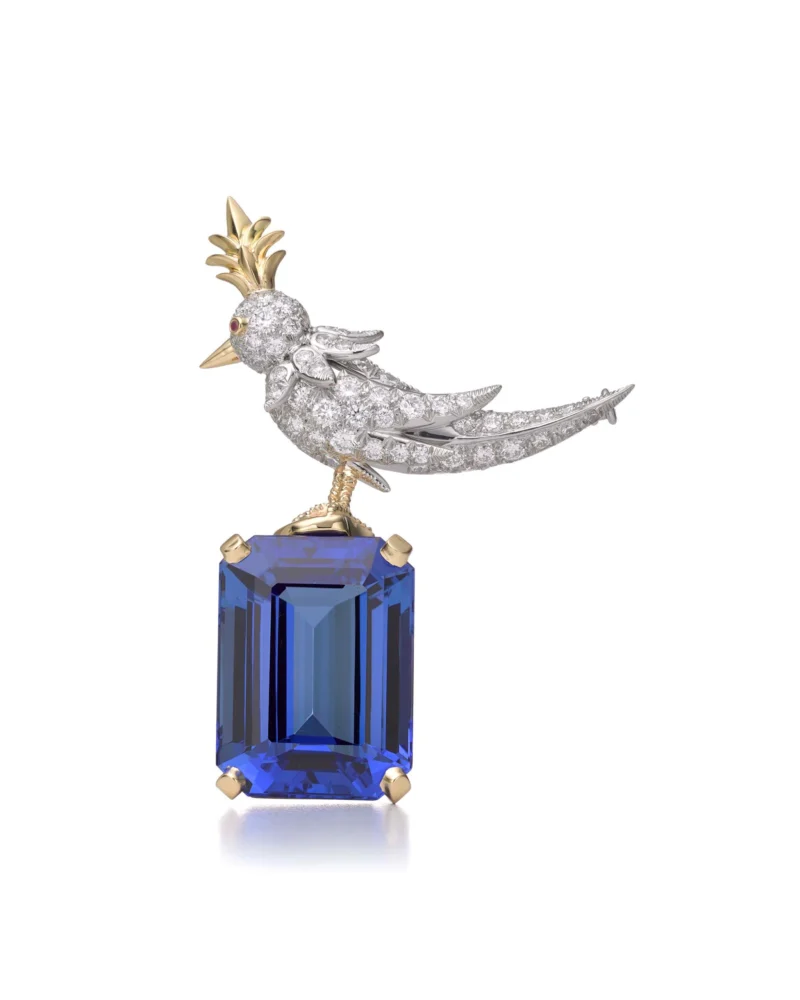
Jean Schlumberger’s Bird on a Rock places a diamond-set bird above an emerald-cut tanzanite. The motif changes with the scale, colour and cut of its gemstone. Courtesy of Tiffany & Co.
Explore the story
A small diamond-set bird perched on a large coloured gemstone and a pendant shaped like a handwritten kiss seem to belong to different worlds. At Tiffany, both have a place.
Jean Schlumberger, Elsa Peretti and Paloma Picasso gave the house distinct ways of making jewellery. Looking at their work individually is more revealing than searching for one Tiffany style. It also helps explain how an archive can support new design without asking every object to resemble its predecessors.
Schlumberger’s world of creatures and colour
Jean Schlumberger joined Tiffany in 1956. Birds, flowers and marine forms offered him starting points for jewels in which metal, enamel and gemstones could take on the appearance of living things.
Bird on a Rock, introduced in 1965, is a particularly clear example. The bird gives the composition a recognisable creature and a sense of scale, while the large gemstone beneath it provides the colour and mass. The stone is more than a pedestal: its cut and proportions change the balance of the whole piece.
In the example pictured at the opening, the blue-violet stone contrasts with the bright bird above it. Follow the outline before concentrating on individual diamonds. The pleasure lies in the encounter between the two forms — a small creature and an improbably large perch.
One diamond, several settings
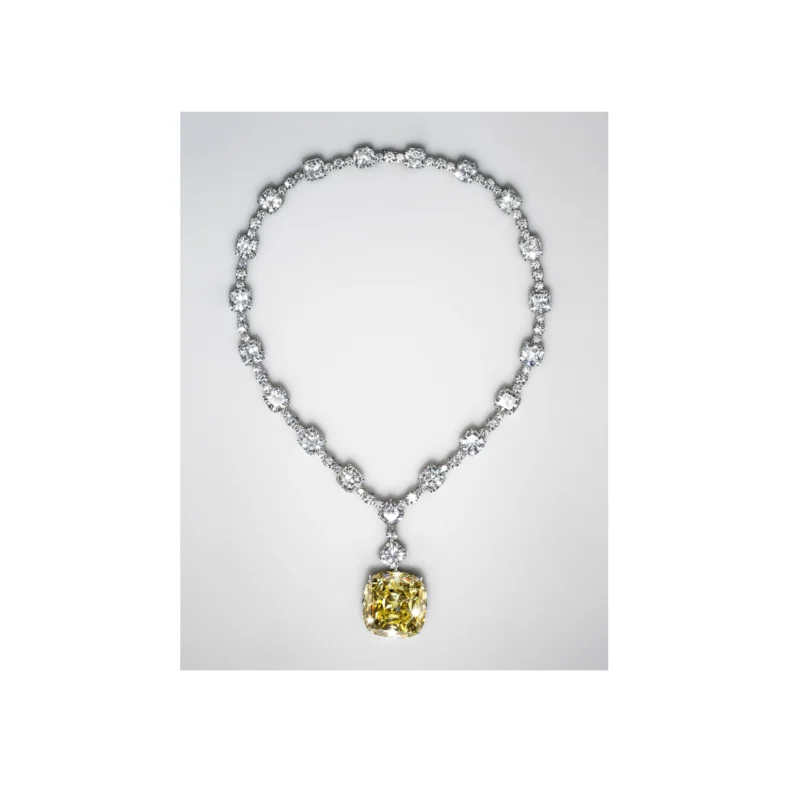
The 128.54-carat Tiffany Diamond in a white-diamond necklace. Its documented history shows how a gemstone’s identity and a setting’s authorship can remain distinct. Courtesy of Tiffany & Co.
The Tiffany Diamond has a history separate from any one mounting. The finished yellow diamond weighs 128.54 carats, and Tiffany has presented it in several settings over its lifetime.
The white-diamond necklace pictured here is one chapter in that history. Other presentations have drawn on Schlumberger’s Ribbon Rosette and Bird on a Rock designs. A gemstone can remain recognisable while the jewel around it changes substantially.
This is a useful distinction for collectors. When an important stone is reset, its own history and the authorship of the new mounting should both be recorded. A famous gem does not make every setting around it the same historical object.
Peretti brings the body into the design
Elsa Peretti’s work changes the emphasis. Her Bone cuff turns metal into a sculptural form shaped around the wrist. Its rise and curve matter as much as the outline seen in a catalogue photograph.
Where a stone-led jewel may direct attention towards a central gem, the cuff asks us to notice the body and the metal together. The surface carries the design through changes of light rather than through a crowded arrangement of ornament.
Peretti’s use of sterling silver also makes material a question of expression, not simply a hierarchy of cost. A strong form can be compelling because of its proportion and the way it is worn. Understanding that is essential to appreciating her contribution alongside Tiffany’s exceptional gemstones.
Paloma Picasso turns a mark into a jewel
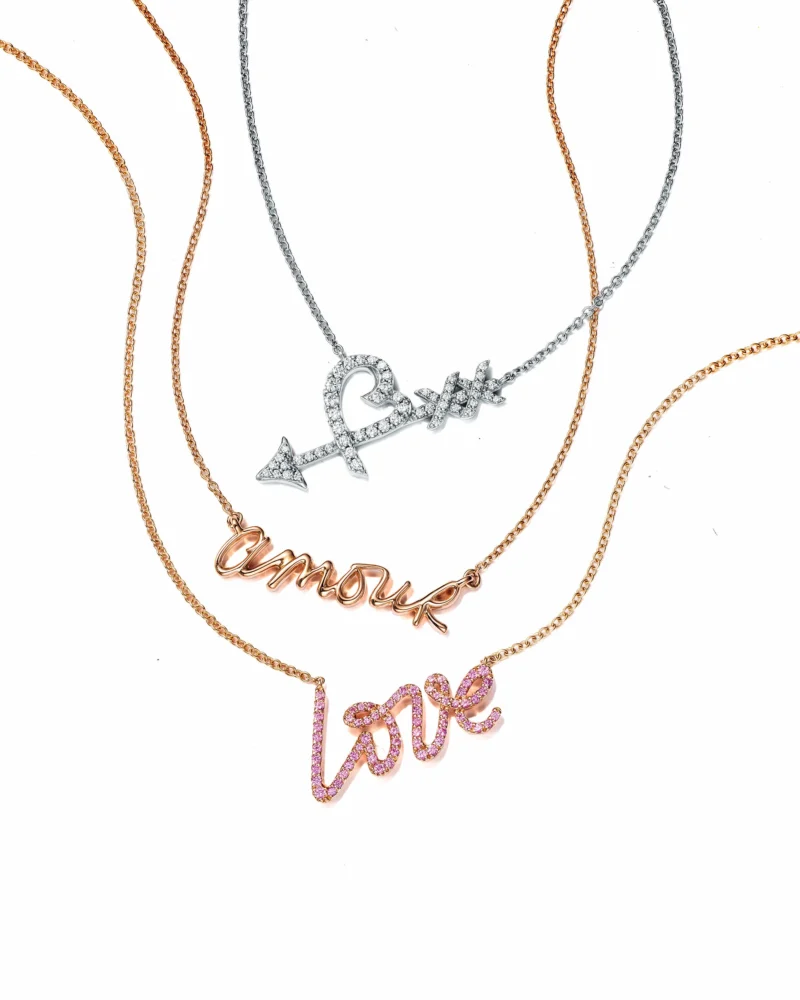
Paloma Picasso’s Graffiti pendants translate the speed and informality of handwriting into precious-metal line. Courtesy of Tiffany & Co.
Paloma Picasso began designing for Tiffany in 1980. Her Graffiti collection draws on the informality of urban marks and handwriting, translating a quick gesture into a durable object.
The pendants pictured here retain something of a drawn line even though they are made in metal. Open space is part of the composition: the eye follows the strokes and the gaps between them, rather than reading a solid emblem.
That transformation is more demanding than it first appears. The line needs enough substance to work as jewellery while preserving the character of a gesture. If it becomes too heavy or too regular, the sense of handwriting changes. The finished form sits between spontaneity and careful control.
Nature without literal imitation
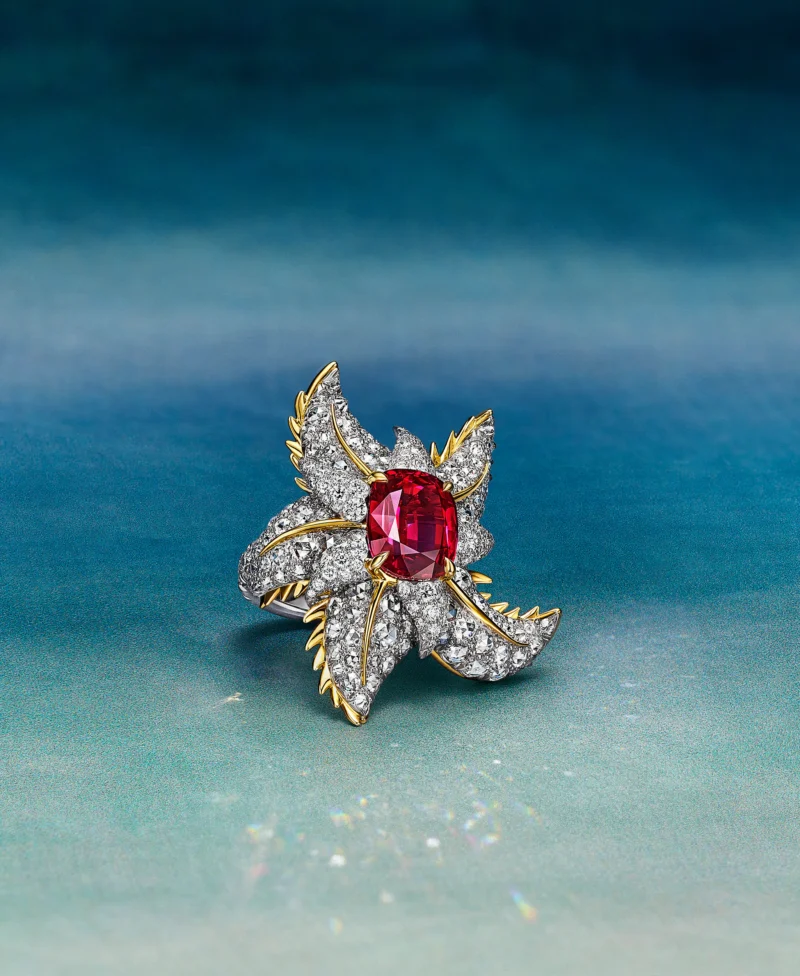
A starfish ring from Blue Book 2025: nature becomes volume, gemstone hierarchy and movement rather than a flat decorative outline. Courtesy of Tiffany & Co.
Nature returns throughout Tiffany’s work, but it does not always produce the same kind of object. Schlumberger’s creatures can be fantastical; Peretti’s forms can suggest something organic without describing a complete animal or flower.
The starfish ring from Blue Book 2025, pictured here, offers another approach. Its arms become a three-dimensional form around the stone and the hand. The design can be recognised as a starfish, but it also has to work as a ring with its own volume and balance.
This is the distinction worth making when a collection is described as nature-inspired. Ask which qualities have been carried into the jewel: a silhouette, a texture, a curve, a pattern of growth or a particular use of colour. The answer tells you more than the name of the source alone.
What “archive-inspired” should explain
An archive can be used in several ways. A reissue may closely follow an earlier design. A reinterpretation can retain a recognisable motif while changing its material or scale. A new piece might take only one feature — the line of a wing, for example — and build a different composition around it.
These are different design tasks. A faithful reproduction can be satisfying because of its precision, while a more distant interpretation has to establish a convincing relationship with its source. Neither becomes interesting merely through the use of the word heritage.
For a modern Tiffany jewel, begin with the named designer or documented source where one exists. Then look at what has changed. Does the stone play the same role? Is the metal treated differently? Has a brooch idea become a pendant or a ring? Those questions make the connection to the archive tangible.
A house with room for different voices
The contrast between Schlumberger, Peretti and Paloma Picasso is part of Tiffany’s appeal. A bird on a gemstone, a sculpted cuff and a line of precious-metal handwriting do not need to be reduced to one common silhouette.
They give a collector different ways to respond to jewellery: through colour and imagination, through the body and surface, or through the personality of a drawn mark. Recognising those distinctions is a better introduction to the house than treating every piece as an expression of the same blue box.
Sources & further reading
Tiffany’s designer records for Jean Schlumberger, Elsa Peretti and Paloma Picasso, together with its Tiffany Diamond history. Design comparisons are TheTimeo’s analysis of the documented work.
The Edit
Jewelry stories
Selected stories from the same editorial universe.
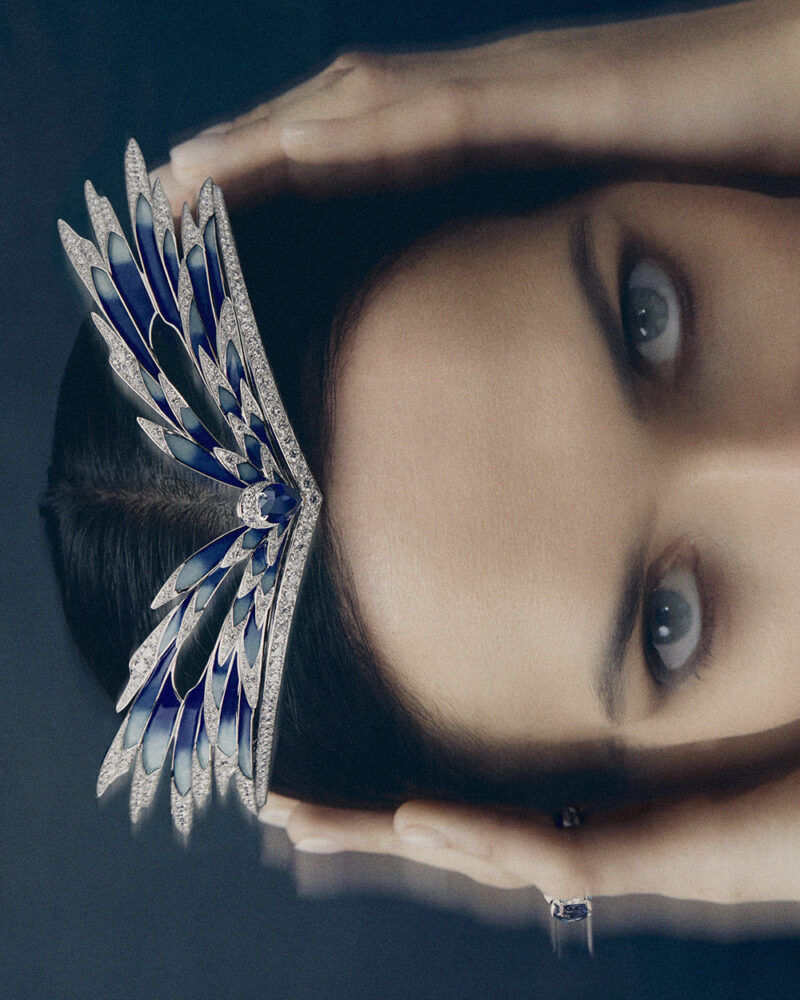
Chaumet Envol: A Tiara in Motion
Blue wings move from hair to face and cloth. Chaumet’s Envol invites a bridal
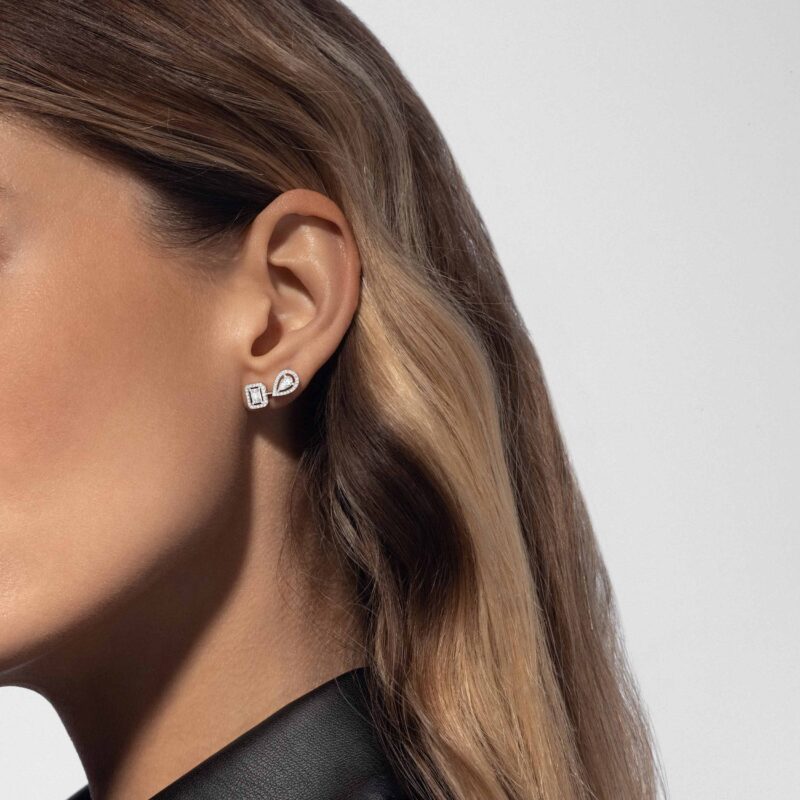
Messika My Twin: Two Cuts, One Bridal Look
An emerald cut, a pear and an unequal pair: the small asymmetry of Messika
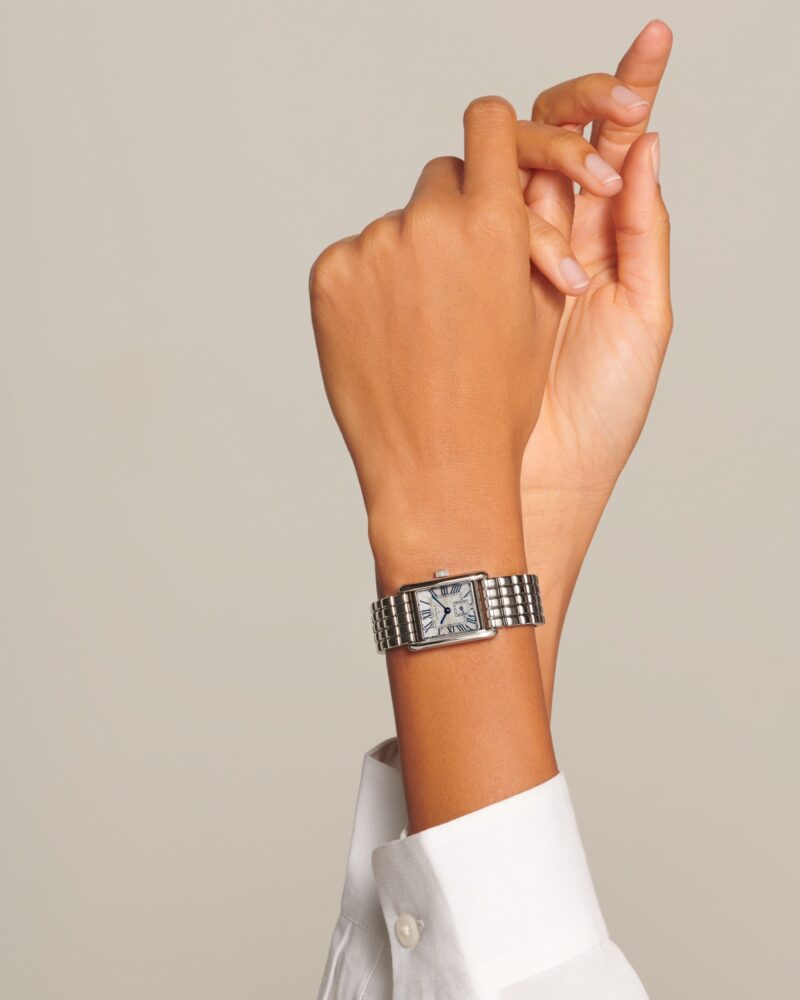
Longines Mini DolceVita: A Small Watch for the Life Ahead
A silver flinqué dial, blue hands and a closely linked steel bracelet: Longines Mini
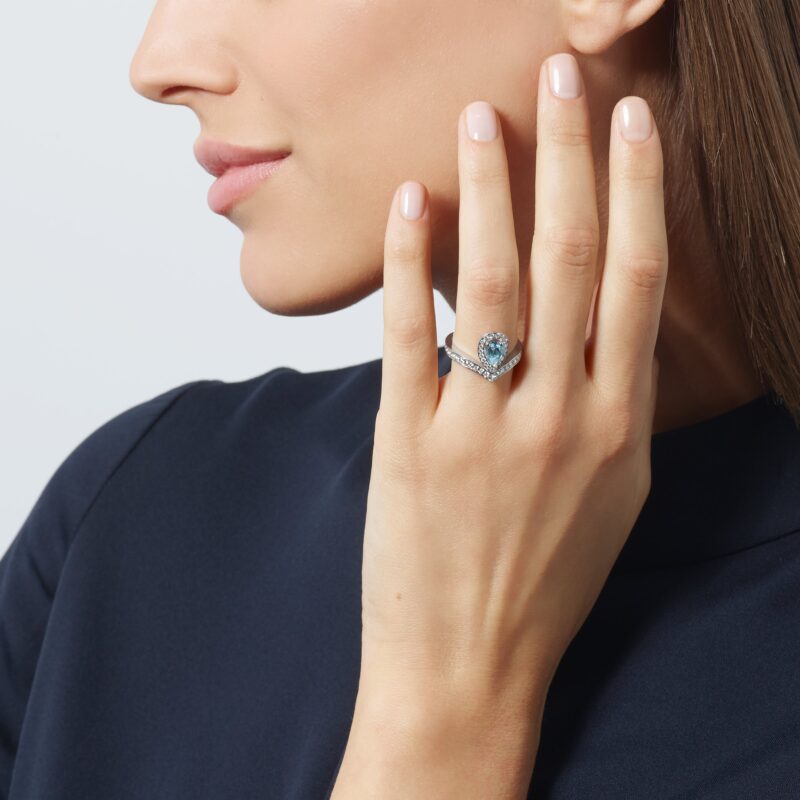
Chaumet Joséphine: Something Blue, Chosen Your Way
An aquamarine beside the face, a sapphire at the centre of a solitaire: Chaumet

Two Rings, Two People: A De Beers Wedding-Band Edit
A rose-gold court profile, a single diamond in platinum, a fine eternity line or
Buccellati Macri Giglio: Gold with a Grain
On the wrist, Buccellati Macri Giglio becomes a broad field of engraved gold. A