Jaeger-LeCoultre Reverso One: La Vallée des Merveilles in Three Miniatures
Jaeger-LeCoultre turns the Reverso One into a miniature landscape: Hibiscus Syriacus, Hibiscus Rosa and Sakura read through enamel, gem-setting and the Calibre 846.
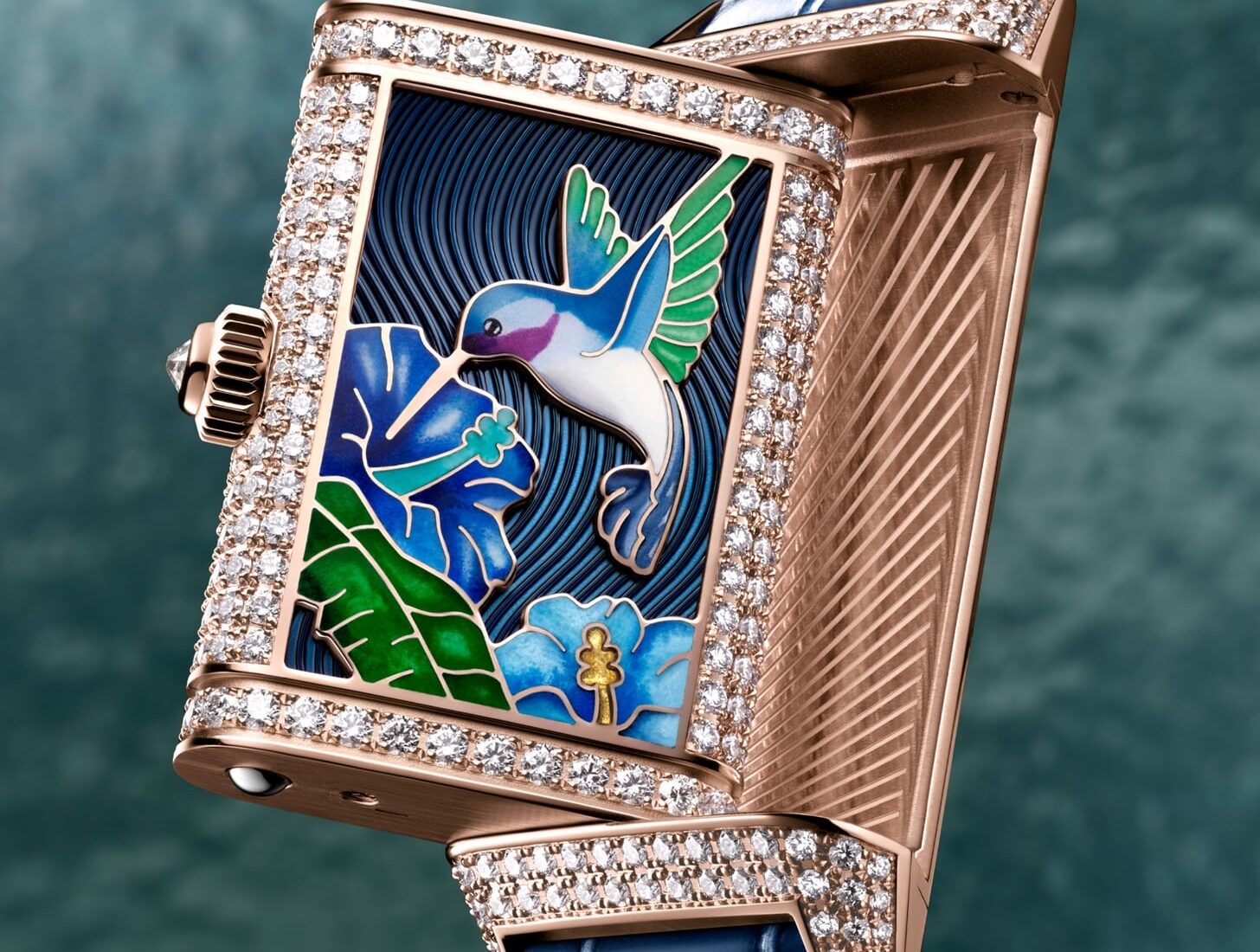
Three miniature landscapes
Jaeger-LeCoultre turns the Reverso One into a miniature stage for rare crafts: enamel, gem-setting and watchmaking architecture held inside one reversible case.
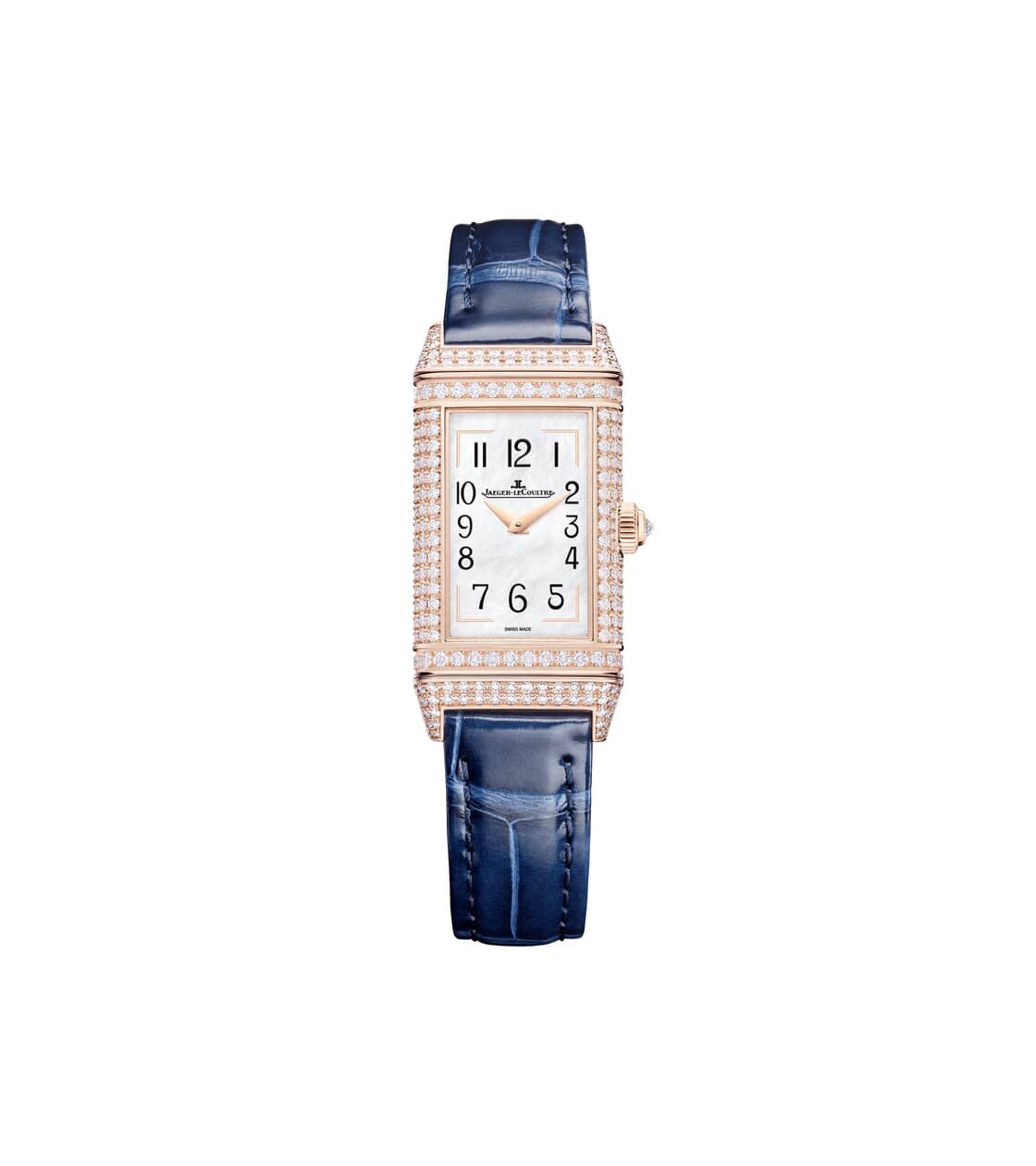
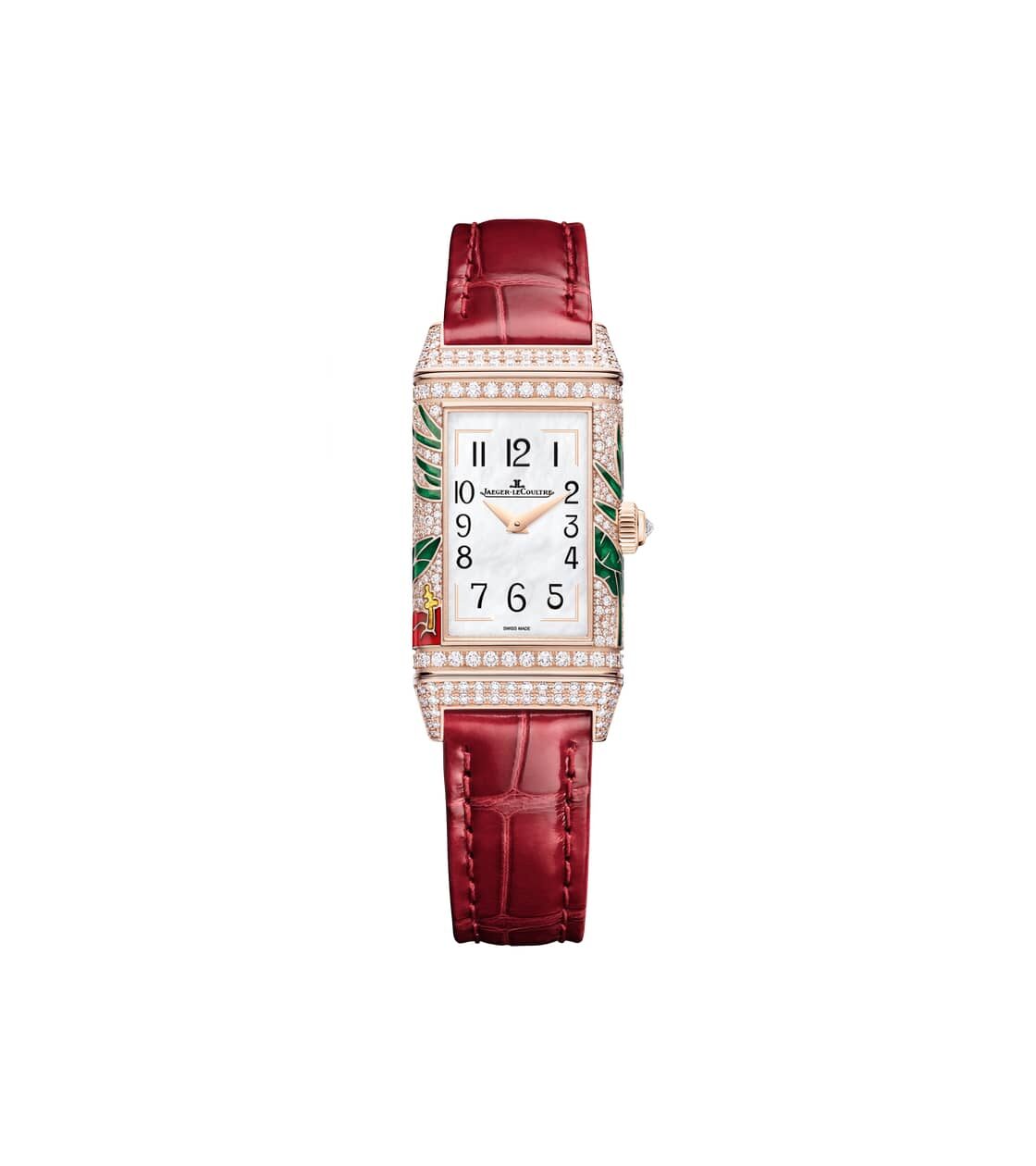
Jaeger-LeCoultre could have treated the Reverso One as a jewellery watch with a decorative back. La Vallée des Merveilles does something more demanding: it turns the reversible case into a small architectural theatre, where the dial, the case flank, the gem-setting and the enamelled reverse all belong to the same visual argument.
The three creations read as a deliberate triptych. Hibiscus Syriacus and Hibiscus Rosa look toward Kauai, with an akialoa and tropical hibiscus translated into blue-green or red botanical scenes. Sakura shifts the register to Hokkaido, where a red-crowned crane and cherry blossom branch appear against a field of diamonds and blue sapphires. The subject is poetic; the execution is highly technical.
Why this Reverso One trio matters
These are not novelty watches built around colour alone. They are limited Reverso One pieces where the reversible case becomes a frame for Grand Feu champleve enamel, paillonne work, lacquer, grain setting and snow setting.
Hibiscus Syriacus
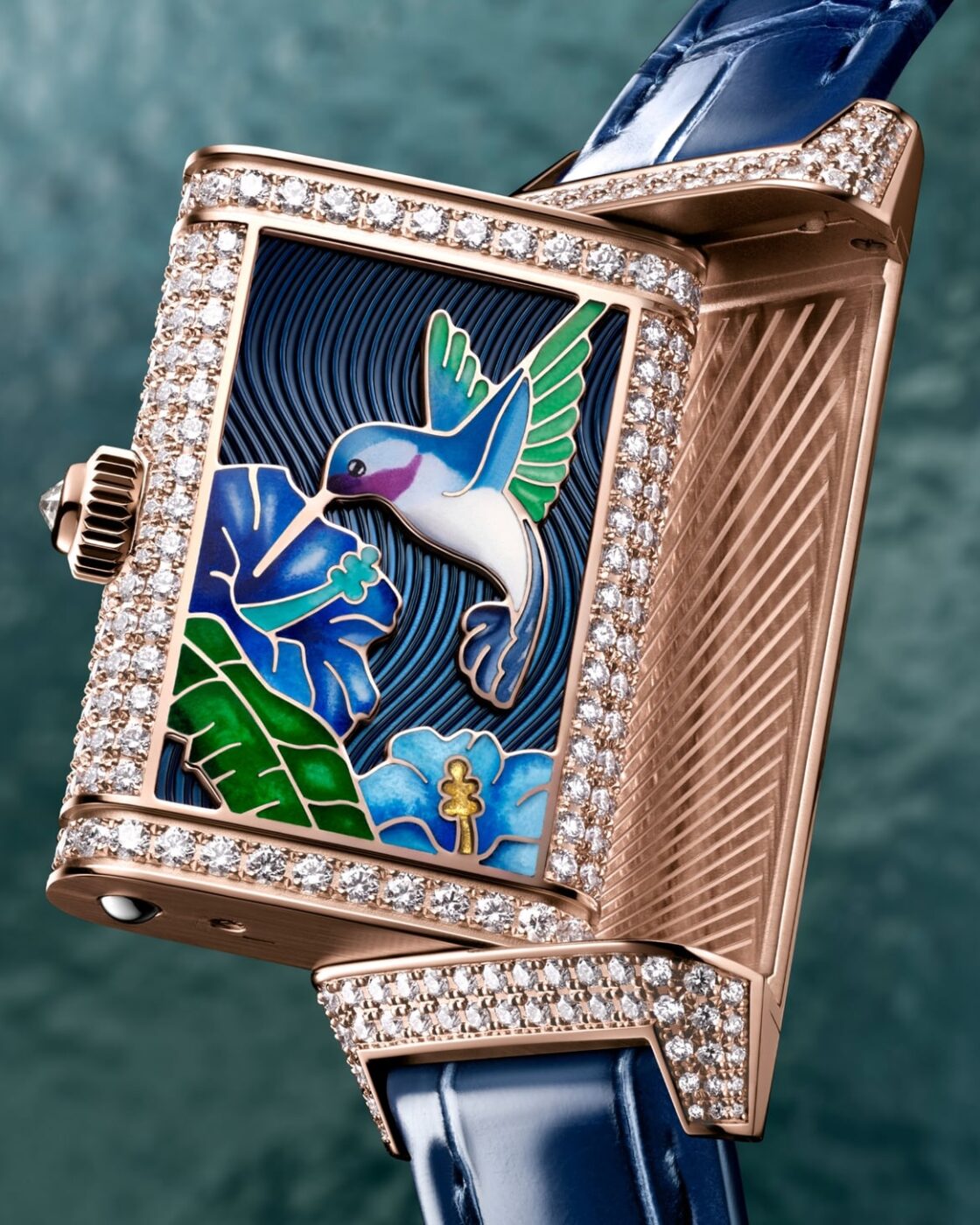
Pink gold, 335 diamonds and a blue-green miniature scene combining Grand Feu champleve enamel, 24-carat gold paillonne work and engraved lacquer.
Hibiscus Rosa
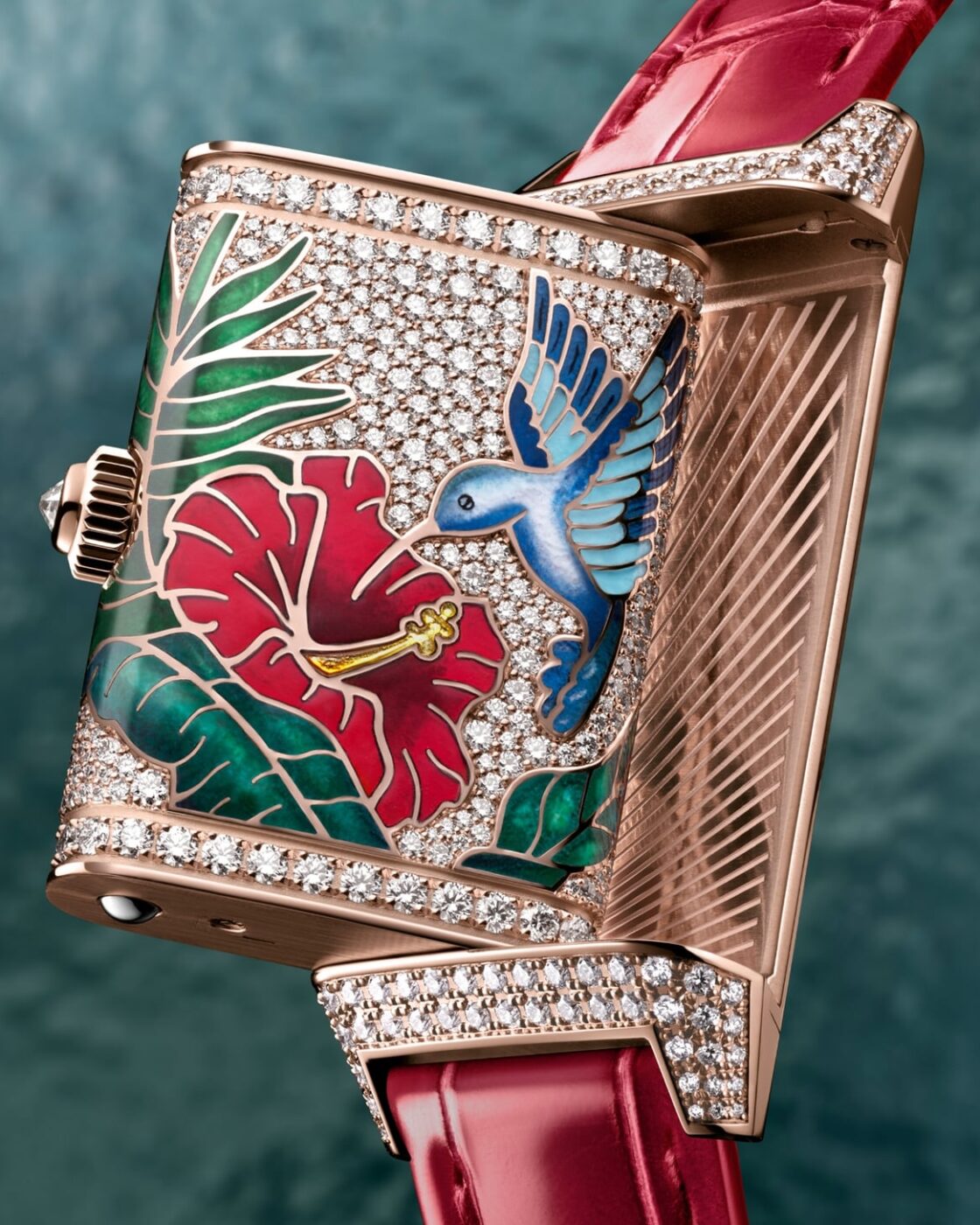
A warmer interpretation of the Hawaiian theme, with 645 diamonds, red hibiscus, snow setting and around 130 hours of decorative craft.
Sakura
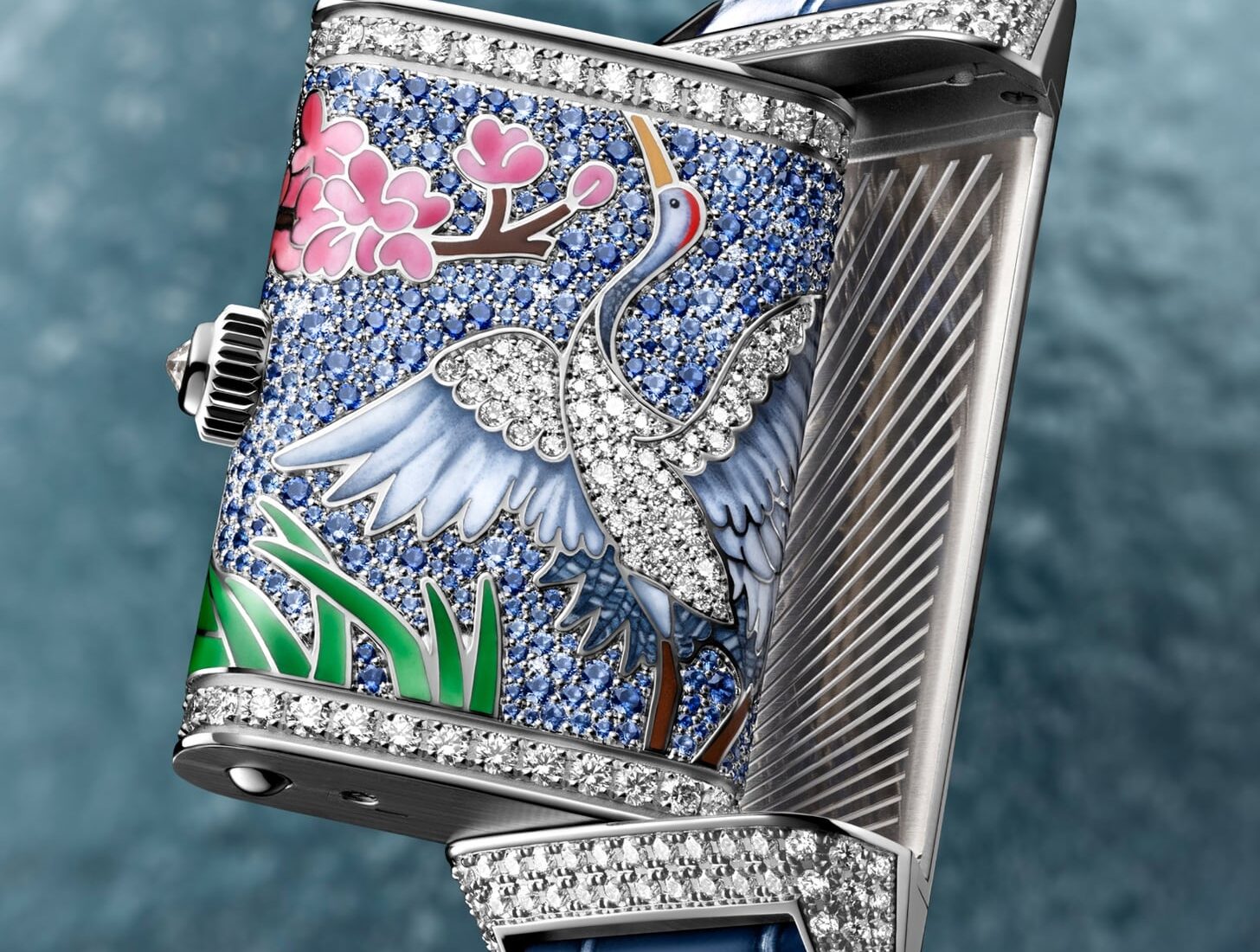
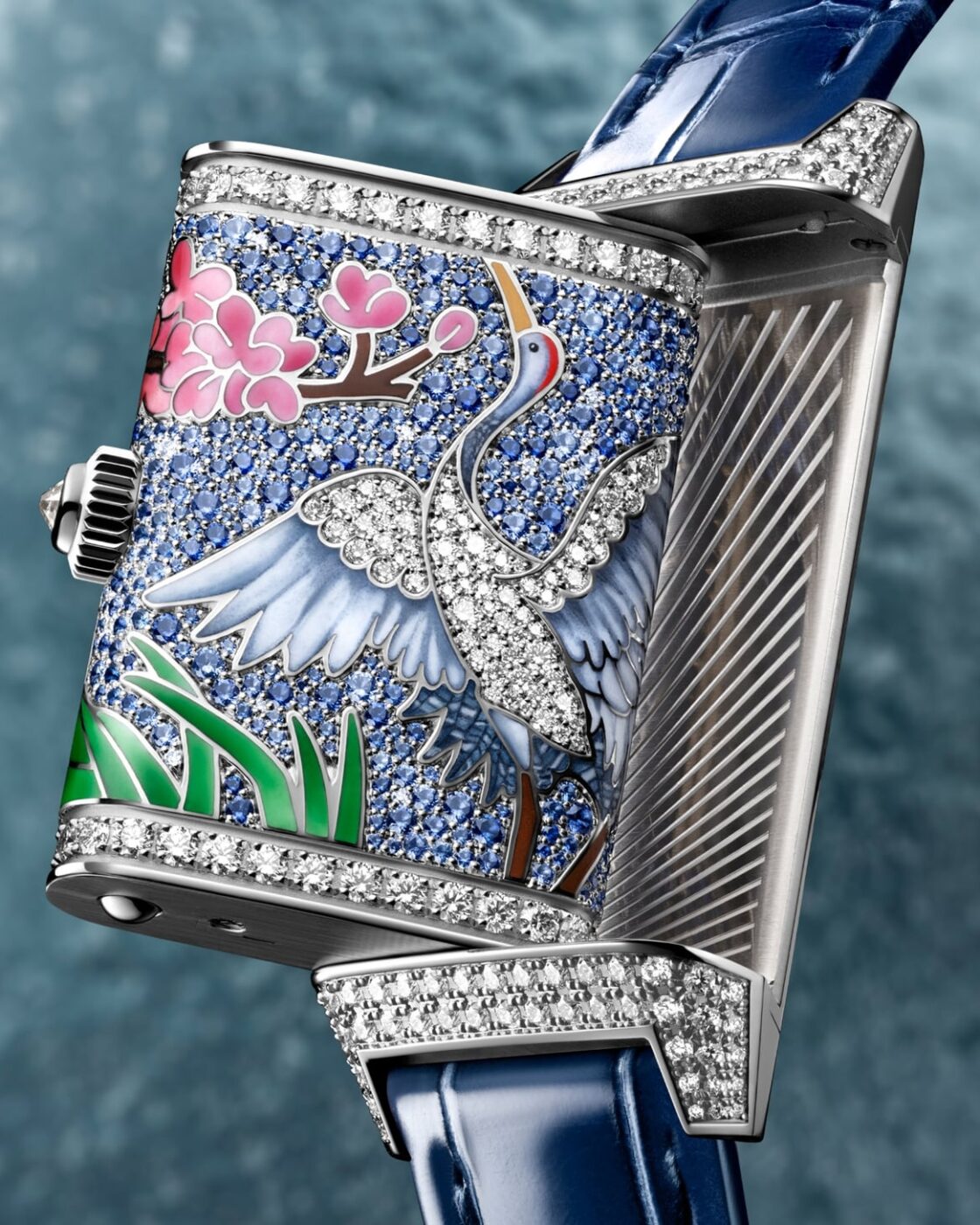
White gold, a crane under cherry blossoms and a gemstone field described by the Maison as 664 stones, with diamonds and blue sapphires in two tones.
The Reverso as a miniature landscape
The power of the trio is the way it uses the Reverso architecture without forcing it. The gadroons, the rectangular case, the sliding reversal and the strong Art Deco identity remain intact. What changes is the narrative load placed on the back: the reverse side becomes a miniature painting, but one disciplined by the geometry of the watch.
That distinction matters. Decorative watchmaking can become sentimental when the image overwhelms the object. Here, the case still reads as Reverso first. The miniature scenes sit inside the object rather than on top of it, and the gem-setting follows the curve from bezel to caseback with a continuity that makes the watch feel constructed, not merely embellished.
Hibiscus Syriacus: blue, green and the discipline of relief
Hibiscus Syriacus is the cooler, more aquatic reading of the Hawaiian inspiration. The akialoa, hibiscus and leaves are built in blue and green tones, while the pink-gold case is set with 335 diamonds for approximately 2.3 carats. Jaeger-LeCoultre describes three decorative techniques on the reverse: Grand Feu champleve enamel, paillonne work in 24-carat gold leaf and engraved lacquer.
The technical interest is the layered construction. The lower level receives shaped elements that are lacquered and assembled like a mosaic; the upper level is filled with successive layers of Grand Feu enamel, fired up to 800 degrees Celsius. The result is not a flat illustration. It has depth, contour and a controlled sense of movement.
Hibiscus Rosa: the red problem
Hibiscus Rosa is the more dramatic version. The red hibiscus gives the watch immediate warmth, but it also creates a technical challenge because red is one of the more difficult colours to control in enamelling. The Maison frames the watch around Grand Feu champleve and paillonne enamel, a snow-set background and 645 diamonds totalling approximately 2.3 carats.
The number that matters here is not only the diamond count. It is the time: the setting alone is described as requiring 100 hours of work, while the decorative craft reaches around 130 hours. That is where the piece moves from jewellery watch to Metiers Rares object.
Sakura: white gold and seasonal restraint
Sakura changes the emotional temperature. Instead of tropical abundance, it uses the seasonal calm of Japan: a red-crowned crane, cherry blossom and a lake-like field of blue stones. The case is white gold and the product page describes the watch as set with 664 stones, combining diamonds and blue sapphires through grain and snow-setting techniques.
Against the pink hibiscus pieces, Sakura is the most graphic of the three. The crane gives the composition a vertical movement, while the blue sapphire field creates a luminous ground. It is still rich, but less voluptuous; the decorative language is closer to quiet precision than to tropical flourish.
The calibre: why the movement still matters
Because the decorative surface is so strong, it would be easy to read the trio purely as jewellery. That would miss the watchmaking point. All three pieces are animated by the manually wound Jaeger-LeCoultre Calibre 846, shaped for the Reverso One rectangular case, 2.9 mm thick, made from 93 components and offering a 50-hour power reserve.
This is the right kind of movement for the concept: discreet, shaped, manual and coherent with the case. It does not compete with the decorative back. It gives the objects their horological legitimacy while leaving the stage to the rare crafts.
TheTimeo view
La Vallée des Merveilles works because it understands the Reverso as both watch and frame. The case can protect a dial, reveal an engraving, carry enamel or become a jewel; this trio uses all of those identities without losing the discipline of the original form.
For collectors, the most interesting question is not whether the watches are beautiful. They clearly are. The real question is whether they extend the Reverso language in a way that feels inevitable. Hibiscus Syriacus, Hibiscus Rosa and Sakura do: each one treats the reverse side not as decoration, but as the reason the Reverso exists.
Editorial reading
The details that shape the story
A magazine-led product page should give the image authority and the text enough substance to support search, AI answers and collector research without becoming a dense wall of copy.
Design codes and first reading
Jaeger-LeCoultre Reverso One: La Vallée des Merveilles in Three Miniatures is introduced through the visual language that matters first in Watches: silhouette, proportion, surface, finishing and the way each detail creates recognition before the specifications begin.
This section gives readers and search systems a clear description of what makes the object legible: the design cues, the material presence, the craftsmanship signals and the collecting vocabulary that surrounds the piece.
Material presence and editorial context
Luxury objects are rarely understood through one image alone. A stronger editorial page explains the relationship between object, hand, scale and atmosphere, allowing the reader to move from visual impact to informed interpretation.
For TheTimeo, this means pairing immersive imagery with precise language around design history, manufacture, gemstone quality, movement architecture, provenance, rarity, market relevance and the cultural world around the maison.
Why it matters to collectors
Collectors look for more than novelty. They evaluate condition, originality, production context, recognisable design language, long-term relevance and the way a piece sits inside the wider conversation of watches, jewellery, diamonds and cultural luxury.
A high-end article should therefore answer practical questions while preserving emotion: what the object is, why it exists, which details deserve attention, how it relates to the maison and why it may remain significant over time.
The reversible case becomes the argument: architecture first, miniature art second, jewellery as the light that binds the two.
TheTimeo editorial desk
Further stories from this world