Watches
Jaeger-LeCoultre Reverso 2026: 95 Years Old, and Still Turning
A TheTimeo collector reading of two Reverso 2026 stories: the new Tribute Duoface Small Seconds medium and the completed Hokusai Waterfalls enamel cycle.
A case that still creates new readings
In 2026 the Reverso story splits into two exact TheTimeo obsessions: proportion and patience. One release gives the Duoface a new medium case; the other closes a five-year enamel cycle devoted to Hokusai waterfalls.
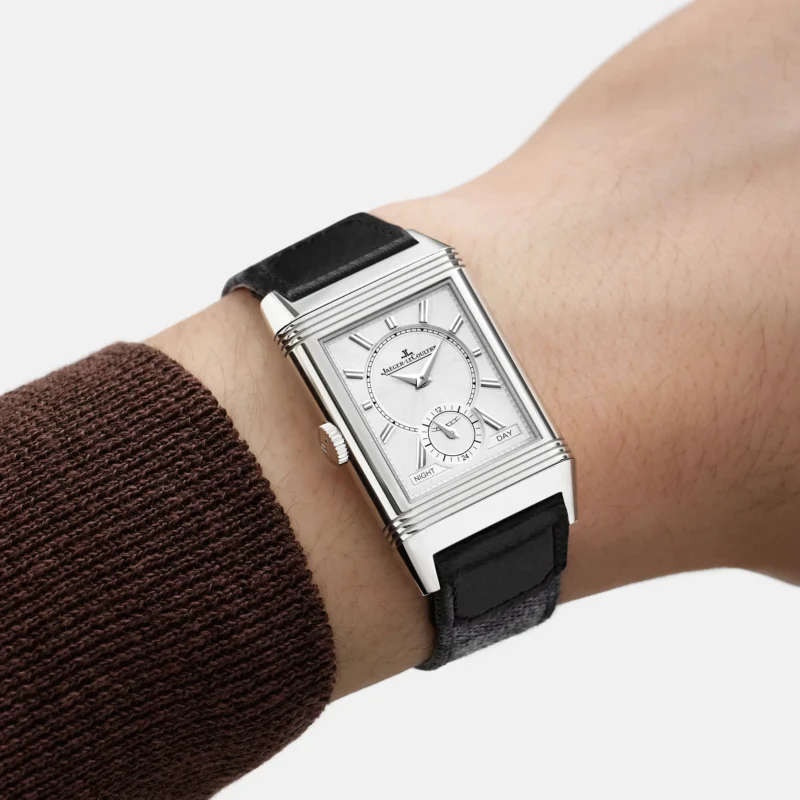
Reverso 2026
One case, two timescales
Jaeger-LeCoultre brings the Reverso into its 95th year through two different forms of discipline: a new medium Duoface proportion for daily wear, and the conclusion of a five-year Hokusai enamel cycle.
In brief: proportion and patience
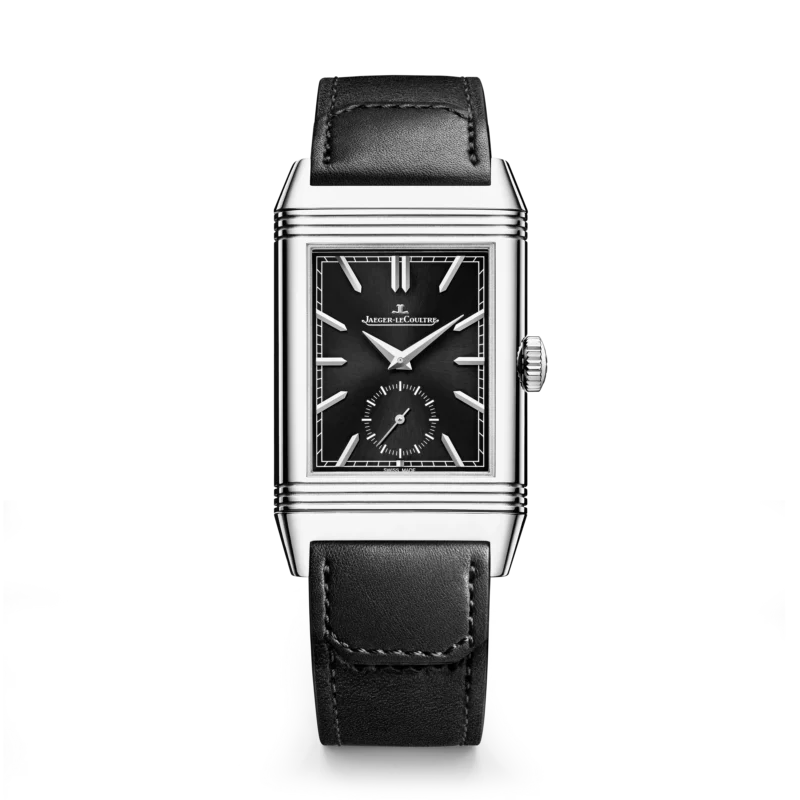
The 2026 Reverso story is not a single product announcement. It is a study in how a 95-year-old design stays alive. One side of the story is immediate and wearable: the Reverso Tribute Duoface Small Seconds in a new medium case, 42.9mm × 25.5mm × 9.23mm, closer to the restrained spirit of the original 1931 watch.
The other side is slow, decorative and deliberately rare: the completion of Jaeger-LeCoultre's Reverso Tribute Enamel Hokusai Waterfalls cycle, an eight-design miniature enamel project released across five years. The two releases could not be more different in tone, yet both depend on the same Reverso idea: a case that turns, reveals, protects and gives the manufacture a second surface to think with.
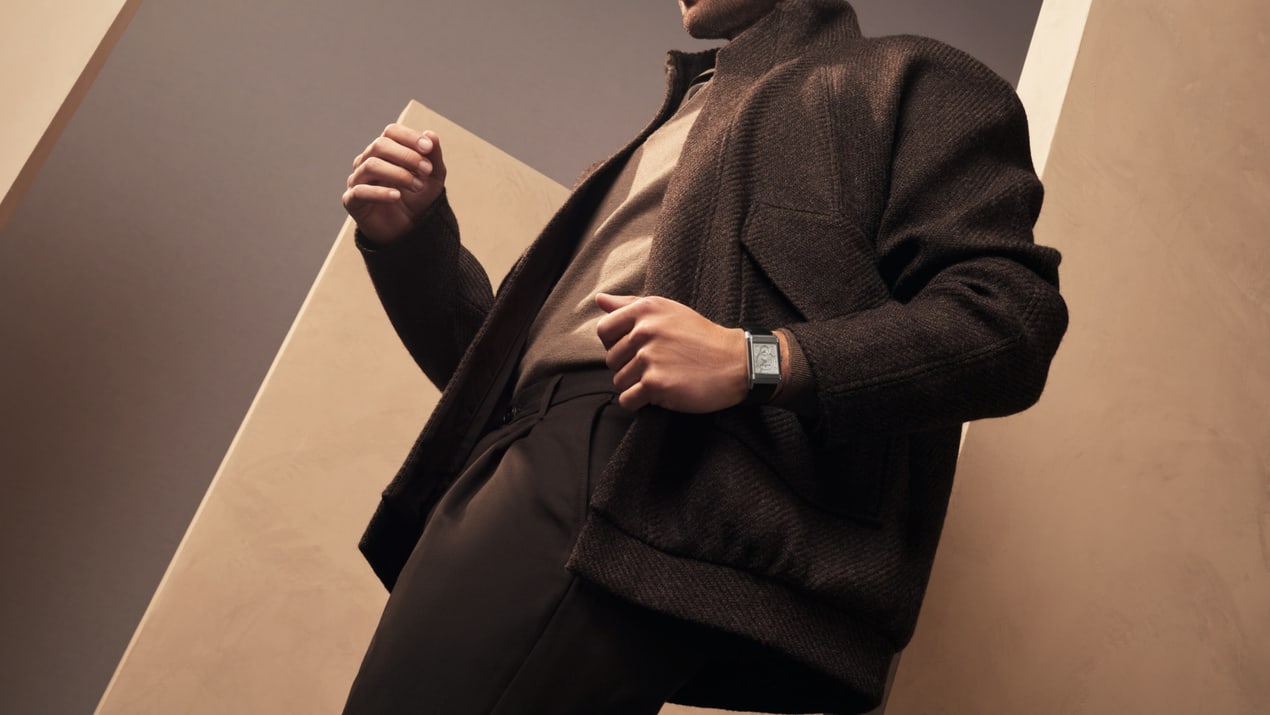
Tribute Duoface Small Seconds
The new Reverso proportion that matters.
The Duoface Small Seconds is not new as an idea. What changes in 2026 is scale. The medium case brings the double-sided complication into a more controlled footprint, making the Reverso feel less like a formal object and more like a watch that can move easily through the day.
- Reference
- Q3908410
- Case
- 42.9mm × 25.5mm × 9.23mm, stainless steel
- Movement
- Calibre 854, hand-wound, 42-hour reserve
- Price
- €14,800 / £12,600 at introduction
A design that solved a real problem
The Reverso was created in 1931 for a practical reason: polo players needed a watch whose crystal could be protected during play. Jaeger-LeCoultre's answer was architectural rather than ornamental, placing the rectangular case inside a carriage so the wearer could turn the dial inward and expose a solid metal back.
That single gesture has kept the watch relevant for nearly a century. What began as protection became identity. The reverse side became a place for engraving, enamel, second time zones and private messages; the front remained one of watchmaking's clearest Art Deco silhouettes.
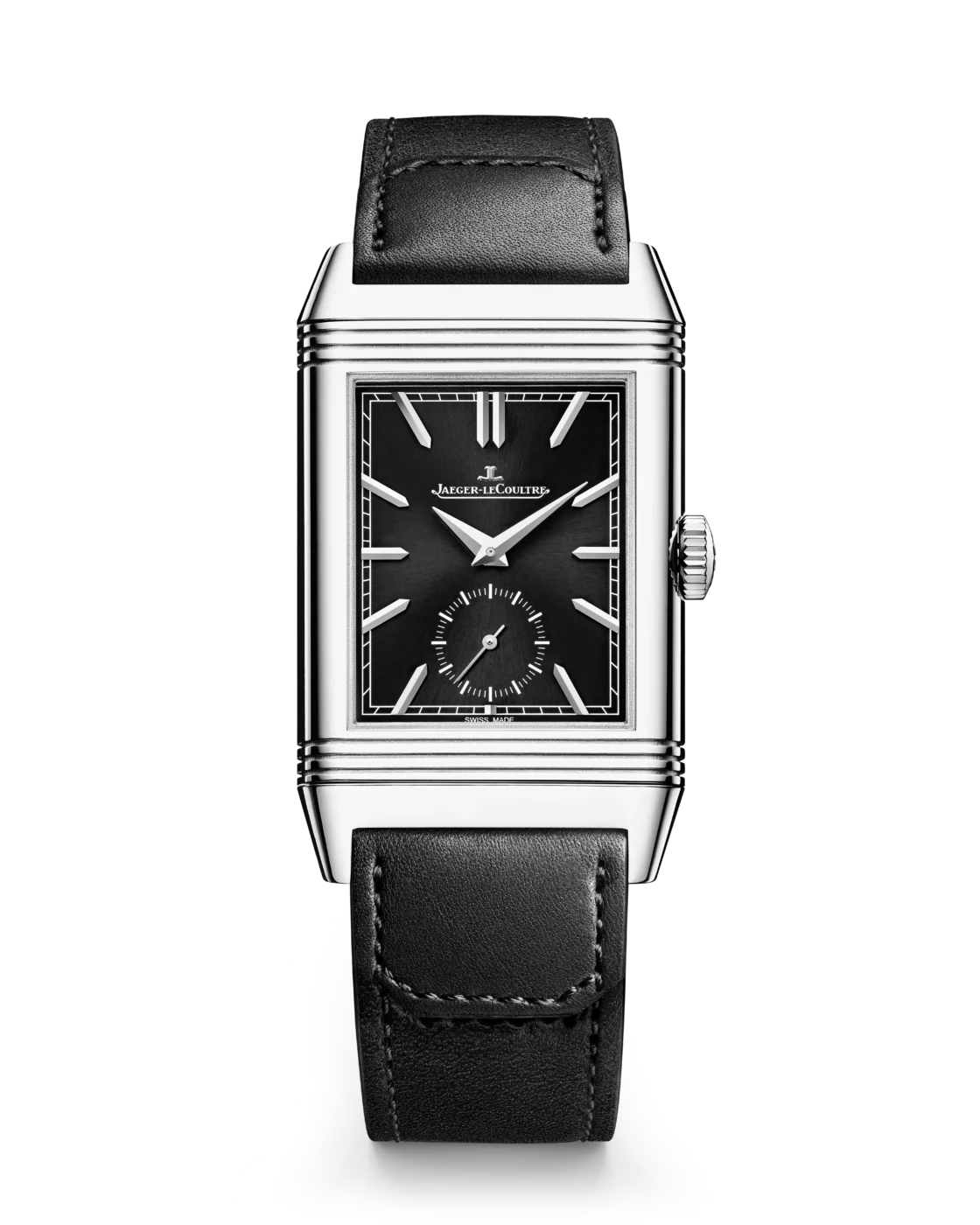
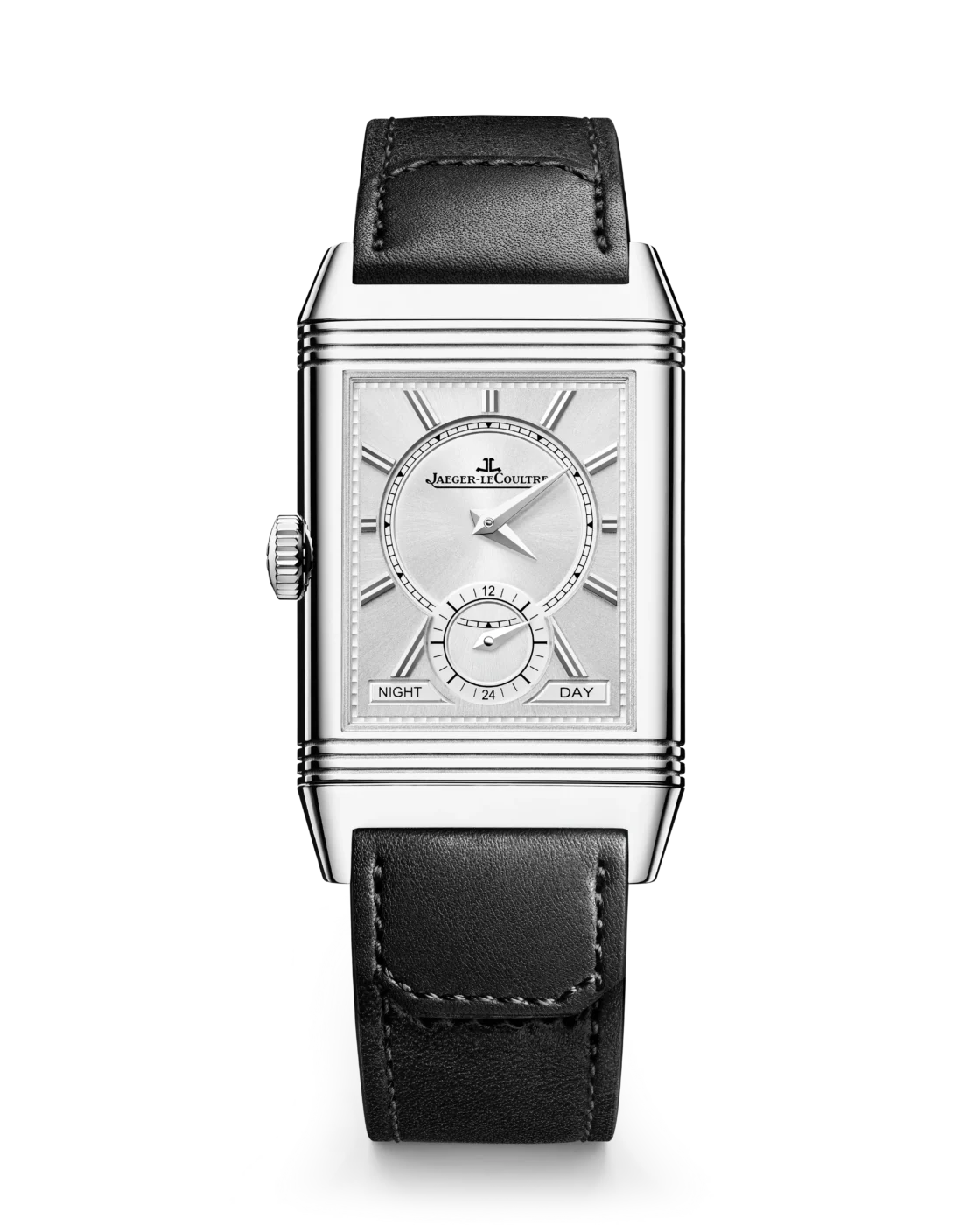
Two faces, one exact gesture.
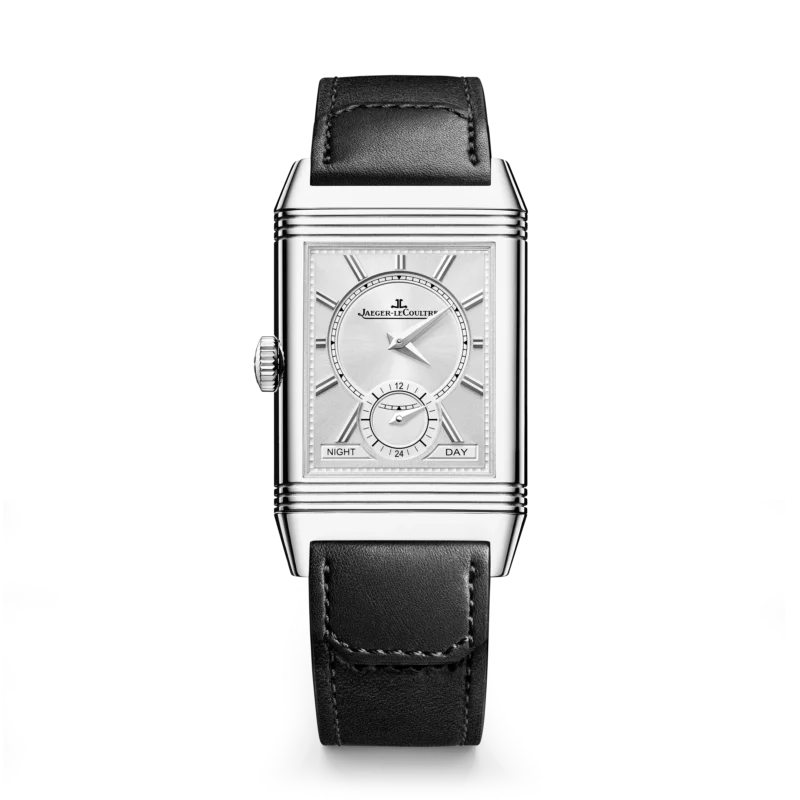
The front dial keeps the Reverso's clean opaline reading and small seconds. The reverse dial opens a second time zone with a blue-grey tone, a 24-hour display and a night-day indication. The point is not complication for display; it is complication hidden until the owner turns the case.
The size that did not exist before
The existing Tribute Duoface Small Seconds references are larger: 47mm × 28.3mm × 10.34mm. The 2026 medium case reduces height, width and thickness without turning the watch into a miniature. That distinction matters. It gives collectors a third Reverso option rather than a simple smaller version of the same idea.
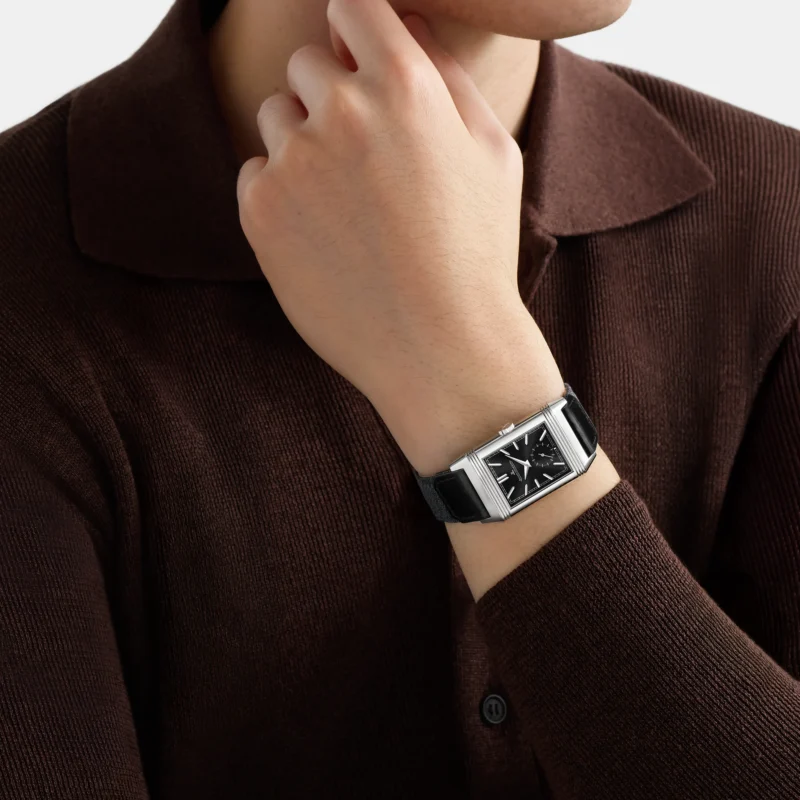
On the wrist, that change is the story. The Reverso has always depended on geometry, but geometry only works when the case has the right relationship to the hand, cuff and strap. The new dimensions bring the Duoface back toward a more classical reading while keeping the practicality of two displays.
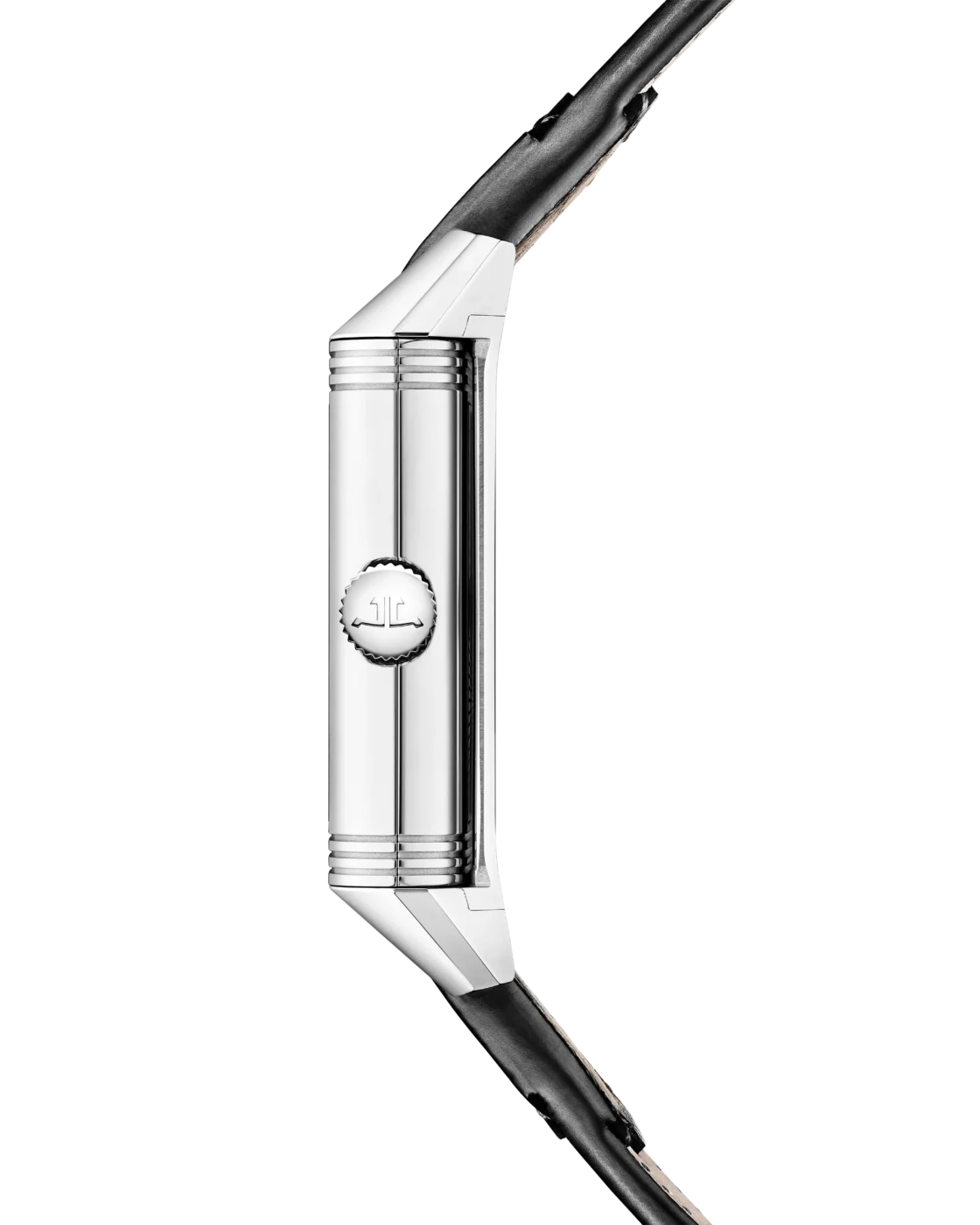
Case architecture
The Reverso is a mechanism before it is an icon.
The case profile is part of the pleasure. A Reverso is not only read from above; it is handled, released, turned and returned to the carriage. The hidden slider, the engraved inner surface and the smoothness of the rotation are what make the object feel mechanical even before the movement is discussed.
Casa Fagliano and the tactile register
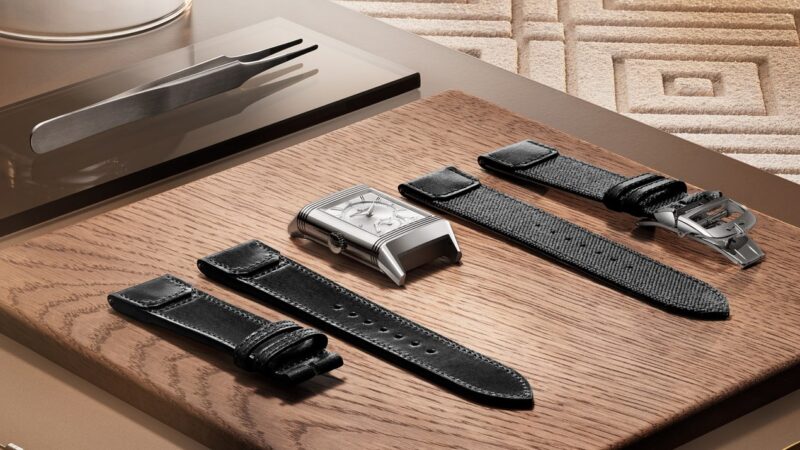
The new medium reference continues the Casa Fagliano relationship, pairing the Reverso with interchangeable straps connected to the world of polo and riding craft. It is a small detail with real narrative weight: the watch returns, through leather and canvas, to the sporting world that originally gave it a reason to exist.
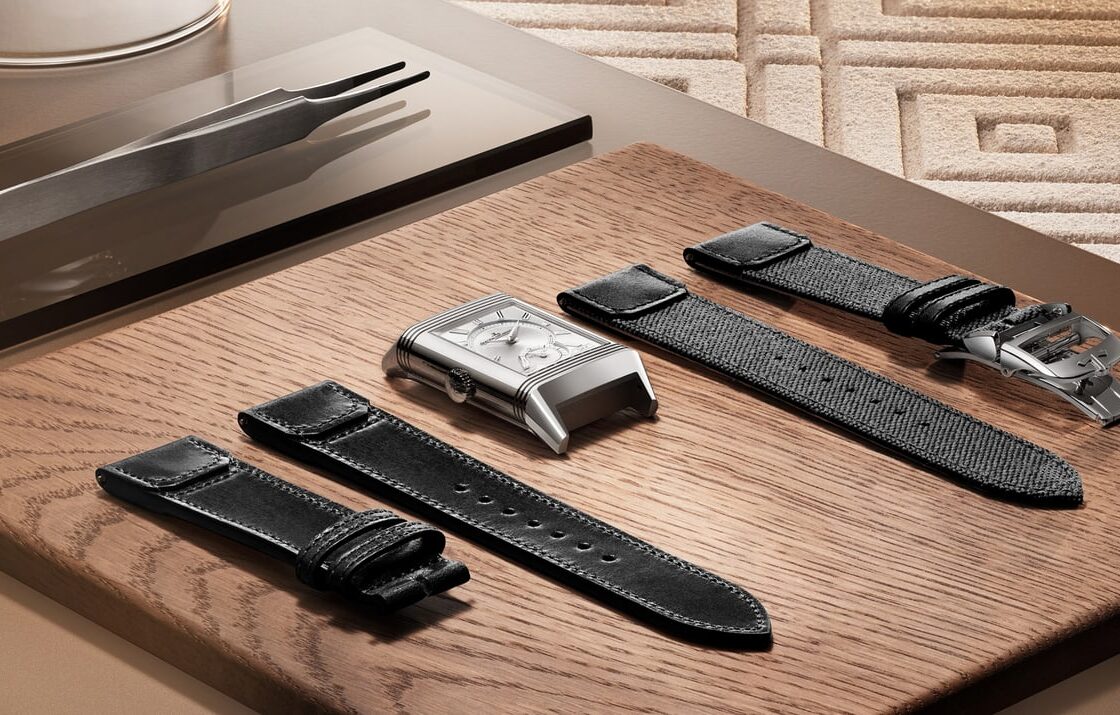
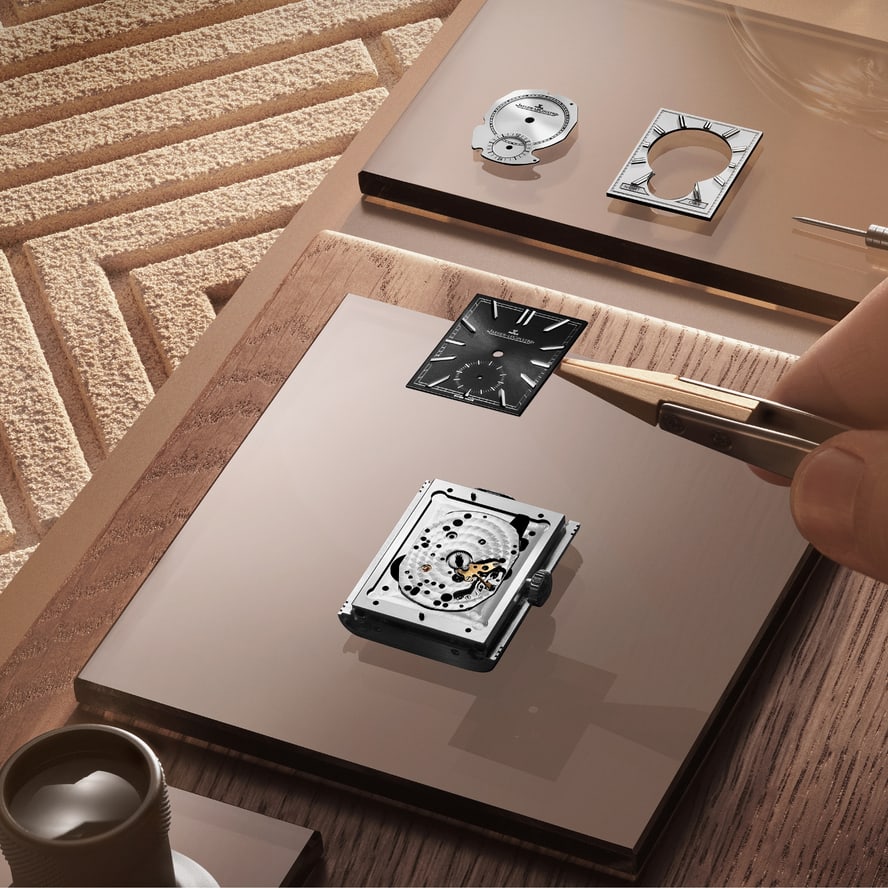
Straps, components and the discipline of touch.
The strongest Reverso images are not always the most dramatic. Sometimes the story sits in the object disassembled: strap, case, dial and movement presented as a set of choices that all have to feel inevitable once the watch is closed again.
Hokusai Waterfalls: completion as a collector event
The second 2026 Reverso story belongs to a different timescale. Jaeger-LeCoultre completed the Reverso Tribute Enamel Hokusai "A Tour of the Waterfalls of the Provinces" cycle with the final four designs of an eight-piece series begun in 2021. Each design is limited to 10 pieces.
The importance of the cycle is not simply that the watches are rare. It is that the project now has a finished shape. The reverse side of the Reverso, originally a protective surface, becomes a miniature picture plane for enamel painting; the front dials use hand-turned guilloche beneath flinque enamel, giving each design its own colour and texture.
Waterfalls cycle
A five-year enamel argument.
Without forcing unrelated imagery into the page, the Hokusai chapter is treated as a technical and collecting note: small in edition, long in execution, and important because the cycle is now closed.
Eight designs released from 2021 to 2026.
A limited artistic cycle, not a broad collection line.
Case reverse enamel painting; front dial with guilloche under translucent enamel.
Reading the two stories together
The Duoface medium and the Hokusai conclusion show two Jaeger-LeCoultre instincts at once. One is responsive: a new proportion for a market returning to restraint, elegance and watches that sit more naturally on the wrist. The other is patient: a decorative cycle built over years, where the conclusion changes the way the earlier pieces are understood.
Both depend on the Reverso's unusual generosity as a platform. It can be a travel watch, a dress watch, an object of enamel, a surface for engraving, a piece of Art Deco design and a mechanical gesture in the hand. Few watch designs give a manufacture that much room without losing their identity.
Reference guide
The two Reverso readings.
The 2026 releases divide cleanly: one for proportion and use, the other for artistic completion.
42.9mm × 25.5mm × 9.23mm steel case, Calibre 854, second time zone on reverse.
Each design limited to 10 pieces, completing an eight-part Reverso Tribute Enamel cycle.
A wearable new size on one side; a closed artistic body of work on the other.
TheTimeo view
There is a temptation, with a design as historically loaded as the Reverso, to read every new release as either reverent repetition or anxious reinvention. The 2026 story is neither. The Tribute Duoface Small Seconds medium shows how much relevance can still come from proportion alone. The Hokusai Waterfalls conclusion shows how much cultural depth can still fit on the back of a rectangular case.
Ninety-five years is a long time for any design to remain genuinely alive rather than merely preserved. In 2026, the Reverso still turns because Jaeger-LeCoultre keeps finding new reasons for it to turn.
The Reverso does not survive by nostalgia. It survives because its architecture still gives Jaeger-LeCoultre somewhere new to go.
TheTimeo editorial desk