Tudor 2026: The Centenary Year, the Watch Everyone Knows and the One Nobody Expected
A TheTimeo collector reading of Tudor's 100th anniversary collection — the sharpened Black Bay 58, now Master Chronometer certified with a new five-link bracelet, and the surprise return of the Tudor Monarch, a faceted, integrated-bracelet design unlike anything currently in Tudor's catalogue.
In brief — Why this collection matters
Tudor arrived at Watches and Wonders Geneva 2026 with six new references, marking the brand's 100th anniversary — Tudor was founded in 1926 by Hans Wilsdorf, the same Wilsdorf behind Rolex, on a founding premise that has not changed in a century: serious mechanical watchmaking at prices that do not require collector-tier budgets. What changed in 2026, as one reviewer put it, "is the execution."Two releases from that six-watch slate define the centenary year. The Black Bay 58 — Tudor's most consistently popular model for nearly a decade — received the kind of update that doesn't reinvent a watch but sharpens every edge of it: a thinner case, full Master Chronometer certification, and a new five-link bracelet option. And the Tudor Monarch — a name "many enthusiasts had long forgotten," originally used on a line that "never became one of Tudor's defining successes" — returned in a completely reimagined form: a faceted, integrated-bracelet design that one publication called "the least Black Bay-like watch" Tudor has produced in years.
Tudor Centenary 2026
The watch everyone knows and the one nobody expected.
A century after Hans Wilsdorf founded Tudor on the premise of serious mechanical watches at accessible prices, the brand marks its centenary by refining its flagship Black Bay 58 and introducing the faceted, integrated-bracelet Monarch.
In brief: why this lineup matters
Tudor arrived at Watches and Wonders Geneva 2026 with six new references, marking the brand’s 100th anniversary — Tudor was founded in 1926 by Hans Wilsdorf, the same Wilsdorf behind Rolex, on a founding premise that has not changed in a century: serious mechanical watchmaking at prices that do not require collector-tier budgets. What changed in 2026, as one reviewer put it, “is the execution.”
Two releases from that six-watch slate define the centenary year. The Black Bay 58 — Tudor’s most consistently popular model for nearly a decade — received the kind of update that doesn’t reinvent a watch but sharpens every edge of it: a thinner case, full Master Chronometer certification, and a new five-link bracelet option. And the Tudor Monarch — a name “many enthusiasts had long forgotten,” originally used on a line that “never became one of Tudor’s defining successes” — returned in a completely reimagined form: a faceted, integrated-bracelet design that one publication called “the least Black Bay-like watch” Tudor has produced in years.
Tudor Monarch
A name returns, transformed.
The Monarch name has a history that even attentive Tudor watchers had largely lost track of. Originally introduced in 1991 as part of an Asian-market line with classic, conservative styling, the Monarch “never became one of Tudor’s defining successes,” and the name gradually faded from the catalogue entirely — to the point that its return in 2026 registered, for many observers, as a genuine surprise rather than an anticipated revival. Unlike the Black Bay, the Ranger, or the Pelagos — names with deep roots in Tudor’s dive watch and military heritage — the Monarch carried no such historical weight. It was, by most measures, a forgotten name.
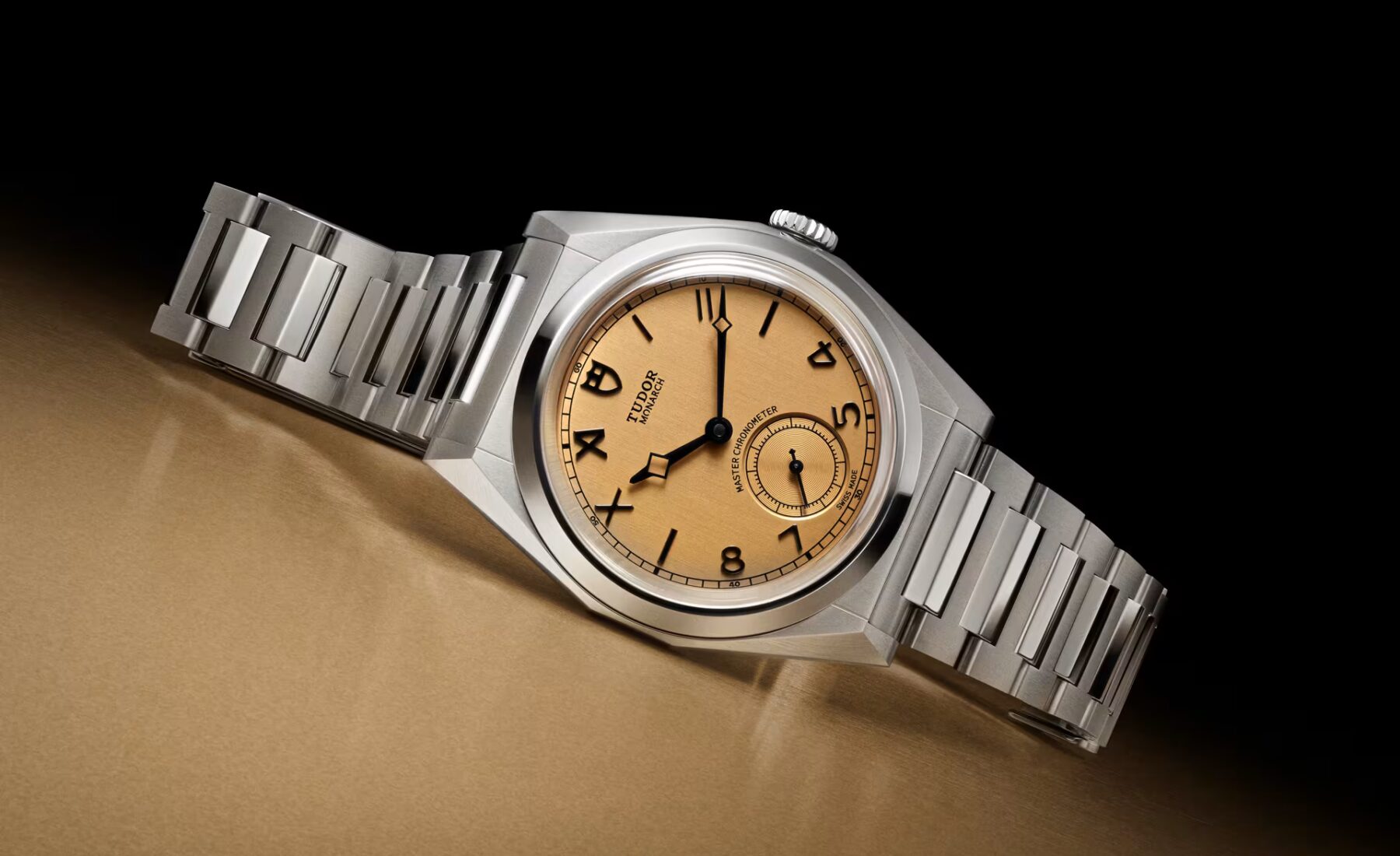
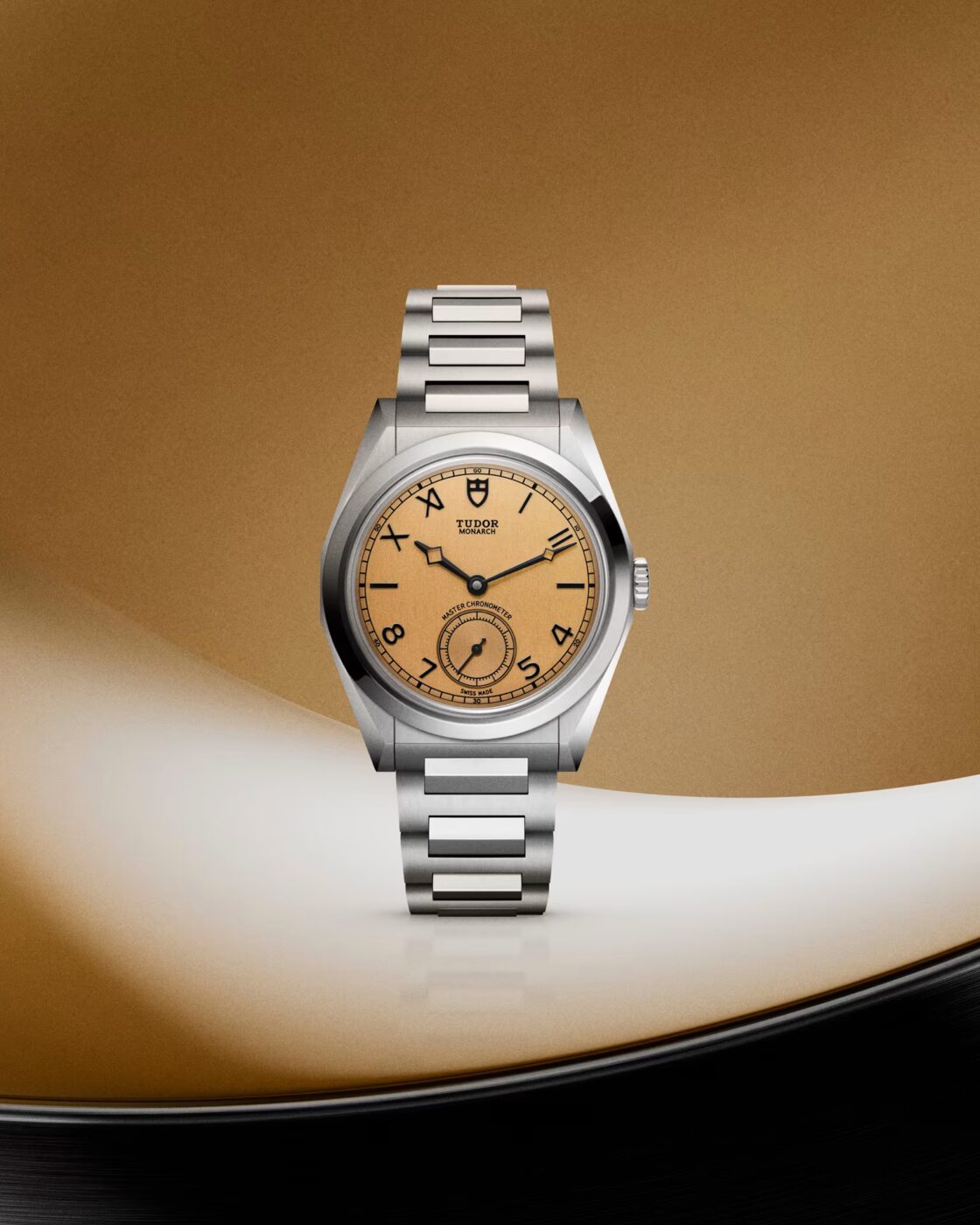
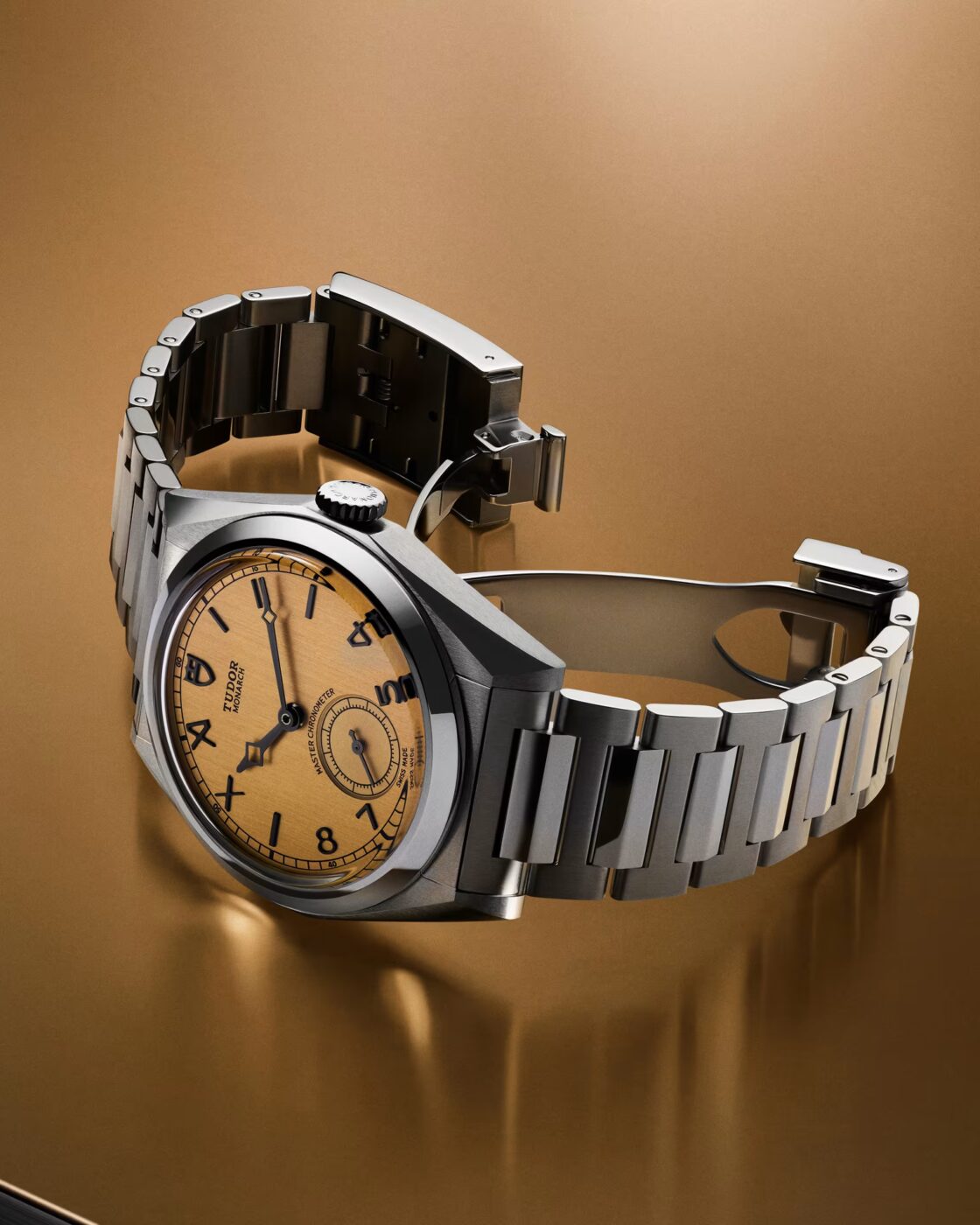
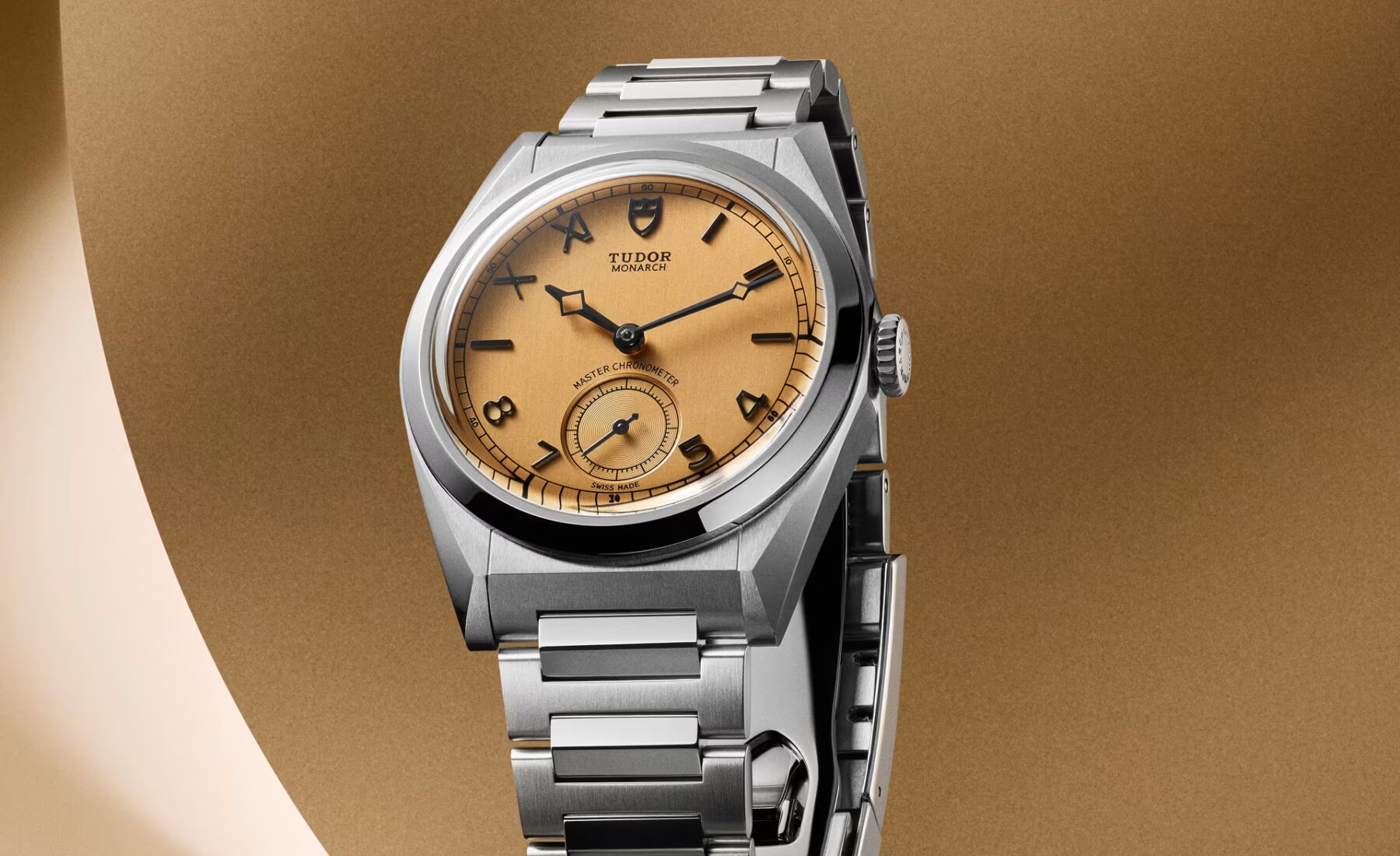
This makes the execution of the 2026 Monarch all the more notable: rather than reviving the name as a nostalgia play tied closely to its 1991 design, Tudor used it as a vessel for something genuinely new within the brand’s current catalogue. The 39mm stainless steel case is faceted — built from sharp, angular lines rather than the rounded, tool-watch profiles that define the Black Bay and Pelagos families. The two-link integrated bracelet follows that same angular logic, with mirror-polished centre links that catch light in a way no current Tudor bracelet does.
- Collection
- Tudor Monarch
- Case
- 39mm steel, faceted
- Bracelet
- 2-link integrated, polished links
- Price
- $5,875
The centenary context — 100 years of “serious watches, accessible prices”
Tudor’s founding story is inseparable from Rolex’s. Hans Wilsdorf established Tudor in 1926 with an explicit commercial logic: Rolex’s own production could not, by design, occupy the more accessible end of the market without diluting the brand’s positioning, so Wilsdorf created a second marque — using movements supplied by established manufactures and his own design oversight — to deliver Rolex-adjacent quality and reliability at a meaningfully lower price point.
The modern Tudor — the one responsible for the Black Bay’s rise to become one of the most successful watch revivals of the past fifteen years — emerged from a deliberate repositioning beginning in the early 2010s: heritage-driven design language drawing on Tudor’s own historical dive watches, paired with a gradual transition to in-house manufacture movements (the MT5xxx series), and eventually full COSC and METAS Master Chronometer certification across much of the catalogue.
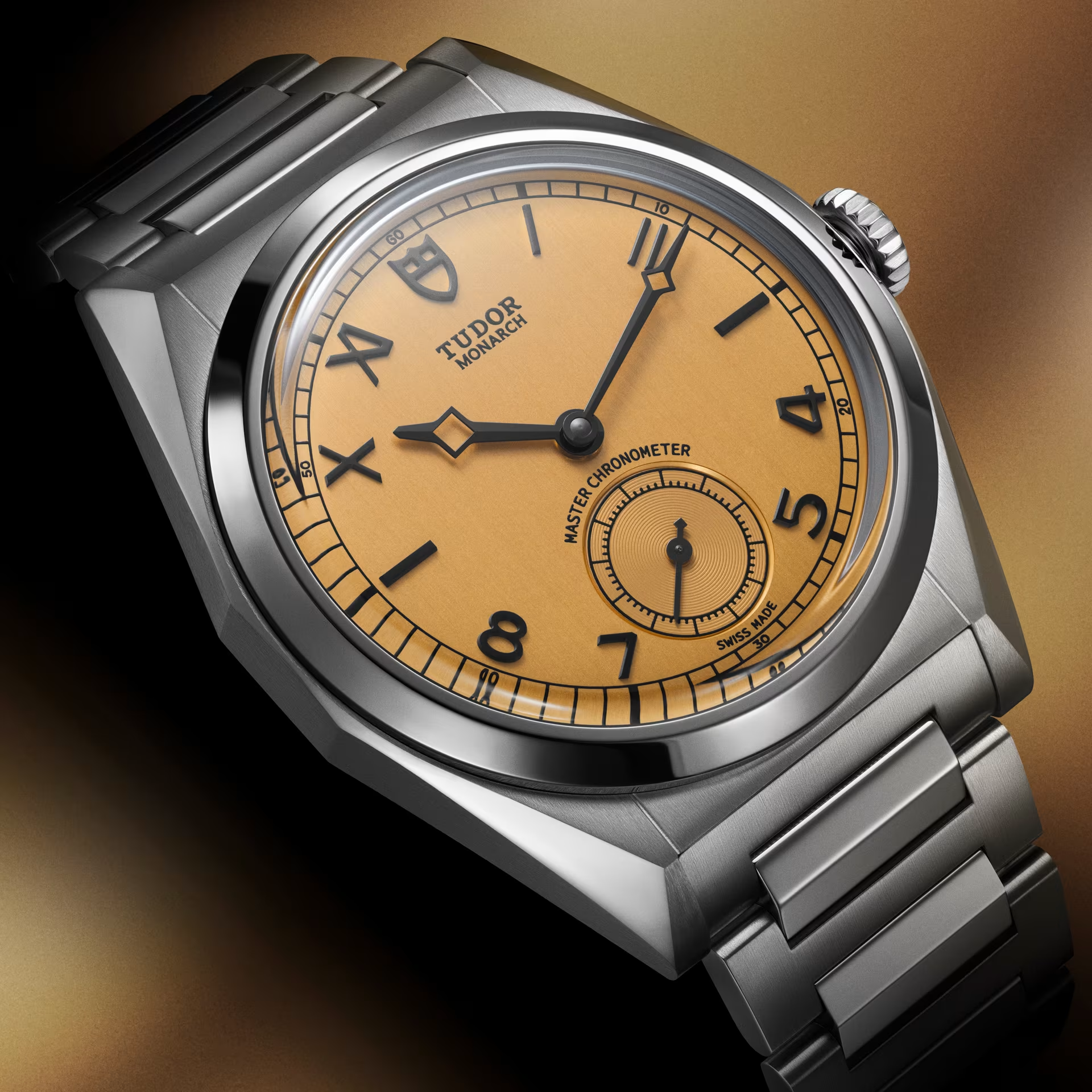
California dial & vintage-formal details.
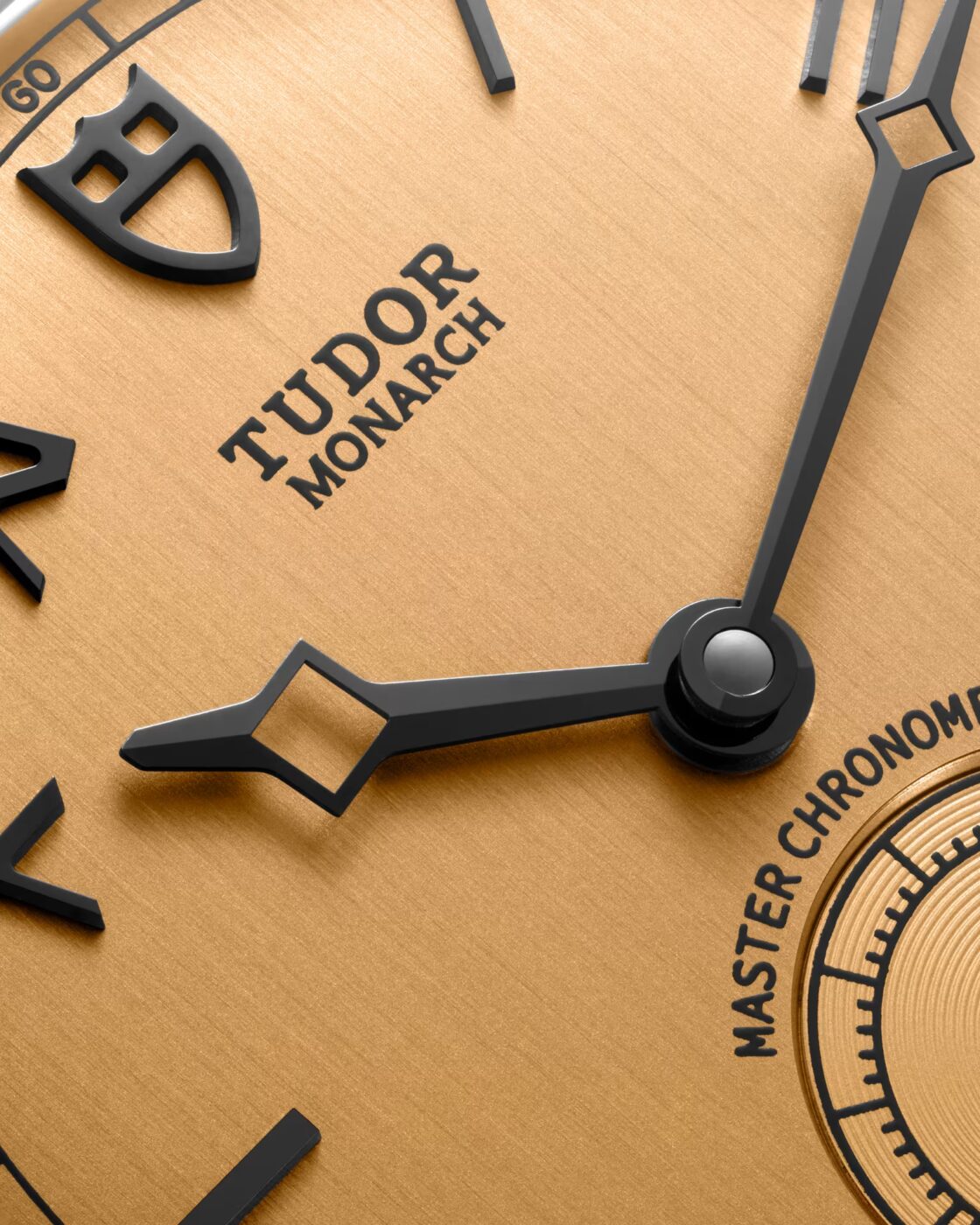
A champagne, textured dial with a small seconds display and a “California dial” numeral arrangement — Roman numerals on one half, Arabic numerals on the other — gives the Monarch a vintage-formal character that has no equivalent anywhere else in Tudor’s current lineup.
The Black Bay 58 — Sharpening, not reinventing
The 2026 update does not alter the Black Bay 58’s fundamental identity. The 39mm diameter, the design language drawn from the 7924, the overall silhouette — all of this remains. What changes is a series of refinements that, individually, read as modest, but which compound into a watch that feels meaningfully more refined without losing what made the original successful.
The case thickness drops to 11.7mm — “shaving a couple tenths off” the previous generation’s profile, a change that is barely perceptible in isolation but contributes to the watch sitting lower and closer to the wrist. The dial gains a slight dome and a matte finish, with the text layout trimmed to two lines — a change consistent with how Tudor has handled dial text across its Master Chronometer certified pieces, where certification markings need to be accommodated without cluttering the dial. The bezel insert numerals are redesigned with a subtle curve, and the crown receives a new profile designed to sit flush against the case — a detail that affects both the watch’s silhouette and its comfort against the wrist or under a cuff.
Caseback & Movement
In-house manufacture calibre.
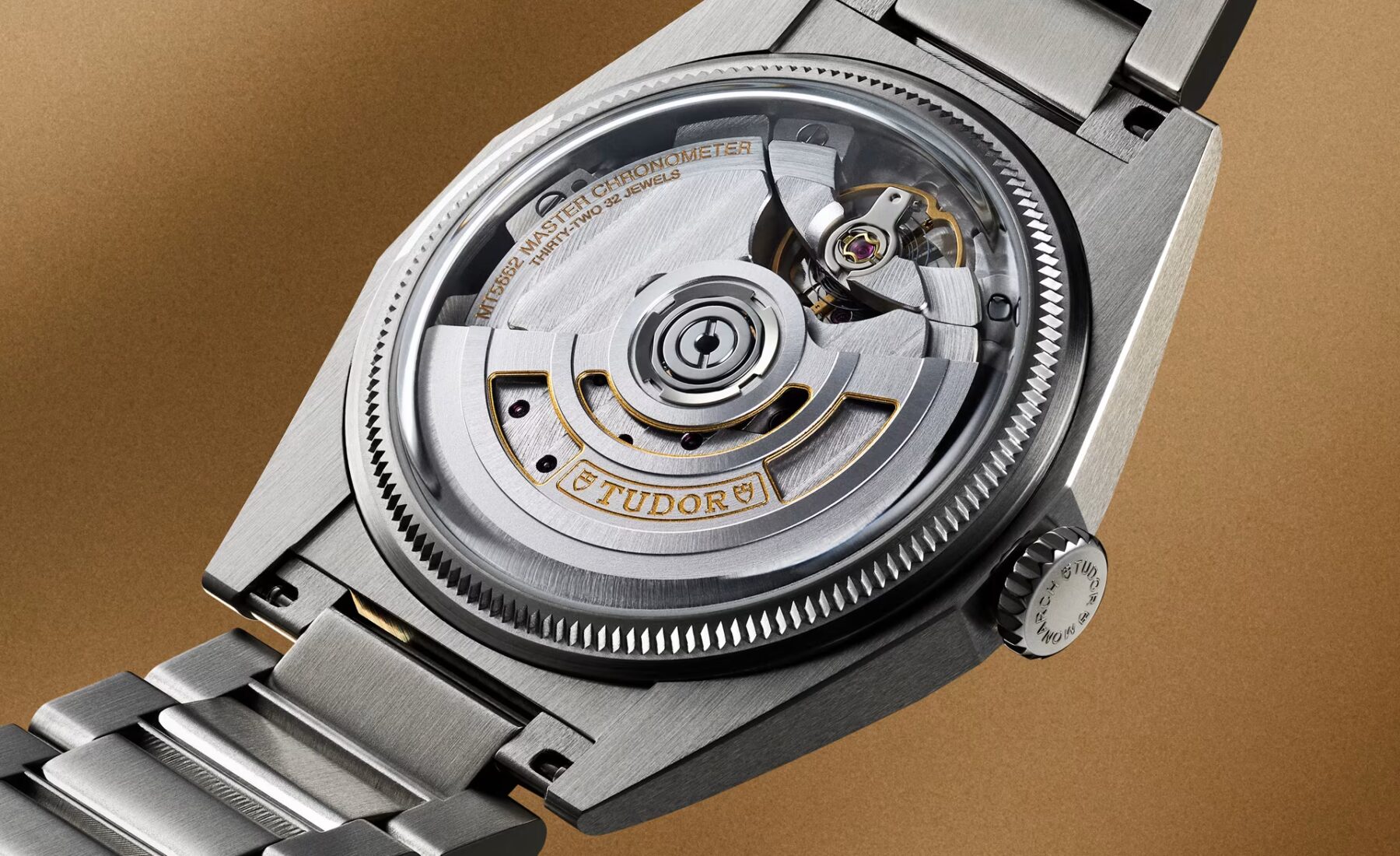
The display back reveals the in-house manufacture automatic movement, customized for the Monarch’s unique proportions and featuring radial finishing, integrated layout, and chronometric regulation. The movement is certified to the highest standards, ensuring a long power reserve and high resistance to magnetic fields.
- Movement
- In-house manufacture movement
- Complication
- Small seconds and calendar
- Finishing
- Radial brushed plates, skeletonised rotor
- Winding
- Automatic bi-directional
Why this update matters more than it appears to
For most buyers, the updated Black Bay 58 is, by wide agreement among reviewers, “the strongest all-around everyday option” in Tudor’s catalogue. The 2026 changes do not alter that fundamental positioning — they reinforce it. A watch that was already close to ideal for a huge range of wrists and use cases became slightly thinner, slightly more accurate, slightly more comfortable, and slightly more versatile in how it can be worn.
None of these changes, individually, would justify a standalone release. Together, in a watch this popular, they represent Tudor doing the hardest kind of design work: improving something that already worked, without anyone being able to point to what changed and call it a gimmick.
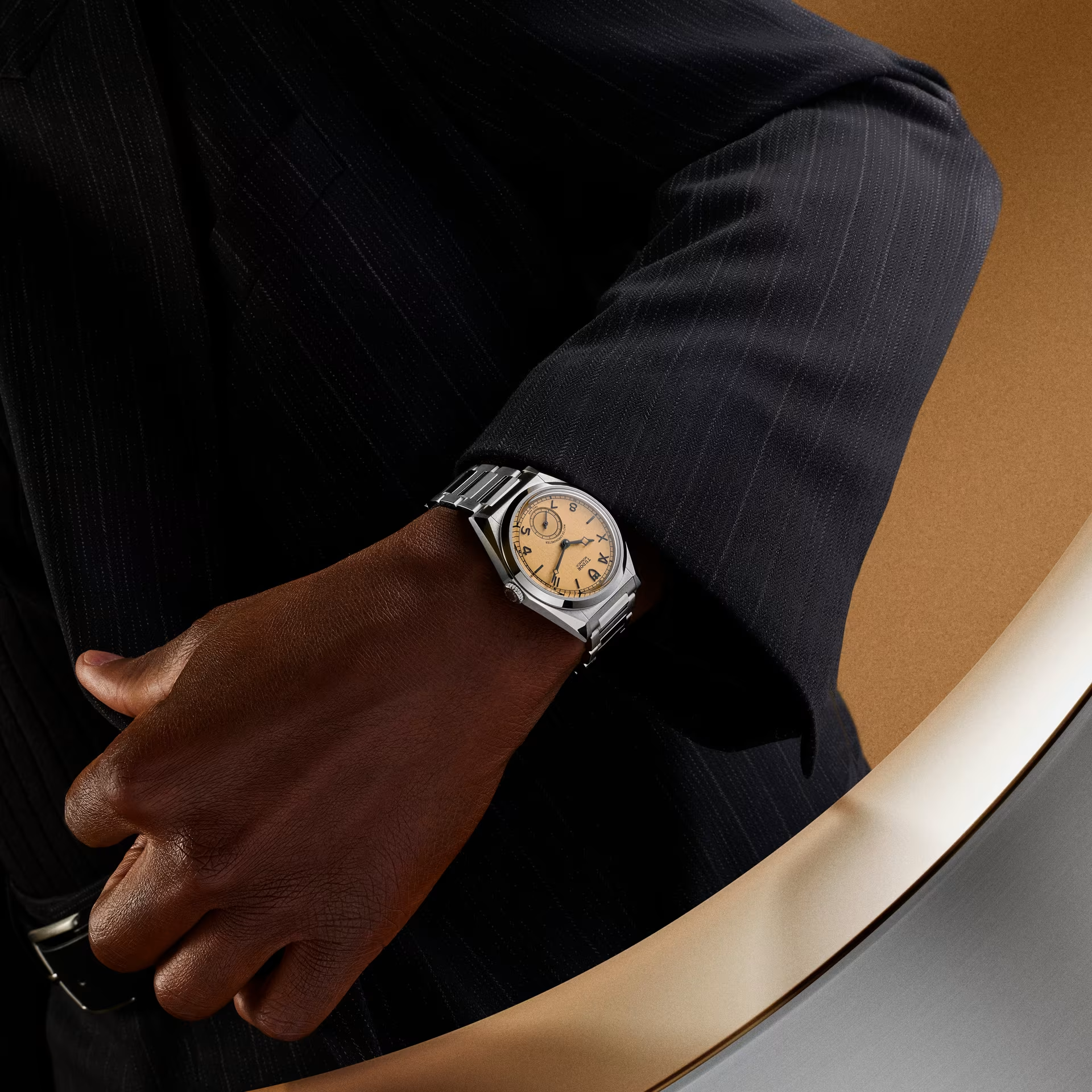
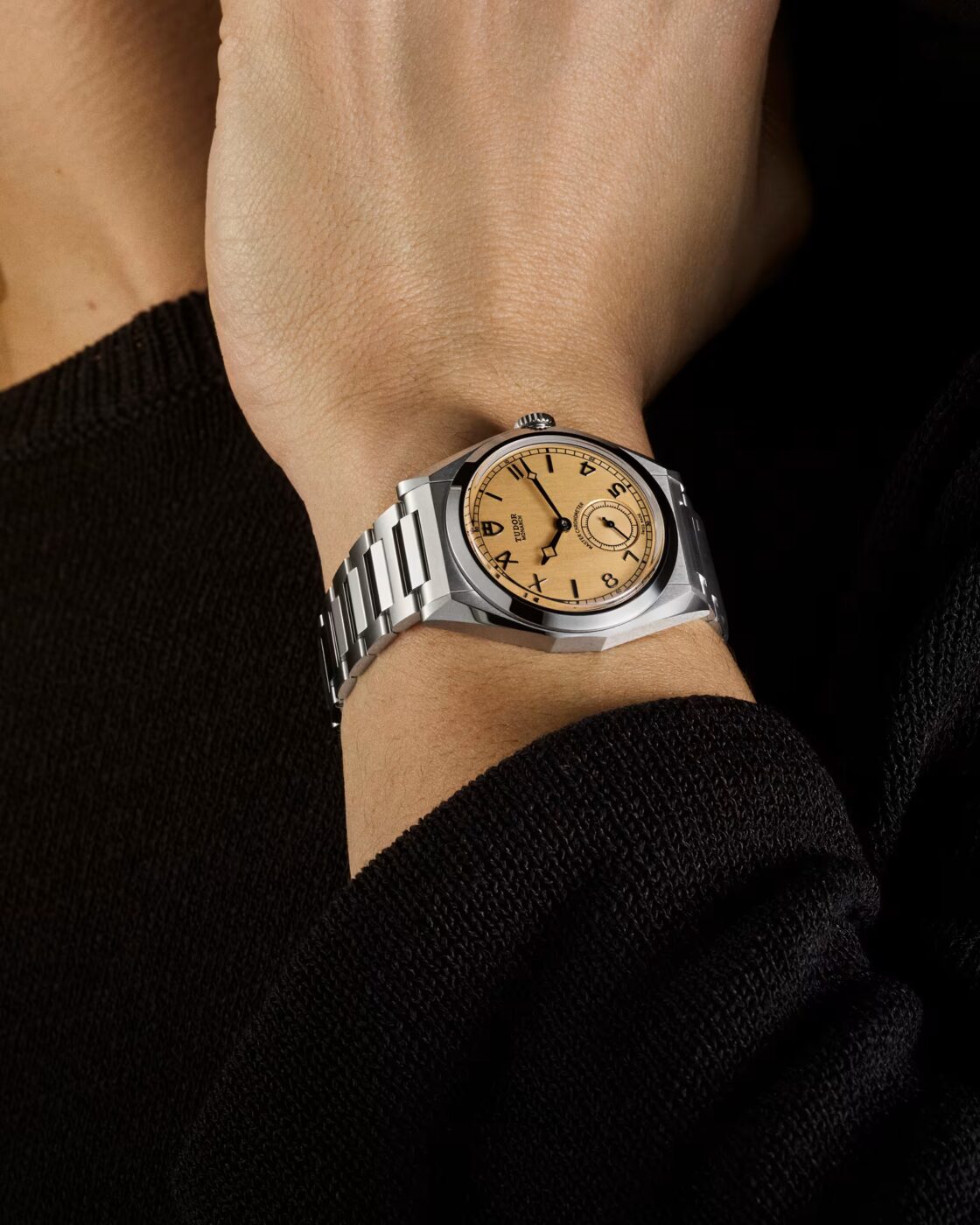
Refined presence on the wrist.
The integrated bracelet design and faceted angles make the Monarch sit somewhere between a formal dress watch and a sporty steel timepiece, adapting effortlessly to different sleeves and skin tones.
The broader 2026 lineup — Context for both watches
Tudor’s full Watches and Wonders 2026 slate included, alongside the Black Bay 58 update and the Monarch: a Black Bay 58 GMT with a new five-link jubilee bracelet, introducing a mid-size GMT format in a wearable 39mm case with burgundy-and-black bezel and gilt dial details; a Black Bay 54 in the brand’s signature blue, continuing the compact 37mm case and minimal-bezel approach; and a Black Bay Full Ceramic — the brand’s “material first” for 2026 — extending the 2021 ceramic case introduction with the addition of a matching ceramic bracelet for the first time, at 41mm × 13.6mm, priced at $7,725 as the most expensive piece in the centenary lineup.
Reference guide
Centenary Watches in Numbers.
The key specifications comparing the updated Black Bay 58 and the new Tudor Monarch.
Calibre MT5400-U, METAS Master Chronometer certified, 65-hour power reserve. Five-link jubilee or three-link rivet bracelet.
In-house manufacture automatic movement, champagne textured dial, California numerals, small seconds layout.
Mid-size GMT, METAS Master Chronometer certified, burgundy-and-black bezel, five-link jubilee bracelet.
METAS certified, matte black ceramic case and matching ceramic bracelet. Centenary price flagship.
Centenary statement piece, positioned as a premium integrated-bracelet alternative.
TheTimeo view
Tudor’s centenary year could have been an exercise in nostalgia — a victory lap built entirely around the Black Bay’s success story, with perhaps a commemorative dial colour or a “100 Years” engraving to mark the occasion. Instead, the brand split its attention in a way that says more about its next century than any anniversary edition could.
The Black Bay 58 update is Tudor at its most disciplined: taking the watch that defines the brand for most people and making it 0.2mm thinner, slightly more accurate, slightly more comfortable, slightly more versatile — improvements that individually mean little and together mean a great deal, delivered without disturbing a formula that has worked for nearly a decade.
The Monarch is something else entirely: a forgotten name, given a faceted case and an integrated bracelet that share nothing with the design language Tudor has built its modern identity on, priced as the centenary’s statement piece, and met with the kind of “opinions will split” reaction that genuinely new ideas tend to generate.
A century after Hans Wilsdorf founded Tudor on the premise of serious mechanical watches at accessible prices, the brand marked its 100th birthday by doing the two things it has always done best — and one thing it had never quite done before. It sharpened its most popular watch, and it revived a name that even longtime Tudor watchers had to think twice about.
TheTimeo editorial desk
Further stories from this world