Hublot Big Bang Reloaded 2026: The Brand That Made Material the Design, Twenty Years Later
A TheTimeo collector reading of Hublot's 2026 Watches and Wonders presentation — the five-piece Big Bang Reloaded collection, marking 20 years of the Big Bang and 15 years of Magic Gold, alongside the Spirit of Big Bang Impact Sapphire Jewellery, the first Hublot to set diamonds directly into a sapphire case.
In brief — Why this collection matters
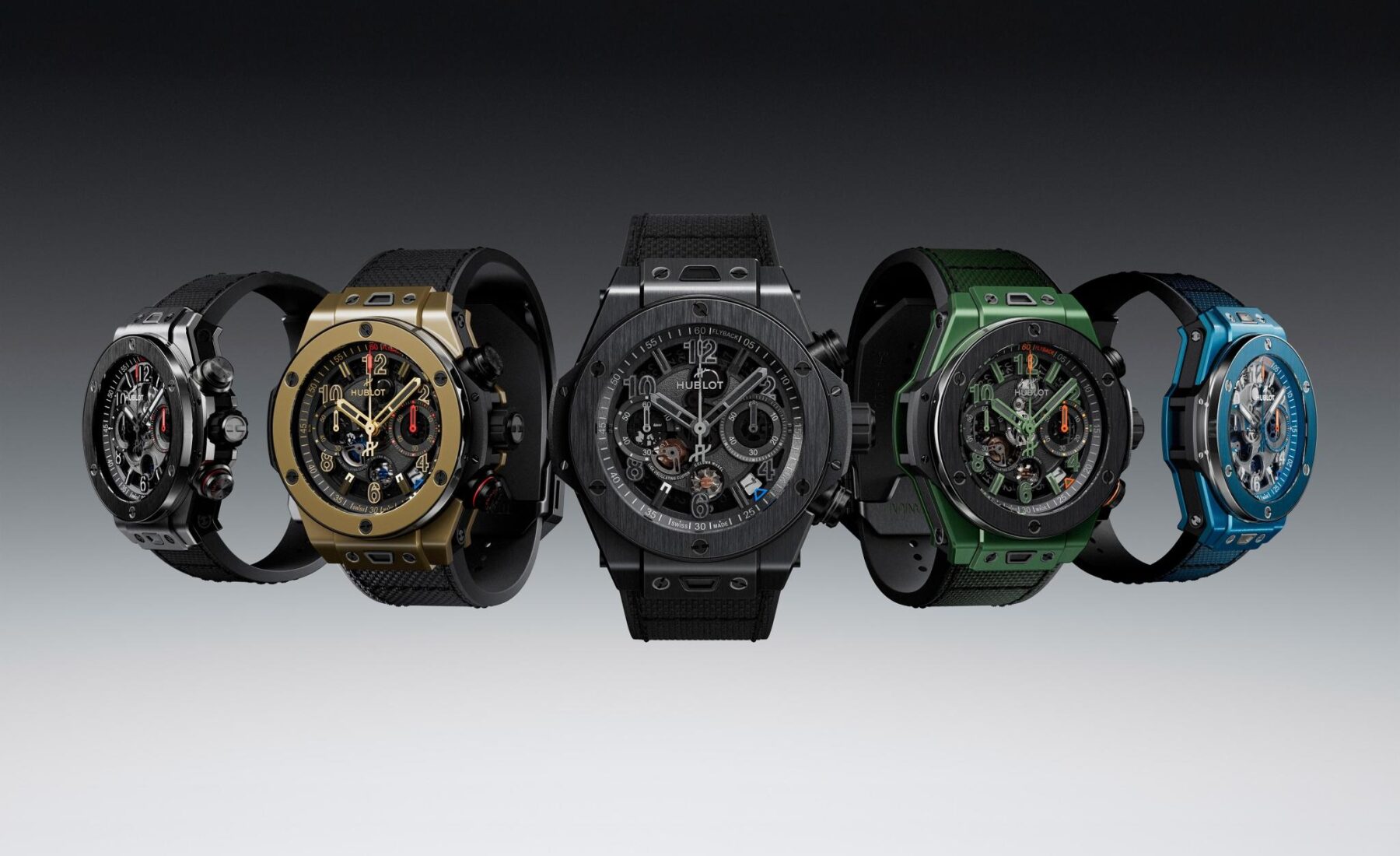
Hublot's 2026 Watches and Wonders presentation marked a dual anniversary: 20 years since the "All Black" concept redefined what a luxury watch could look like, and 15 years since the introduction of Magic Gold — Hublot's proprietary scratch-resistant gold alloy.Rather than mark these anniversaries with faithful reproductions of the watches that originally carried these ideas, Hublot did something more characteristic of the brand's identity: it re-engineered the open-worked Big Bang Unico from the inside out, placing the in-house HUB1280 movement's mechanical architecture more visibly at the centre of the design than ever before, across five references — one for each of the materials that have defined the Big Bang's twenty-year history.Alongside this anchor collection, Hublot returned to its Impact concept — a decade after the original 2016 Big Bang Impact Bang's "shattered diamond" motif — with three new Spirit of Big Bang Impact limited editions in ceramic, crystallised osmium, and, most significantly, a Sapphire Jewellery edition that achieves something no Hublot watch has done before: diamonds set directly into a polished sapphire case.
Big Bang & Spirit of Big Bang
Twenty years of material innovation, re-engineered.
The 2026 Watches and Wonders novelties show Hublot at its most coherent: five references that map the brand’s history through titanium, ceramic, and Magic Gold, alongside a world-first technique setting diamonds directly into sapphire.
In brief: why this collection matters
Hublot’s 2026 Watches and Wonders presentation marked a dual anniversary: 20 years since the “All Black” concept redefined what a luxury watch could look like, and 15 years since the introduction of Magic Gold — Hublot’s proprietary scratch-resistant gold alloy. Rather than mark these anniversaries with faithful reproductions of the watches that originally carried these ideas, Hublot did something more characteristic of the brand’s identity: it re-engineered the open-worked Big Bang Unico from the inside out, placing the in-house HUB1280 movement’s mechanical architecture more visibly at the centre of the design than ever before, across five references — one for each of the materials that have defined the Big Bang’s twenty-year history.
Alongside this anchor collection, Hublot returned to its Impact concept — a decade after the original 2016 Big Bang Impact Bang’s “shattered diamond” motif — with three new Spirit of Big Bang Impact limited editions in ceramic, crystallised osmium, and, most significantly, a Sapphire Jewellery edition that achieves something no Hublot watch has done before: diamonds set directly into a polished sapphire case.
HUB1280 Unico
What “Reloaded” actually means mechanically.
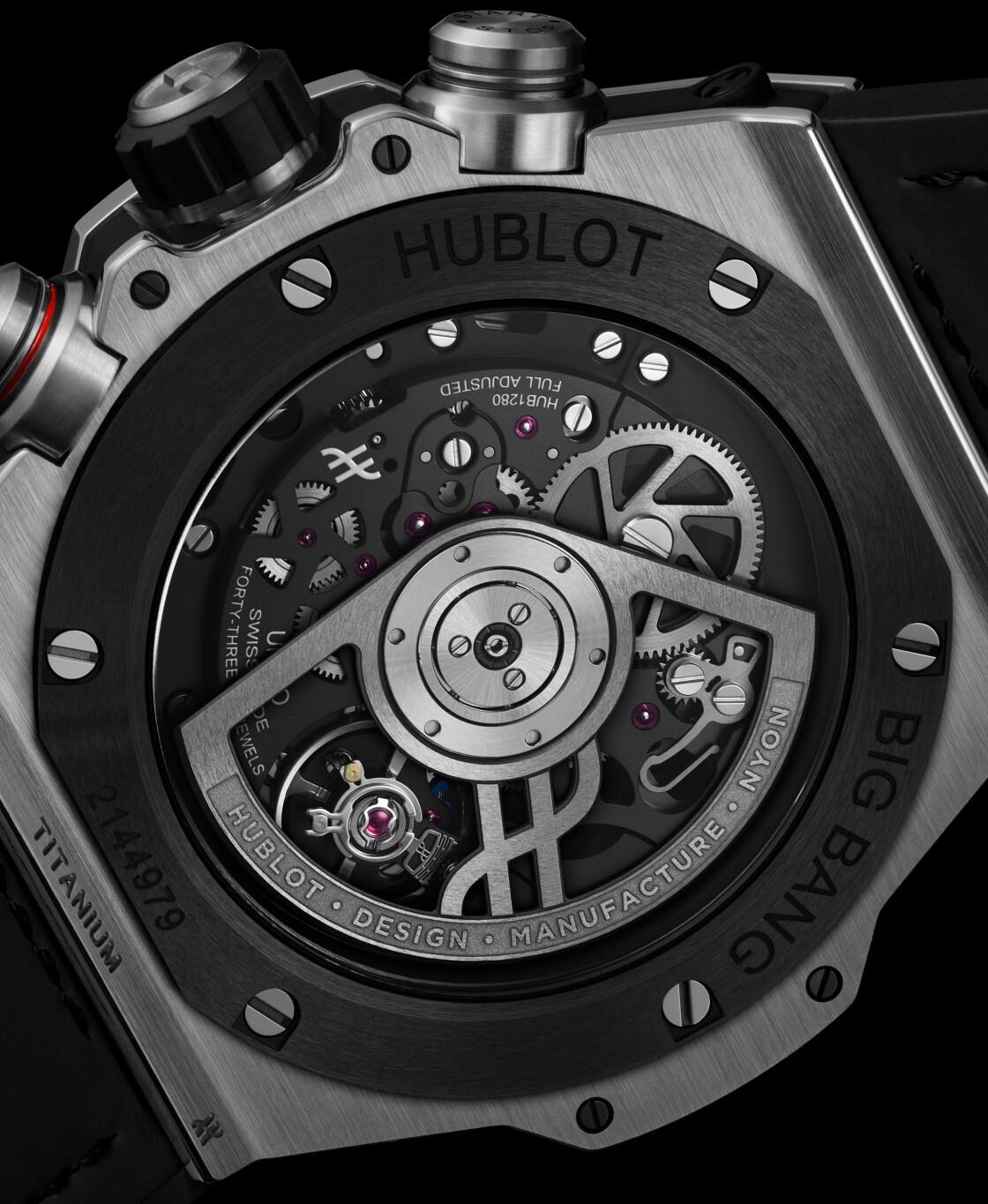
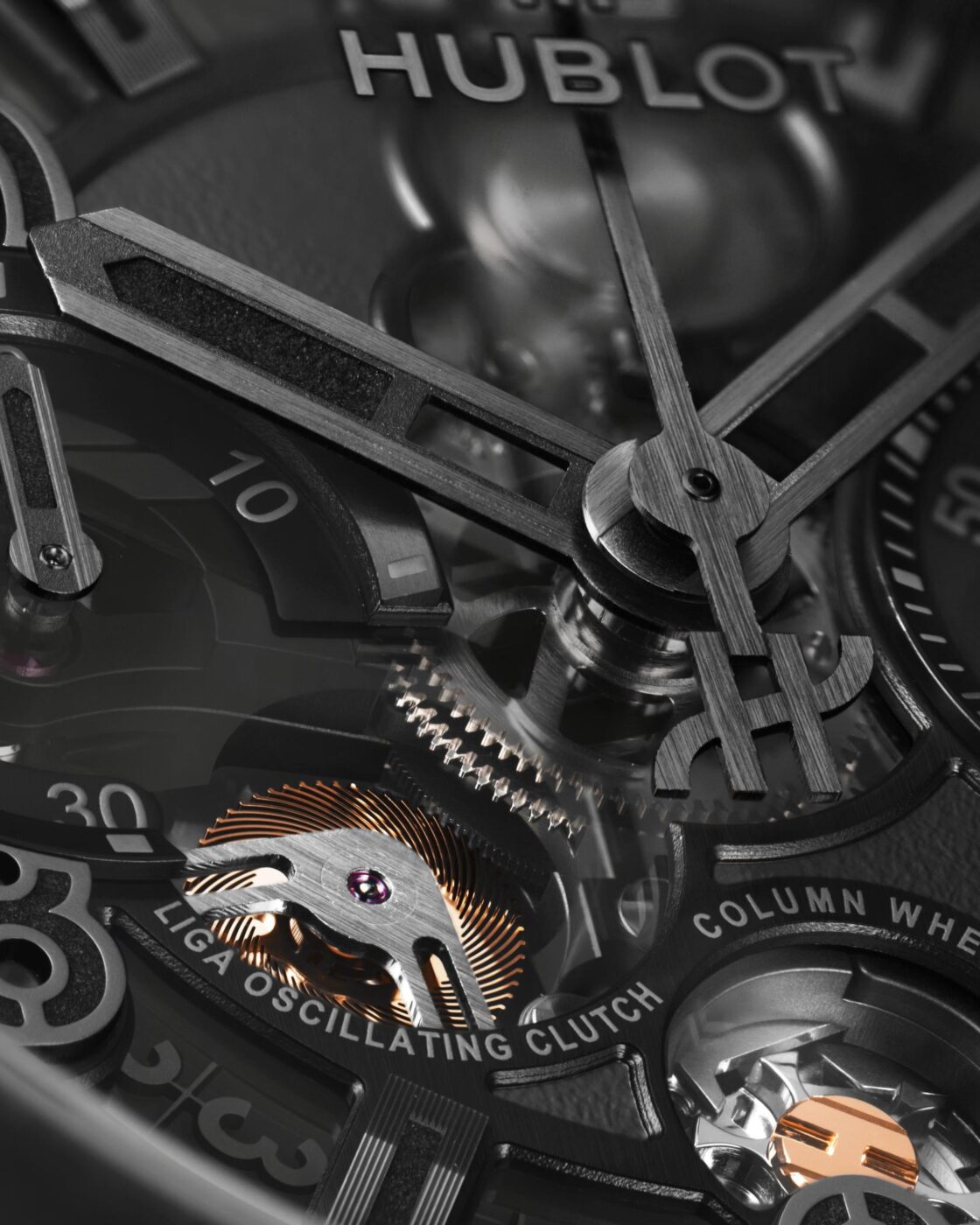
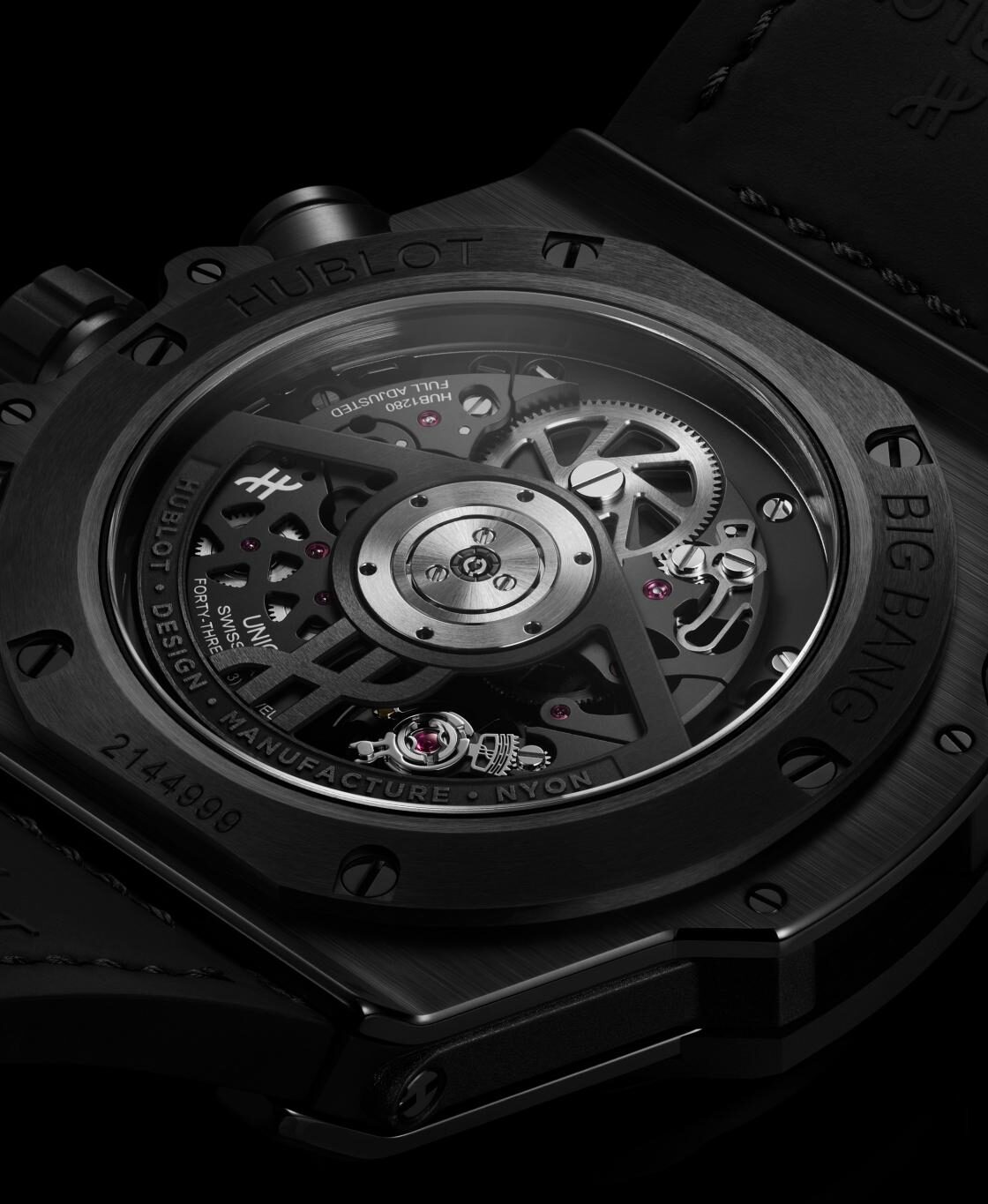
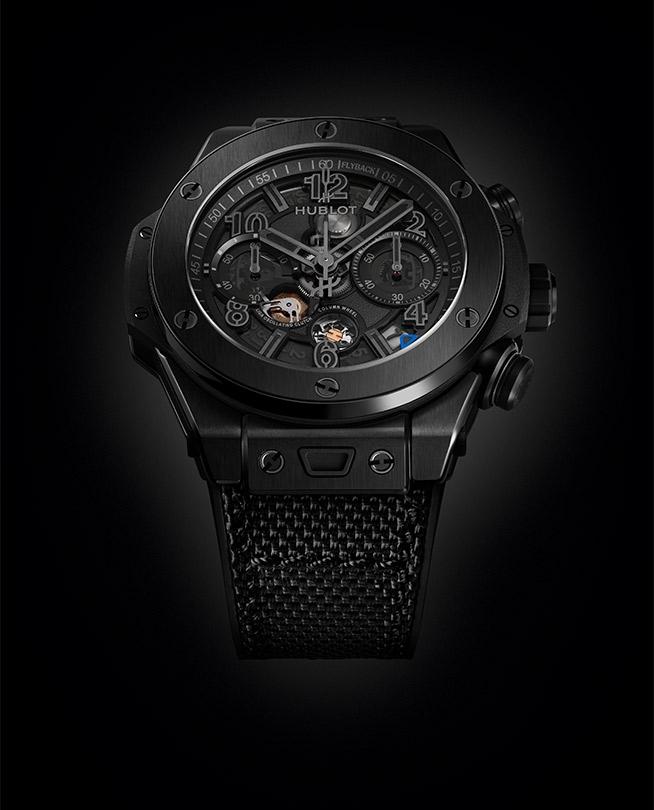
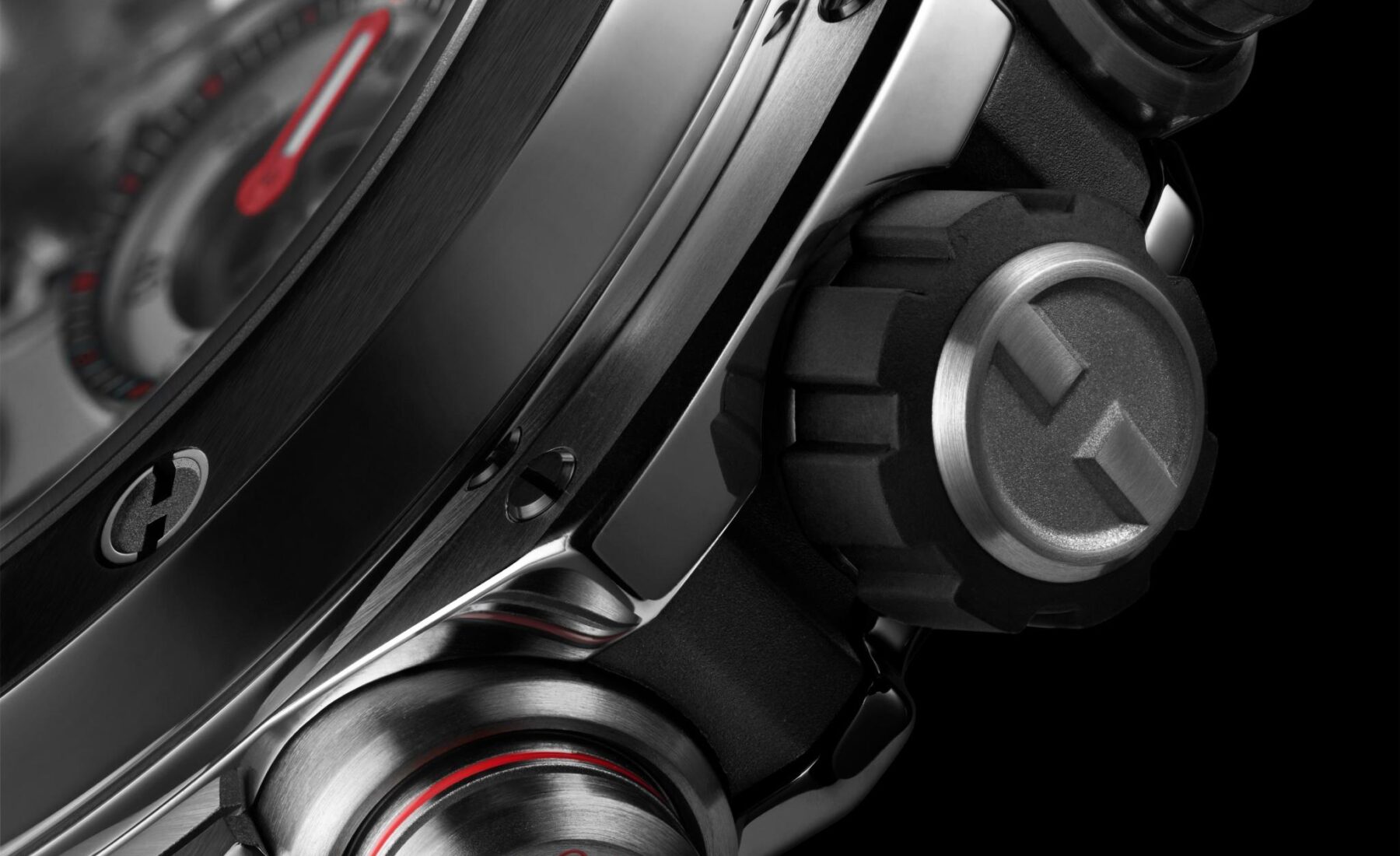
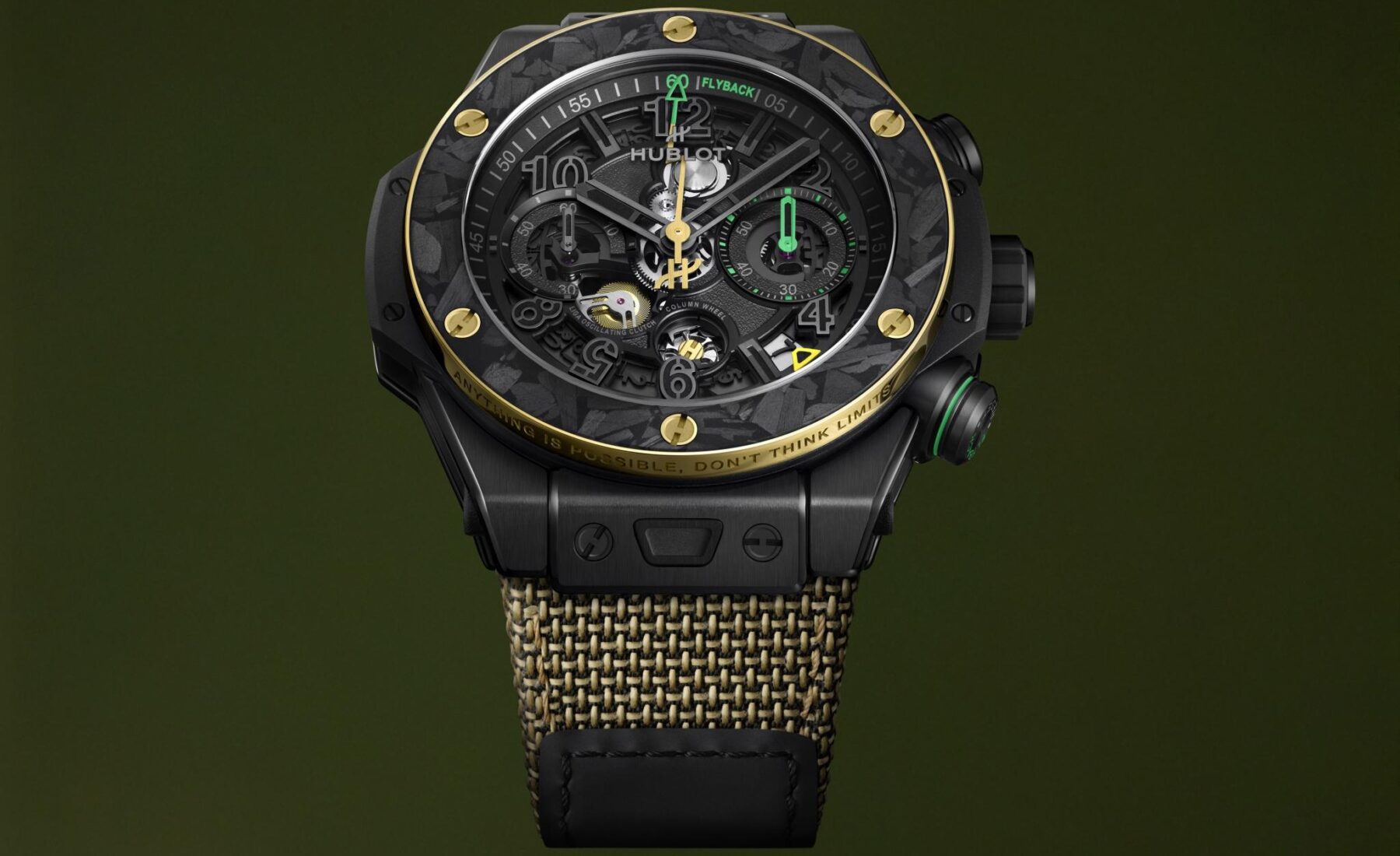
The Big Bang Reloaded is described by Hublot and by reviewers as “a sharper evolution of the Unico platform” — and the changes, while not altering the watch’s fundamental architecture, are concentrated specifically on improving how the HUB1280 Unico movement is presented to the eye. The column wheel, positioned at 6 o’clock, and the dual oscillating clutch, positioned at 8 o’clock, have been given new colours specifically to improve contrast and legibility against the rest of the open-worked movement.
By recolouring the column wheel and clutch specifically, Hublot is using colour as a wayfinding tool within the movement’s architecture — directing the eye to the two components most central to the chronograph’s operation. The new two-part bezel construction adds physical depth to the case’s silhouette while also serving the practical function of accommodating Hublot’s One-Click strap-change system more elegantly than a single-part bezel would allow.
- Movement
- HUB1280 Unico Flyback
- Frequency
- 28,800 vph (4 Hz)
- Power Reserve
- 72 hours
- Escapement
- Silicon column-wheel chronograph
The Art of Fusion — A philosophy with a 1980 origin date
To understand why a 2026 watch collection organised entirely around case materials makes sense as Hublot’s anniversary statement, it helps to go back to 1980. That year, at Baselworld, Hublot disrupted the watchmaking category by pairing gold with rubber — a combination that, at the time, would have seemed almost contradictory: gold, the material of traditional luxury and permanence, combined with rubber, a material associated with sport, utility, and disposability. This pairing was not a styling choice layered onto an existing design; it was the design’s premise. The watch existed to demonstrate that two materials from opposite ends of watchmaking’s traditional material hierarchy could be combined, and that the combination itself could be the luxury statement.
This 1980 origin established what Hublot now calls its “Art of Fusion” — a material-first philosophy that the brand, since joining LVMH in 2008, has steadily developed into its core identity, positioning itself as what one publication called “watchmaking’s sporty high-jeweler.” The Big Bang, introduced in 2005, took this philosophy and built an entire watch family around it: a bold, architectural case design whose primary variable, across two decades of references, has consistently been material rather than complication or dial layout. Twenty years later, the 2026 Big Bang Reloaded collection makes this explicit by organising itself as, in one publication’s words, “a material manifesto.”
The five materials — A tour through twenty years of Hublot’s R&D
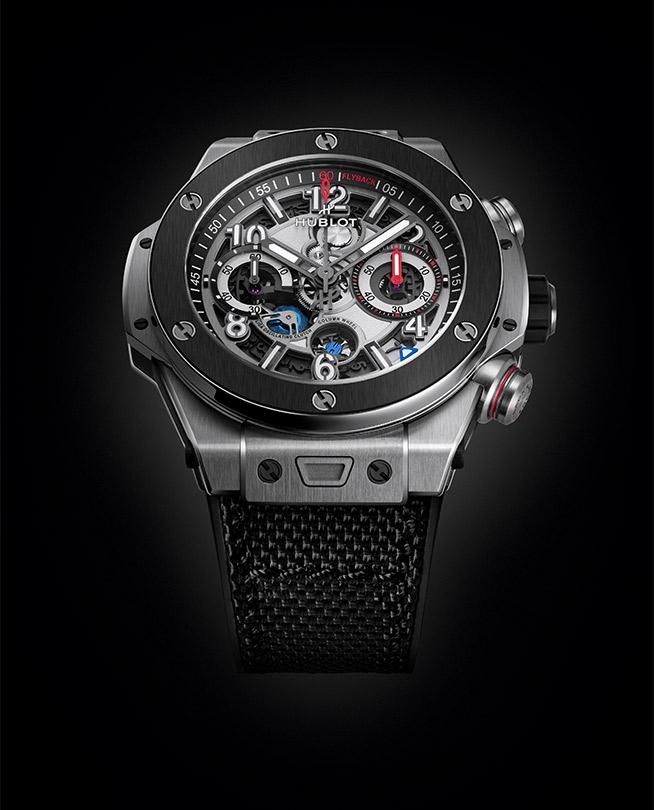
Titanium ceramic — The combination of titanium and ceramic represents Hublot’s most fundamental material pairing: titanium’s light weight and strength combined with ceramic’s scratch resistance and colour stability, a pairing that has anchored much of the Big Bang’s “everyday wearable” positioning across two decades.
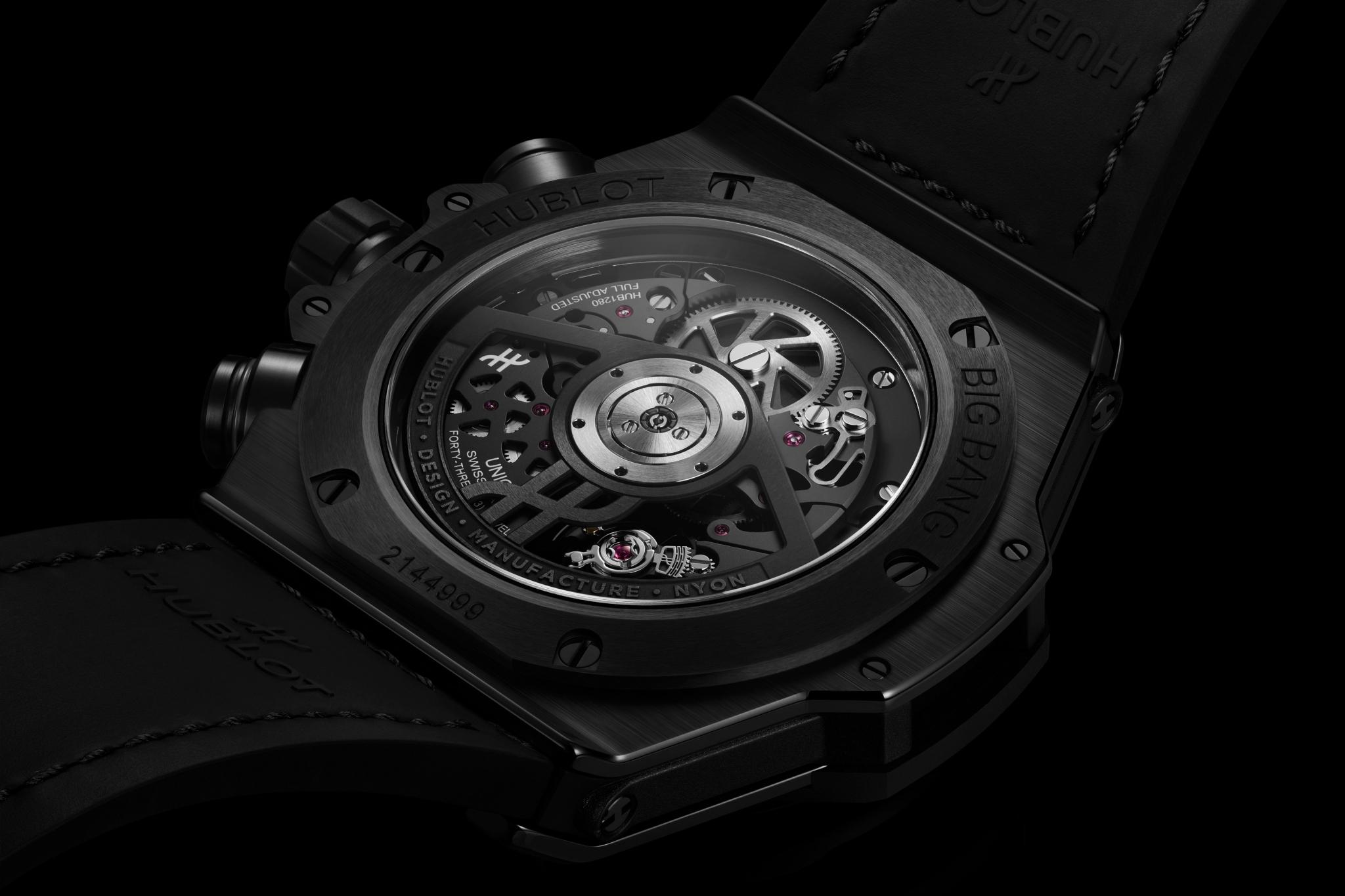
Black ceramic — Marking the 20th anniversary of the “All Black” concept specifically, the black ceramic reference is the most direct anniversary tribute in the collection. The All Black concept, when introduced, was itself a statement: an entirely monochromatic watch, case, dial, hands, and strap all rendered in black, at a time when this level of tonal commitment was unusual in luxury watchmaking.
Blue ceramic and dark green ceramic — These two references extend the All Black concept’s logic — full-case, full-dial colour commitment — into colours that represent more recent additions to Hublot’s ceramic palette. Ceramic’s colour stability under UV exposure makes it particularly well-suited to bold, saturated colours that need to remain consistent over years of wear.
18-carat Magic Gold — The alloy that “only a diamond can scratch” — Magic Gold is a proprietary alloy combining boron carbide — an extremely hard ceramic compound — with gold, engineered specifically to be “virtually scratch-proof,” with Hublot’s own claim being that only a diamond can scratch it. This is a genuinely significant material engineering achievement: gold, in its traditional 18-karat alloyed forms (yellow, white, rose), remains a relatively soft metal by industrial standards — which is precisely why gold watch cases have historically been prone to visible wear, scratching, and surface degradation over years of use.
The architecture of darkness.
The All Black concept remains one of Hublot’s most defining contributions to modern watch design: a full commitment to matte black textures that shift the focus from the case’s outline to the mechanical skeleton within.
Athlete Editions
Usain Bolt & Kylian Mbappé: 200 pieces each.
Alongside the five core Big Bang Reloaded references, Hublot introduced two 200-piece limited editions developed in partnership with Kylian Mbappé and Usain Bolt — both athletes with existing, multi-year relationships with the brand. The Big Bang Reloaded Usain Bolt edition shares the core collection’s 44mm × 14.5mm dimensions, with Hublot describing the edition as “reload[ing] Bolt’s legacy with renewed energy” in recognition of “over 15 years” of partnership.
These athlete editions sit within a broader pattern in Hublot’s brand strategy: shortly before Watches and Wonders 2026, Hublot announced K-Pop idol Jungkook as a new brand ambassador — a signal of the brand’s continued investment in cultural figures whose audiences extend well beyond traditional watch collecting circles.
- Collaboration
- Usain Bolt / Kylian Mbappé
- Limitation
- 200 pieces per reference
- Case
- 44mm carbon and black ceramic
- Accents
- Lightning bolt hand & gold indicators
The 2026 trio — Three different “extreme materials” arguments
The All Black ceramic edition, at 100 pieces, is positioned as the most “understated” of the three — a relative description, given the Impact concept’s inherently dramatic visual language, but one that situates this edition as the entry point to the trio.
The Sapphire & Osmium edition, limited to 30 pieces, pairs sapphire crystal construction with crystallised osmium — one of the rarest and densest naturally occurring elements, with a distinctive blue-grey crystalline structure that has become sought-after specifically because of its extreme rarity and its unique visual character.
Sapphire Jewellery — A manufacturing first
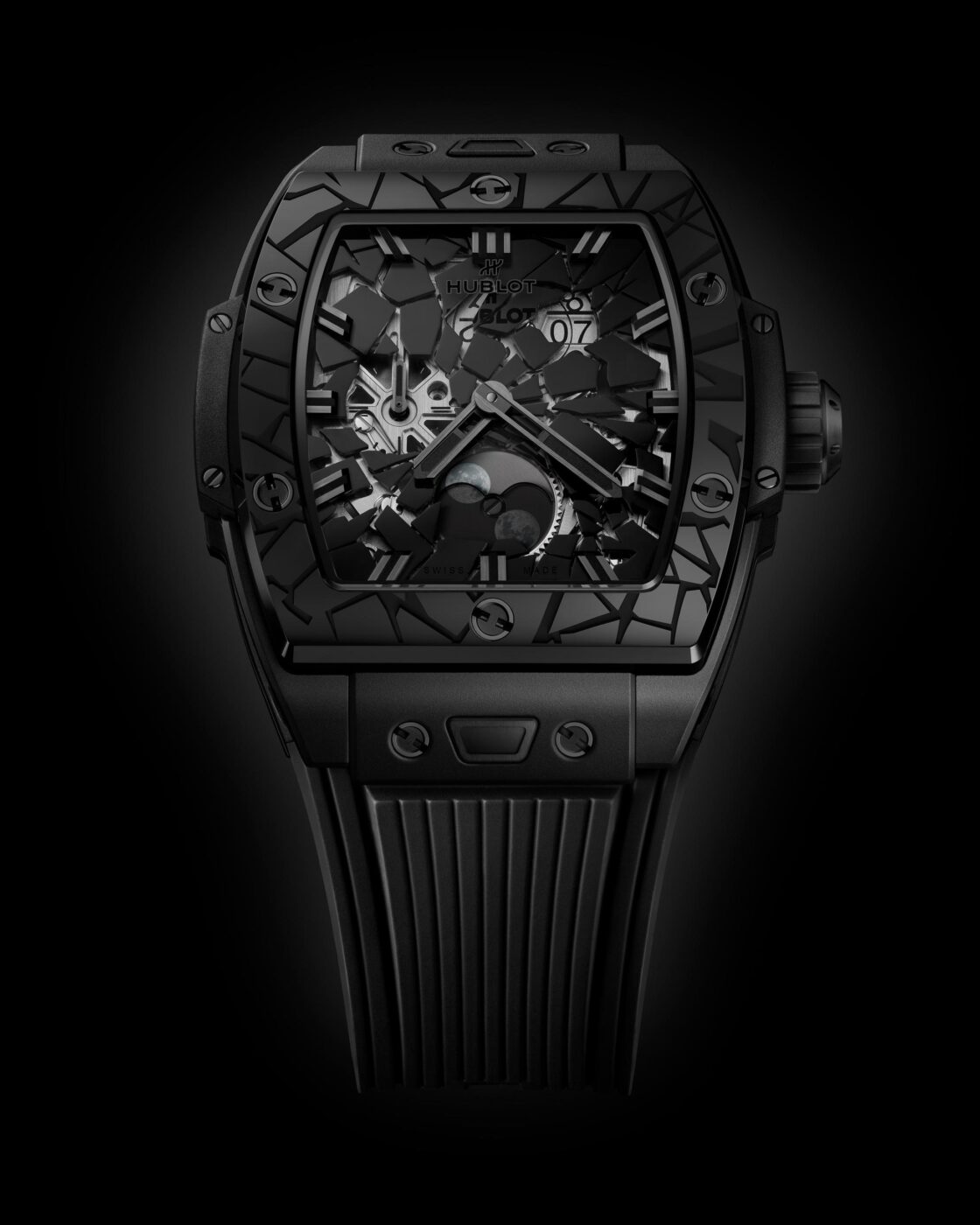
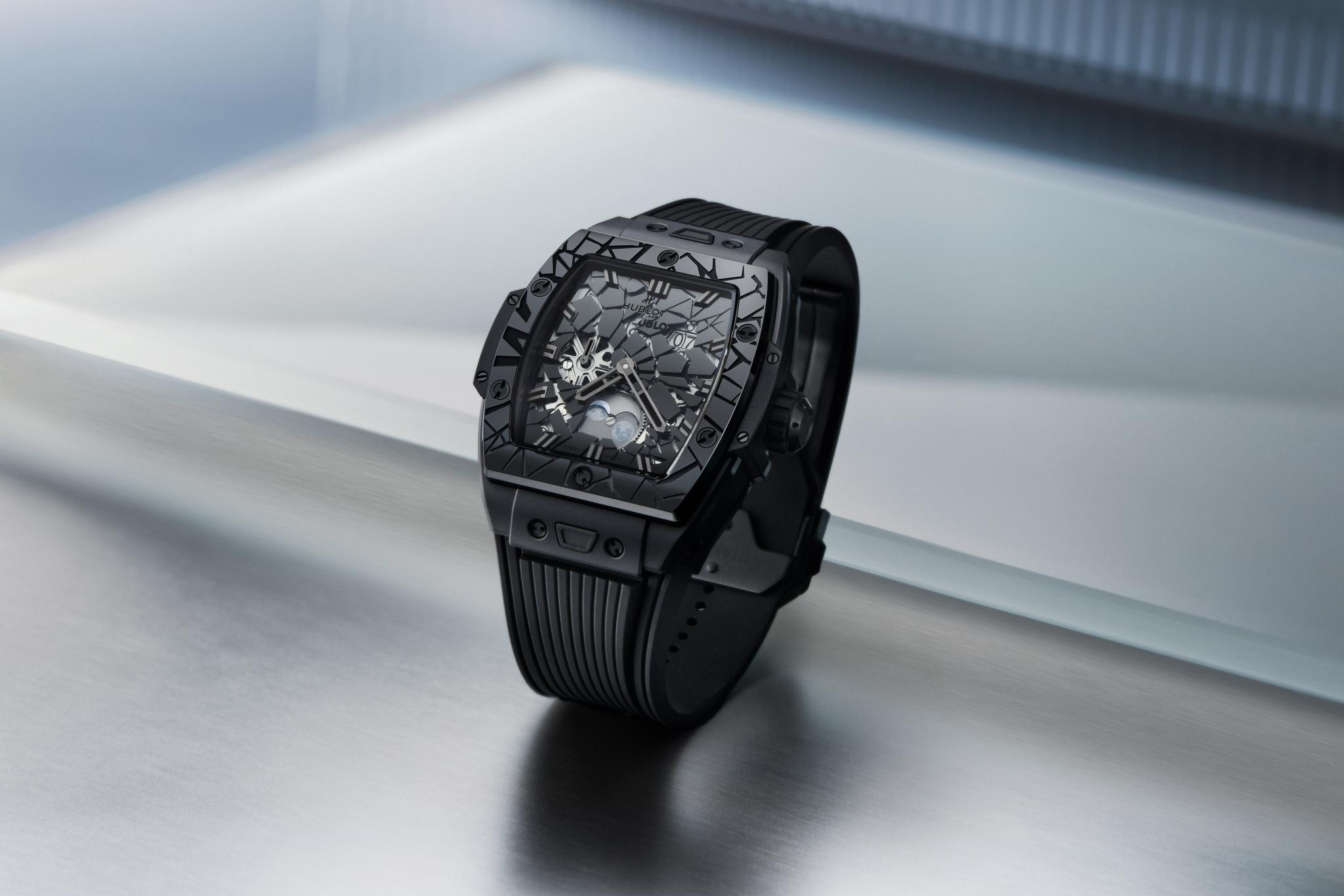
The third edition, Sapphire Jewellery, limited to 20 pieces, is the collection’s standout — and the claim behind it is specific and verifiable: Hublot sets diamonds directly into a polished sapphire case, described explicitly as “a world first for the brand.”
To understand why this is difficult, it helps to understand sapphire’s material properties. Sapphire registers 9 on the Mohs hardness scale, second only to diamond (10) among all materials. Cutting, shaping, drilling, or otherwise modifying a material that sits one step below diamond on the hardness scale requires tooling capable of working at that hardness level — and creating the precise mounts needed to set 145 fancy-cut diamonds into a sapphire case means laser-cutting mounting points.
Spirit of Big Bang Impact — Ten years later, sapphire meets diamonds.
The Spirit of Big Bang Impact’s return marks ten years since the original 2016 Big Bang Impact Bang introduced an avant-garde fragmented motif — an arrangement of interlocking diamonds creating the visual appearance that the watch’s surface had been struck and shattered. The 2026 trio takes this concept and applies it across three distinct material executions, cased in ceramic, crystallised osmium, and sapphire.
Beyond the headline collections
The Big Bang Reloaded and Spirit of Big Bang Impact represent the anchor of Hublot’s 2026 presentation, but the brand’s full Watches and Wonders and LVMH Watch Week 2026 slate extended considerably further — six launches in total at Geneva alone, including “a million-dollar diamond tourbillon” and “a joyful amethyst 33mm” — a wide spread that one reviewer summarised as Hublot positioning itself as “everywhere at once.”
Earlier in the year, Hublot had already introduced a Sage Green Classic Fusion trio — unisex timepieces inspired by “springtime in the Alps,” introducing a new colour to Hublot’s palette alongside the revival of a Milanese bracelet-style rubber strap, achieved by weaving threads at 45-degree angles into the rubber itself. The Classic Fusion Chronograph UEFA Europa League Titanium Carbon and a Novak Djokovic-linked piece rounded out a presentation that touched football, tennis, K-pop, and the Year of the Horse.
Reference guide
The 2026 Novelties in Numbers.
The key configurations and technical specifications of the Big Bang Reloaded and Spirit of Big Bang Impact collections.
HUB1280 Unico Flyback chronograph movement. Regular production references in titanium ceramic, black/blue/green ceramic, and Magic Gold.
HUB1280 Unico movement. Limited editions of 200 pieces each for Kylian Mbappé and Usain Bolt.
HUB1770 skeletonised automatic movement with moonphase and big date. Limited edition of 100 pieces.
HUB1770 movement. Unique sapphire and crystallised osmium case construction. Limited edition of 30 pieces.
HUB1770 movement. Sapphire case and bezel set with 145+91+54 fancy-cut diamonds. Limited edition of 20 pieces.
TheTimeo view
Hublot’s 2026 presentation answers a question that anniversary collections rarely answer well: what do you do when the thing you’re celebrating is not a single watch, but an attitude toward materials that has been right, repeatedly, for twenty years? The Big Bang Reloaded’s five references don’t ask anyone to choose a favourite era of Hublot’s history — they put titanium ceramic, the 20-year-old All Black concept, two contemporary ceramic colours, and the 15-year-old Magic Gold alloy on the same table, with the same re-engineered movement underneath each, and let the material itself make the argument for which decade of Hublot’s R&D speaks to a given collector.
And then, almost as a coda to that anniversary statement, Hublot did something that has nothing to do with anniversaries at all: it set diamonds into sapphire, a material that exists specifically because it resists almost everything, including — until now — the idea of being set with anything. “Hundreds of hours per case” is not a marketing phrase. It is the actual cost, in skilled labour, of making a material whose entire reputation is built on resistance accept ornamentation it was never designed to accept.
Twenty years after pairing gold with rubber felt disruptive, Hublot’s 2026 collection suggests the brand’s most interesting material story might not be about combining two things anymore — it might be about making one impossibly hard thing do something it shouldn’t be able to do at all.
Most watch brands treat material as a finish — something applied to a design that already exists. Hublot has spent twenty years treating material as the design itself. In 2026, on the anniversaries of the Big Bang and Magic Gold, the brand didn't reissue its history. It re-engineered it, and then, almost as an afterthought, became the first manufacture to set diamonds directly into sapphire.
TheTimeo editorial desk
Further stories from this world