
Watchmaking Intelligence / Flagship
Watches
Patek Philippe Nautilus 50th Anniversary: The Watch That Lost a Window and Gained Everything
A TheTimeo collector reading of the 2026 Patek Philippe Nautilus 50th Anniversary collection: Ref. 5610/1P, 5810/1G, 5810G and 958G.
TheTimeo view
The complication beneath the dial
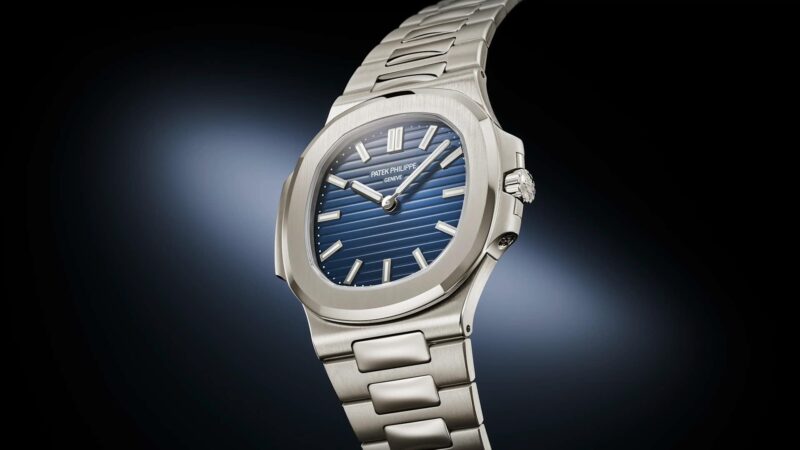
The Nautilus 50th Anniversary is the most important watch release of 2026 because Patek Philippe chose restraint over spectacle: two hands, no date, no seconds, precious metal cases and the Calibre 240 ultra-thin automatic movement.
Patek Philippe celebrated 50 years of the Nautilus not by adding, but by removing. No date. No seconds hand. Just the embossed blue dial, an ultra-thin case and the confidence of a manufacture that knows exactly what it is doing.
TheTimeo editorial desk
The visual edit
The object, frame by frame.
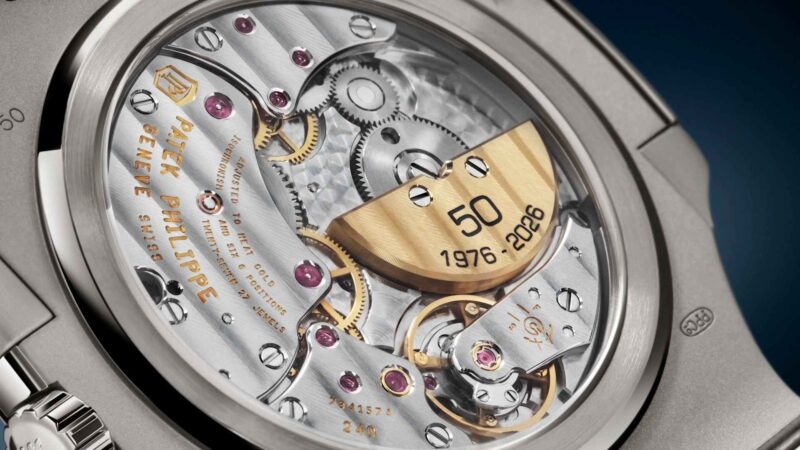
Calibre 240 with 22k gold micro-rotor engraved for the Nautilus 50th Anniversary. Image courtesy of Patek Philippe.
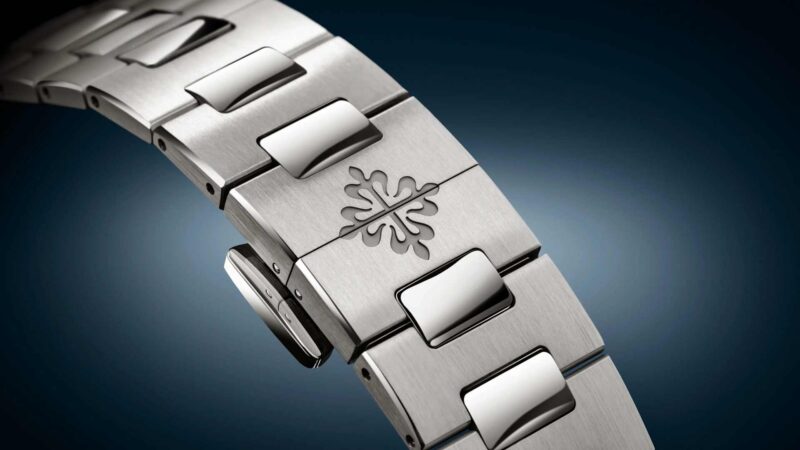
Integrated bracelet and clasp finishing with Calatrava cross detail. Image courtesy of Patek Philippe.
The signature mechanism
One command.
Three registers.
Move through the sequence to see how one split-second command changes character across seconds, minutes and hours.
The origin — Gérald Genta, 1976, and the watch nobody wanted
The Nautilus was introduced at the Basel watch fair in 1976, designed by Gérald Genta during a single overnight session on a paper napkin. The brief was unusual for the time: a luxury sports watch in steel, at a price that matched gold watches of the period. The case was modelled on a porthole — octagonal bezel, exposed screws, integrated bracelet — and the dial carried a horizontally embossed pattern that would become one of the most recognisable surfaces in horology.
The reference 3700 launched without a seconds hand and without a date. It was a two-hand watch, which in 1976 was considered reductive. Retailers were uncertain. Collectors were sceptical. Patek Philippe's own director reportedly said it was the most audacious thing the manufacture had ever done.
Fifty years later, the anniversary editions return to that original two-hand form. The decision to remove the date window — present in every major production Nautilus since the ref. 5711 — is the most significant editorial choice Patek Philippe has made in years. It is also the clearest signal of what the anniversary means to the manufacture: not a celebration of what the Nautilus became, but a tribute to what it was.
The four references — A complete collector reading
Ref. 5610/1P-001 — The platinum flagship
Case 38mm · Platinum 950 · 6.9mm thick Dial Sunburst blue · horizontally embossed · no date · no seconds Bracelet Integrated platinum bracelet · polished and satin-brushed finishing Movement Calibre 240 · 2.53mm height · 22k gold micro-rotor engraved "50 1976–2026" Power reserve Minimum 48 hours Water resistance 120 metres Limited edition 2,000 pieces Price CHF 90,000 · USD 112,529 · GBP 90,830
The 5610/1P is the flagship of the anniversary collection and the most historically resonant piece. The 38mm diameter mirrors the mid-size Nautilus references of the 1980s — particularly the ref. 3800 — a proportion that reads as more intimate and arguably more correct than the modern 41mm standard. In platinum, the case gains density without visual weight: the metal's slightly higher lustre distinguishes it from white gold at close range, and a single diamond set discreetly into the case side at 9 o'clock serves as the traditional Patek platinum marker.
The sunburst blue dial is unchanged in code but transformed in effect. Without the date window breaking the horizontal embossing at 3 o'clock, the surface reads as a continuous architectural motif — a field of light that shifts between deep navy and bright steel blue depending on the angle. The applied white gold baton-style hour markers and the rounded baton hands, both with white luminescent coating, give the dial its hierarchy without interrupting the surface's integrity.
The Calibre 240 is the movement that makes this watch possible. Measuring 27.5mm in diameter and just 2.53mm in height, it is one of the thinnest automatic movements in Patek Philippe's production history. The off-centred 22k gold micro-rotor — engraved with the anniversary inscription — winds the mainspring with an efficiency that keeps the total case height at 6.9mm. By comparison, the ref. 5711, the standard production Nautilus this anniversary references, measured 8.3mm. The reduction is not cosmetic; it changes how the watch sits on the wrist.
The 5610/1P is the reference a collector with one choice should choose. The platinum case, the 38mm diameter, and the 2,000-piece cap make it the most historically positioned piece in the collection. On the wrist, it does not announce itself. That is its authority.
Ref. 5810/1G-001 — White gold, 41mm, integrated bracelet
Case 41mm · 18k palladium white gold · 6.9mm thick Dial Sunburst blue · horizontally embossed · white gold baton markers · no date · no seconds Bracelet Integrated white gold bracelet · polished and satin-brushed finishing Movement Calibre 240 · 22k gold micro-rotor engraved "50 1976–2026" Power reserve Minimum 48 hours Limited edition 2,000 pieces Price CHF 75,000 · USD 93,774 · GBP 75,690
The 5810/1G is the direct descendant of the ref. 5711 in anniversary form. At 41mm it carries the proportions that contemporary collectors know best, and the white gold integrated bracelet — with its alternating polished and satin-brushed surfaces — is the Nautilus bracelet at its most refined. The absence of the seconds hand is more striking on the 41mm than on the 38mm: on a larger dial, the centre becomes emptier, and that emptiness is the point. The watch does not hurry. It displays hours and minutes, and nothing else.
For a collector who already has a 5711 in steel or gold: the 5810/1G is the anniversary companion, not a replacement. Different metal, different thickness, different feeling. Both are necessary.
Ref. 5810G-001 — White gold, 41mm, composite strap
Case 41mm · 18k palladium white gold · 6.9mm thick Dial Sunburst blue · baguette-cut diamond hour markers · no date · no seconds Strap Navy-blue composite material · fabric pattern · contrasting cream stitching Movement Calibre 240 · 22k gold micro-rotor engraved "50 1976–2026" Power reserve Minimum 48 hours Limited edition 1,000 pieces Price CHF 59,500 · USD 75,019
The 5810G introduces a diamond chapter to the anniversary. Baguette-cut white gold hour markers replace the standard batons, and the navy-blue composite strap with cream stitching gives the watch a deliberately casual register — as if the diamonds needed softening. The 1,000-piece allocation is the most restricted of the wristwatch references, which places it in a different collecting category: fewer pieces, more distinctive aesthetic, and a client profile closer to jewellery than pure horology.
The most wearable piece in the collection for daily use. The strap changes the weight equation and the silhouette entirely. The baguette markers make it the most visually distinctive of the three wristwatch references.
Ref. 958G-001 — The desk clock
Case 50.65mm · 18k palladium white gold · 13.5mm height Dial Blue embossed · baguette-diamond hour markers · engraved caseback with Calatrava cross Movement Hand-wound 31-505 8J PS IRM CI J · 8-day power reserve · two barrels Complications Hours · minutes · date by hand · day of week · small seconds · power reserve Limited edition 100 pieces Price CHF 200,000+ · USD 256,315 · GBP 206,880
The desk clock is the anniversary object for those who already have everything. At 50.65mm in a Nautilus-shaped white gold case, it converts into a desk clock — the hinged back stands upright, transforming the same porthole case geometry into a table companion. The hand-wound movement with 8-day power reserve and calendar complications gives the object a technical narrative entirely different from the wristwatches: this is not about thinness or restraint, but about ceremony. The engraved caseback carries the caption "50th Anniversary Nautilus 1976–2026 Patek Philippe" and the Calatrava cross. At 100 pieces, it is the rarest object in the collection and the most explicit in its commemorative intention.
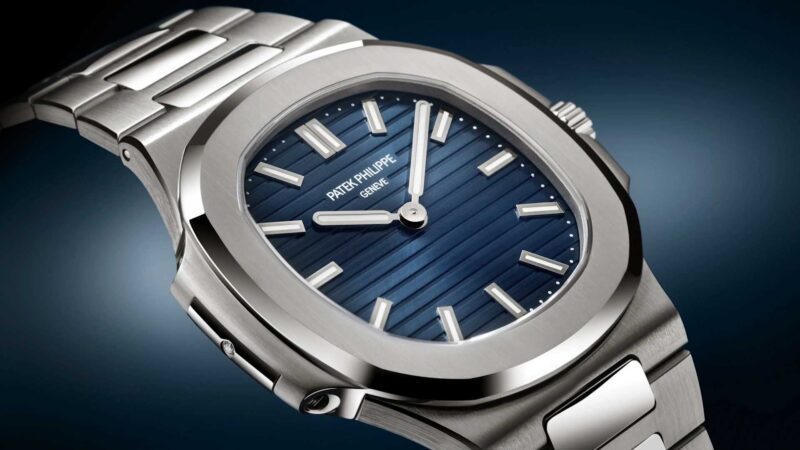
Patek Philippe Nautilus 50th Anniversary wristwatch in precious metal with blue embossed dial and integrated bracelet. Image courtesy of Patek Philippe.
The movement — Calibre 240 and why it matters
The Calibre 240 is not a new movement. It was introduced in 1977 — one year after the Nautilus — and its presence in the anniversary editions is deliberate. Patek Philippe is not using the 50th anniversary to debut a new complication or a new architecture. It is using a movement that has been part of the manufacture's vocabulary for almost as long as the watch itself.
The technical case for the Calibre 240 is straightforward: at 2.53mm in height, it remains one of the thinnest automatic movements in the world. The off-centred micro-rotor — rather than a full oscillating weight — is what allows the movement to be so flat. The 22k gold rotor is positioned at the periphery of the movement, leaving the central area visible and the overall profile minimal.
At 21,600 vph (3Hz), the movement runs at a lower frequency than many modern alternatives, which gives it a longer power reserve from a smaller mainspring — minimum 48 hours in current specification, typically closer to 60 hours in daily use. The Gyromax balance and Spiromax balance spring, both Patek Philippe proprietary technologies, give the calibre a stated accuracy of -1/+2 seconds per day — a performance standard that most competitors cannot match at this case thickness.
For the 50th anniversary, each micro-rotor is engraved with "50 1976–2026." It is visible through the sapphire caseback, and it is the only explicit commemorative text on the wristwatches. Everything else about the anniversary is communicated through proportion, material, and omission.
The design argument — What subtraction looks like
Patek Philippe's anniversary decision to remove the date window from the wristwatches is the most discussed design choice of Watches and Wonders 2026. It requires some context to understand why.
The ref. 5711 — the standard production Nautilus that Patek Philippe discontinued in 2021 — has a date window at 3 o'clock. On the horizontally embossed dial, this window interrupts the embossing at its most visible point: the midline, where the embossed texture is most pronounced and the sunburst effect most dramatic. Generations of Nautilus collectors accepted this interruption as part of the design. It was always there.
The anniversary editions remove it. The result is a dial that reads as complete for the first time — the embossing runs uninterrupted across the full surface, the sunburst effect is unbroken, and the negative space at the centre (where the seconds hand used to be) becomes part of the composition rather than an absence. The hands describe an arc, and the eye follows them across a surface that has no interruption.
This is not a simplification. It is a correction. The original ref. 3700 of 1976 did not have a seconds hand. The anniversary editions return to that original logic, and in doing so make the case that the definitive Nautilus was always the purest one.
Calibre L132.1
The command becomes architecture.
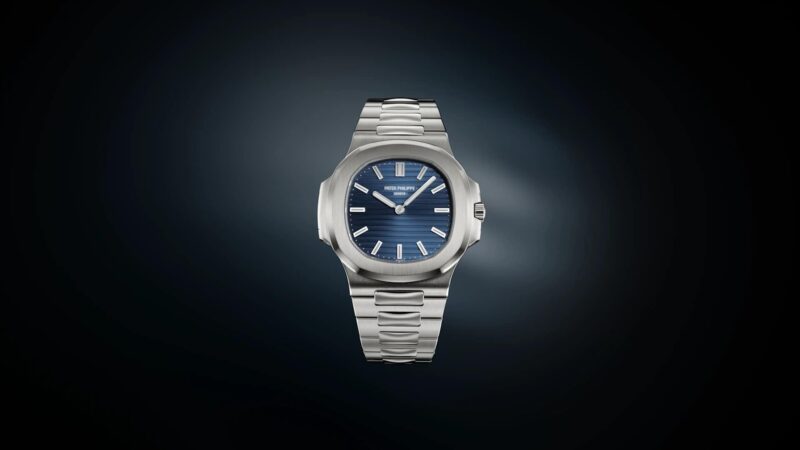
Nautilus 50th Anniversary two-hand wristwatch with uninterrupted blue embossed dial. Image courtesy of Patek Philippe.
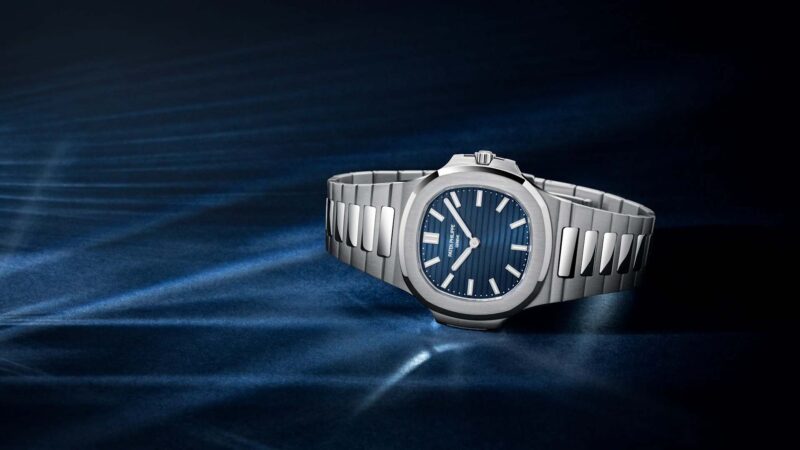
Nautilus 50th Anniversary low-profile case and bracelet composition. Image courtesy of Patek Philippe.
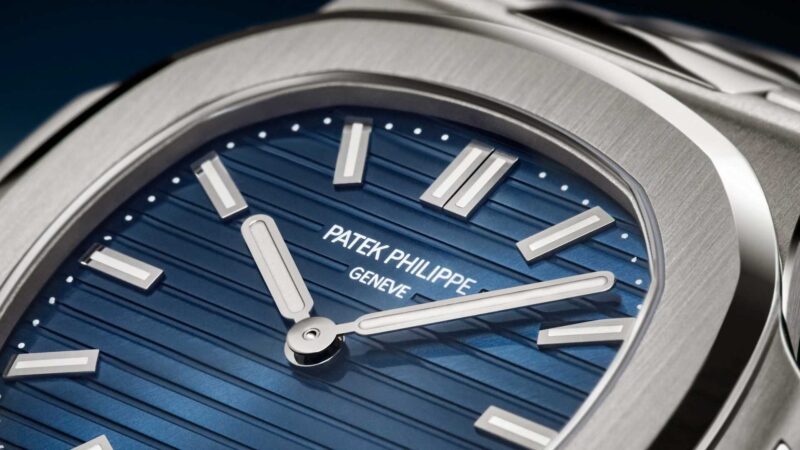
Blue horizontally embossed dial without date window or seconds hand. Image courtesy of Patek Philippe.
Mechanical context
The architecture, in two acts.
Ref. 5610/1P · the platinum flagship
The 38mm platinum reference is the most historically resonant wristwatch of the anniversary collection.
- Range
- 38mm
- Display
- 6.9mm
- Control
- Calibre 240
- Isolation
- CHF 90,000
- Flyback
- Minimum 48 hours
Ref. 5810/1G · the modern standard
The 41mm white gold bracelet reference translates the 5711 memory into anniversary form.
- Range
- 41mm
- Display
- 6.9mm
- Control
- Calibre 240
- Isolation
- CHF 75,000
- Flyback
- Minimum 48 hours
Why no steel — The precious metal strategy
Every reference in the 50th anniversary collection uses platinum or 18k palladium white gold. There is no steel Nautilus in the anniversary lineup, and Patek Philippe has not produced a steel Nautilus for public sale since the discontinuation of the ref. 5711 in 2021.
This is a deliberate positioning decision. The manufacture is defining the anniversary as a precious metal event, which places these references explicitly in the collector and investor tier rather than the accessible aspirational tier. The signal to the market is clear: the Nautilus 50th anniversary is not a democratic celebration. It is a limited allocation exercise aimed at established Patek Philippe clients and collectors with track records at authorised dealers.
The secondary market implications are significant. The ref. 5711/1P — the 40th anniversary Nautilus in platinum, limited to 700 pieces in 2016 — saw secondary market prices more than triple from launch to 2026. The 2026 anniversary editions have substantially higher production caps (2,000 pieces for the flagship 5610/1P versus 700 for the 5711/1P) but the demand profile is also substantially larger. Historical Patek capped-production anniversary references have documented 10–15 year appreciation curves that outperform most comparable luxury investment categories.
Collector relevance — How to read the 50th anniversary as an investment
The four anniversary references serve different collector profiles:
Primary target — Platinum 5610/1P: The flagship. Smallest case, rarest metal, most historically correct proportions. For a collector building a focused Nautilus set, the 5610/1P should take priority. The 38mm diameter also broadens the potential buyer base to include collectors who find the 41mm references too large.
Secondary target — White gold 5810/1G: The modern standard. At 41mm on an integrated bracelet, this is the Nautilus format that a generation of collectors knows best. The white gold construction and the slimmer profile relative to the 5811 give it clear differentiation from existing production references.
Completion target — White gold 5810G: The most restricted wristwatch at 1,000 pieces. The baguette diamond markers and composite strap give it a distinct aesthetic identity. For a collector building the complete anniversary set, this is the final piece.
Display target — Desk clock 958G: At 100 pieces, this is a rarity play rather than a wearability argument. Its value is commemorative and display-oriented — a Nautilus-form object that celebrates the occasion in a different dimensional language.
Key specifications — Reference table
Explore the comparison
| Reference | Metal | Diameter | Thickness | Movement | Edition | Price (CHF) |
|---|---|---|---|---|---|---|
| 5610/1P-001 | Platinum 950 | 38mm | 6.9mm | Cal. 240 | 2,000 pieces | 90,000 |
| 5810/1G-001 | 18k white gold | 41mm | 6.9mm | Cal. 240 | 2,000 pieces | 75,000 |
| 5810G-001 | 18k white gold | 41mm | 6.9mm | Cal. 240 | 1,000 pieces | 59,500 |
| 958G-001 | 18k white gold | 50.65mm | 13.5mm | 31-505 8J | 100 pieces | 200,000+ |
TheTimeo view
The Nautilus 50th anniversary is Patek Philippe at its most confident and its most historically honest. The manufacture did not use the milestone to introduce a new movement, a new complication, or a new dial colour. It used it to remove things: the date, the seconds hand, the steel, the rose gold, the open production. What remains is the Nautilus in its most essential form — embossed blue dial, ultra-thin case, integrated bracelet, two hands, and 50 years of cultural weight.
That is the real anniversary argument. Not what the Nautilus has become, but what it always was: a watch designed to be worn by someone who did not need to prove anything.
For collectors who understand the distinction between a watch that displays luxury and a watch that embodies it, the 2026 anniversary editions are the clearest answer Patek Philippe has given in a decade.
Further Nautilus intelligence
- Explore the Nautilus 50th Anniversary at Patek Philippe
- Ref. 5610/1P-001 official page
- Ref. 5810/1G-001 official page
- Ref. 5810G-001 official page
- Ref. 958G-001 desk clock official page
TheTimeo is an independent editorial magazine dedicated to fine watchmaking, high jewellery and the culture of enduring luxury. All specifications are verified against official Patek Philippe sources at time of publication. Prices are indicative and vary by market.
The Edit
Stories selected by TheTimeo
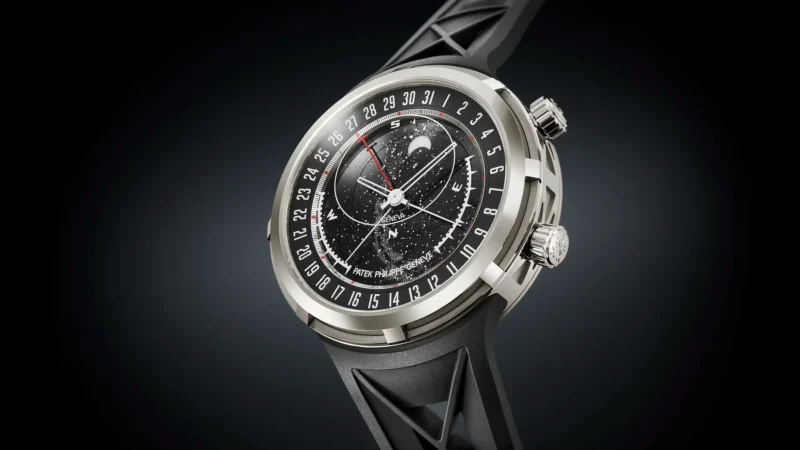
Patek Philippe Ref. 6105G: What a Sunrise-and-Sunset Celestial Actually Displays
The Ref. 6105G is not one astronomical display but several kinds of time negotiated
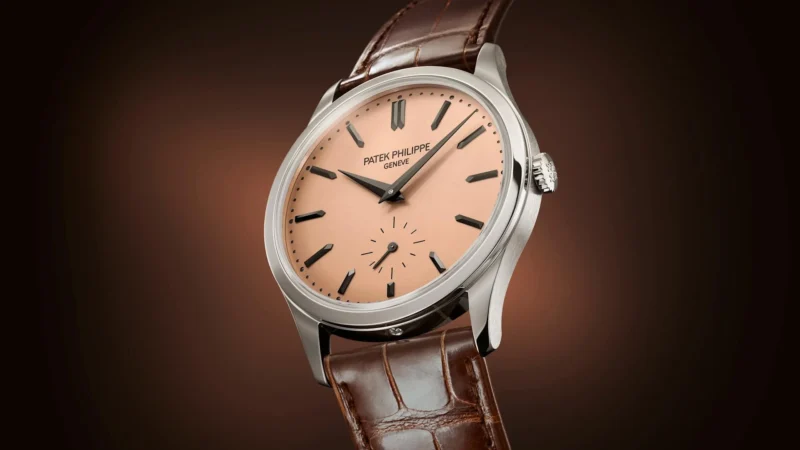
Patek Philippe: what references and archives reveal
A reference identifies the design; an archive extract adds part of its history. How
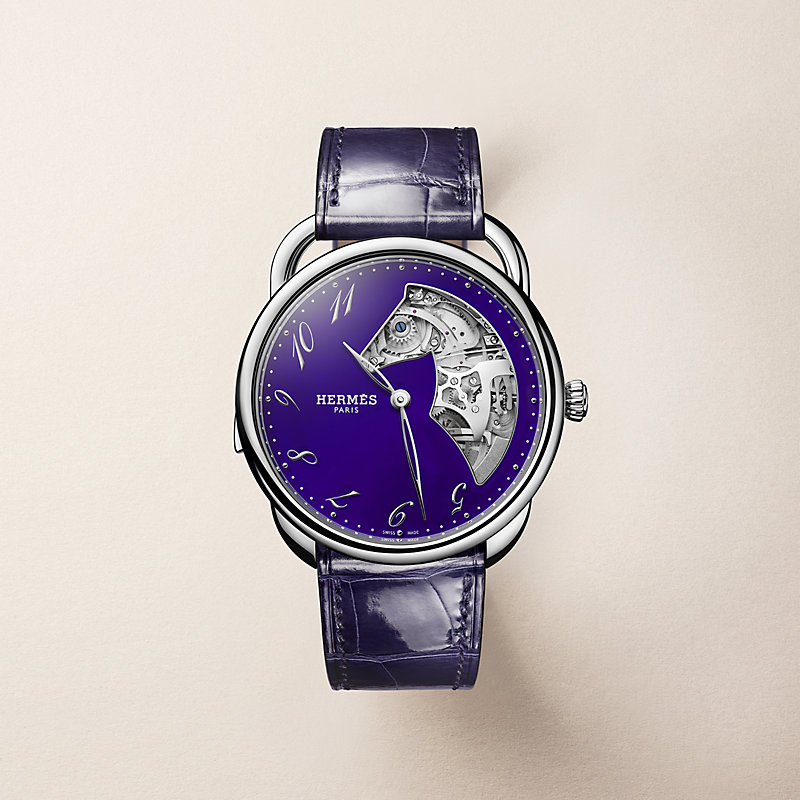
A Horse in Crystal: Hermès Arceau Samarcande
On the Arceau Samarcande W408546WW00, Hermès cuts a horse into a Saint-Louis crystal dial
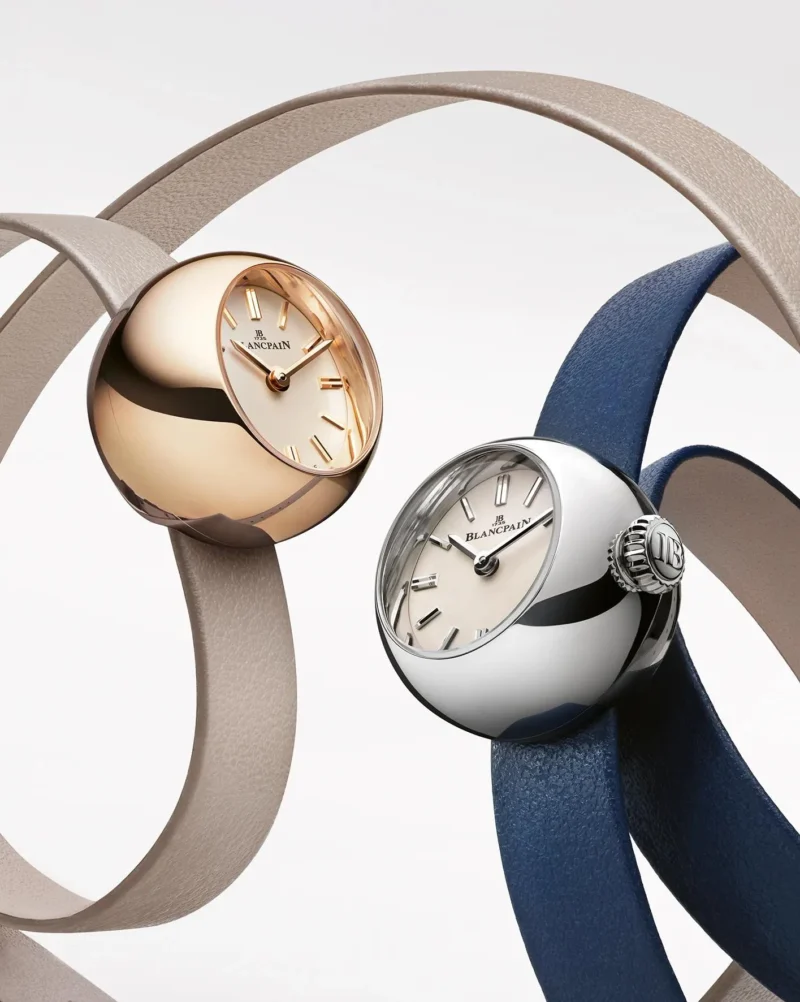
Blancpain Lady B: What Does 19 Millimetres Require?
Blancpain’s 19 mm Lady B is best understood as an exercise in mechanical volume:
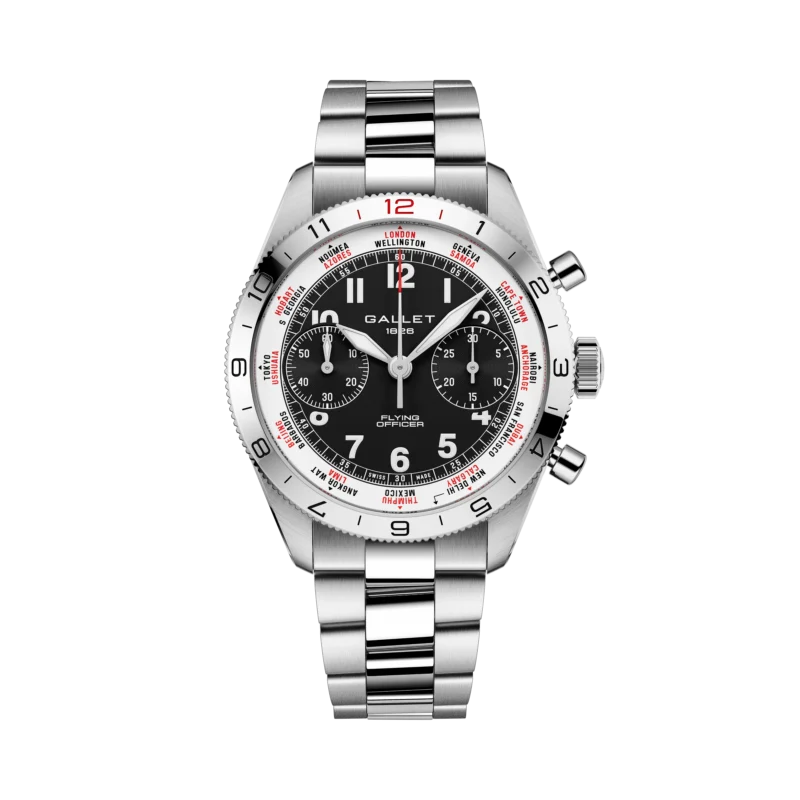
When Is a Revived Watch Brand Still the Same Brand? Testing the New Gallet Against the Archive
The archive is real and the manufacturing system is new. We test Flying Officer,
Ferdinand Berthoud FB 3SPC.4-1: Why Bend a Balance Spring into a Cylinder?
The black titanium case is new. The harder achievement is regulating a cylindrical spring