
Fine Watchmaking Deep Dive
WatchesRolex Cosmograph Daytona Rolesium: The Steel Daytona That Rewrote Its Own Rules
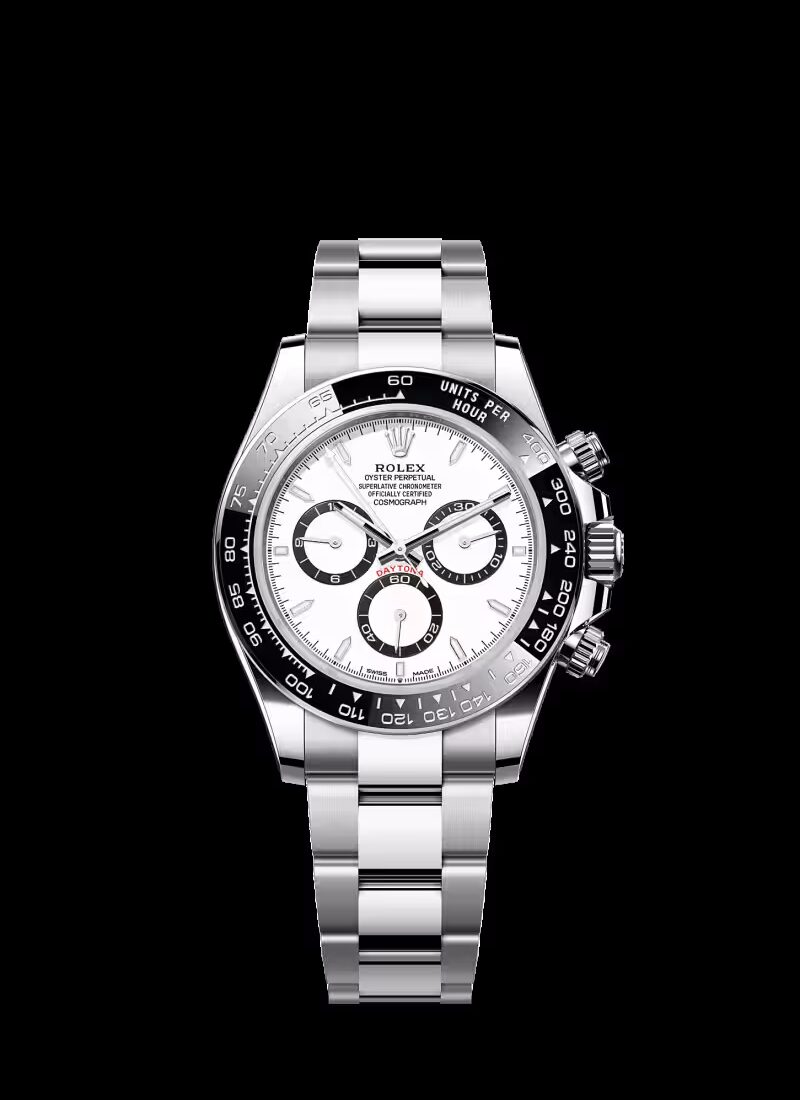
A TheTimeo collector reading of the Cosmograph Daytona ref. 126502 — the first Rolesium Daytona, with a white Grand Feu enamel dial, a tungsten-carbide Cerachrom bezel and an exhibition caseback on a steel-based Daytona.
TheTimeo view
The steel Daytona’s third face
The ref. 126502 matters because it moves the steel-based Daytona into territory Rolex normally keeps separate: Rolesium platinum framing, Grand Feu enamel and an exhibition caseback in one off-catalogue “Exceptional Watch”.
In 2026, Rolex gave the steel Daytona a third face — and that third face is made of glass, fired in a kiln.
TheTimeo editorial desk
Exterior study
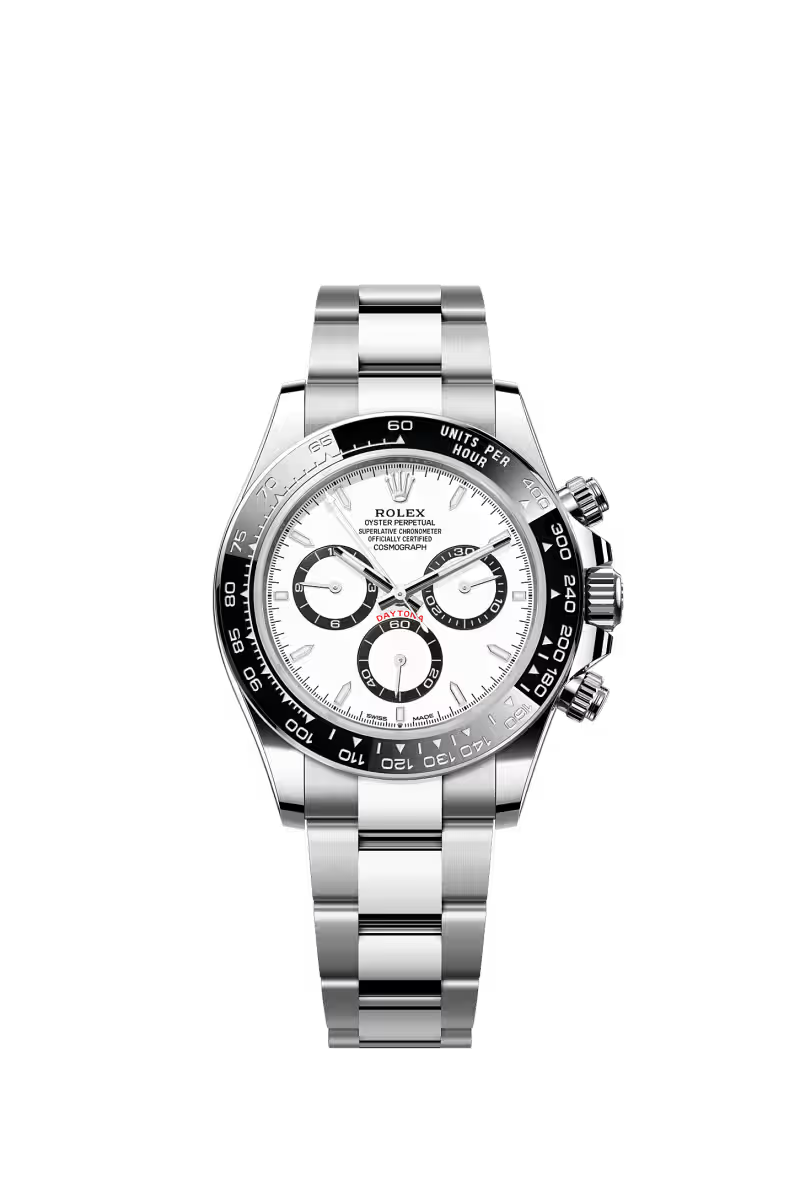
Case, scale, presence
In brief — Why this watch matters
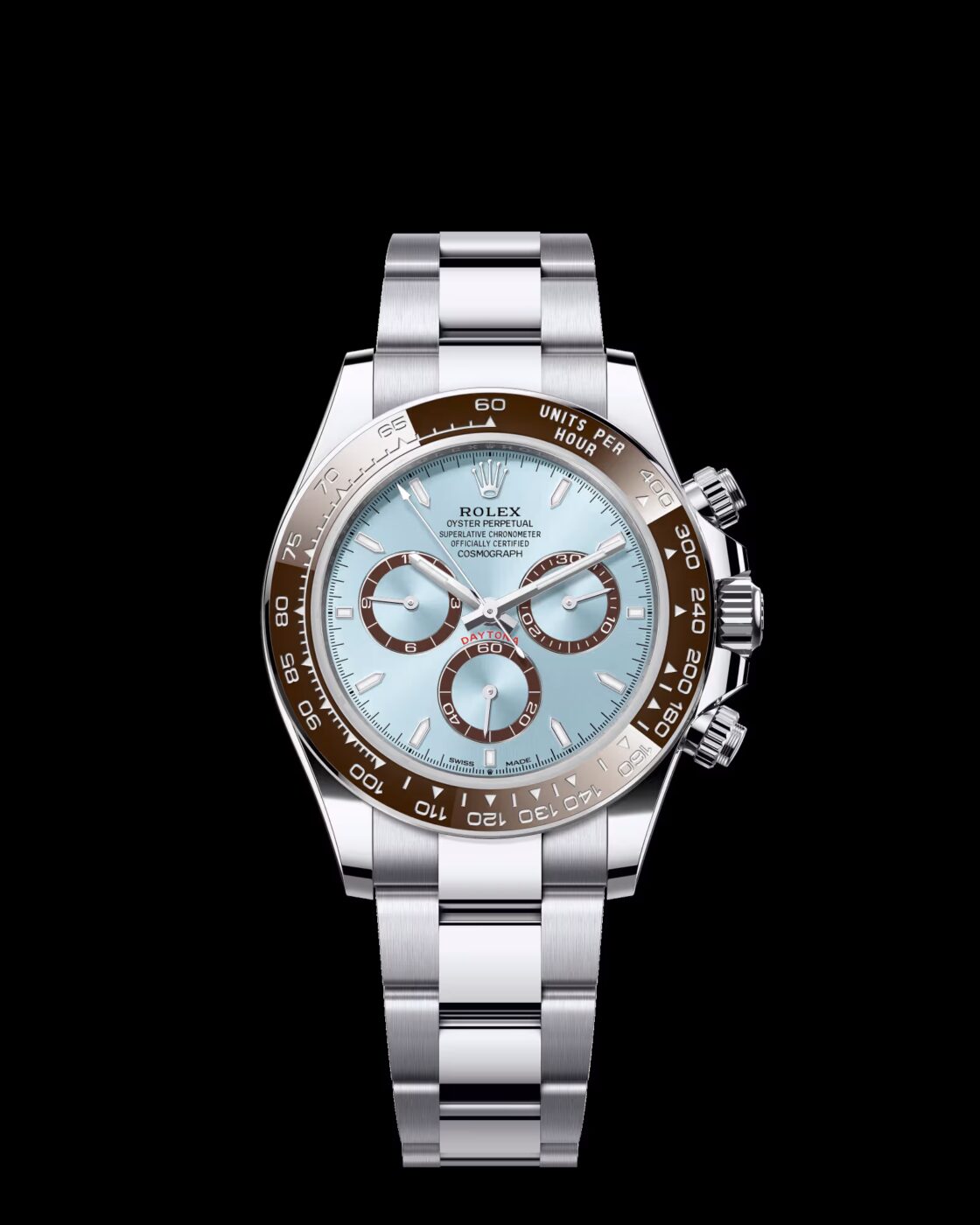
Rolex opened Watches and Wonders Geneva 2026 with the Cosmograph Daytona reference 126502 — and within hours it had become, by wide consensus among industry observers, the most discussed single watch of the fair. The reasons are structural, not just aesthetic. This is the first Daytona ever produced in Rolesium — Rolex’s historic platinum-and-steel combination, registered as a name by founder Hans Wilsdorf in 1932 and previously seen only on the Yacht-Master. It is the first Daytona with a white Grand Feu enamel dial. And it is the first steel-based Daytona with an exhibition caseback, opening a window onto the Calibre 4131 that Rolex has, until now, kept concealed in every steel reference.
Individually, any one of these would be notable. Together, in a single 40mm case, they represent Rolex doing something it does rarely and always deliberately: taking its most commercially important model — the watch responsible for more waiting lists, more grey market premiums, and more collector obsession than any other single reference in the world — and using it to demonstrate techniques normally reserved for haute horlogerie.
The context — 100 years of the Oyster, and why 2026 is different
Rolex frames its entire 2026 release slate around a single anchor: 2026 marks the 100th anniversary of the Oyster case, patented by Hans Wilsdorf in 1926 and the foundation of every water-resistant Rolex that followed. Much of the 2026 catalogue — refreshed Day-Dates, two-tone Datejusts, Oyster Perpetual references carrying “100 Years” text on the dial — ladders back to that centenary in straightforward ways.
The ref. 126502 is different. Rather than adding anniversary text or a commemorative engraving to an existing Daytona, Rolex used the centenary as licence to do something it almost never does: introduce genuinely new dial-making and bezel technology on its most scrutinised model, as an off-catalogue “Exceptional Watch” — a designation Rolex reserves for pieces that sit outside the standard catalogue, generally understood to signal extremely limited availability and a different distribution logic than the regular collection.
The base watch is the steel Daytona as updated in 2023 under reference 126500LN — the version with the enlarged, more symmetrical Oystersteel case, stronger lugs, still 40mm in diameter but with a slightly reduced 11.9mm thickness. The 126502 takes that case architecture, at 12.2mm marginally thicker to accommodate the new construction, and rebuilds three of its most visible elements from scratch.
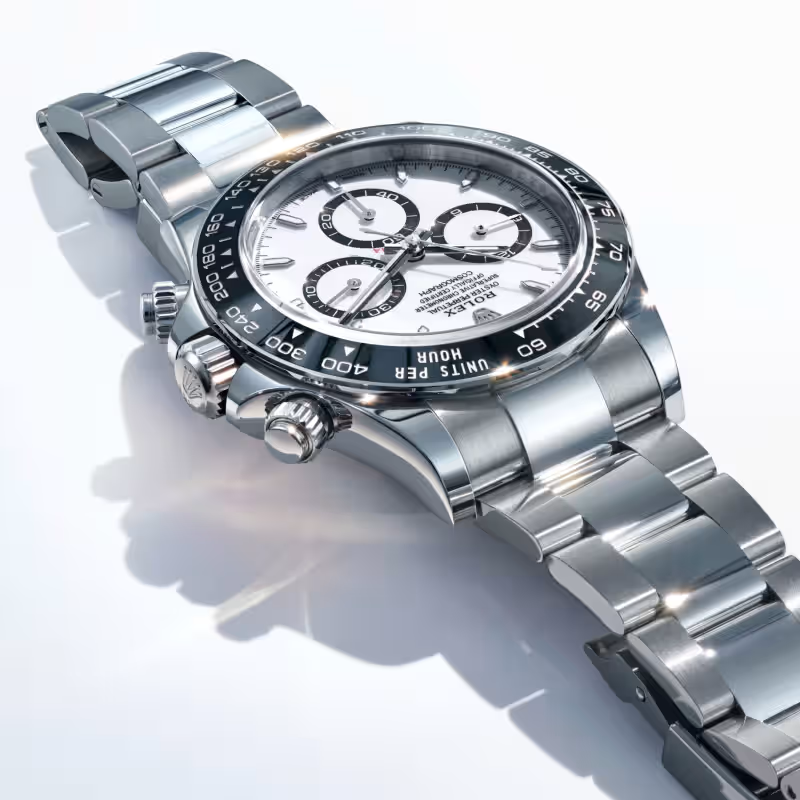
The steel Daytona becomes an object of material tension.
The visual point is not simply that platinum is added. It is where Rolex places it: at the bezel edge and around the sapphire back, exactly where the eye reads authority, weight and finish.
- Case
- Oystersteel with 950 platinum punctuation
- Dial
- White Grand Feu enamel, four-piece construction
- Bezel
- Anthracite Cerachrom with tungsten carbide enrichment
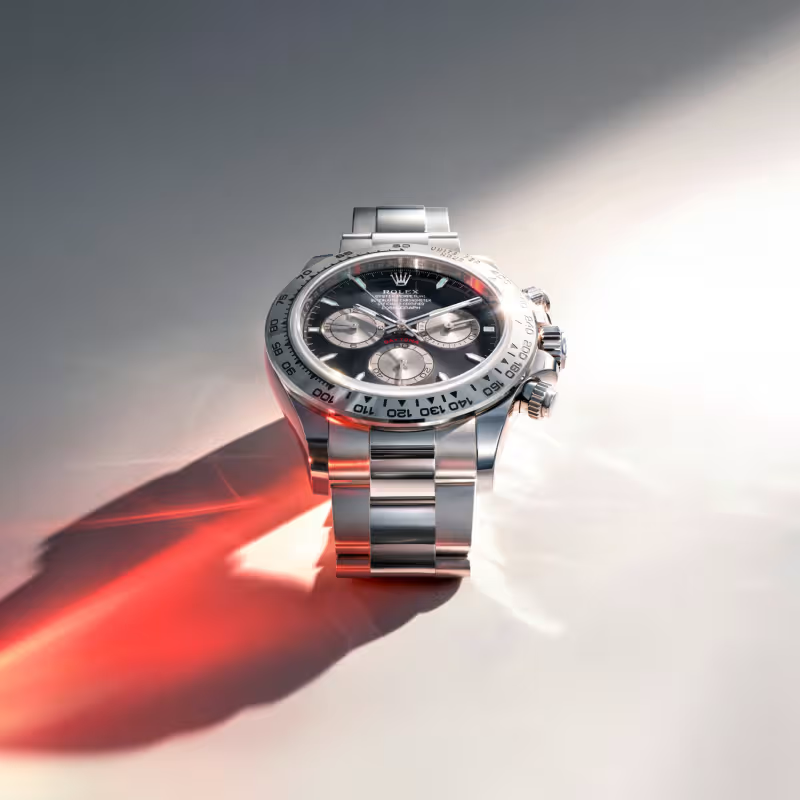
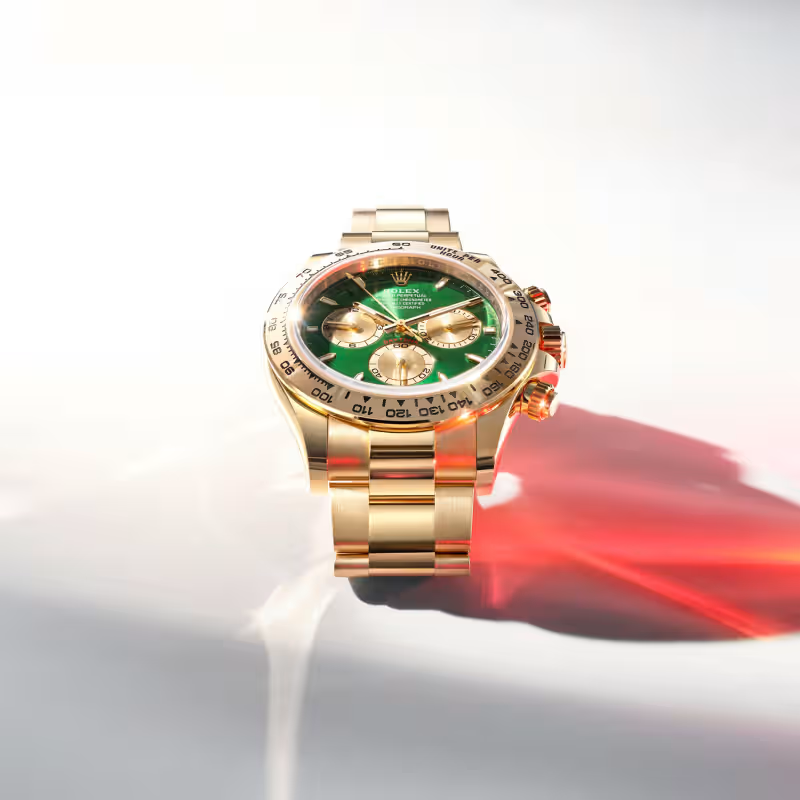
Rolesium — A name from 1932, on a Daytona for the first time
“Rolesium” is not a new alloy and not a marketing invention for this watch — it is one of the oldest material names in Rolex’s vocabulary, registered by Hans Wilsdorf in 1932, decades before its first practical application. The name designates Rolex’s combination of Oystersteel with 950 platinum, and in the modern era it has appeared primarily on the Yacht-Master collection — the 40mm Yacht-Master in Oystersteel with a platinum bezel being the most familiar Rolesium reference most collectors would recognise.
It has never, until the ref. 126502, appeared on a Cosmograph Daytona.
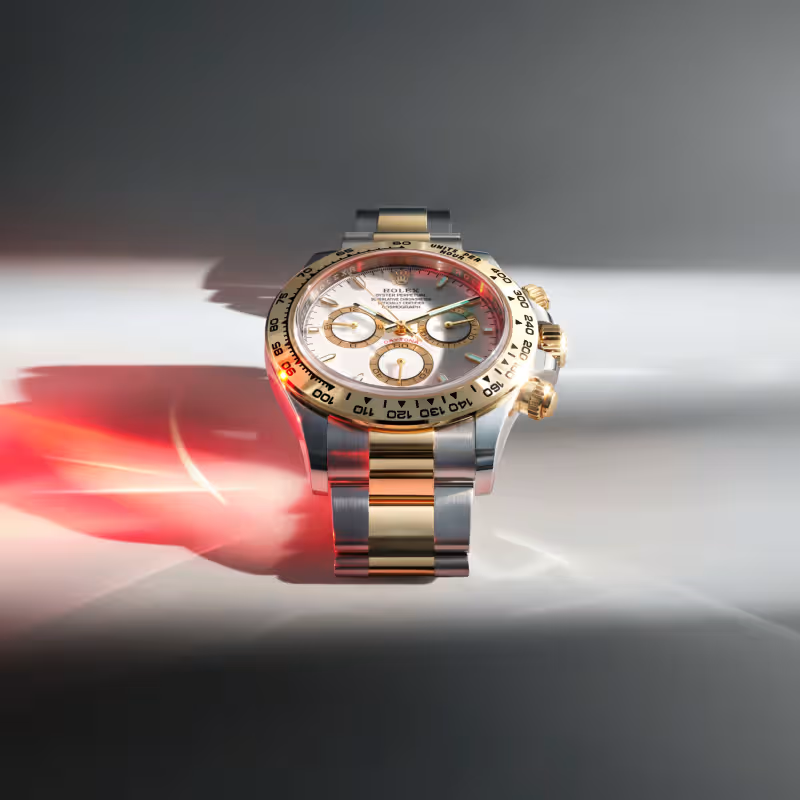
The application here is precise rather than decorative. Two elements of the case receive platinum: the bezel ring — the thin band that frames the Cerachrom tachymeter insert — and the caseback ring that holds the new sapphire exhibition window. The logic, as Rolex’s own positioning makes clear, is that platinum is placed exactly where it is most visually present: framing the two elements of the watch most likely to draw the eye, the bezel and the open caseback. The bulk of the case — the 40mm Oystersteel structure, the three-link Oyster bracelet — remains steel. This is not a precious metal watch wearing steel’s clothes; it is a steel watch with platinum applied as punctuation.
Detail study
Dial, calibre, signature
The dial — White Grand Feu enamel, and what that phrase actually means
The dial is the element that generated the most discussion — and the most necessary clarification — in the weeks following the reveal.
What “Grand Feu” traditionally means
Historically, “grand feu” enamel refers to vitreous enamel kiln-fired at high temperature directly onto a metal substrate — gold, silver, copper or brass. The technique developed within the broader tradition of metal enameling, where managing the thermal relationship between the metal base and the molten glass during firing is the central technical challenge of the craft. Grand feu dials are found across haute horlogerie’s most historically significant references, prized for a depth, luminosity and glossy whiteness that no lacquer or printed dial can replicate.
What Rolex actually did
Rolex’s process for the 126502 differs from that lineage in a specific and disclosed way: rather than firing enamel directly onto a metal substrate, Rolex applies the white enamel to four ceramic plates, fires them through a vitrification process, and then fits the fired plates onto a brass base. The four-piece ceramic construction is itself a notable engineering detail — managing four separately fired enamel components into a single dial assembly with consistent colour and surface quality across all four pieces requires a level of process control that explains, at least in part, why this technique has not previously appeared on a production Daytona.
Rolex also had to solve a problem specific to enamel on a chronograph dial: enamel is prone to cracking, particularly across temperature cycling and the kind of repeated mechanical stress a worn watch experiences. The brand developed a dedicated production process specifically to avoid this issue — a detail that signals genuine R&D investment rather than a one-off craft flourish borrowed wholesale from another department.
The visual result — and its echo of the past
The result is a dial that reads as “surprisingly glossy, deep white” — a description that multiple independent reviewers converged on, and one that closely recalls the white “porcelain” dial of the reference 16520 Zenith Daytona from 1988. Those 16520 dials were, in fact, lacquer rather than true porcelain, but the visual association — “floating white,” depth without the flatness of standard lacquer — is exactly the territory the 126502’s enamel dial occupies. Rolex has not explicitly referenced the 16520 in its own materials, but the resemblance has not gone unnoticed by collectors who know that reference’s history well.
Crucially, the 126502’s enamel dial has no contrasting sub-dial rings — a genuine departure from the Daytona’s defining “panda” or “reverse panda” visual signature, which has relied on contrasting sub-dial colour since the model’s earliest references. The white-on-white monochromatic purity is interrupted only by the red “Daytona” signature at 6 o’clock, a detail that, on this dial, carries more visual weight than it does on any standard production Daytona precisely because it has nothing else to compete with.
The applied hour markers are white gold, with Chromalight luminous material — Rolex’s proprietary blue-glow luminescent compound — providing low-light legibility against the enamel surface.
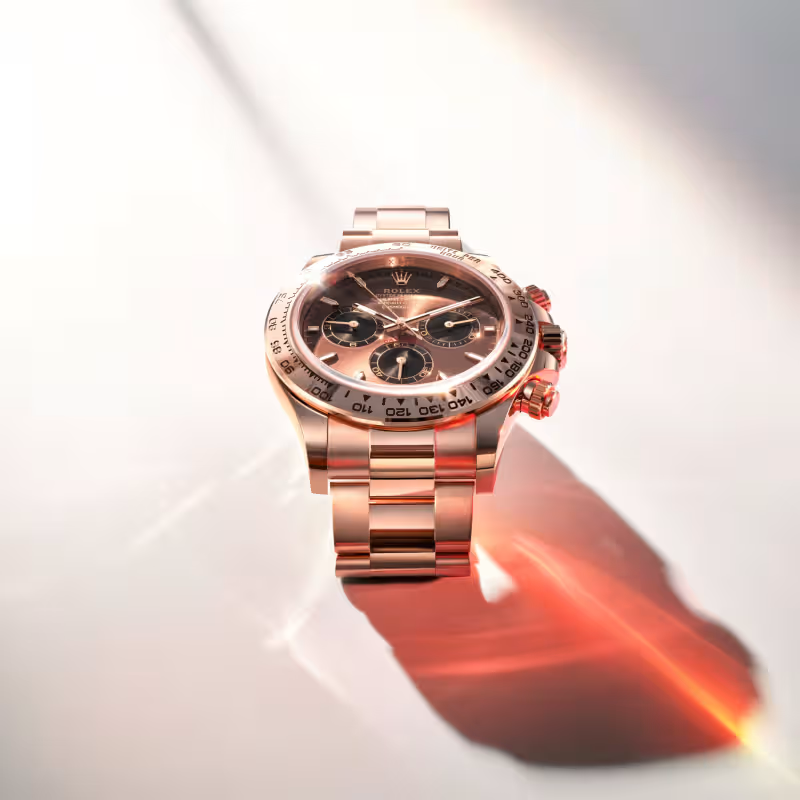
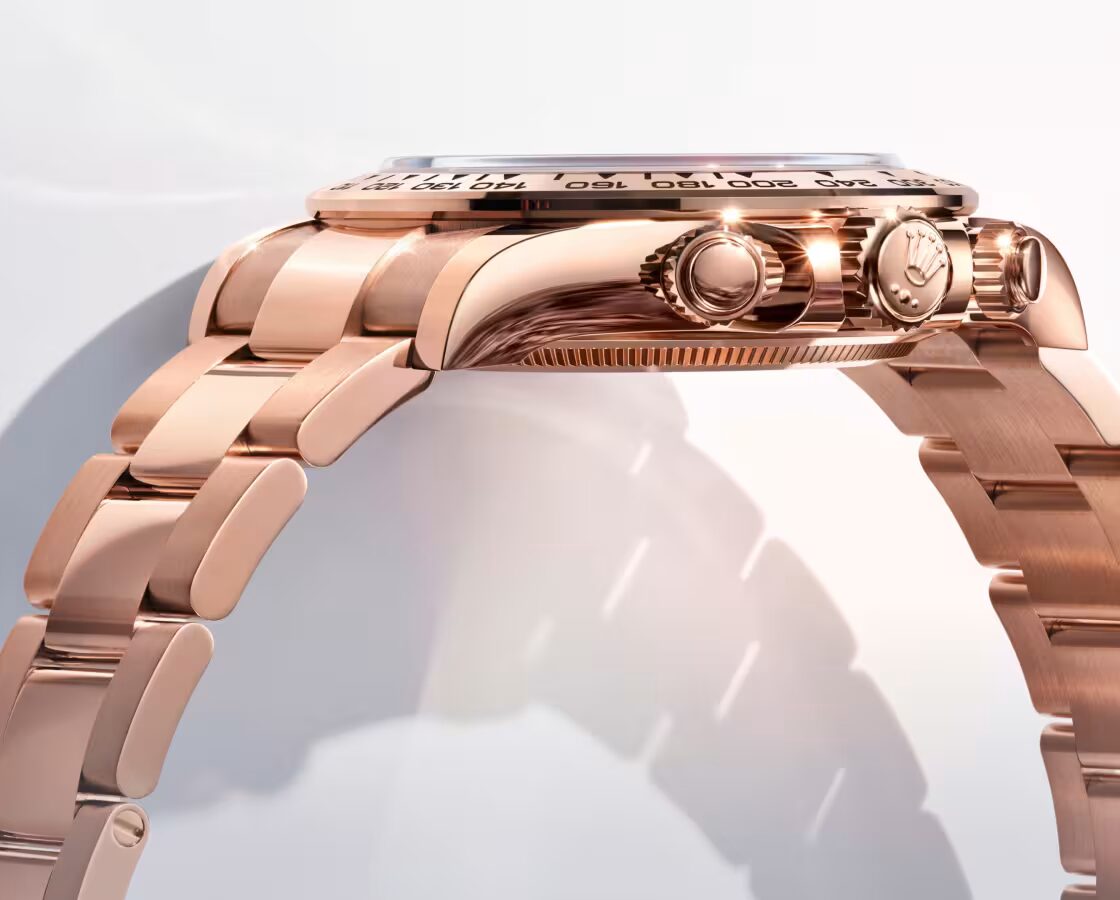
The bezel — A new ceramic, and a return to horizontal numerals
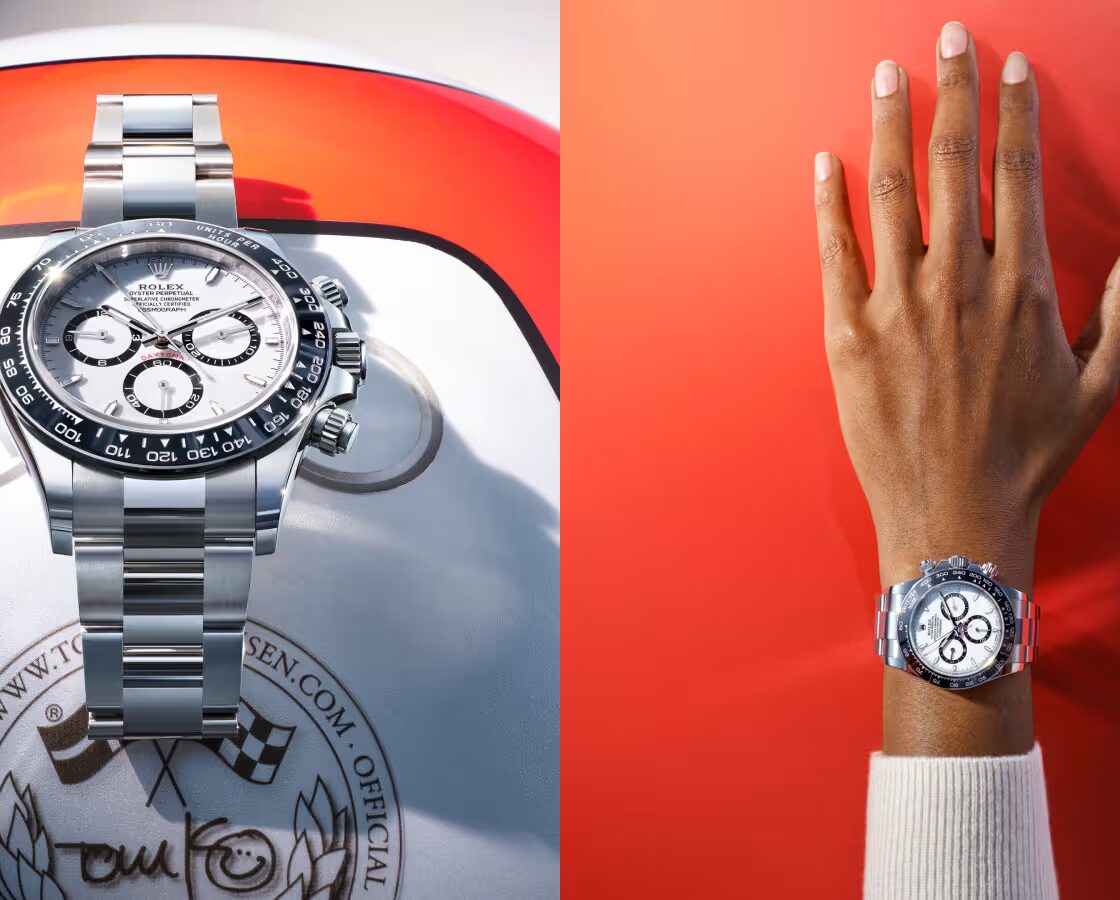
The Cerachrom bezel insert is also new: an anthracite grey ceramic enriched with tungsten carbide, developed exclusively for this reference. Tungsten carbide is among the hardest industrially produced materials, and its inclusion in the ceramic formula is consistent with Rolex’s long-running strategy of using Cerachrom material science as a genuine engineering differentiator rather than a purely cosmetic choice — Cerachrom bezels are prized for scratch resistance and colour stability under UV exposure that conventional aluminium or steel bezel inserts cannot match.
The tachymeter scale on the new bezel is also restyled: the numerals are arranged horizontally, in a contemporary font that echoes the layout of the original 1963 Cosmograph — a detail that several reviewers read as a deliberate callback to the model’s earliest references, at a moment, the Oyster centenary, when Rolex is explicitly inviting that kind of historical reading. The bezel ring itself — the thin band framing the ceramic insert — is where the Rolesium platinum appears, edging the anthracite ceramic in a way that gives the bezel a defined, jewellery-like border it would not otherwise have.
The caseback — A first for steel, a window onto Calibre 4131
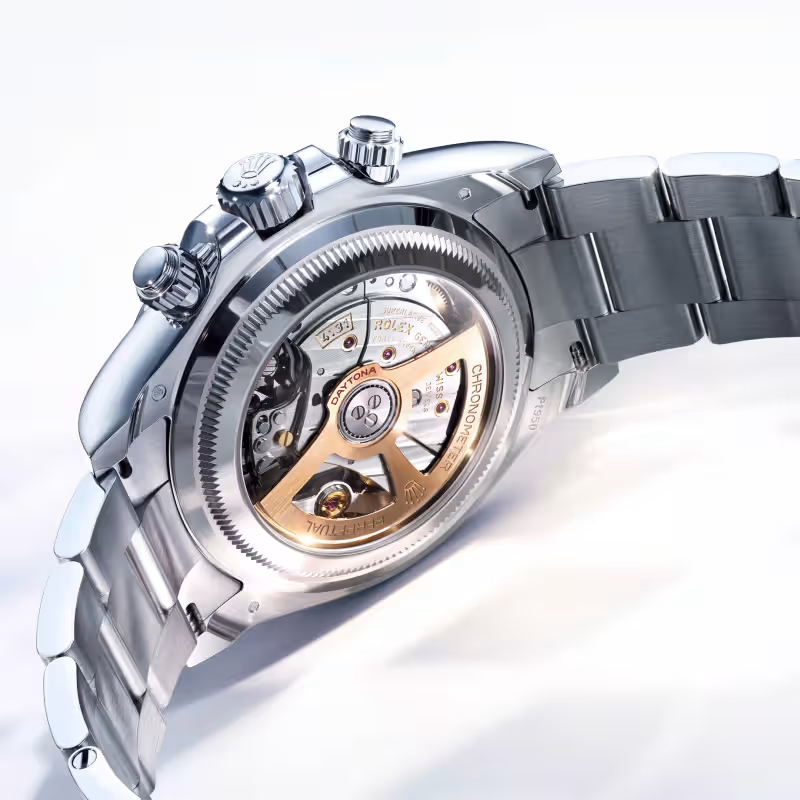
Perhaps the most quietly significant change is the exhibition caseback. Every steel Daytona since the in-house Calibre 4130 was introduced in 2000 — and its successor, the Calibre 4131, introduced in 2023 — has concealed its movement behind a solid steel caseback. Rolex’s reasoning for this has historically been linked to water resistance specifications and case construction philosophy; the brand’s precious metal Daytonas have offered exhibition casebacks, but steel references have not.
The 126502 changes that. A sapphire exhibition window, secured by a 950 platinum ring, the second Rolesium element on the watch, reveals the Calibre 4131 — Rolex’s current-generation automatic chronograph movement, running at 4Hz with a 72-hour power reserve, a substantial improvement over the 4130’s 72-hour figure already being class-leading among automatic chronograph movements.
For a steel Daytona, this is a genuinely new experience: seeing the column wheel chronograph mechanism, the Chronergy escapement, and the blue Parachrom hairspring that define the 4131’s architecture, on a watch whose case material puts it — at least nominally — closer to the accessible end of the Daytona range than to the gold and platinum references that have always offered this view.
Reading the price — $57,800 against a backdrop of $200,000+ Le Mans Daytonas
To understand where the 126502 sits in the collector landscape, it helps to look at where the previous generation of “special steel-adjacent Daytona” sits.
The Daytona “Le Mans” editions — references 126529LN, a yellow gold iteration, and 126525LN in Everose gold — became, in the words of one collector publication, “the world’s most wanted chronograph.” Each carried an MSRP around $50,000, yet secondary market prices for these precious metal Le Mans editions have traded between $225,000 and over $350,000 — four to seven times retail. The related “Baby Le Mans” steel reference, with similar styling but without the Le Mans-specific complications, retails at $39,300 and trades around $47,000 — a far more modest but still meaningful premium.
The 126502 enters a different lane. At $57,800, it is priced above the Le Mans editions’ original MSRP, reflecting both the Rolesium platinum content and the genuinely novel enamel dial production process. Whether it follows the Le Mans pattern of dramatic secondary market appreciation will depend on factors that are, as of this writing, unknowable — production volume for “Exceptional Watch” designations is not disclosed, and the category’s track record has no direct precedent.
What can be said with more confidence: the 126502 represents a different kind of significance than the Le Mans editions. The Le Mans Daytonas were thematic — anniversary editions tied to a specific motorsport event, with design cues that referenced that theme explicitly. The 126502 is technical — its significance lies in the dial material, the bezel ceramic, the caseback construction, and the Rolesium application, none of which are tied to an external anniversary that will eventually pass. If the Daytona’s history of off-catalogue specials is any guide, technical firsts tend to be referenced for far longer than thematic ones.
The 126502 is not a colour story.
Its significance comes from construction: material allocation, dial process, ceramic development and the decision to expose the calibre in a steel-based Daytona.
Technical firsts tend to last longer than decorative novelties.
That is why this reference sits closer to a structural Daytona moment than to a seasonal variation.
Collector relevance — Where the 126502 sits in the Daytona hierarchy
The 126502 carries three genuine firsts — Rolesium, Grand Feu enamel, exhibition caseback on steel — in a single reference. No other Daytona in the model’s six-decade history combines this many simultaneous departures from established convention.
Independent of the Daytona context entirely, a Rolex production watch with a Grand Feu enamel dial is itself a rare category. The 126502 extends traditional dial craft to the Daytona specifically, which had never received this treatment.
Rolex designates only a small number of references each year as “Exceptional Watches” — a category that sits outside the standard catalogue and, by reputation, outside standard allocation logic as well.
Key specifications
Off-catalogue, “Exceptional Watch” 2026.
Oystersteel with 950 platinum bezel ring and caseback ring.
Four-piece ceramic construction on brass base, with applied white gold hour markers and Chromalight.
Tungsten carbide-enriched ceramic, platinum-edged, with horizontal tachymeter numerals.
Automatic chronograph, 4Hz, 72-hour power reserve, visible through sapphire caseback.
Three-link stainless steel bracelet and Rolex Oyster case water resistance.
Prices before taxes at time of introduction.
TheTimeo view
There is a version of this watch that Rolex could have made safely: a steel Daytona with a platinum-accented bezel and a nice new dial colour, slotted quietly into the catalogue, generating modest interest before the next novelty arrived. That is not what the 126502 is. Rolex took its most commercially consequential model — the watch around which an entire secondary market ecosystem has been built — and used it as the proving ground for three techniques the brand has, for decades, kept largely separate from the Daytona’s identity: precious metal framing through Rolesium, enamel dial-making at a level normally associated with the most rarefied haute horlogerie houses, and an exhibition caseback that finally lets a steel Daytona owner see the movement that has made the model legendary.
The Oyster case centenary gave Rolex the occasion. What it did with that occasion — three genuine firsts on the world’s most scrutinised chronograph, executed with the kind of process rigour that solves real problems like enamel cracking rather than papering over them — is the kind of release that, years from now, collectors will point to as the moment the steel Daytona’s ceiling moved. Not because of the price, though $57,800 is itself a number worth noting for an off-catalogue steel-based Daytona. Because of what it proved Rolex was willing to do with the watch that, more than any other, defines what people think Rolex is.
Official sources
The Edit
Stories selected by TheTimeo
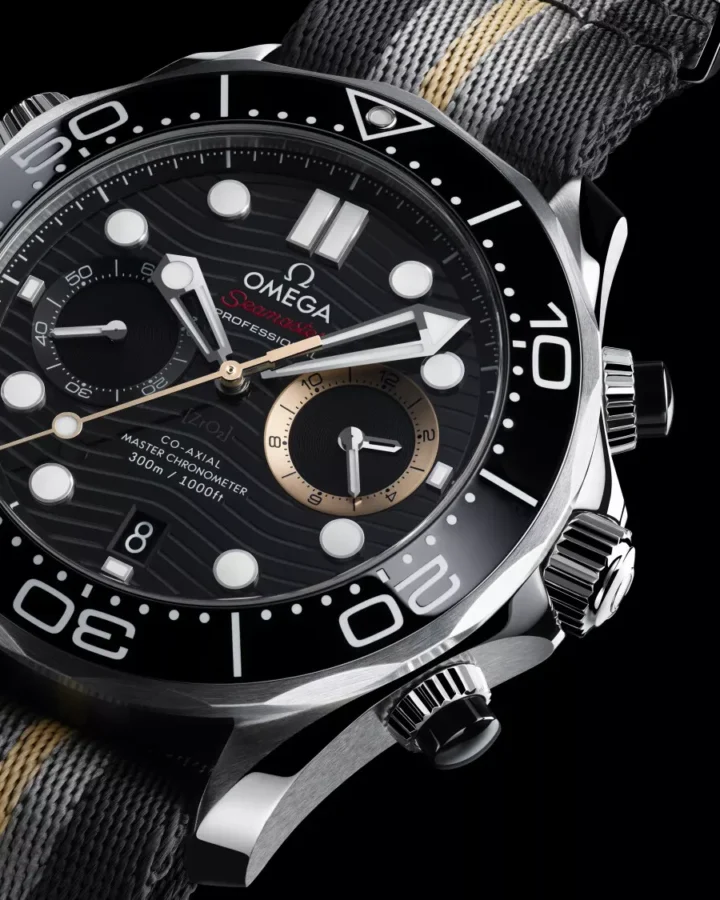
Omega Seamaster Diver 300M Chronograph “007 First Light”: The Bond Watch That Launched Inside a Video Game First
A TheTimeo collector reading of ref. 210.32.44.51.01.002 — the first chronograph in James Bond's…
Tudor 2026: The Centenary Year, the Watch Everyone Knows and the One Nobody Expected
A TheTimeo collector reading of Tudor's 100th anniversary collection — the sharpened Black Bay…
Hublot Big Bang Reloaded 2026: The Brand That Made Material the Design, Twenty Years Later
A TheTimeo collector reading of Hublot's 2026 Watches and Wonders presentation — the five-piece…